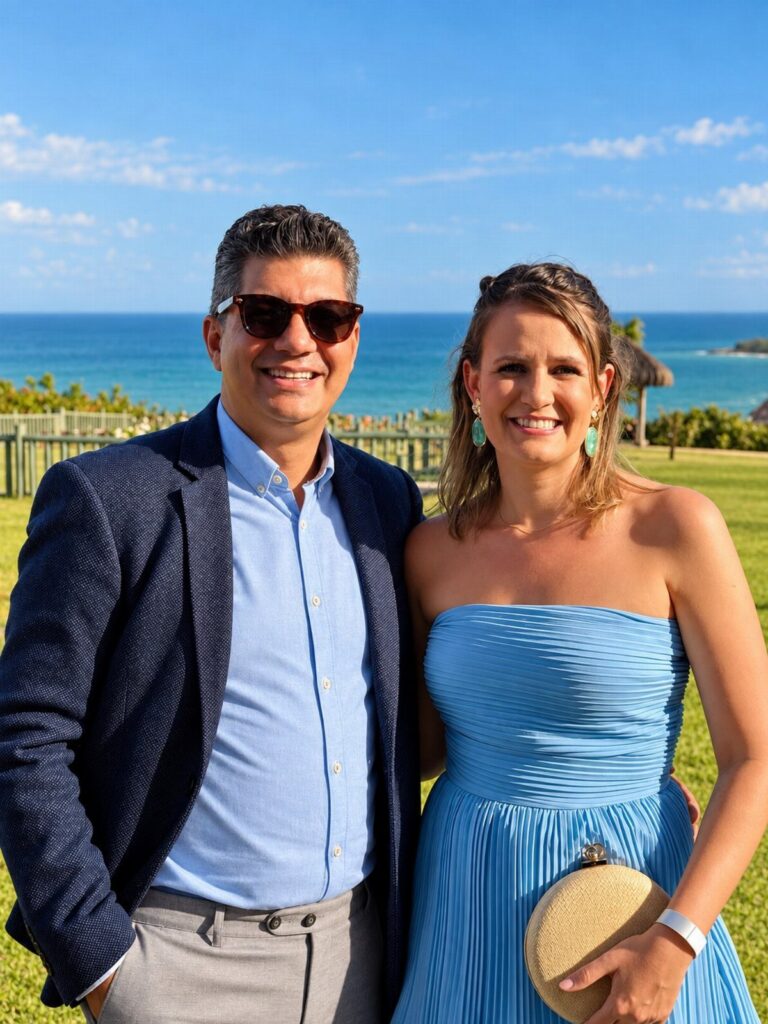
Check the fine print at the bottom of the invitation or on the reception card before you shop for anything. Footwear and color then decide whether the outfit holds up once you’re actually standing in the venue.
1. Cocktail or Semi-Formal
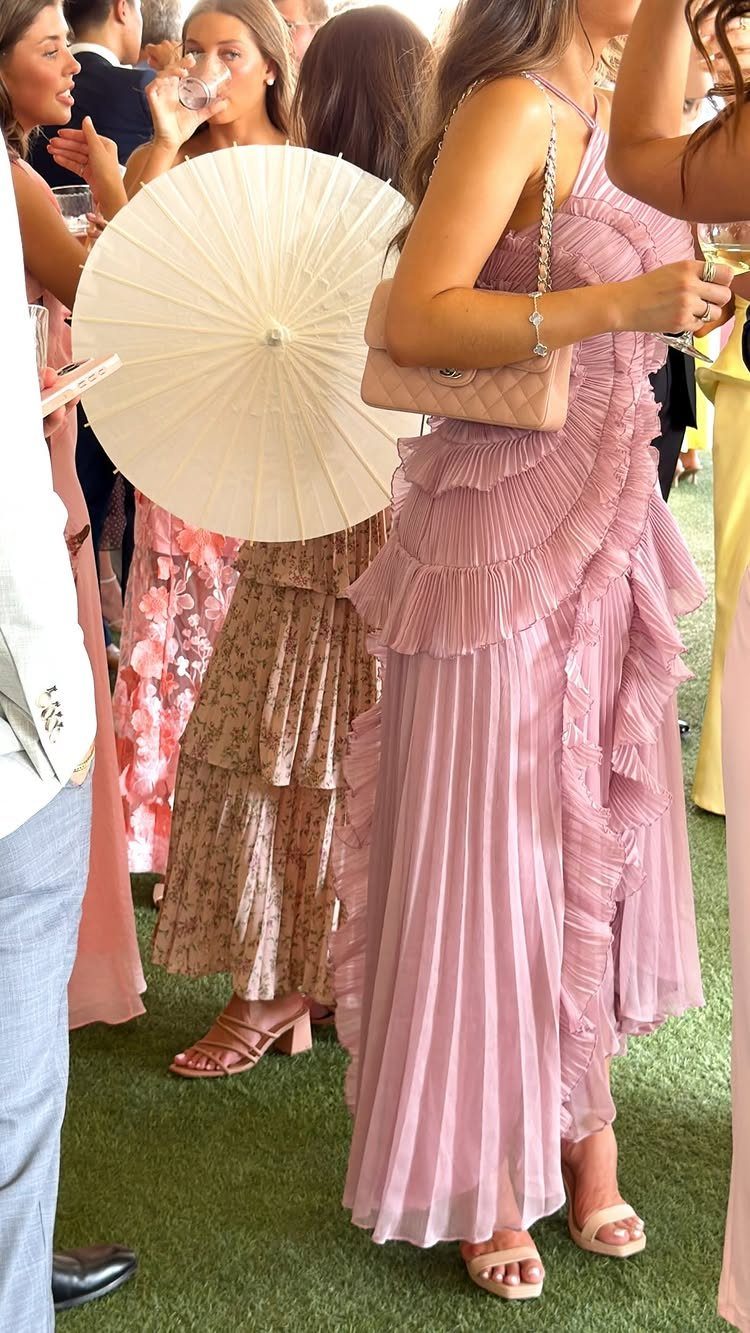
Evening weddings call for this code, and a knee-length or midi dress is the usual answer. Ruffles, soft mauve and small prints all work, since the code leaves room for color and pattern.
Pair the dress with a small handbag and keep the rest simple. Cocktail attire is looser than black tie, so I would spend the effort on fit and fabric rather than on extra accessories.
2. Beach Casual
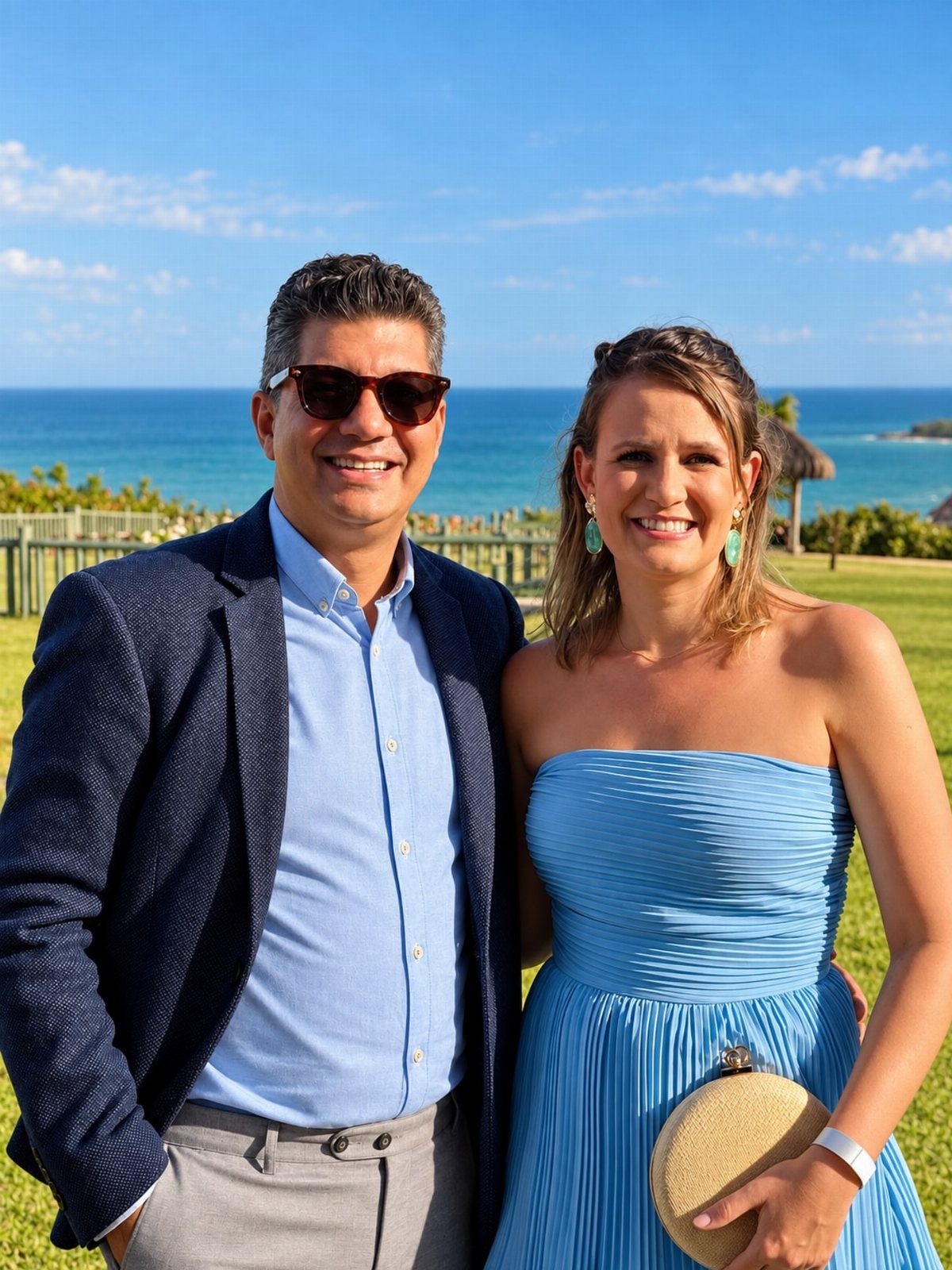
A navy blazer with grey pants is about as far as a man needs to go for a beach ceremony, and it reads dressed up without feeling stiff. A strapless dress in blue suits the setting for her.
Pick lighter pieces than you would wear to an indoor wedding. Skip anything you would be nervous about getting near sand or wind.
3. Black Tie
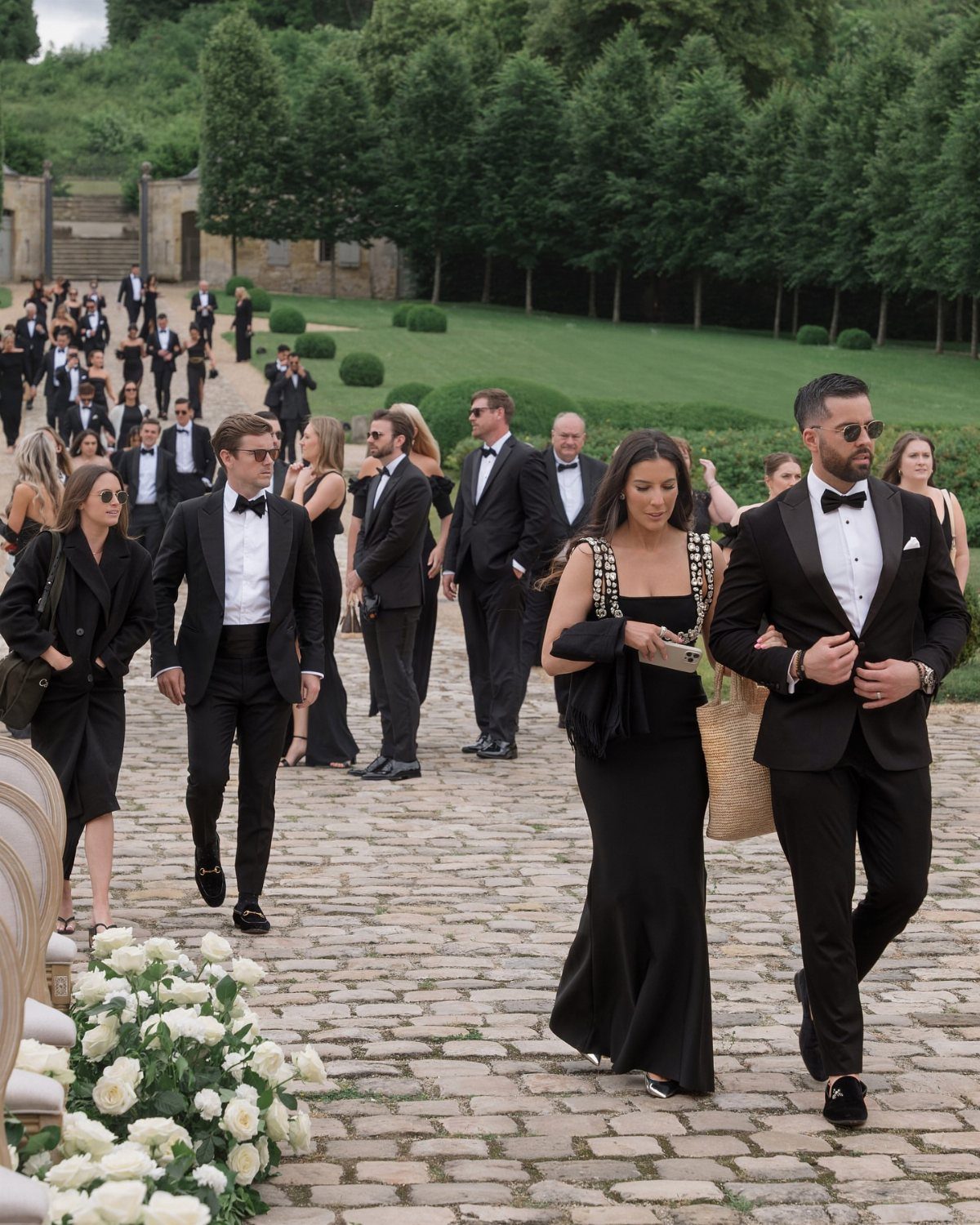
Black tie means tuxedos for men and floor-length gowns for women, and it belongs to evening weddings.
Choose a long dress in a deep or rich shade, and test whether your shoes can handle uneven paths, since many black tie venues have stone, gravel or grass.
4. Black Tie Optional
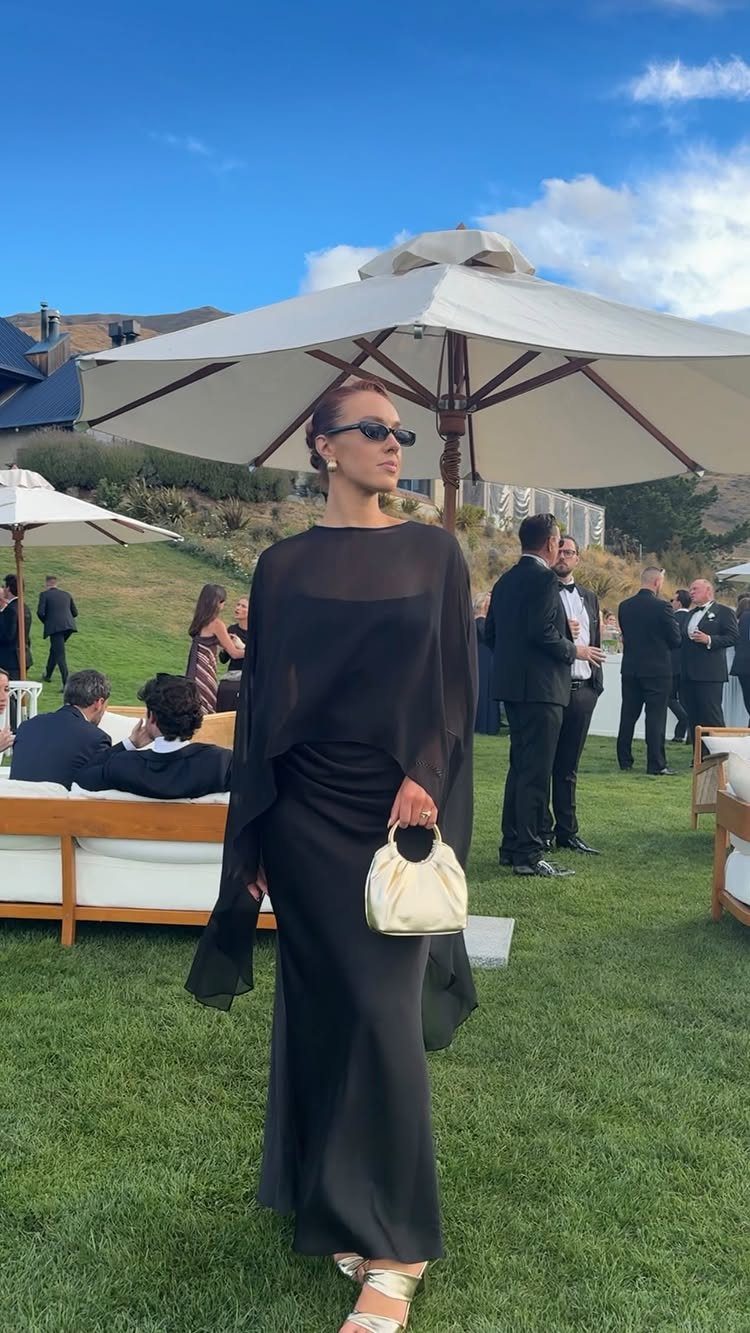
Black tie optional gives you a choice: a tuxedo or a dark suit for men, and a long dress for women.
A floor-length black gown with metallic heels works for black tie optional, because the length signals formality while the shoes keep it from feeling strict.
I would go long on the dress. A white or neutral handbag lightens the black, and an outdoor lawn means block heels may serve you better than stilettos.
5. White Tie
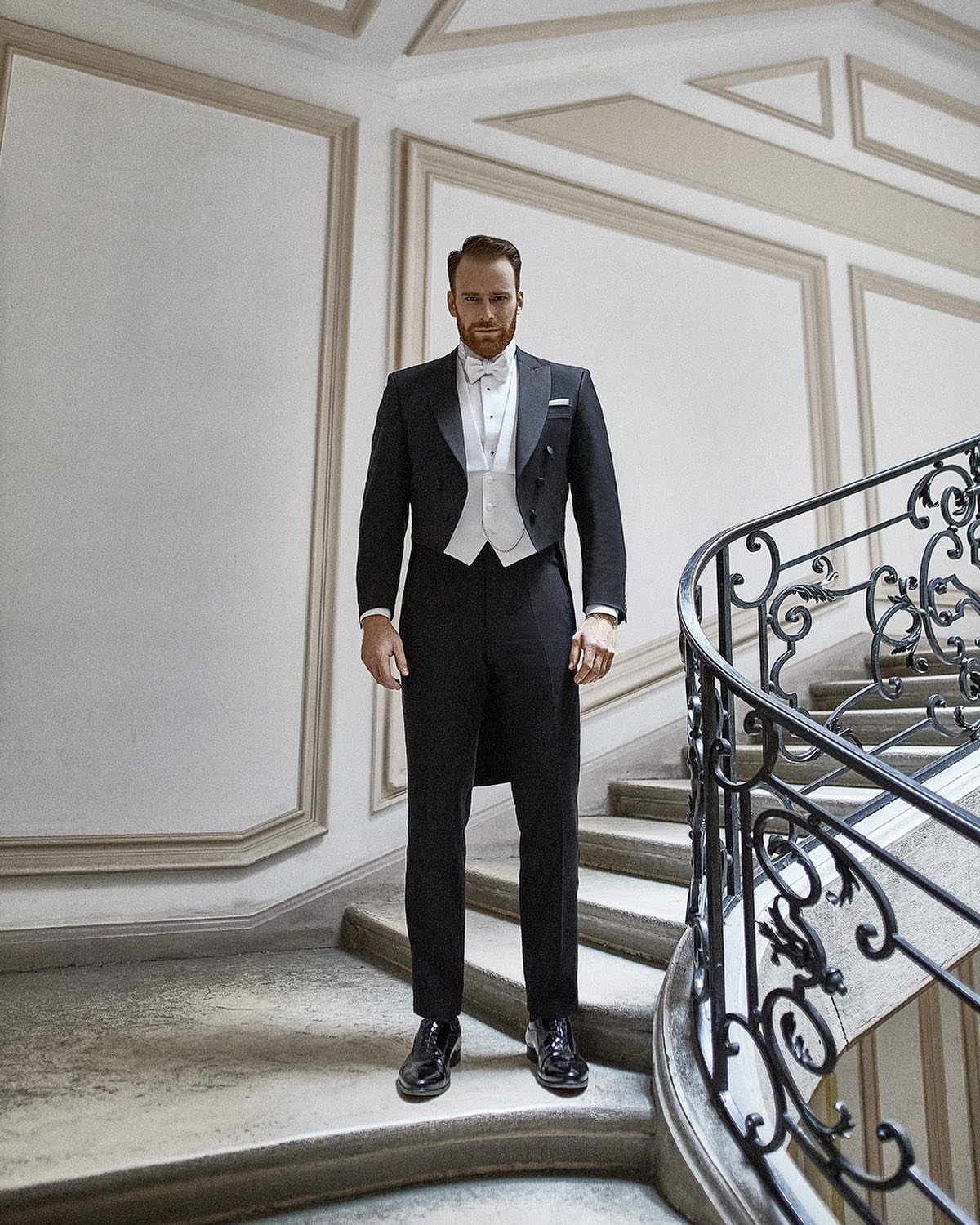
Of all the dress codes, white tie asks the most: a black tailcoat, white waistcoat and white bow tie, with a long gown for women. Few guests own the pieces, so most people rent the menswear.
Start looking early, because tailcoats need proper fitting. The bow tie should be white, not black, or the look falls apart.
6. Formal Venues
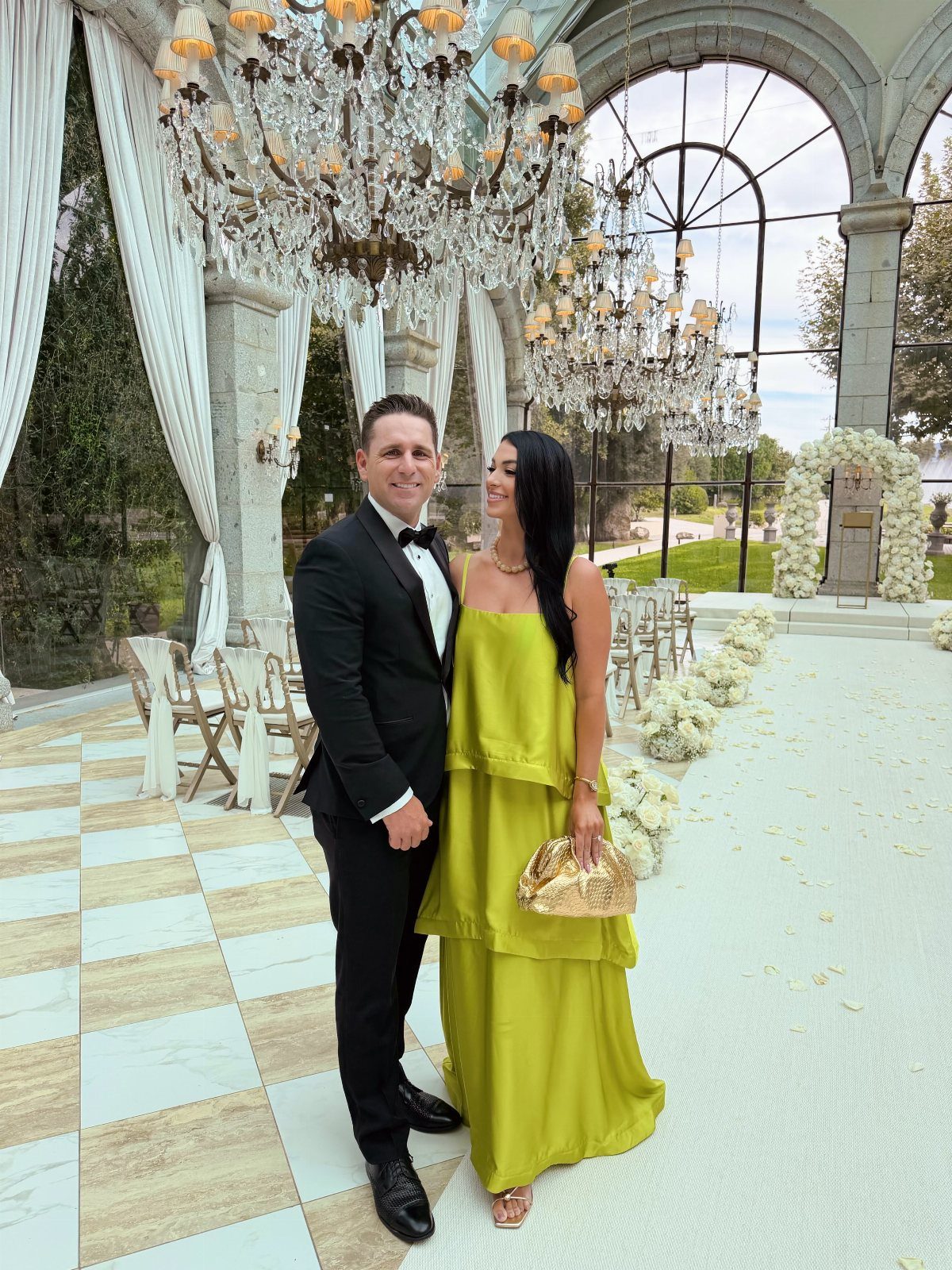
Let the room set the dress code in your head.
Formal venues with chandeliers and white florals can carry a tuxedo or a bold floor-length gown, and a saturated color like emerald or lime works as long as the length and fabric stay dressy.
If the invitation gives no code, an ornate venue is a strong hint to dress formally. Going a little more dressed up costs you less than looking underdressed in photos.
7. Traditional Indian Wedding Attire
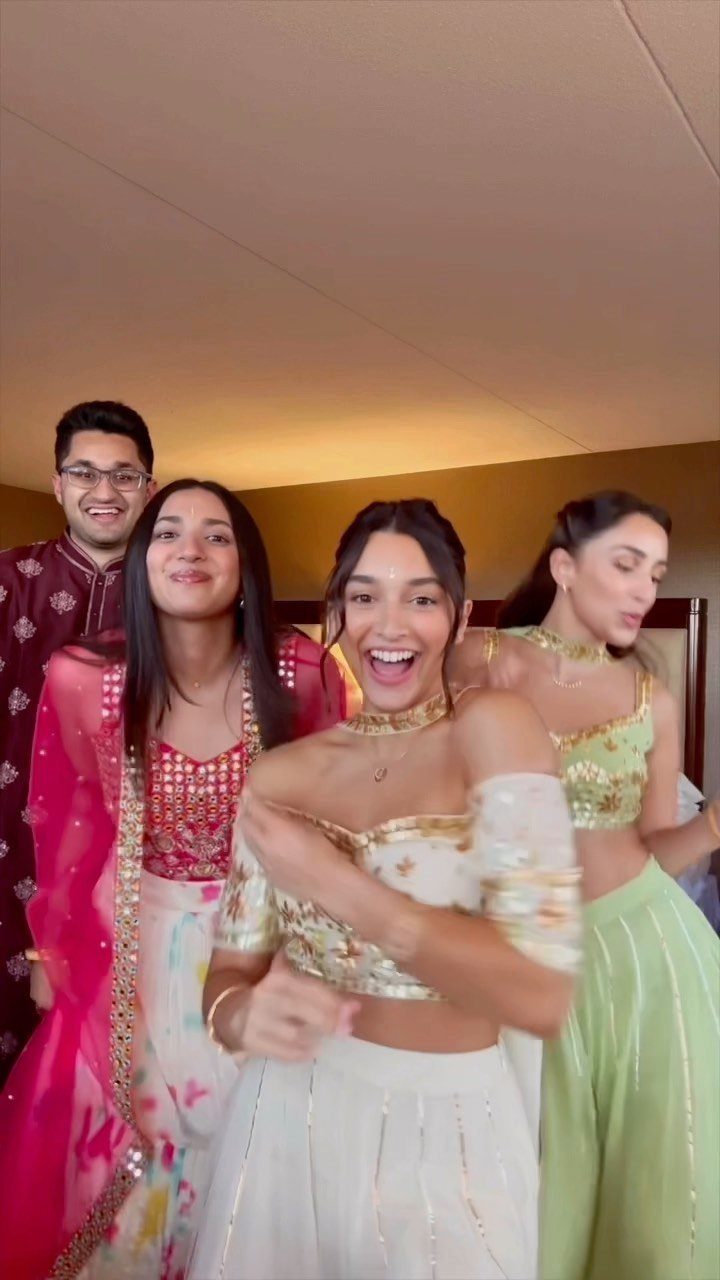
Traditional Indian wedding attire gives guests permission to wear color at full volume. Lehengas, kurtas and embroidered tunics all fit, and embellishment is welcome rather than overdone.
Pick jewel tones or bright shades, and keep white and black out of it.
If you don’t own the outfit, rent or borrow one, and ask the couple or a relative which style suits the specific ceremony prior to spending a dime.
Fit matters more than the price tag here, so leave time for alterations.
8. Rustic Barn Wedding Look
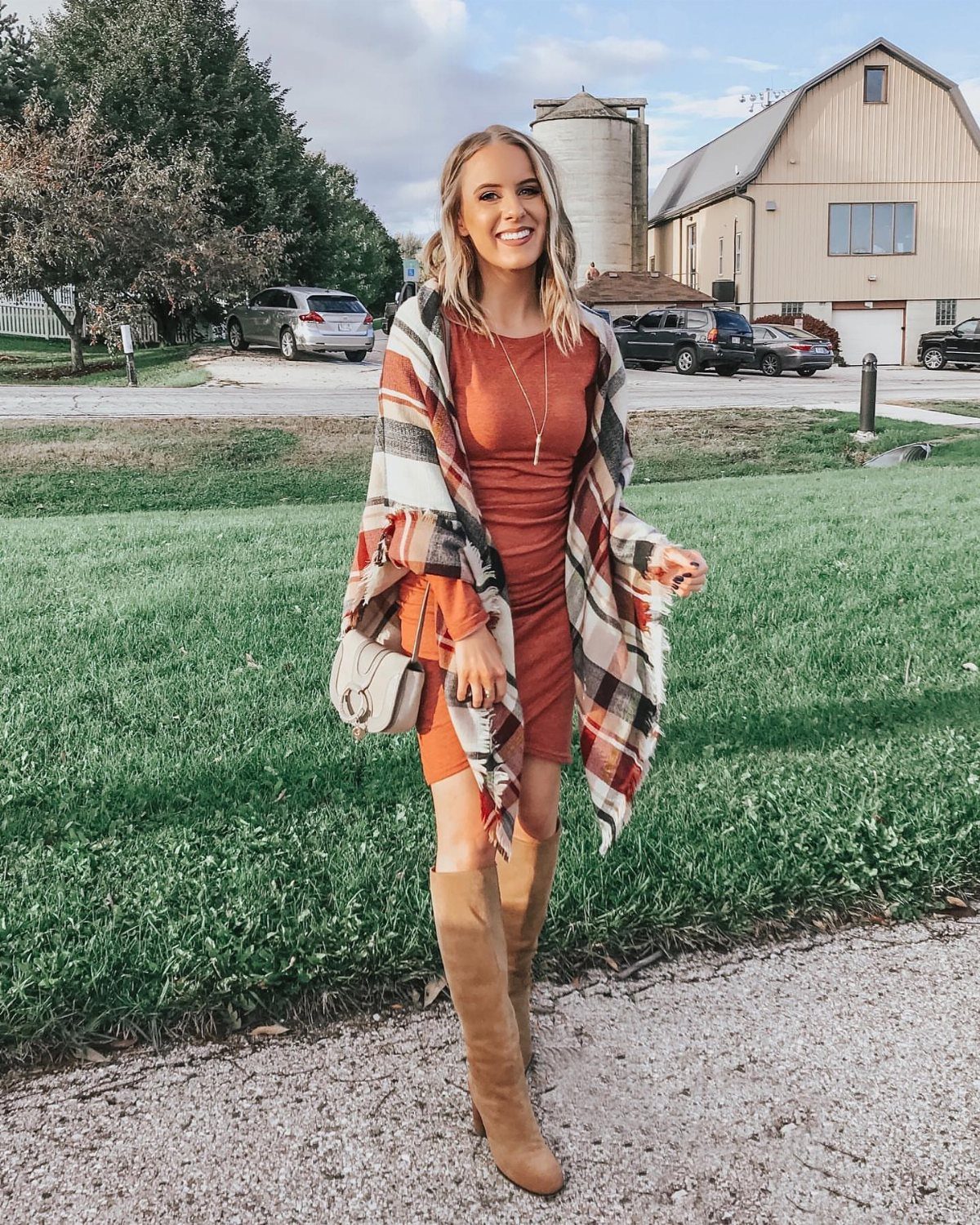
A rust-colored dress, a plaid shawl and tan leather boots make a barn wedding outfit that fits the setting without looking like a costume. Warm earth tones sit well against grass, wood and a silo.
Choose boots with a low or block heel, since stilettos sink in grass. The shawl does double duty as a layer when the evening cools down.
Small jewelry works best here, since the dress and shawl should carry the look.
Dress Code Clarifications
Read the invitation closely before you open a single shopping tab.
Check the bottom of the invitation first, since the dress code often hides in small print there or on a separate reception card; the wedding website may spell it out again.
Couples are told to match their own attire, the wedding party’s and the groom’s to the stated code, or one step dressier. So the code tells you the floor for the day, and dressing at that level is safe.
If the card gives a theme or a hint of one, let it steer fabric and color.
If it says nothing at all, a quick message to the couple or a member of the wedding party settles it faster than guessing.
Footwear Choices
Shoes are where guests get caught most often. Sandals at a ranch or stiletto heels in beach sand will make you the one guest who misread the setting.
Match the footwear to the ground, not just the dress.
For gardens, lawns and sand, block heels or wedges hold up where thin heels sink. Wedges are my pick for sand and grass because they spread your weight.
You will be standing through a ceremony, then dancing, so comfort counts. Pick shoes you can wear for hours.
Color Considerations
Fabric does as much as color.
Semi-formal weddings call for silk, satin, chiffon or lace, because those fabrics look dressy right away. Stretchy polyester and thin rayon weaves read as casual, even when the color flatters you.
Navy, blush, emerald and burgundy are safe solids. If you prefer a pattern, a tasteful floral or geometric print works, as long as it suits the wedding’s theme.
Casual does not mean everyday. At a casual wedding, I would still choose something polished, not jeans and a t-shirt, and skip anything that looks thrown together.
Frequently Asked Questions
What are appropriate colors to wear to a wedding as a guest?
Pick colors that suit the wedding’s theme and venue, and leave white and overly casual shades alone.
Deep jewel tones like navy, emerald and burgundy are dependable, and so is soft blush; a quiet floral or geometric pattern also passes without trouble.
What are the different levels of dress codes?
From most to least formal, the codes in play are white tie, black tie, black tie optional, cocktail or semi-formal, and casual. Black tie means tuxedos and floor-length gowns, while black tie optional also allows a dark suit for men.
What should I wear for a semi-casual wedding?
Wear something polished but relaxed, such as a nice dress or tailored pants, never jeans and a t-shirt.
Casual does not mean everyday, so choose dressy fabrics like silk, satin, chiffon or lace over stretchy polyester or thin rayon. Match your shoes to the ground, with block heels or wedges on grass and sand.





