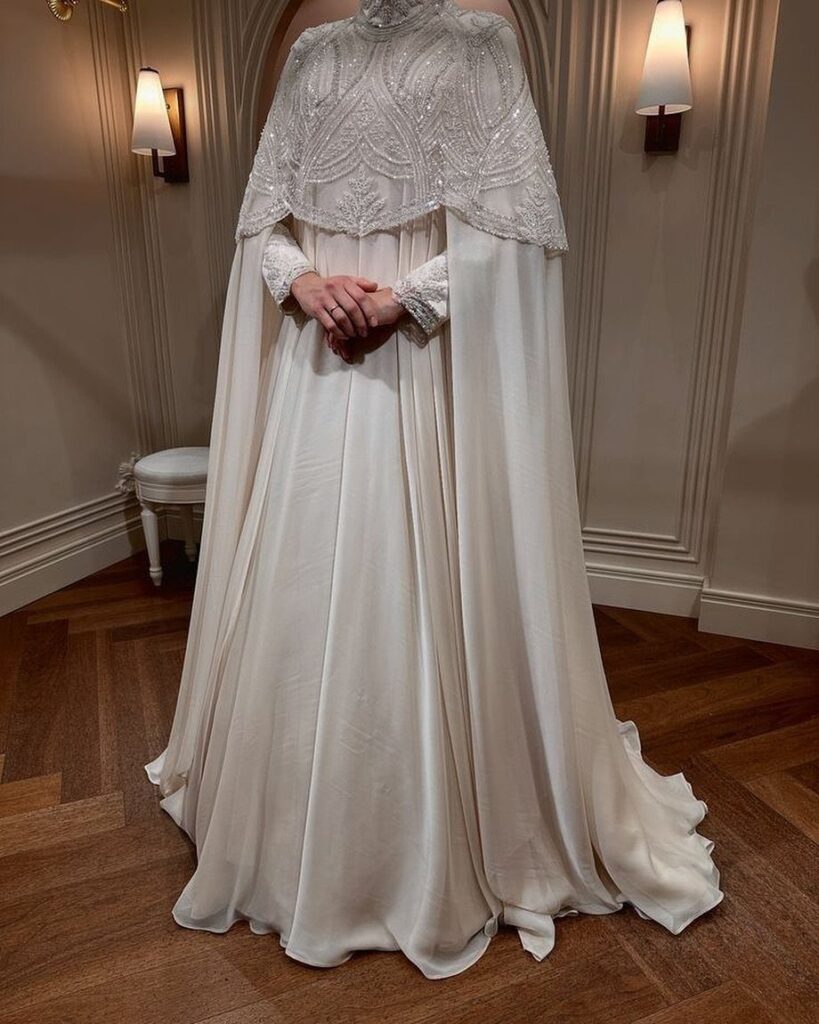
The capes in this list run from a shoulder-length capelet to a floor-length lace cape over a beaded gown, and the length you pick sets how much of the dress people actually see.
A capelet leaves the bodice in view, while a long sheer or lace cape becomes the main statement, so I would match the cape to the dress’s level of detail and keep whatever sits underneath simpler.
1. Capelet Wedding Dress
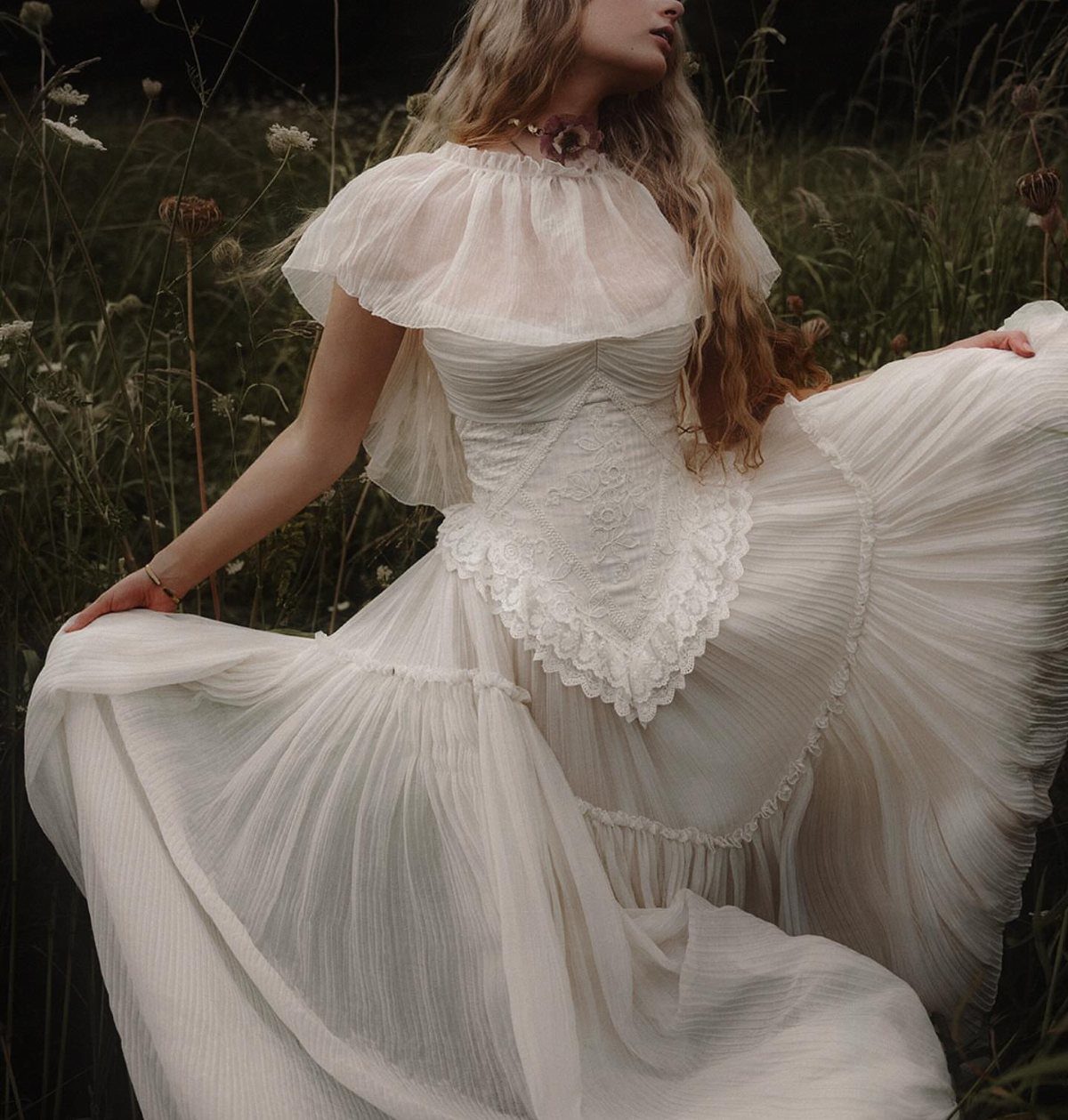
A capelet stops at the shoulders or just past them, so it adds a layer without hiding the bodice.
That makes it the easiest cape to live with, and the one I would pick for a dress you still want people to see.
The sheer, ruffled version here keeps the look soft rather than regal. If your budget is tight, a capelet is a smart add-on, since it can sometimes be removed for the dancing.
2. Lace Cape Wedding Dress
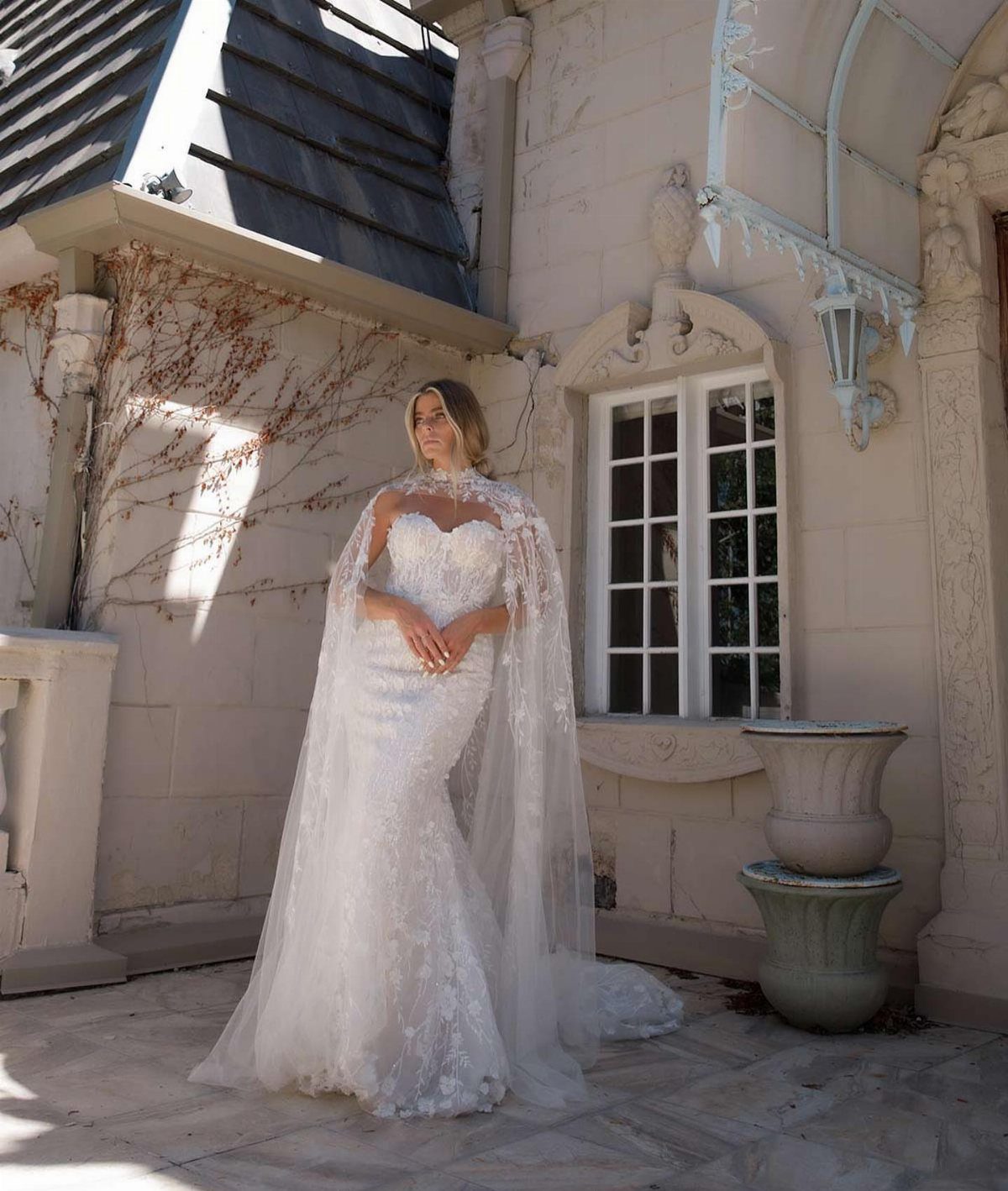
Long, sheer lace falling behind the shoulders gives a cape a vintage feel that plain fabric can’t copy. Lace also reads as romantic in daylight, so outdoor ceremonies suit it well.
Keep the dress underneath simpler. A lace cape over a heavily lace bodice turns busy fast, and I would choose a quieter base so the cape does the talking.
3. Sparkly Cape Wedding Dress
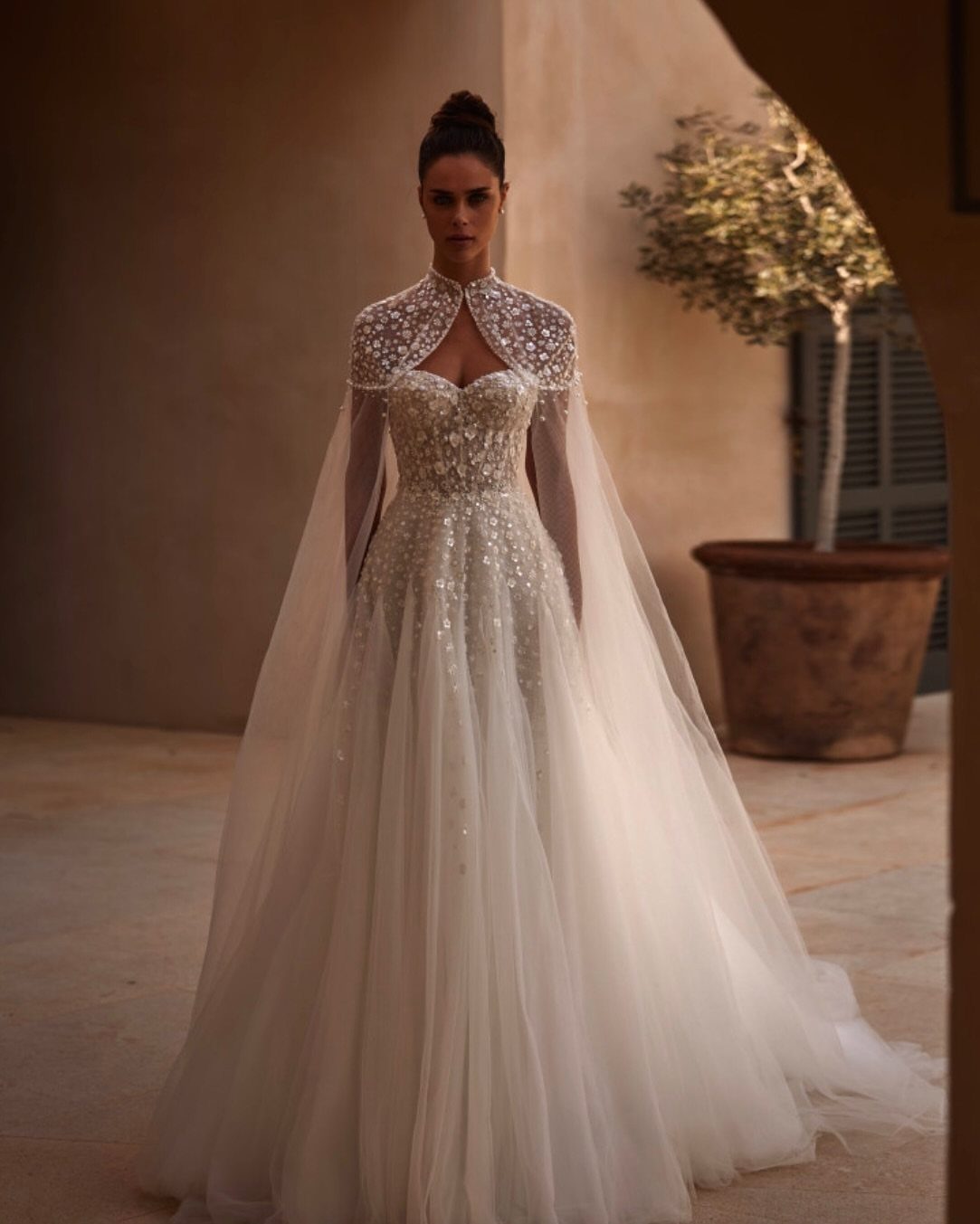
Because the cape carries the glamour, I would keep the veil minimal or skip it.
Ask to see the dress under both indoor lighting and daylight, since sparkle behaves very differently in each.
4. 3D Floral Cape Wedding Dress
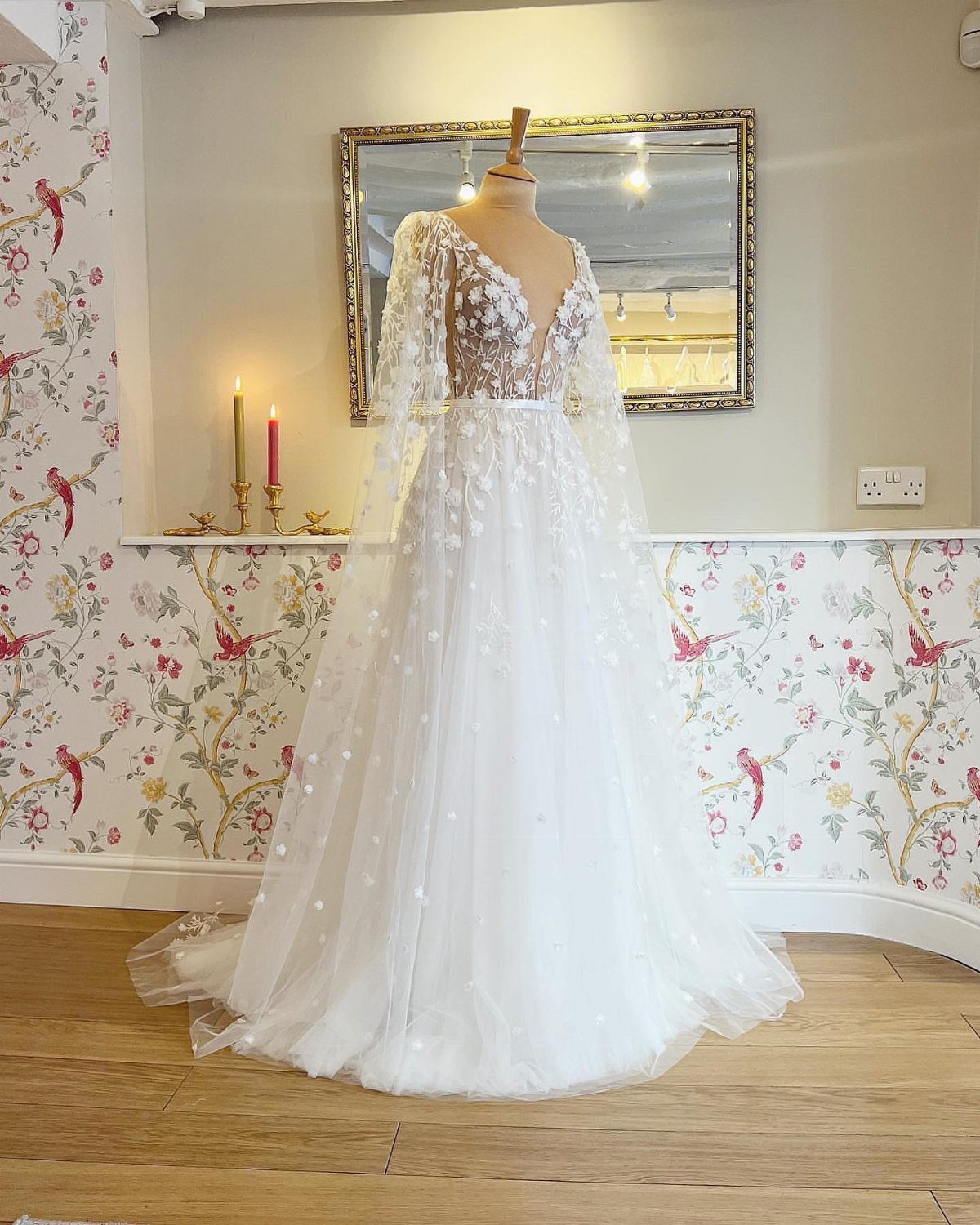
Three-dimensional florals raise the fabric off the surface, so the cape has texture you can see from across a room. A long sheer cape lets those flowers float over the dress rather than sit flat.
Pair it with a plain, clean gown. Dimensional flowers already supply the drama, and a second embellished layer would compete with them.
5. Cape Sleeve Wedding Dress
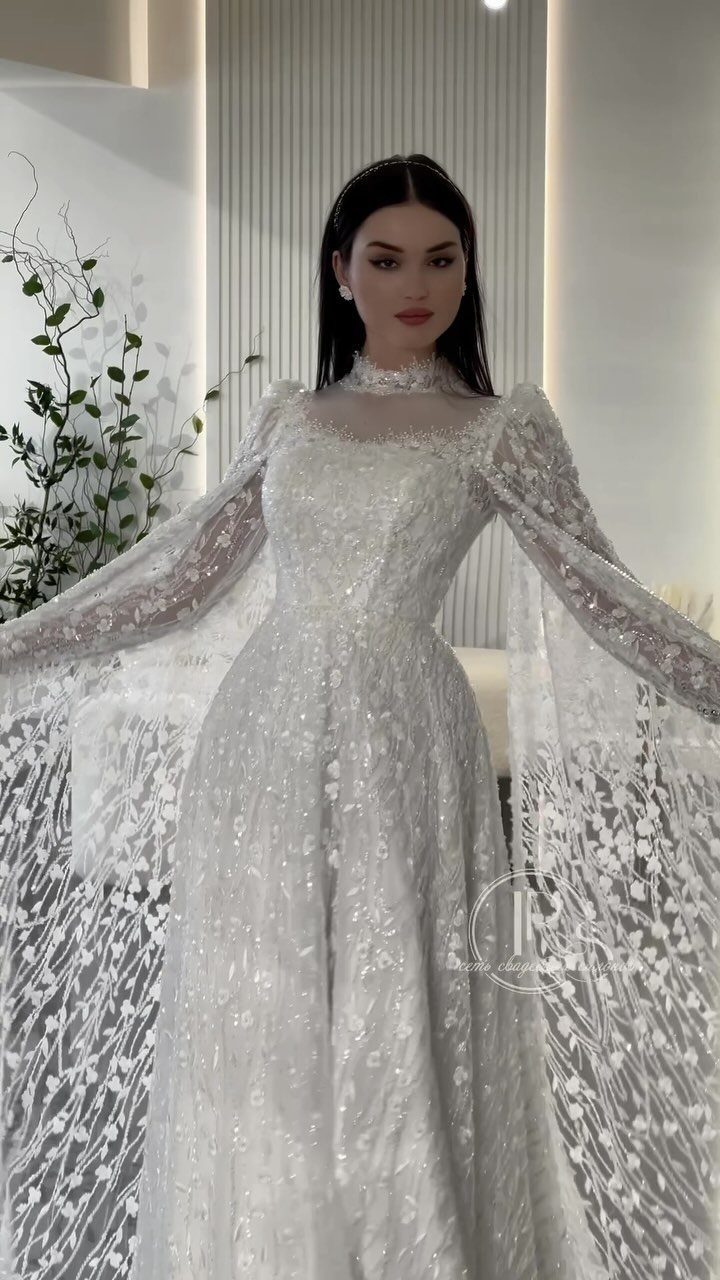
Cape sleeves drape from the shoulders over the arms, so you get coverage without a separate piece to manage. For a brides who wants sleeves but not the weight of a full cape, this is my pick.
Sheer lace keeps the effect light, and the sparkle on the dress shows through. Check that you can lift your arms comfortably for hugs and dancing.
6. Sheer Cape Wedding Dress
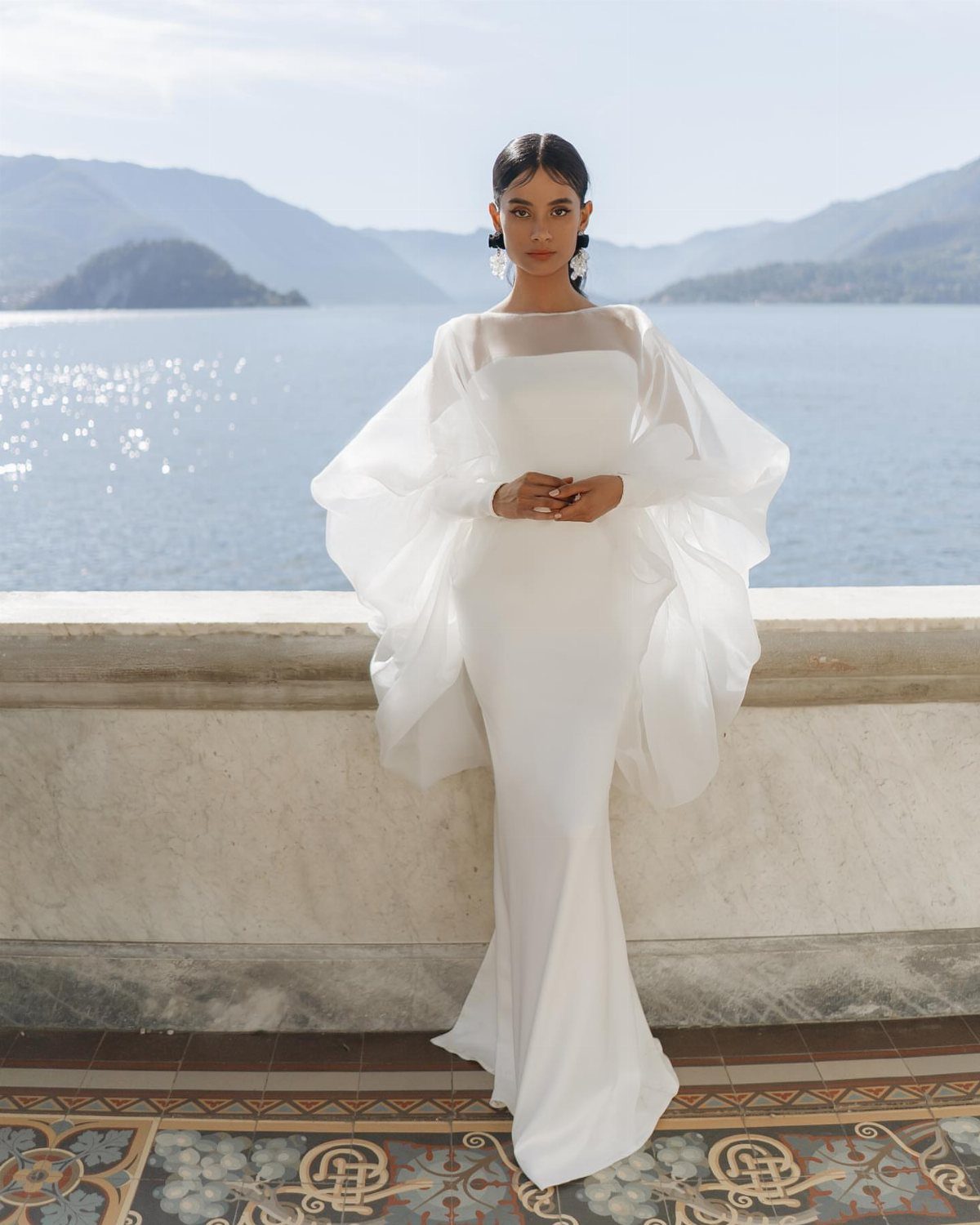
A sheer cape moves with every breath of wind, which is why a lakeside or mountain setting suits it so well. The fabric adds volume without adding bulk or hiding the dress beneath.
Choose a sheer cape if you want drama on a modest budget of effort: it needs no embellishment to look finished. Keep the gown simple and let the fabric flow.
7. Ruffled Cape Wedding Dress
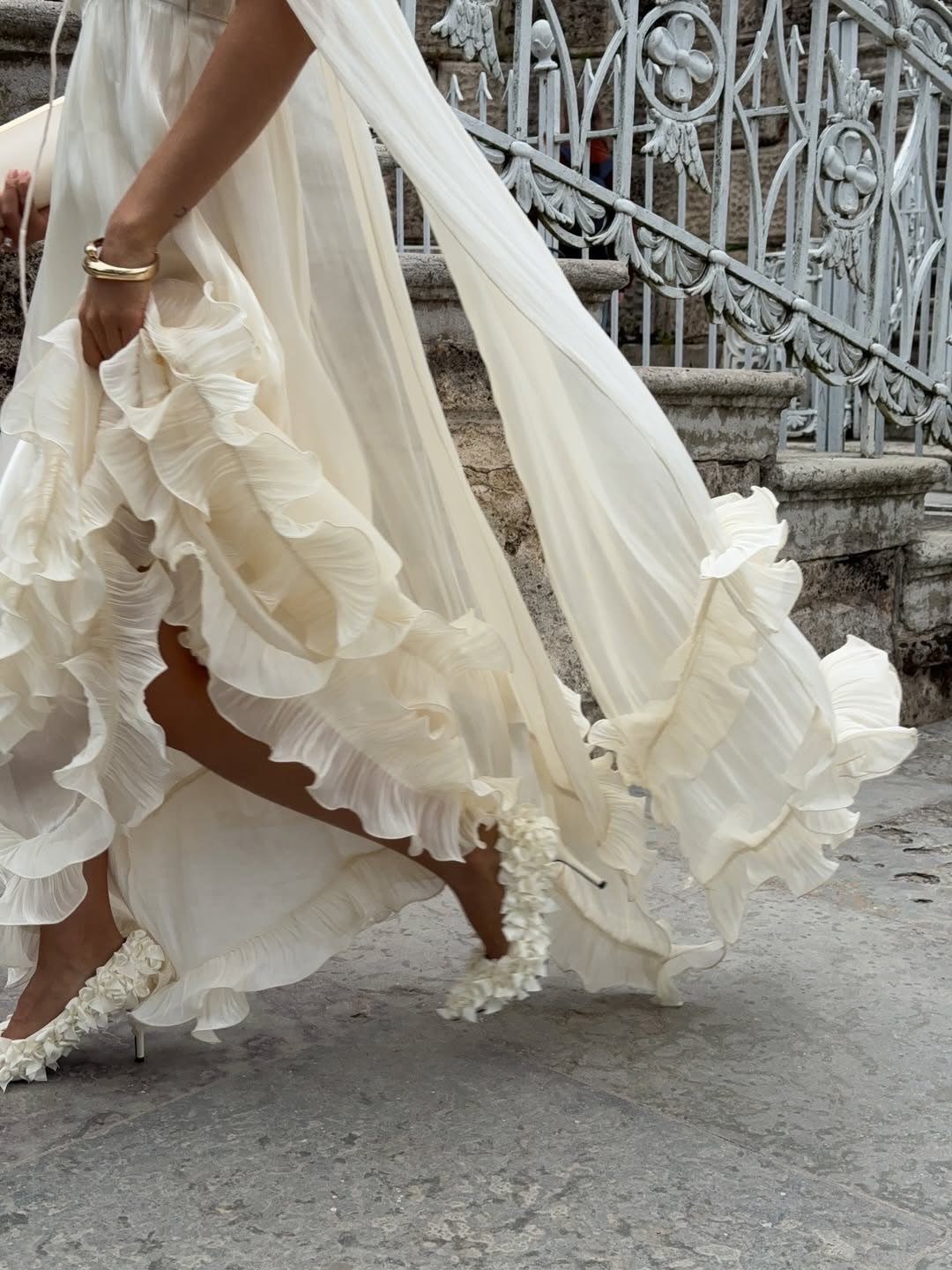
Ruffles give a cape movement that a smooth fabric can’t, because every tier catches air and shifts as you walk.
When the dress and cape both carry ruffles, the set reads as one deliberate look rather than a gown with an add-on.
Keep everything else quiet. With this much volume, I would pick simple jewelry and a sleek hairstyle so the texture stays the focus.
Try walking in the full outfit, including the cape, before you commit, since layered ruffles can feel heavier on the move than they look on a hanger.
8. Dramatic Cape Wedding Gown
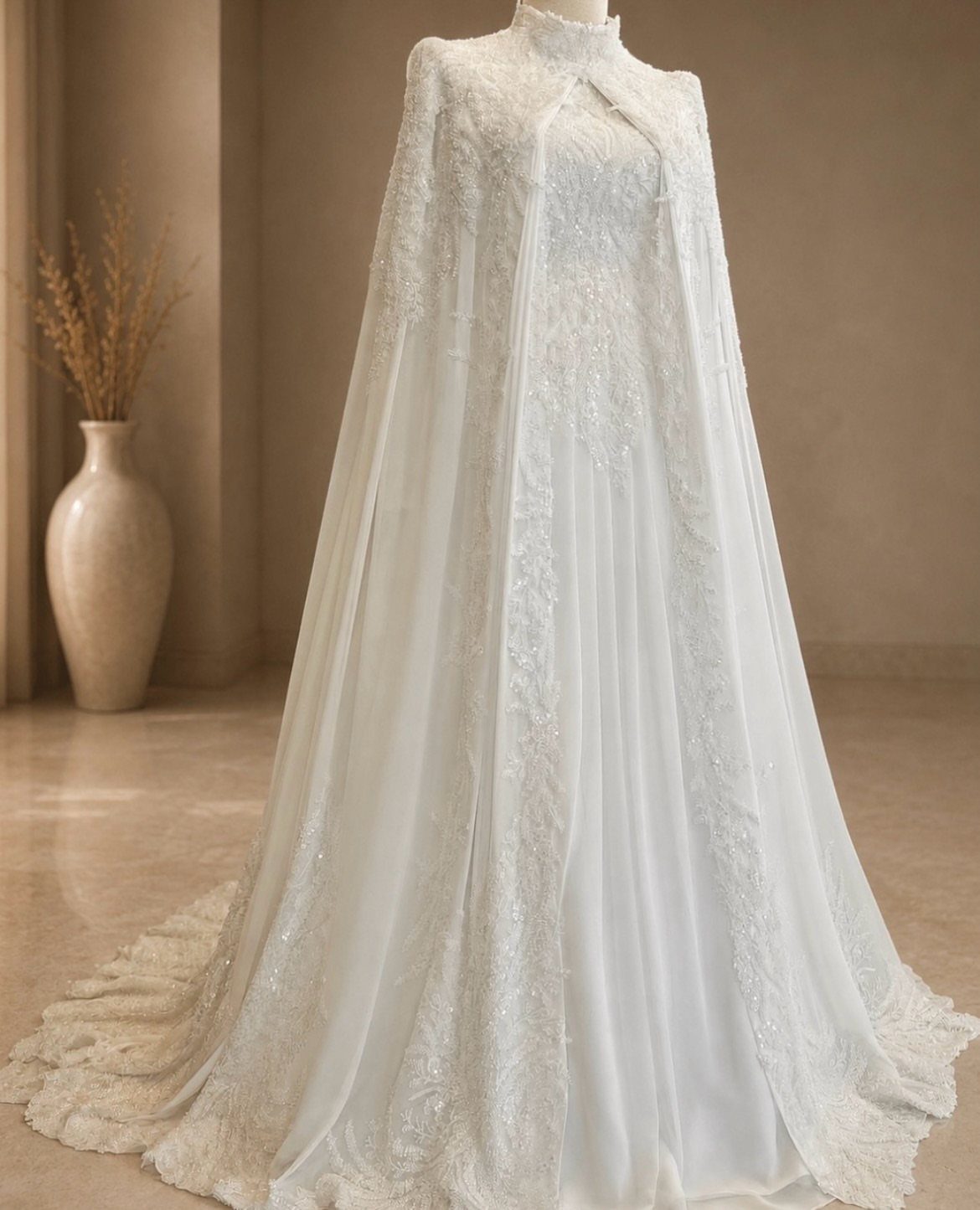
A floor-length lace cape over a beaded gown is the choice for a bride who wants the cape to be the statement.
The length gives you a trailing line behind you, and the lace keeps all that fabric from feeling stiff.
Because both layers carry detail, I would skip a heavy necklace and a long, ornate veil. Let the cape be the final word.
Ask whether the cape detaches. A gown that also works without it gives you a lighter option for the reception.
Choosing the Right Cape
Start with the formality of the day. Fabric and structure set the mood: a stiff, tailored cape gives a formal church or ballroom ceremony its regal weight, while a sheer, floaty one belongs at a boho garden wedding.
Pick the cape after the gown, so its shape follows the skirt and bodice instead of fighting them.
Fabric weight should agree between the layers.
Chiffon and tulle weigh almost nothing and move with the breeze, whereas satin or velvet hangs heavier and gives the look more body. Mixing a heavy cape with a featherweight dress tends to look mismatched.
Comfort decides the last call. You will wear this through the ceremony and the reception, so pick something light enough to move in.
If nothing off the rack fits your plan, a custom cape lets you set the fabric, length, and detailing yourself. I would ask about this early, since made-to-order pieces take time.
Bridal Cape Styles
A pearl beaded tulle cape with a delicate lace trim is a good in-between choice if all-over lace feels like too much.
Tulle gives a cape a clean, modern feel, lace or fur-style trim pushes it toward romantic, and a draped open back lets the gown’s buttons or lace show through.
Capes also work as a veil alternative. They add detail and a little drama without a second long piece of tulle trailing behind you.
Fabric options run from sheer silk and tulle at the light end to heavy lace at the other.
Some bridal studios will make any of their cape shapes in any of their fabrics, so choose the shape you love first and then the fabric.
That order gets you a cape that suits your dress rather than one you settle for.
Wearing a Bridal Cape
Attachment depends on the cape and the gown’s silhouette, so ask how a cape fastens before you fall for it.
Some pin directly to the straps of the dress.
Others tie or clasp around the neck with a bow or a clasp. Neck fastenings are easy to adjust, but check that they sit comfortably and don’t tug at your hair or necklace.
A cape or capelet with sleeves goes on and comes off the way a jacket does, so you can shed it quickly for the reception.
I like this style for anyone who wants to take the layer off between the ceremony and the dancing without help.
Whichever you pick, practice putting it on and taking it off in your fitting. Pinned styles especially should be secured by whoever will dress you that day.
Frequently Asked Questions
What is a dress with a cape called?
It is called a cape wedding dress. The cape attaches at the shoulders or neck and falls down the back, and a shorter version that stops at or just past the shoulders is a capelet.
A cape with sleeves, where the fabric drapes over the arms, is called a cape sleeve dress.
Are bridal capes in style?
Yes. Bridal capes have been one of the top wedding trends for the past few years, and they are a chic, high-fashion alternative to a veil.
They also add a quick second look, since many can be taken off after the ceremony.
Can you wear a bridal cape instead of a veil?
Yes, a cape gives you the same drama as a veil without covering your hairstyle. A cape gives you drama and a bit of swing as you walk, and you skip the extra yards of tulle dragging behind.
Pairing the two works best with a plain, single-layer veil, since a heavy one competes with the cape for attention.





