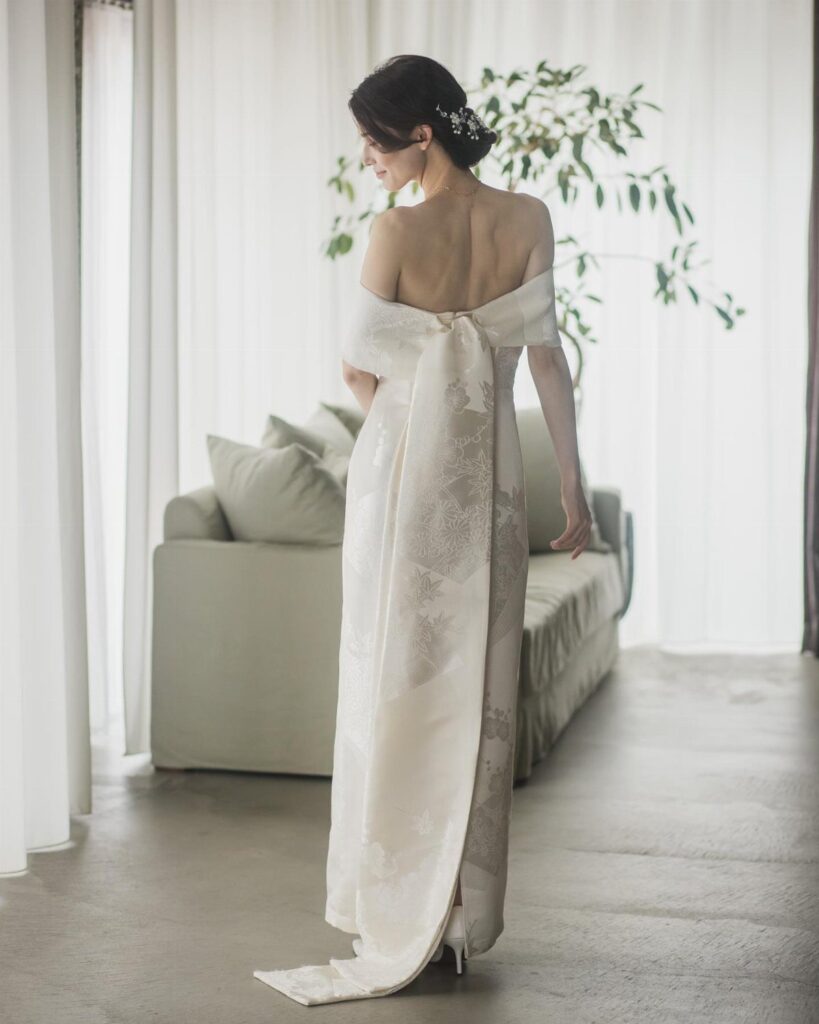
The list runs from a pure white shiromuku for the Shinto ceremony to a strapless navy gown with kimono fabric panels and an obi-style bow, so the real question is whether you are marrying in Japan or bringing Japanese tradition into a Western wedding.
In Japan, renting a full kimono set is the practical route; anywhere else, a seamstress can work kimono fabric into a gown you already love.
Color tells you the job each piece does: white shiromuku for the ceremony, bold iro-uchikake for what follows, and a kimono fabric fusion gown for couples who want both cultures in one outfit.
1. Shiromuku
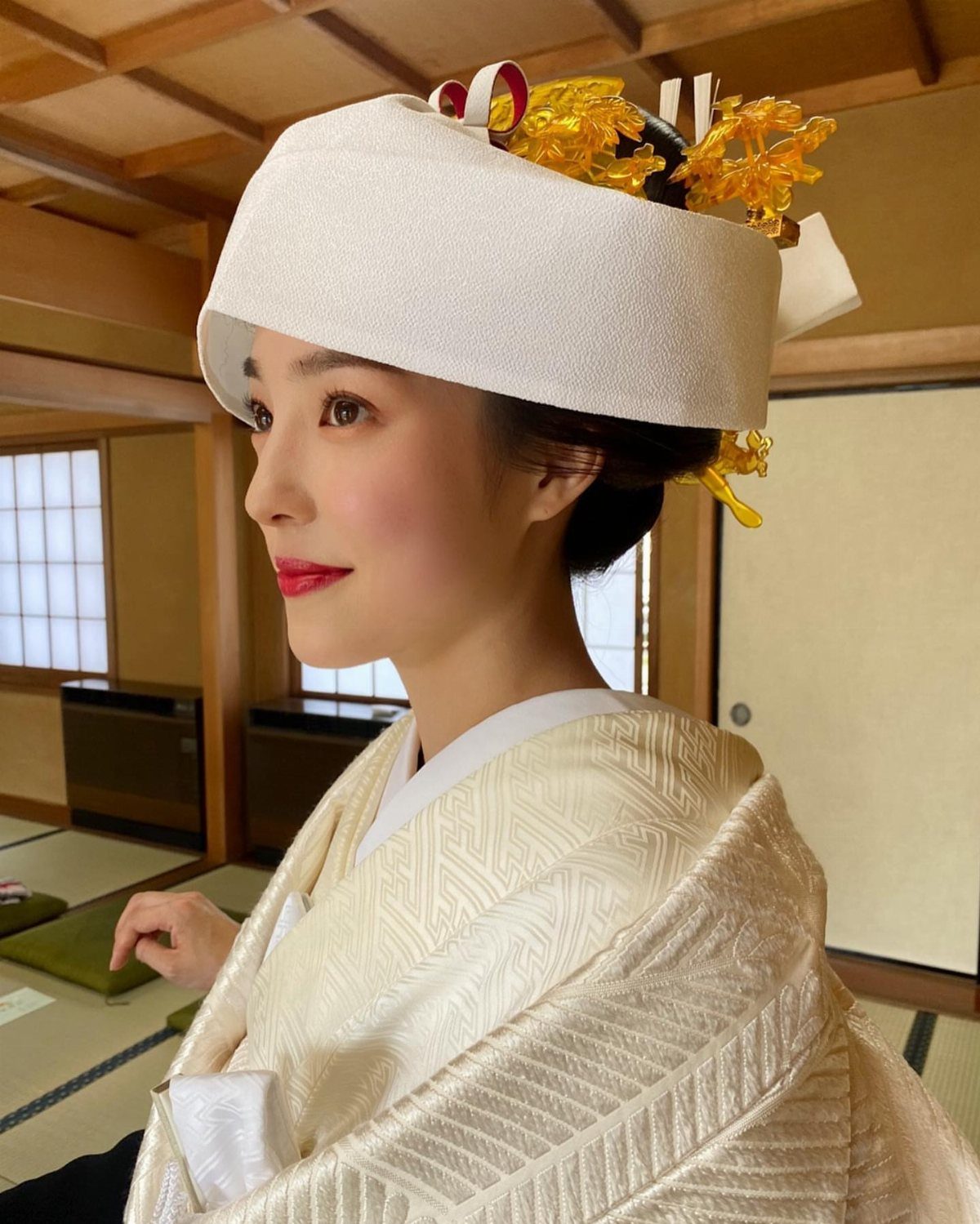
Pure white is the whole statement of a shiromuku: the kimono, the layers and the headpiece all stay in one color for the Shinto ceremony. That makes it a quiet choice, and I think the quiet is the appeal.
If you are marrying in Japan and want the ceremony look people picture first, this is the one to book.
Ask the shop what the rental includes, since a full set means more than the kimono alone, and get the price of each piece in writing before you sign anything.
Shinto weddings are in decline as fewer Japanese people get married, with those who do often choosing Western-style, white wedding ceremonies.
2. Iro-Uchikake
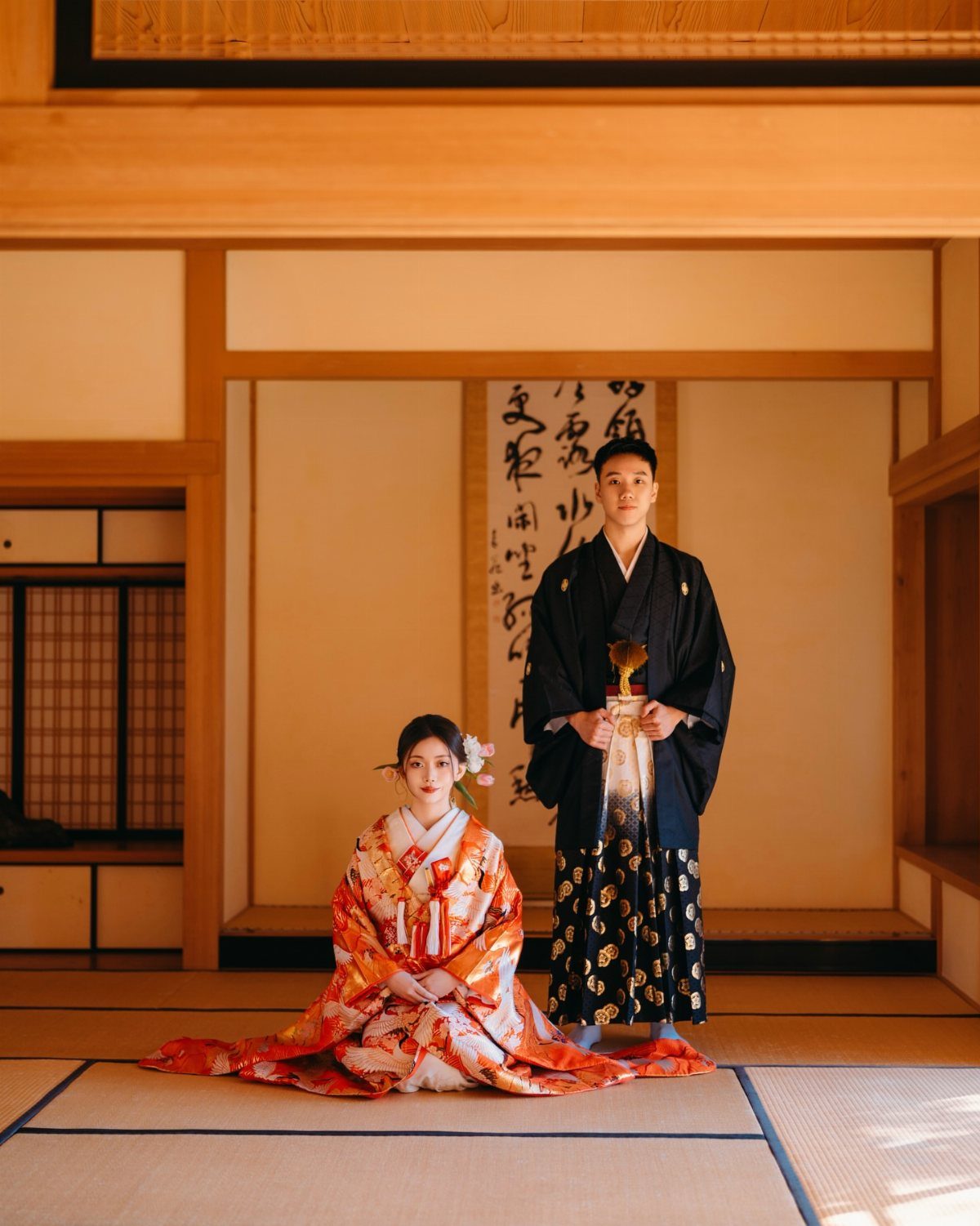
Red and gold embroidery covers an iro-uchikake, and that color is what separates it from the white ceremony kimono. It is an outer robe, so it suits the reception, where you want something to stand out in photos.
I would plan it as a second outfit, not a replacement. Wearing white for the ceremony and color afterward gives you 2 distinct looks, but a second rental adds to the bill, so price it against your budget early.
3. Shinto Ceremony Sake Exchange
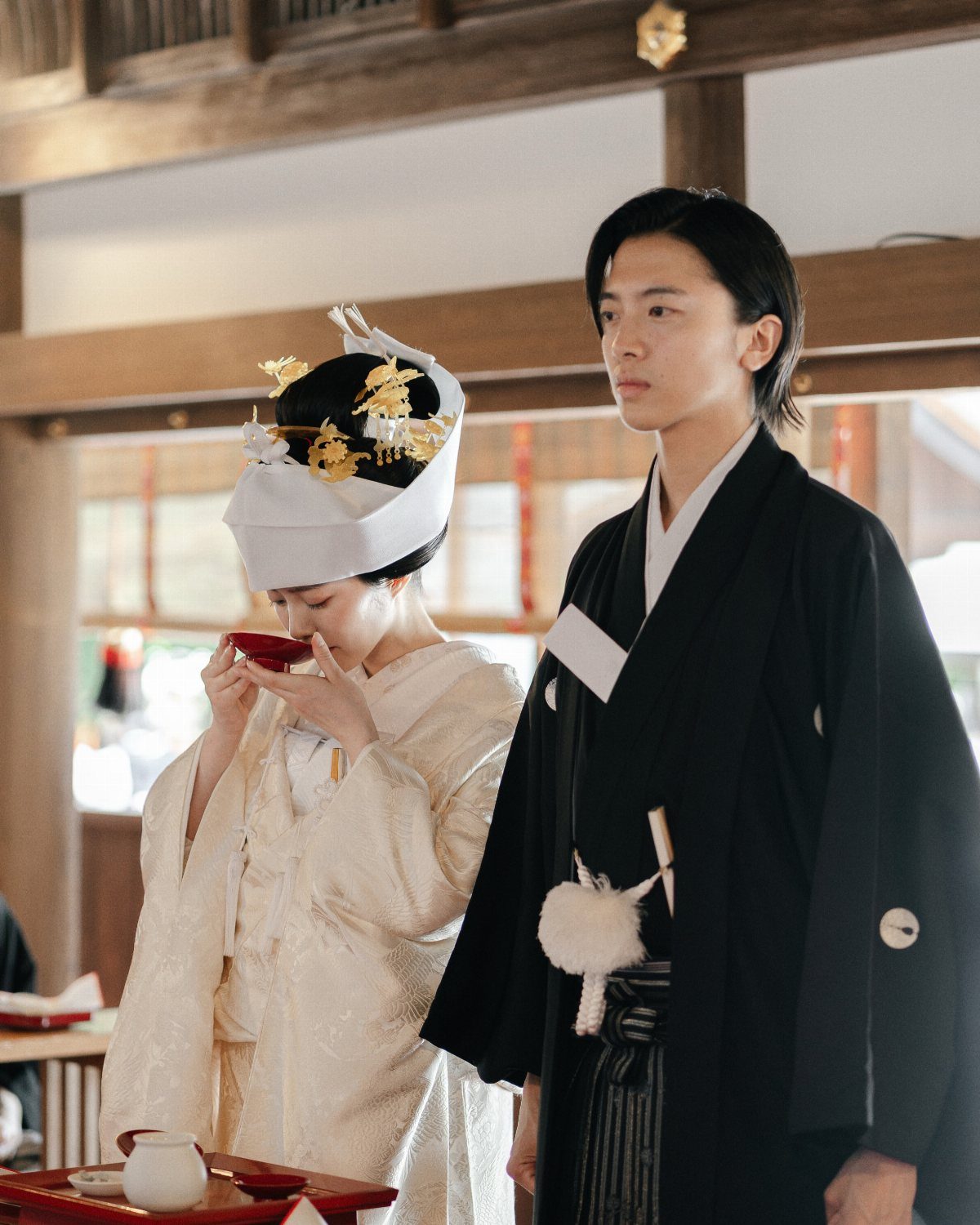
Sake sharing is a ritual inside the Shinto ceremony, and the small red cup is the object to notice. The bride drinks from it, and the couple takes part in a few set rituals together.
Treat it as something to rehearse in your head, not a thing to wear. Ask the officiant or venue to walk you through the order beforehand, so you are not guessing at the cup or the pace on the day.
4. Wataboshi and Tsunokakushi Headpieces
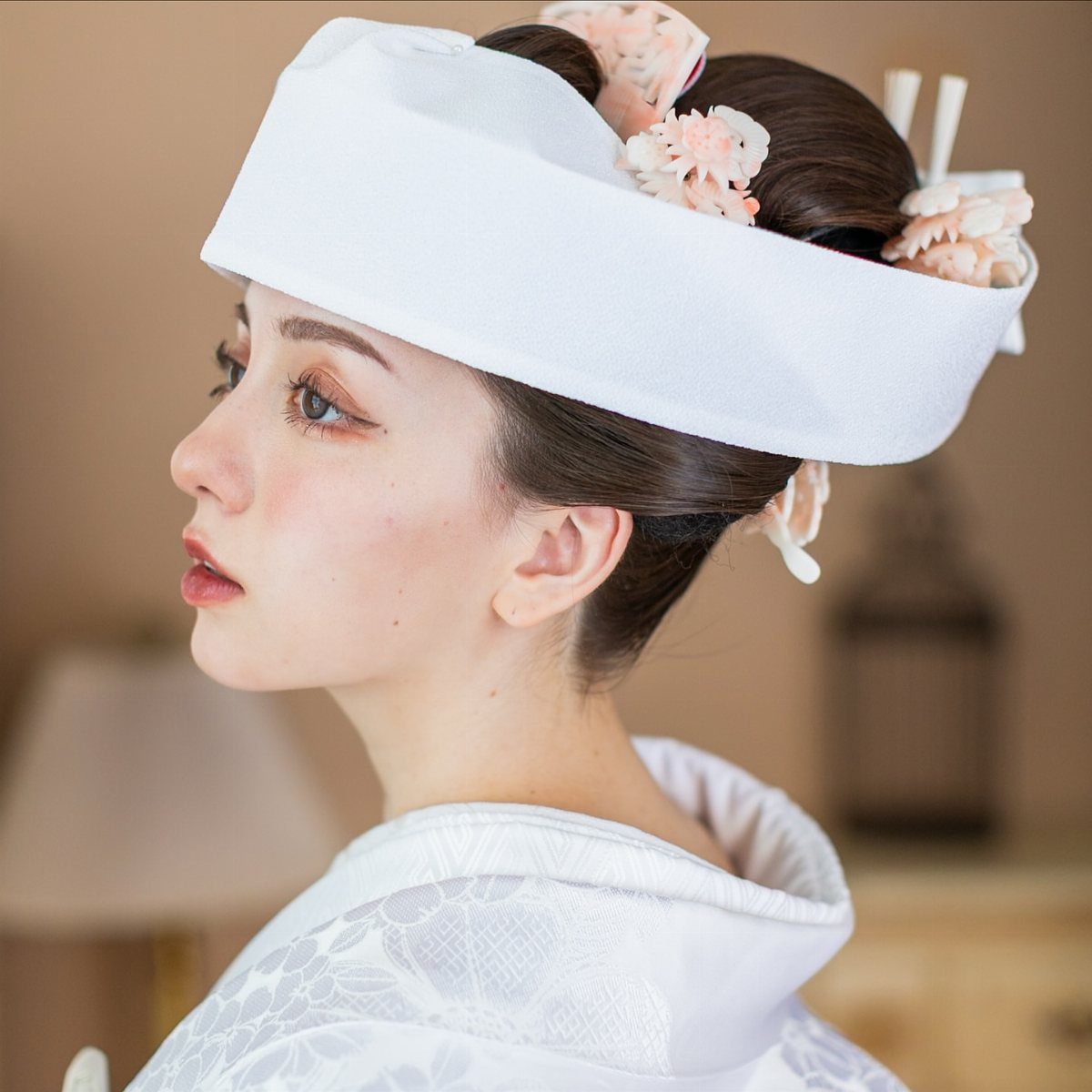
Headpieces do a lot of work in a traditional bridal look. A tsunokakushi is a white piece worn with the white kimono, and floral hair ornaments can sit alongside it.
Choose the headpiece after the kimono, not before, so the whites match. I would try it on with the hairstyle planned for the day, because the hair and the piece have to work as one shape.
5. Traditional Garments
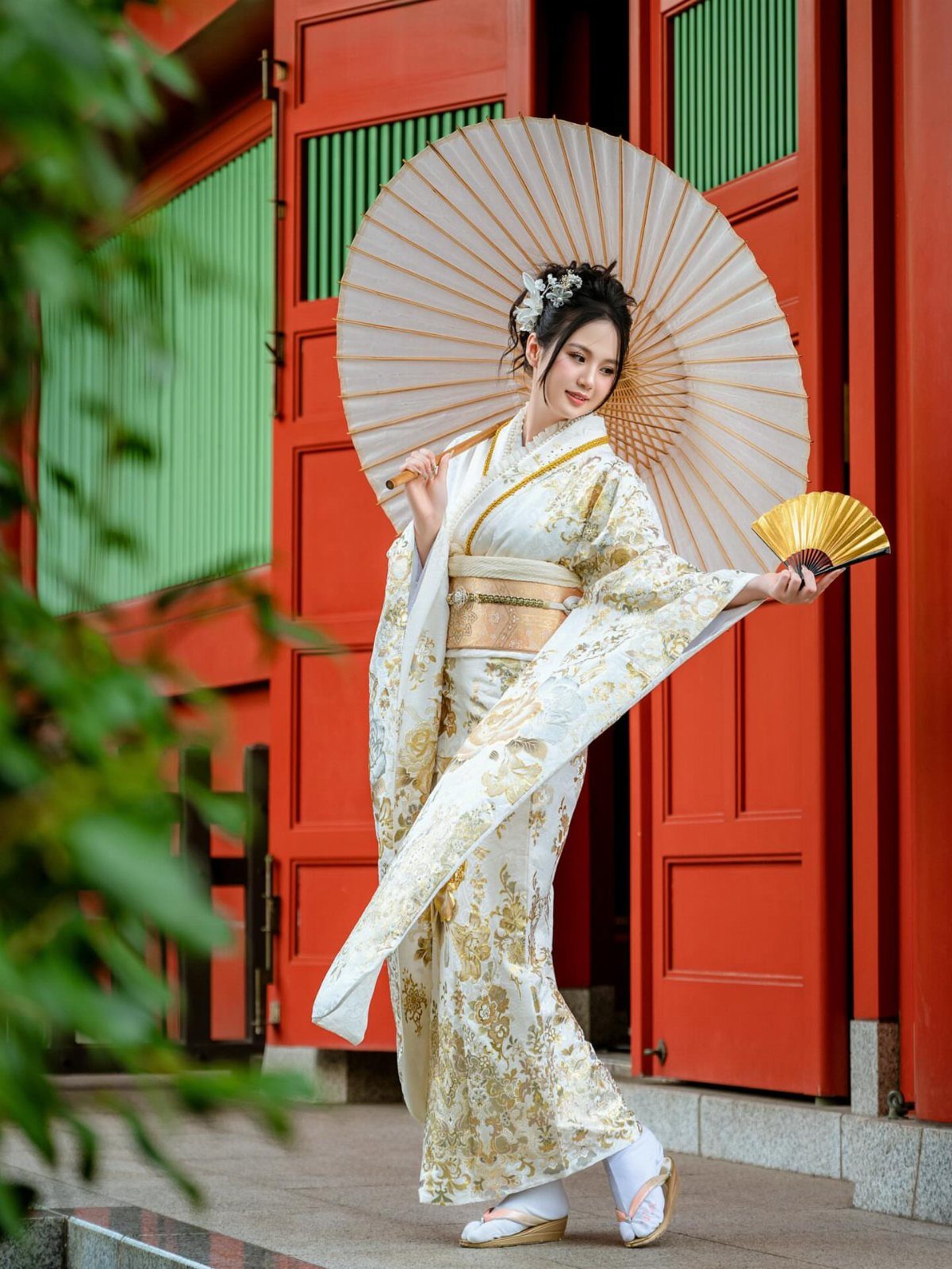
Accessories such as a parasol and fan finish the look.
For portraits, ask whether the rental covers props, since they change the photos more than you would expect. Gold on white reads warmer than plain white, which is the version I would pick for outdoor shots.
6. Kimono Fabric Fusion Wedding Gown
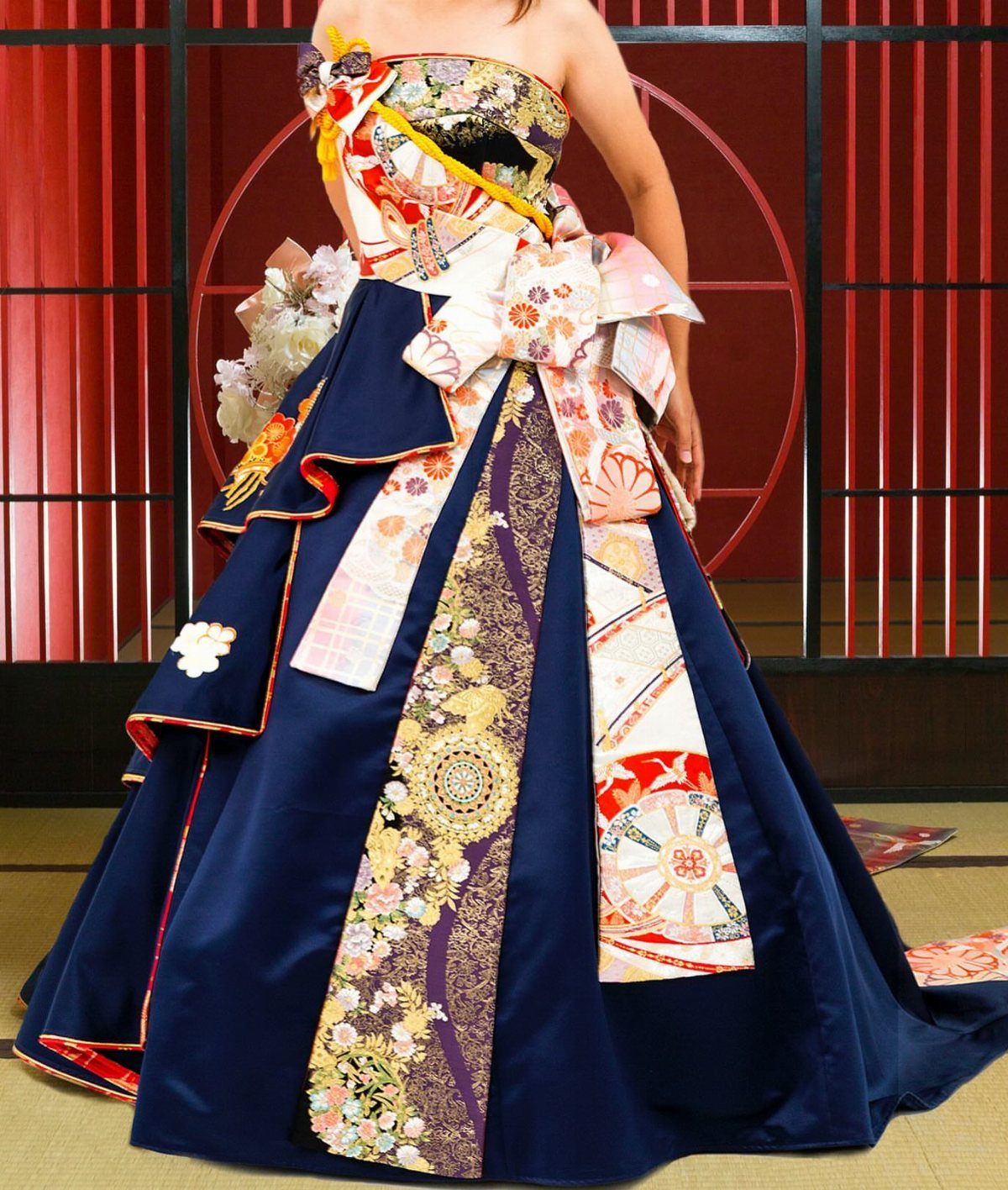
A strapless navy gown with kimono fabric panels and an obi-style bow keeps the Western silhouette and borrows the Japanese textile. That makes it the easiest bridge for a couple who want both cultures on the day.
Have a seamstress build the panels into the bodice or skirt, and let the floral patterns sit where the eye lands. It costs more than off-the-rack, since it is tailored work, so settle the fabric before the fittings begin.
Frequently Asked Questions
What is the dress code for guests at a Japanese wedding?
Formal.
Avoid exposing shoulders, and carry a shawl if your outfit leaves them bare. The dress code reflects Japanese modesty and respect for the ceremony.
What is a Japanese wedding gown called?
The classic ceremony garment is the shiromuku, a pure white kimono worn with white layers and a white headpiece for a Shinto ceremony.
At the reception, many brides switch into an iro-uchikake, a colored outer robe heavy with red and gold embroidery.
Do Japanese brides have to wear a kimono?
No.
Bride has to wear a kimono, and plenty of brides in Japan choose a Western-style gown instead. A common compromise is a kimono for the ceremony and a Western gown for the reception.





