Couture covers a wide range here, from an embroidered or sequined veil, which is the cheapest way to get handwork into your look, to a gown built on your own measurements, with the pattern and inner structure made for you before any fabric is cut.
With a close date, a lace cape or an embroidered veil is where I would start, since both go over a dress you already own.
1. Soft Romantic Couture Wedding Dress
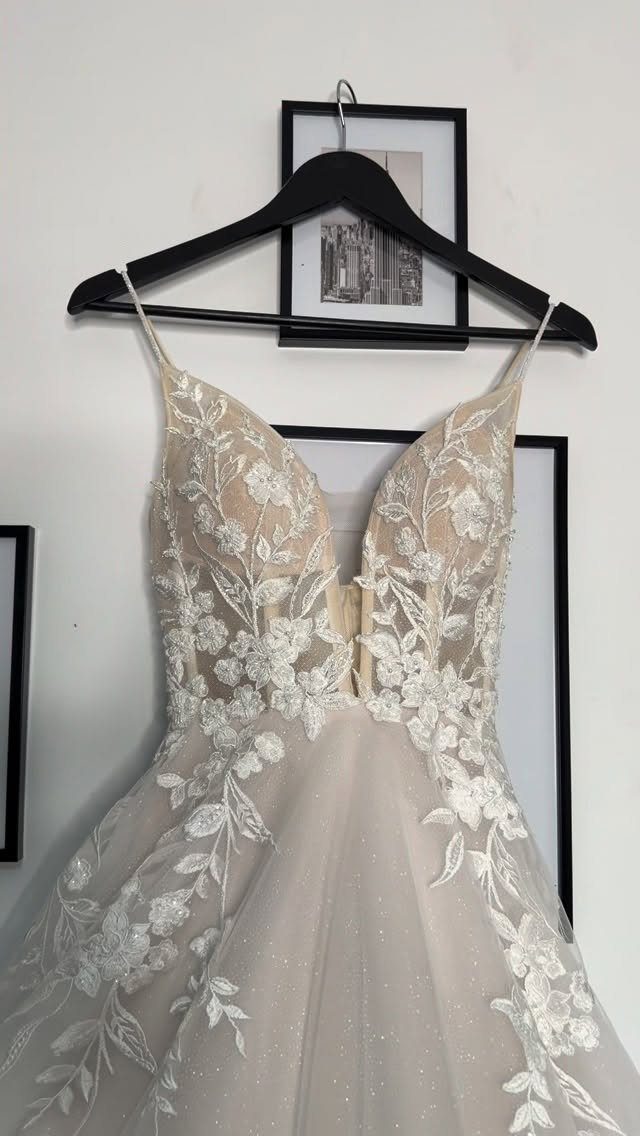
A champagne tone under white floral lace appliqués softens a gown more than pure white does, and a plunging neckline keeps the lace from feeling sweet or fussy.
Look at the dress in daylight before you commit. Champagne can read as white in a salon and as beige in a garden, and that shift changes how it sits against your skin.
I would choose this over a heavily beaded gown if you want romance without weight.
2. Private Couture Consultations
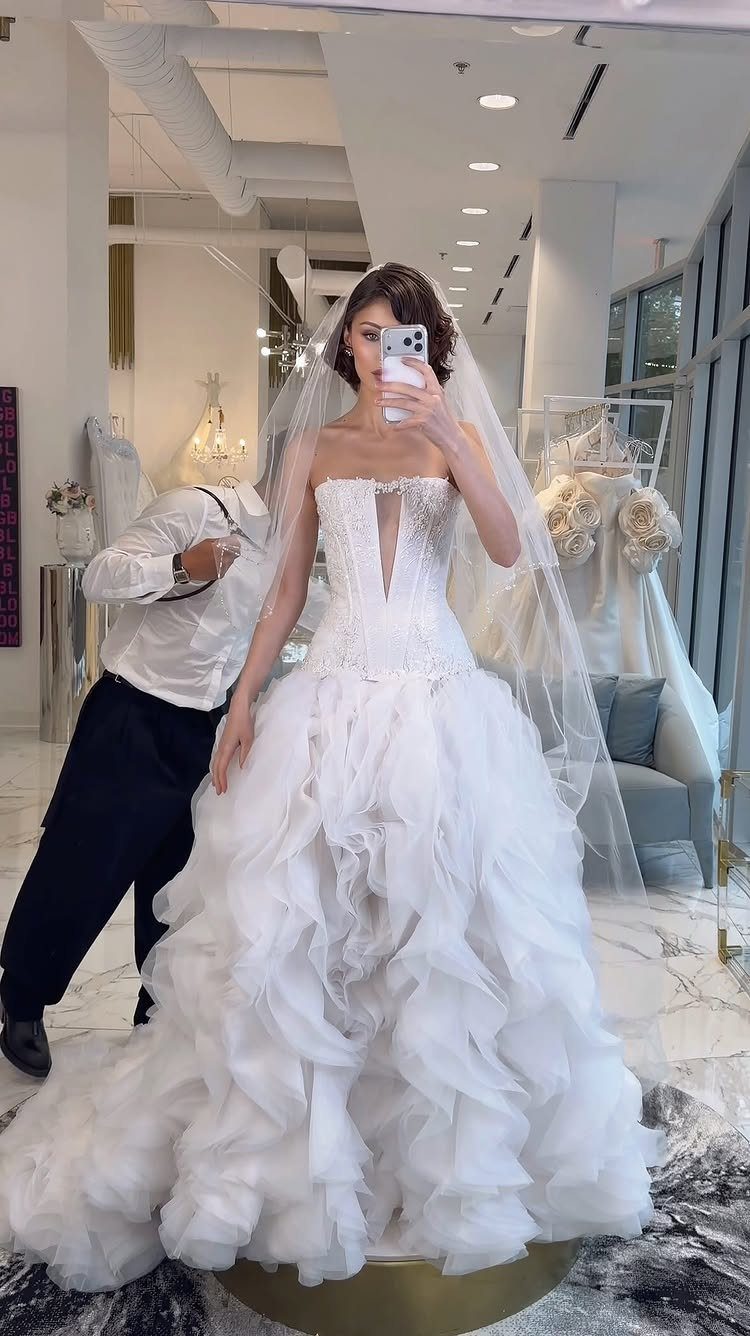
A private appointment puts one fitter on your gown and no one else on the floor. For a ruffled couture dress, where the shape depends on how the layers fall, that attention is the whole advantage.
Bring the veil or shoes you plan to wear so the tailor can judge the full look. Ask what a fitting costs and how many you get before you book, because couture pricing is rarely simple.
The trade-off is time: custom work needs a long runway, so start early.
3. Bridal Fashion Week Couture Designs
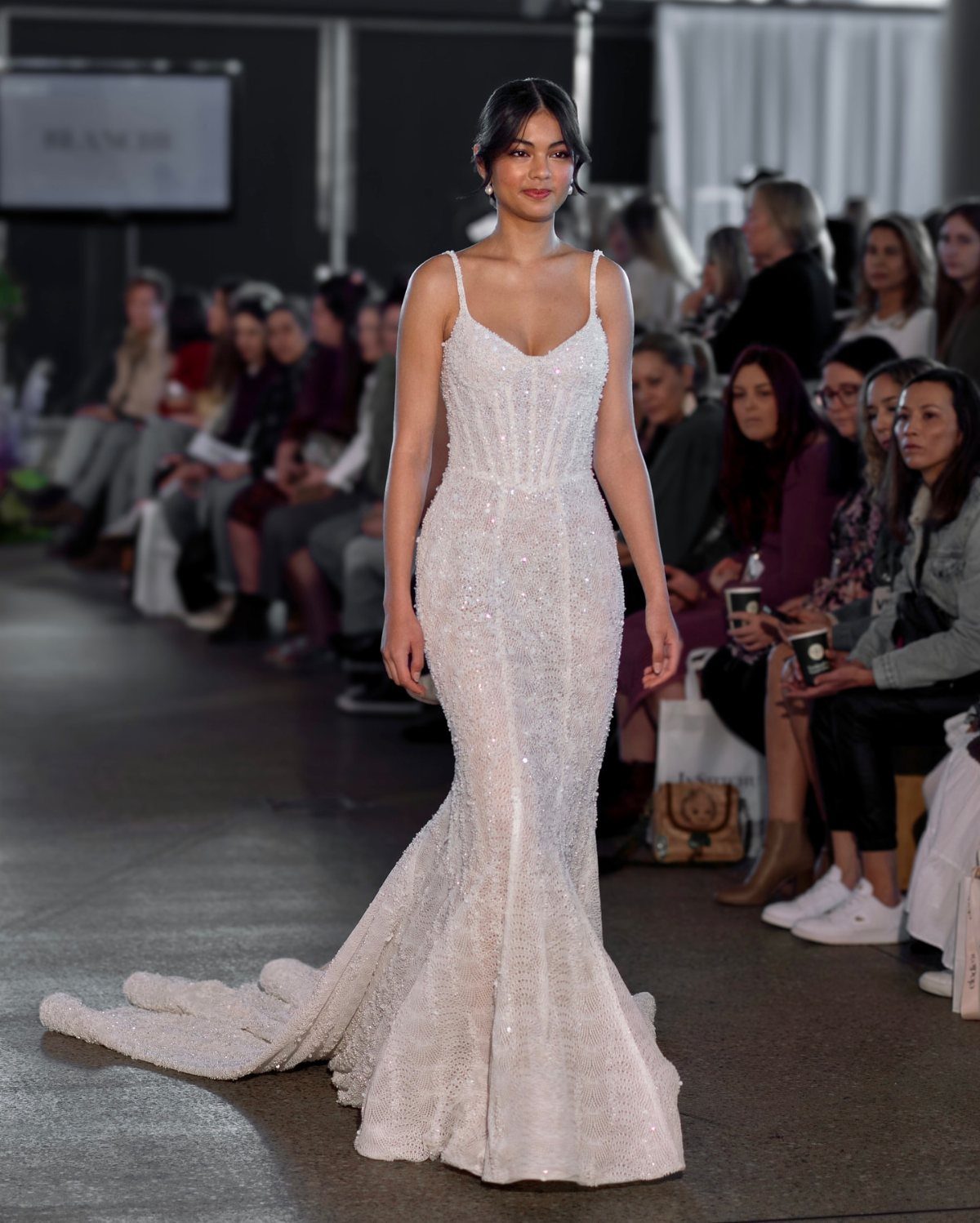
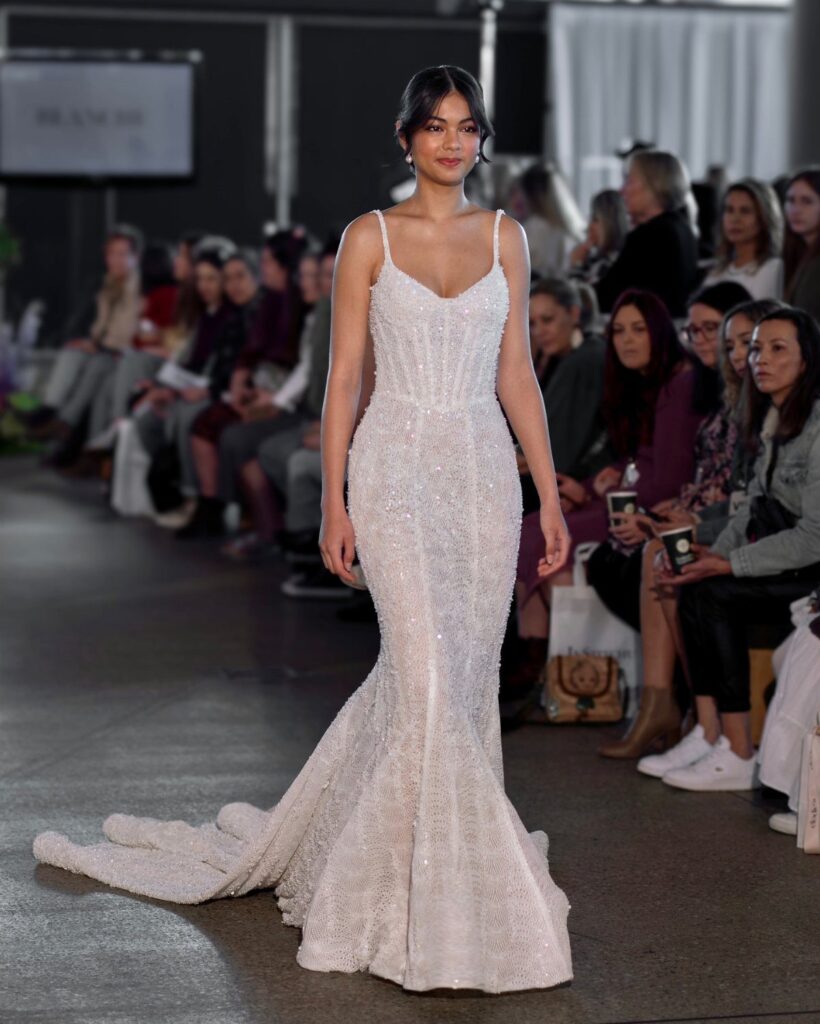
Runway bridal shows are where a sequined, beaded gown moves the way it will on you, and that is worth watching before you buy.
Use a show as research, not a shopping list.
Notice how the beading catches light in motion and whether it looks heavy at the hem. Save two or three silhouettes you keep returning to, then bring those to a salon.
Runway pieces are made for drama, so expect a few details to be toned down for a real aisle.
4. Structured Architectural Couture Wedding Dress
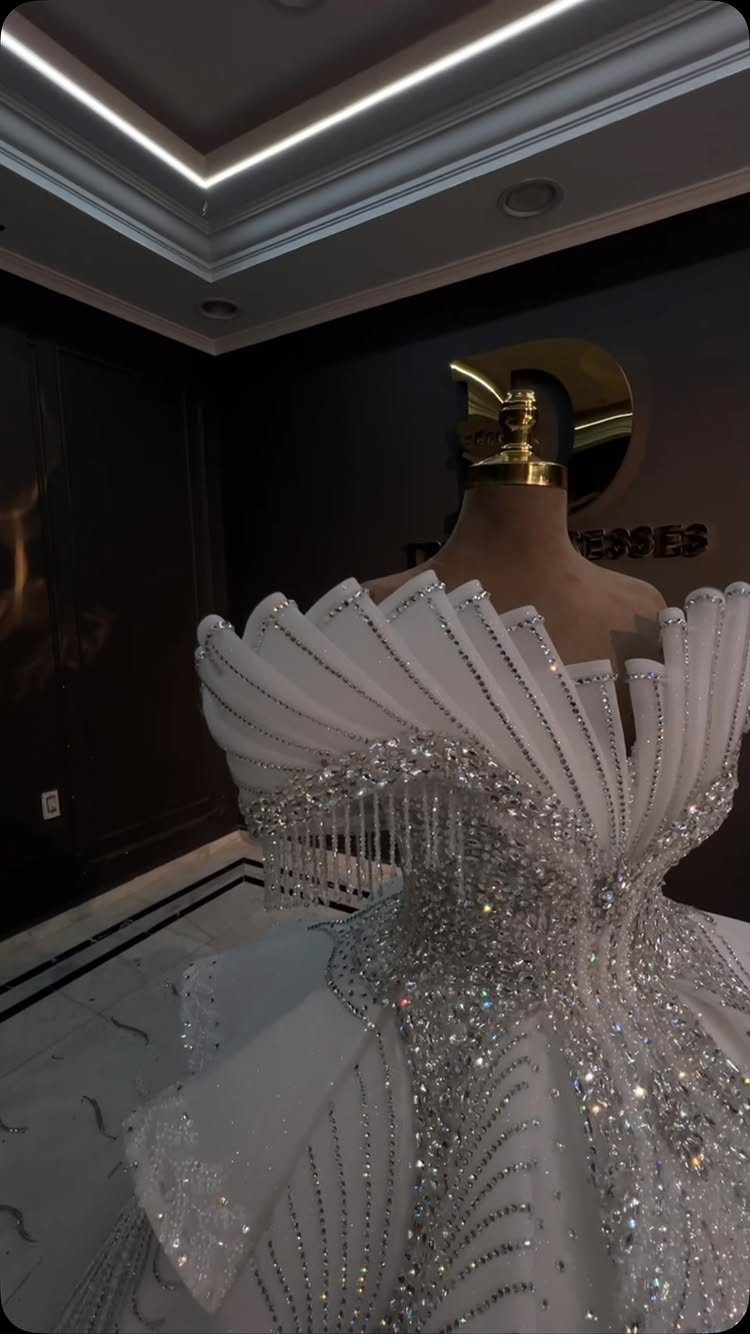
Pleats cut in sharp, deliberate lines turn a gown into something closer to sculpture, and silver beadwork across the surface adds light without adding softness.
This suits a bride who wants a statement more than a flowing dress. I would keep the rest of the look quiet: simple jewelry, a plain veil or none at all.
Structure needs a fitter who can shape it to your body, so budget for alterations on a dress like this and expect them to be careful, slow work.
5. Couture Bridal Accessories Veils
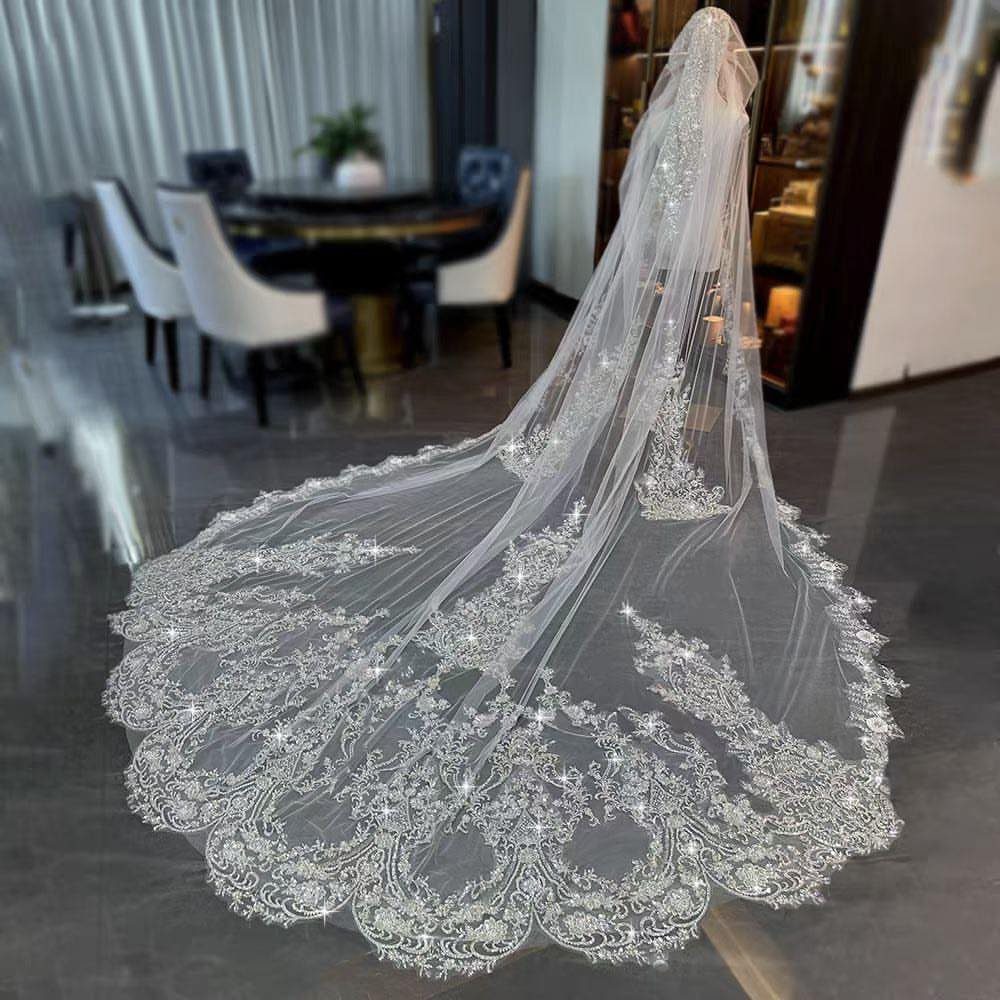
A long veil with lace embroidery or sequins carries real weight and visual detail, so plan it as a second garment: pick it with the dress, check that the two don’t compete, and budget for it separately.
Try it on over your actual gown.
If the dress is already beaded, a veil this ornate can compete with it; against a plainer bodice, it carries the look. Hold the lace edge up to the light to see how the sequins catch.
Cheaper than a gown, a veil is where I would spend if I wanted couture detail on a tighter budget.
6. 3D Floral Embellished Bodice
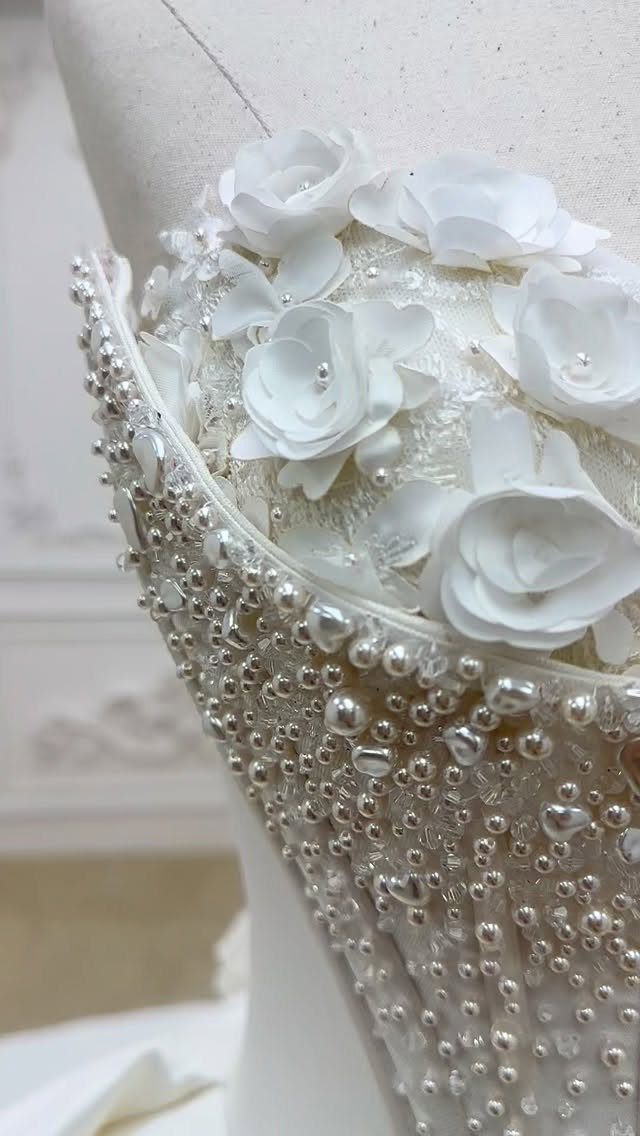
Fabric roses lifted off the surface, set with pearls and silver beadwork, give a bodice real depth, and no flat embroidery matches it.
The detail sits right at the center of attention, so the skirt can stay simple. I would pair it with clean lines below the waist and let the bodice do the talking.
Dimensional work takes hours by hand, which is why it costs more. Ask how the roses are attached and whether they snag, then check the bodice for comfort when you sit.
7. Embroidered Lace Button Back
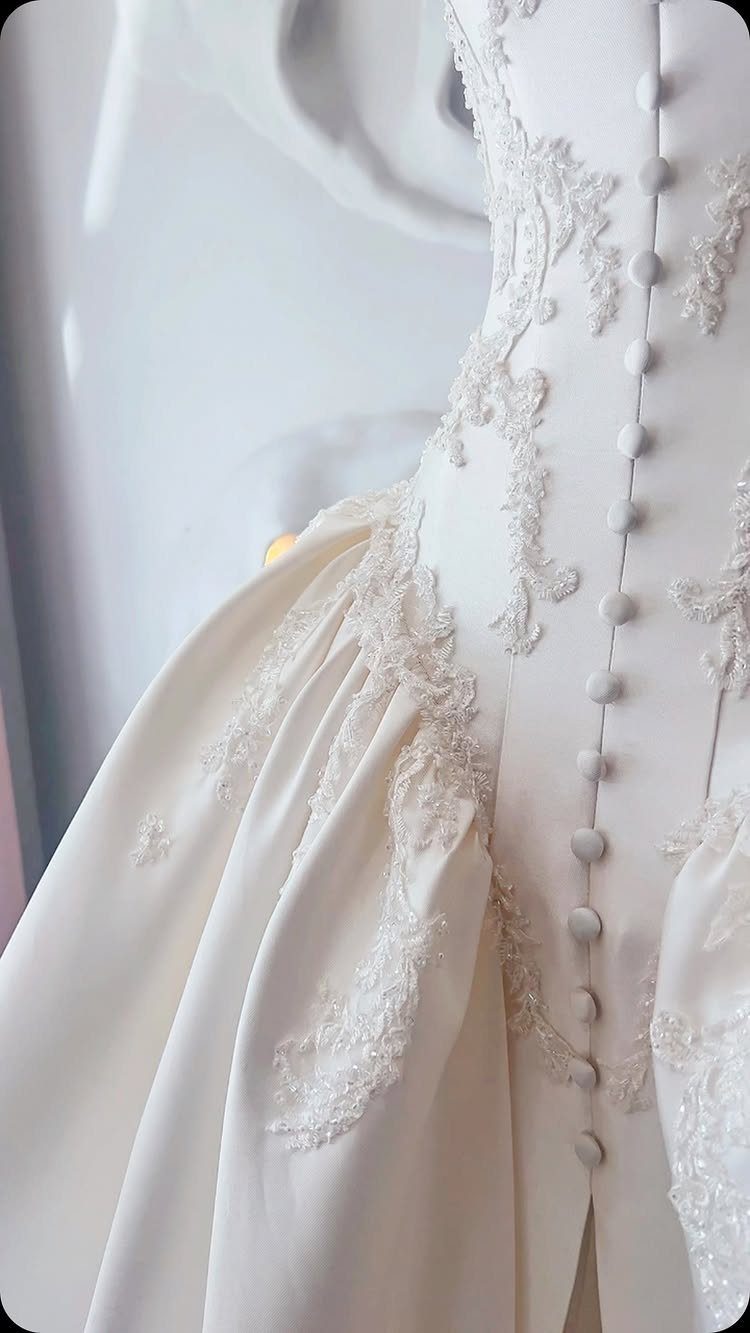
A row of fabric-covered buttons down a lace-embroidered back finishes a gown from the side guests see during the ceremony, so the back deserves as much thought as the front.
Ask how many buttons there are and how they close. Tiny loops take patience, so allow extra time on the wedding morning and pick someone with steady hands to do them up.
I would choose this over a zipper if the back is your favorite angle, but have the fitter check that the buttons lie flat under the lace.
8. Lace Gown with Matching Cape
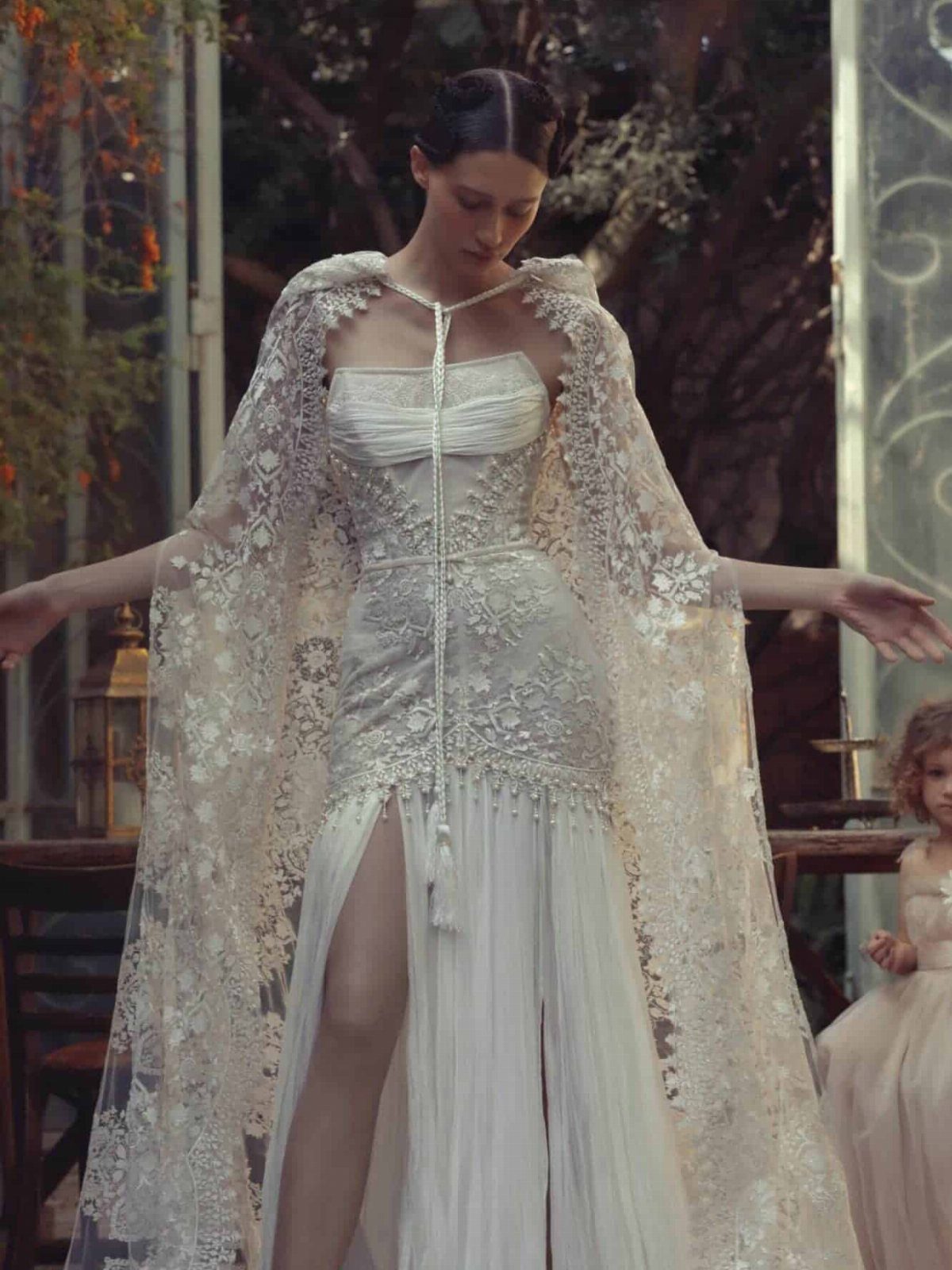
Over a lace gown, a full-length matching cape adds drama without a second silhouette, since the lace repeats instead of competing.
Try the cape on with the dress, then walk and sit in it. Check whether it stays on your shoulders, and ask if it can be removed so the gown shows for the reception.
A cape is a good option if you want sleeves or coverage without committing to them. Treat it as a separate line item, and choose understated jewelry so the lace stays the focus.
9. Off-the-Shoulder Long Sleeve Ballgown
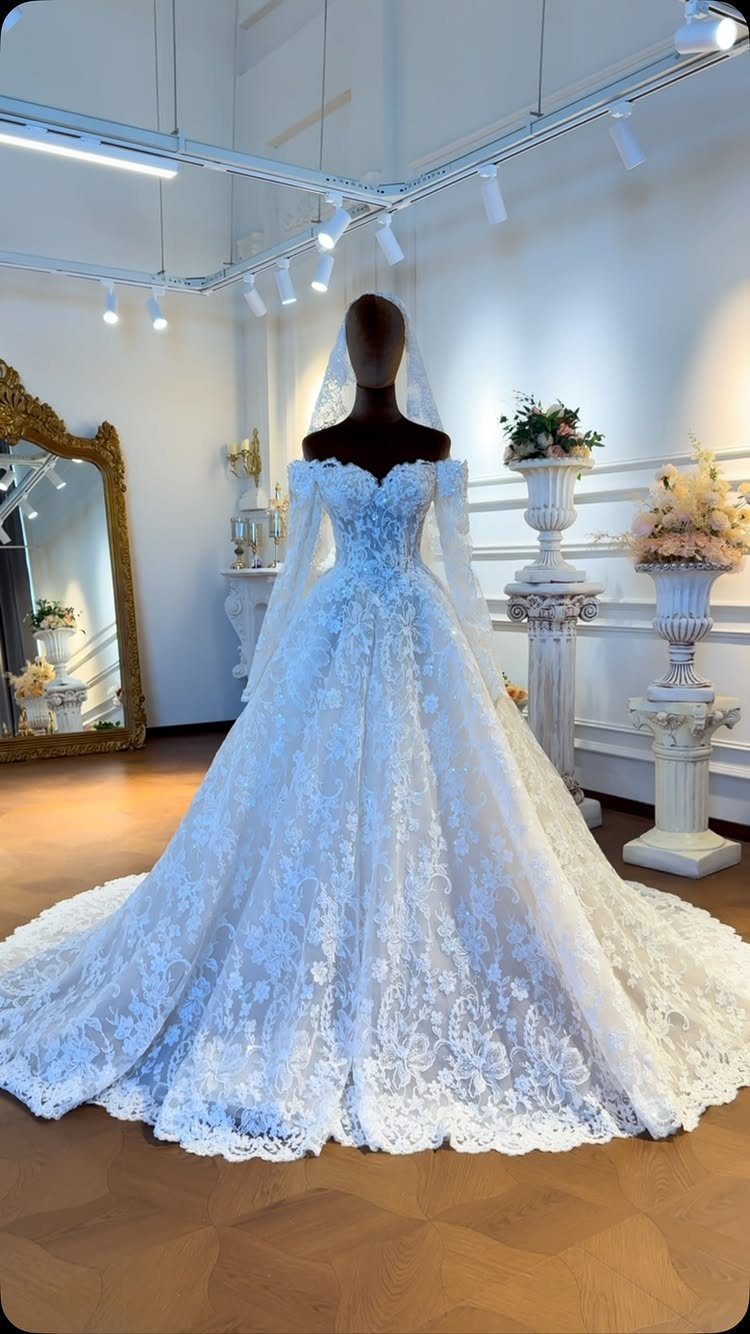
Lace sleeves with an off-the-shoulder neckline give a full ballgown a more grown-up shape, with the skirt carrying the volume and the neckline keeping the top clean.
Raise your arms, hug someone, and reach forward in the fitting, since off-the-shoulder sleeves can pull tight once you move.
Long sleeves that sit off the shoulder can pull when you lift them to hug guests, so raise them, reach forward, and ask for adjustments if the lace tugs.
I would pick this for a formal ceremony where a big skirt fits the room. Plan alterations for the sleeve length and neckline fit.
10. Cathedral-Length Embroidered Train
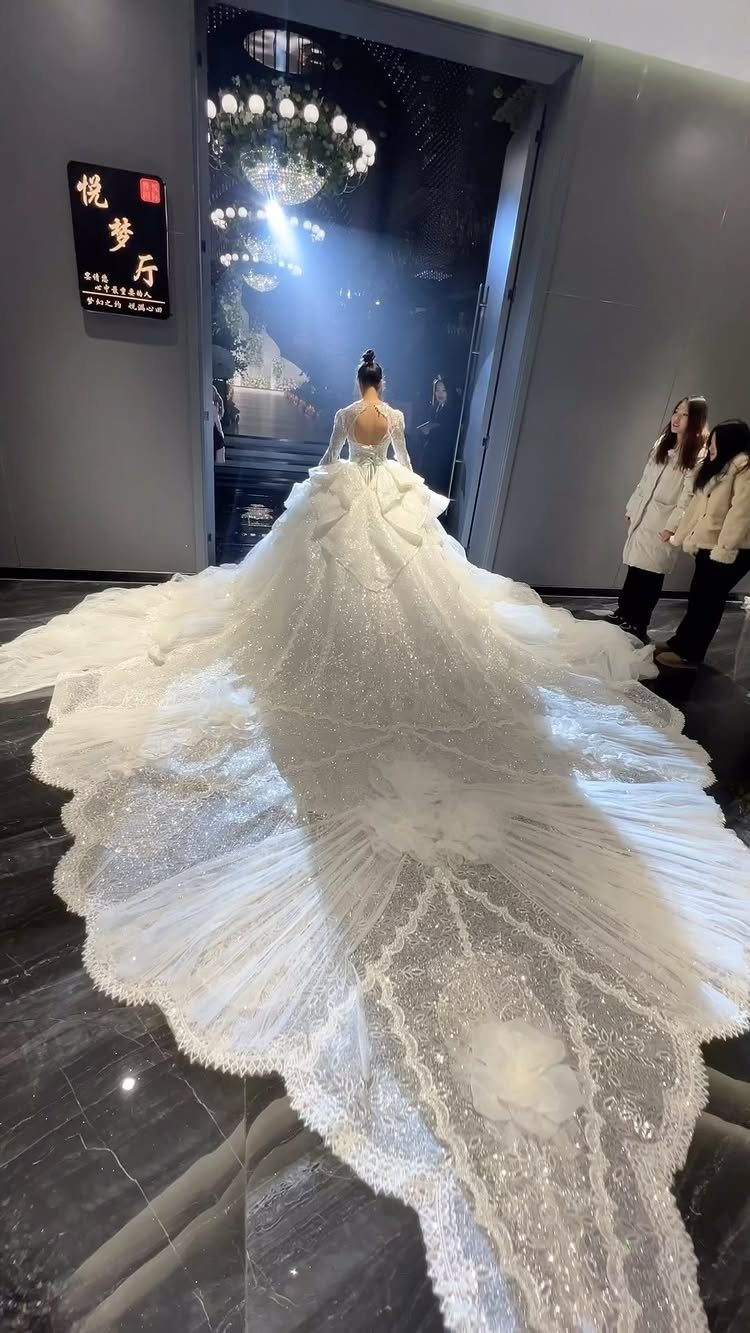
An embroidered train this long is a decision about space as much as style, because the length only works if the aisle and the room can hold it.
Find out how wide and long the aisle is, then rehearse walking with the train a few times in the weeks ahead. Find out whether it can be bustled for the reception, and who will be responsible for arranging it.
If the embroidery shimmers, I would keep the veil simple so the back of the gown gets the attention. Expect it to cost more than a plain train, since the embroidery covers a lot of fabric.
Why Brides Choose Couture
Couture is built around one person, and that is what you are paying for.
Off-the-rack designer gowns start as a sample size, usually a 6 or 8 in the US, and get taken in or let out afterward, so the corset, boning and seam lines inside were built for someone else’s frame.
Couture works the other way around: the pattern comes from your own measurements, and the structure inside is cut and built around them before any fabric is sewn.
Ask a salon whether the dress is made to your measurements or altered from a standard size. The answer explains most of the price gap.
Detachable pieces are worth asking about too. A removable overskirt or sleeves can give you two looks without a second dress, which helps when the budget has one gown in it.
I would choose couture if you want a dress that feels like fashion, not just a pretty white gown. If you only want a classic shape, a well-altered designer dress can look excellent for less.
Couture Gown Fitting Process
Expect several appointments, not one. Each fitting refines the structure and comfort of the gown, so ask up front how many are included and what extra visits cost.
Book the first one early and put the later ones on your calendar before you leave the salon. Fitters need time between visits to make changes, and a wedding date will not move for them.
Wear the shoes and undergarments you plan to wear on the day.
Sit, eat a snack, and dance a few steps in the dress. A gown should be comfortable all day, not just standing still in a mirror.
Tell the fitter plainly what feels tight or itchy. Fixing it at fitting 2 is far easier than at fitting 4.
Couture Gown Materials
4 fabrics come up again and again in couture: silk mikado, French lace, hand-embroidered tulle, and organza. Each behaves differently, so ask to touch swatches before you fall for a photo.
Silk mikado is the structured one, with body that holds a clean shape.
Organza is lighter and crisper. Tulle gives soft, layered depth, and French lace brings fine texture.
Watch how each fabric moves and reflects light. Take the swatch to a window, then under indoor lighting, since the same silk can look quite different in both.
I would put the money into fabric before extra trim. Quality material is hard to fake, and it shapes how the whole dress falls.
Frequently Asked Questions
What are couture wedding dresses?
A true couture gown starts with a pattern drafted from your own measurements, and the inner structure is shaped to your body before anyone cuts the fashion fabric.
They typically use hand-applied embellishment, superior fabrics and several fittings. A designer gown off the rack begins as a sample size, then gets taken in or let out to approximate your shape.
What is the process for custom couture gowns?
Working with an atelier means picking the fabrics, neckline, sleeves and beading yourself, while the team measures you so the whole gown is built to your proportions.
Plan on 3 or more fittings rather than a single visit, since each one fine-tunes the fit, the internal structure and how comfortable you are moving in it.





