Venue and season shape the choice more than silhouette does, and the Venue Considerations section below goes through how a beach, a church or a winter ballroom changes what works.
The ideas run from classic gowns with trains and lace to a sparkling ballgown or a long-sleeved lace mermaid, where fit decides everything, with budget-friendly options in the mix too.
Give yourself 6–8 months before the date to buy; fittings and alterations run on the seamstress’s schedule, and rushing them costs extra.
1. Classic Gowns with Trains and Lace
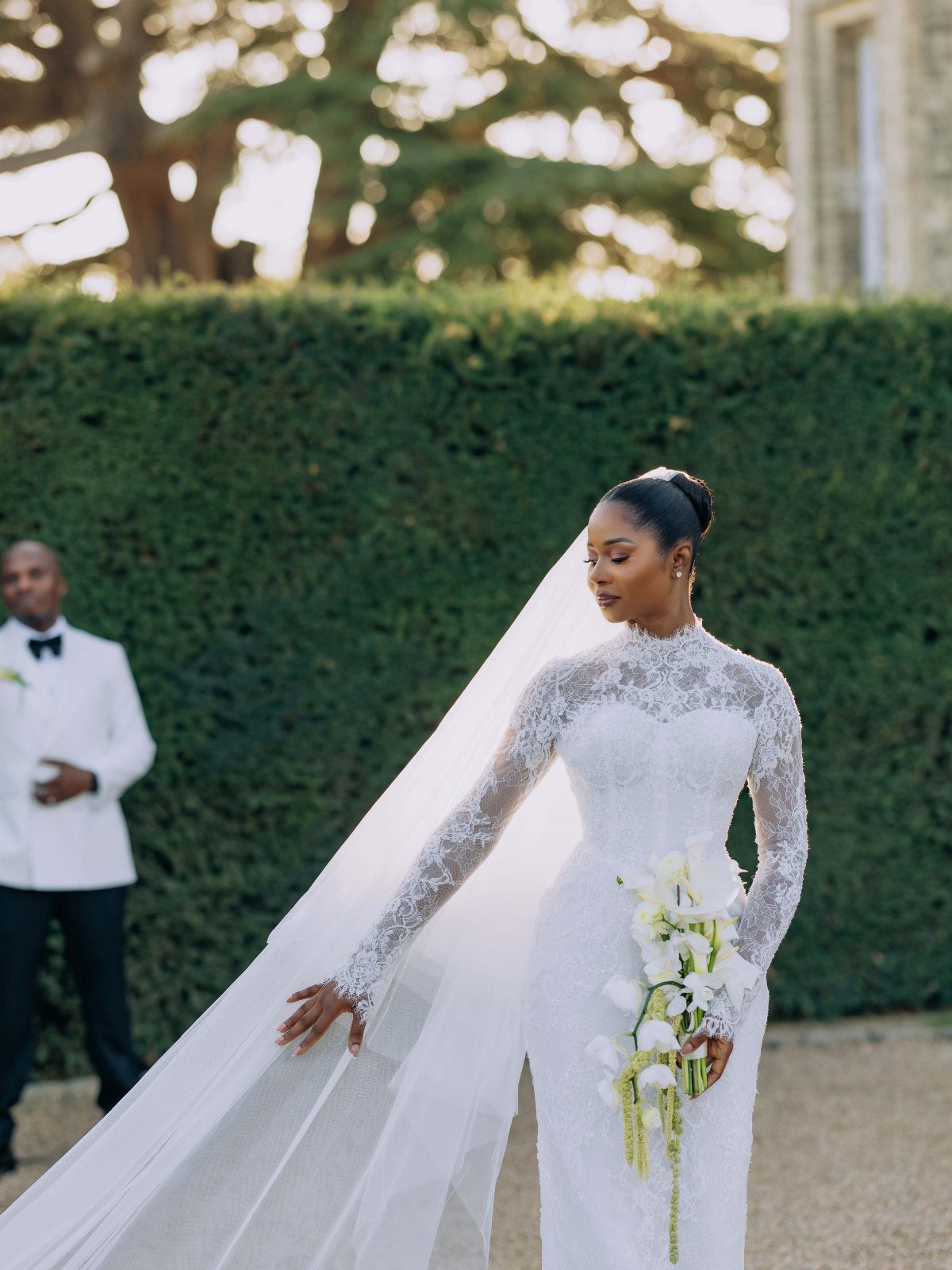
Lace with long sleeves asks for a quiet veil. Pick one or the other to carry the drama, because a heavily patterned lace and an ornate veil edge will compete in photos.
A train adds length and ceremony, but it also adds hem work. Ask the shop whether a bustle is included in the alteration price or billed separately, since that line item surprises people on a tight budget.
Outdoor venues with grass or gravel are hard on a trailing hem, so I would test the walk before committing.
2. A-line Wedding Gowns
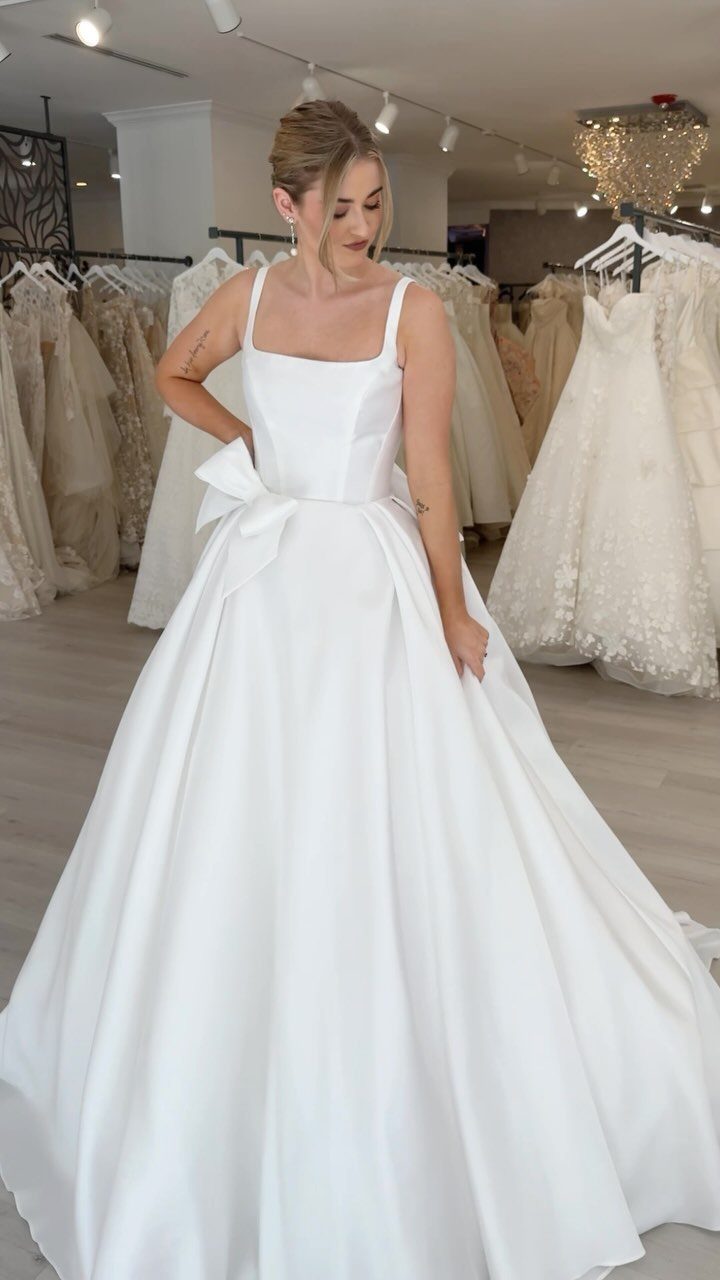
Try on an A-line before you decide you want anything fancier. The skirt flares gently from the waist, so it skims the hips instead of clinging, and it moves easily through a ceremony, a reception and a dance floor.
Judge it by how it fits your torso and shoulders, since the skirt forgives more than the bodice does.
Bring shoes at your real heel height to the fitting, and ask the consultant how the dress would sit in your venue, whether that is a church aisle or a field.
A bow detail is easy to add or remove at alterations, so you can keep the shape and change the finish.
3. Wedding Dress with Statement Veil

A shimmering veil does the work of a second dress. With a full skirt underneath, I would keep the gown itself simple and let the veil take the shine, because glitter on both layers reads as too much.
Cathedral-length veils trail well on a polished floor, but they need a helper at the ceremony and a plan for taking them off before dinner.
Many brides remove the veil after the first dance, so it also pays to ask whether the comb is secure enough for a windy outdoor aisle.
4. Sparkling Ballgown Wedding Dress
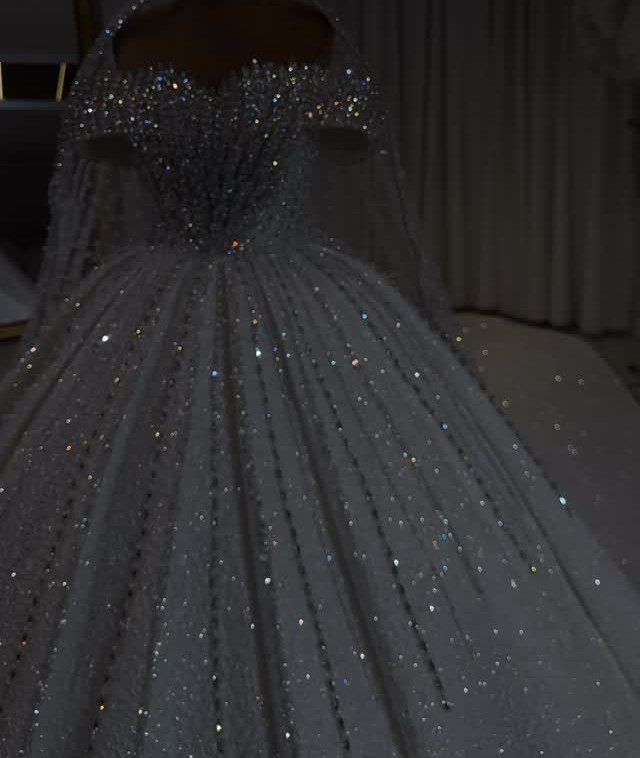
Sequins across the bodice and a full skirt of shimmering fabric make a gown that photographs under any light. I would choose it for an evening reception, where the sparkle has room to show.
Sequined bodices can scratch, so press the lining against your skin and sit down in the dress at the fitting, ahead of any deposit. A full skirt also takes up floor space, which matters for narrow aisles and crowded tables.
Keep jewelry minimal. The dress already supplies all the glitter you need.
5. Long-Sleeved Lace Mermaid Gown
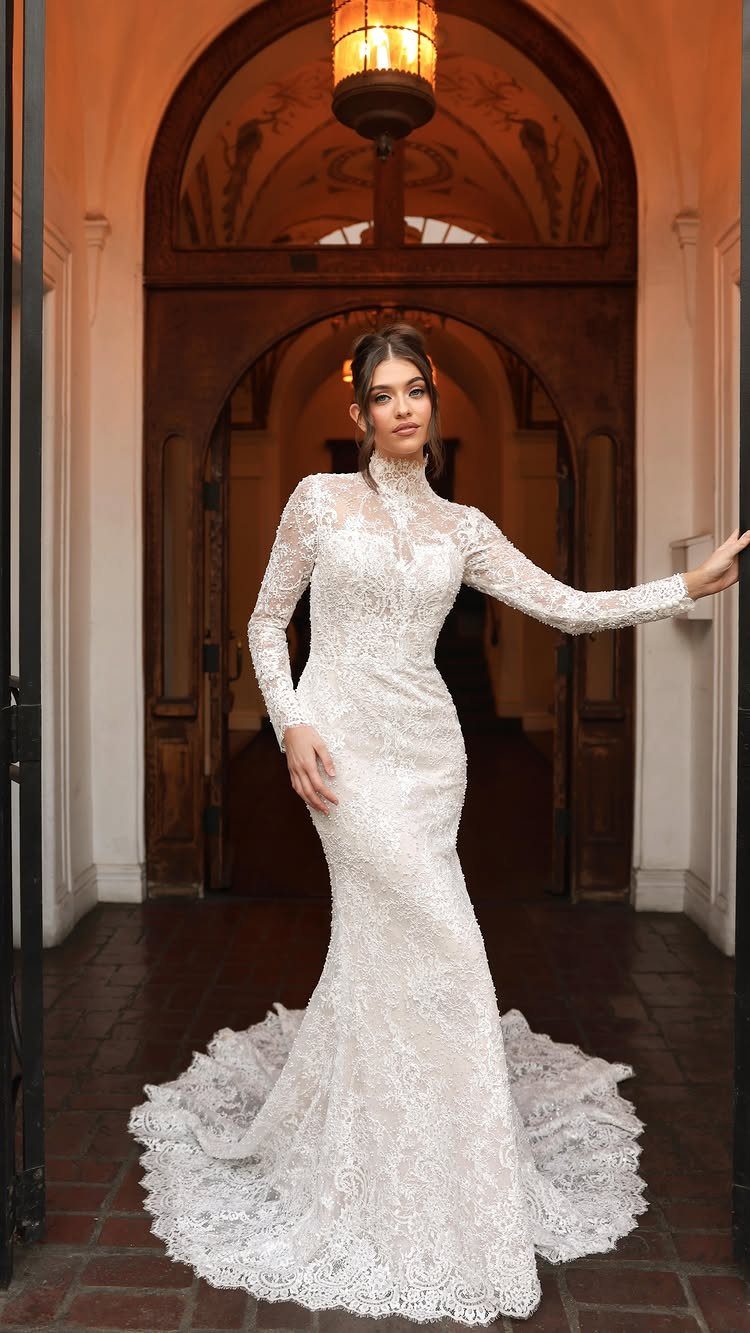
Mermaid fit is unforgiving, so the fitting matters more than the label. The gown hugs through the hip, then flares low, and long lace sleeves with a high neck keep the look covered and formal.
Order for your largest measurement and let the seamstress take it in; letting out a fitted gown is far harder. Practice sitting, climbing stairs and dancing in it before the final fitting, because the flare restricts your stride.
I like this one best for indoor ceremonies with a clear aisle, like an arched church doorway.
6. Minimalist White Wedding Dress
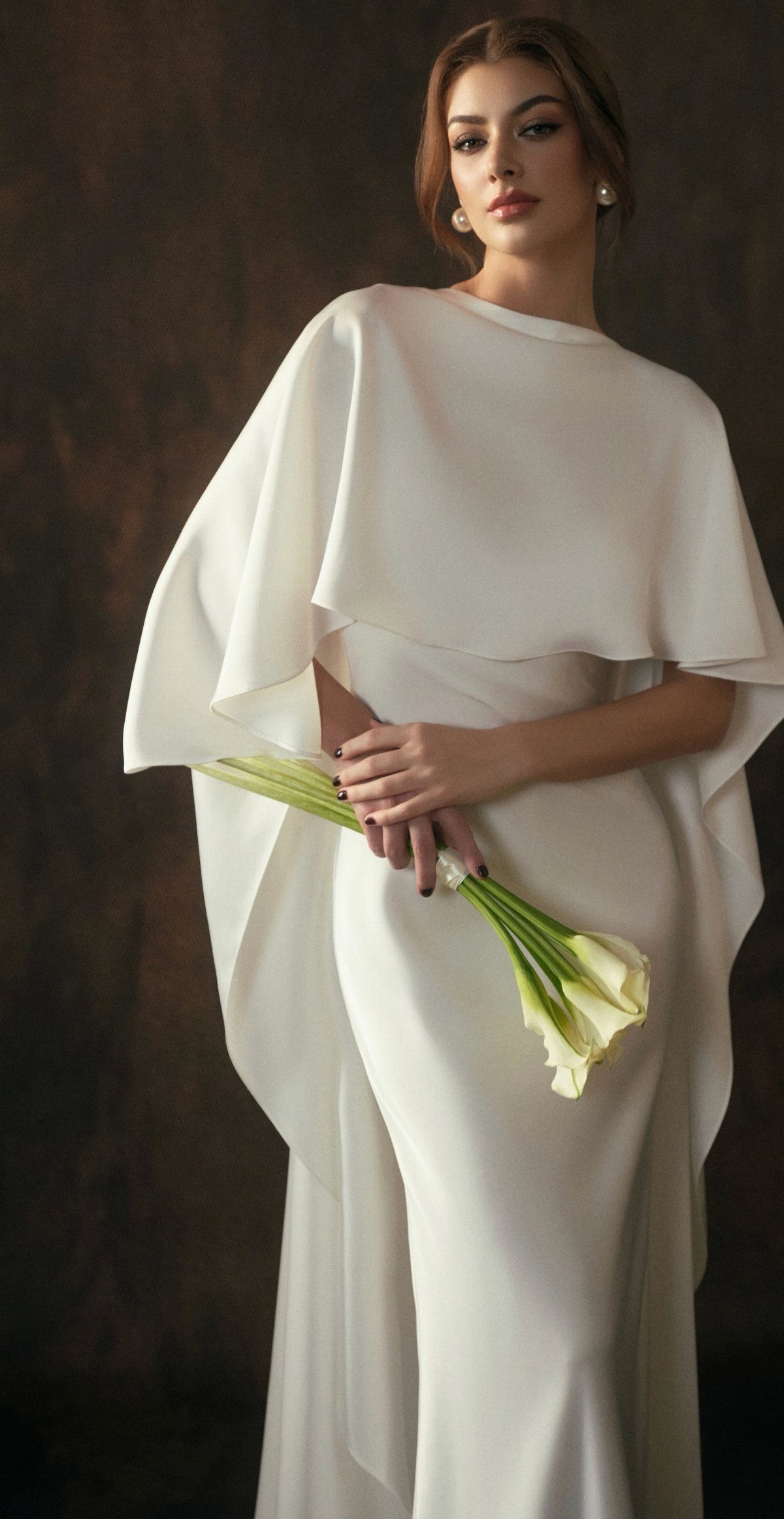
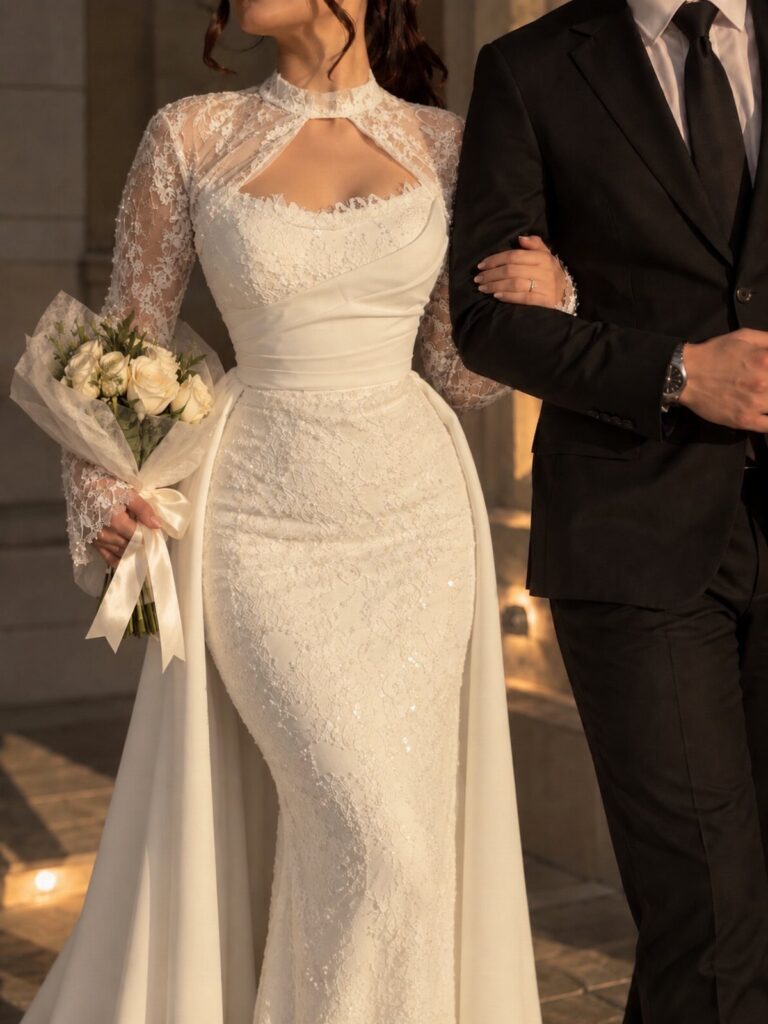
A cape does what a veil or sleeves would do, with less fuss. Over a sleek, clean-lined gown, it adds movement and a finished edge without any beading or lace.
Minimalist dresses show every seam, so fit and fabric weight matter more than detail. Spend your alterations money on a precise fit instead of embellishment.
Pair it with a bold bouquet, such as white calla lilies, so the flowers supply the one dramatic element. You can also take the cape off for the reception and keep a simple dress underneath.
7. Puff-Sleeve Satin Gown
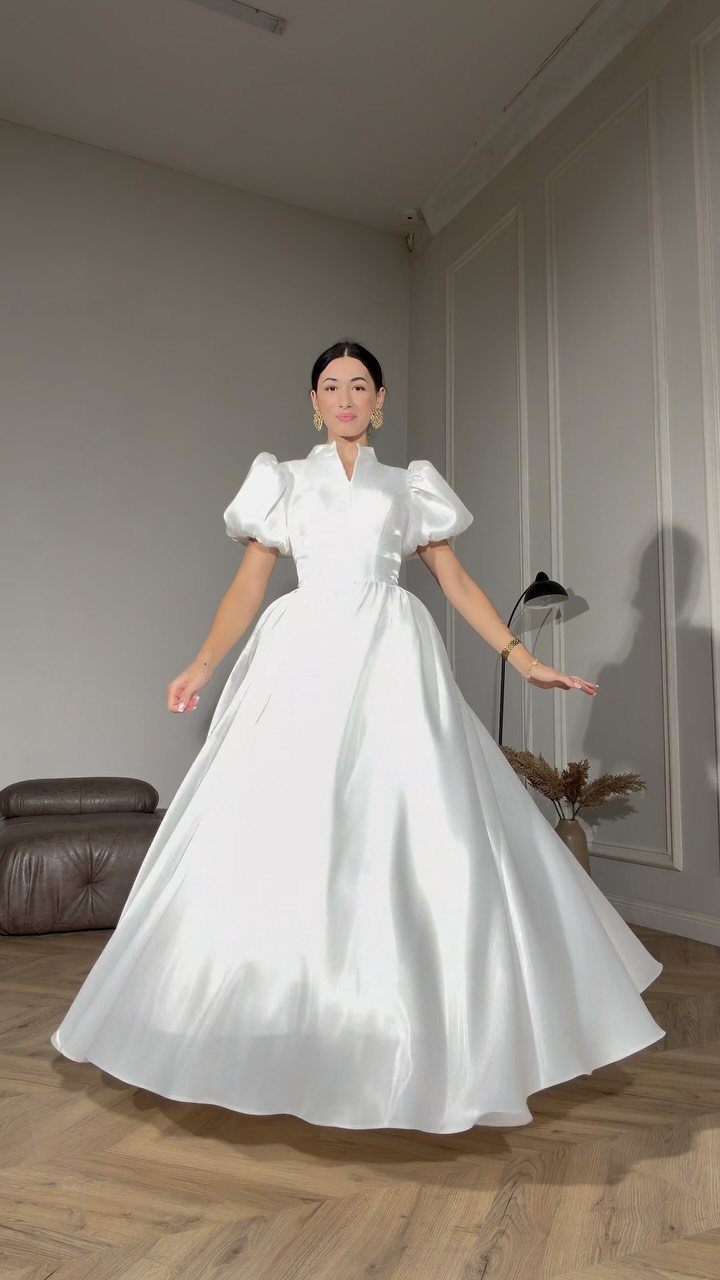
Satin shows everything, so puff sleeves in this fabric need a structured, well-pressed finish to hold their shape. Soft, collapsing volume reads as wrinkled, while a sleeve with body looks deliberate.
Try the dress on with your arms raised and bent, since a gathered sleeve can pull at the shoulder seam. Test the sleeves with a real hug, arms wrapped around someone, ahead of the purchase.
Satin also catches light unevenly, so look at it under both store lighting and daylight. With sleeves this full, I would skip a statement veil and keep jewelry small, letting the sleeves be the one big gesture.
Budget-friendly Options
Online shops sell designer-label white gowns at lower prices than most boutiques, and that is where a tight budget gets its biggest relief. Sizing guides and easy browsing let you compare dozens of dresses in one evening.
Local boutiques earn their place for fit. If you plan a church ceremony, try on the gowns in person, because custom fittings are where a boutique beats a screen.
Chiffon and tulle also tend to suit a beach or destination wedding, and both give a light, easy look without extra layers of structure.
My plan for most budgets: browse online to learn your shape and price range, then confirm the fit in person before you pay.
Venue Considerations
Fabric should follow the season as much as the venue. For summer, I would pick chiffon for breathability; at a beach or destination wedding it flows in the wind, and tulle gives volume without much weight.
Winter calls for heavier cloth. Velvet or satin adds warmth, and a long-sleeve white gown in either one keeps you comfortable and still looks formal.
Floral lace reads soft and romantic, while satin gives a sleek, glossy look that suits a more formal room.
For a traditional setting, choose a church-appropriate dress. For an outdoor one, choose something lighter.
Shopping Tips
Start shopping 6–8 months before the wedding. That window leaves room for alterations and fittings, which are slow and hard to rush.
Pull a few gowns off the rack that you’re sure you’ll dislike, because a silhouette that looks wrong on the hanger sometimes fits better than the one you came in for. What flatters you is often a surprise.
Build accessories and alterations into the budget from the start, not after the dress is bought. A dress that looks affordable on the tag can climb once the extras are added.
Match the dress to the venue too: a church gown for a traditional setting, a lightweight one for an outdoor space.
Frequently Asked Questions
What are the top white wedding gown trends for 2026?
Lace, satin and A-line gowns with minimal detailing lead the trends, and soft fabrics with detachable trains or sheer sleeves are getting attention.
With simple, clean-lined gowns, every wrinkle and gap shows, so a tailor’s precision does more for the look than beading or lace would; spend there first.
Are ivory wedding gowns a good alternative to white?
Yes. Ivory has a creamy, warm undertone that flatters most skin tones, especially warm or olive ones, and it suits outdoor and beach weddings well.
Hold fabric swatches or the gown itself up to your face by a window, because the warm bulbs in a salon can make ivory look like white and white look gray.
Where can I find affordable designer white bridal gowns?
Online shops are where a tight budget gets the most relief, because they sell designer-label white gowns for less than most boutiques.
Shop online first to learn which cuts suit you and what you can afford, then try the dress on in person before you hand over a deposit.
How do I style a white wedding gown for winter?
Pick a heavier fabric: a long-sleeve gown in velvet or satin holds in heat and still reads as formal.
Add a shawl for extra warmth, and keep to one bold accessory, such as a statement veil or a single piece of jewelry. Too many focal points compete in photos.





