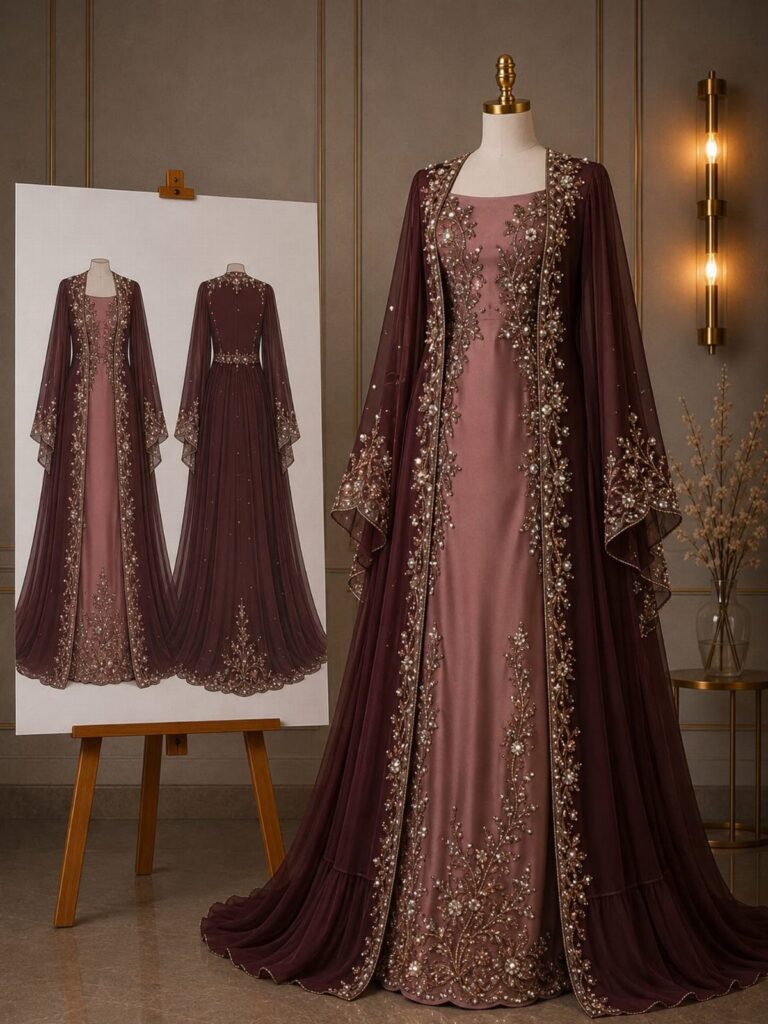
Where the money goes decides which of these gowns fits: beadwork and embroidery both add hours of hand labor, so pick the one detail you will pay for and keep the rest plain.
Coverage is a choice in every style, not a trade against richness, and sleeves, necklines and fabric can usually be changed.
1. Arabic Wedding Dress
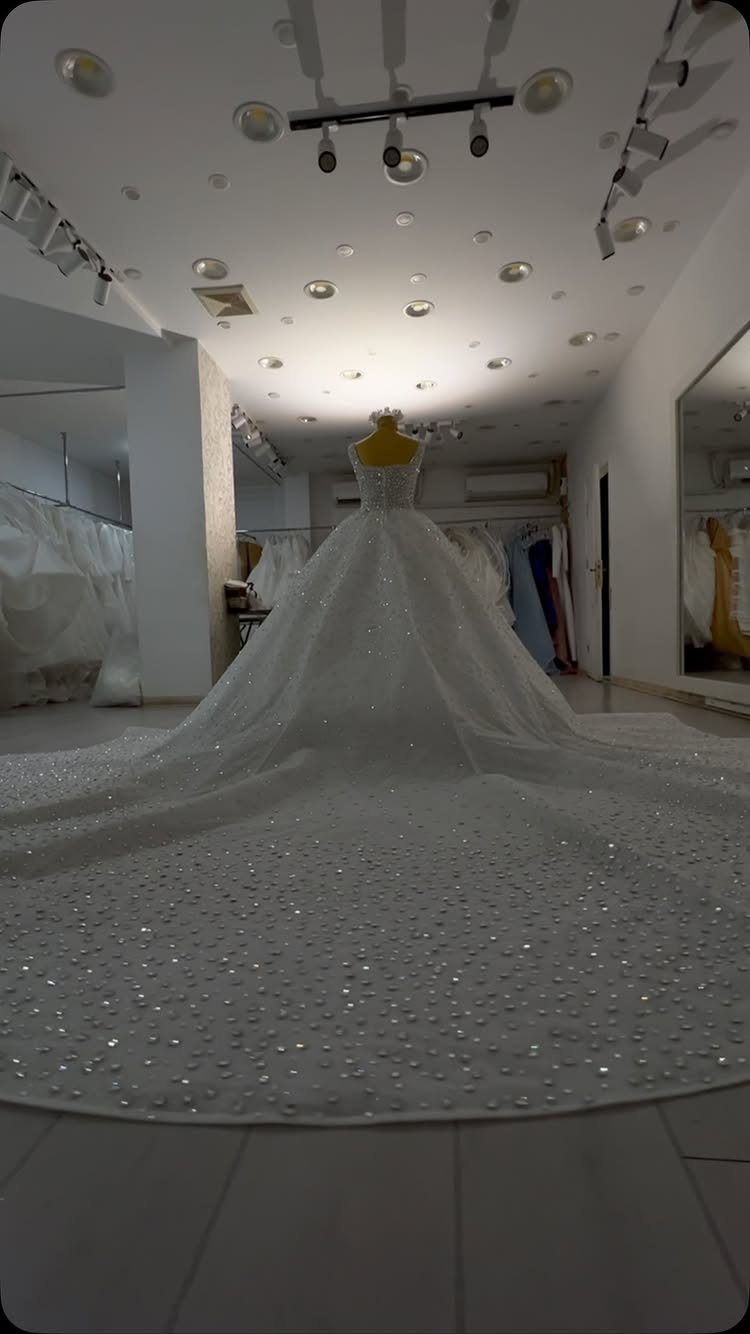
Dense beading on a white gown, with a sweeping cathedral-length sweep of skirt trailing behind, is the clearest shorthand for the luxury people look for in Arabic bridal design. The weight sits in the details, so spend your attention there.
Check how the beading is attached and how it sits against the skirt, because a heavily beaded dress with a sweeping, floor-length back needs a fitting that accounts for that weight.
Ask the shop how the train is finished and whether it bustles for the reception.
Dresses like this cost more than plain satin, so decide early whether the beading or the train gets the budget.
2. Arab Wedding Dresses with Beadwork
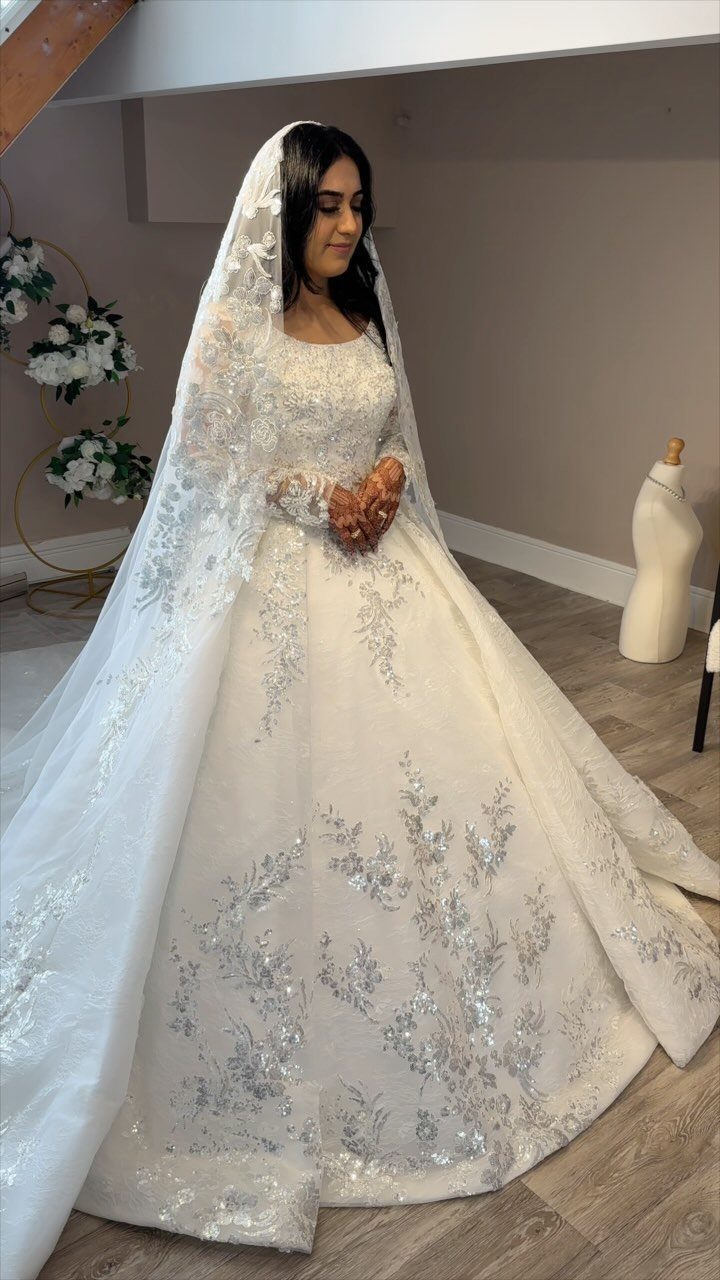
Silver beadwork on white reads cooler and quieter than gold, and I like it for brides who want sparkle without warmth. Paired with a veil, it keeps the focus on the dress rather than competing with it.
Before buying, hold the fabric up to window light and see how the beads catch it. Dense beading photographs differently from sparse beading, and indoor lighting at your venue will change the effect.
Beadwork is where most of the price goes, so ask which areas are beaded by hand and which are not. If the budget is tight, keep the beading to the bodice and let the skirt stay simple.
3. Modesty in Design
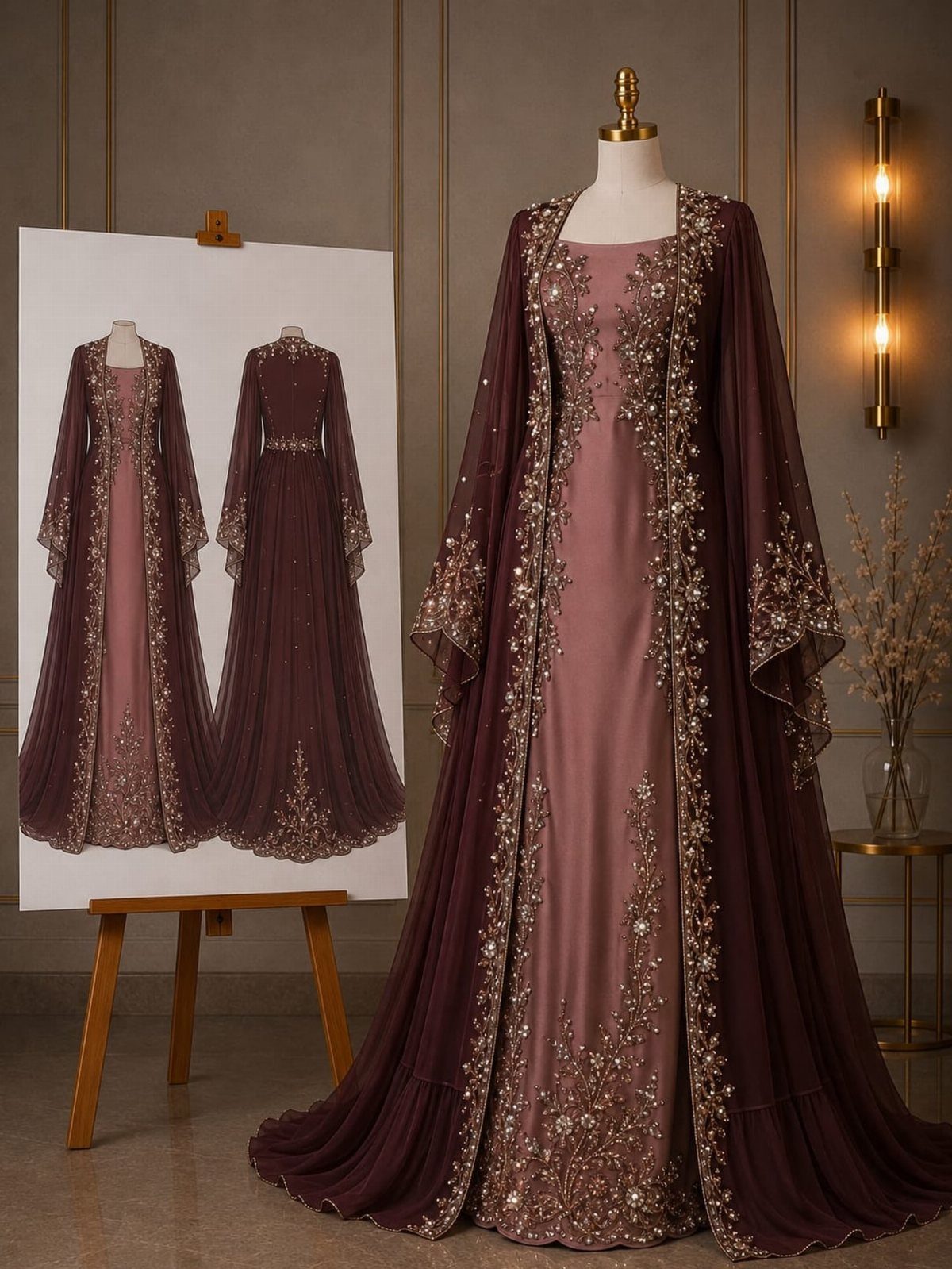
Coverage and richness are not opposites.
A sheer cape does the covering without hiding the embellishment underneath, which is why I prefer it to opaque layers. It also lets you adjust: wear it for the ceremony, then decide about the reception.
Color matters here.
A deep shade like burgundy gives gold beadwork more contrast than white would, though it moves the dress away from traditional bridal tones. Bring fabric swatches to your fitting and look at them next to your skin tone.
4. High Slit Satin Wedding Dress
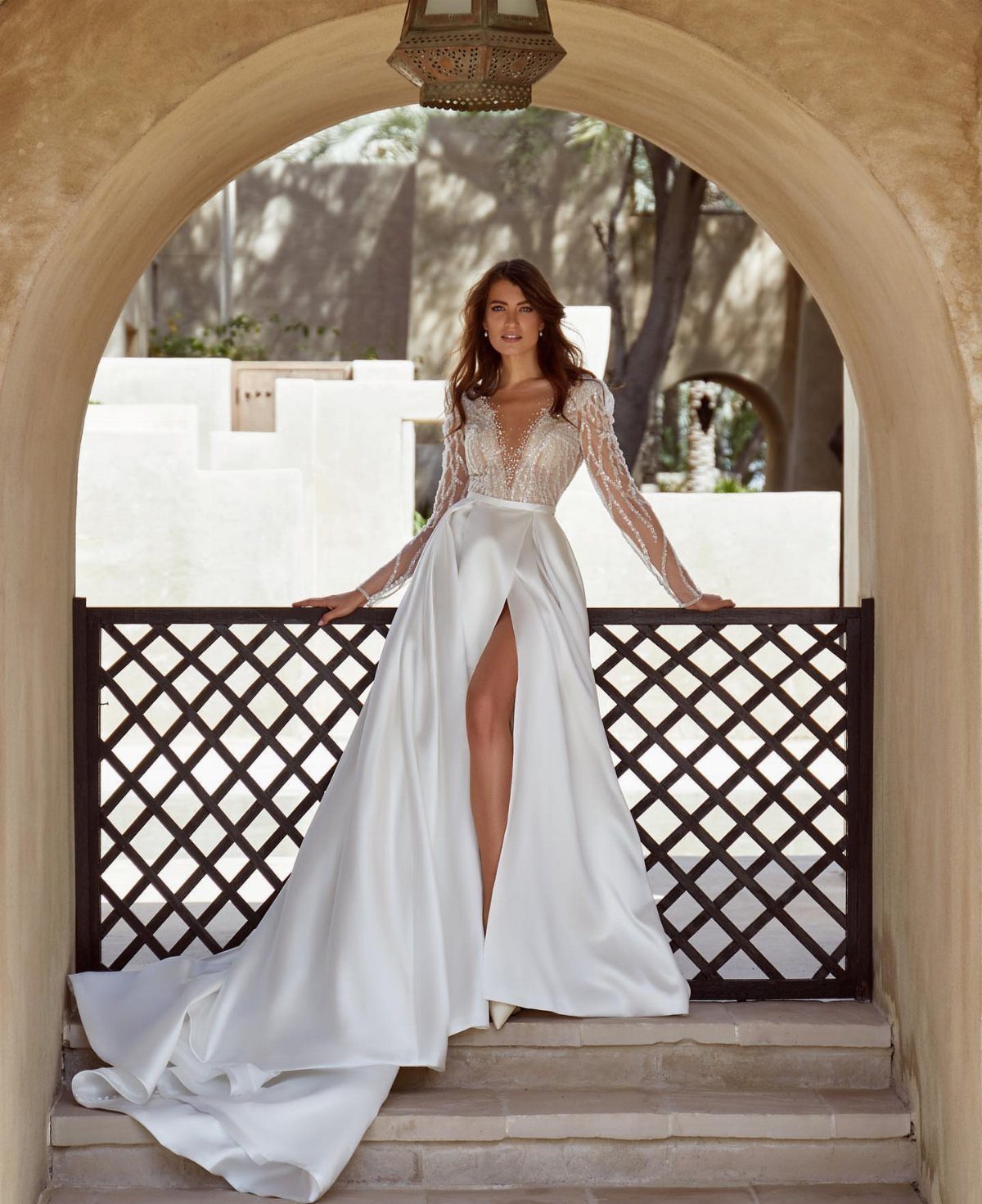
Sleeves to the wrist and a thigh-high slit sit on the same dress, which makes this one of the more balanced designs on the list: covered on top, open below.
The beaded lace bodice gives texture, and the satin skirt gives movement.
Slit placement is the detail to test. Walk, sit and climb a few stairs in the fitting, since a high slit that looks right standing can shift when you move.
Satin shows every crease and mark, so ask about steaming and handling before the day. If the slit feels too bold for any part of the event, a lining or underlayer can be added by your seamstress.
5. White and Gold Embroidered Gown
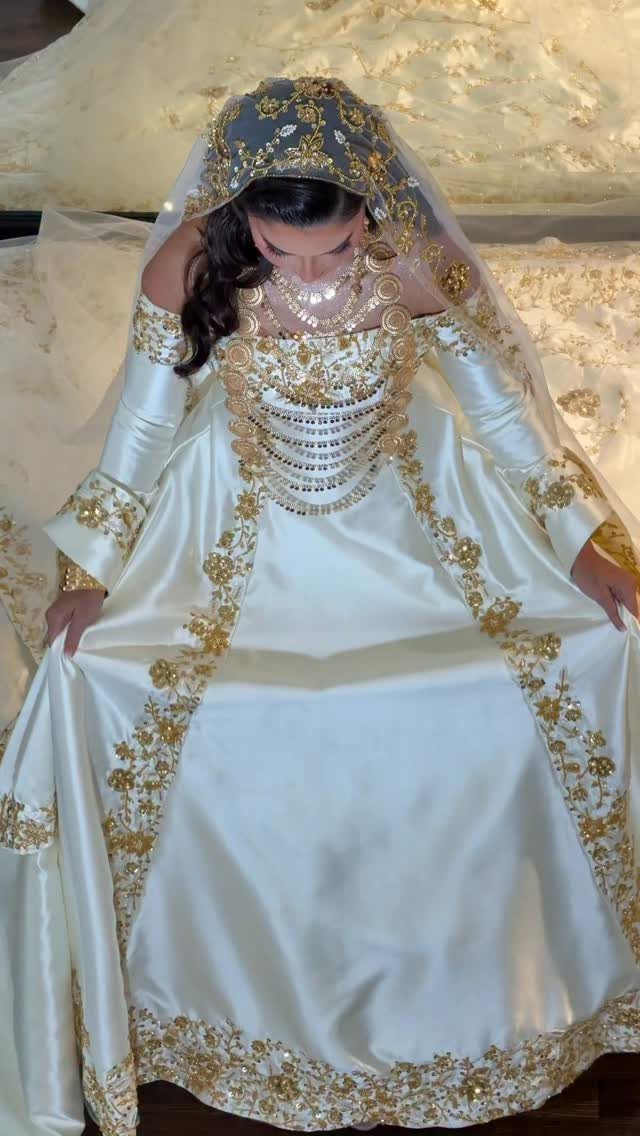
White satin with ornate gold embroidery is my pick for the most formal look here. Gold thread on a pale ground gives contrast without needing a color change.
Matching the veil’s gold detailing to the gown’s embroidery pulls the look together, and gold jewelry should then stay simple so it does not fight the stitching. Choose one statement piece rather than several.
Embroidery this dense adds labor to the price, so ask how much of the gown is embroidered before comparing quotes. Satin also needs careful storage after the wedding, so plan for cleaning and preservation in your budget.
Bridal Experience
A bridal appointment should feel like a conversation about you, not a rack of samples.
Before you book, write down your budget ceiling, your must-haves and the one thing you refuse to compromise on, then say all three at the start of the appointment.
Ask whether the salon guides you through the whole process, from picking a gown to styling. A good one will talk about veils, jewelry and shoes alongside the dress, so you see the full look in one place.
Bring only the people whose opinions you trust, because every extra voice in the fitting room makes the decision harder. A crowd makes confidence harder to find.
Ask what happens after you say yes. Fittings, timelines and what a rush costs are easier to settle before you sign than after.
Couture Design
Couture means the dress can be made around you, so ask what a house will customize. Sleeve length, neckline, coverage and fabric are the usual places to start, and modest designs should be a normal request, not a special one.
Look at the materials in person if you can, or on a video call if you are ordering from far away.
Hand-embroidered lace, satin, intricate beadwork and soft tulle each behave differently, and a tulle skirt will feel nothing like a satin one.
If you want a mix of modern and traditional, pick one tradition to lead. A geometric pattern, a floral lace or a sculptural ball gown shape can carry the dress, and the other details should support it.
Ask for the made-to-order timeline in writing, and count backward from your wedding date.





