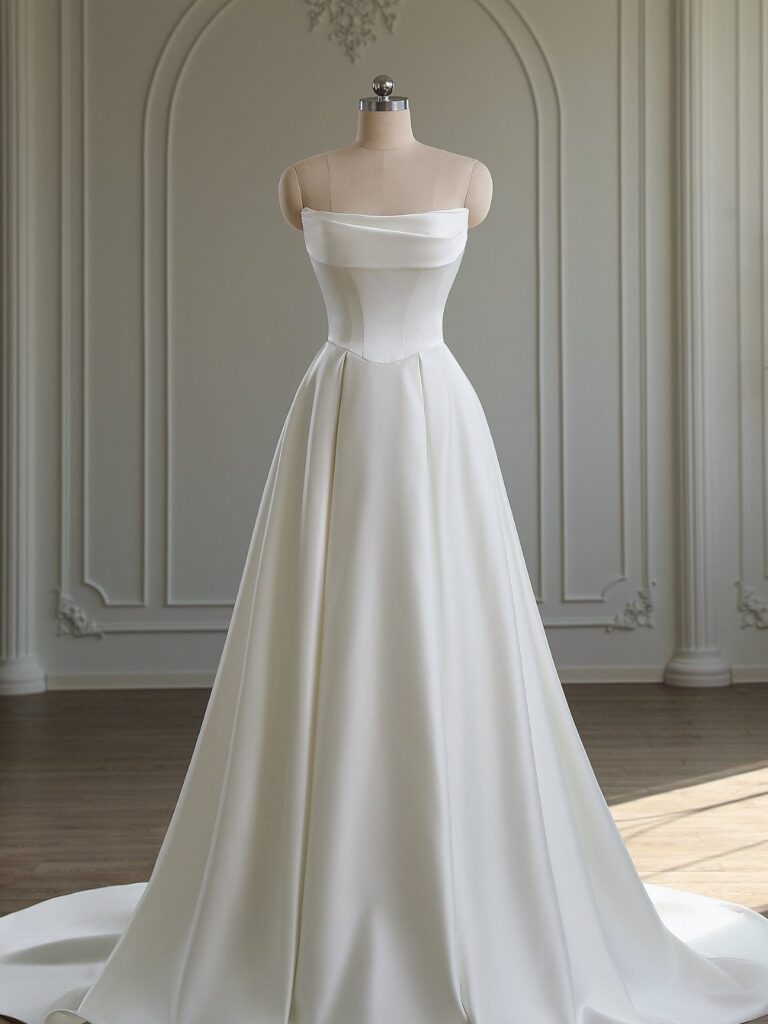
These A-line gowns run from a plain satin or minimalist skirt, where the money goes into cut and fit, to intricate lace, sparkle or sleeves, where the fabric and trim do the work.
Sleeves decide a lot about which dress is yours: flutter sleeves and long sleeves each change how much you can lift your arms, how much skin is covered and how the bodice sits.
1. Bridal Belts for A-line Dresses
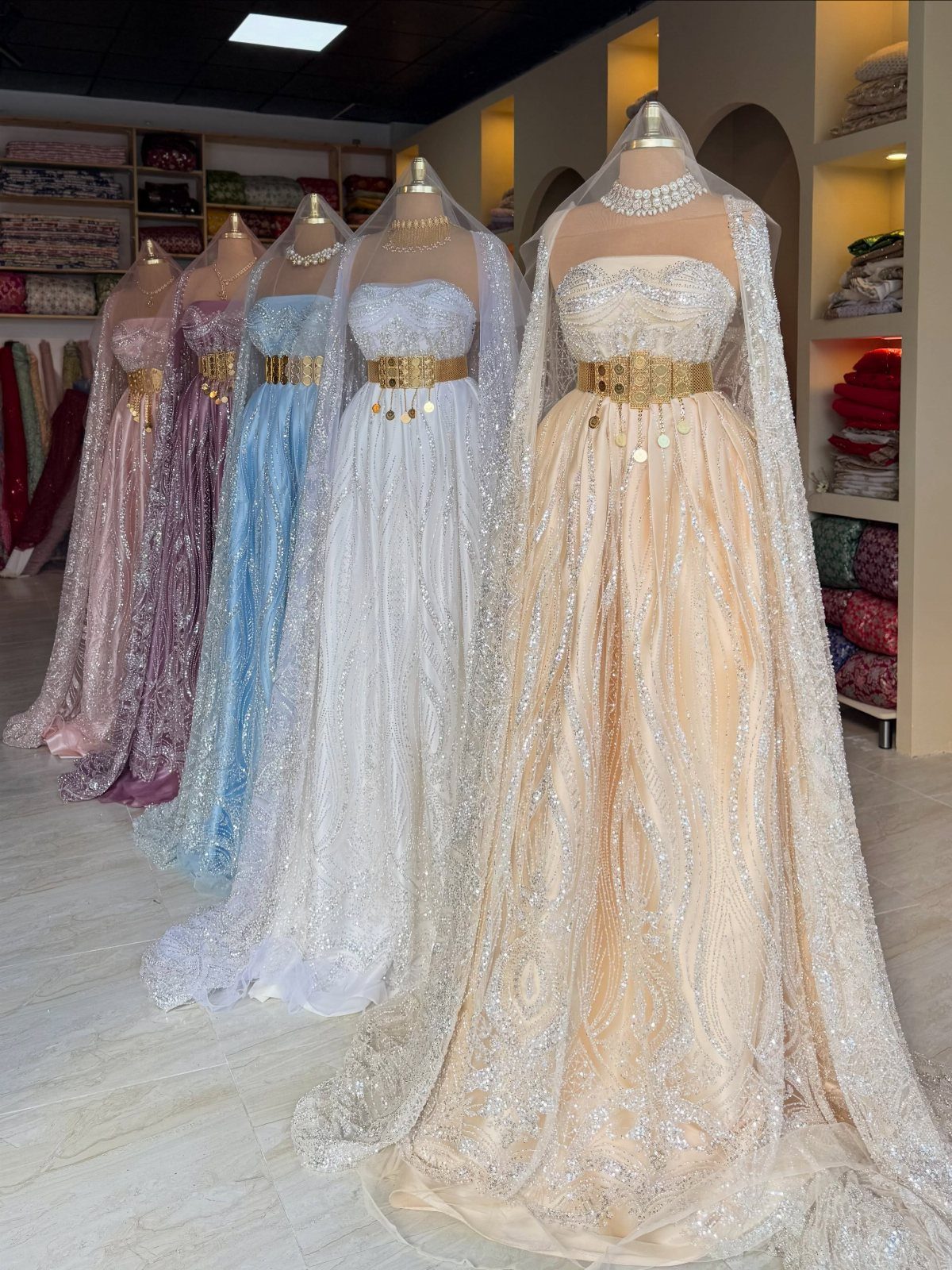
A metallic gold belt turns a plain A-line into a different dress without touching the skirt.
Belts are cheaper than a new gown, so buy one separately if the dress itself is already right. Gold reads warmest on champagne and white fabric.
Wear it at the natural waist, and ask a seamstress to check that it sits flat.
2. Intricate Lace A-line Gowns
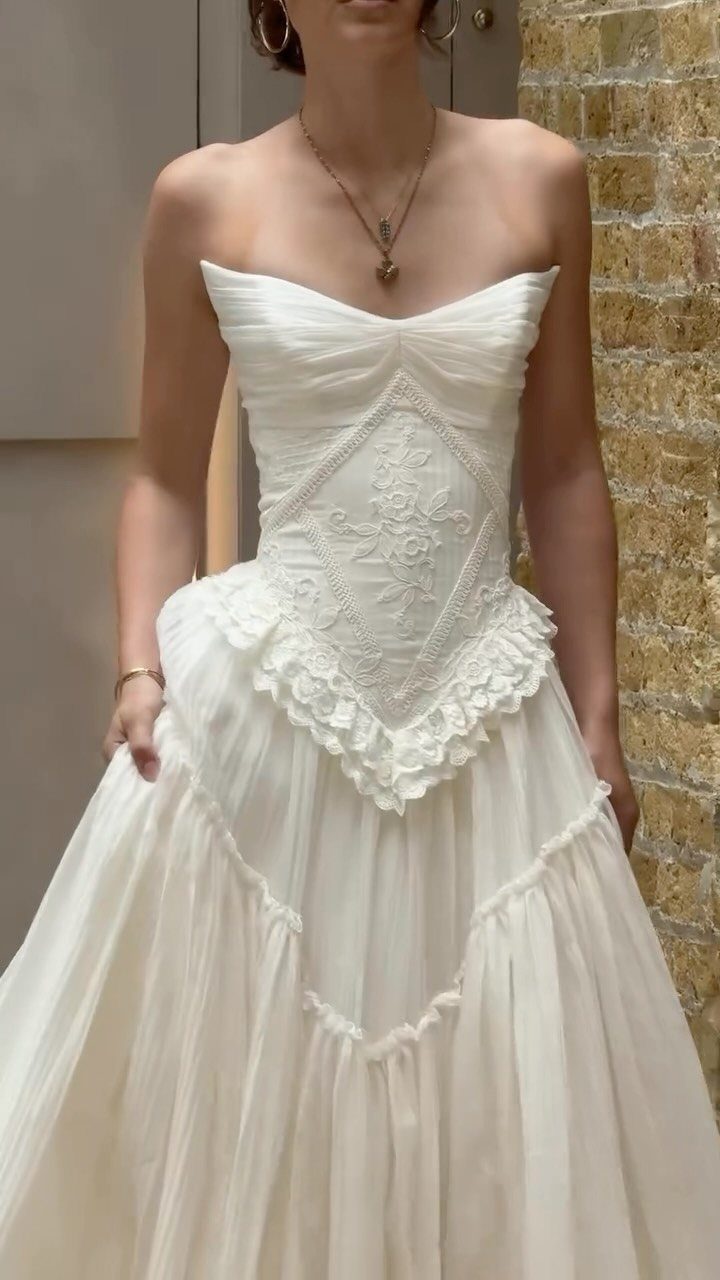
Lace embroidery on the bodice, with a tiered skirt below, gives a strapless A-line plenty of texture without needing a train or a heavy veil.
I like this combination for brides who want romance but not volume. The A-line skirt carries the layers easily, and the strapless neckline keeps the focus on the lace.
Try the gown on and look at it up close, since lace is where the detail lives. Skip extra jewelry and give the bodice room to do the talking.
3. Modern Satin A-line Gowns
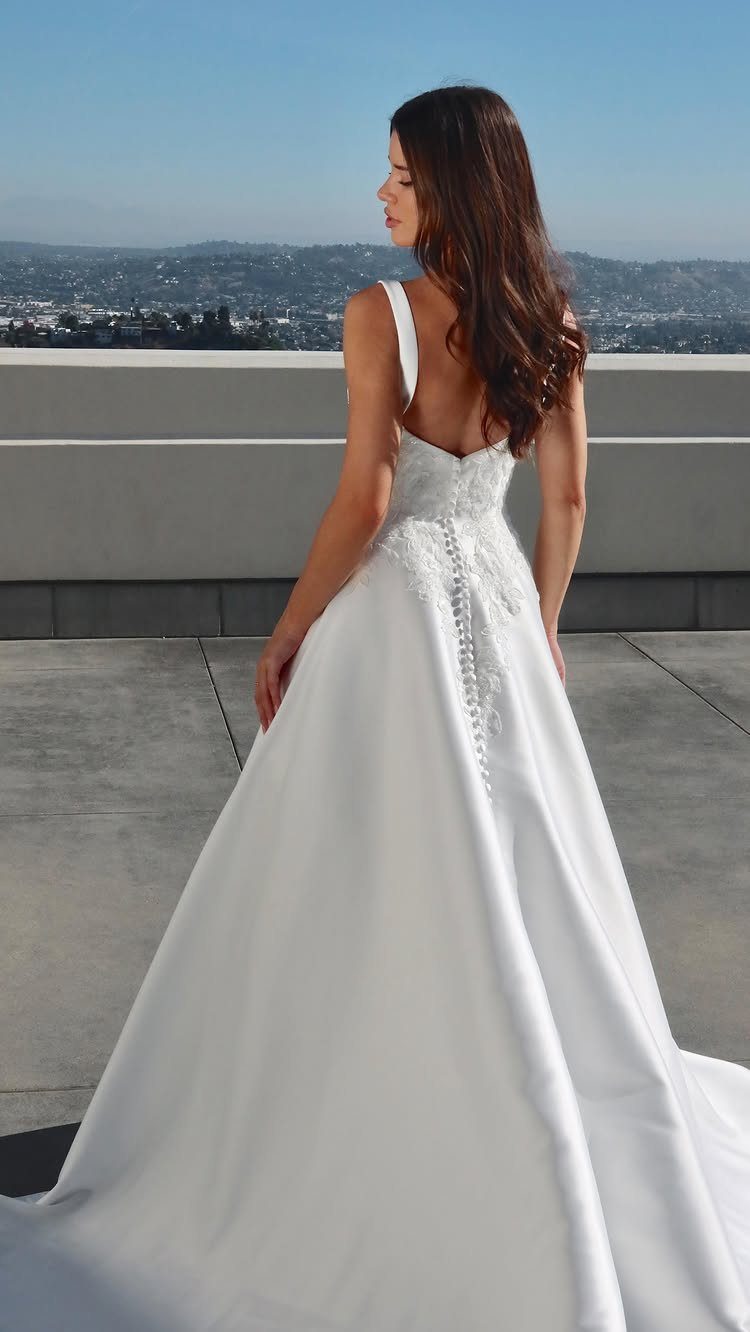
Satin gives an A-line a smooth, polished surface, and with a little lace detail it stays soft rather than stiff.
For a city wedding or a rooftop, I would choose satin over heavier fabrics: it looks sharp and clean against modern architecture.
Keep the styling simple. A sleek hairstyle and small earrings suit the fabric, because satin already does the work of a statement.
4. Minimalist A-line Styles
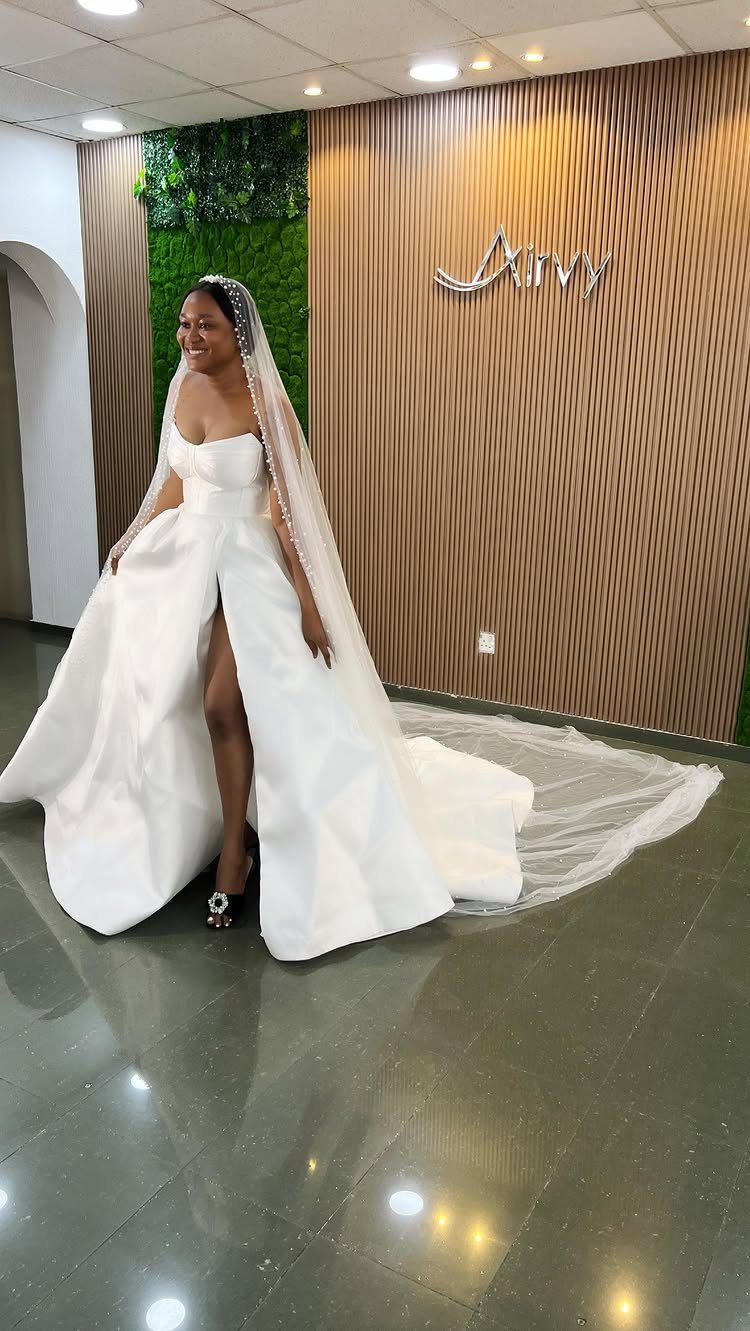
Clean lines are the whole design in a minimalist A-line: a plain white skirt, a long veil and a slit, with no beading or appliqué competing for attention.
Minimalist gowns suit a bride on a tighter budget, since you spend on cut and fit rather than decoration. Put any extra money into alterations.
A long veil is my pick for this dress, since it adds the drama the gown deliberately leaves out.
5. Sparkling A-line Gown
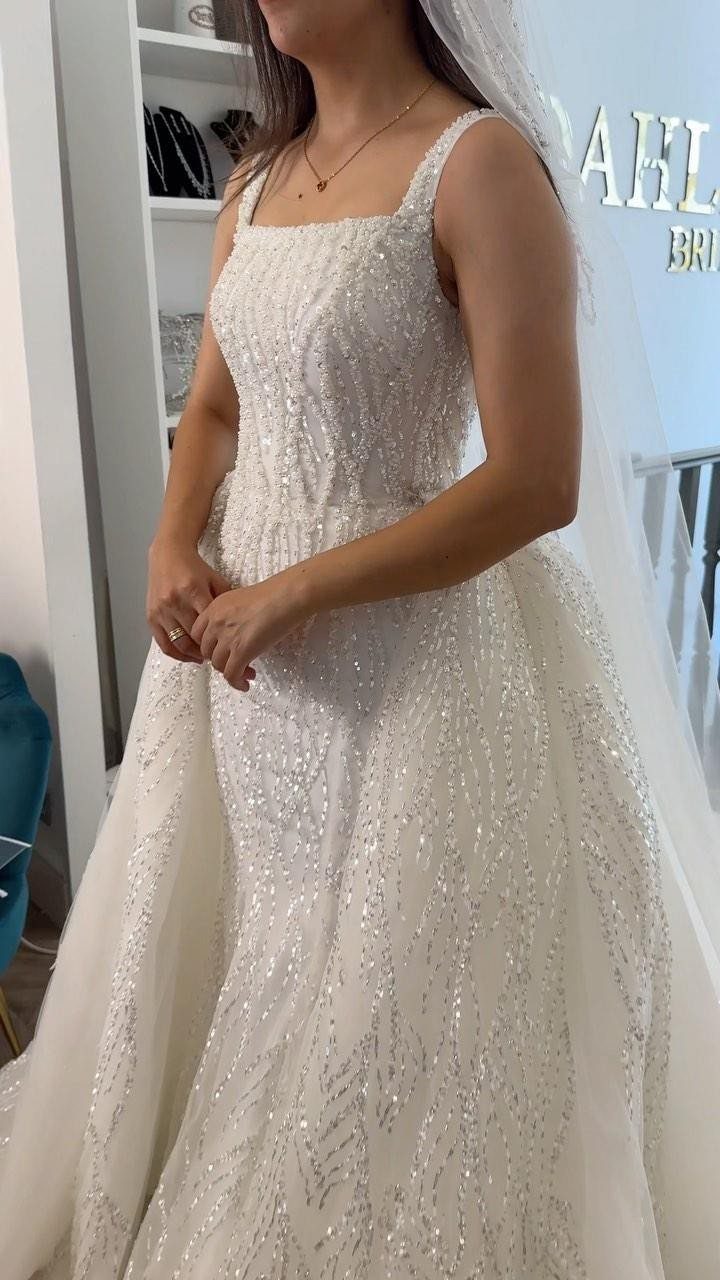
Sequins across the whole gown do most of the work on their own, and a matching veil finishes the look without any extra detail. The shimmer does the decorating, so little else is needed.
Choose a long veil in plain tulle, as here, so the 2 layers do not fight each other.
Try sitting in the dress at the fitting, because a gown that looks perfect standing can bunch, pinch or gape once you are seated. Sparkle that looks great standing up should still feel comfortable for an entire evening.
6. Flutter Sleeve A-line Gown
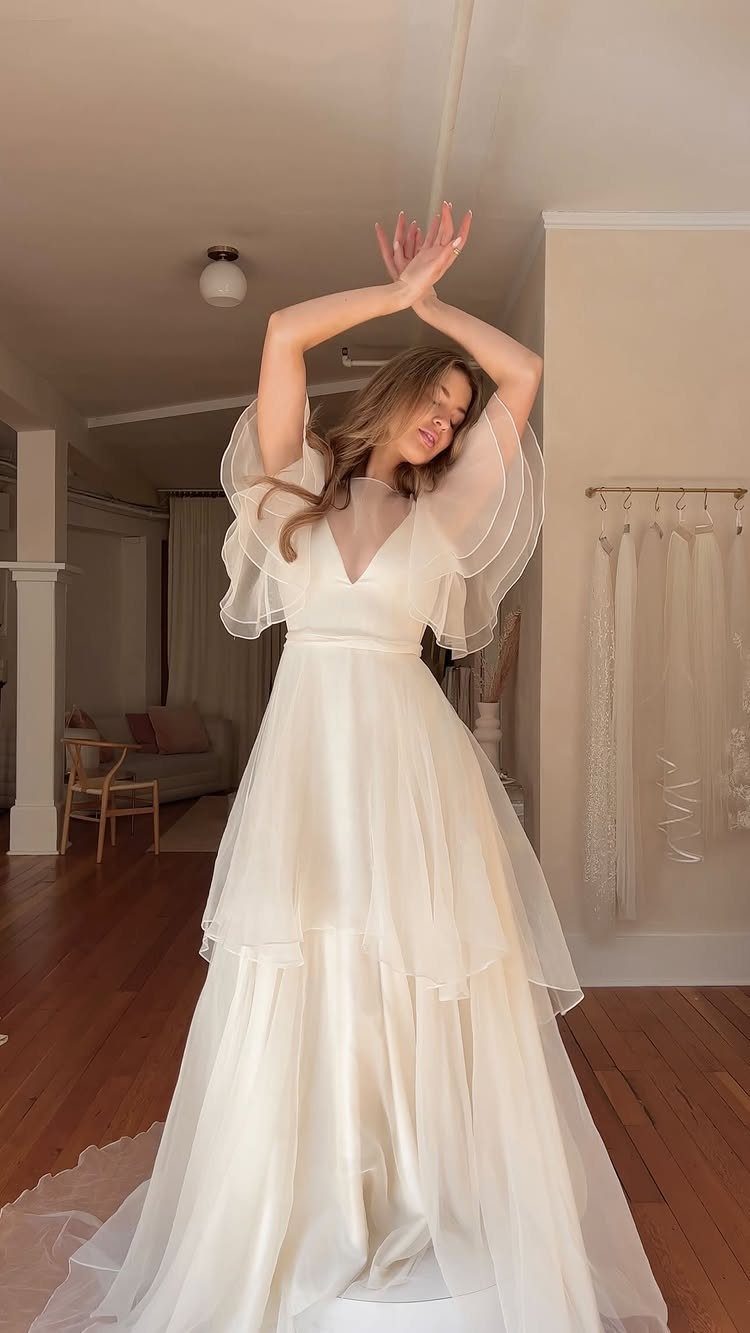
Delicate flutter sleeves on a V-neck A-line add coverage over the shoulders while keeping the look light and open.
They suit a bride who wants something between strapless and full sleeves. The V-neck lengthens the neckline, and the soft sleeves frame the arms.
Lift both arms overhead in the fitting room, since flutter sleeves and snug bodices show their limits fast.
If the sleeves pull or the bodice lifts, ask about alterations ahead of the final payment, since a fix is easier to price in at that point.
7. Long Sleeve A-line Gown
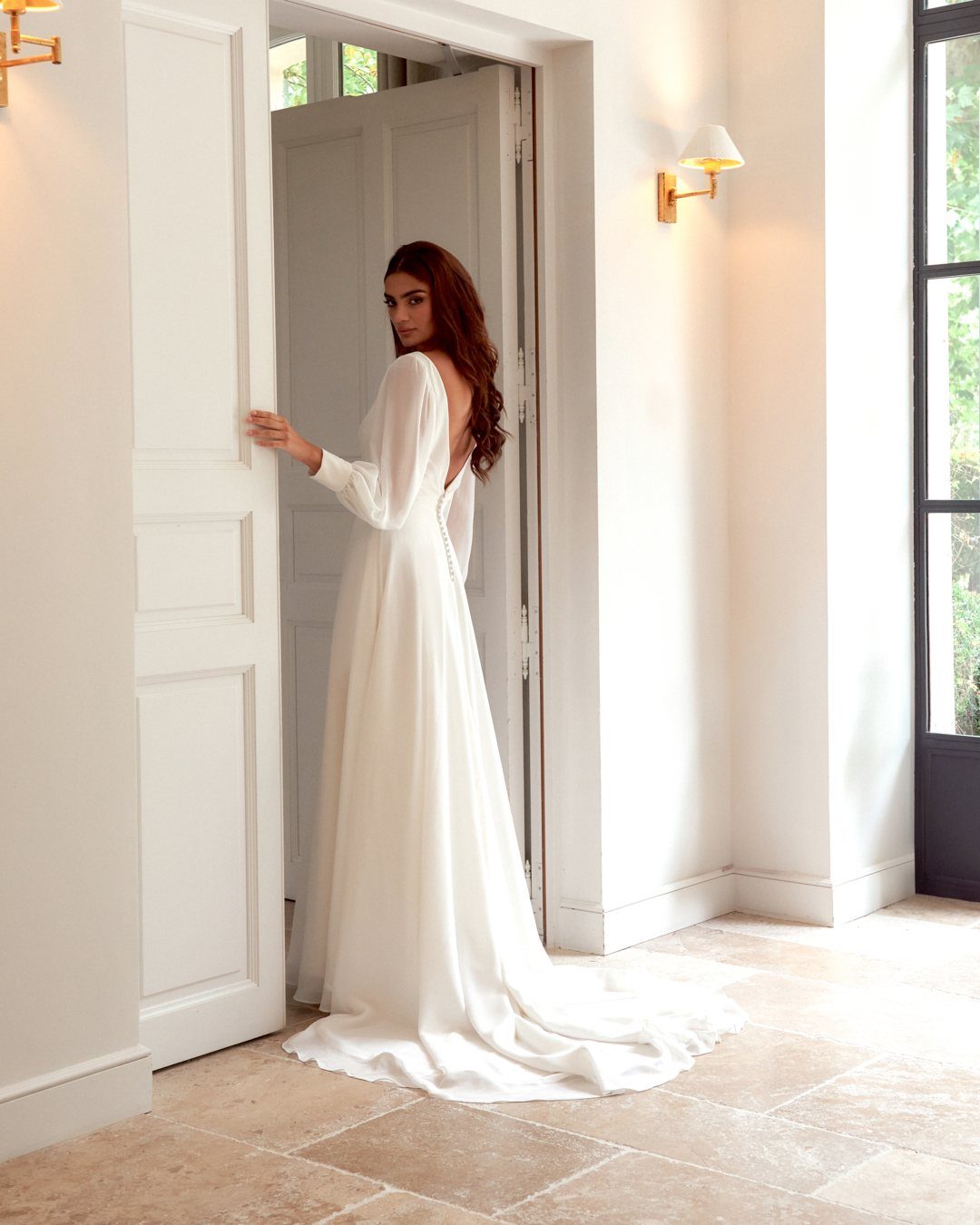
Long sleeves with an open back give an A-line 2 moods at once: full coverage from the front, a bare reveal from behind.
That split suits a bride who wants arms covered but still wants a moment as she turns. The A-line skirt keeps the shape simple, so the back gets the attention.
At the fitting, reach forward as if hugging someone, and check that the sleeves move without pulling across the back. Open backs also show undergarments, so ask what to wear underneath before the final fitting.
Keep the hair up if you want the back seen.
Choosing the Right A-line Dress
The silhouette defines the waist and flares over the hips, so most body types work, but waist placement, bodice structure and skirt fullness all change the result.
Choose by personal style, not by what is trending. A minimalist, a boho bride and a glamour-minded bride can all wear an A-line: the cut stays the same while the fabric and details change.
Fabric is the biggest lever: A-lines come in chiffon, silk, crepe, satin, tulle and lace.
For plus-size brides, a structured bodice with boning or a built-in corset, plus a tailor who fits it to your measurements, will do more than any trim or fabric choice.
Differences Between Dress Styles
Ball gowns and A-lines share a fitted bodice and a flared skirt.
The difference is how fast the skirt widens: an A-line opens gradually from the natural waist, while a ball gown goes full and dramatic, often over a tight corset top.
If you want a fairy-tale entrance, pick the ball gown. If you want to walk, hug and dance without managing a mountain of skirt, the A-line wins.
An A-line can run from a slight flare to a wide, full skirt, so a dress with real drama is still on the table.
Tips for Trying on Dresses
Take a few steps, sit down, lift your arms and turn around in each gown, then compare which one let you move without thinking about it.
A heavy skirt, scratchy lining, tight seams or a long train can wear you out by the second hour, even when the dress looks perfect in photos.
Pay attention to the train. A longer one looks grand in the aisle but needs handling later.
A seamstress can tell you whether a bustle will pull the train up for the reception; get that price in writing and add it to the dress total so it doesn’t surprise you later.





