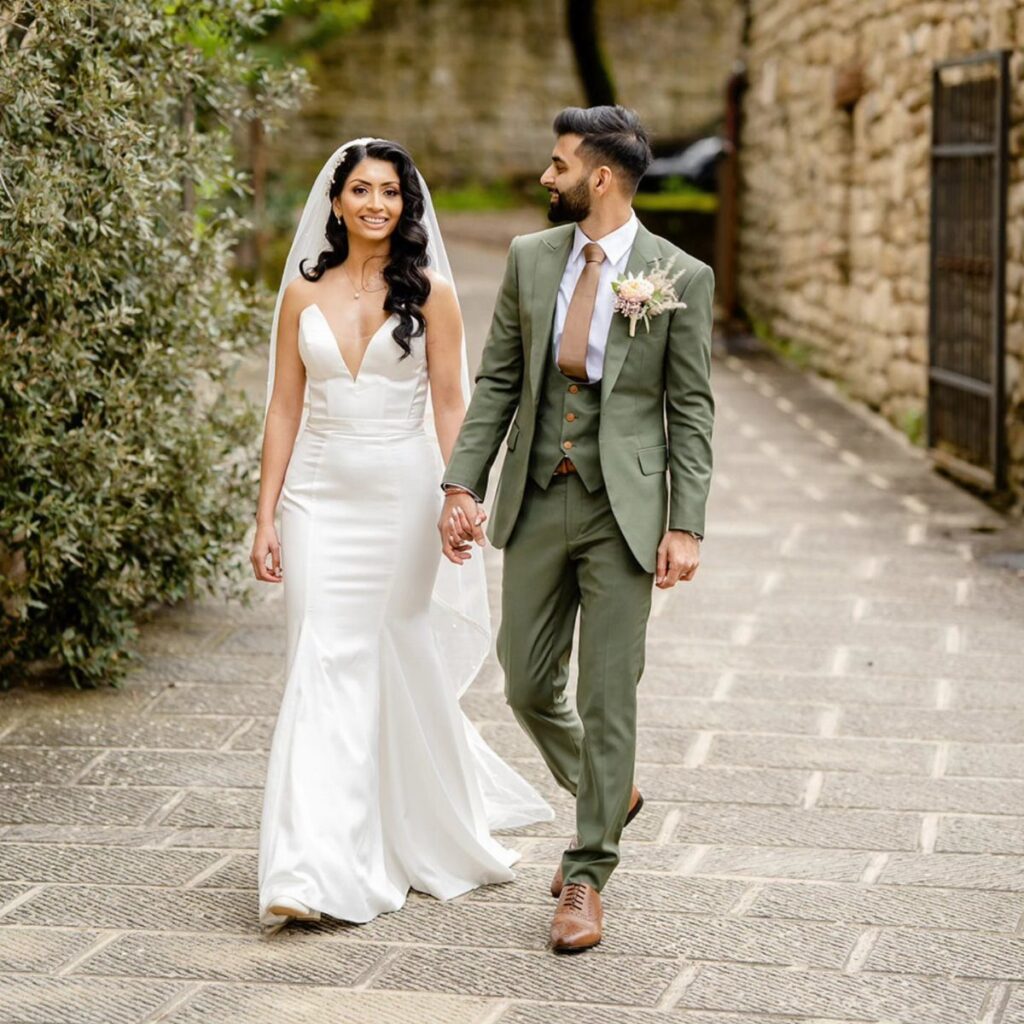
Season shapes a groom’s outfit as much as the theme does: a beige suit suits a summer ceremony, while a brown tweed three-piece or a brown pinstripe suit holds up in cold weather.
The ideas here run from a blue suit that works again at later events to an embroidered sherwani, and from a white dinner jacket over black trousers to a monochromatic black suit.
Start your search about 4 months out so fittings and alterations fit before the date, and settle rent versus buy first, since that sets both budget and timeline.
1. White Wedding Tuxedo
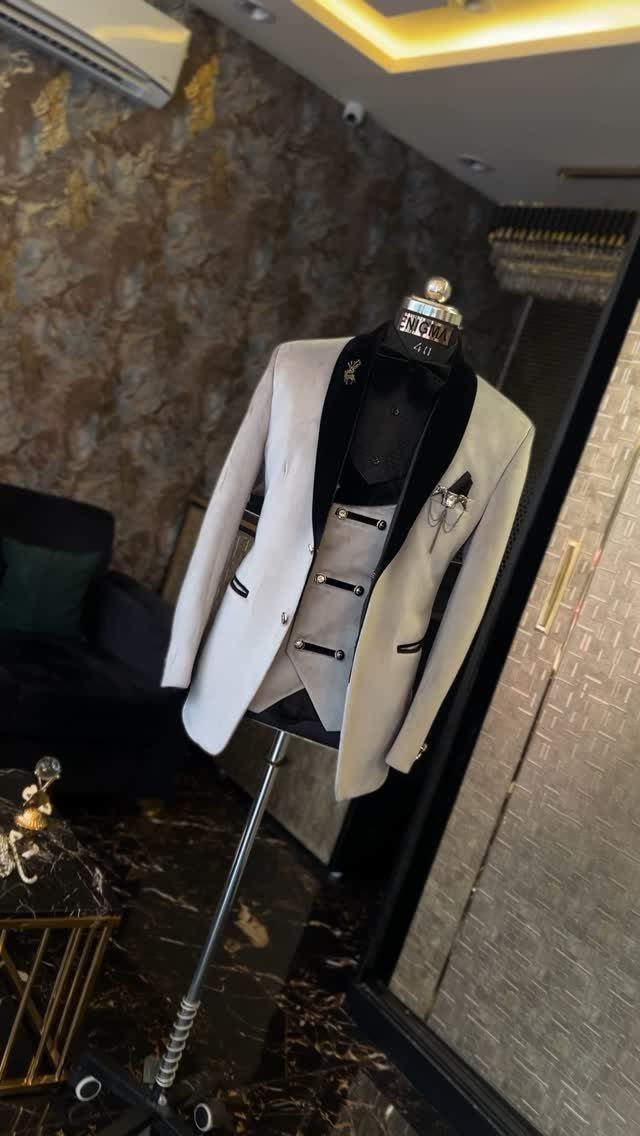
A white jacket with black satin-faced lapels and a matching vest reads as formal and a little theatrical, and the contrast does the styling for you. Black lapels keep it from looking like a costume.
Under a white tuxedo jacket, a black shirt adds depth, and a velvet bow tie in the same black keeps the contrast clean. A black shirt or a textured one beats a white shirt here, which flattens the look.
Wear a vest so the waist stays clean. Keep the trousers black.
2. Classic Black Tux
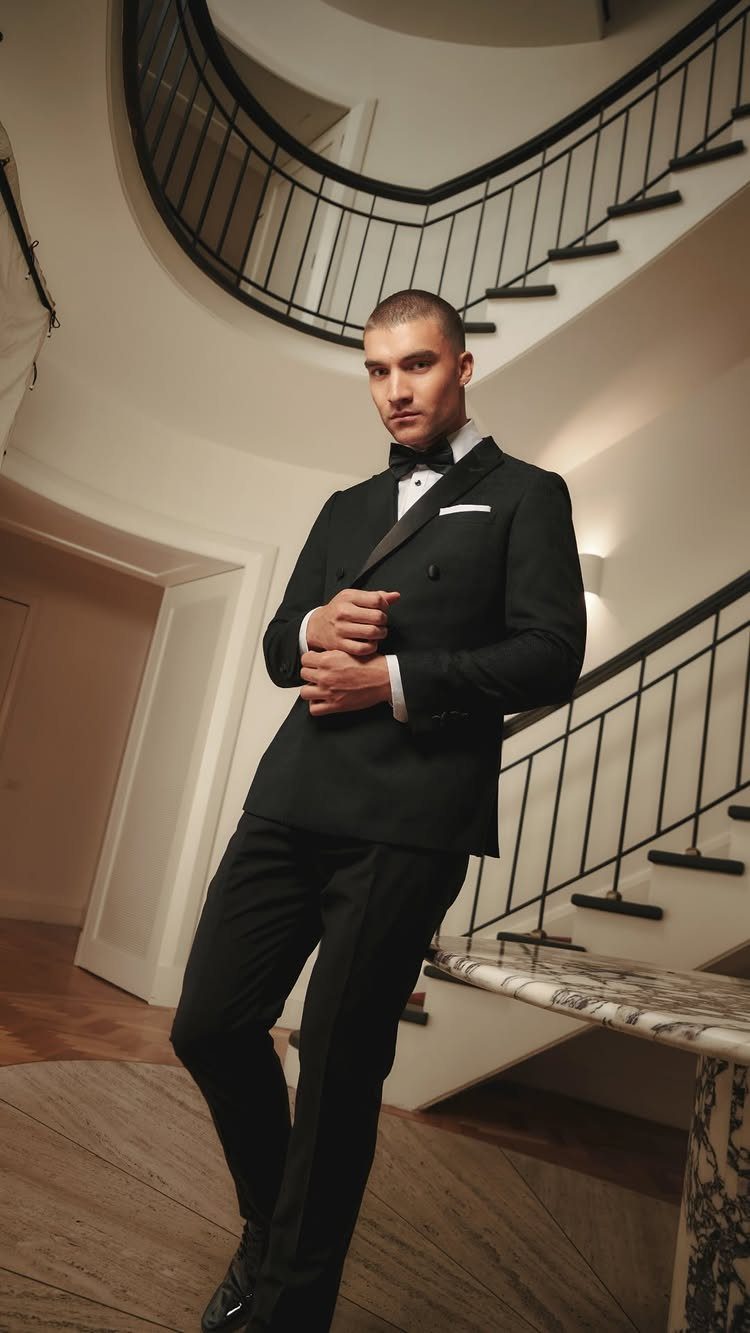
Black tie never needed a second opinion, and a black tuxedo with a bow tie is still the safest answer for an evening ceremony in a formal venue. Because the suit itself is fixed, the fit decides everything.
I would spend the alteration money before the upgrade money. A tux that sits right on the shoulders and breaks cleanly at the shoe beats a pricier one that hangs loose.
Keep the accessories plain: a black bow tie, a crisp white shirt, polished shoes.
3. Green Wedding Suit
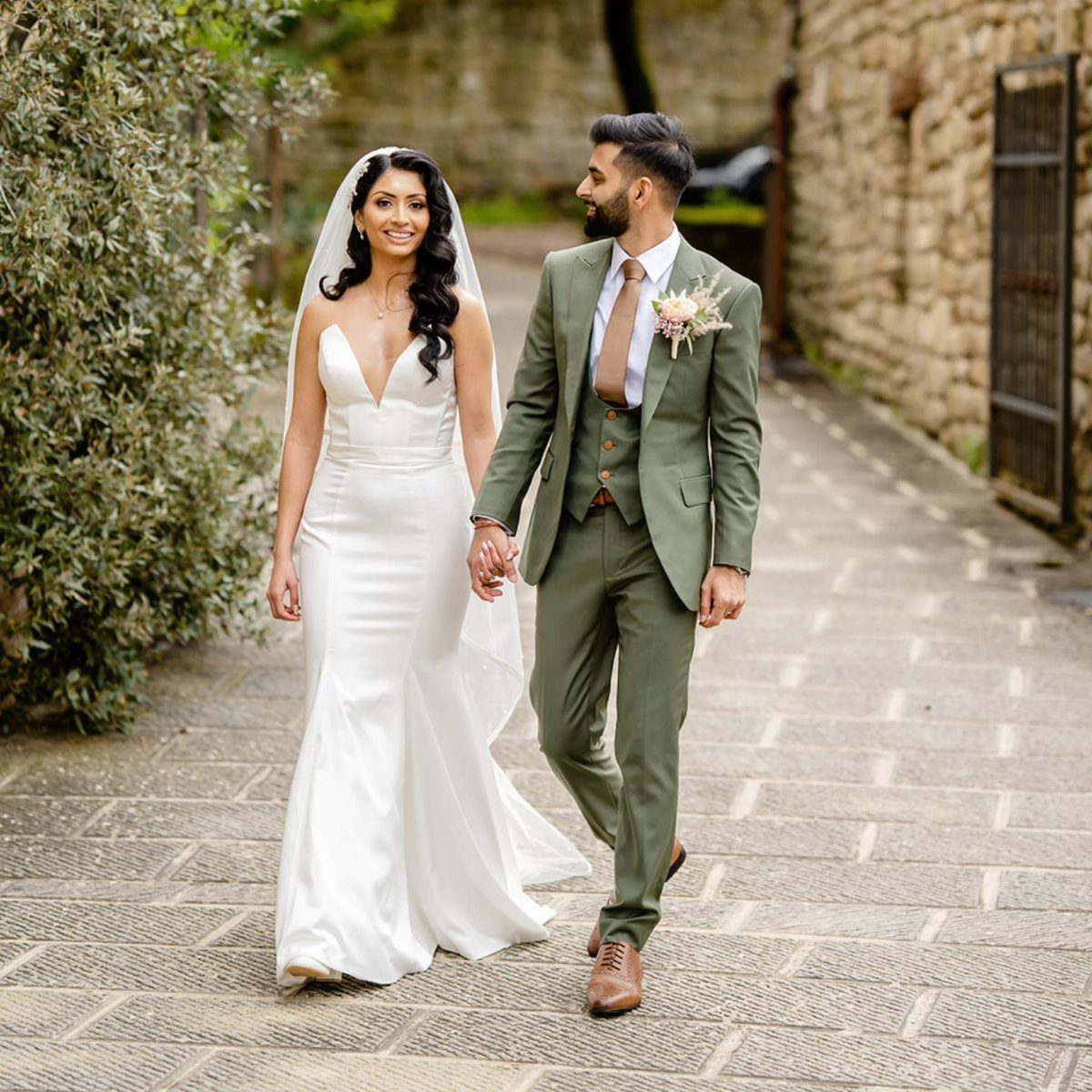
A green wedding suit feels deliberate without shouting.
Olive is easy to pair.
Go with a white or ivory shirt and a tie in a tone close to the suit, or a darker one for contrast. Keep the vest matched to the jacket and trousers so the three pieces read as one.
I like it best for grooms who want color but not a loud one.
4. Blue Wedding Suit
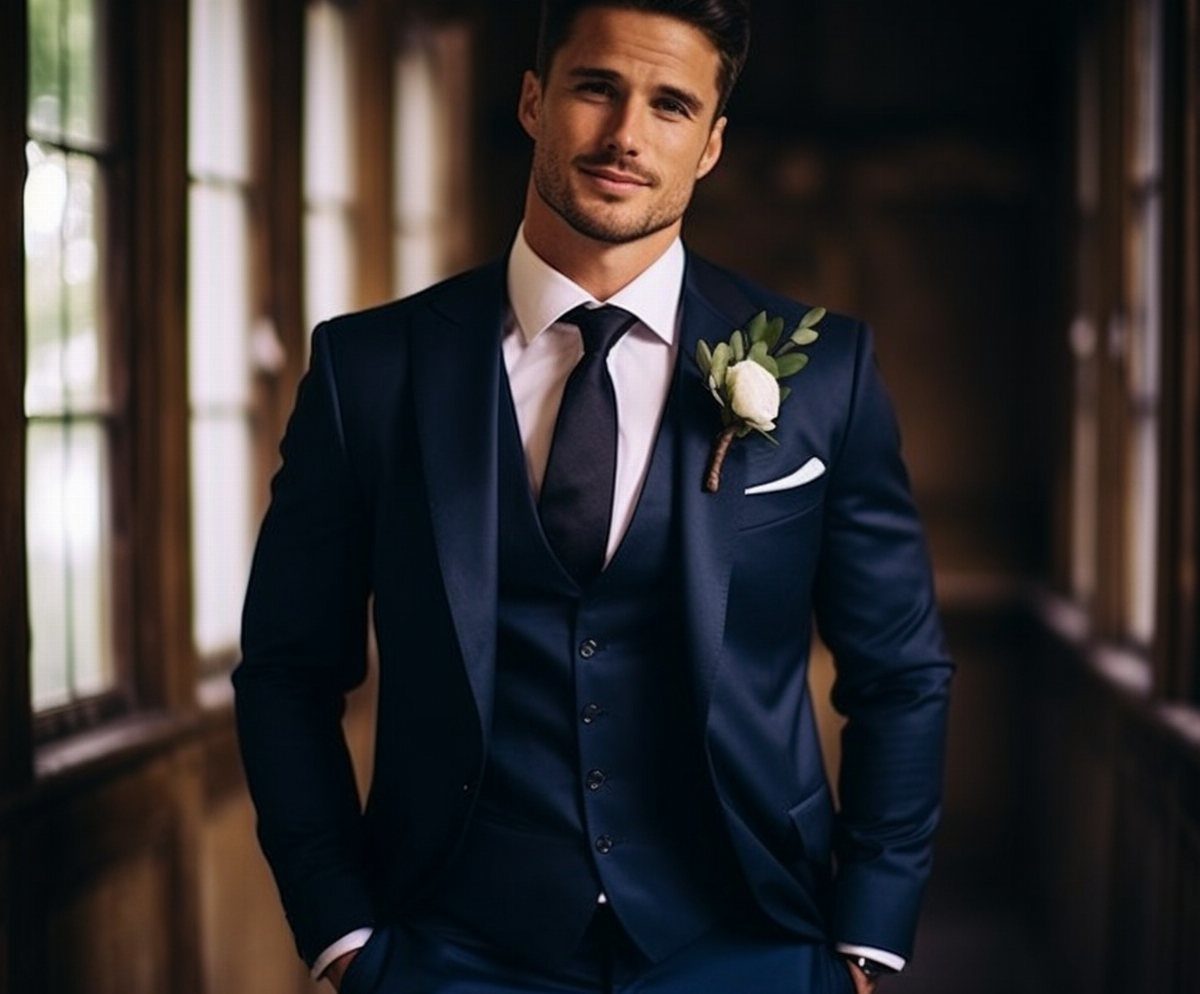
Navy is the color I trust most for grooms on a budget, since it works again at later events, long after the wedding. A three-piece version adds formality without changing the color.
Pair it with a white shirt and a dark tie, then let a white rose boutonniere supply the only bright note. The look stays crisp in a hallway, a church or a garden.
Navy beats black for a suit that has to double as a dressy outfit later.
5. Beige Wedding Suit
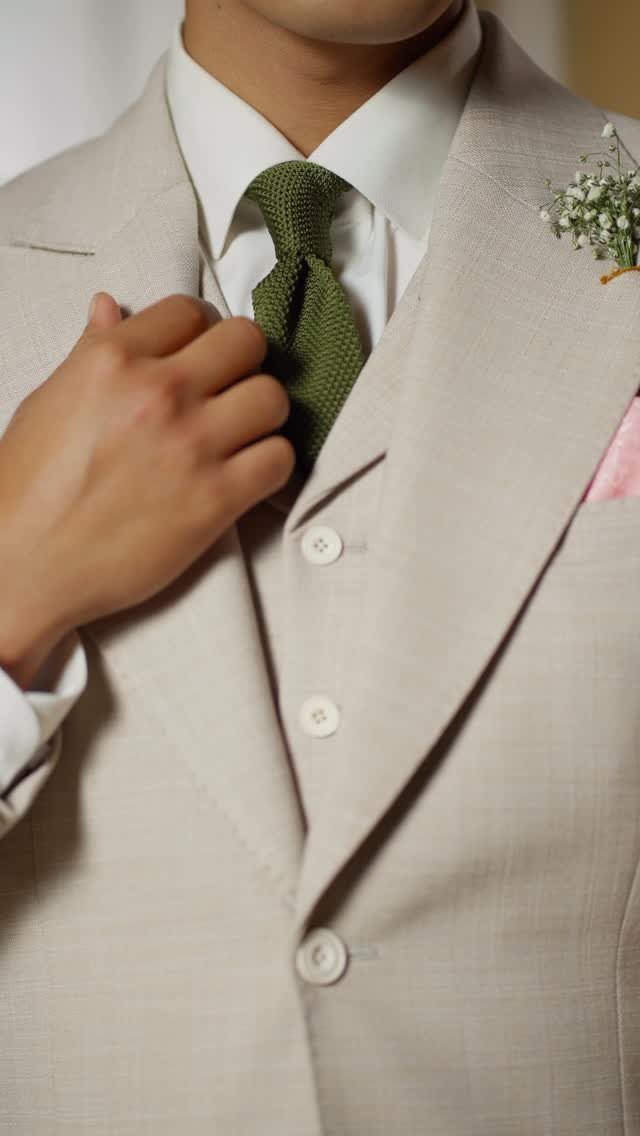
Beige is the groom’s answer to a warm-weather wedding, and a three-piece cut keeps it from looking too casual. Against a light suit, color in the accessories matters more.
An olive green knit tie is a smart pick: it adds texture and a muted contrast without fighting the neutral.
Light fabric shows wear, so keep it away from the dance floor drinks. I would take this over a darker suit for a daytime ceremony.
6. Vintage Wedding Suit
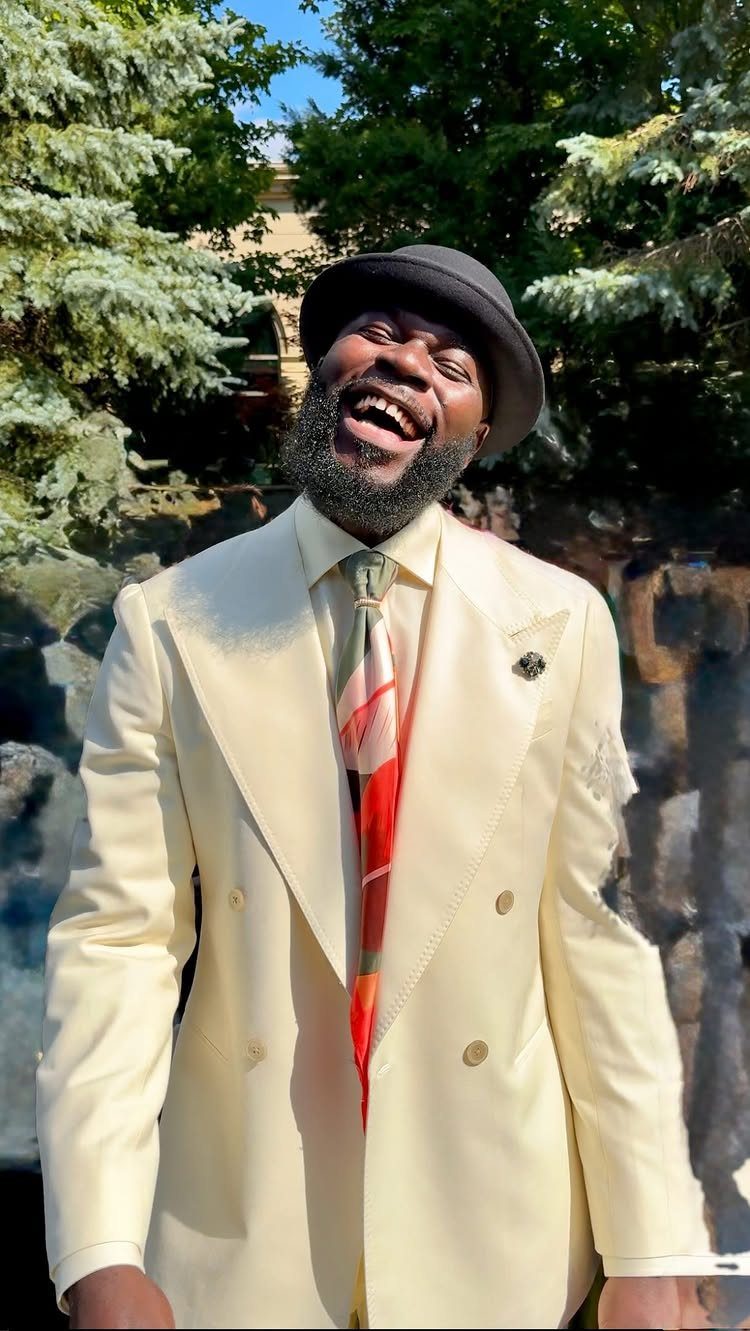
The hat is what sets the era, so commit to it.
Double-breasted jackets look best buttoned, so have the fit checked while buttoned and seated.
For one memorable detail, this beats a plain suit. Wear the hat for photos and take it off for the ceremony.
7. Statement Suits
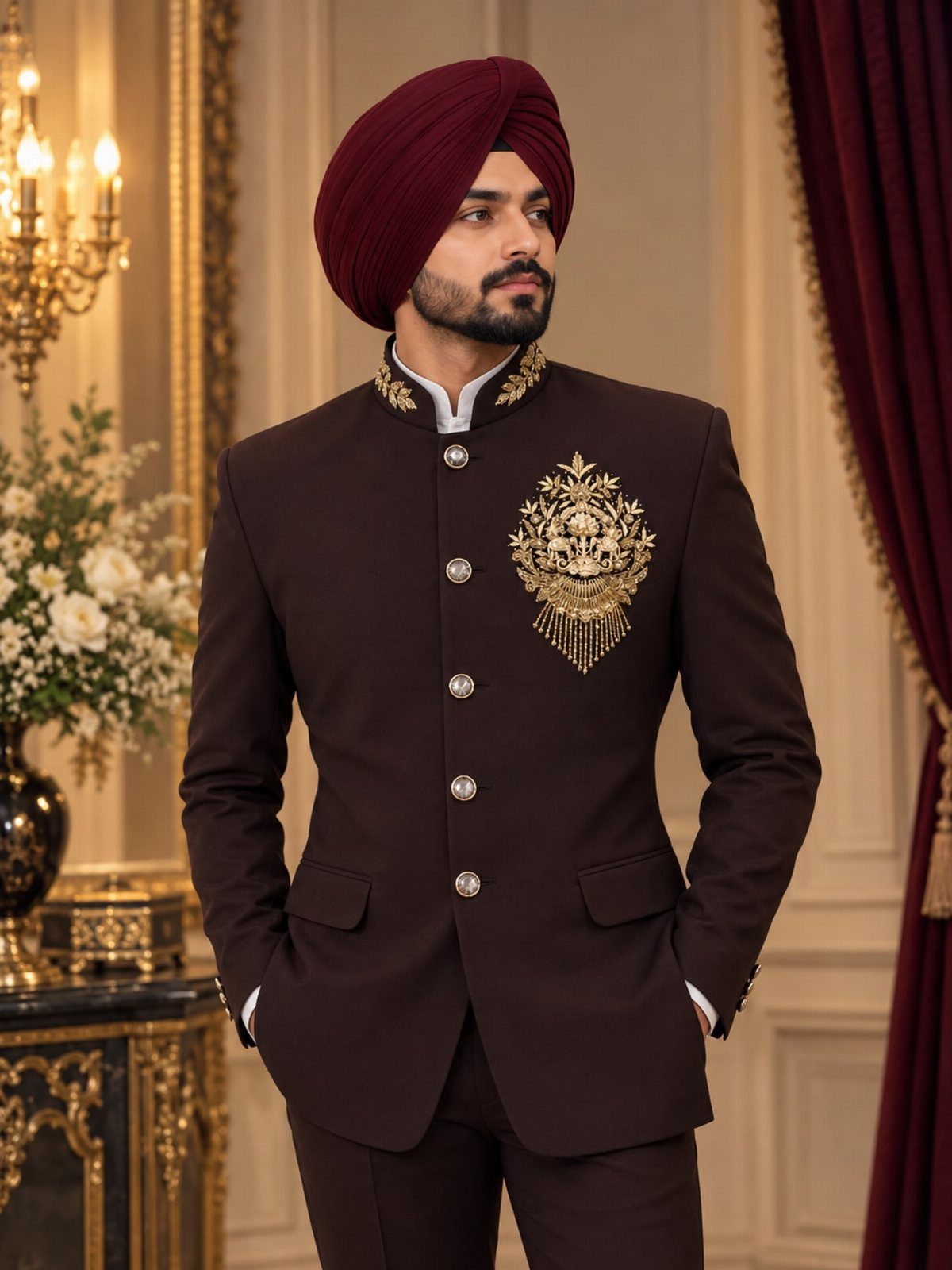
One loud element carries the whole look, so let the embroidery and the turban do the talking.
Keep everything else quiet. A plain shirt and simple shoes stop the outfit from competing with itself.
I would pick this over a plain suit if you want guests to remember what you wore, and it suits a room with rich color and gold accents.
8. Embroidered Black Tuxedo
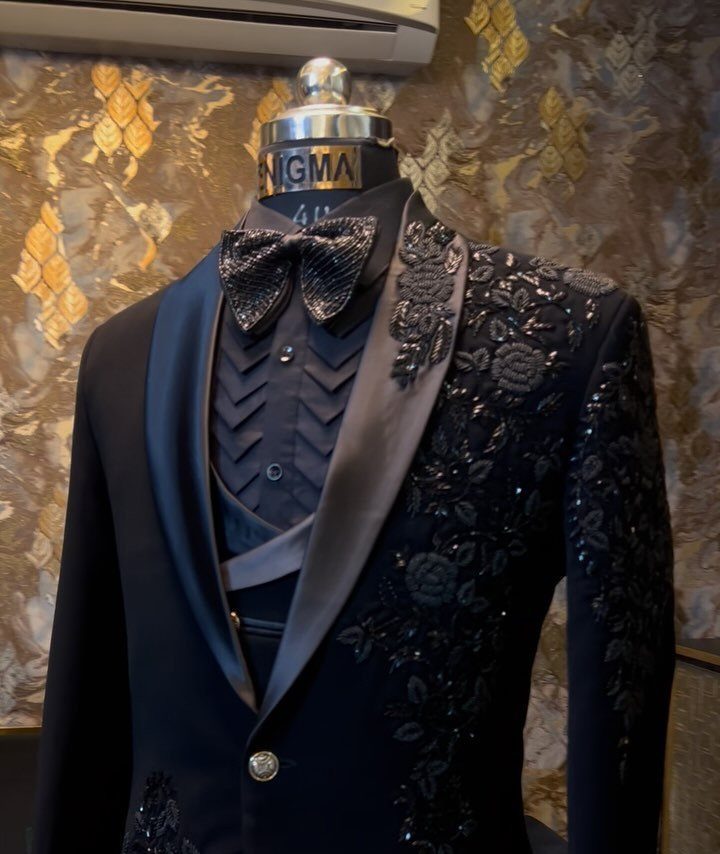
Floral beadwork and sequins on a black tuxedo jacket give formal wear some sparkle without leaving black tie behind.
Wear it with plain black trousers so the jacket is the only thing catching light. Keep the shirt and bow tie simple as well.
Beading adds weight and detail, so have the fit checked with the jacket on. I like this for an evening ceremony, where the sequins pick up the lighting.
9. Traditional Embroidered Sherwani
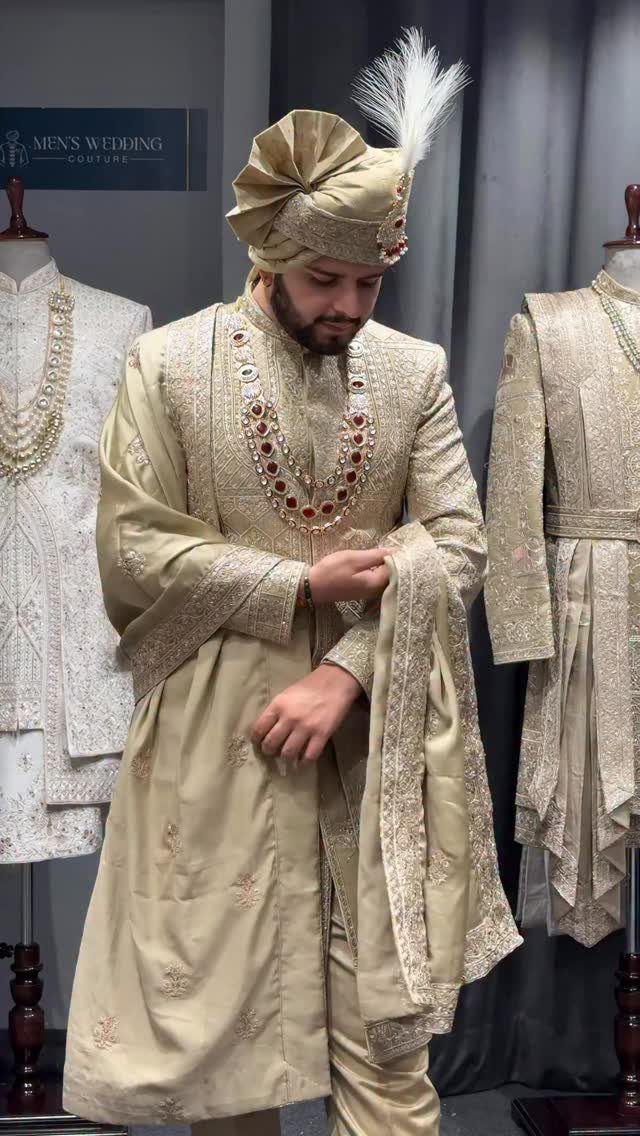
Gold embroidery across a sherwani, matched with a turban, shawl and jewelry, makes the groom’s outfit a full ensemble rather than a single garment. Each piece should echo the same gold so they read as a set.
Because the pieces work together, choose them together. Buying the turban and jewelry after the sherwani risks mismatched golds.
Wear the full look to a fitting, with every piece on, and only then put down a deposit. I would choose this over a suit for a traditional ceremony.
10. Brown Pinstripe Suit
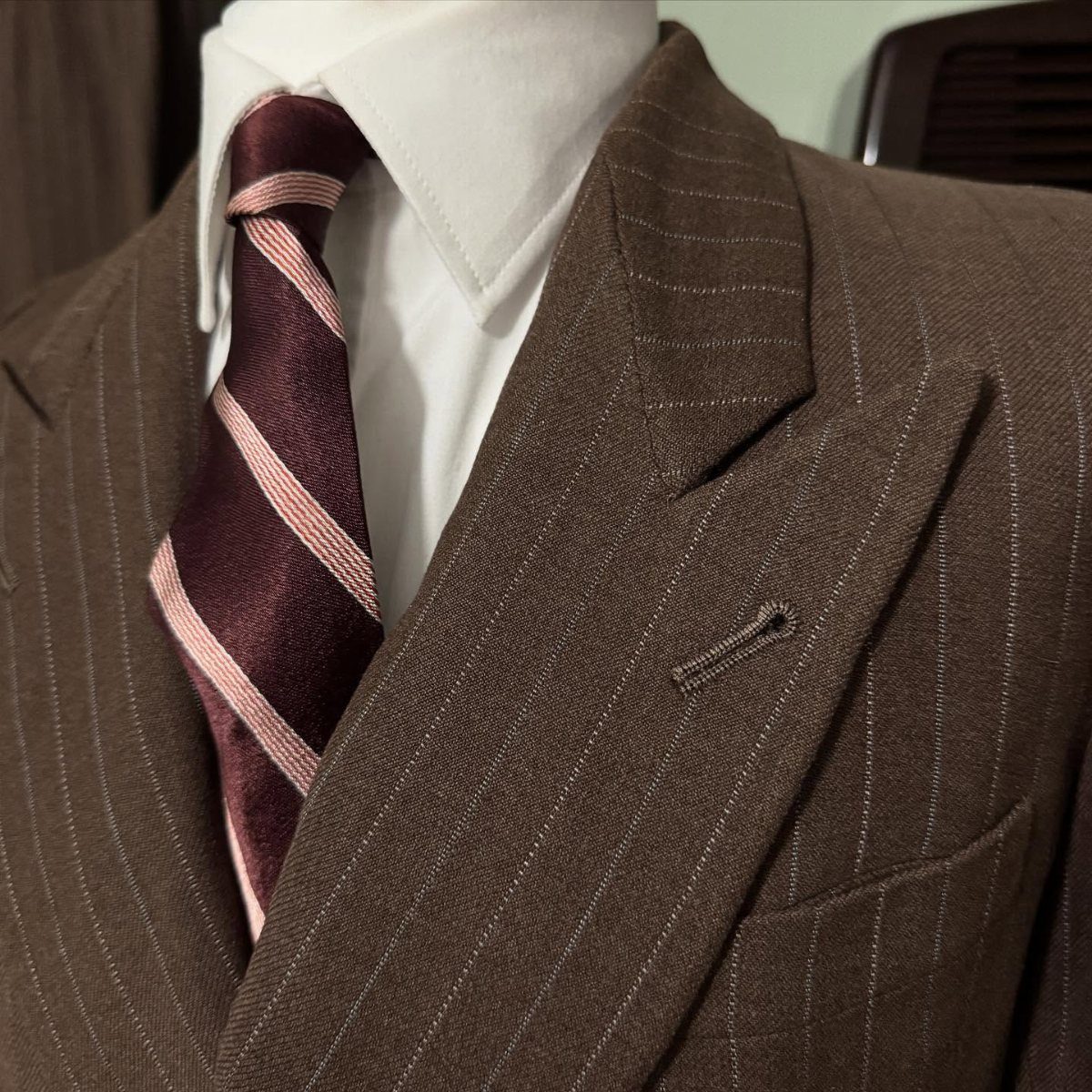
A brown pinstripe jacket is a quieter way to step off the navy and black path. The stripe adds pattern at a distance, so the rest can stay simple.
A white shirt keeps it crisp, and a burgundy and white striped tie picks up warm tones in the brown. 2 stripes can clash, so pick a tie whose stripe is wider or more widely spaced than the suit’s.
I like it for a daytime wedding where black feels too heavy.
11. Monochromatic Black Suit
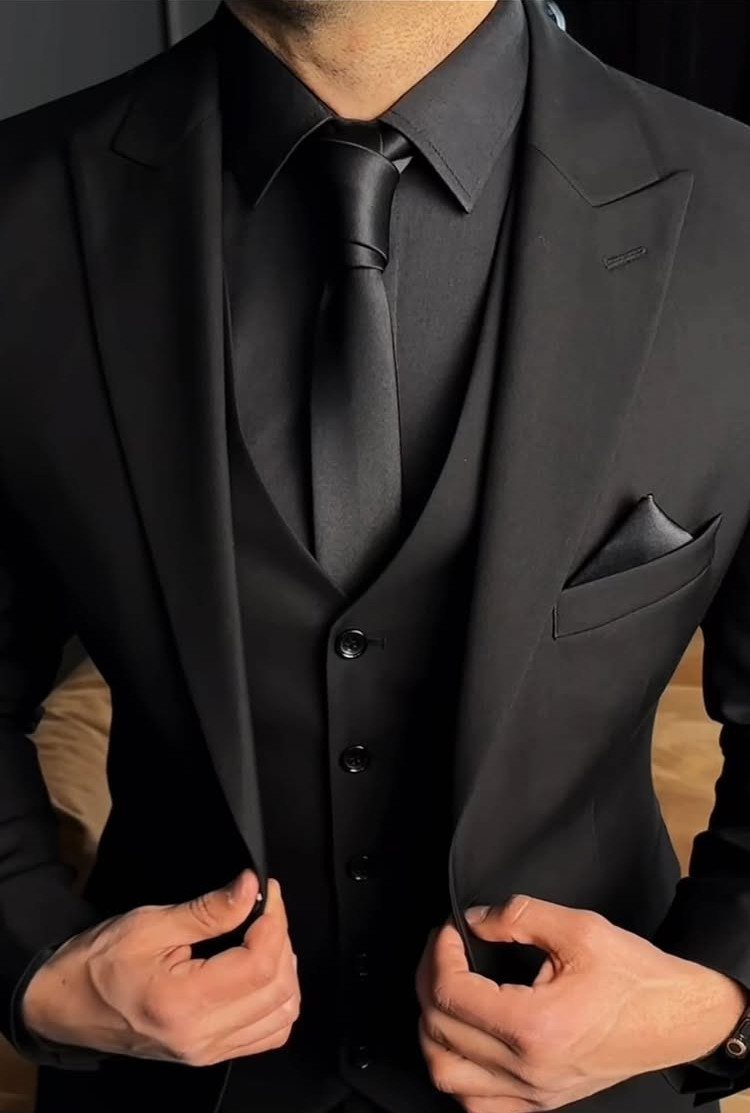
All black from jacket to pocket square is sleek, and the three-piece cut keeps it formal. With no contrast to lean on, texture and fit carry the look.
Match the blacks as closely as you can. A shirt, tie and pocket square that are slightly different shades will look faded beside the suit, so buy them together or compare them in daylight.
I would choose a pocket square in a different texture, such as silk against wool, so the outfit has some depth.
12. Brown Tweed Three-Piece Suit
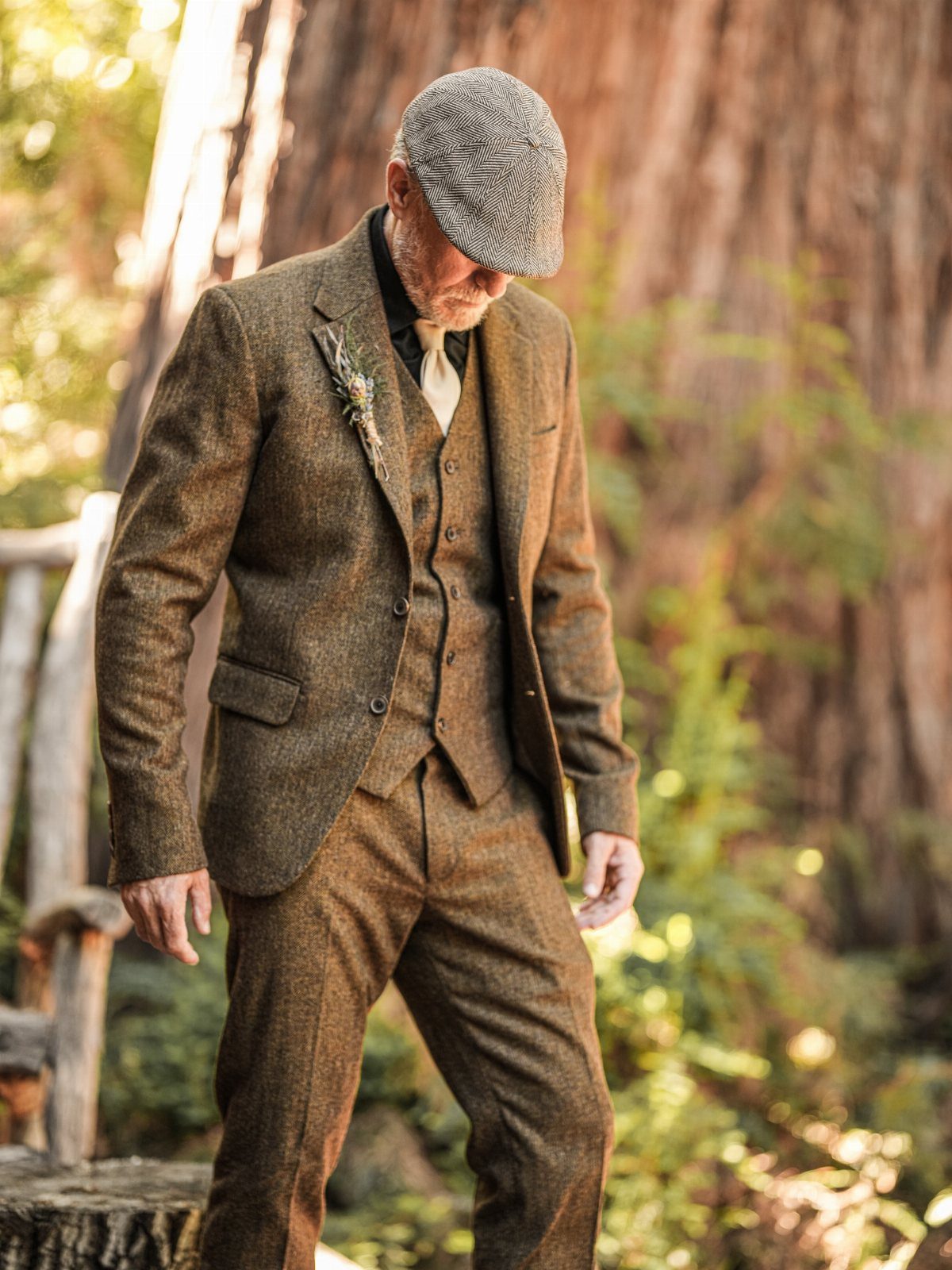
Brown tweed in a three-piece cut, with a flat cap and a rustic tie, suits an outdoor or woodland wedding. The cap finishes the look, so match its fabric to the suit.
Tweed is a heavier cloth, which makes it a better fit for cooler weather than a summer day. I would not pick it for a hot afternoon.
Keep the tie in earthy tones and the shirt plain. Wear the cap for photos outdoors, then take it off indoors.
13. White Dinner Jacket with Black Trousers
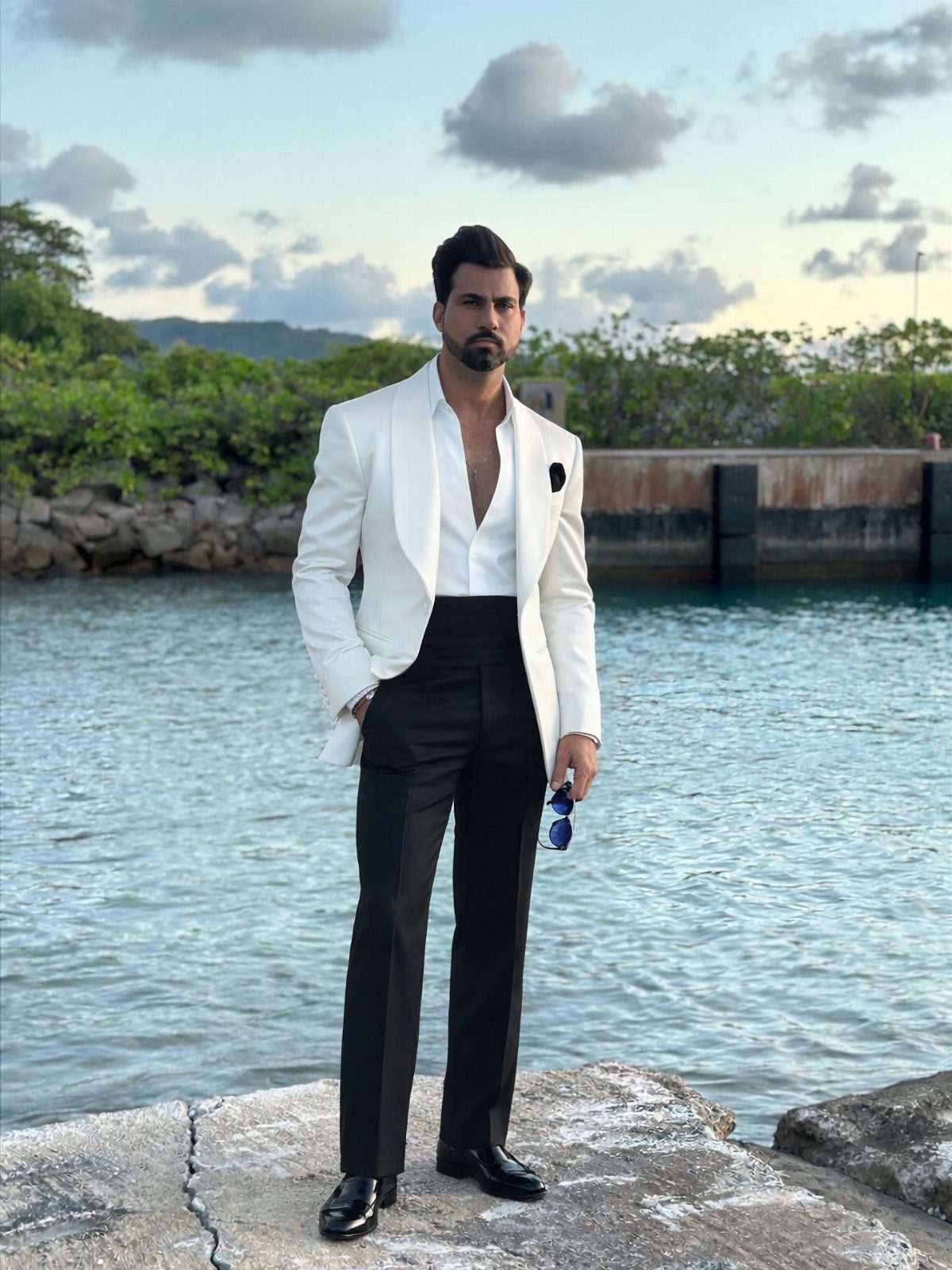
A white dinner jacket over black trousers is the warm-weather cousin of the black tux, and the split between light jacket and dark trousers is the whole look.
An open collar with no tie makes it relaxed, which suits a waterside ceremony.
High-waisted trousers matter here. They cover the gap between jacket and waist, so the black column stays unbroken and the legs look longer.
Skip the tie unless you want a more formal result; a black bow tie is the one addition I would allow. I would choose this over a full white tux for an outdoor daytime wedding.
Choosing the Right Color
Season and weather should set your color before the theme does.
For a summer wedding, go with tan or light gray, and pick a lighter weave too: linen in a neutral shade will keep you cooler than any wool of the same color.
Winter points the other way: navy or charcoal gray.
Want a pale suit in cold weather? A stone or beige wool keeps the look relaxed without the weight and gloom of dark, heavy cloth.
Whatever you choose, check it against the dress code and the look of the rest of the wedding.
Neutral shades also pair well with florals and tonal, textured accessories, so they leave you room to dress the outfit up or down.
Accessorizing the Groom’s Outfit
Your groomsmen will probably wear one uniform look, so the small pieces are where you separate yourself from them. A different tie, a different pocket square or a different boutonniere can all do it without changing the suit.
Fathers can be handled the same way. To set a father apart, change his boutonniere: a different flower or color does it, while a white, ivory or silver tie echoes the bride’s gown.
I would change one or two items, not all three. If everything differs, the group stops looking like a group.
Planning Ahead for Suit Selection
Begin your suit search about 4 months out, which leaves room for fittings and any alterations. That gives you time for fittings and alterations without the pressure, and you want to feel comfortable and sharp in the photos.
Settle the rent-or-buy question early, since it shapes your budget and your timeline.
If you rarely wear suits, renting gives you a memorable look without a one-off purchase. If you would wear it again, buying is a fair way to treat yourself.
Plan the outfit around your partner’s, too. The 2 looks should feel like a pair in the pictures, though a bit of contrast can work well at a relaxed or eclectic wedding.
Hiring a wedding suit has always been a more sustainable option for your wedding outfit – if you don’t wear suits very often then it might not make sense to invest in a one-off.
Frequently Asked Questions
How much should a groom spend on a suit?
I can’t give one number, because it depends on your budget and on whether you rent or buy. Rent if suits rarely leave your closet; you get a standout look without a purchase you will not use again.
Buy if you will wear it again, and make it navy, since that color carries over to later events better than any other.
What are the groom suit trends for 2026?
Classic tuxedos, bolder colors, and custom-made suits lead the trends for 2026.
Tweed is also popular, in modern cuts with softer shoulders and muted shades. It is a heavier cloth, so I would save it for cooler weather or an outdoor, rustic wedding.
When should a groom start shopping for a wedding suit?
Begin shopping about 4 months out.
That window leaves room for fittings and alterations without a rush. Decide on renting versus buying early too, because that choice sets both your budget and your timeline.
How can a groom stand out from his groomsmen?
Change the small pieces and leave the suit alone. A different tie, pocket square or boutonniere separates you from a group in one uniform look.





