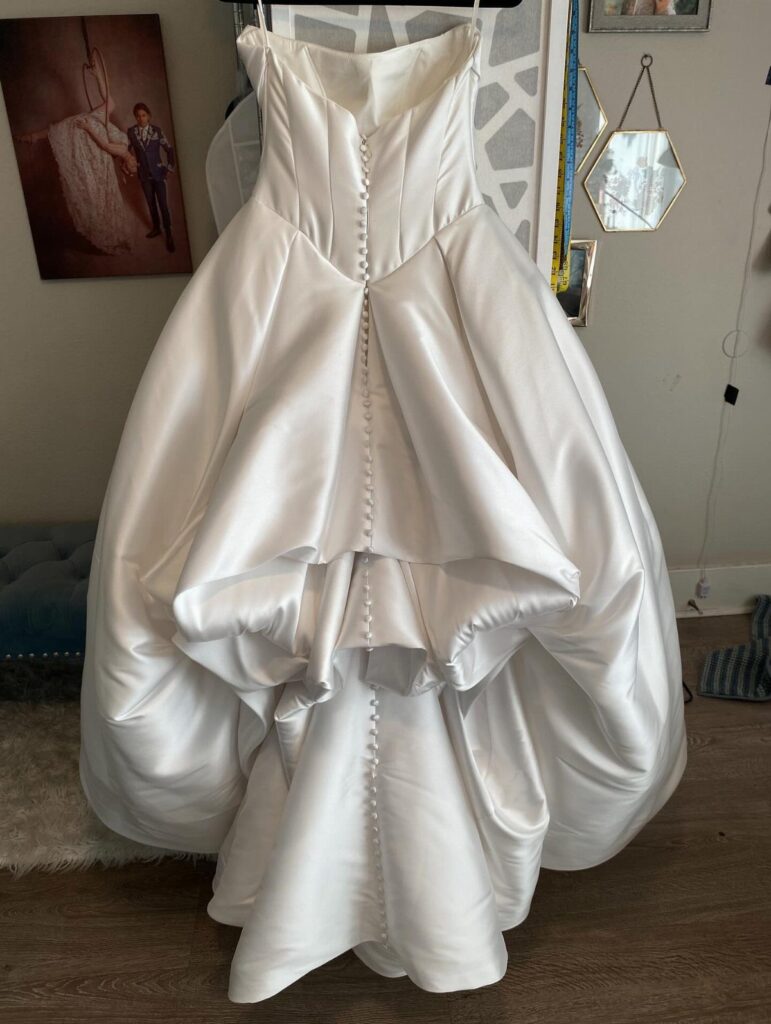
Your gown picks the bustle more than you do: its fabric, layers, train length and back detail decide which style looks right, and a bustle that suits satin can feel awkward on lace or embroidery.
Choices range from the wristlet bustle, a loop you slip over your wrist with no hooks to sew in, to the tiered bustle, which stacks the train in layers and needs more fastening points.
1. French Bustle
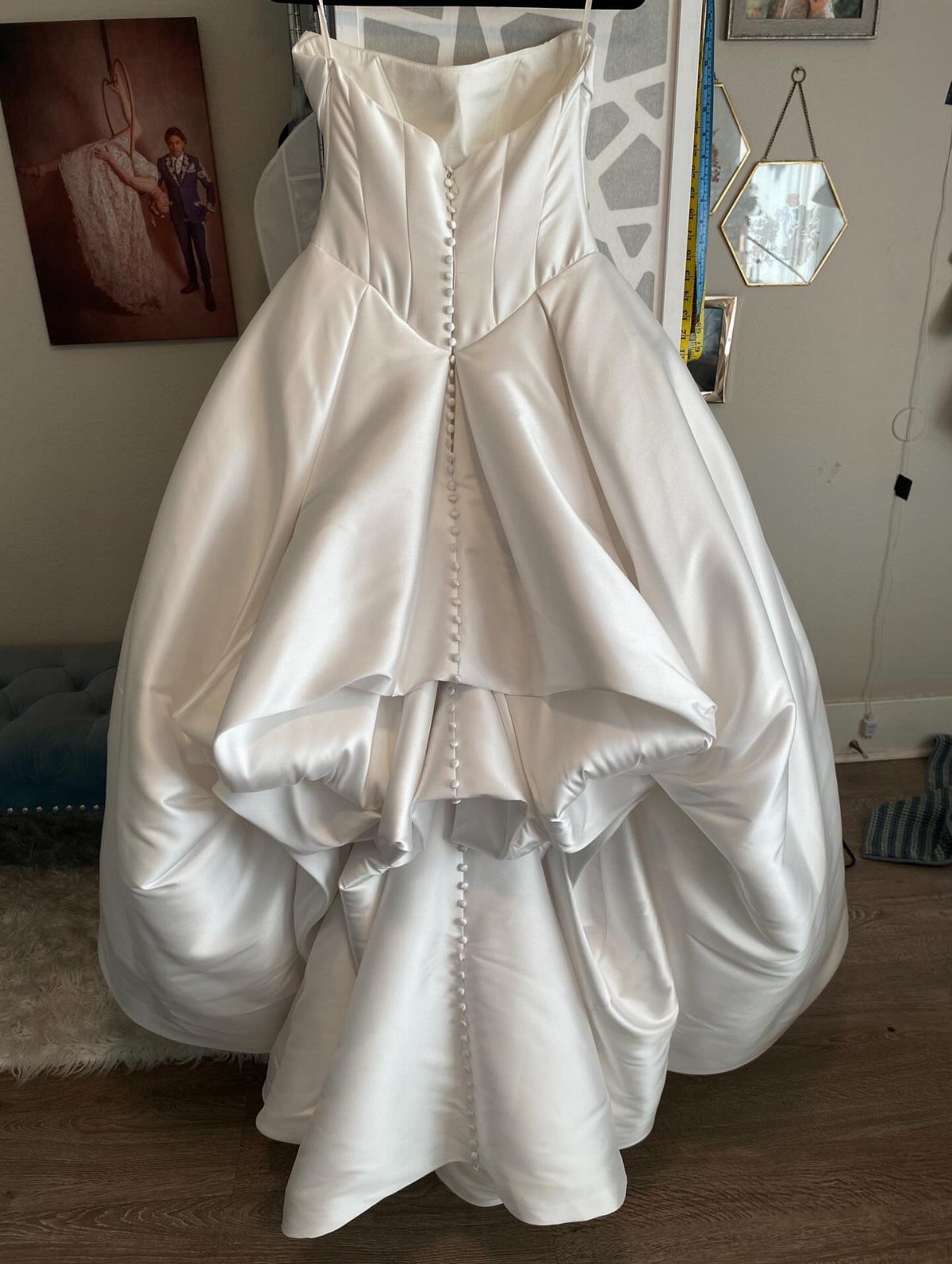
A French bustle folds the train underneath the gown instead of lifting it over the top, so the back of the skirt stays smooth and the satin hangs clean.
Ask your seamstress to attach it to the inside of the dress during your alterations.
Because the train sits out of sight, the bustle works best on a plain fabric like satin, where nothing on the surface needs to be seen. Cost depends on your seamstress, so get a quote when you book your fitting.
2. Wristlet Bustle
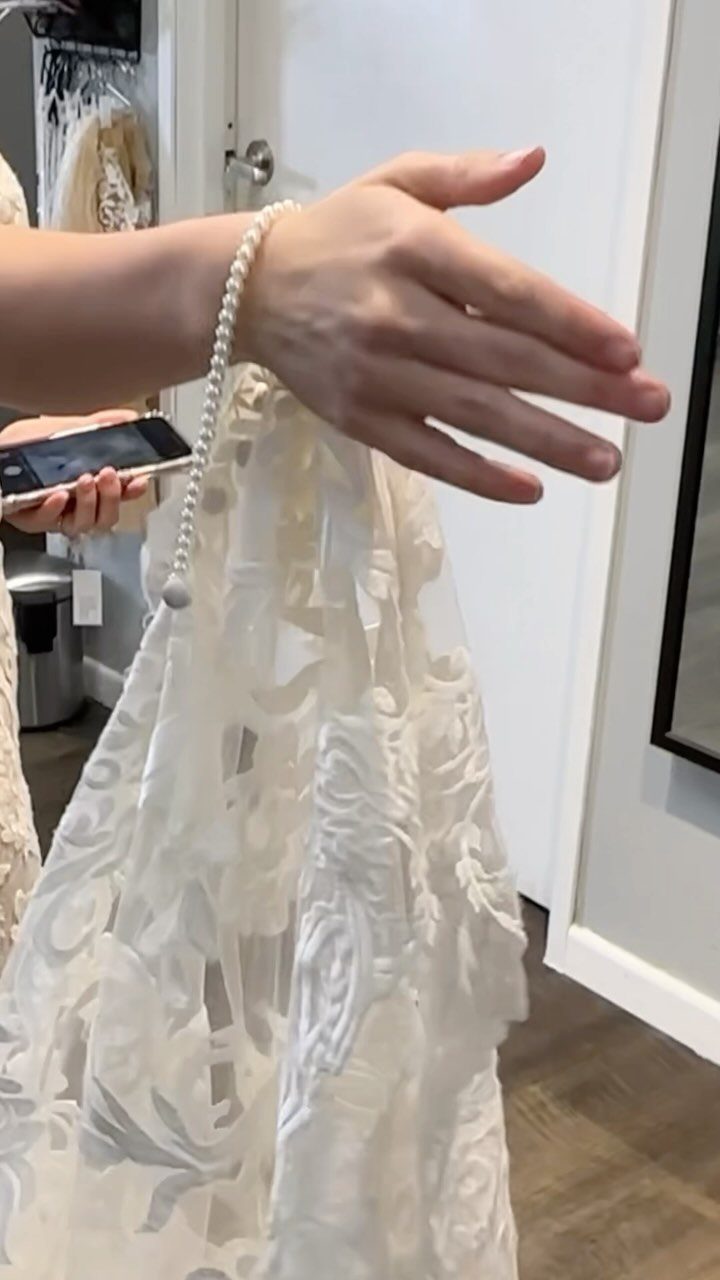
Wristlet bustles let you hold the train yourself. A loop slips over your wrist and lifts the hem whenever you want it up, then lets go when you want the full length back.
That is a real budget perk: no rows of hooks to sew in. Ask for a strap that matches the dress, such as the beaded one on this lace train.
Carrying it also keeps one hand busy, so I would choose it for a ceremony or a short walk and not for a night of dancing.
3. Bow Bustle
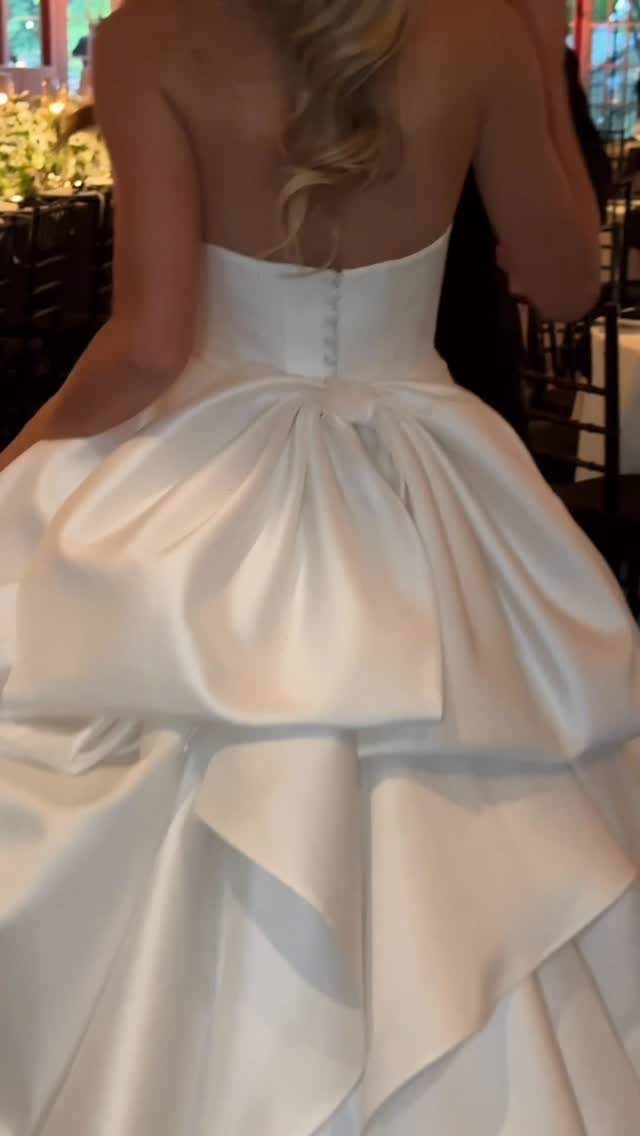
A bow bustle suits gowns that already end in a big bow at the back, since the bustle can sit right under it. It shows that detail off instead of hiding it under folded fabric.
Choose it only if you love the bow, since the dress is designed around it.
A strapless satin gown gives the bow room to be the main feature. Bring the dress to your first fitting and ask the seamstress how the bow will sit once the train is lifted.
4. Gathered Satin Train Bustle
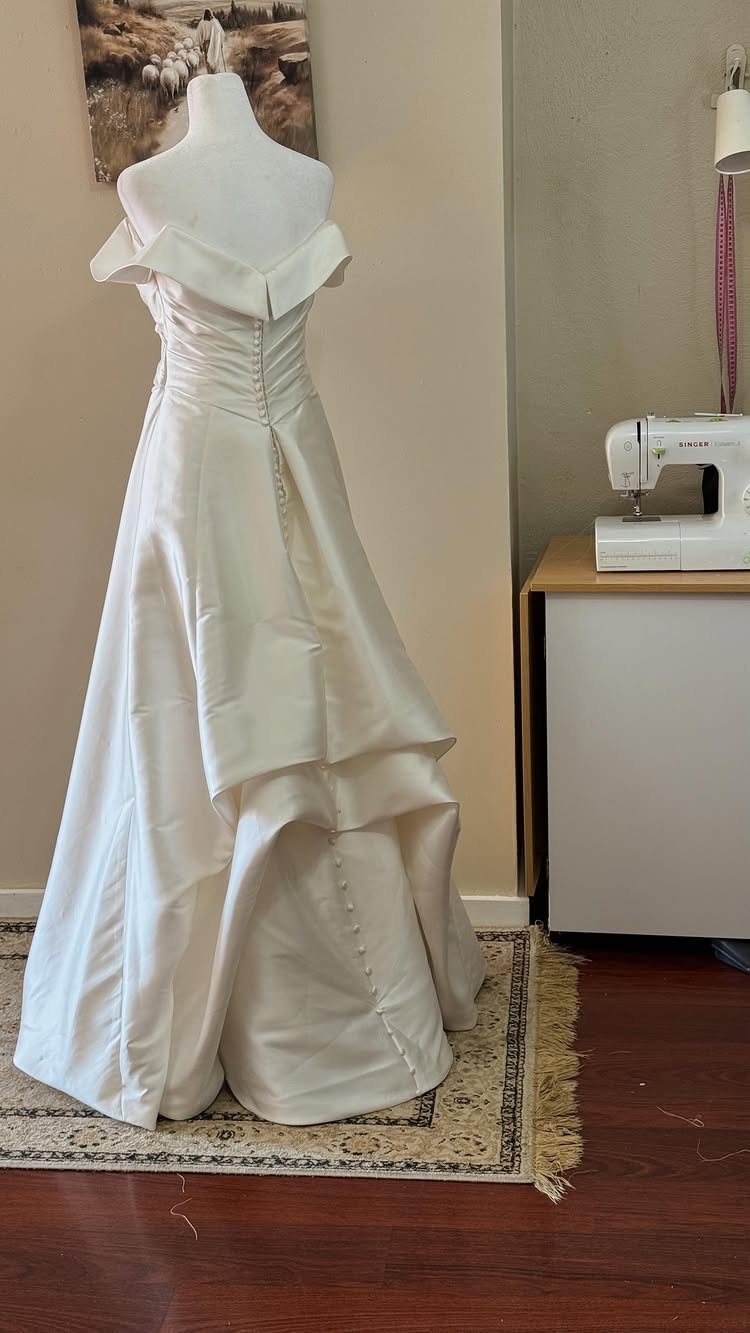
Gathered satin holds soft folds when the train is pulled up, which gives the back a rounded, draped finish. Satin is smooth, so the gathers look deliberate and not messy.
Have your seamstress bustle the dress on a form before your final fitting, as in this setup.
Then you can see the gathers from every angle and ask her to move the points if the folds look uneven. I prefer this for satin gowns with a simple back, since the draping becomes the detail.
5. Tiered Wedding Dress Bustle
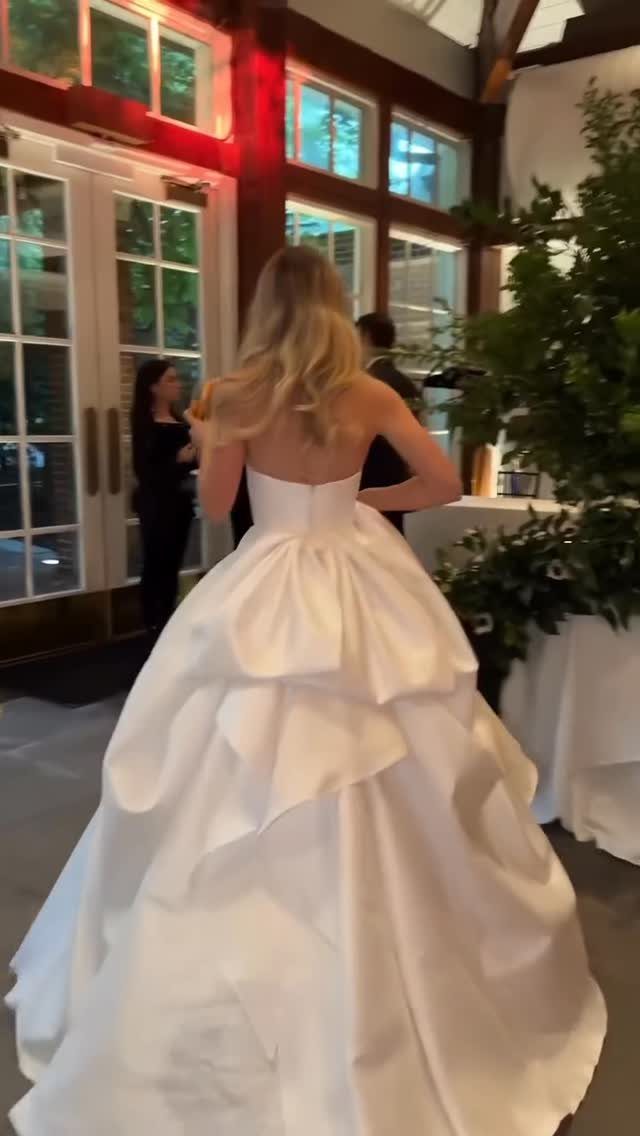
A tiered bustle stacks the train in layers down the back, so a strapless gown ends up with a full, voluminous shape. It looks fuller than most styles because each tier adds fabric.
That layered volume takes more fastening points than a simple lift, so expect more work from your seamstress.
Ask how many points she plans to use and get that in your quote. If you want a dramatic back view and have the fitting time, I would pick this one.
6. Lace Train Bustle
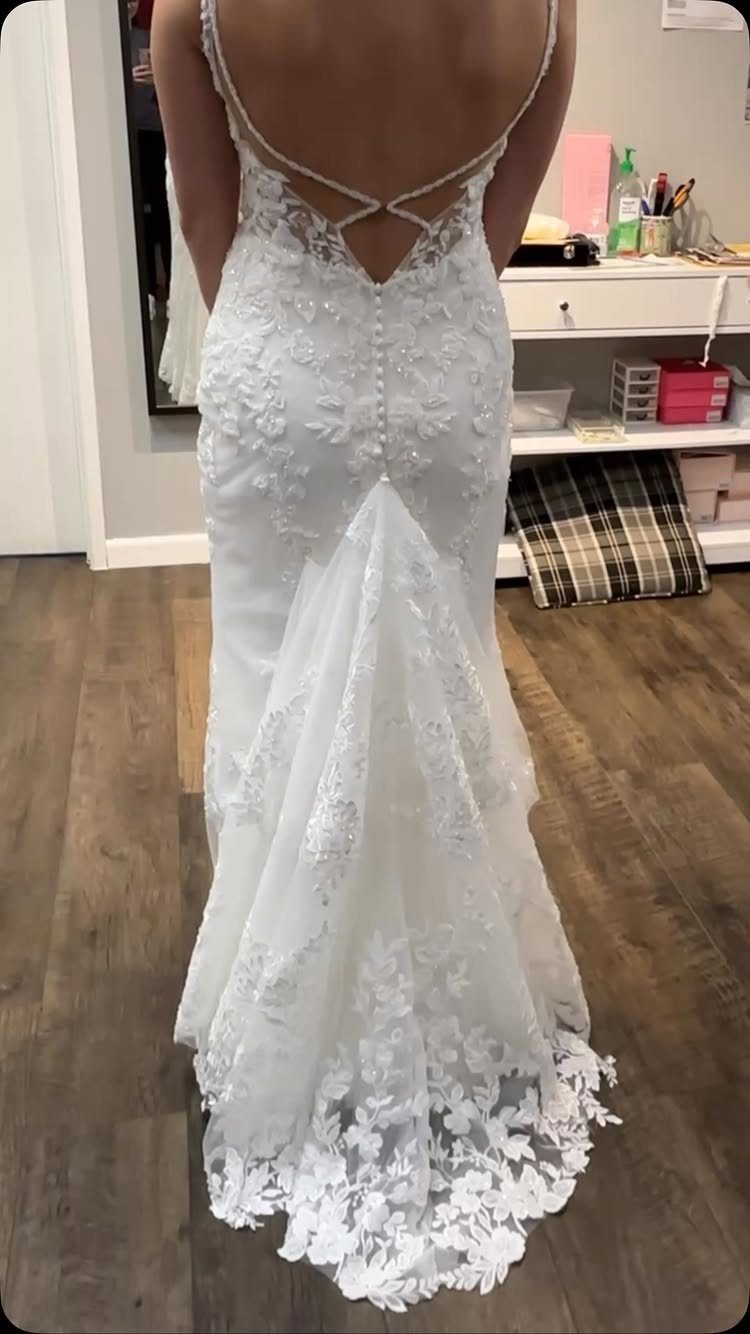
Lace is delicate, so a lace train needs a bustle that lifts it neatly without pulling on the fabric. Pinned up behind a low-back gown, it keeps the hem off the floor and lets the lace show.
Ask your seamstress to attach the fastening points to sturdy seams and not to the lace itself.
Bring your shoes and wear your real undergarments to the fitting so the hem height is right. If a low back is part of your look, this bustle keeps the whole silhouette clean.
7. Embroidered Train Bustle
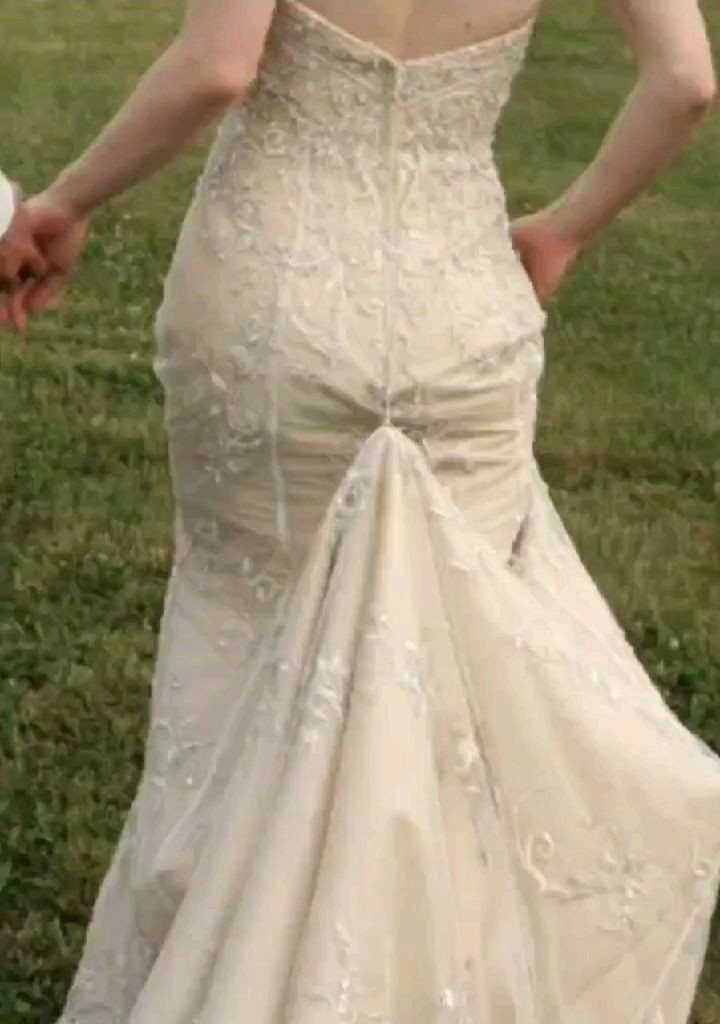
Embroidery adds weight and texture to a train, so a bustle on this kind of dress has to hold more than the fabric alone.
Cream thread on a cream gown keeps the pattern soft, and the pinned-up train still reads as one clean shape from behind.
Anchor the bustle on the dress’s structural seams, a few inches clear of the embroidery, so the weight never drags on the thread work or catches a motif.
Bring your shoes to the fitting so the hem lands at the right height, since a lawn will tug at anything that hangs low. I would choose this for an outdoor ceremony.
Emergency Bustle Kit
Pack a small kit and hand it to your maid of honor or stylist before the ceremony. Safety pins, a small sewing kit, fashion tape, and any spare hooks or buttons your seamstress gave you cover most problems.
Dancing is hard on a bustle: one guest stepping on the train, or a few hours of spinning, is enough to snap a loop or pop a button.
If that happens, use safety pins to copy the spot where the bustle broke. You can usually see where it came loose, and matching that point restores the look.
Ask one person to know where the kit is and how the bustle works. Having a stylist on site makes the repair even easier.
Choosing the Right Bustle
Your gown usually picks the bustle, not the other way around. Height, fabric, layers, and train length all change which style looks right, and a bustle that suits one dress can feel awkward on another.
Let your seamstress show you each option on your actual gown and explain the pros and cons as she goes. Then choose the one you like best from the front, the back, and the side.
Decide at your alterations appointment, not the week of the wedding, so there is time to adjust the points.
“Factors that go into what bustles look best are a person’s height, the gown materials, layers, and length of train.” In the end, choosing a wedding dress bustle comes down to what works best for the bride and their dress.
— Vogue
Bustle Timing on Wedding Day
Give the bustle its own slot on the day-of timeline so it never gets squeezed in at the last second before the first dance.
A basic bustle goes quickly, around 5 minutes, while a layered or multi-point style can eat up to 15. If your cocktail hour is short and you aren’t changing outfits, you can wait until guests sit down for dinner.
For a complex bustle, step out of the dress and have your helper work on it laid flat on the floor.
Since you’ll be stepping away anyway, treat it as a bathroom break too, and keep a robe nearby so you’re not standing around in the dress.
A few couples bustle straight after the recessional, which buys a quiet few minutes alone before they rejoin their guests.
Frequently Asked Questions
What is the bustle on a wedding dress?
After the ceremony, a bustle gathers the train up and holds it off the floor, so you can walk, dance and hug your guests without tripping on your own hem.
Most are secured with small hooks, buttons, loops or ribbon ties that a seamstress stitches inside the skirt. Your seamstress adds it during alterations, and it also protects the hem from damage.
How much does it typically cost to bustle a wedding dress?
Expect roughly $100 to $350, depending on how complex the bustle is.
Basic styles like a wristlet run about $90–$150, while multi-point or heavily layered styles can pass $300. Beaded gowns, rush work, peak season, and big-city shops can push the price up, so get a quote at your first fitting.





