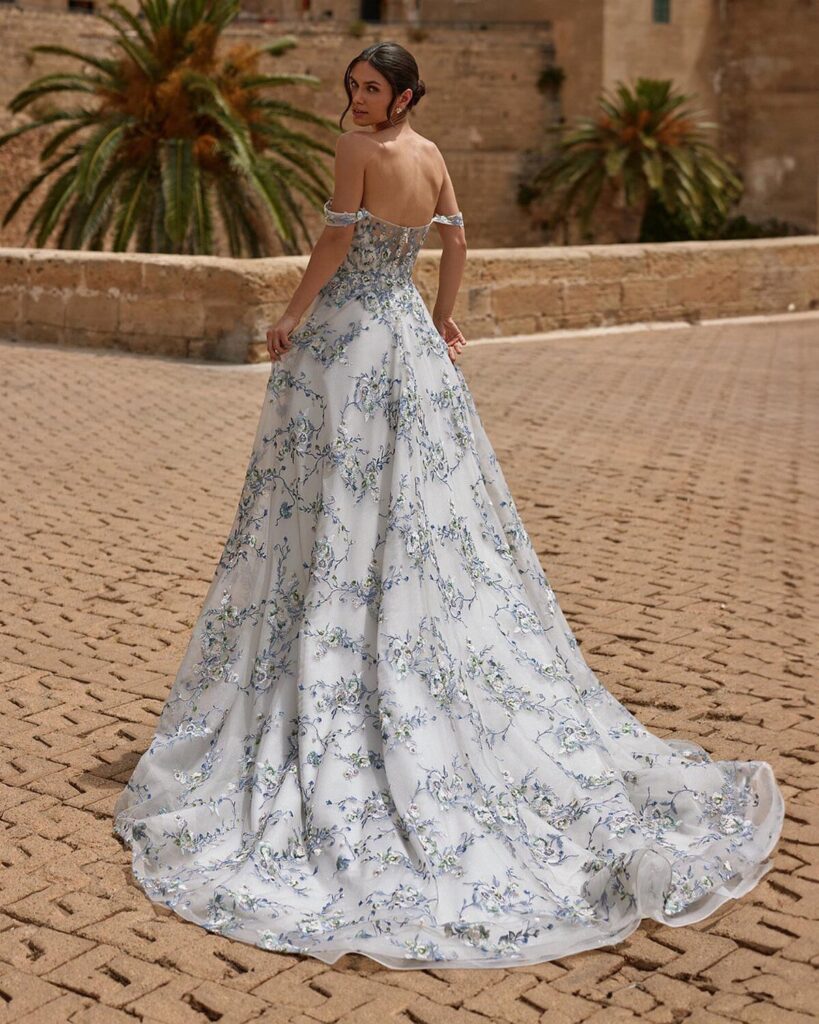
The 16 dresses here range from a white gown with a sheer floral cape to a royal blue ballgown, a red tulle skirt and a deep maroon saree, so the real decision is how much of the dress carries color.
To keep the classic bridal look, put the color in embroidery, an ombre skirt or a floral cape; a full-color gown like the blue, sage or maroon ones skips white entirely, and that narrows your options for veils, flowers and shoes.
Before you commit to any shade, carry the swatch to a window or step outside with it, since the soft glow of a bridal salon can make a color look warmer or richer than it does in sunlight.
1. Bright Colorful Florals
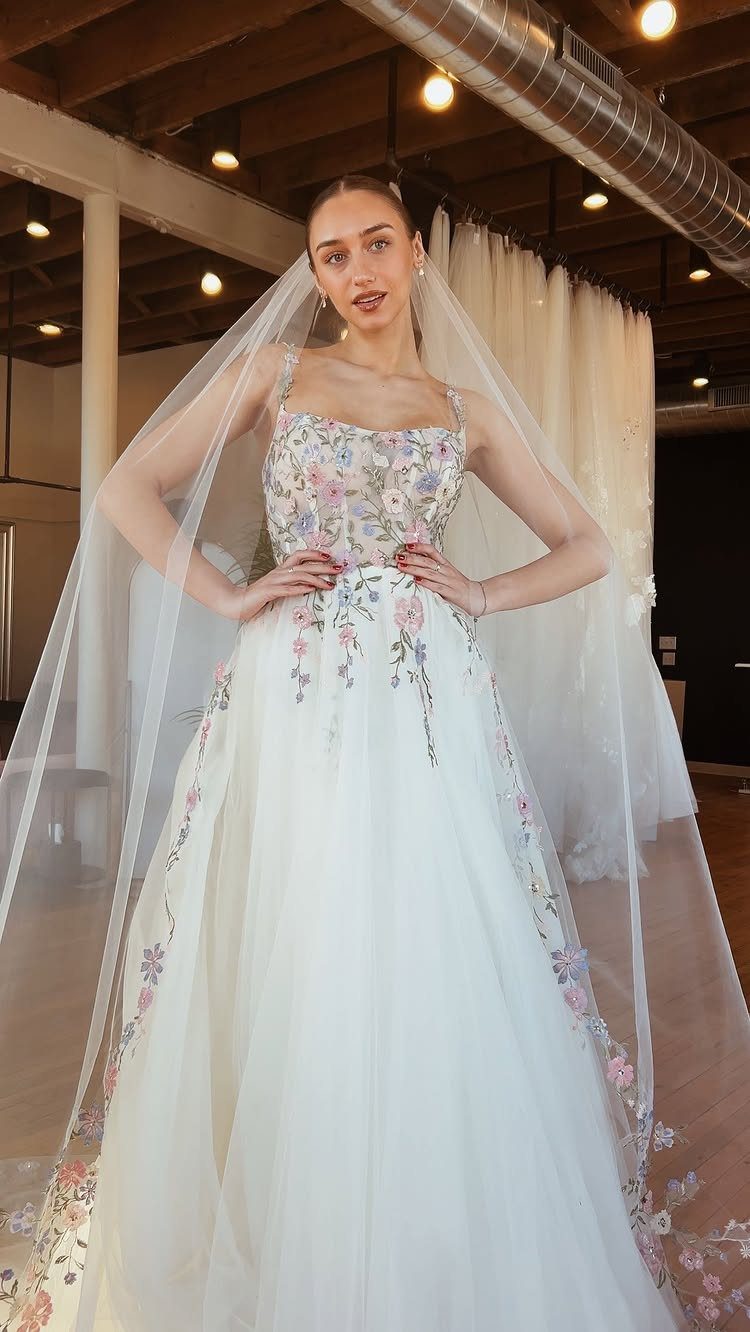
Color works best on a white gown when it lives in the embroidery, not the fabric.
Bright floral thread on a white base gives you a dress that still reads as bridal from across the room, with the color arriving only up close.
Daylight shows a dress’s true color, so have the shop carry it to a window or outside door and look at it there first, since store lighting can flatter a shade that reads very differently at an outdoor ceremony.
Saturated thread looks different under store lights, and a veil in plain tulle keeps the florals as the only loud thing.
2. Blue Florals
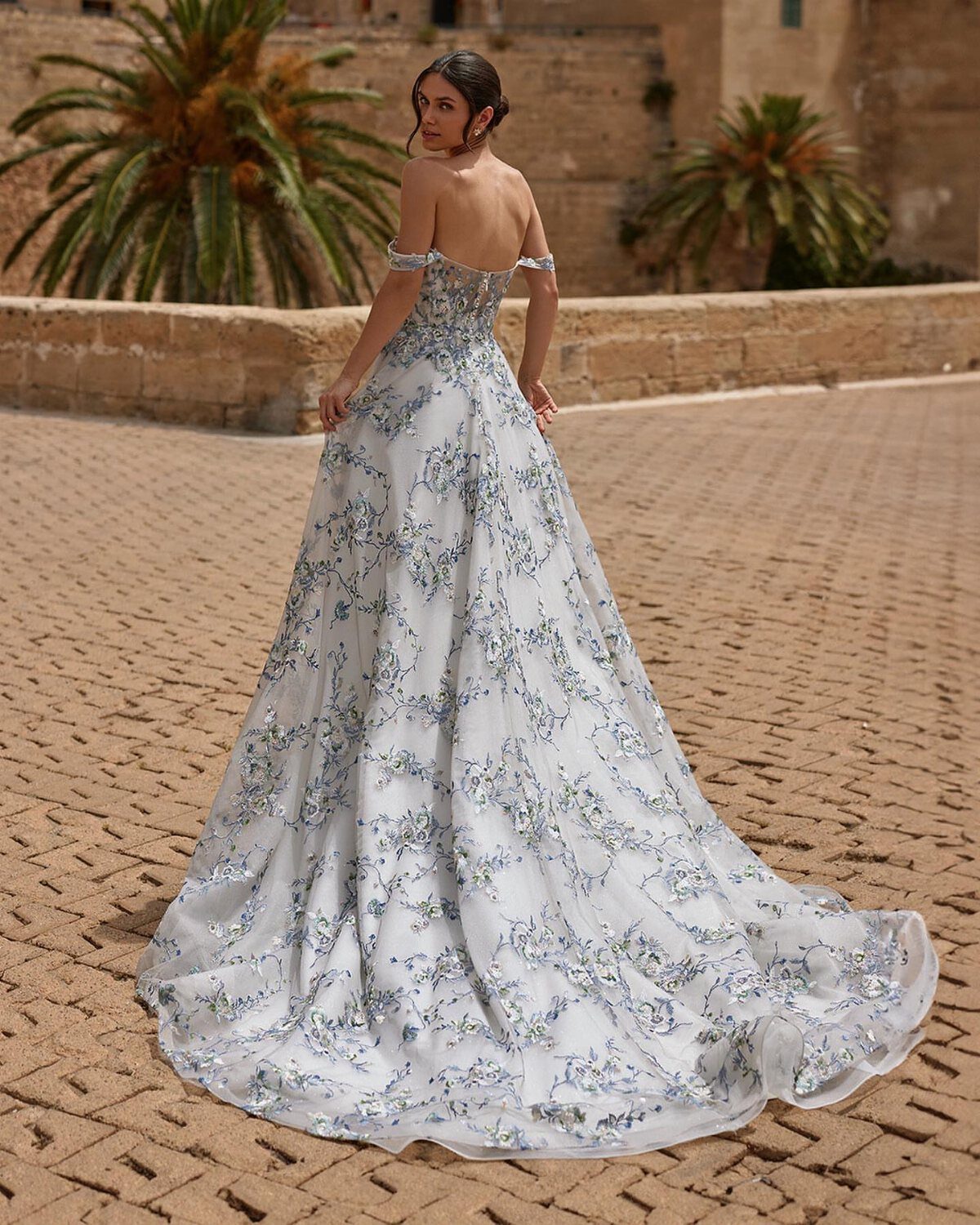
Light blue florals on a white off-the-shoulder lace gown are the quietest way I know to carry "something blue" in the dress itself. The color is soft enough that it never fights the lace.
Pare down the shoes, jewelry and hair so the color has no competition. Plain shoes, a clean hairstyle and minimal jewelry let the embroidery do the work, and the neckline already gives you a bare-shoulder line to build on.
3. Cactus Rose Embroidery
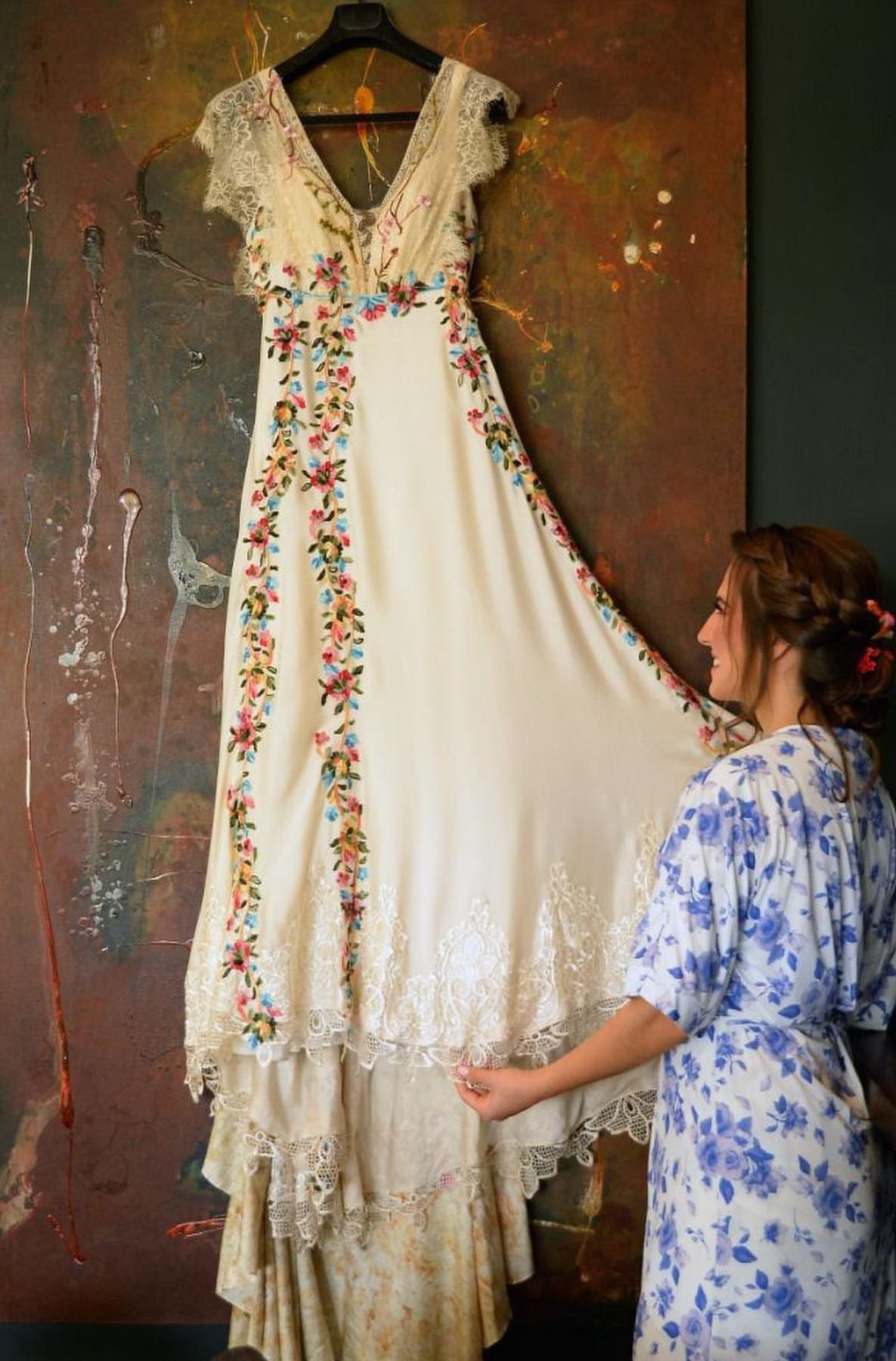
A cream base, not stark white, suits heavy embroidery best, because multicolor thread looks warmer and less sharp against it. That is why this boho approach feels relaxed instead of costume-like.
Pick a gown where the stitching is the whole design, then keep the hair loose and the accessories few. If you love it, put the embroidery first in your budget, since hand-worked detail is where a dress price climbs.
4. Black Gown with Floral Overlay
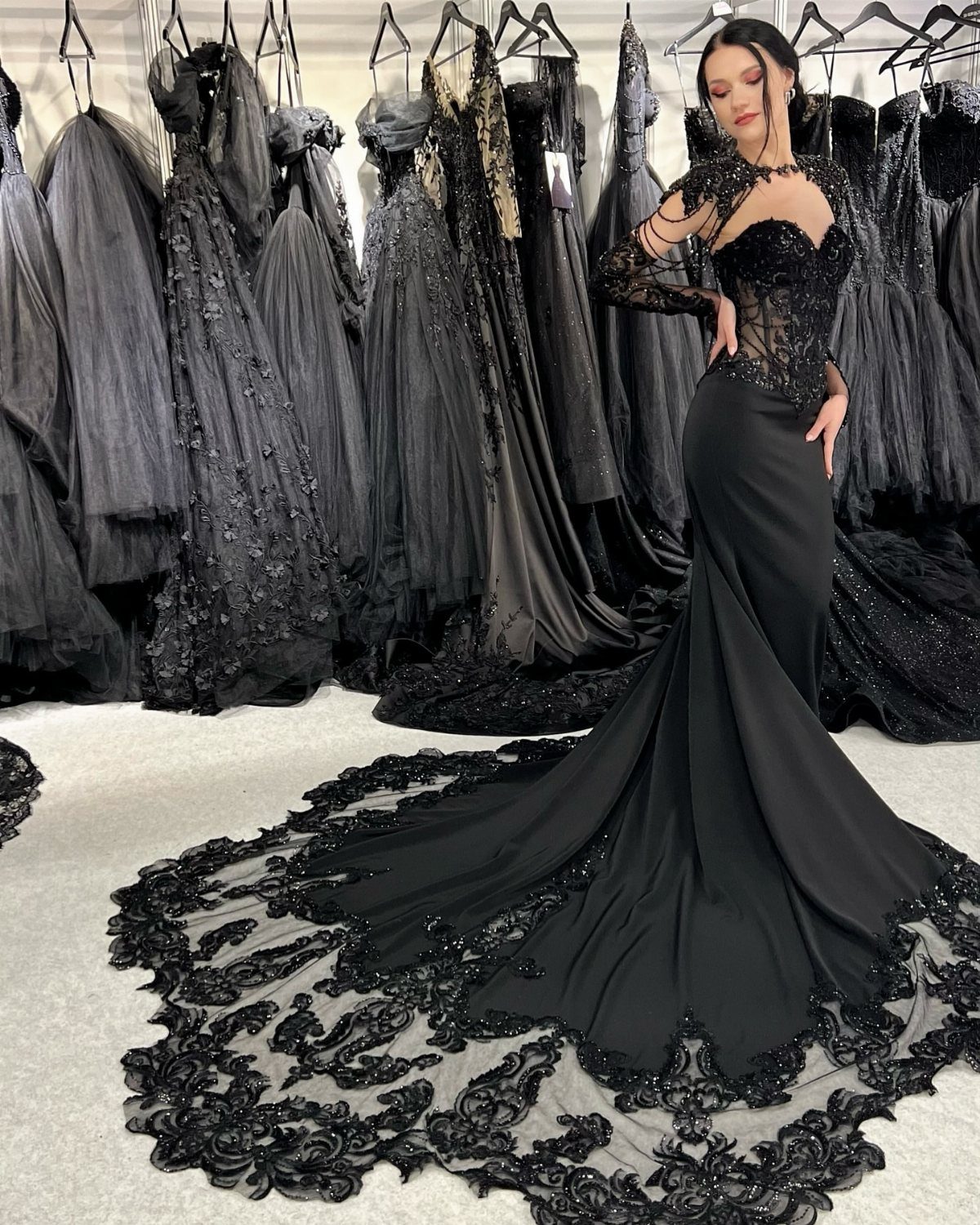
A black mermaid gown with a floral lace overlay and a long train is a real statement, and if black is what you truly want, it beats a white dress with black accents.
The fitted shape shows off the lace pattern along the train.
Plan for the train. A long one needs a bustle or a helper at the reception, so ask about that at your first fitting.
5. Blue Wedding Gown
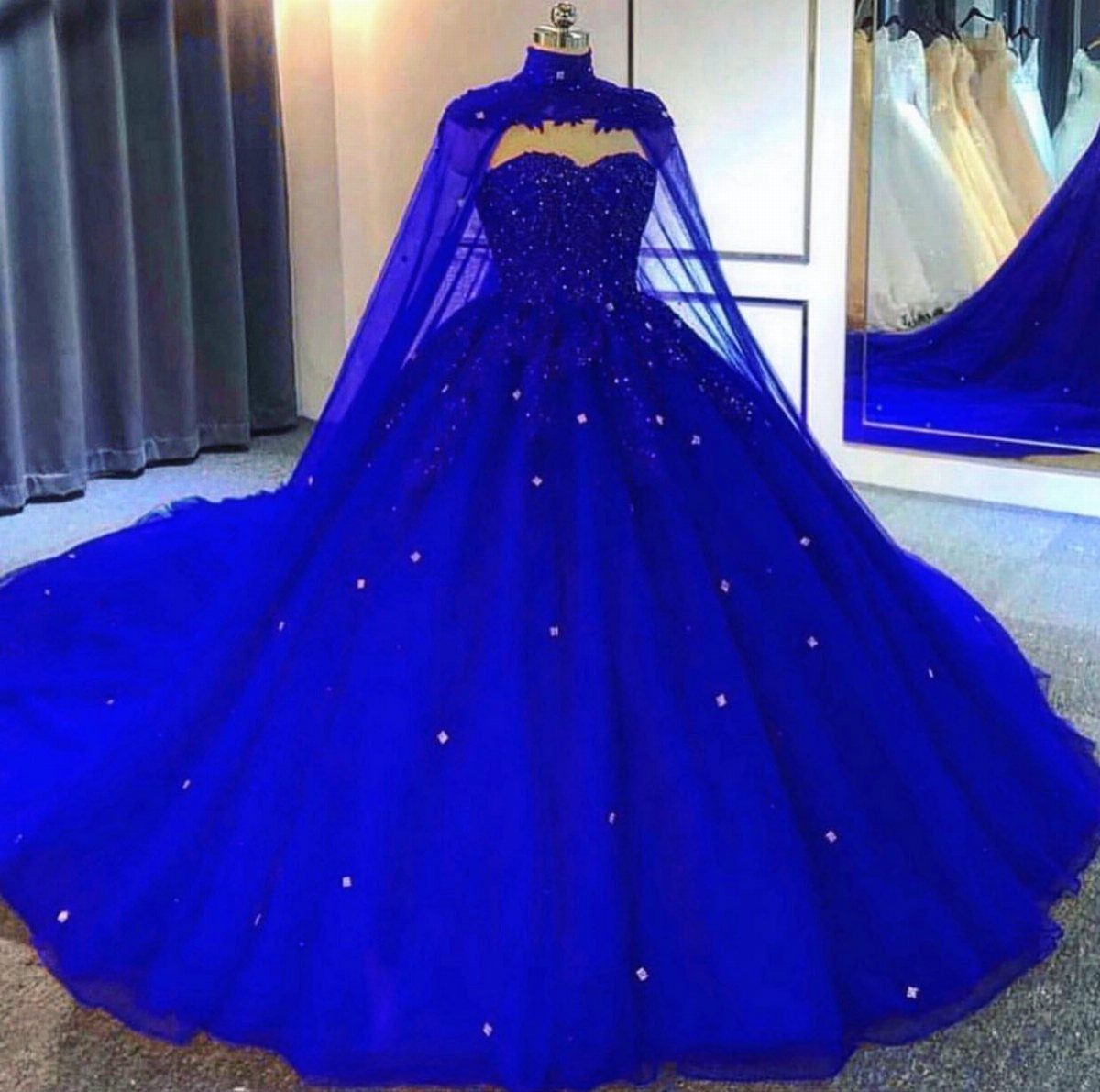
Royal blue from neckline to hem is the boldest choice in this list, and a sheer matching cape makes it feel ceremonial instead of like a party dress.
A full ballgown skirt gives the color room to read as a deep, solid shade.
Go for blue only if you are sure. Match your bouquet to the gown or keep it white, and plan on taking the cape off for dancing.
6. Warm Florals
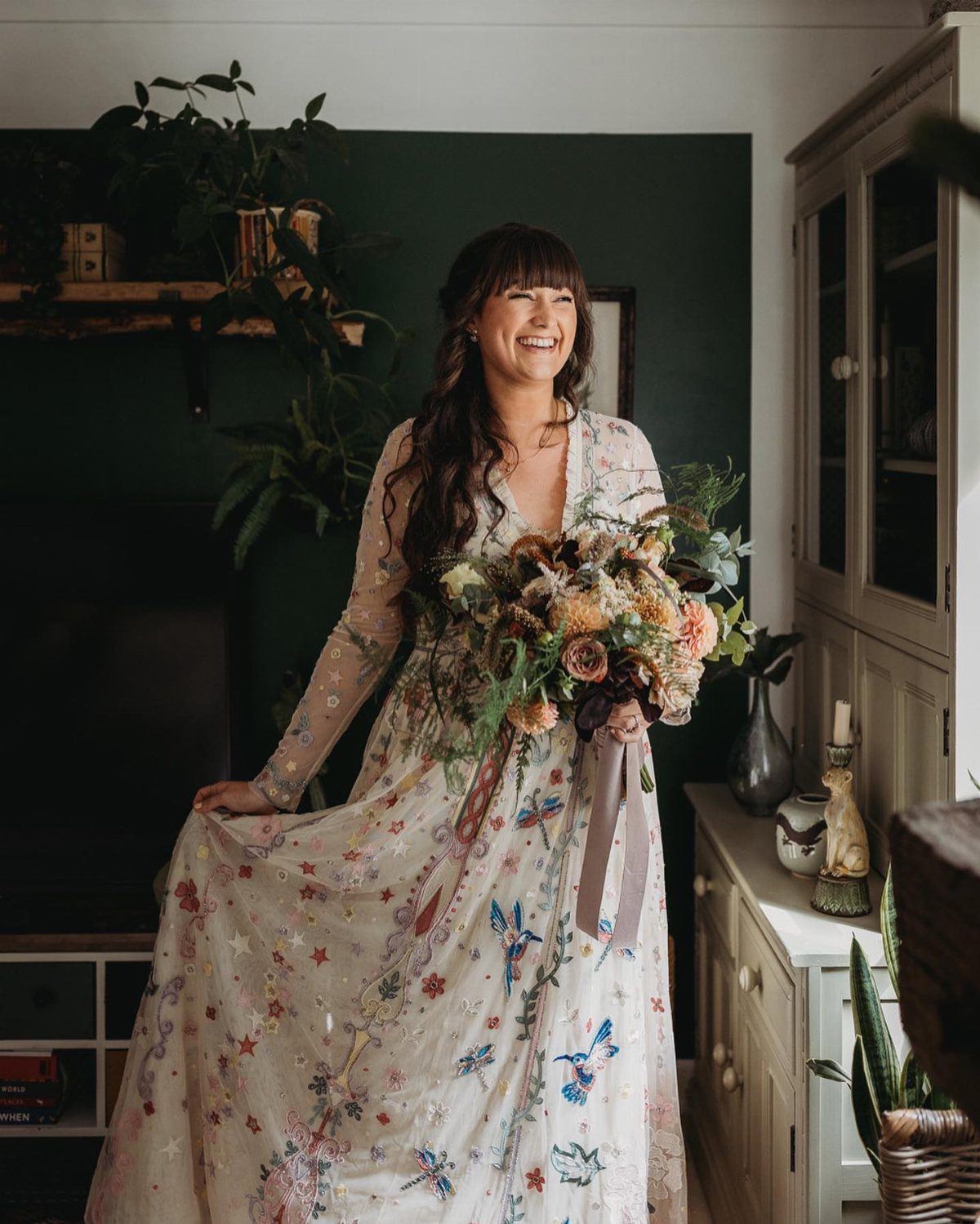
Warm florals in rust, gold and orange tones turn a long-sleeved gown into an autumn dress without a single leaf appliqué. Sleeves already suit cooler months, so the pairing feels natural.
Build the bouquet from the same warm palette so the flowers and the embroidery echo each other. Deep green or wood-toned settings make those colors look richer than a pale backdrop would.
7. Ombre Skirt
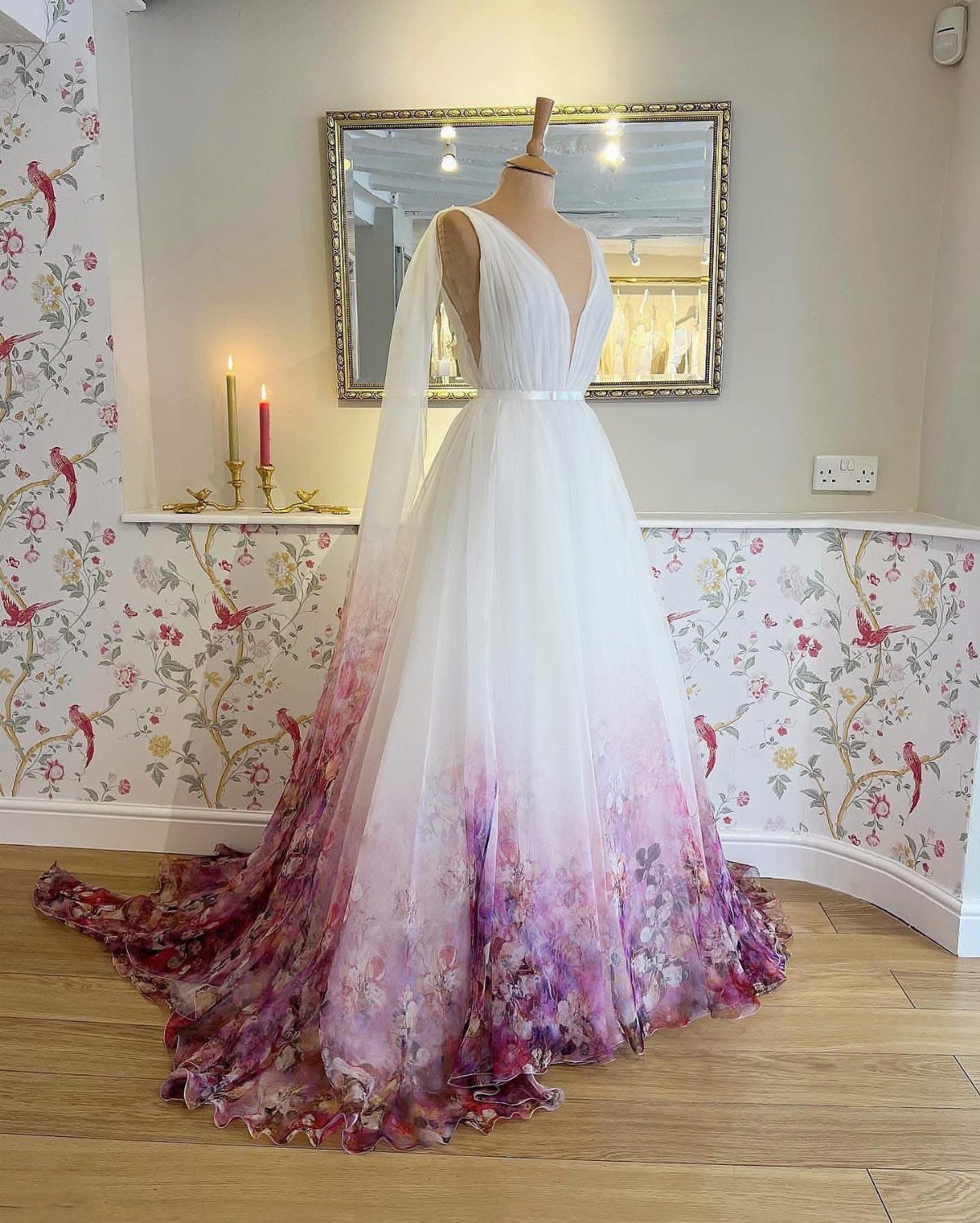
A traditional white bodice over a colored skirt is the easiest way I know to wear color without giving up the classic bridal top.
The purple and red ombre fades toward the hem, so the color grows as you move down.
A dress that still photographs as bridal from the waist up is what this ombre skirt delivers. Simple jewelry and a plain veil keep the skirt as the single bold element.
8. Shimmering Sequin Patterns
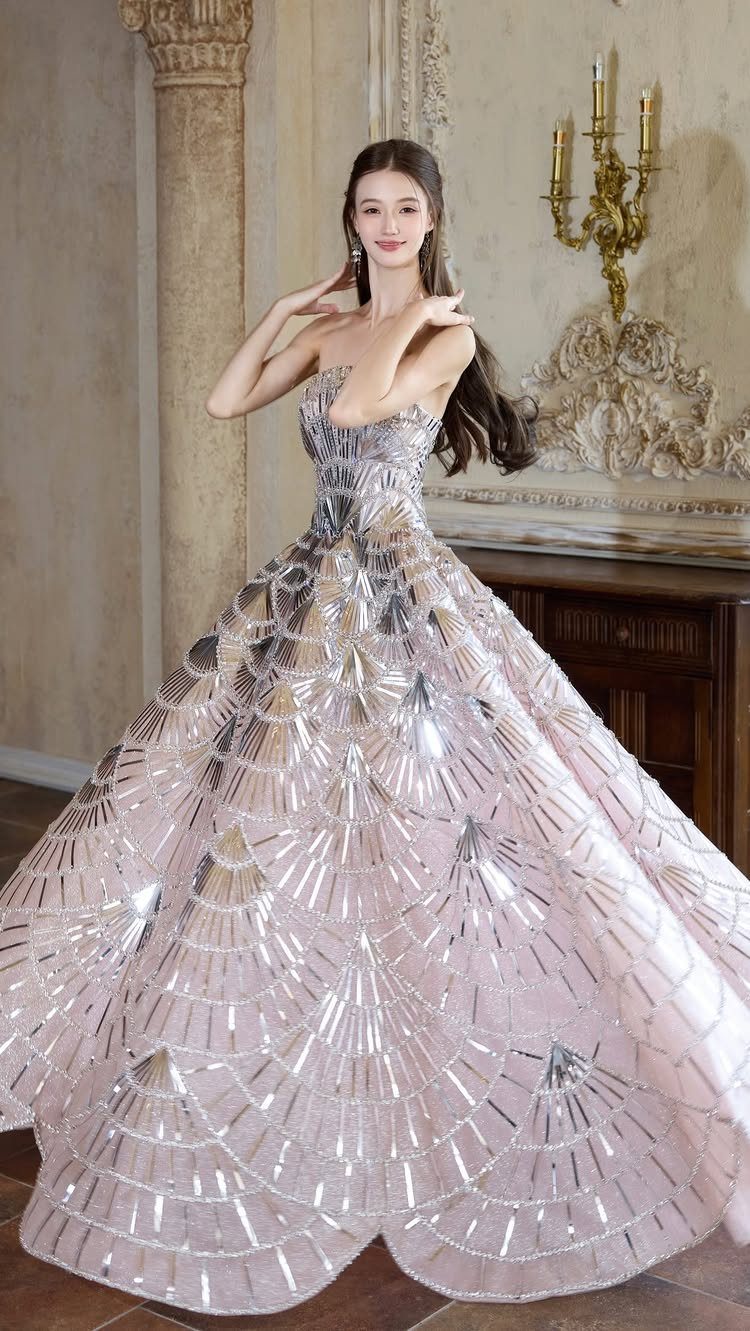
Sequins in silver and pale pink give a strapless ballgown glitter without any loud color. The pattern catches light and moves with you, so the gown does the work that jewelry would otherwise do.
Keep the accessories light: small earrings, a simple hairstyle, no heavy necklace across a strapless neckline.
If you love shimmer, I would spend on the bodice fit first, because a sparkling dress that slips looks worse than a plain one that sits right.
9. Dusty Rose Gown
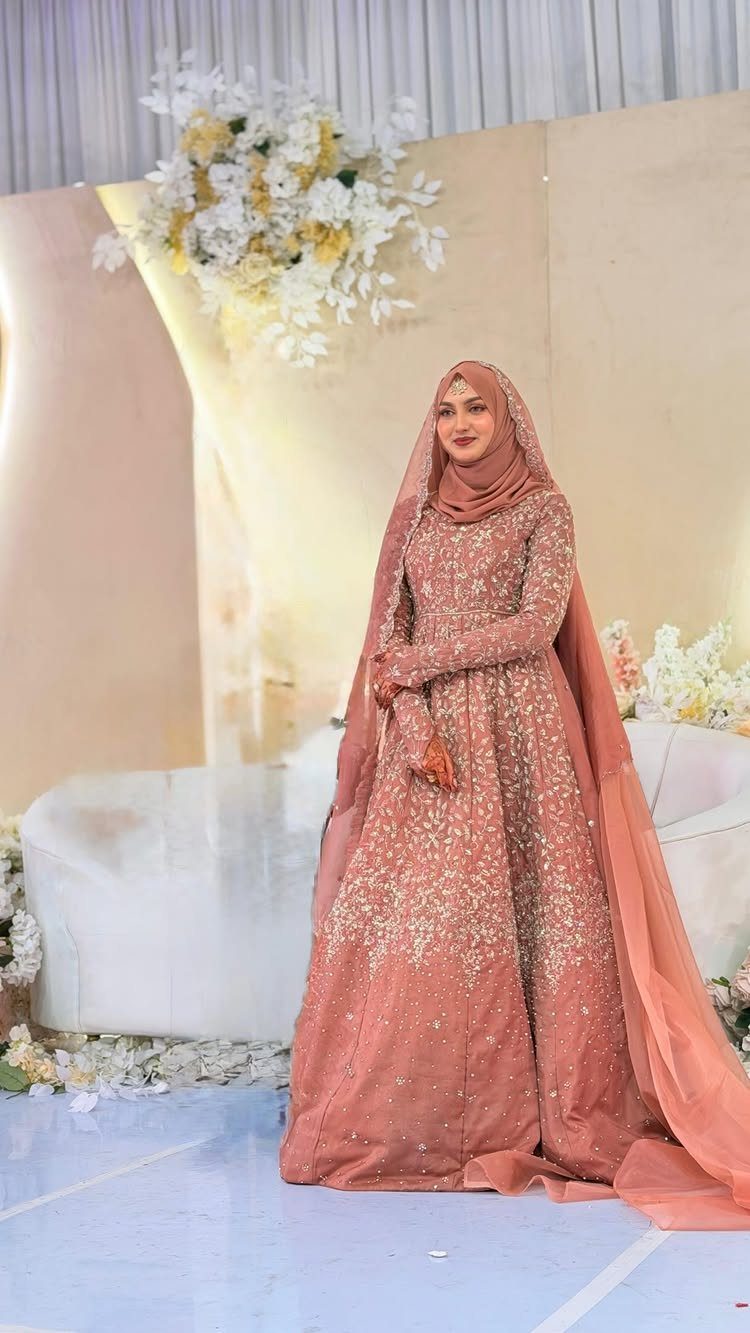
Dusty rose is a muted pink with a bit of gray in it, which makes a beaded couture gown look soft and expensive instead of sweet.
Matching a hijab to the gown in the same shade keeps the whole look as one clean column of color.
Ask for fabric swatches of both pieces and compare them together in daylight. Pink-toned neutrals can drift apart in tone between 2 dye lots, and a mismatch shows in photos.
10. Deep Maroon Bridal Saree
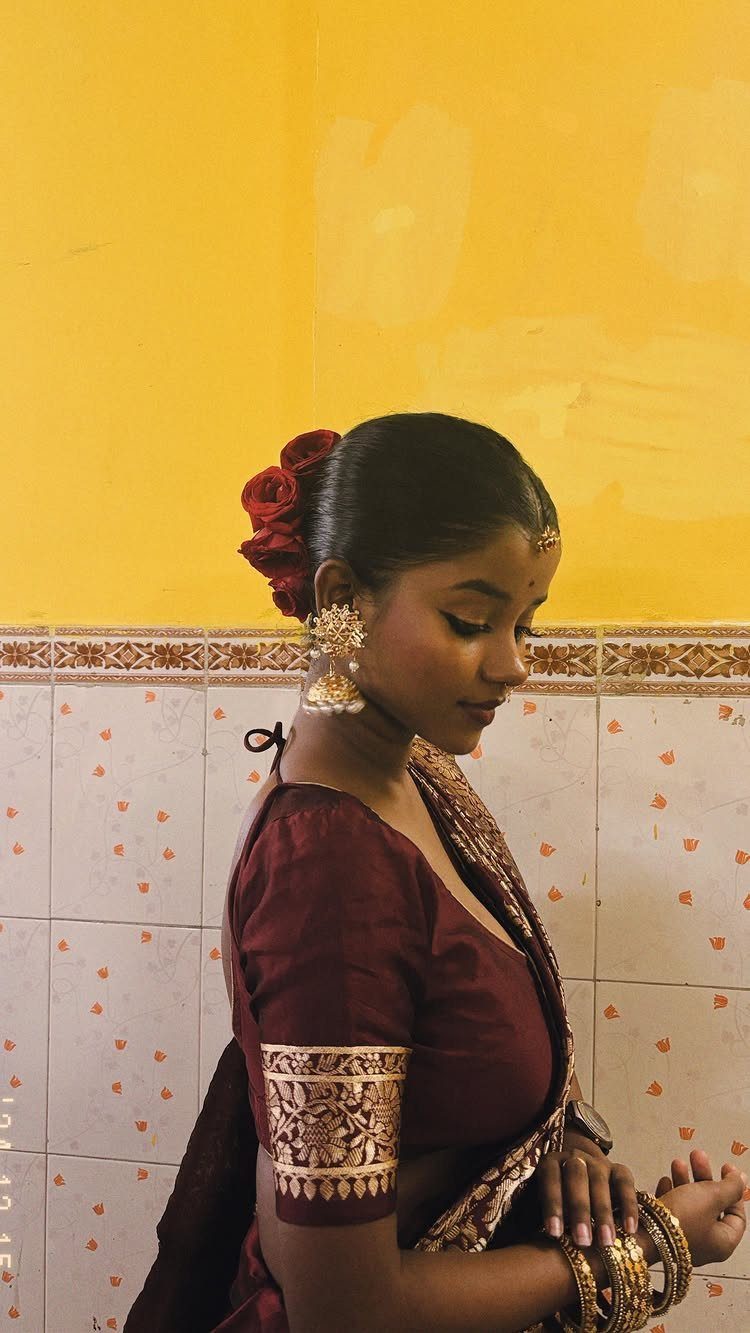
Deep maroon with gold embroidery is a saree color that carries its own richness, so the dress needs little else. Gold jewelry and fresh red roses in the hair echo the thread and finish the look.
Spend your budget on the embroidery, since the gold work is what makes the drape feel bridal. Choose roses that match the maroon rather than clashing with it.
11. Red Tulle Ballgown
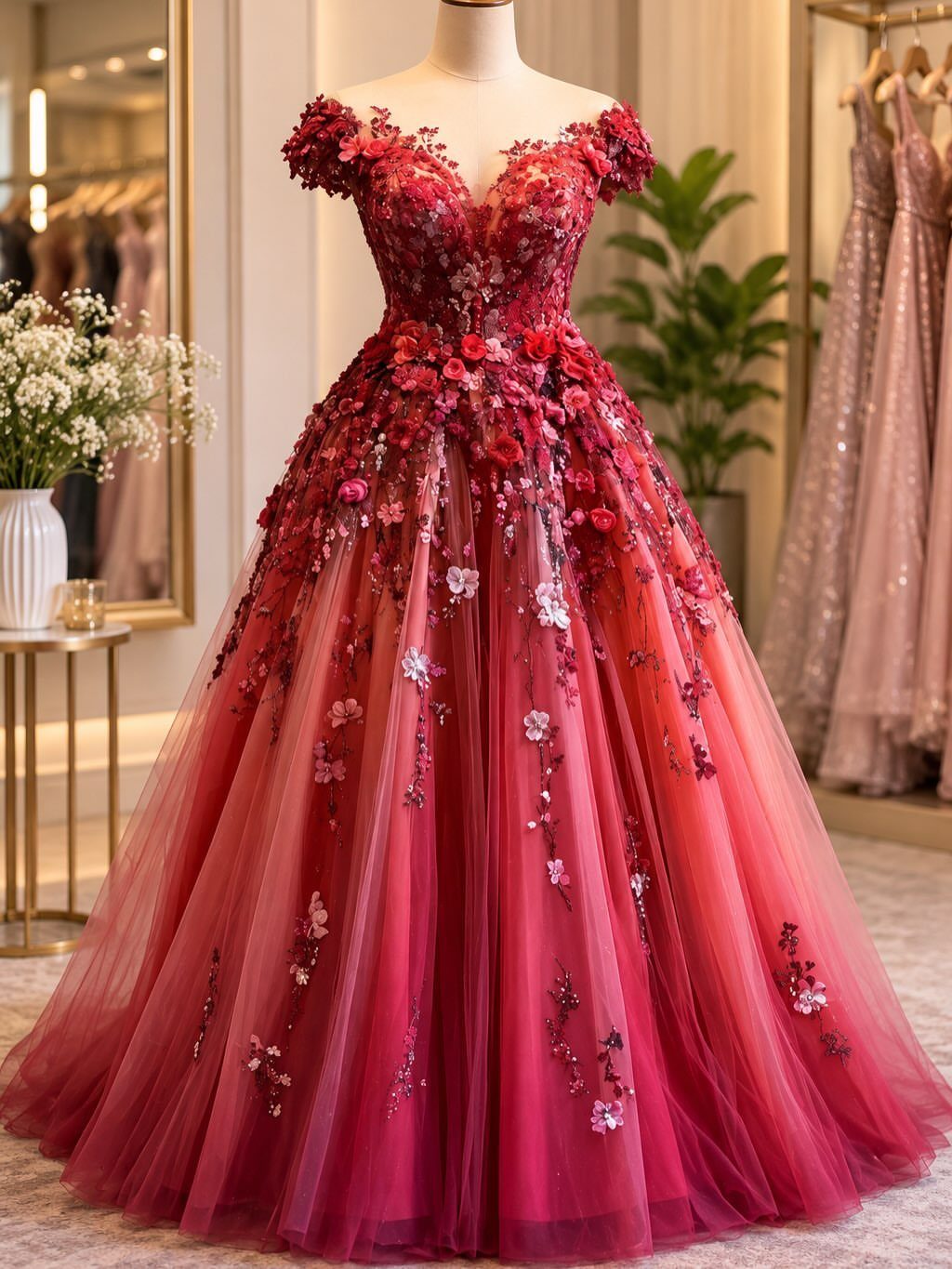
Red tulle with 3D floral embellishments on the bodice makes a ballgown for anyone ready to skip white entirely.
Dimensional flowers add weight and detail, so ask the shop how they are attached, and whether they can be repaired, ahead of the purchase. Keep the bouquet white or green, and the red stays the star.
12. Voluminous Ruffled Pink Gown
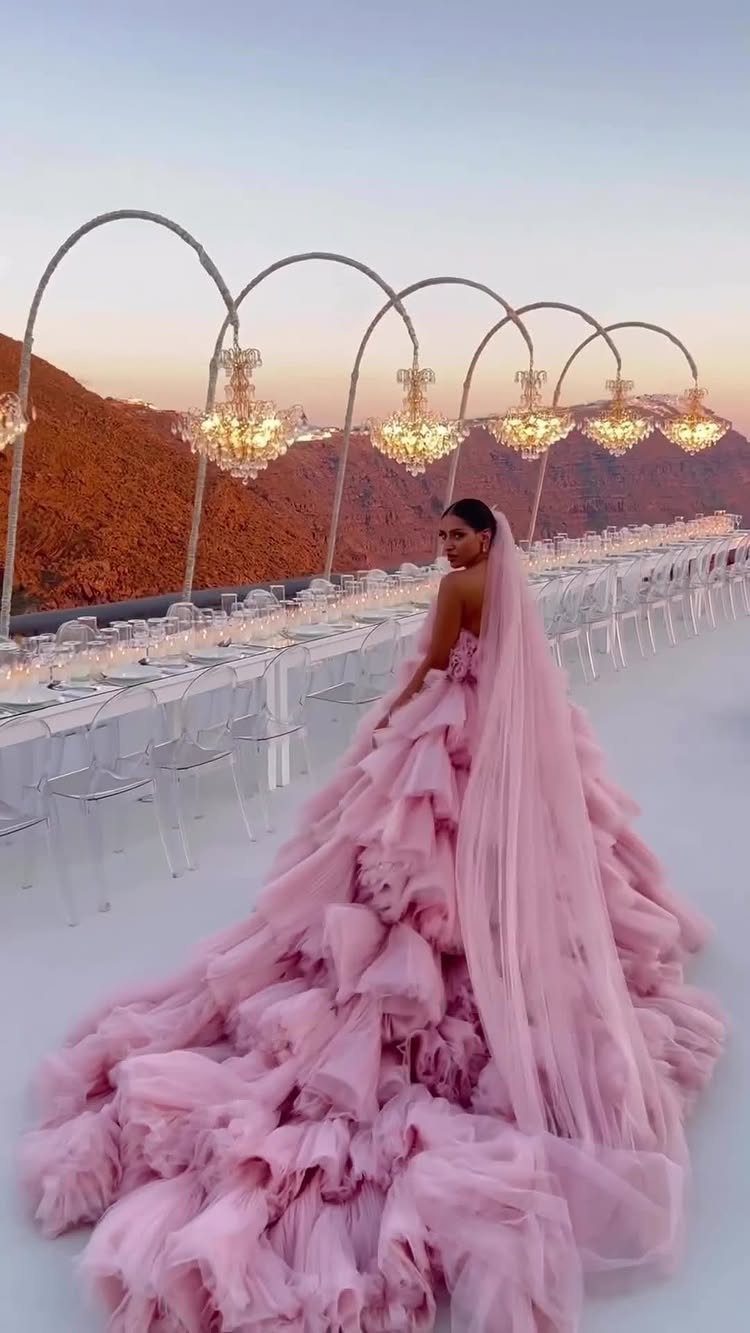
Light pink in tiers of ruffles is a dramatic gown that still feels gentle, because the color is so pale. A matching veil keeps the look unified, and the volume does the talking.
A skirt this full needs space to move, so check aisle and dance floor width before you commit. Let the ruffles be the only texture: skip lace or heavy beading on top.
13. Multicolor Pastel Ruffled Ballgown
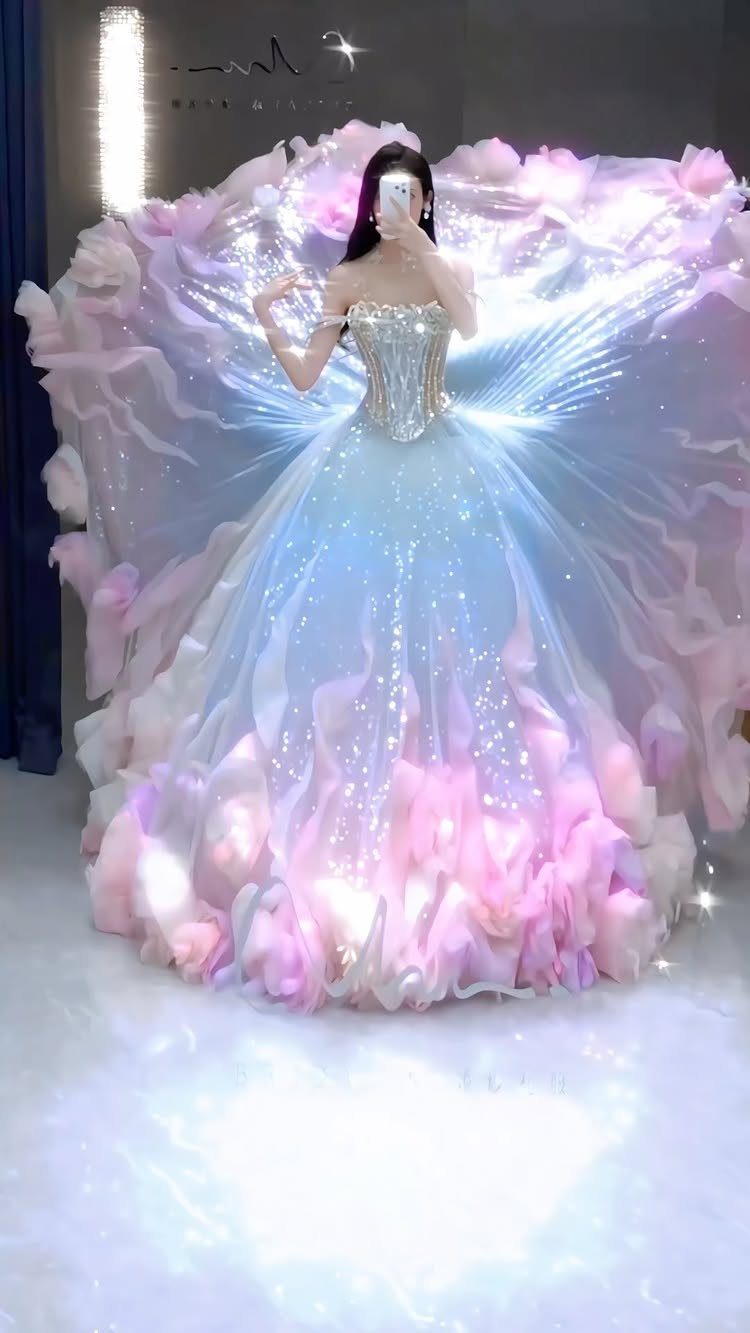
Light blue and pink together read as cotton candy in a sparkling ruffled ballgown, and that is the appeal. 2 soft shades keep the color playful without tipping into loud.
Because the gown already carries shimmer and ruffles, leave the rest plain. A simple updo, small earrings and a bouquet in white or one of the two gown shades will keep the look from getting busy.
Check the dress in daylight before you buy, since pale blue and pink can shift next to each other.
14. Sage Green Ruffled Gown
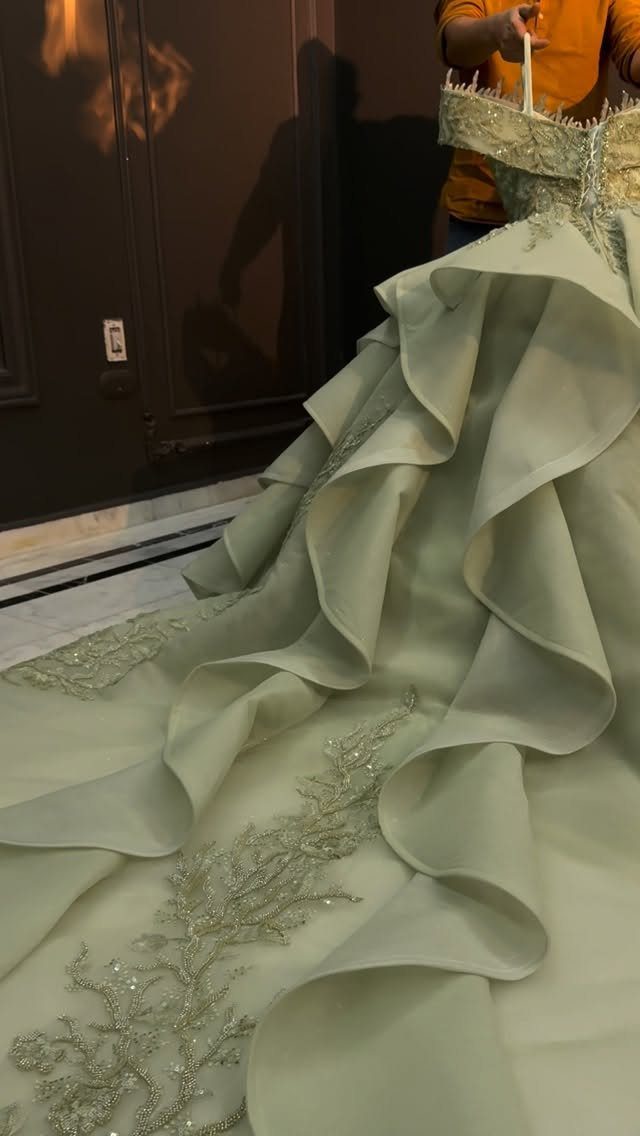
Sage green with silver embroidery is a gown for a bride who wants color that behaves like a neutral. The gray undertone in sage lets the silver thread read as a shimmer instead of a contrast.
Layered ruffles add volume, so ask for a fitting with the shoes and any petticoat you plan to wear, since skirt fullness changes how the hem falls.
Keep jewelry silver, not gold, so it agrees with the thread. White or cream flowers look crisp against the green.
15. Lavender Embellished Lehenga
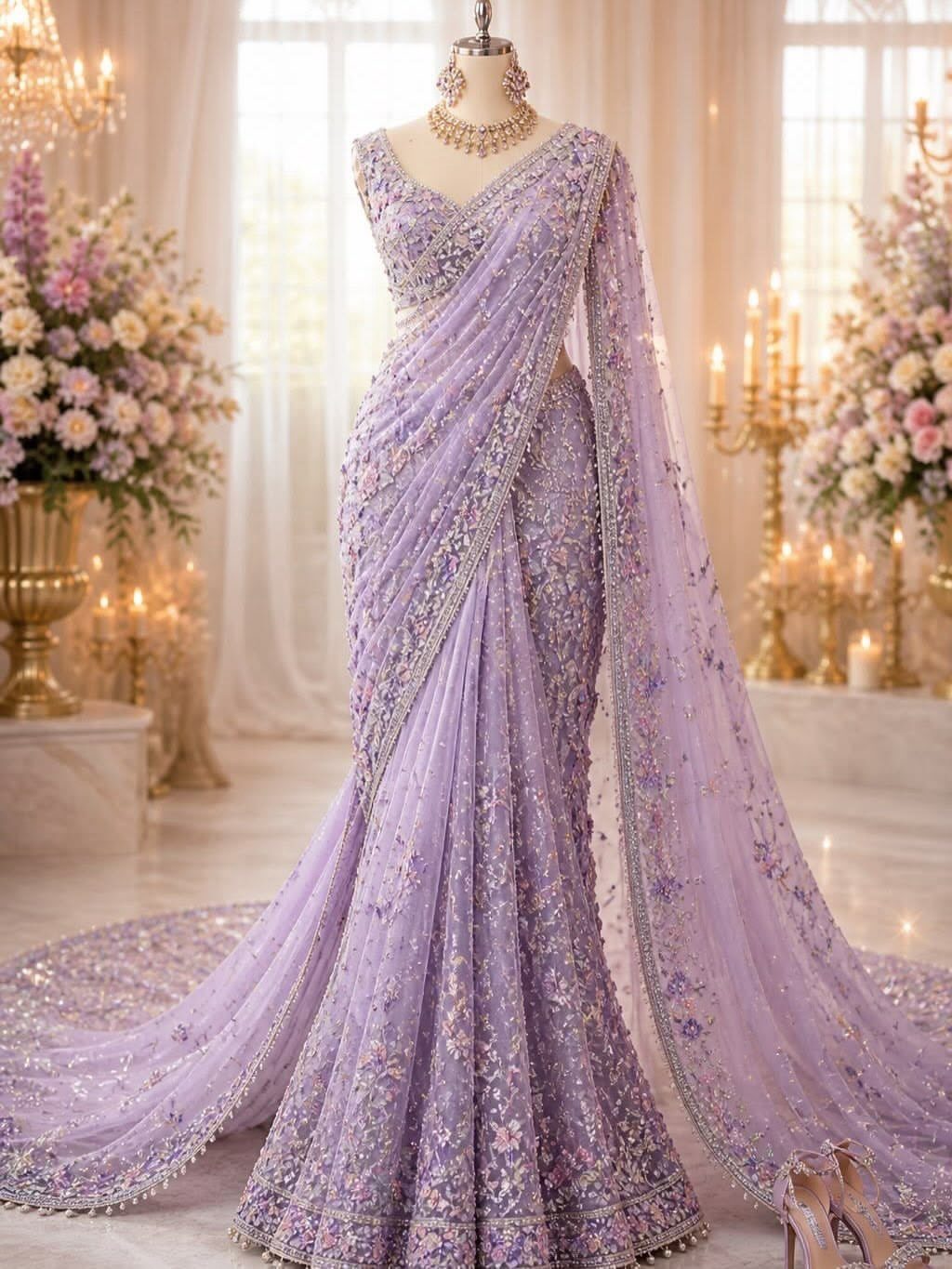
Lavender is a gentle shade for a lehenga, and floral sequin embroidery with beadwork gives it the richness a pale color can lack. The detail does what a deeper dye would otherwise do.
Embellishment this dense is where the price sits, so I would put money into it before add-ons.
Ask how heavy the skirt is, and wear it long enough to see how it feels both standing and walking, since embellished lehengas can drag on the waist.
Pearl or silver jewelry suits lavender better than heavy gold, in my view.
16. Floral Cape Bridal Gown
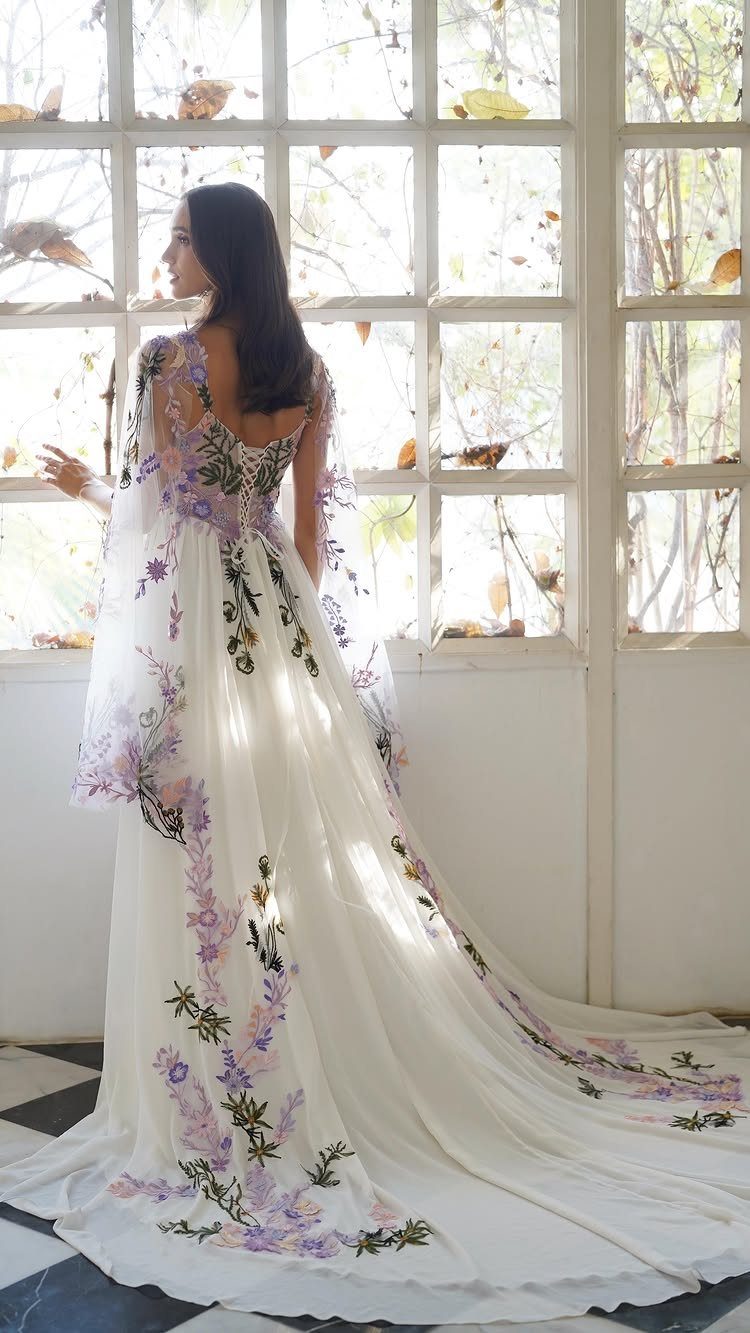
A sheer cape with purple and green floral embroidery lets a plain white gown carry color without changing the dress at all. If you already love a simple gown, this is the lowest-risk way to add it.
The cape is also removable, so you can wear it for the ceremony and photos, then take it off for dancing. Choose a gown with a clean neckline and little detail on the bodice so the embroidery has room.
Hold the cape against the gown in daylight to confirm the white and the sheer fabric sit well together.
Embracing Color in Weddings
For decades, the choice was white, ivory or champagne, so a gown in any other color now reads as a deliberate decision.
Color shows up in 2 ways: a dress that is fully non-white, or a white gown with a pop of color added.
Hot pink, red, emerald green, romantic blue, orange and yellow all count as options.
A colored dress also suits a two-part wedding, where one outfit for the ceremony and another for the party lets you try a bolder shade without betting the whole day on it.
Decide which route you want before you shop. Full color is a bigger commitment than a white dress with an accent, and it narrows your choices for veils, flowers and shoes.
Choosing the Right Color
Start with your skin tone, and test it the plain way: hold fabric swatches up to your face, bare of makeup, in natural light. Some shades make you glow and others flatten you, and you will see it within seconds.
Then check the shade against your wedding theme. Look at your venue, your flowers and the season, and ask whether the color will look like it belongs in all of them.
If you are torn between two shades, pick the one that flatters you. A theme can bend to your dress, but your skin tone cannot bend to a color.
Accessorizing Colorful Dresses
Neutral accessories balance a colored gown. Think ivory, nude, soft metallic or white, so nothing competes with the dress.
Match your metals to one tone and keep to it. Nude shoes also lengthen the line of the leg under a bold color, and they are easy to find in a range of shades.
Test the full set together before the wedding day, in the same light you will be married in. If the dress is the loudest thing in the room, the accessories have done their job.
Frequently Asked Questions
What are the benefits of wearing a colorful wedding dress?
A colored gown lets you show your personality and stand out, since white, ivory or champagne has been the default for decades. Today a non-white dress reads as a deliberate choice.
A colored dress also fits a wedding split in two: wear ivory for the ceremony, then change into a deeper shade for the reception, and the bold choice never carries the whole day.
Can I wear a colorful dress for a traditional wedding?
Yes, and the easiest way is to keep the classic bridal look and add color in one place.
A white gown with colored embroidery, a sheer floral cape, or a white bodice over an ombre skirt still reads as bridal from across the room.
Keep shoes, jewelry and wraps in ivory, nude, soft gold or white, and the dress stays the one strong note instead of fighting everything around it.





