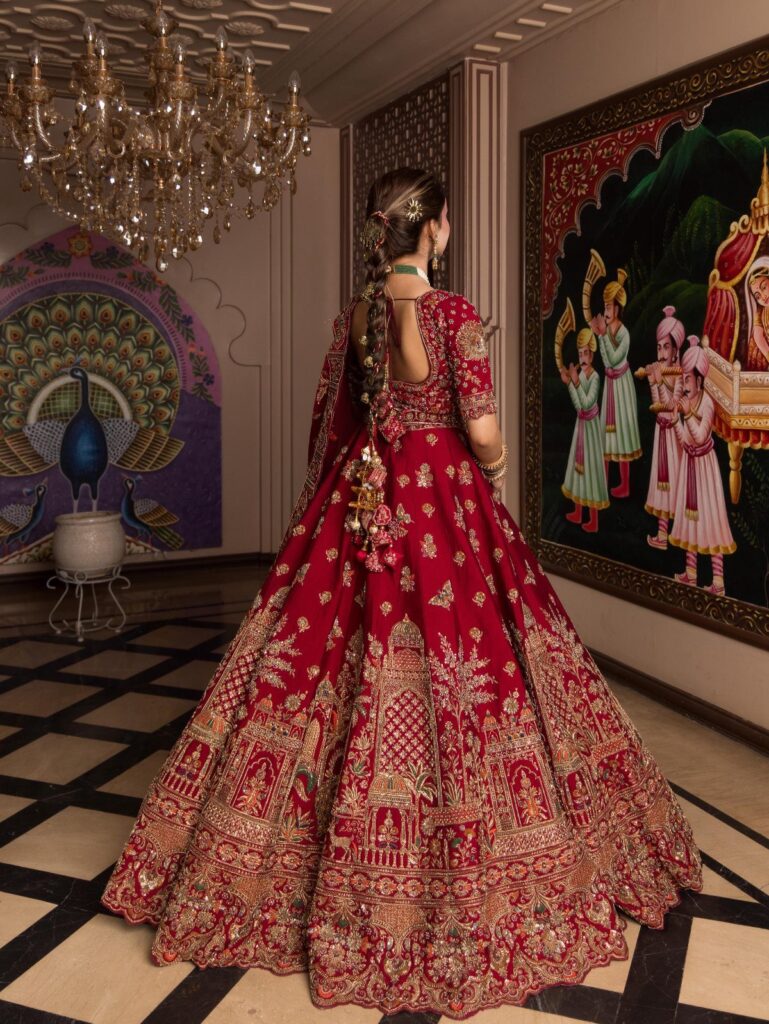
Which Indian wedding dress is yours depends on the event you are dressing for, since a wedding runs across several and each has its own code: light lehengas or sarees for an engagement, yellow for haldi, green or floral for mehndi, sequins for sangeet.
Brides come first with the lehenga choli and designer saree, with the anarkali set after them; the groom’s side follows with the achkan, bandhgala, dhoti kurta, sherwani, Nehru jacket and kurta pajama, and jewelry and guest advice close the list.
Tight budget? Put the most money into the wedding-day outfit, where the heavy zari and stonework belong, and let the earlier events get lighter pieces.
1. Lehenga Choli
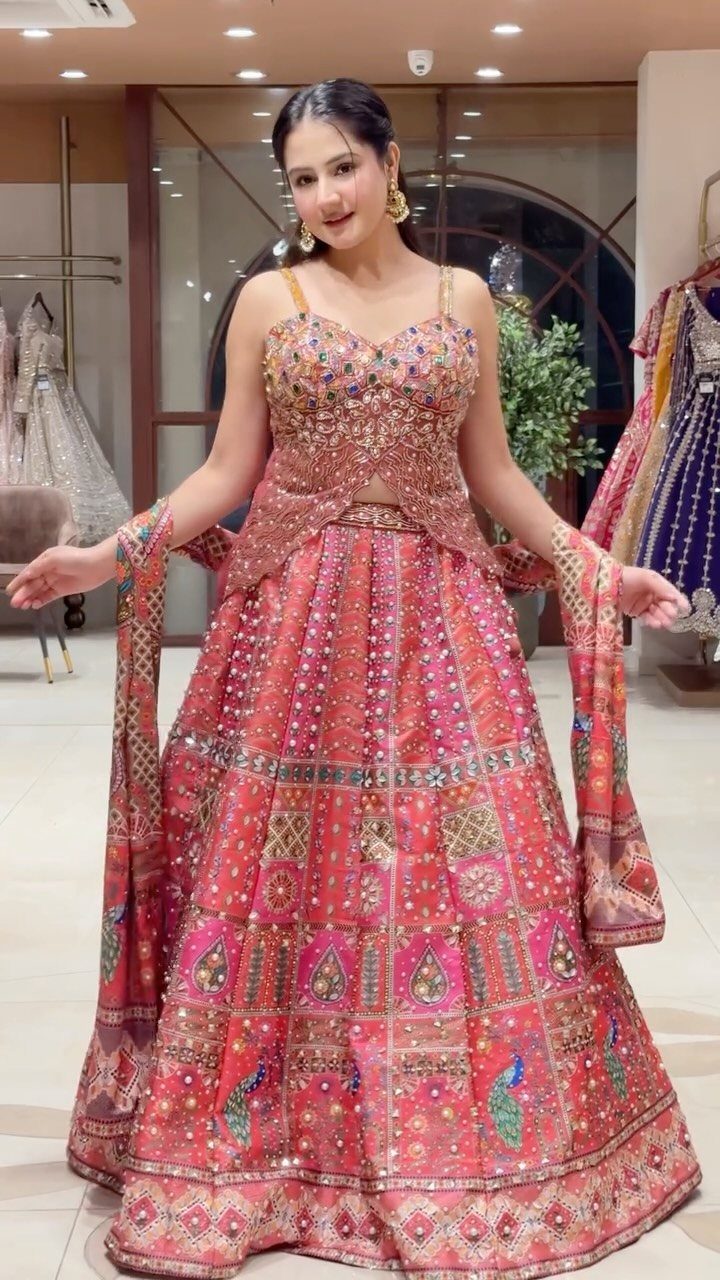
A lehenga choli arrives as three pieces: a fitted blouse, a flared skirt and a dupatta, and that long scarf is the piece where your budget can bend either way, with a plain net costing a fraction of a heavily worked one.
The maker of this one pairs it with a printed dupatta, and says the set works for weddings, mehendi ceremonies and bridal functions.
That range is useful on a budget. One heavily embroidered red and pink set can cover more than one event if you change the jewelry and how you drape the dupatta.
I would put the money into the skirt and blouse and keep the dupatta simple.
2. Designer Saree
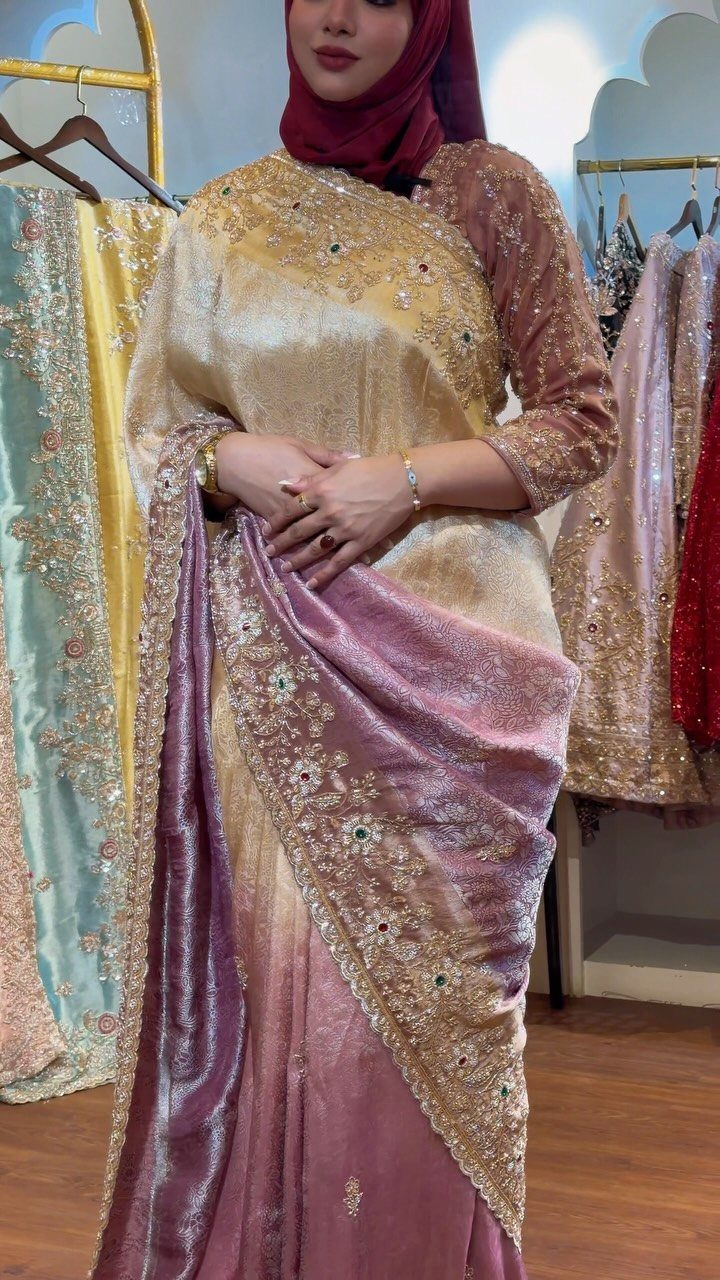
South Indian and Bengali brides have long chosen the saree, and a designer one gives you embroidery without the weight of a full lehenga.
Gold and purple is a strong pairing, and a maroon hijab can sit under the drape if you cover your hair.
Pick the blouse with as much care as the saree itself. It is the fitted piece, so it is the one that needs a tailor.
If you want a saree for more than one event, choose a quieter border and let jewelry carry the formality.
3. Anarkali Set
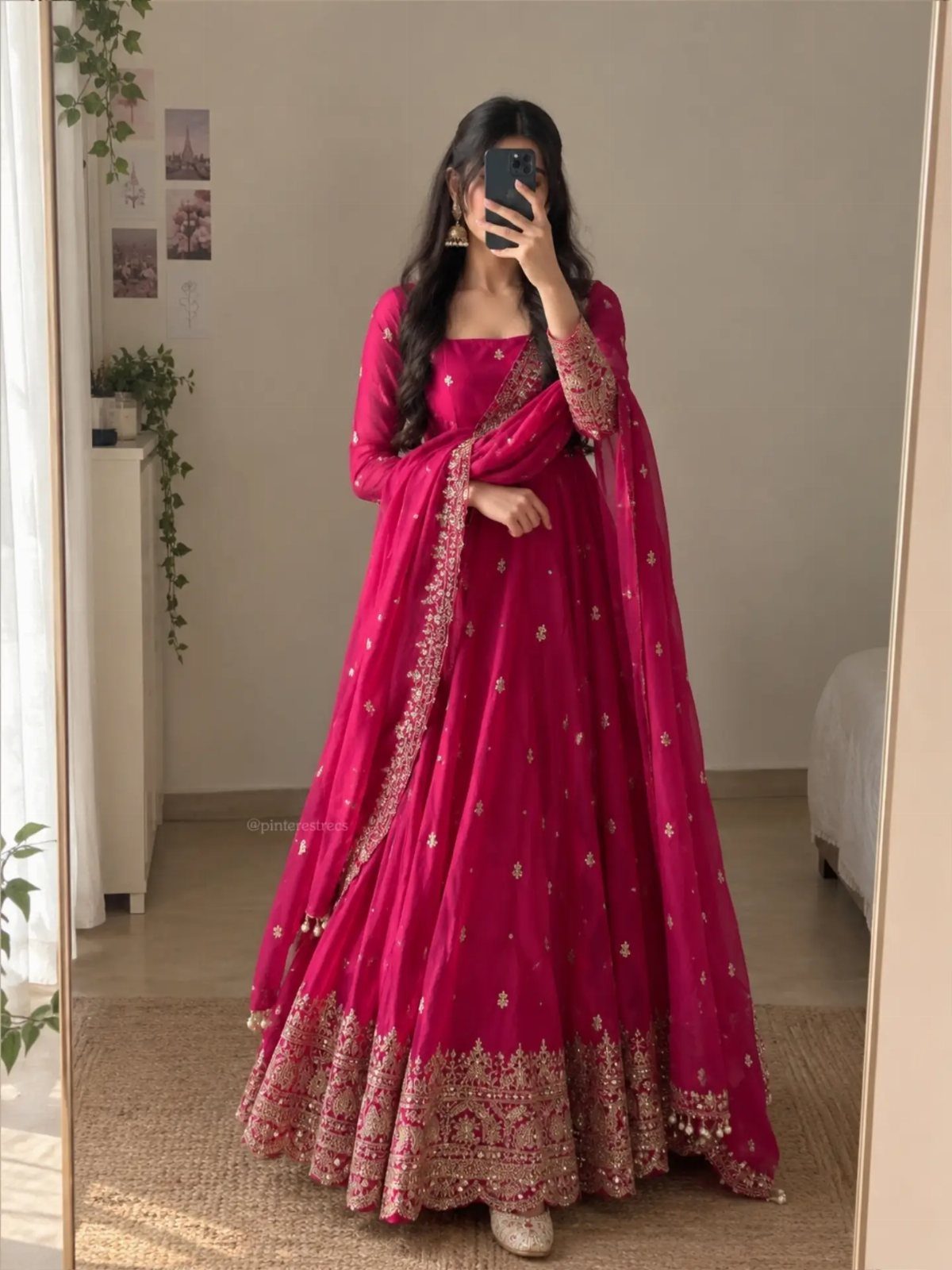
Floor-length and flared from the waist or chest, an Anarkali suit looks grand without asking you to manage a heavy skirt.
For pre-wedding events, I prefer one in a saturated color like magenta, with gold embroidery and a dupatta to match.
Buy the dupatta together with the suit so the shade lines up exactly.
The length is the thing to check: have the hem fitted with the shoes you plan to wear, since it falls to the floor and will drag if it is cut for flats.
4. Achkan Set
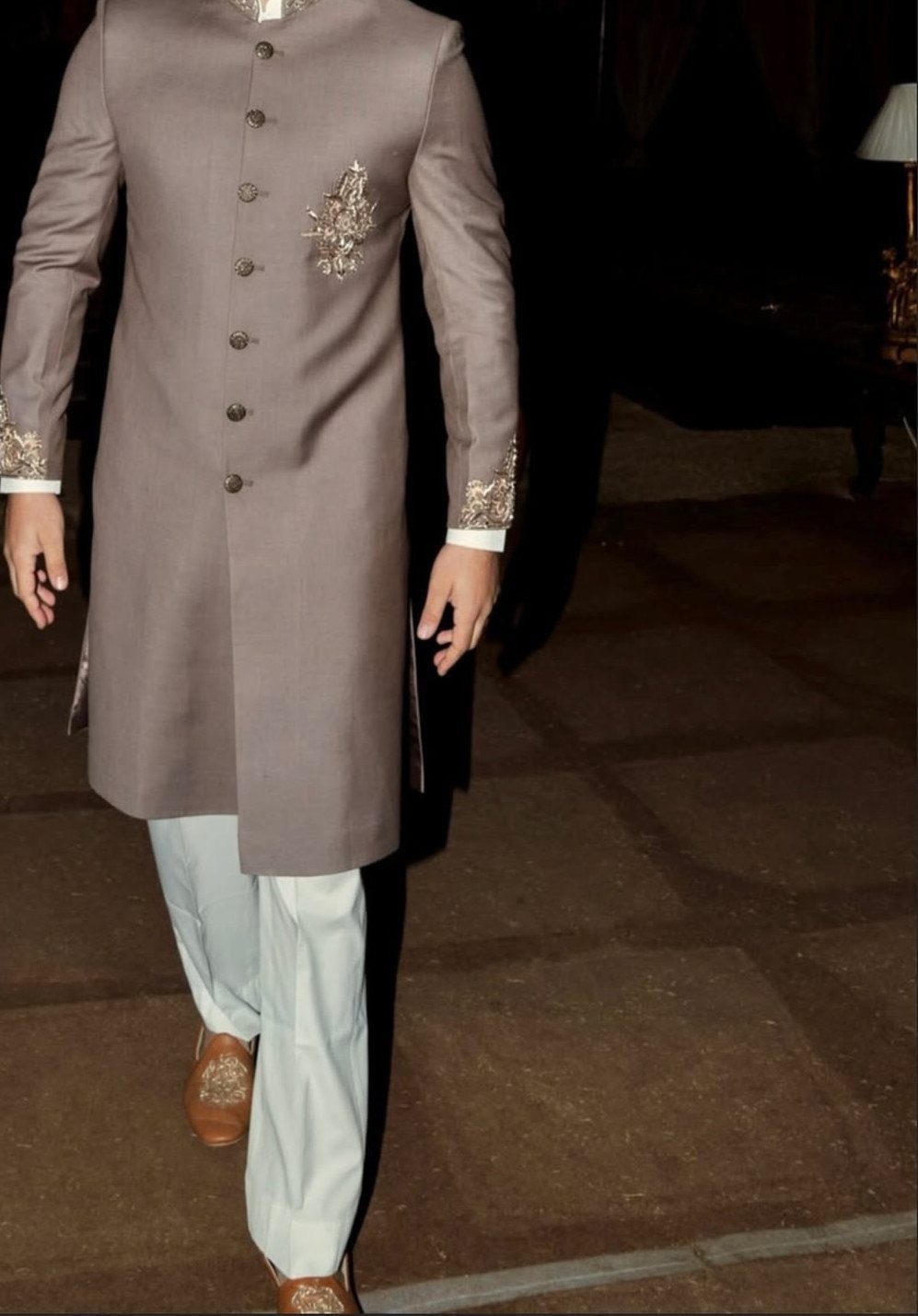
Lighter than a sherwani, an achkan is a long jacket that suits cocktail events, where a full wedding sherwani would feel like too much.
Neutral tones like this also pair well with embroidered shoes, which is where I would add some contrast.
If you want a second use, choose a muted shade; it will outlast a loud one.
5. Bandhgala Set
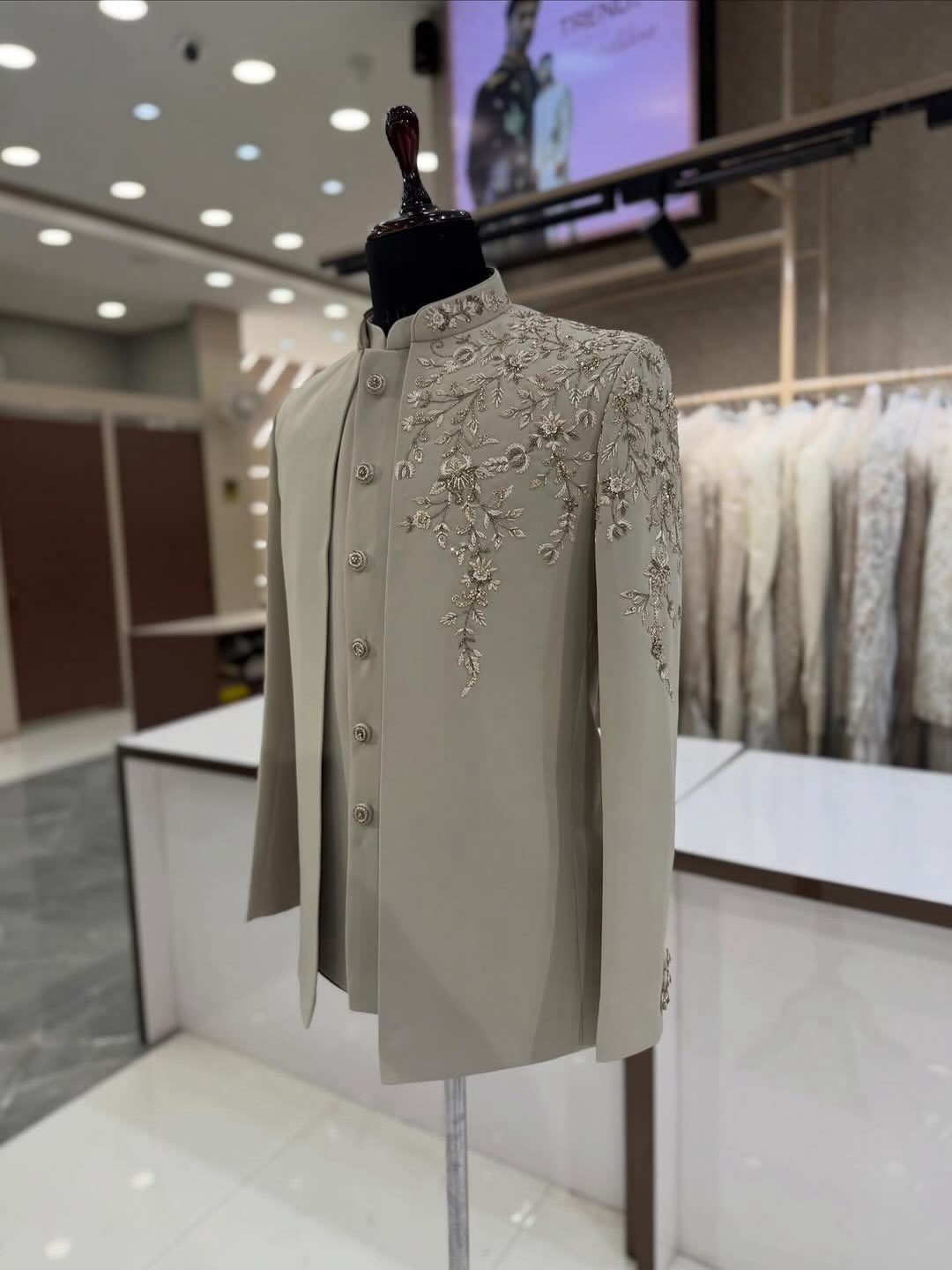
For grooms who want formality with a clean line, a Bandhgala is a structured jacket with a high, closed collar.
Sage green with floral embroidery gives it color without shouting, and it is a good option if a full sherwani feels heavy.
Collar fit decides everything, so try it on buttoned and move your arms.
I would choose subtle embroidery over dense work; it photographs well and looks sharper with simple trousers.
6. Dhoti Kurta Set
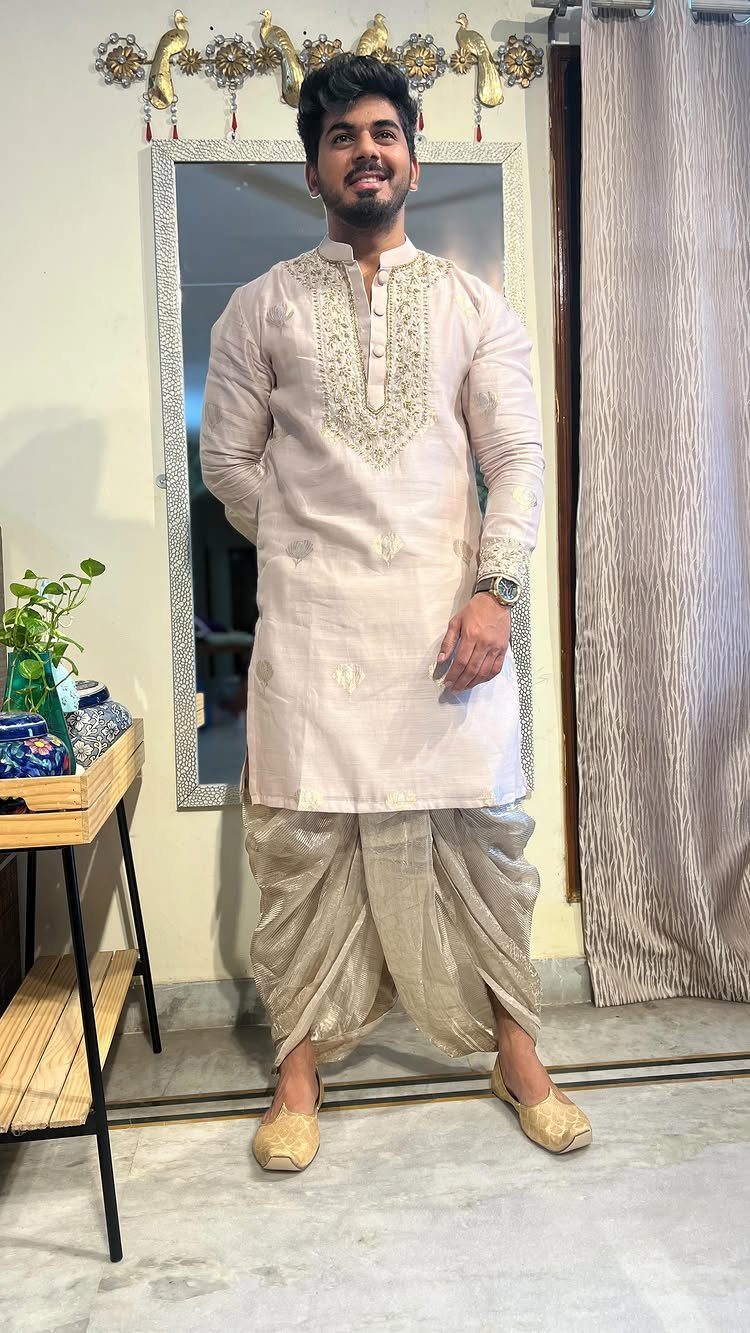
Draped rather than tailored, the dhoti is a staple for Bengali and South Indian grooms, and pairing it with an embroidered kurta makes it wedding-ready. A light pink kurta with gold dhoti pants keeps everything in one warm palette.
Practice walking and sitting in it before the day. The drape needs to be secure, and the fit around the waist matters more than the embroidery.
Traditional shoes finish the look, so try them on with the full set.
7. Bridal Jewellery
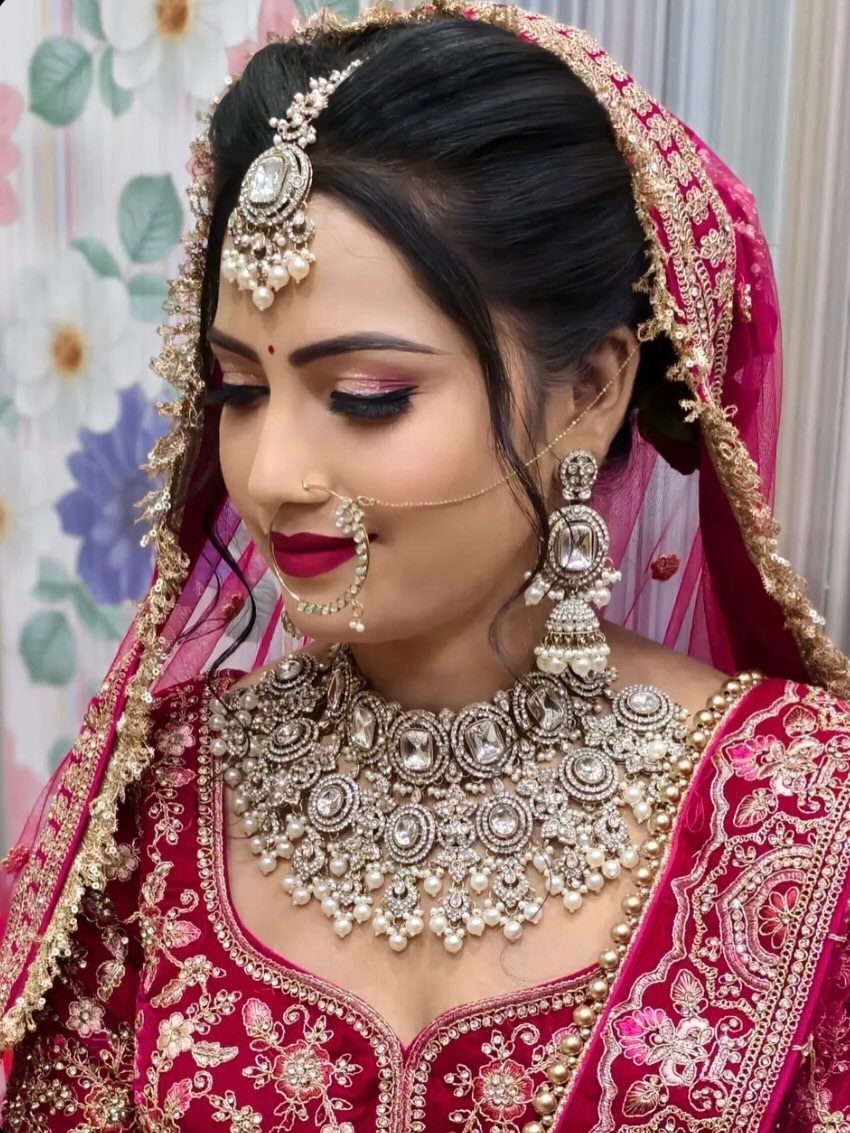
Heavy gold and pearl pieces like the maang tikka, nath, earrings and a layered necklace finish a red bridal outfit, and without them even a richly embroidered lehenga can look unfinished.
Styles differ by region and family, so ask relatives which pieces are expected before you buy anything.
A full set is a big spend. I would buy the necklace and earrings as a matched pair and add the nath or tikka only if your tradition calls for it.
Try every piece on with your hair and blouse neckline already decided, since a heavy necklace needs room to sit.
8. Embroidered Wedding Sherwani
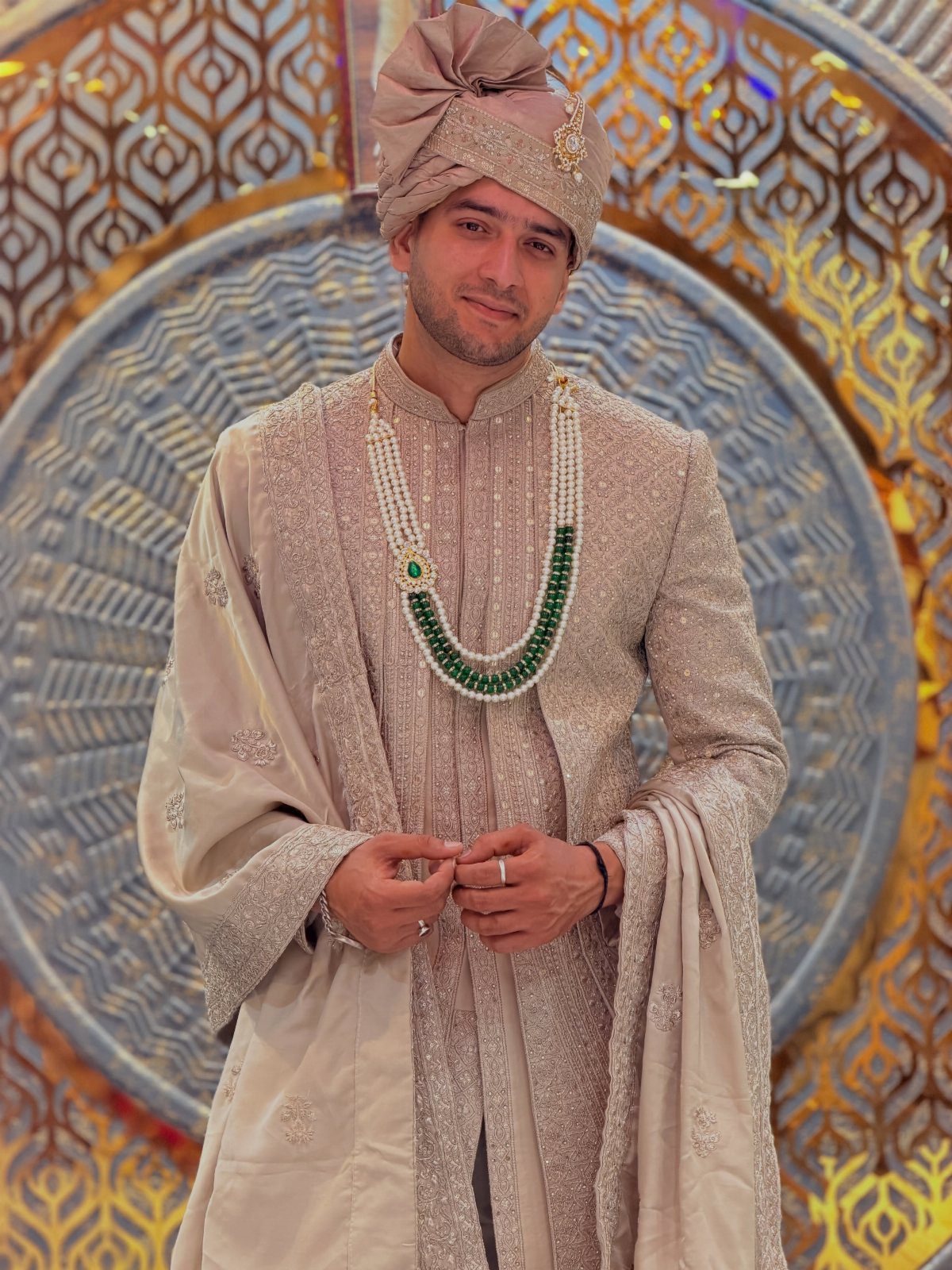
Cream embroidery on a sherwani, a matching turban and one bold necklace: that is a complete groom’s look with only three decisions. An emerald green strand against cream gives contrast without a second loud color.
Keep the sherwani and turban in the same shade so they read as one outfit. Let the necklace be the single statement, and skip extra brooches or layers.
I would have the turban tied and fitted at the same appointment as the sherwani.
9. Nehru Jacket Kurta Set
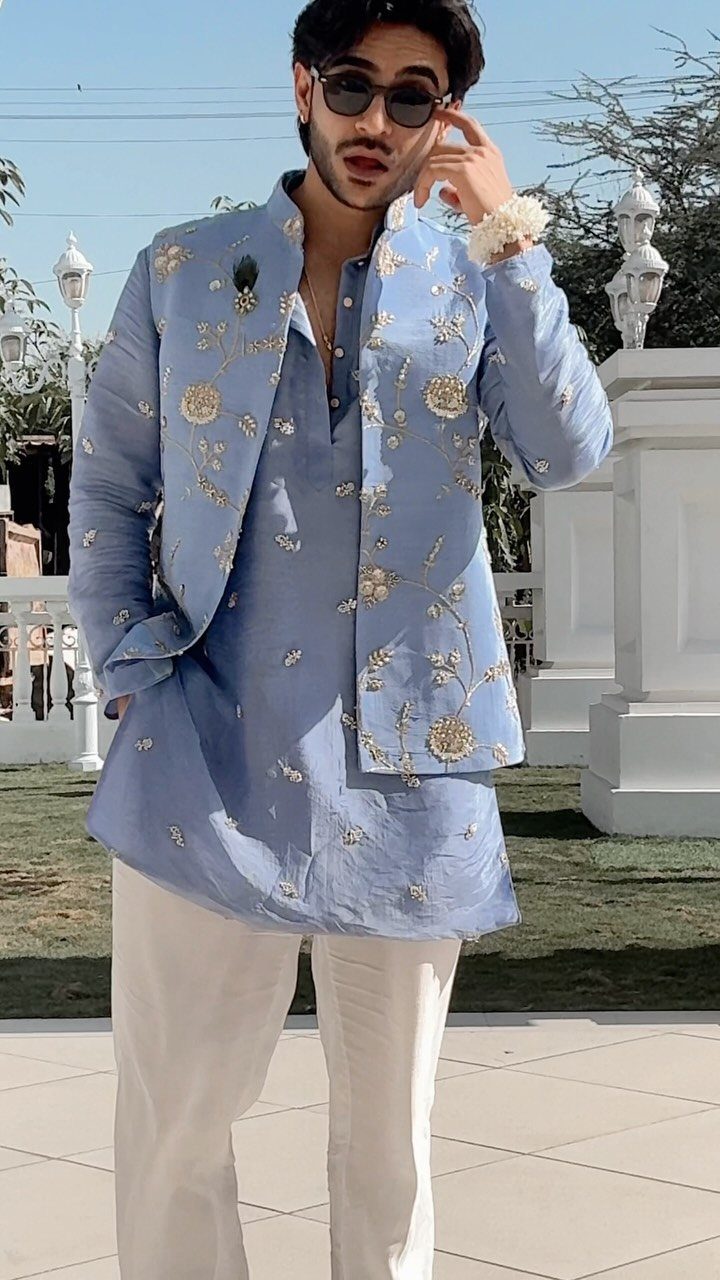
Layering a light blue embroidered Nehru jacket over a matching kurta, with white trousers below, gives you a groom’s outfit that feels dressy but stays easy to wear in the sun.
It suits daytime events better than a heavy sherwani would.
Choose the jacket with embroidery you like, since it is the piece people see.
Since the kurta in a set like this carries its own embroidery, I let the jacket and kurta match in tone and keep the two from fighting for attention.
White trousers show every mark, so have them pressed and keep them away from food until the photos are done.
10. Embroidered Kurta Pajama
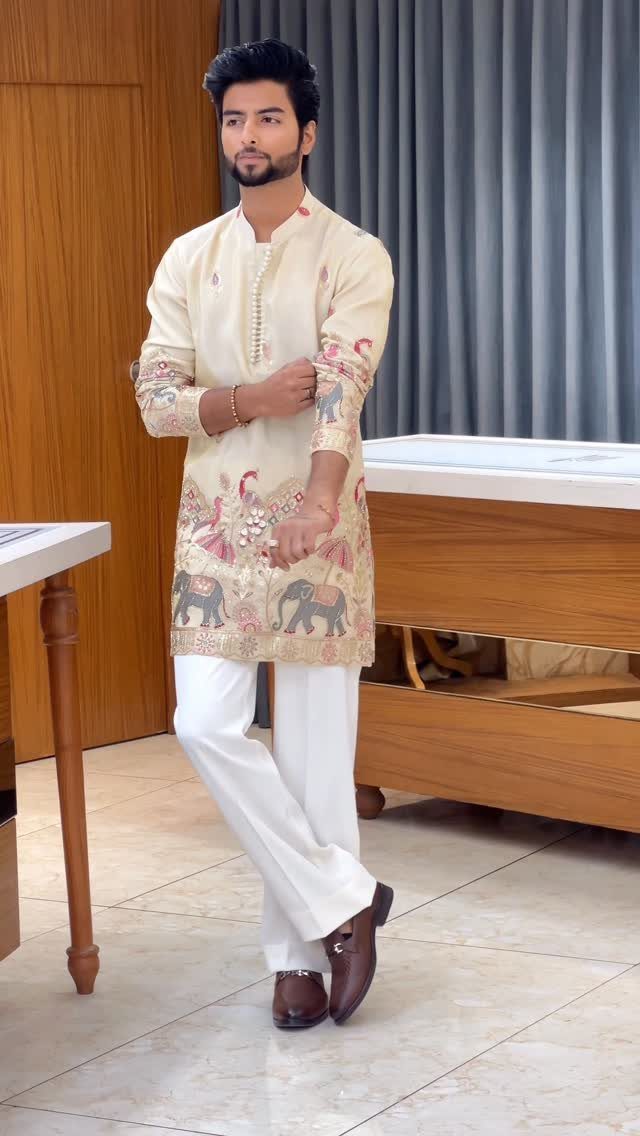
Elephant motifs on a cream kurta give a simple set a story, and white trousers keep the rest quiet.
For a smaller budget, an embroidered kurta pajama is the groom look I would pick, because the embroidery does the work that layers would otherwise do.
Check that the embroidery sits flat against the skin and does not scratch at the neckline or cuffs.
If you want a second wear, pair the kurta with plain trousers at a later event.
Significance of Indian Wedding Outfits
Indian weddings run across several events, and each one has its own dress code. Planning outfits by event, not by the wedding day alone, keeps the budget honest.
For an engagement, brides tend to wear light lehengas or sarees, and grooms lean toward bandhgalas or Indo-western suits.
For the haldi ceremony, yellow is the color to wear, since it stands for purity and good fortune. At mehndi, brides wear green or floral lehengas.
Sangeet is the dancing night, so sequin sarees, fusion gowns and sherwanis make sense.
The wedding day gets the heaviest embellishment, luxury jewelry and accessories. At the reception, brides can pick a gown, a lehenga or a concept saree, and grooms often choose a tuxedo or a bandhgala.
A saree is a single unstitched piece of cloth, anywhere from 5 to 9 yards long, that gets draped and pleated on the body.
I would spend most on the wedding day and keep the earlier events lighter.
Advice for Wedding Guests
Color decides most of what a guest wears.
Choose something bright and festive, and skip black. Red belongs to the bride, so leave it out of your own outfit as a courtesy to her.
Plan around the hours. Ceremonies and receptions stretch long and can run well into the night, so choose something you can walk, sit and dance in comfortably for hours.
When the invitation names no dress code, a cocktail dress or a suit is a safe bet and will fit in nicely.
Traditional garments are a nice gesture, and you can rent a set for the festivities instead of buying one.
Choose modest over tight or revealing. Then finish with jewelry, whether you wear a saree or formal Western clothes.





