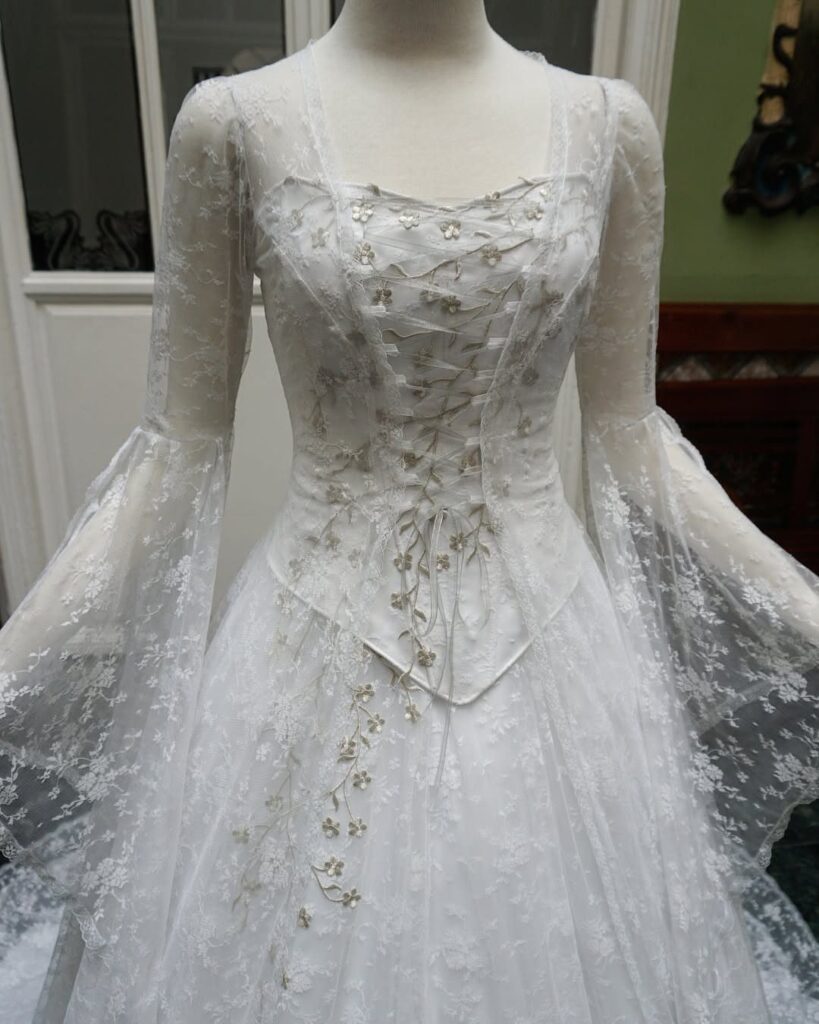
Where the ceremony happens decides which of these gowns works.
A field, garden or woodland wedding rules out any train that drags unless it has a wrist loop or a bridesmaid to lift it, and it favors earthy colors over stark white.
The looks run from a plain white gown with bell sleeves and a floral crown in place of a veil to a custom red velvet gown with an attached hood.
Velvet is heavy, so a warm-weather date pushes me toward the off-the-shoulder lace gowns or the flowing bell sleeve styles over the hooded red velvet.
1. Corseted Closures
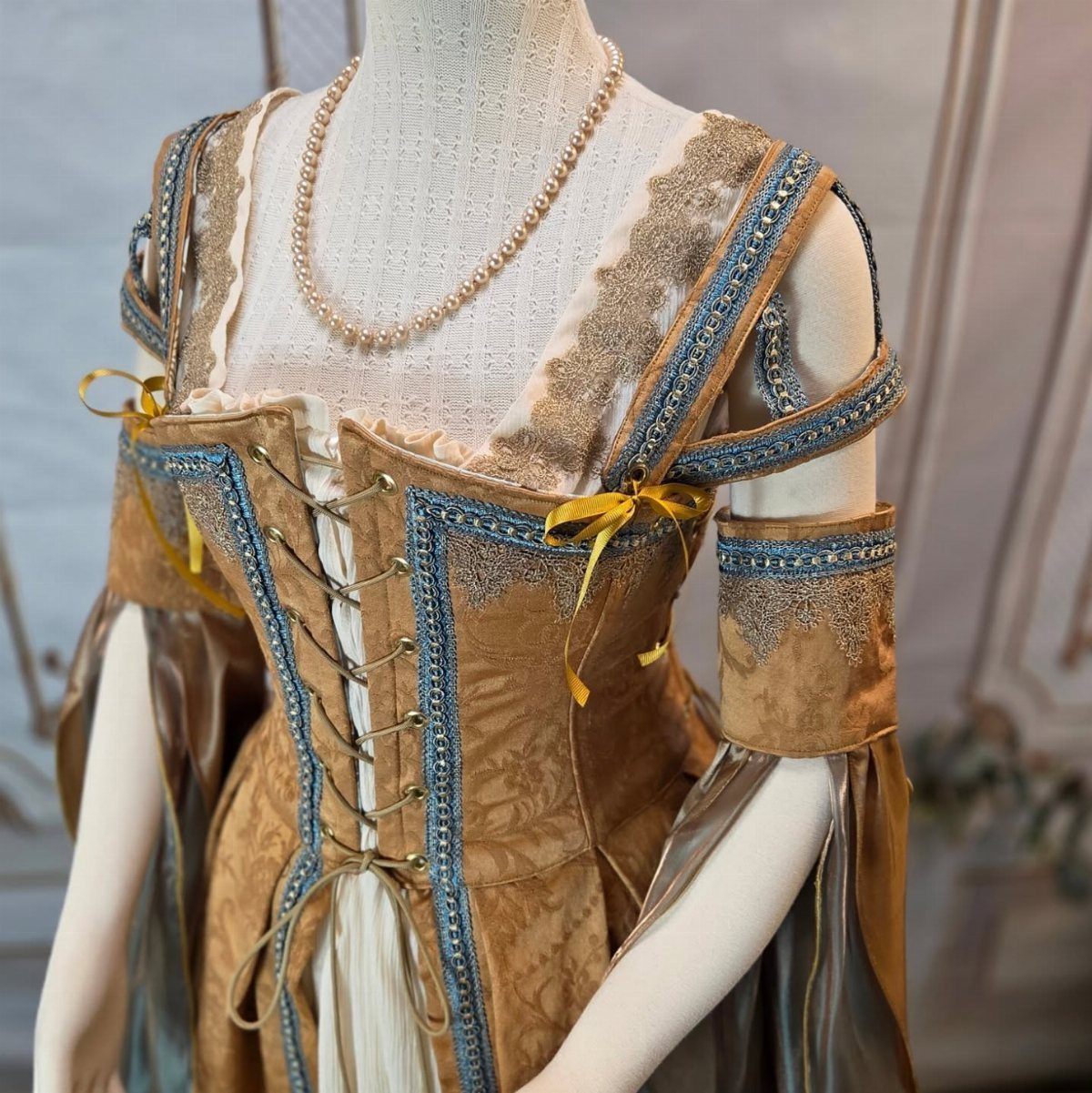
A lace-up front does the work of a zipper and a corset in one, and on a gold and blue gown like this one it becomes the visual center of the bodice.
Laces also adjust. If your measurements shift between the final fitting and the wedding, you can loosen or tighten the front yourself, which a sewn-in zipper will not allow.
A lacing color that matches the trim makes the cord read as detail rather than hardware, and that is the choice that wins here. Ask your seamstress about a modesty panel underneath so the lacing stays snug without gaps.
2. Medieval Wedding Dress Styles
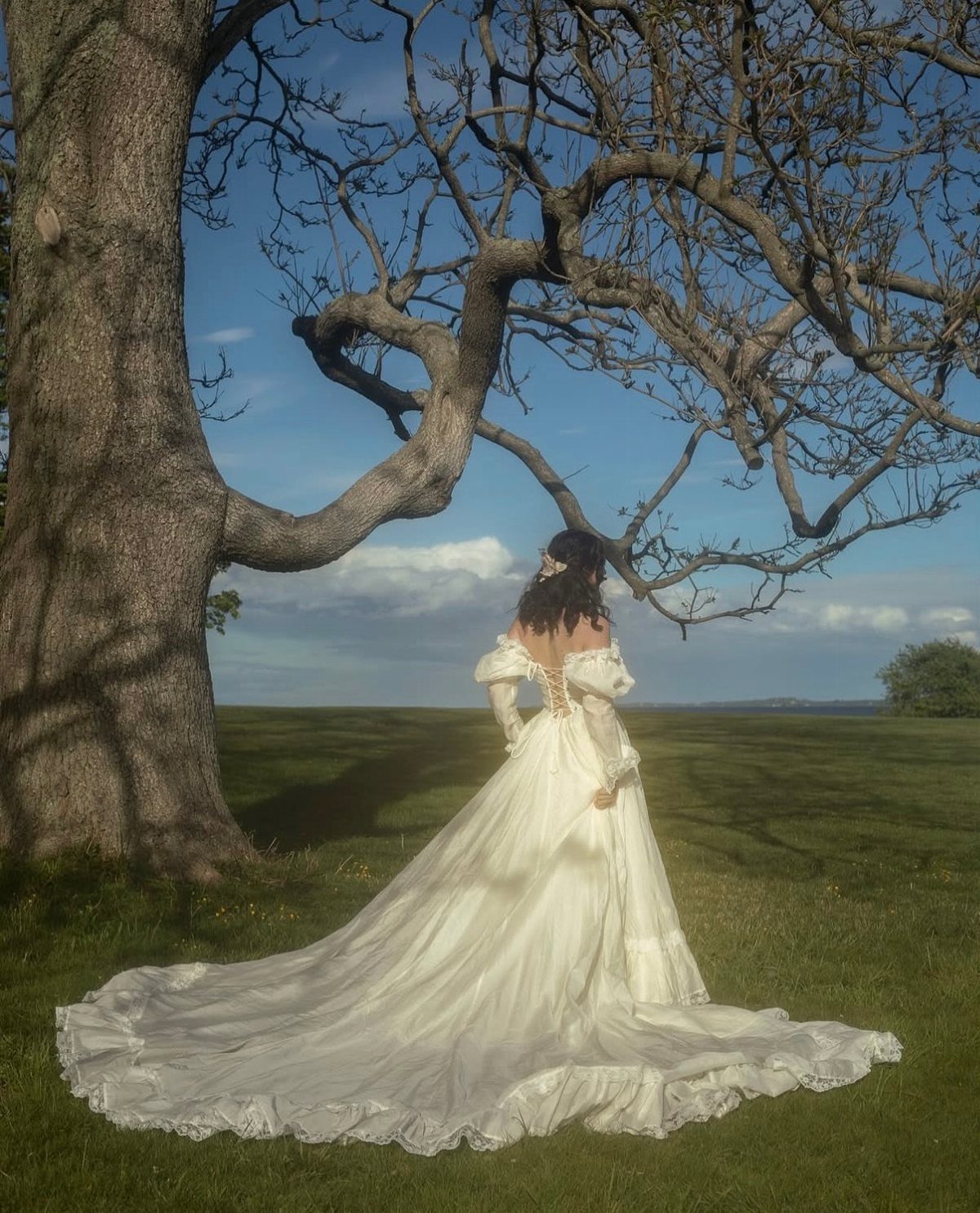
Off-the-shoulder necklines with a long, sweeping train give a white medieval gown its period feel before any trim is added.
For a field or garden wedding, a train like this will drag through grass, so ask the maker about a loop or wrist strap to lift it while walking.
A plain white gown also leaves room for a custom budget to go into one detail, such as the sleeve or neckline, instead of spreading thin.
I would start with the neckline, since it sets the silhouette for everything else.
3. Modern Medieval Styles
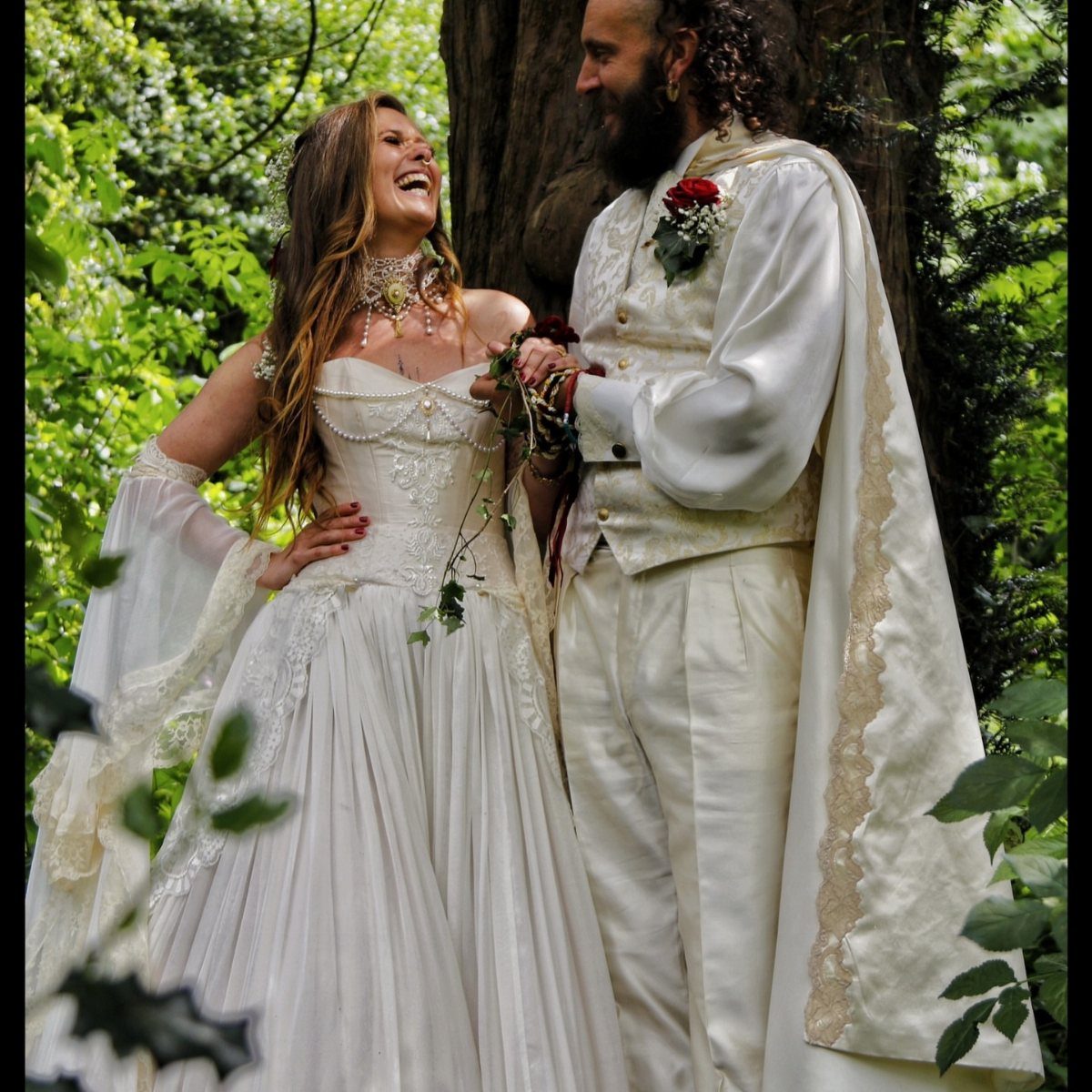
A modern medieval look borrows the shapes and leaves out the costume: soft, period-inspired fabrics and cuts that you can wear comfortably through a long day outdoors.
This approach suits couples who want a theme without a full reenactment.
Dress the bride and groom in matching tones so they read as a pair, and keep the details simple enough that guests in ordinary formal wear will not look out of place beside you.
For a woodland ceremony, I would choose natural, earthy colors over stark white.
4. Flowing Bell Sleeve Gowns
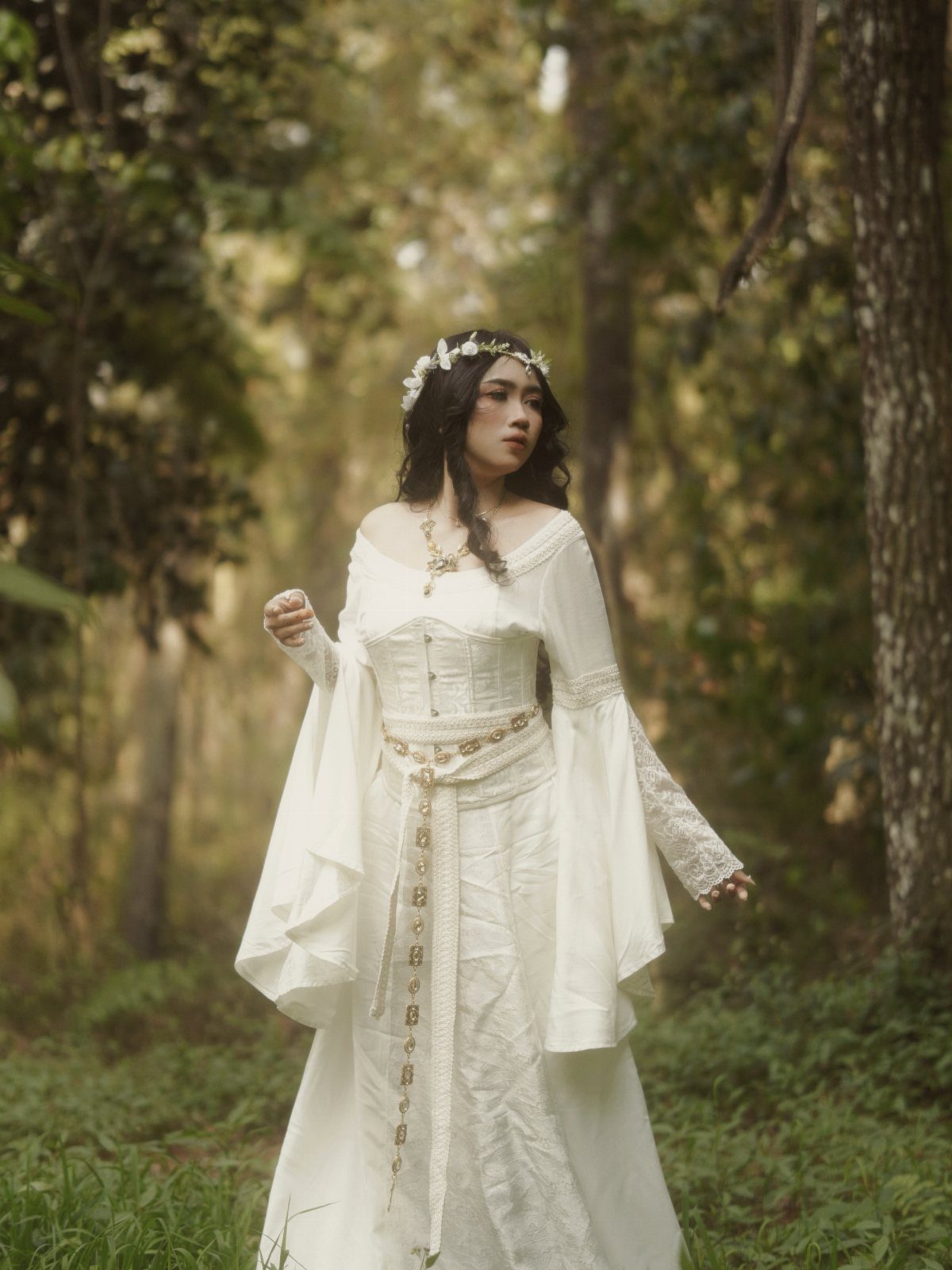
Bell sleeves, fitted at the shoulder and widening toward the wrist, give a plain white gown its drama without any added beading or lace.
A floral crown finishes the look and replaces a veil, which saves money. Choose fresh or silk flowers based on your budget and how long you will be outside.
Wide sleeves catch on bouquets, chairs and food, so I would have them hemmed to just past the wrist rather than to the floor. Try lifting a glass and hugging someone during your fitting.
5. Hooded Red Velvet Gowns
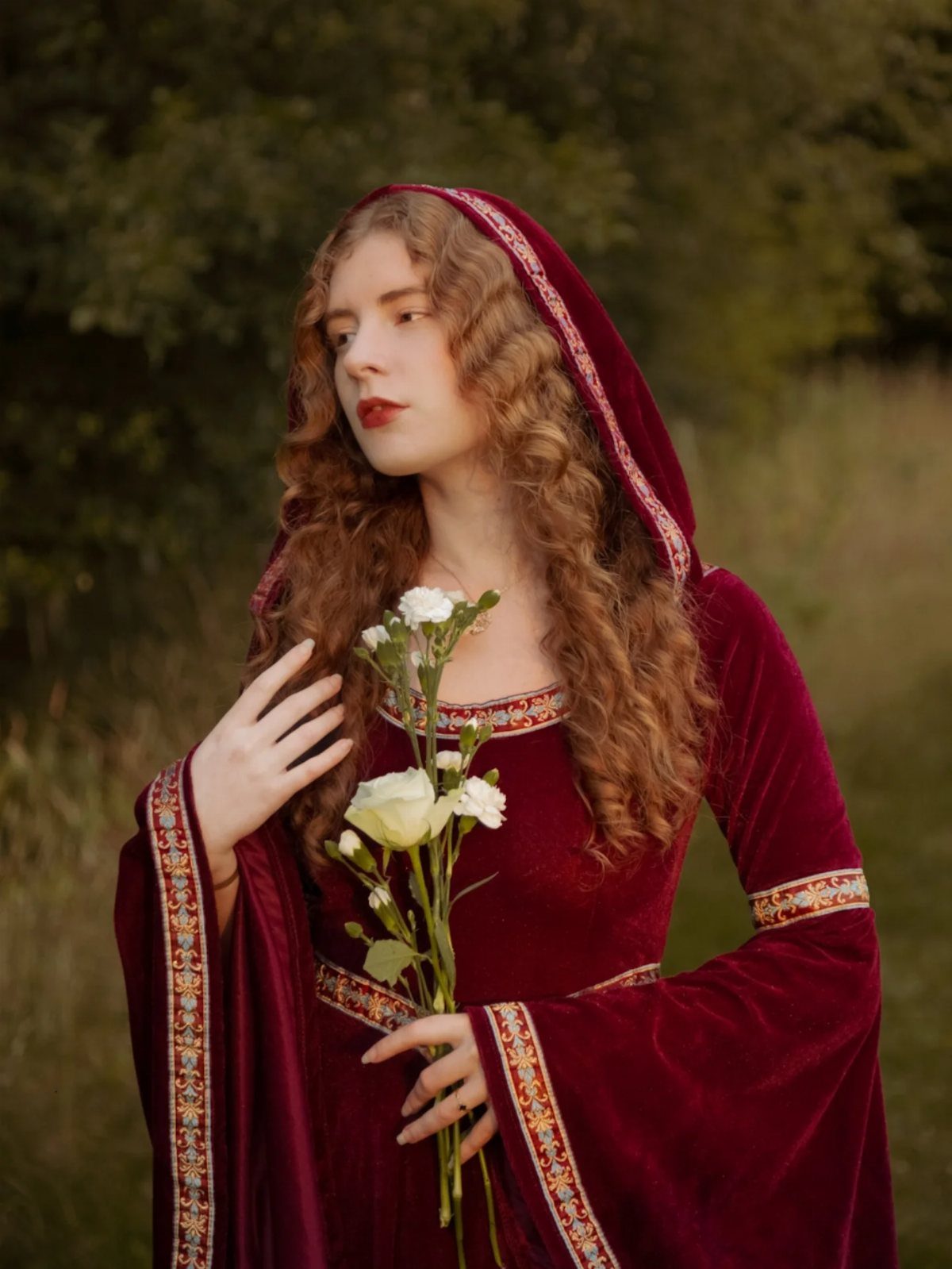
Red velvet with gold trim and an attached hood is the boldest option on this list, and it reads as a medieval bride more than any white gown can.
A hood doubles as your headpiece, so you can skip the veil and the hairpins. Velvet is heavy, so I would test it for comfort before committing, especially for a warm-weather date.
White roses against deep red look striking, so carry them rather than a colorful bouquet. Custom work is the likely route here, so allow generous time.
6. Fairytale Equestrian Bridal Looks
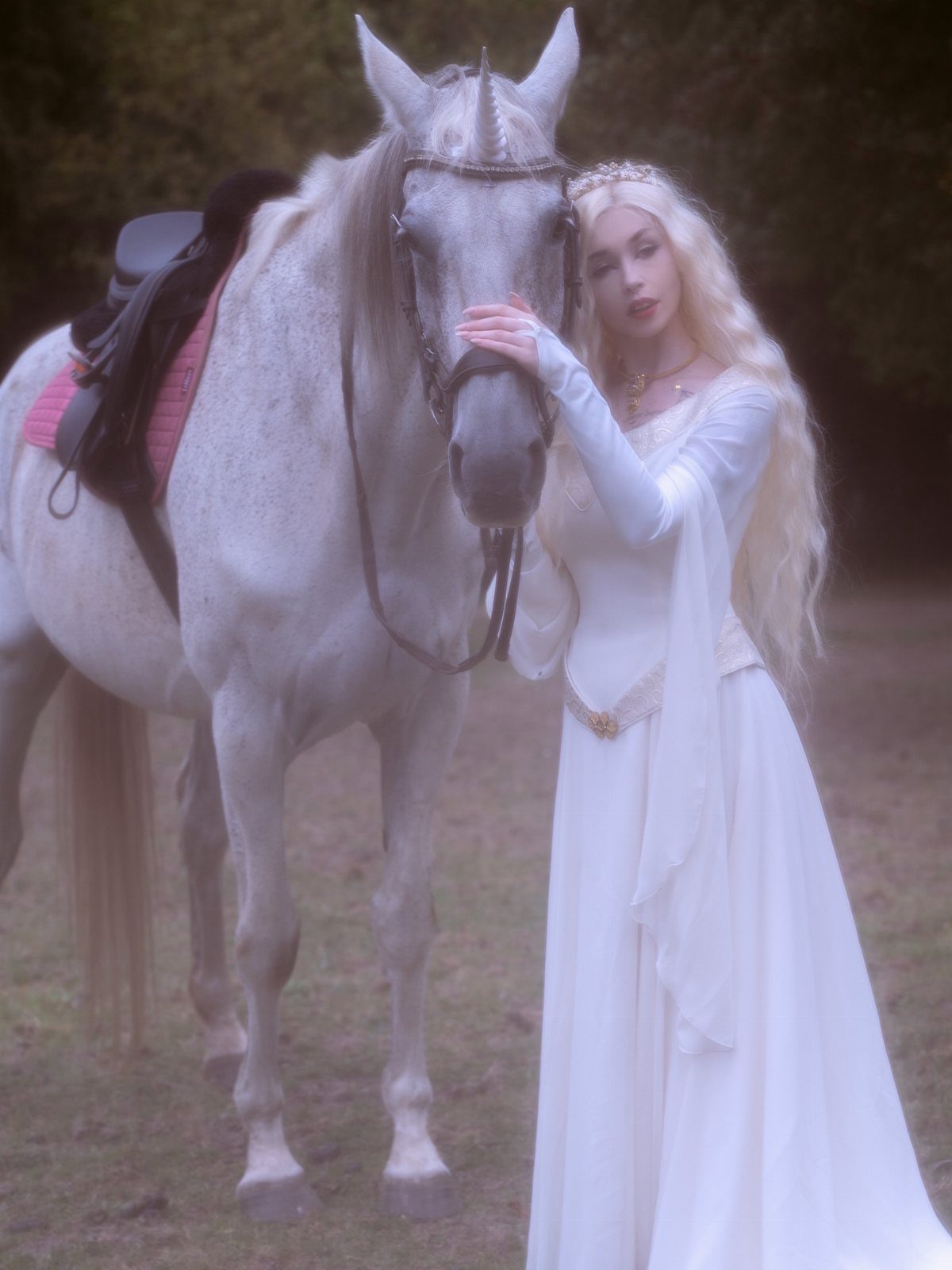
Posing with a white horse turns a medieval gown into a fairytale scene, and the horse does most of the storytelling for you.
Fantasy-style accessories, like a delicate circlet or hair adornment, suit long loose hair and a flowing white dress. Quiet styling elsewhere lets the horse and gown stay the focus.
Book the horse and its handler early, and ask about gown-friendly timing, since a long hem and a large animal need space. I would reserve this for portraits rather than the ceremony itself.
7. Off-the-Shoulder Lace Gowns
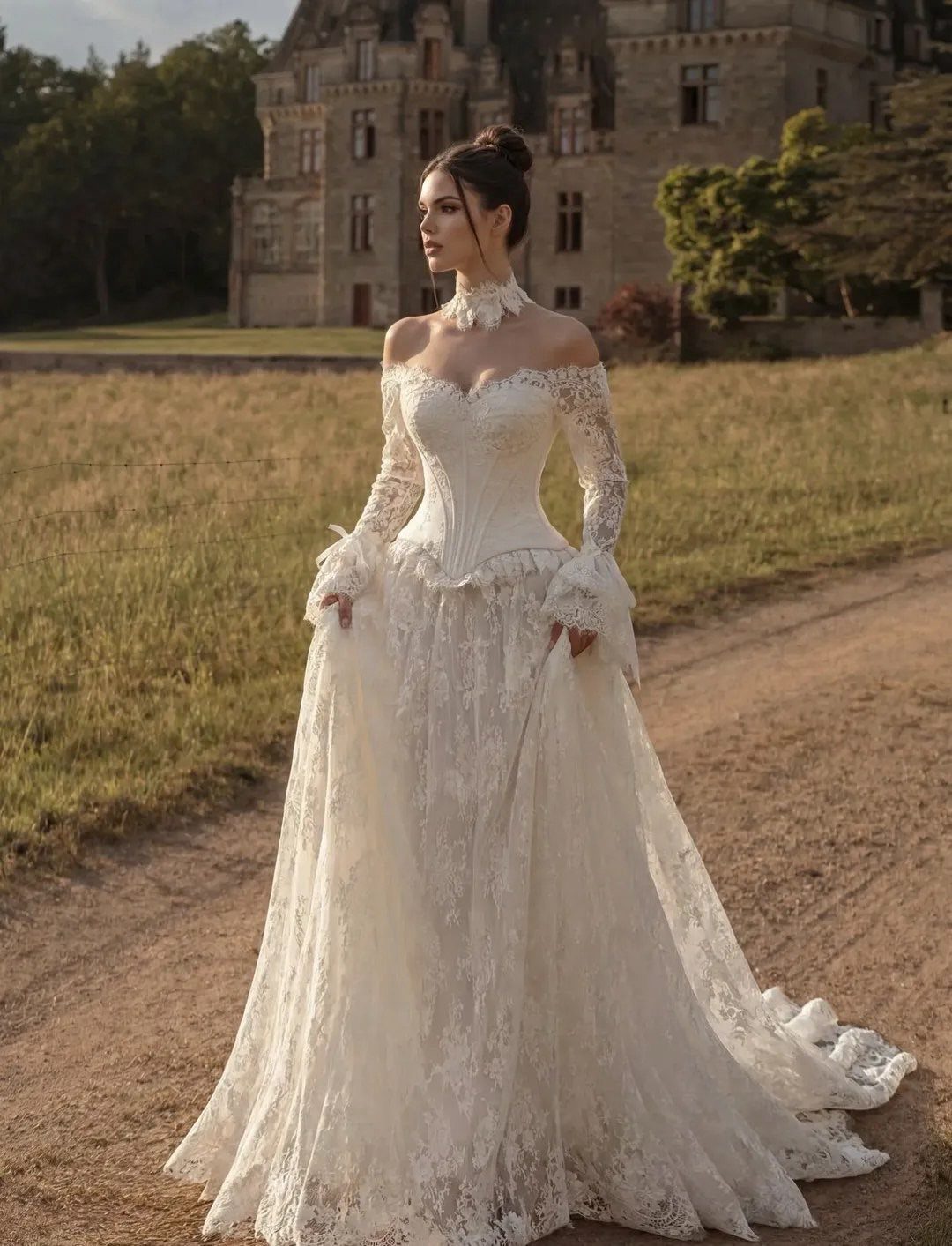
Lace carries this gown: the sleeves, the shoulder line and the train all stay quiet, so the fabric does the period work.
Long lace sleeves cover the arms without a wrap, which helps at an outdoor ceremony and keeps the cost of extras down.
Off-the-shoulder cuts can slip, so I would ask the seamstress to stitch in elastic or a small stay along the neckline and test it by raising your arms.
Lace is delicate on stone and dirt, so a train this long needs a plan for the walk. Have a bridesmaid lift it, or add a wrist loop.
A plain hairstyle, with no veil, keeps the lace in view.
Frequently Asked Questions
What did they call medieval dresses?
Medieval dresses are usually called gowns, and a modern version is often called a medieval-inspired or period-inspired gown.
Medieval dresses are usually called gowns, and shoppers sort them by features: lace-up corseted bodices, bell sleeves, Juliet or poet sleeves, and square or V necklines. Costume is the word for a full reenactment look.
What did a medieval wedding look like?
Medieval wedding attire leaned on deep colors, and authentic gowns were made in red, green and blue rather than white or pastel.
Gowns used heavy fabrics such as velvet, brocade and satin, with lace-up fronts or backs, bell or poet sleeves and long trains. A modern medieval wedding can borrow those shapes in white or ivory and keep the details simple.
What color was a medieval wedding dress?
Deep colors such as red, green and blue were the authentic choice, not white. If you prefer white or ivory, a medieval-inspired cut with off-the-shoulder lines or bell sleeves still gives the period feel.





