The 1989 gowns here run from a cotton Laura Ashley dress to a beaded Bob Mackie mesh, and the fabric you pick decides the rest: lace for structure, chiffon for movement, raw silk for a princess cut.
Check the size and length first, though. The Eva Haynal Forsyth dress is a size 0–2, which leaves almost no room to alter.
1. Embroidered Chiffon Dress
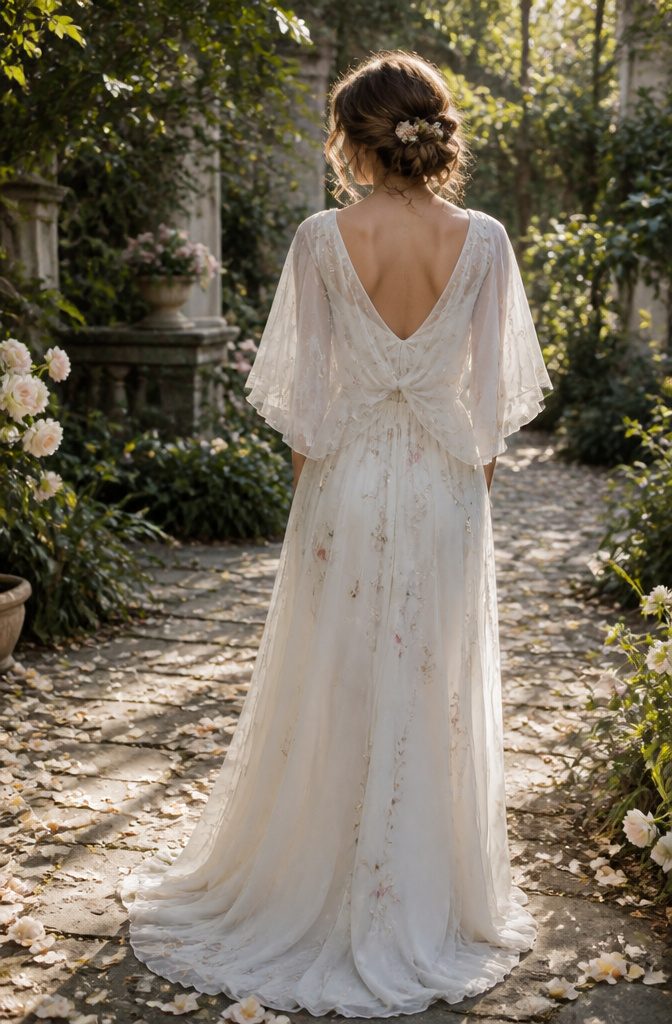
Sheer chiffon carries this dress, with floral embroidery worked across the fabric and a gathered "butterfly" effect at the back. The gathers sit like soft wings behind the shoulders and waist, so the back gets the attention, not the front.
A hidden elastic waist is a real advantage on a vintage piece. It gives a little in the fitting, which makes sizing more forgiving than a rigid, boned bodice.
I’d point this toward a bride who wants a romantic, light look and plans to be photographed from behind: aisle walk, first dance, a veil-free exit.
Chiffon is sheer, so check the lining before you commit. Embroidery on a delicate base also needs careful handling, so budget for gentle cleaning.
2. Priscilla of Boston Lace Gown
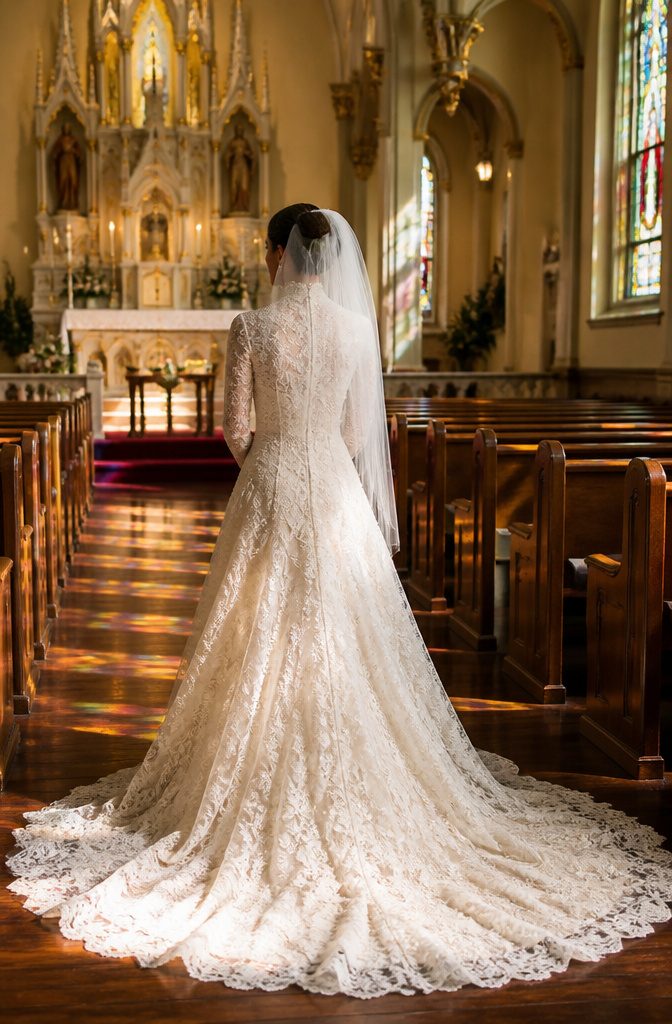
A Priscilla of Boston gown is the one to picture when you think of a late-’80s bride in full lace: long fitted sleeves, a high neckline and a bodice covered in pattern.
The lace does the decorating, so the dress needs little else. Appliqués sit along the neckline and cuffs, and the sleeves often taper to a point over the hand.
The look is modest by design, with skin showing only at the face. I’d pick it for a winter ceremony or a church aisle, and I’d skip it for a hot outdoor venue, since lace over lace holds heat.
Check that the sleeves reach your wrist bone when you lift your arms, because long lace sleeves are the first thing a tailor has to adjust.
3. Laura Ashley White Cotton
Laura Ashley was the most famous name on the British High Street from the late 1960s through the 1970s and 1980s, and it began as a textile company.
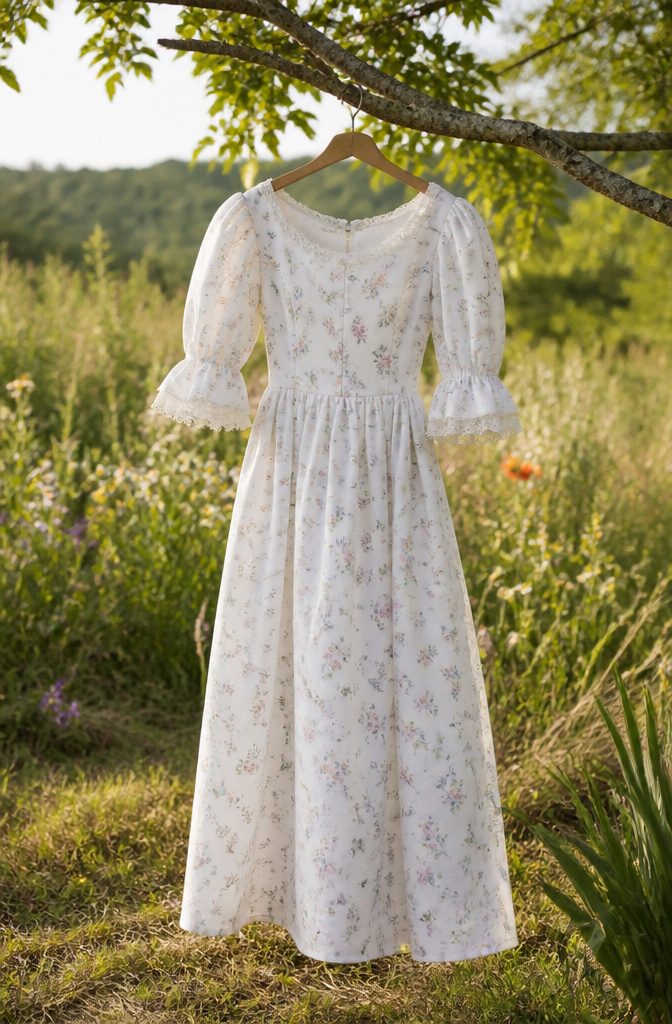
That origin shows in the dresses. Two documented gowns are listed in white: a 1984 white cotton dress and a 1988 white embossed print dress in a size 8.
Cotton reads matte and a little crisp, where silk and chiffon catch light and drift. A floral pattern on cotton sits flat and looks printed, almost like a garden fabric.
If you want soft, quiet and unfussy, cotton wins; if you want shimmer in photos, it won’t give you that. Embossed texture adds some depth without any shine.
4. Mermaid Silhouette
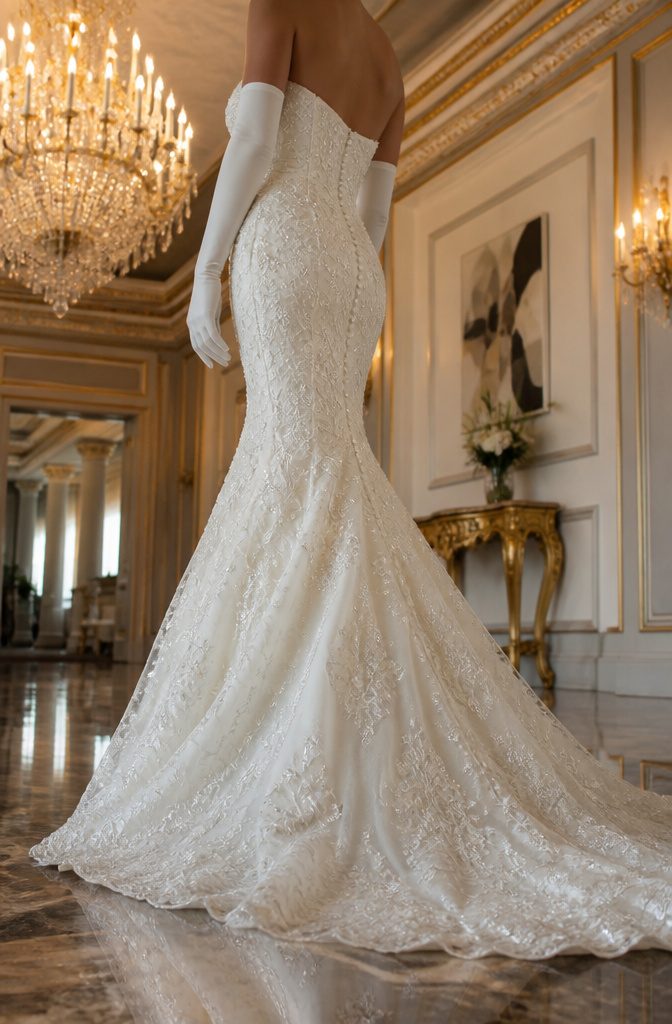
A mermaid gown fits close through the bodice, waist and hips, then flares at the knee into a fishtail hem. Lace and beading are the usual finishes, because a fitted line shows every bit of surface detail.
The 1988 David Fielden London gown is a good example to study for 1989 wedding dresses.
It uses ribbon and sequin embroidered lace, a boned and fully lined bodice, and a tiered ruffled fishtail hem. The arm pieces detach, so one dress works as sleeveless or covered.
Boning is what I’d check first on any mermaid, vintage or new. A fitted silhouette only looks sleek if the bodice is boned and lined, and that structure is also what makes alterations tricky.
5. Puff Sleeves
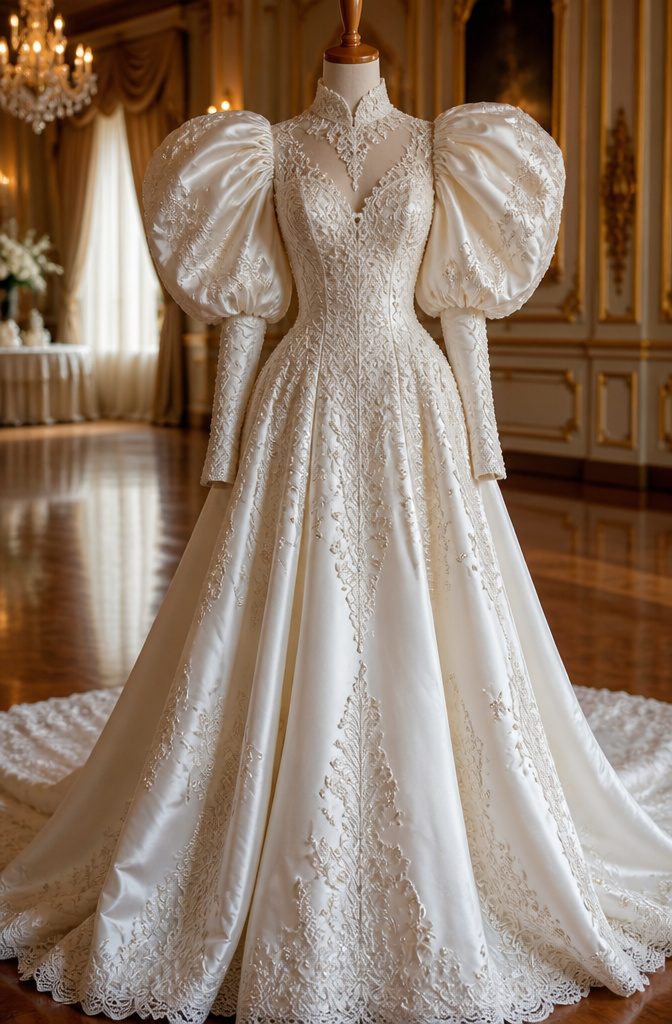
Big puffed sleeves were the loudest feature of 1980s bridal wear, and by the middle of the decade they reached what the period called massive fullness.
The shape traces to Princess Diana’s wedding, which made big, elbow-length puffs the look to copy.
The fullness works because it sits on a quiet base. A high or stand collar and a fitted, lace-rich bodice give the eye somewhere calm to land, so the sleeve is the only thing in the outfit allowed to shout.
Shape matters at the shoulder too. A puffed sleeve head often had net or inner shoulder support to hold it up, and I’d ask any seamstress about that first.
6. Chanel Grecian Goddess Gown
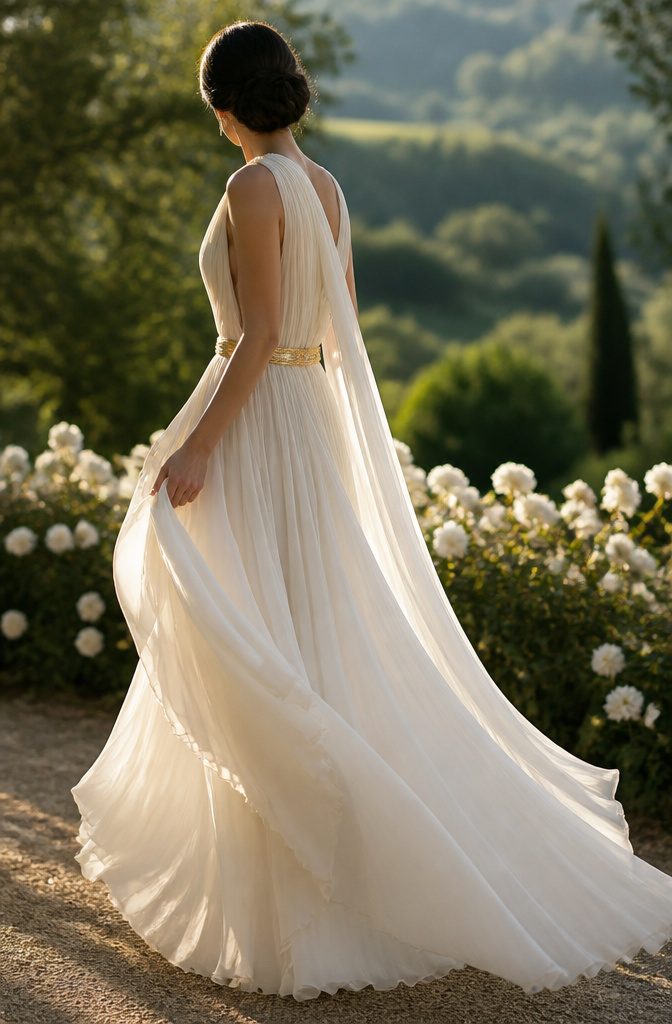
Chanel’s Spring/Summer 1989 Grecian gown, designed by Karl Lagerfeld, is cut from fluid ivory silk chiffon with a finely pleated bodice, and the gold in the colorway keeps it from reading as plain white.
Most 1989 gowns relied on boning, lace and sleeve volume to hold a shape. This one lets the chiffon fall and the pleats do the shaping.
The 1stdibs listing puts the appeal simply:
A truly special piece, it would make an unforgettable wedding dress for a bride with exquisite taste.
— 1stdibs
If you buy vintage, expect chiffon that moves with you, not a structured shell. I would choose it for a simple ceremony where the fabric can be the whole story.
7. Silk and Guipure Lace
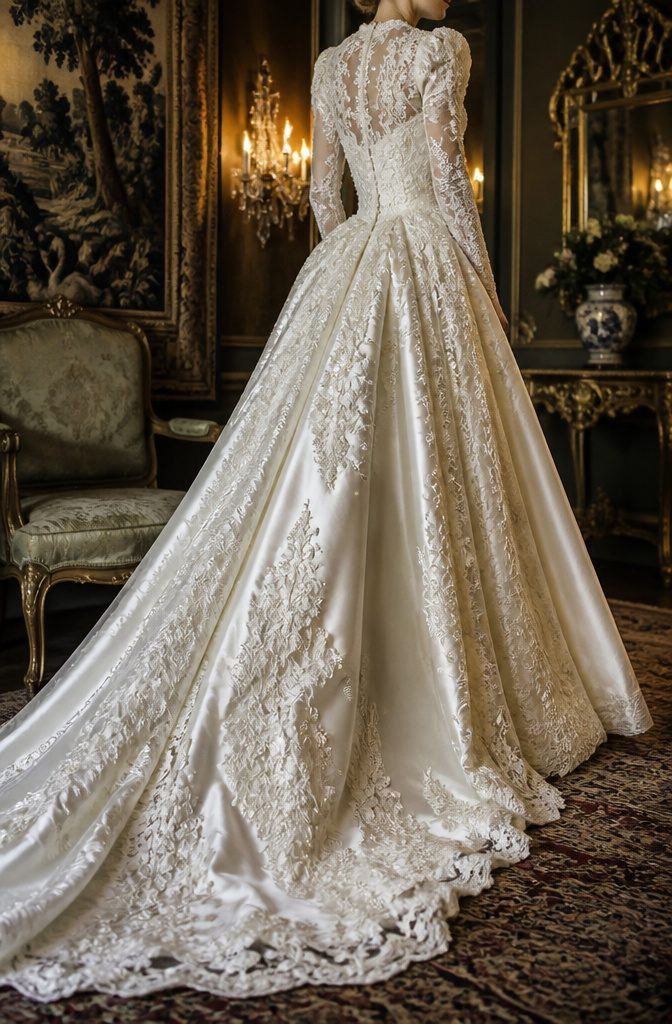
Guipure is lace with no net ground. Softer laces such as Chantilly stitch fine floral motifs onto sheer tulle, so the fabric reads as a veil of thread.
Guipure motifs are heavy and joined directly to each other by bars or plain stitching, which leaves open gaps and gives the lace a raised, almost carved texture.
Against silk, that difference matters. Silk satin under guipure gives the lace something solid to sit on, so the pattern stands out in relief instead of dissolving into skin.
I’d choose this pairing for a structured gown with a defined bodice, since guipure holds its shape and won’t drape like Chantilly. It also costs more and feels heavier, so try the dress on and walk in it before committing.
8. Four-Piece Lace Ensemble
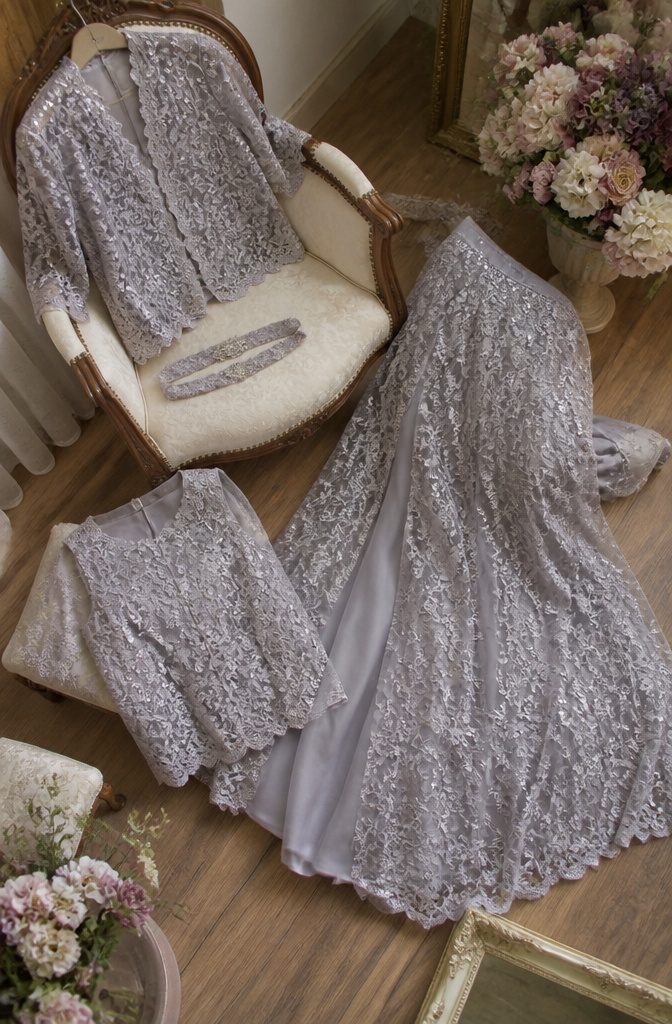
The Giorgio di Sant’ Angelo ensemble comes as four pieces: a skirt, a top, a jacket and a belt, all in grey lace and lined in silk.
Clear crystal embellishments catch the light, and the lace stays lightweight enough to wear for hours.
One note on dates: the runway piece is listed as 1983, so treat it as a forerunner of the late-’80s lace look rather than a true 1989 gown.
A separates set changes how you build the day. You can wear the skirt and top for the ceremony, then add the jacket for photos or the belt to define the waist, which a single gown can’t do.
It also means you can re-wear the top or skirt on its own later. The cost is more seams and more pieces to fit, so ask a seamstress to check how the layers sit together.
9. Bob Mackie Beaded Mesh
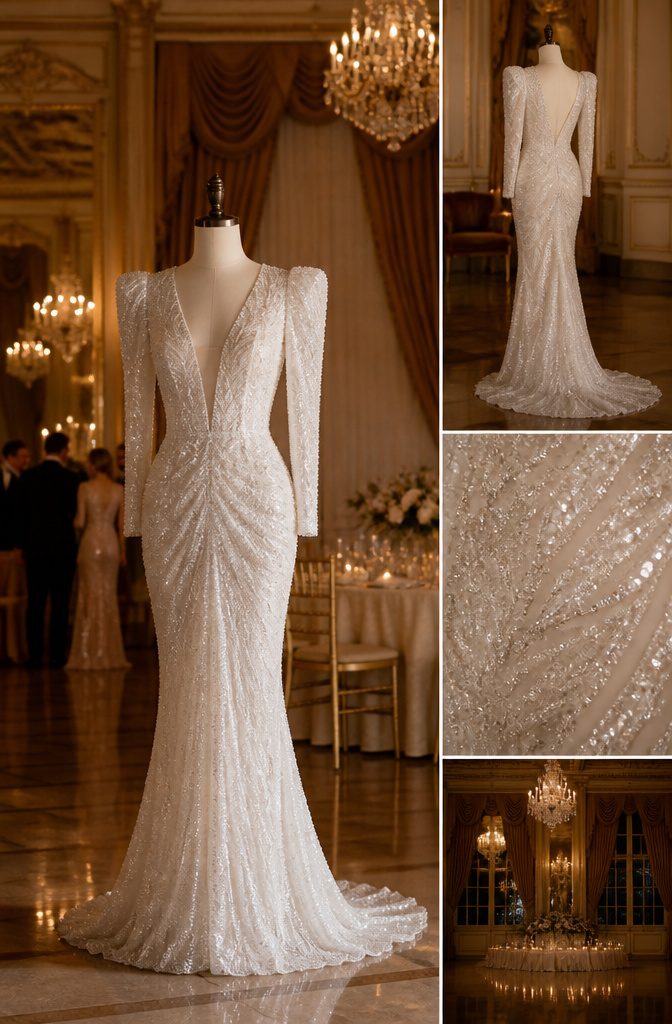
Bob Mackie’s Spring 1989 white beaded mesh gown is the dress to look at if your idea of a wedding involves a spotlight.
The mesh carries intricate beadwork, so the gown reads as sparkle first and fabric second, and that suits a ballroom far better than a barn.
The Dynasty-era glamour is easy to see in it, even if the label never says so.
Its cousin is a 1980s Mackie white gown with a beaded bodice, an off-shoulder neckline and a sweetheart cup. The listing gives the length as 49 in, so check that figure against your own height before you fall for it.
I would choose the mesh for drama and the bodice gown for a softer shape.
10. Flower Embellished Gowns
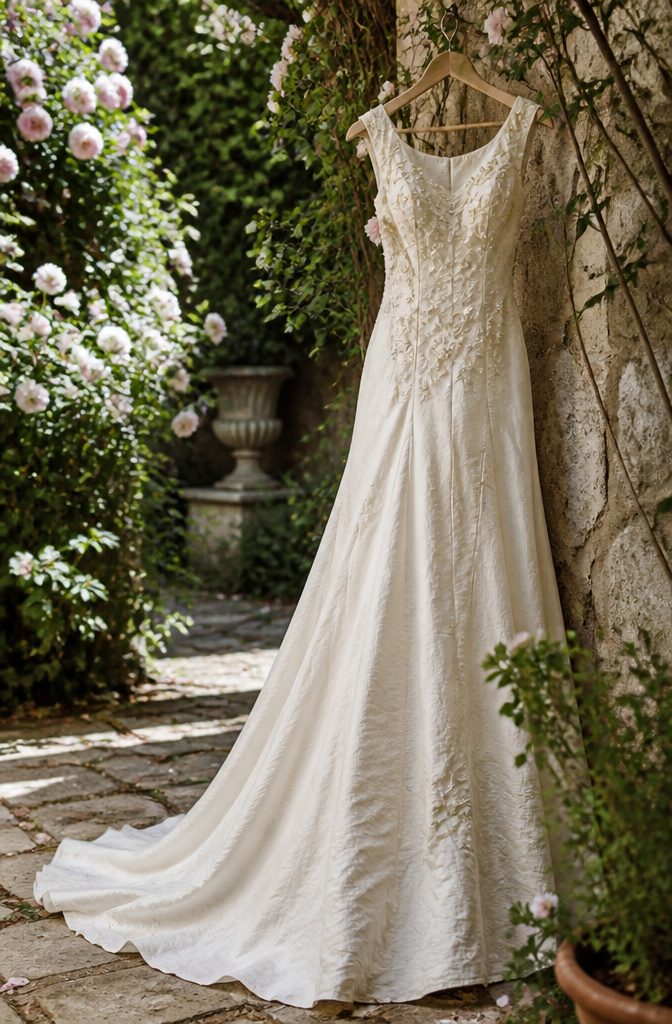
Floral embellishment on a 1989 gown tends to mean appliqué flowers stitched across the bodice and skirt, which gives a plain fabric its romance without needing lace.
The Eva Haynal Forsyth 1989 dress is a good example: antique white raw silk in a princess cut, listed at a size 0–2. Raw silk has a dry, slightly nubby surface, so flowers stand out against it as texture rather than disappearing.
Bob Mackie’s 1980s version goes the other way, with white flowers on fluid silk crepe that falls to 48 inches in length.
I’d pick the structured raw silk for a ceremony and the crepe for a dance floor. Check the size first, because a size 0–2 leaves almost no room for alterations.
1989 Trends and Princess Diana
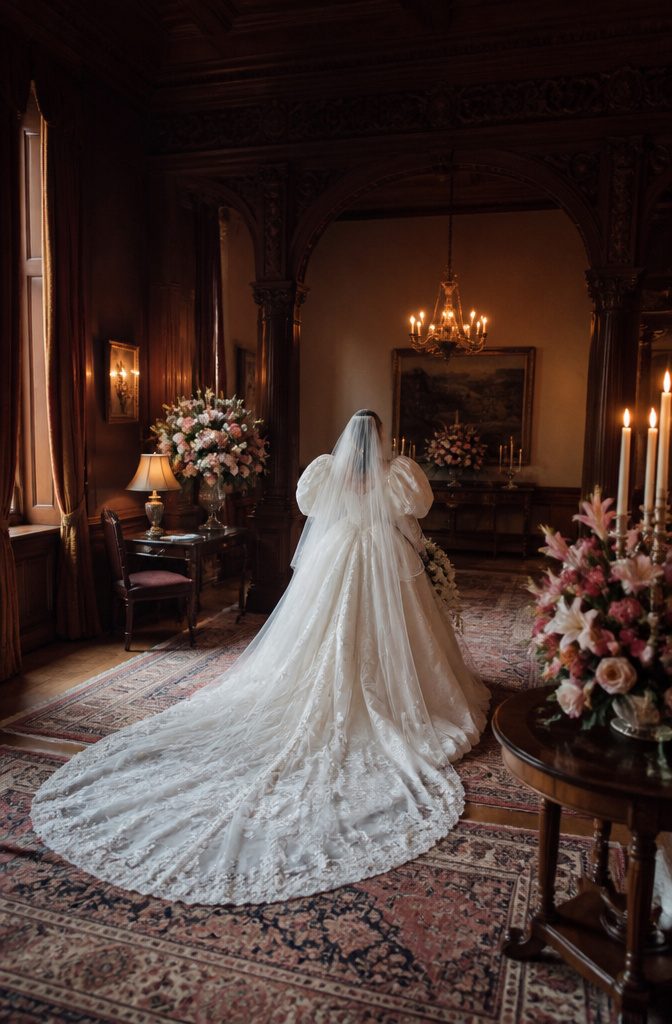
Princess Diana’s 1981 wedding set the template that 1989 brides were still working from: big puffed sleeves reaching to the elbow, plus a lower neckline that spread everywhere afterward.
By the late 1980s the low neckline had gone a little tired, and decorum was back, so high and stand collars took over, often over semi-sheer lace bodices.
Lace, silk and chiffon carried the look. Chiffon came as extra flounces on curved yokes, sometimes in several layers.
Dynasty added the shoulder. Widening shoulders, a bodice rich with detail, and sleeves puffed at the head became the TV-influenced silhouette, and I’d say the hidden net or inner shoulder support is what makes it read as authentic.
Fabrics Used in 1989
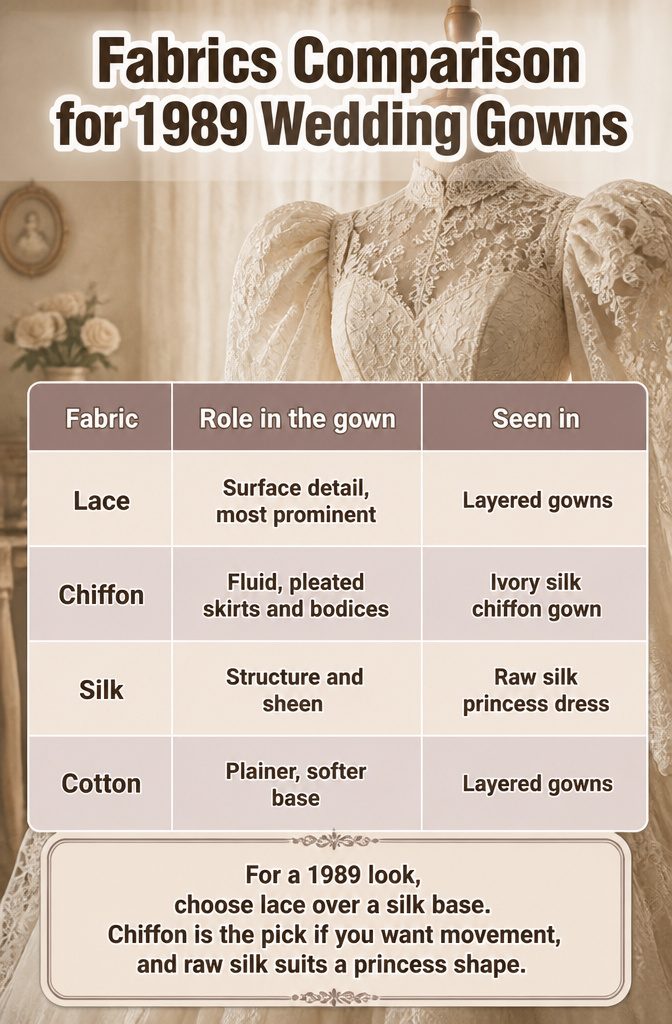
Lace led the 1989 bridal wardrobe, and it rarely worked alone. Gowns often layered it over silk, chiffon or cotton, so the lace gave the look and the fabric underneath gave the drape.
Fabric records from 1989 are thin, so the table sticks to what the garments themselves show: sheen, drape, stiffness and how the layers hold their shape.
| Fabric | Role in the gown | Seen in |
|---|---|---|
| Lace | Surface detail, most prominent | Layered gowns |
| Chiffon | Fluid, pleated skirts and bodices | Ivory silk chiffon gown |
| Silk | Structure and sheen | Raw silk princess dress |
| Cotton | Plainer, softer base | Layered gowns |
For a 1989 look, choose lace over a silk base. Chiffon is the pick if you want movement, and raw silk suits a princess shape.
High Necklines and Modest Cuts
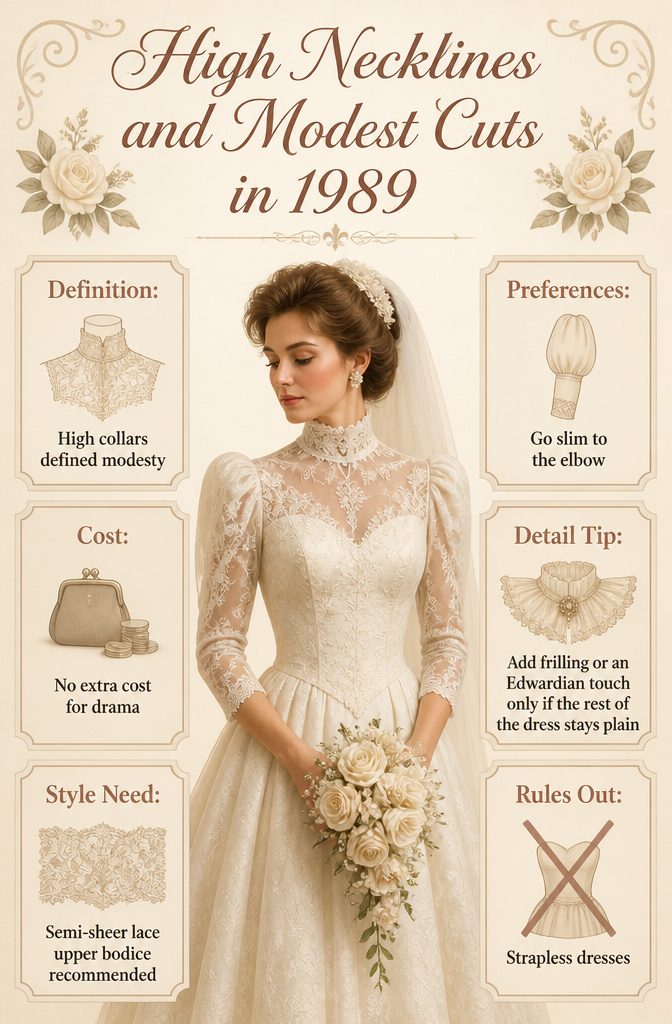
Mandarin and high stand collars replaced the square necklines of the 1970s, and brides in the 1980s read them as a return to decorum.
Low necklines never vanished, but the plunging look had been everywhere since Princess Diana’s 1981 wedding and was wearing thin.
For a 1989-style gown, choose a high or stand collar, ideally over a semi-sheer lace upper bodice. It covers more than a strapless dress does and costs nothing extra in drama.
Sleeves carry the rest. Puffed fullness reached its peak in this decade, though most real brides wore slimmer versions than the pattern books showed.
I’d go slim to the elbow, and I’d add frilling or an Edwardian touch only if the rest of the dress stays plain.
Frequently Asked Questions
What did wedding dresses look like in 1989?
Most 1989 wedding dresses had big puffed sleeves, high or stand collars and bodices rich with lace.
Mermaid cuts with boned, lined bodices were also around, along with softer chiffon and silk gowns. The look grew out of Princess Diana’s 1981 wedding, then added the wide shoulders made popular by Dynasty.
What materials were commonly used in 1989 wedding dresses?
Lace led, and it was usually layered over silk, chiffon or cotton.
The lace supplied the pattern, while the fabric underneath supplied drape or structure. Raw silk showed up in princess cuts, and ivory silk chiffon in fluid, pleated gowns.
Who were the notable designers of 1989 wedding dresses?
Bob Mackie and Priscilla of Boston are the names that come up most.
Mackie made beaded mesh and floral silk gowns, and Priscilla of Boston was known for full lace dresses with long sleeves. Chanel, under Karl Lagerfeld, also showed a Spring/Summer 1989 Grecian gown in ivory silk chiffon.
What were the popular wedding dress trends of the late 1980s?
The biggest trends were puffed sleeves, high stand collars over semi-sheer lace, and widening shoulders.
Low necklines had spread after 1981 but were wearing thin by the late decade, and decorum came back. Chiffon flounces on curved yokes, sometimes in several layers, were another common detail.





