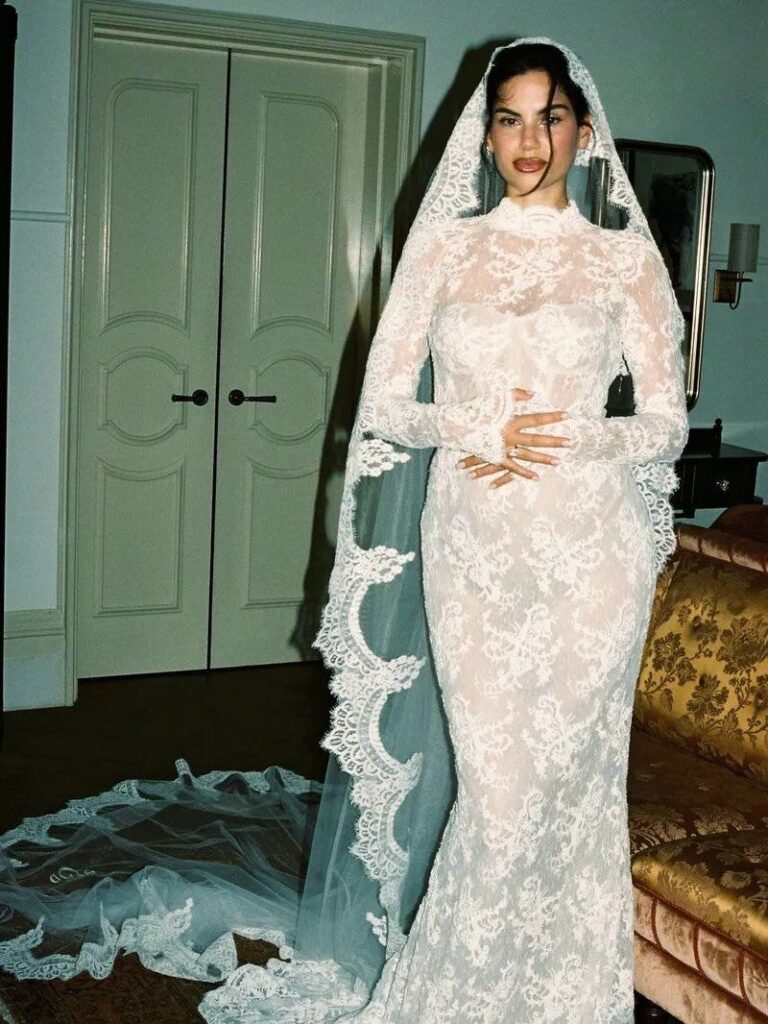
Every idea below suits a different setting, and the venue settles it: on a snowy mountainside, long sleeves or a wrap need to last the whole day, while an indoor ceremony lets you hold a layer back until evening.
Mikado and satin give the most warmth, since both are heavy and structured enough to block cold air.
1. Long Sleeves Wedding Dress
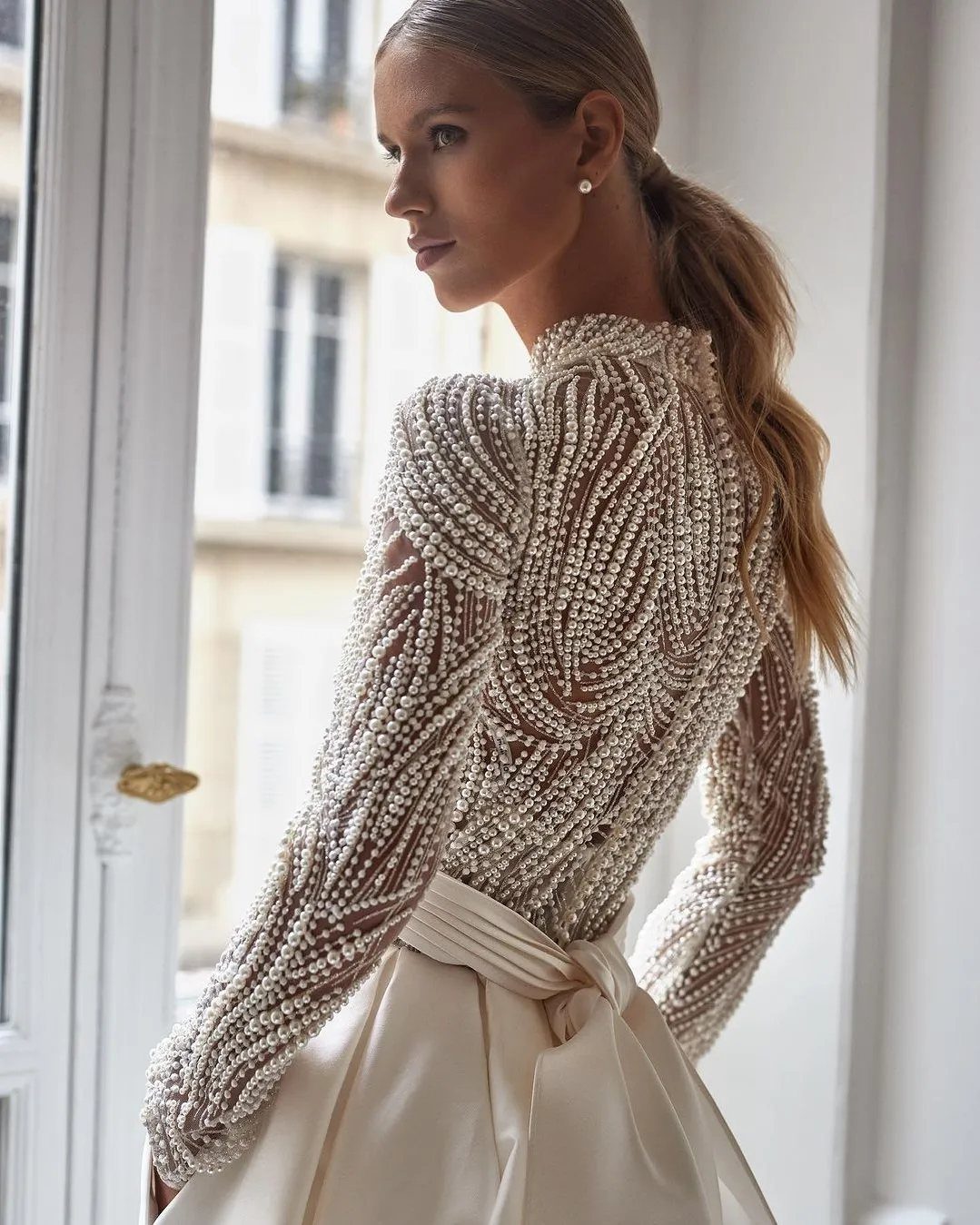
Pearl-covered sleeves do the work of a cover-up and a piece of jewelry at once, so a necklace would only crowd that high neckline. Skip it and wear small earrings.
The satin skirt is plain, which lets the sleeves carry the detail. In a cold venue, a long-sleeved gown beats a dress with a wrap added on top, because the warmth is built into the bodice.
Ask for a fitting with your arms raised and reaching forward. Fitted sleeves that pull when you hug someone will bother you all night.
2. Winter Wedding Dress with Ankle Boots
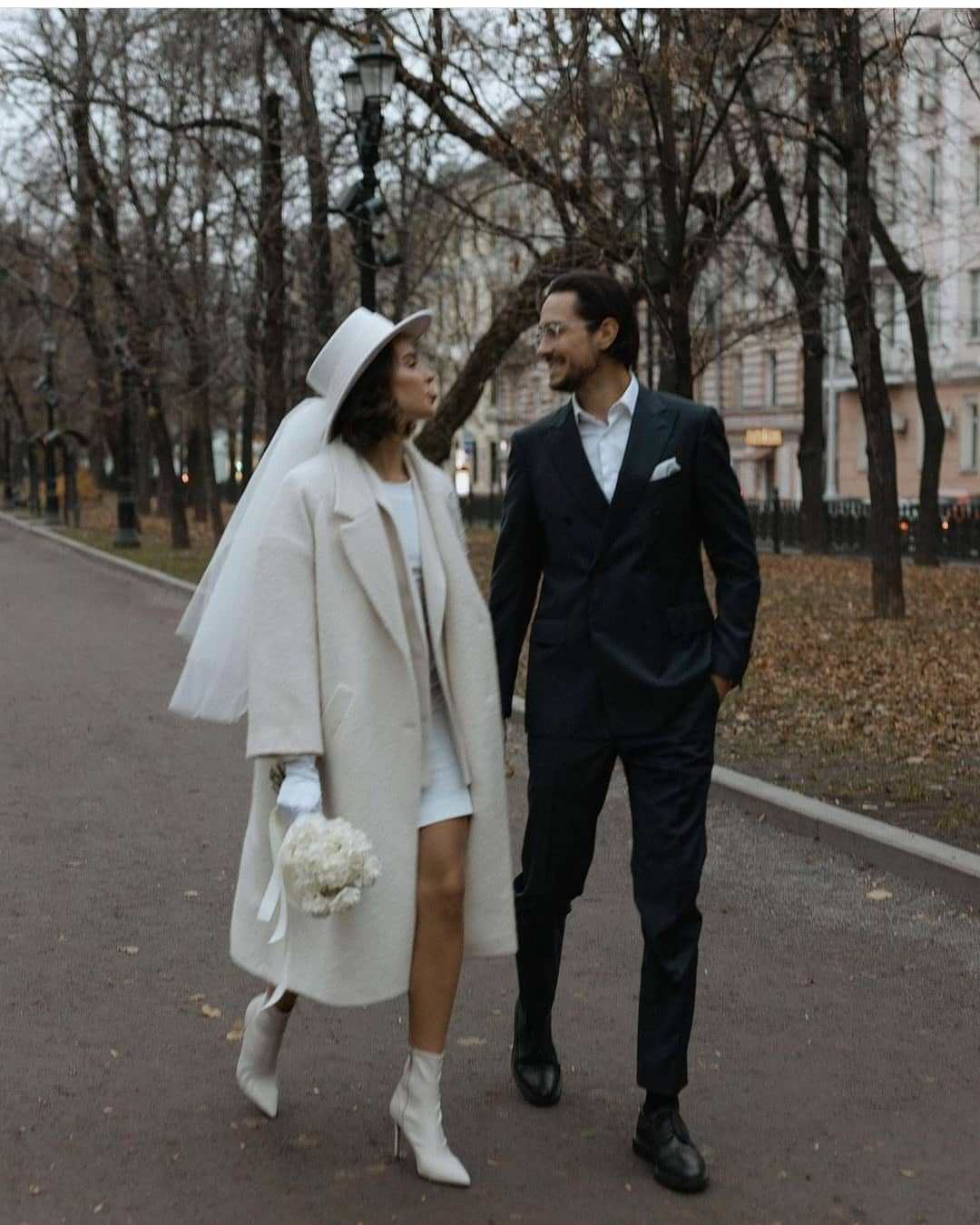
White ankle boots under a short dress keep your feet warm and spare you a dragging hem on cold ground.
For outdoor portraits, I like this far more than satin heels on frozen pavement. Choose a block heel or flat sole for grip.
Break the boots in well ahead of the wedding, and wear them to your final fitting so the hem length looks right with them. A short hemline leaves your legs bare, so tights are worth testing too.
3. Faux Fur Wraps
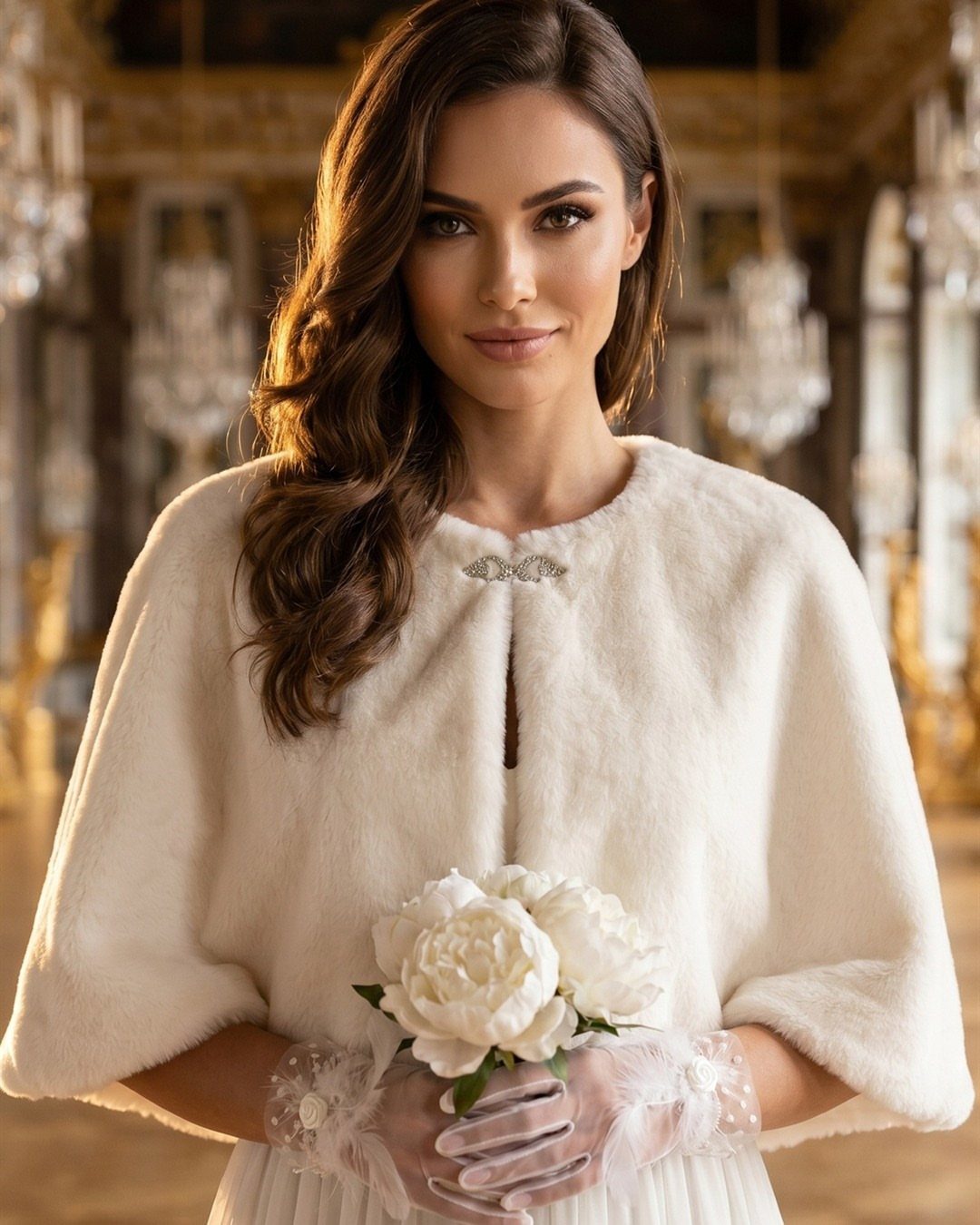
A faux fur wrap goes over the shoulders and leaves the dress visible, which suits a bride who wants warmth without hiding her gown. Paired with lace gloves, it makes a full cold-weather look.
I prefer faux over real fur for the price and the easy care. Pick a white that matches your dress, since a stark white wrap beside ivory fabric shows the difference in photos.
You can take it off for the dance floor and put it back on for outdoor pictures. Hold your bouquet in one hand and check that the wrap stays put.
4. Ball Gowns
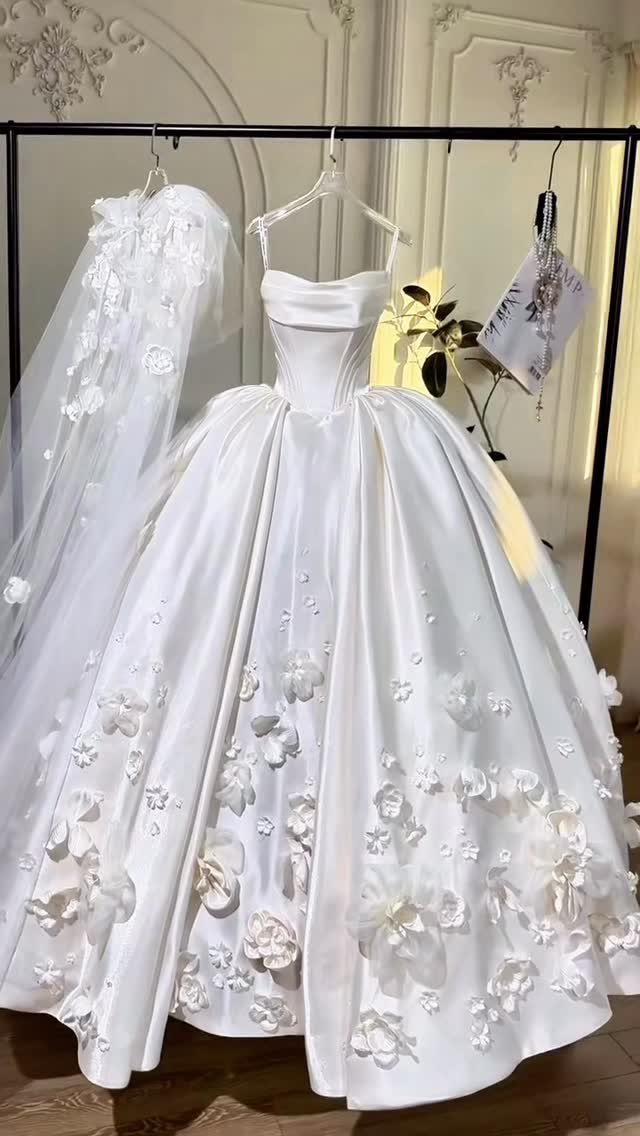
A strapless ball gown with 3D floral appliqués is the classic choice for a traditional bridal look. The full skirt gives you room for warm layers underneath, and a matching veil finishes it.
The maker pairs it with a floral veil and minimal accessories, and I agree: the appliqués are already busy, so jewelry should stay quiet.
Strapless leaves your shoulders bare, so plan a wrap or capelet for the ceremony. Heavy skirts also take a while to move in, so practice walking and sitting before the wedding.
5. Blush Winter Wedding Dress
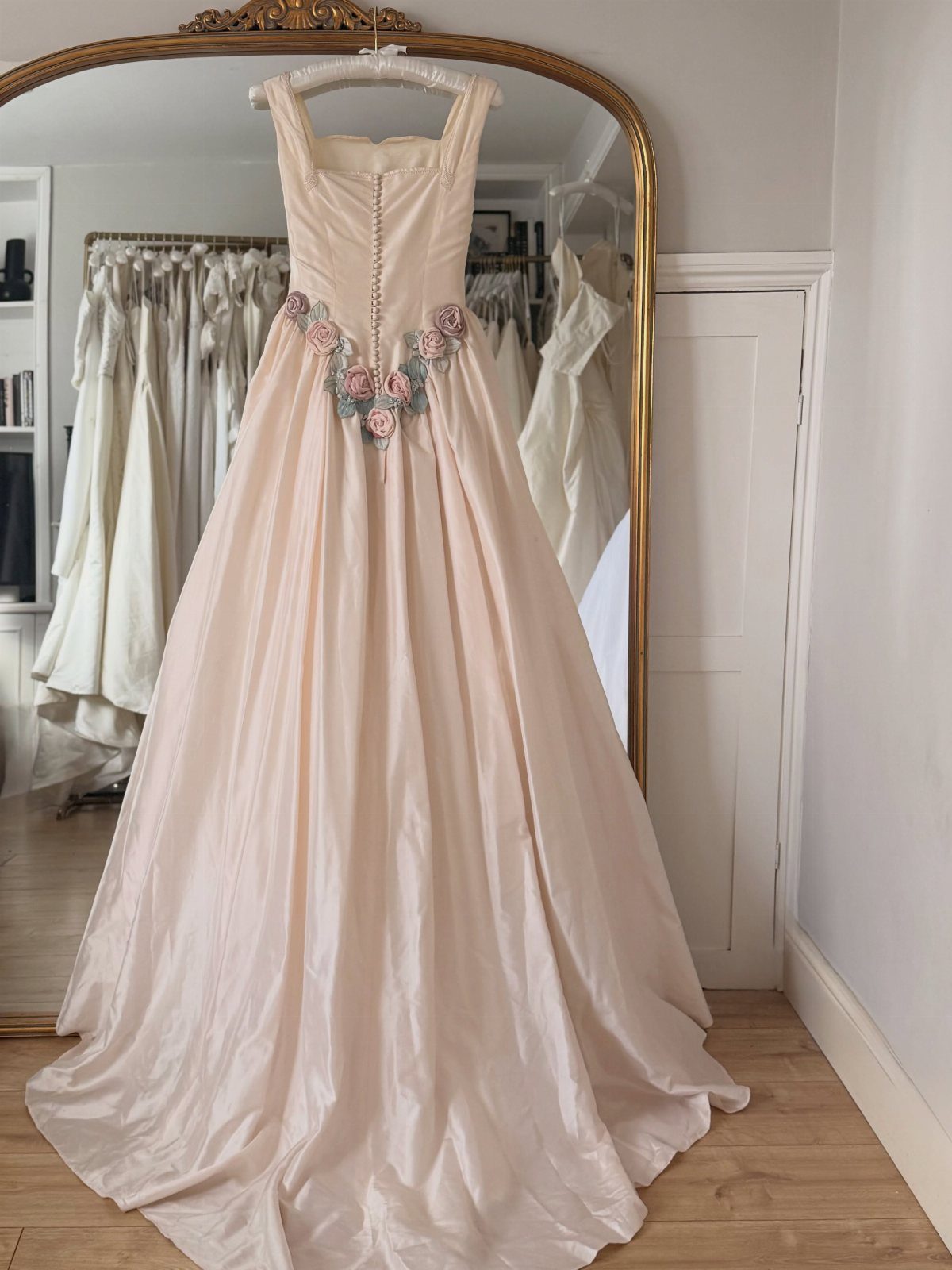
Blush softens white into something warmer, and the floral embroidery at the waist gives a floor-length dress a focal point without extra accessories.
That makes it a good fit for winter, when pale pink reads gentle against bare branches and gray skies.
Check the dress in daylight, since blush can shift toward pink or gray depending on the light. Blush can shift toward pink or gray depending on the light, and the shop’s mirror lighting may not match your venue.
Keep the rest of the look simple: a plain veil, small earrings and a cozy wrap.
6. Hooded Bridal Cape
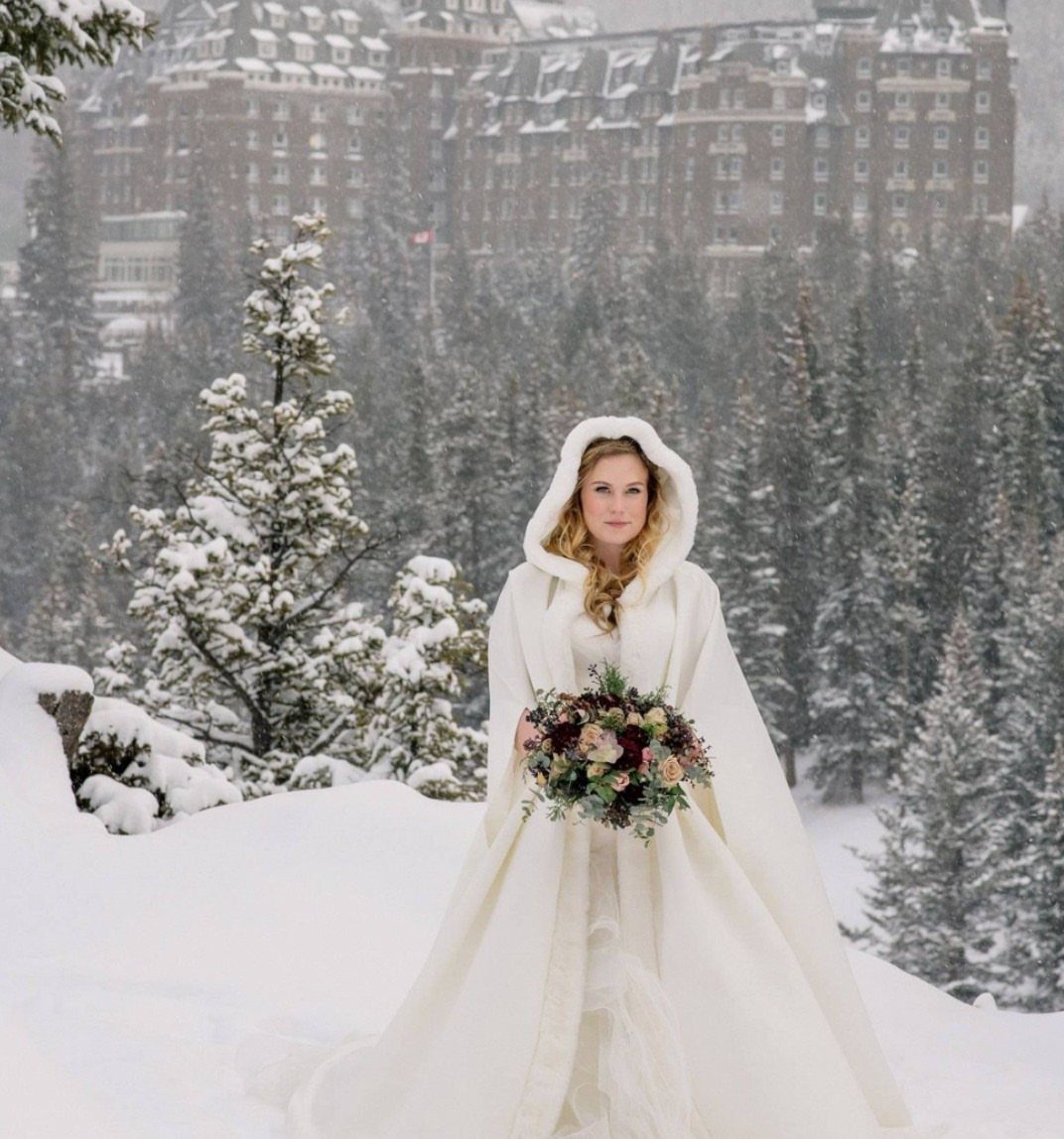
A hooded cape keeps your head and shoulders covered, which makes it the practical choice for snow. White over a white gown looks cohesive, especially in mountain settings.
Choose the cape for outdoor portraits, since a hood can flatten a hairstyle. Try it on with your hair done and your dress on, and check that the cape’s length clears your train.
Hold your bouquet while you try the cape on, since a hood and heavy fabric can crowd your arms. A cape with openings for your arms is easier to handle than one you have to keep gathered around you.
7. Bridal Pantsuit with Lace
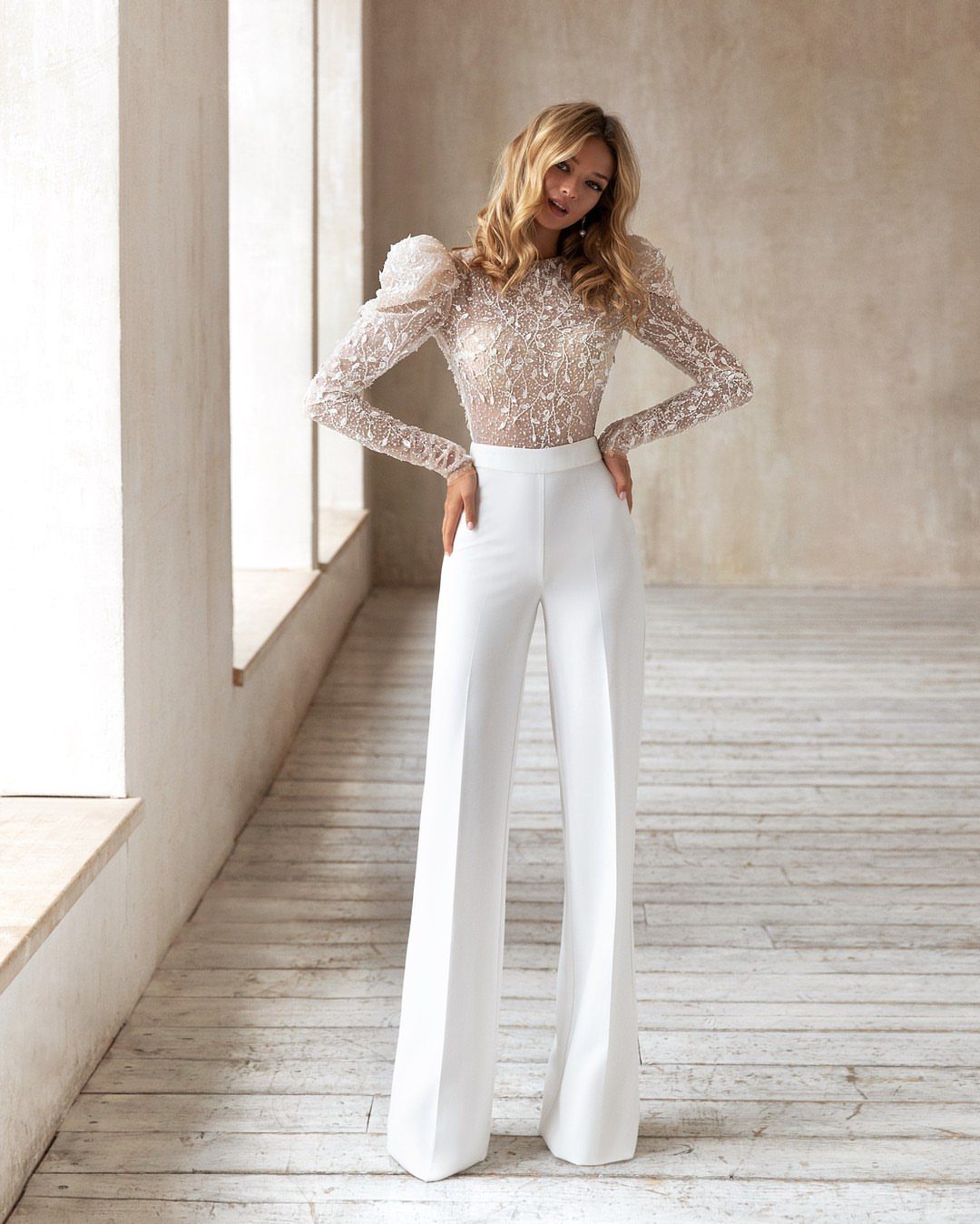
Wide-leg trousers cover your legs completely, so a cold venue stops being a problem below the waist. A long-sleeved lace top handles the rest, which makes this a full-coverage outfit with no wrap required.
High-waisted trousers need the right hem. Bring your shoes to every fitting, since wide legs should skim the floor without dragging through slush.
Sit, hug and lift your arms in the top before you commit. If you want a skirt-like drama for the aisle, a sheer overlay is an option you could add.
8. Velvet Bridal Lehengas
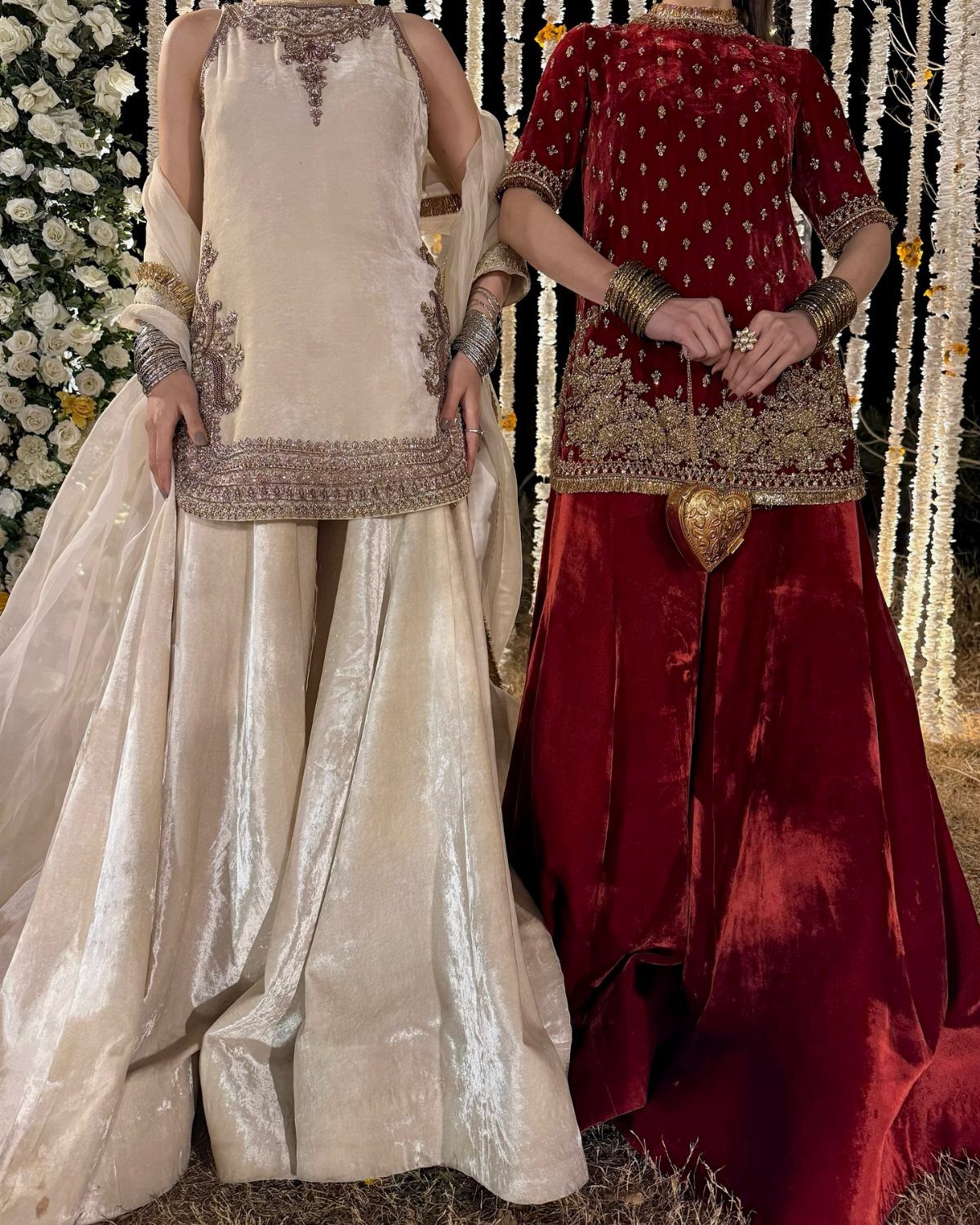
Velvet is a heavy, warm fabric, and a lehenga in it suits a winter wedding better than almost any lightweight silk. Gold embroidery on cream or red gives you richness without any extra jewelry piece doing the work.
Heavy embroidery on velvet adds real weight, so I would ask for a fitting in the full outfit and walk around in it for several minutes. Pick cream if you want a softer winter look, red if you want tradition.
Velvet shows creases and pressure marks, so plan how you will sit and how it travels.
9. Wedding Dress with Fur Trim
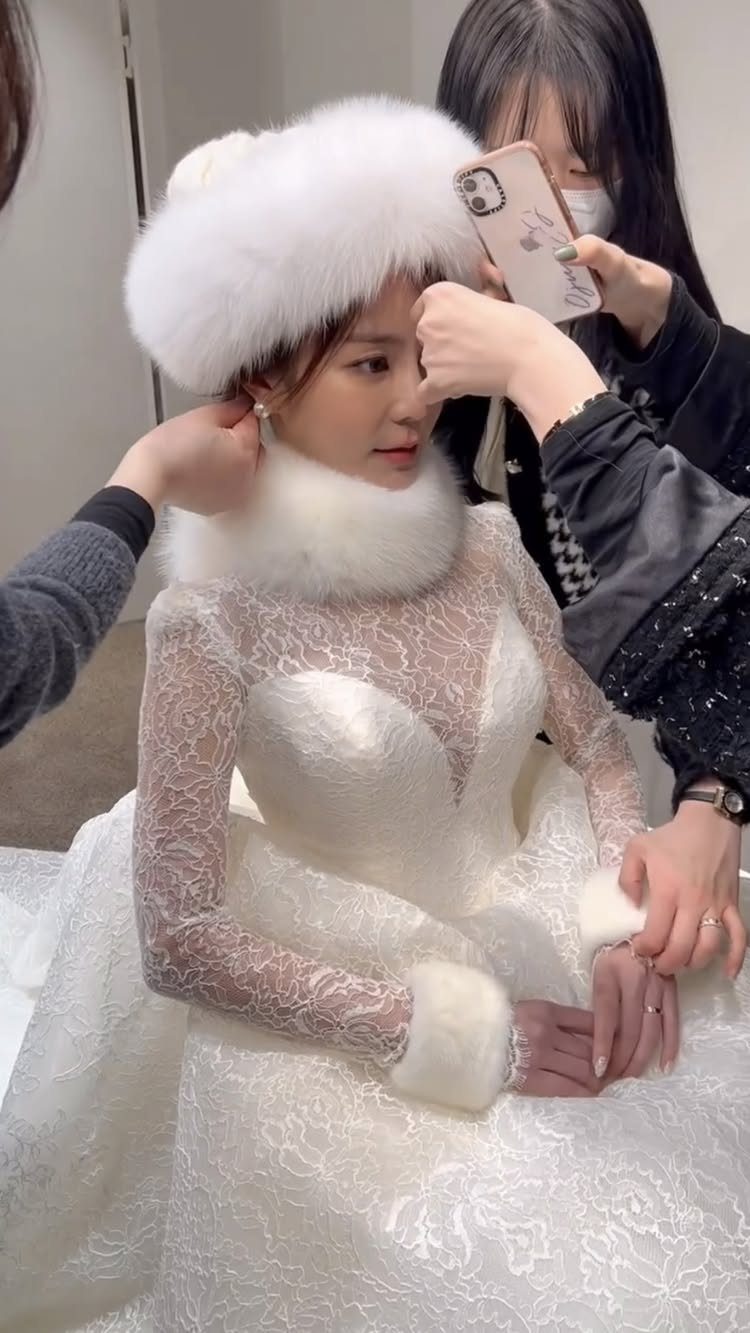
Fur trim at the collar and cuffs puts the warmth exactly where cold air gets in: your neck and wrists. Over a long-sleeved lace dress, it looks finished without a separate coat.
Faux fur wins on cost and easier care, and a white close to your lace keeps the two from clashing in photos. A matching hat is a bold extra, so test it with your hairstyle first, ideally at a fitting.
Check that the cuffs do not snag your bouquet or rub your hands when you hold it.
10. Bridal Capelet
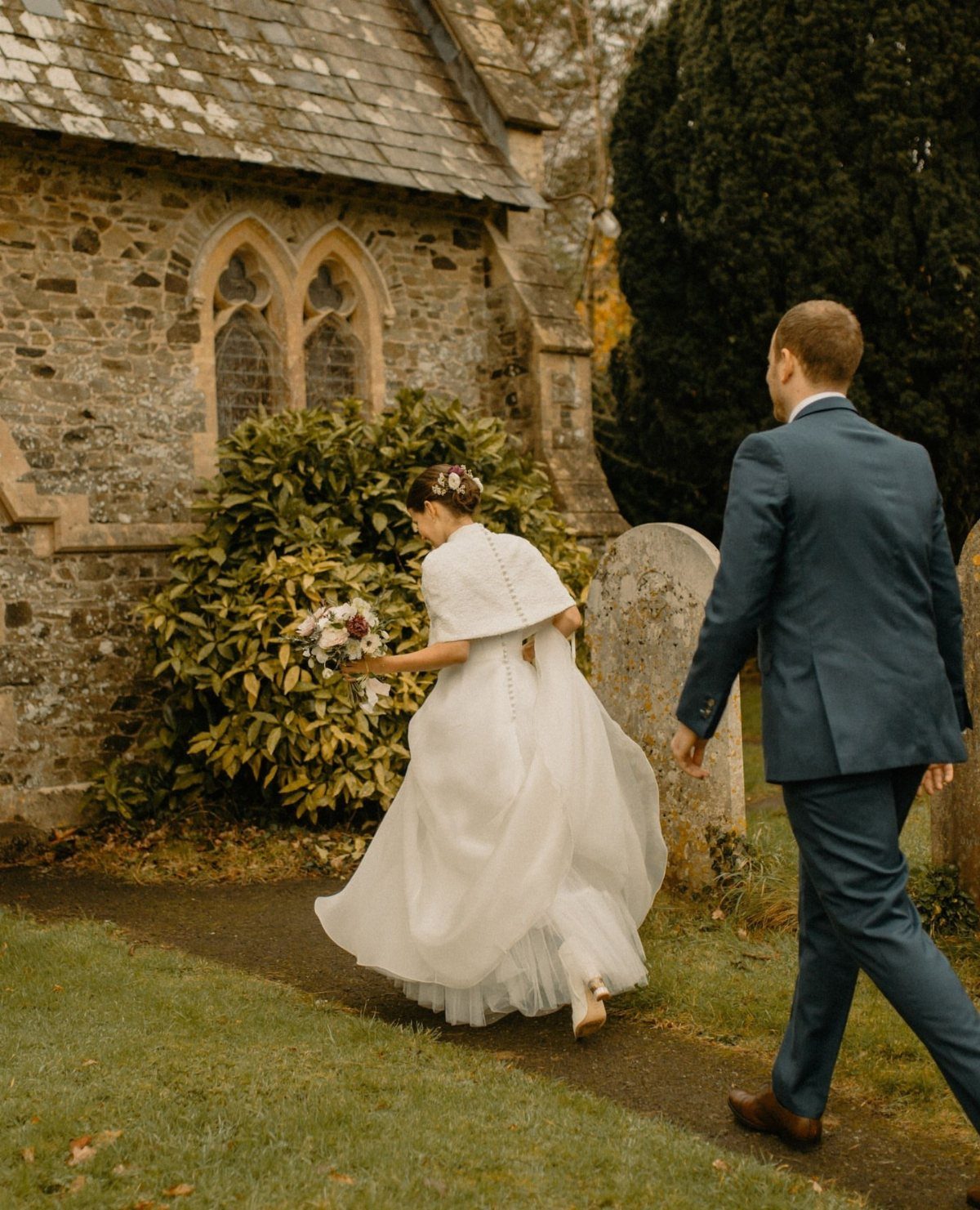
A short capelet sits on the shoulders and leaves the whole dress in view, which is what I like about it.
It suits a classic gown, and it works best for a ceremony or an outdoor walk rather than a long day in deep cold.
Match the capelet’s white to your dress, because a mismatch shows in daylight. Choose one that stays put when you move your arms.
It covers less than a full cape, so pair it with a long-sleeved or structured bodice if the venue is really cold.
11. Sparkling Ice Blue Gown
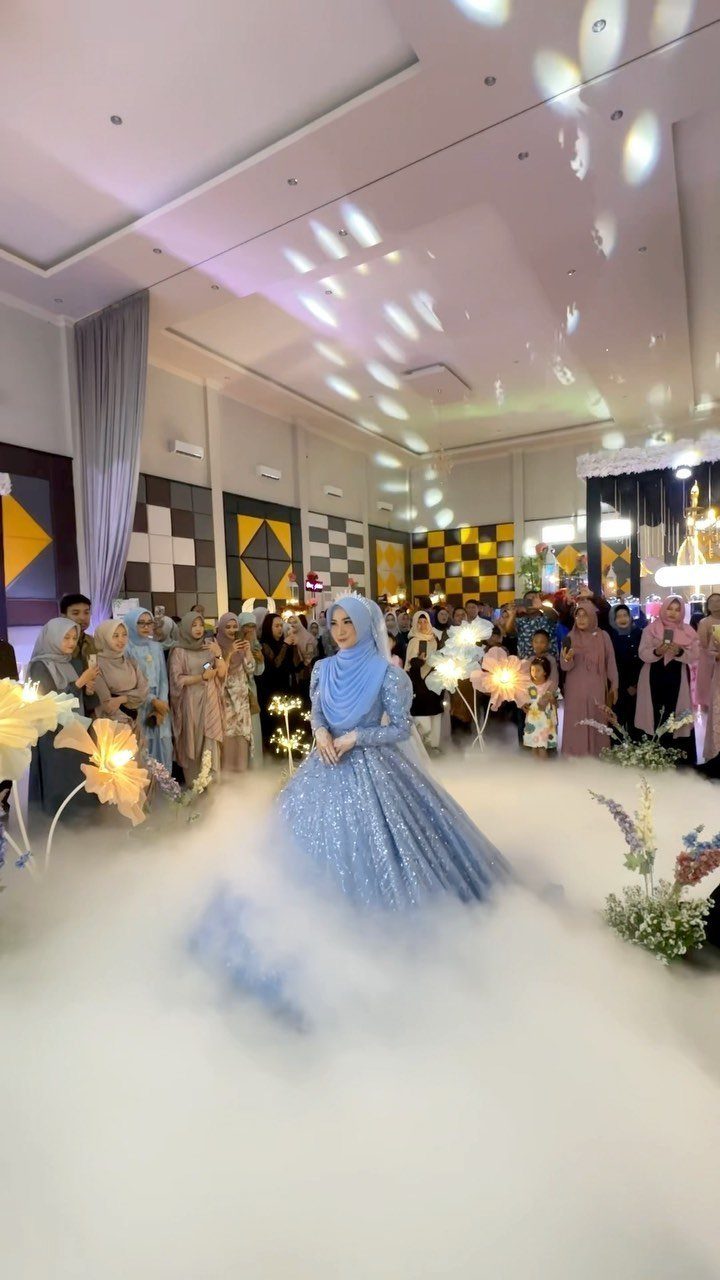
Ice blue sparkle reads as frost, so it fits a winter wedding without needing white at all. A matching hijab in the same shade keeps the whole look one color, and the shimmer catches indoor lighting well.
Check the gown under the lights of your actual venue, since pale blue can shift toward gray or silver. Ask whether the hijab fabric moves the same way as the gown, because sparkle can feel heavy and slip.
Keep jewelry minimal, as the gown already supplies the shine.
Choosing the Right Fabric
Mikado and satin are the warm picks. Both are heavy and structured, so they hold their shape and block cold air better than a thin fabric.
Crepe, tulle and lace also work in cold weather. Crepe has a clean, luxurious drape, tulle adds a soft layered texture, and lace gives some coverage while setting a romantic tone.
Let the venue decide how much fabric you need. A ceremony on a snowy mountainside means long sleeves or a wrap for the full day, but at an indoor venue you can usually wait until the evening to add anything.
If you love lace, ask for an embroidered or lace style with a mikado or satin skirt. You get the detail on top and the weight below.
Styling Tips for Cold Weather
A lightweight gown gets much warmer over a fitted thermal slip, and the slip stays invisible under most skirts. A fitted one adds warmth without bulk, so the silhouette stays clean.
Cold air pulls moisture from skin, so I’d pick a dewy, long-wear base over a matte one that will crack by the first dance.
Moisturize well beforehand and finish with a setting spray so the look lasts through photos and dancing.
Berries and eucalyptus suit a winter bouquet well, since both are in season and hold up in the cold. The mix looks fresh against a winter dress and suits the season without trying too hard.
Plan a December, January or February wedding around layers you can add and remove. Lacy sleeves and a warm wrap can handle the change from a cold ceremony to a warm reception.
Winter Wedding Trends
Long sleeves lead winter bridal style right now. They add warmth and a regal look, and they flatter every body shape, whether in delicate lace or sleek crepe.
Rich fabrics come next. Mikado is a heavy silk blend that gives a gown structure and a little warmth, and beading adds a darker kind of sparkle that catches firelight.
High necklines, lace panels and covered backs are popular too. They suit religious or traditional settings, and they keep you warmer.
Dramatic ballgowns with layered skirts are also in. Tulle, organza or tiered skirts make a statement and add insulation, so the drama earns its place on a cold day.





