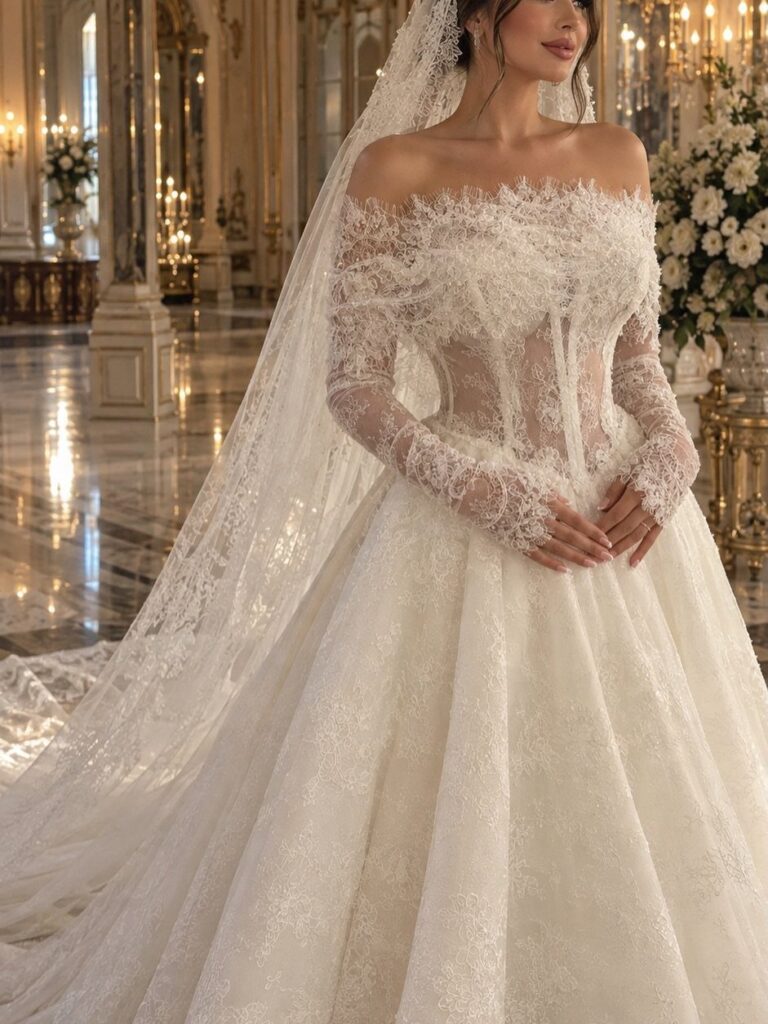
The ideas here run from sculptural minimalism, where clean lines and fit do all the work, to ruffled trains and romantic florals that add fabric, labor and cost.
Which one is yours depends on where your budget has room: if alterations will eat into it, pick a shape or a color, like a blue dress or a draped bodice, that carries the look without beading.
If you can pay for construction, put the detail in one area, such as dramatic sleeves, a statement skirt or a basque waist, and keep the rest plain.
Start shopping 9 to 12 months before the wedding, since a late start leaves you picking from what is available.
1. Sculptural Minimalism Wedding Dresses
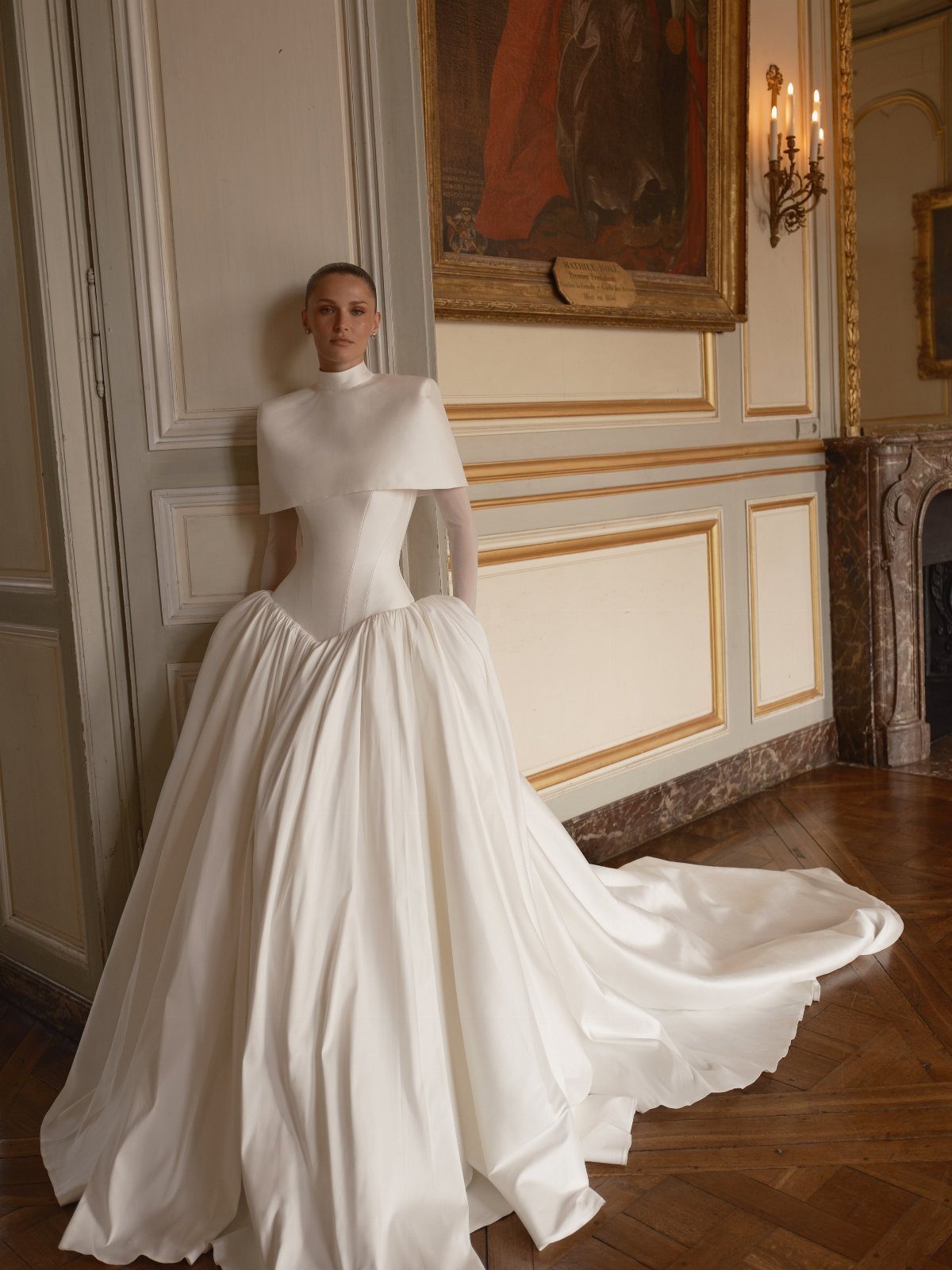
A capelet draped over a voluminous skirt adds drama quietly, with no beading or appliqué needed.
Sculptural minimalism relies on clean lines and fabric that holds its own shape, so the cut and the construction do the work that beading or lace would do elsewhere.
Choose a fabric with enough body to stand away from you, and expect the fit to matter more than any detail. A gown this plain shows every wrinkle and every pull, so budget for alterations.
I would keep the accessories almost nonexistent.
2. Exposed Corsetry
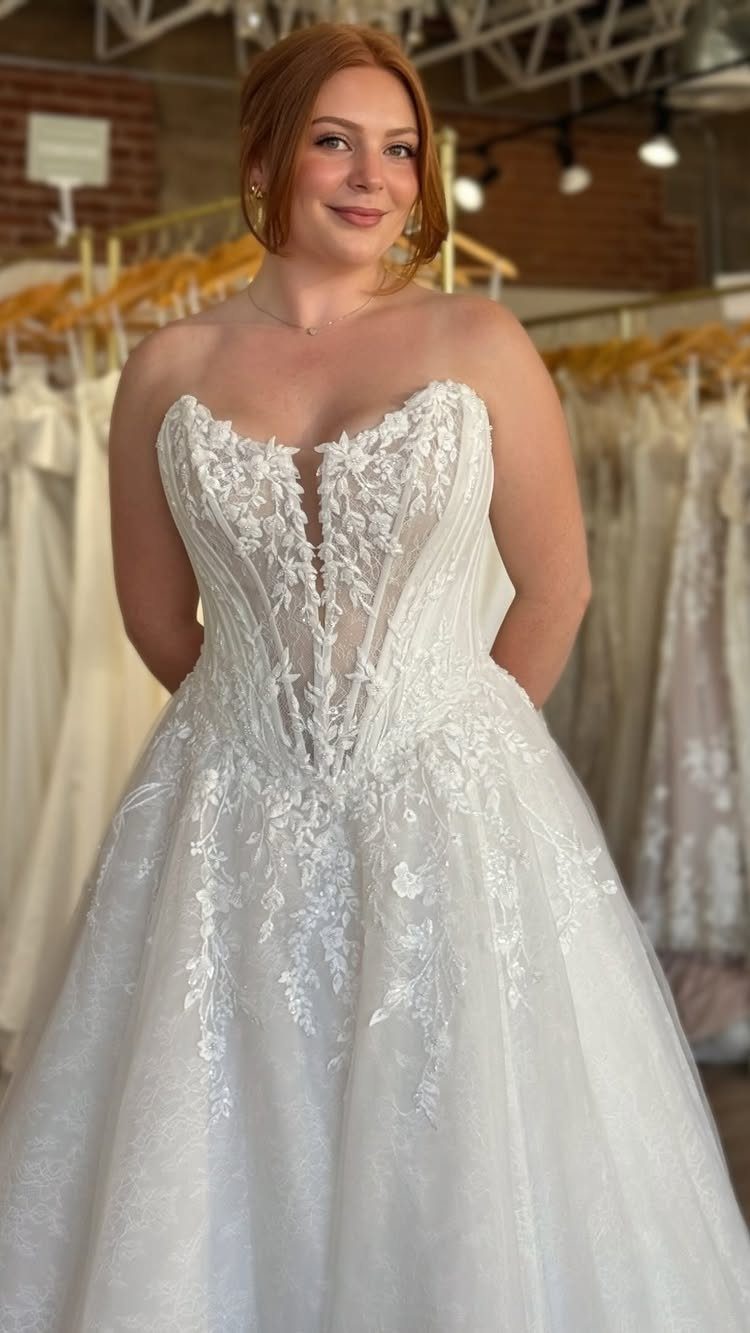
Visible corsetry turns the bodice’s inner structure into the design. A sheer corset panel with strapless lace gives you shape and a decorative front in one piece.
Because the boning shows, fit decides everything. Ask a boutique to pin the bodice at your final fitting so the seams sit flat along your ribs.
I like the sheer versions best, since they read as delicate rather than costume-like. Wear the same undergarments to every fitting, as anything beneath a sheer panel can show.
3. Romantic Florals
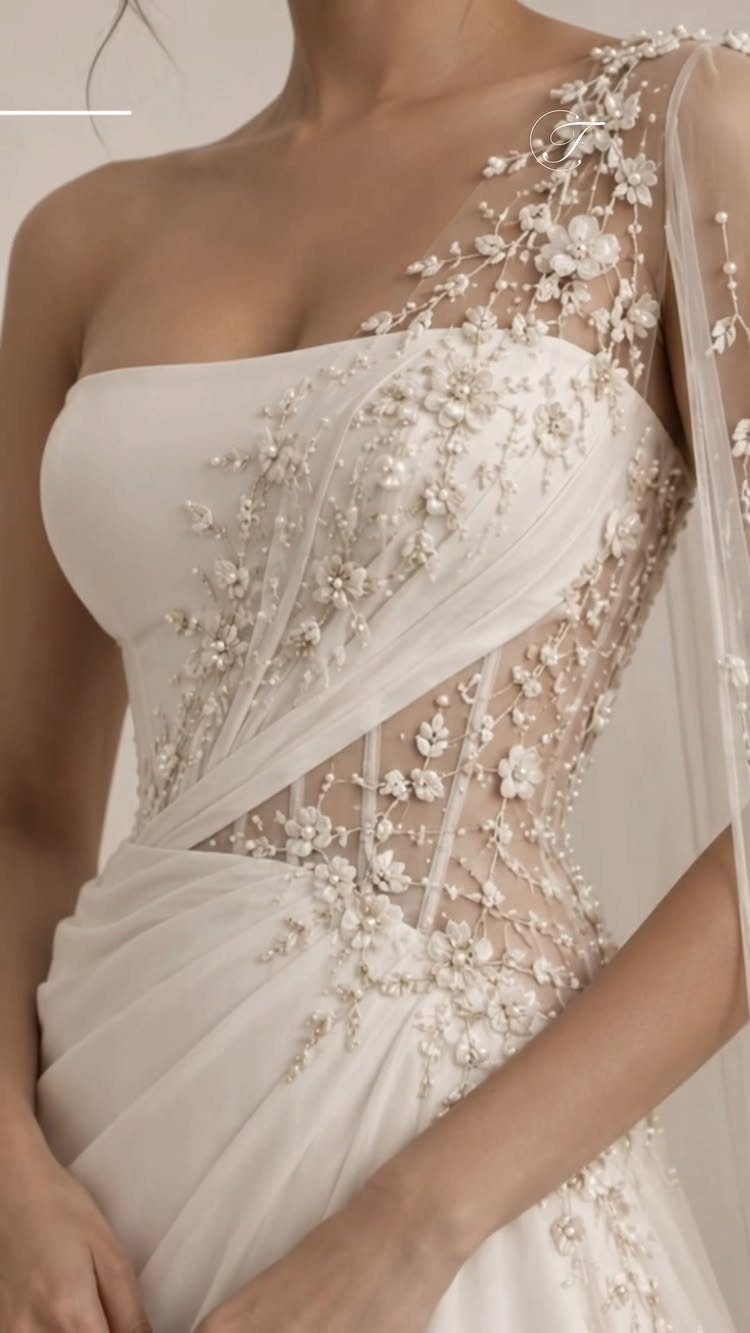
Flowers stitched in relief, with beading catching light at the center of each bloom, give a plain bodice real texture. On a one-shoulder neckline, that detail has room to be seen.
Pick one area for the 3D work, such as the shoulder or bodice, and let the rest stay smooth. Dimensional embroidery adds labor, so it often adds cost too.
I would choose this over all-over lace when the budget is tight, because a few well-placed blooms look deliberate. Ask how the pieces are attached, since raised florals can snag.
4. Statement Skirts
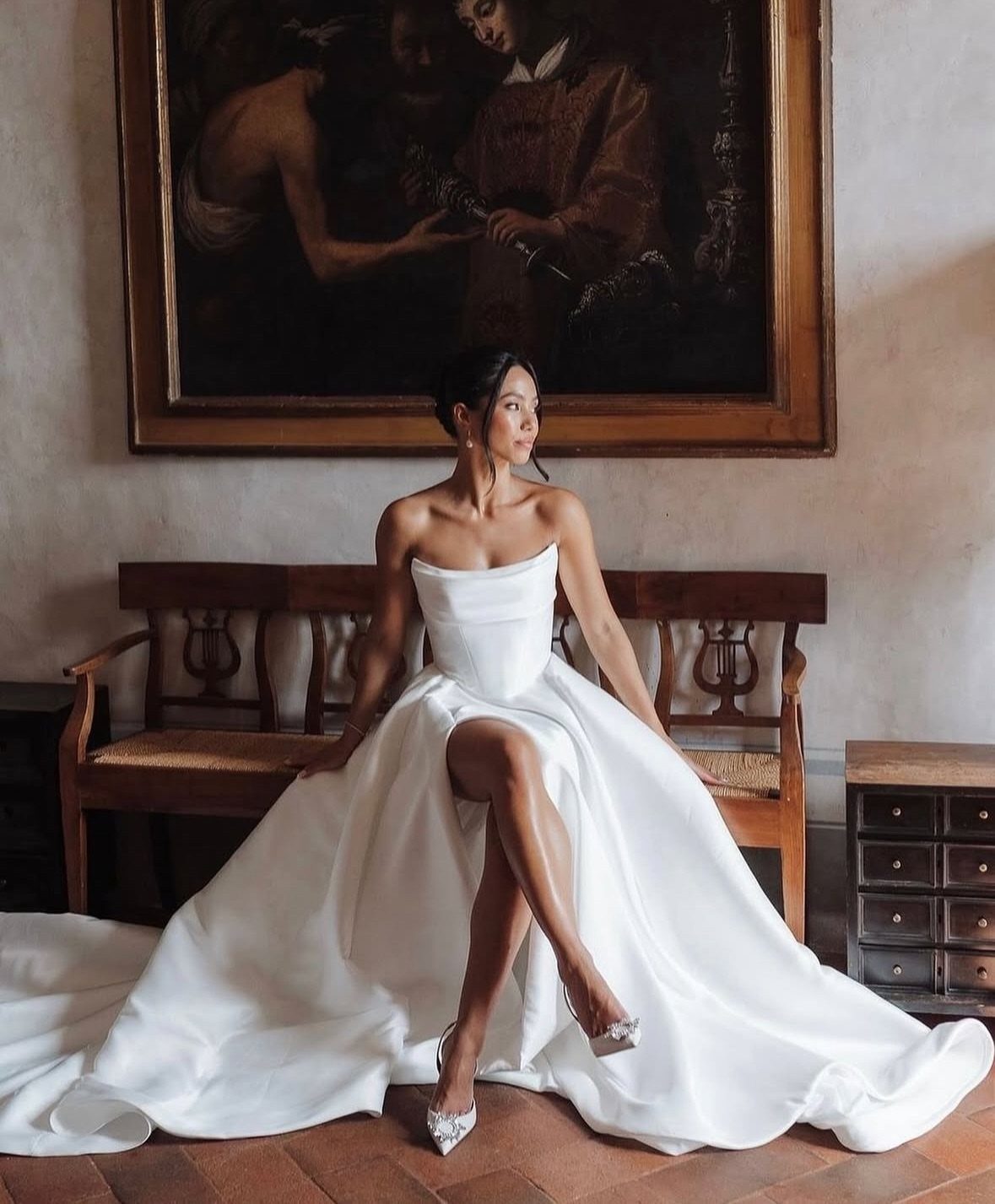
Satin skirts that stand out with volume make the lower half of the dress the main event. A strapless top keeps the eye moving down, so the skirt gets all the attention.
Choose a bodice simple enough not to compete, and check how you move in the skirt before you commit.
Sit, walk, and try stairs during a fitting. Volume that looks great standing can be a chore for a long reception.
If dancing matters to you, I would put that test first.
5. Draped Wedding Dresses
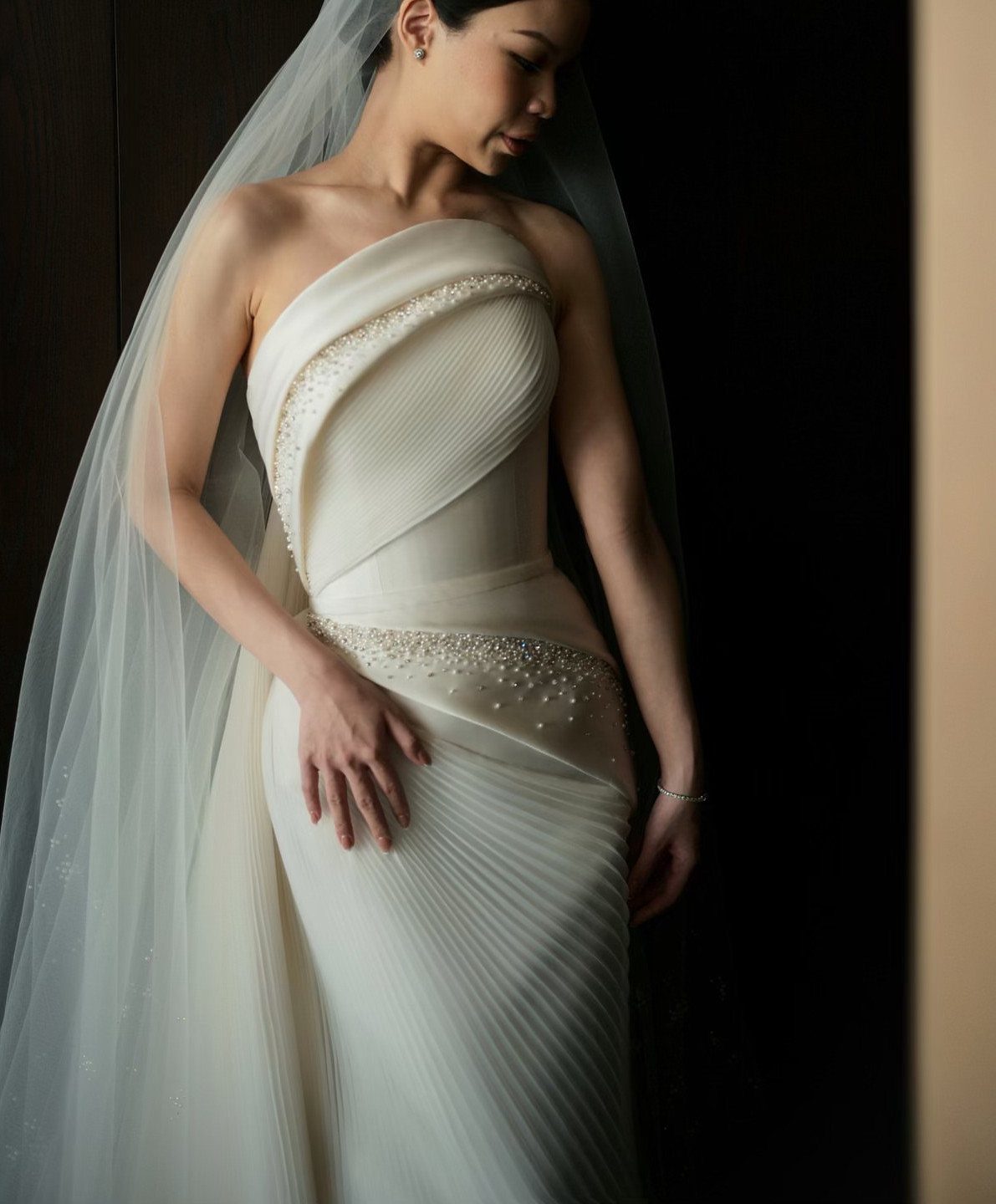
Pleats and soft folds give a strapless gown movement that a stiff bodice cannot. Draping reads as relaxed, yet it still looks tailored when paired with beaded accents and a veil.
Fine beadwork along the folds adds shine without weight, which I like. Because the fabric gathers, a small change to the hem or bodice can ripple through every layer, so book a seamstress who has worked with drape before.
A cream shade softens the look further than stark white does.
6. Basque Waist Wedding Dresses
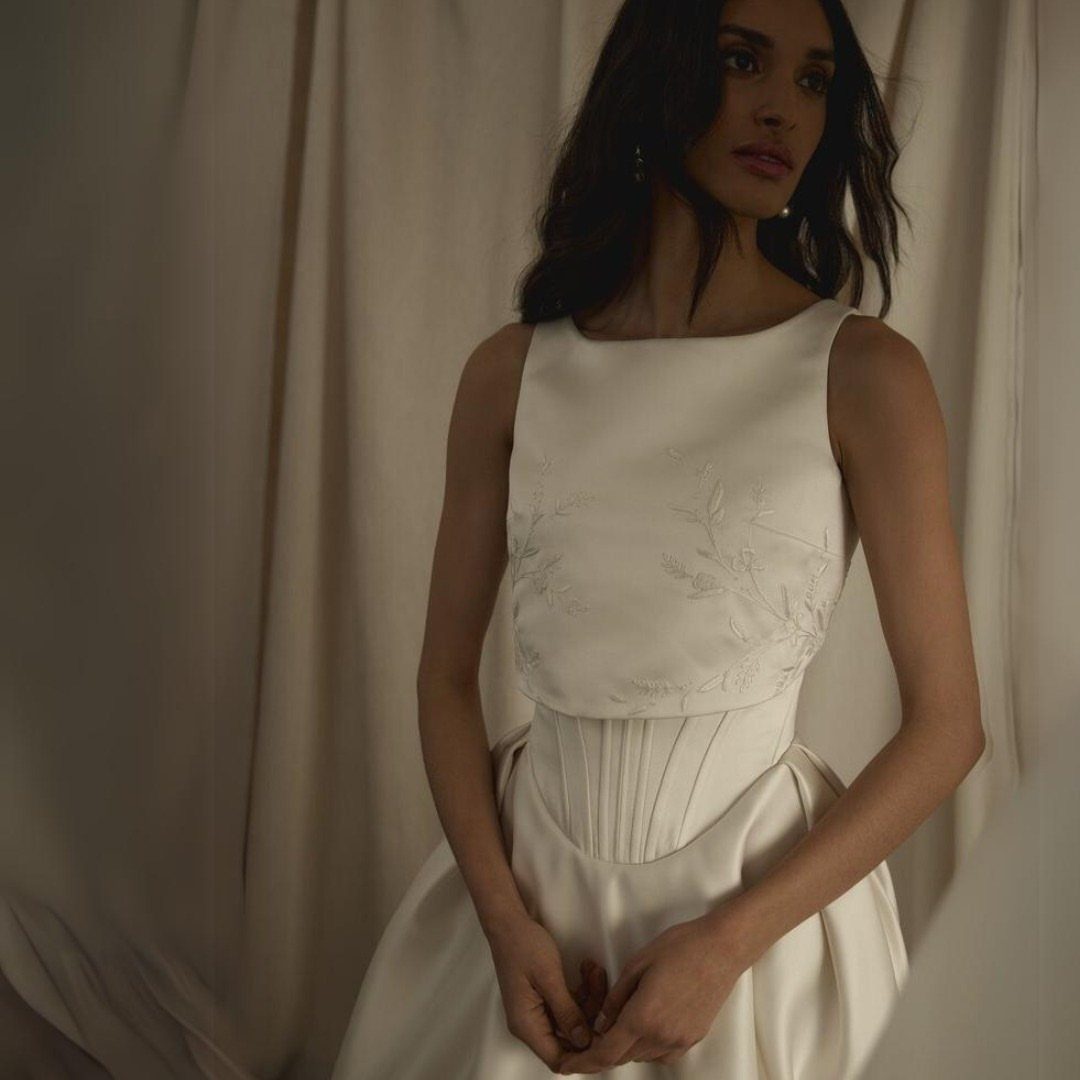
A basque waist dips to a point below the natural waistline, which lengthens the torso and sharpens the line between bodice and skirt.
Embroidery on a structured bodice keeps the point from looking severe. Try on a few lengths in person, since the depth of the dip changes how the dress sits when you sit down.
When a plain A-line feels too safe, this is the silhouette I’d reach for.
7. Blue Wedding Dresses
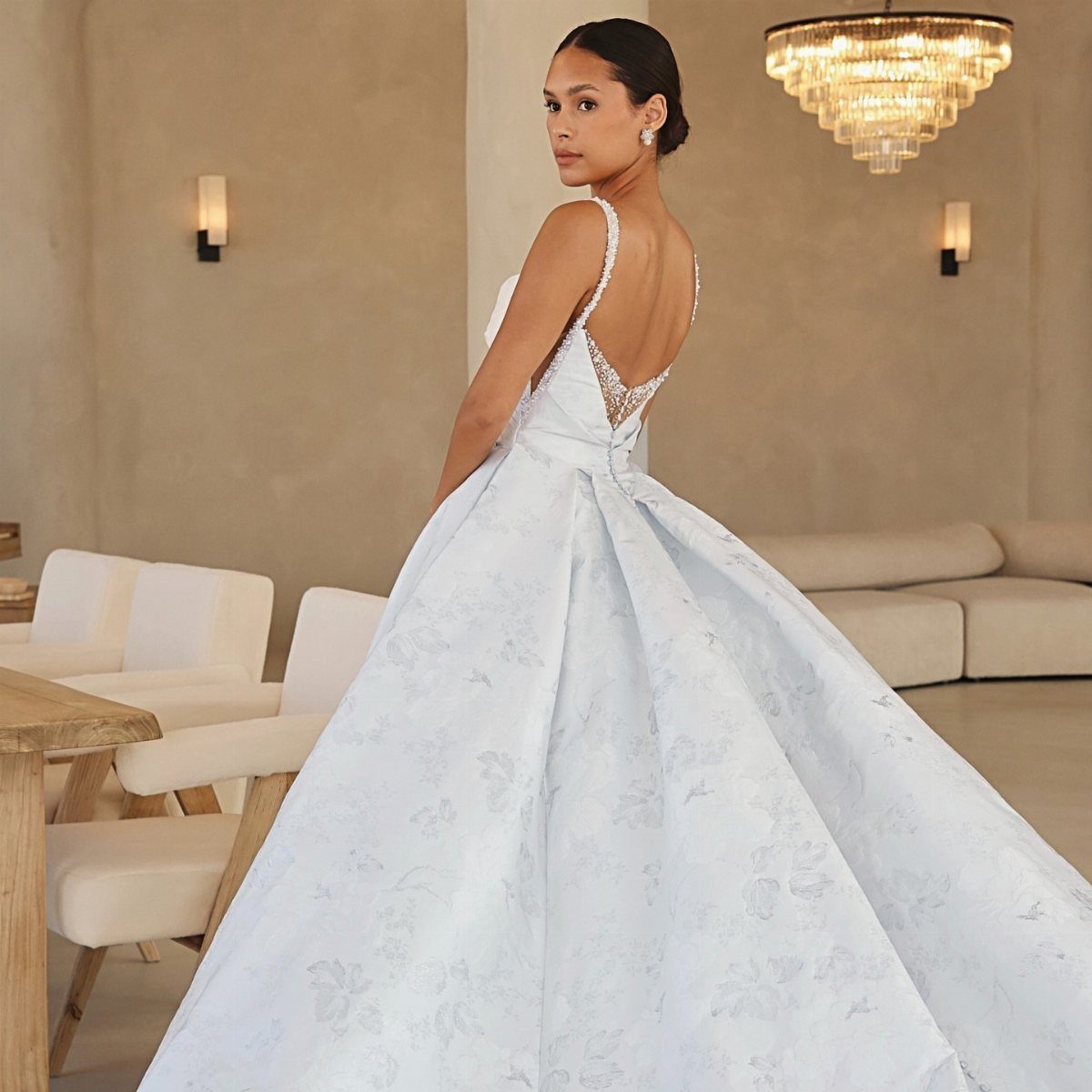
Pale blue on a voluminous ballgown reads as a deliberate choice rather than a trend piece, especially when the skirt carries a soft floral pattern. Color does the talking, so the silhouette can stay classic.
Ask for a fabric swatch and look at it in daylight and under indoor bulbs, since light blue can drift toward gray or green. Pair it with simple jewelry.
Blue beats white when the budget has no room for beading, since the shade itself becomes the statement.
8. Dramatic Sleeves
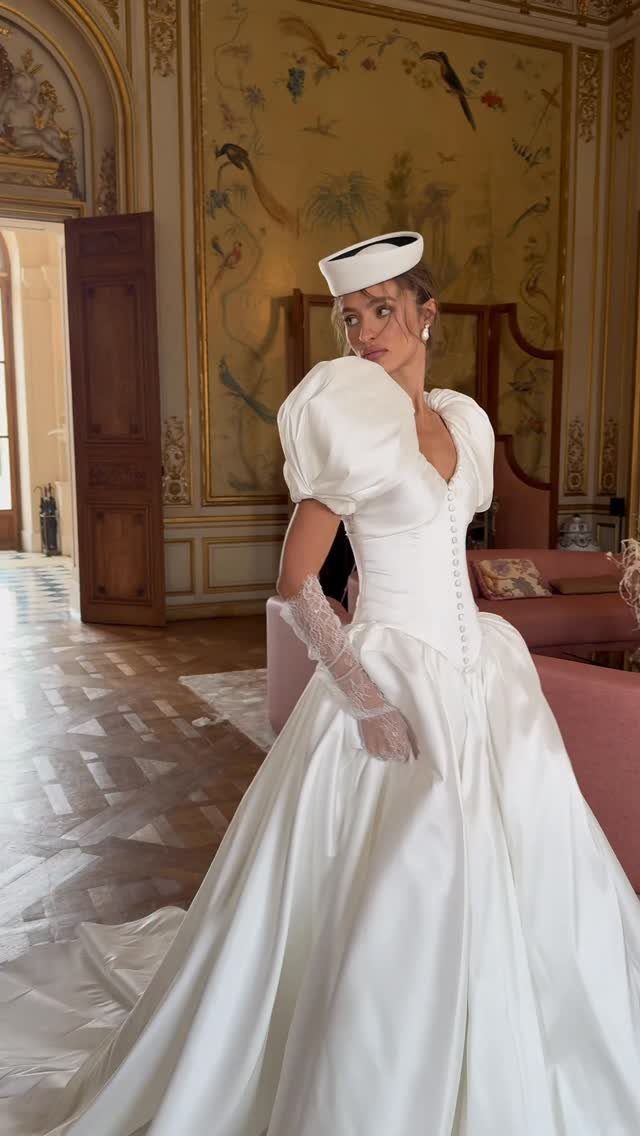
Sleeves are moving from supporting detail to the main feature, and big puffs in satin show why. The volume frames the shoulders and face, so the rest of the dress can stay clean.
Keep the bodice and skirt quiet when the sleeves are this large. At a fitting, raise both arms and hug someone, because a fitted armhole under a puff can restrict movement.
Lace gloves and a pillbox hat push the look vintage, so add just one of them to keep it feeling current.
9. Champagne Sparkle Ballgowns
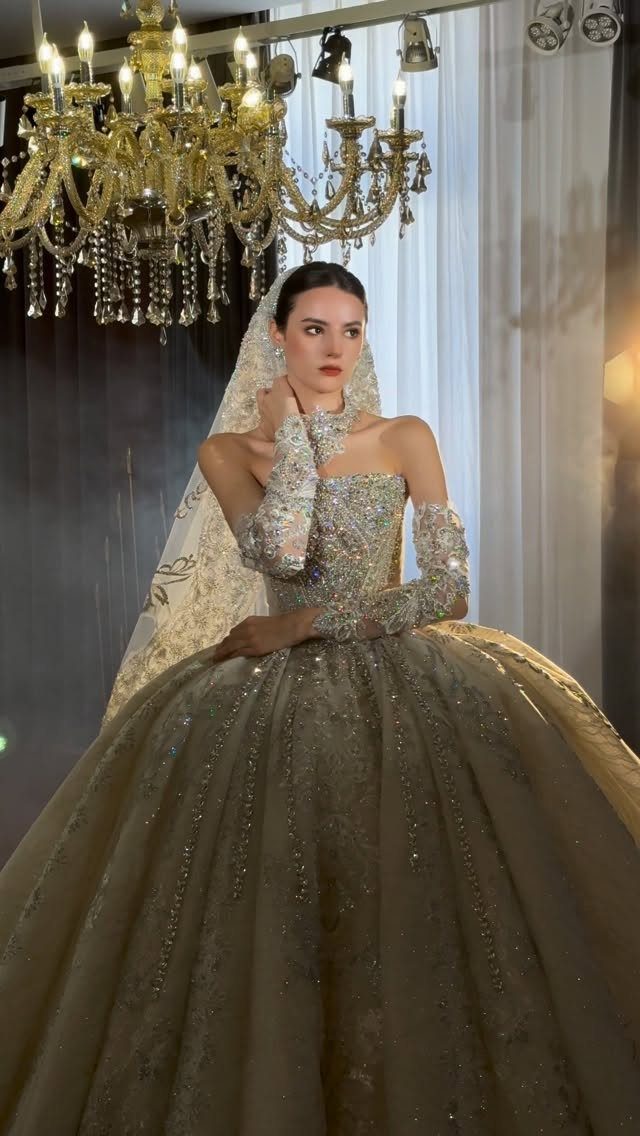
Champagne sparkle gives a ballgown warmth that stark white lacks, and detached sleeves on a strapless bodice add coverage without changing the neckline. The sleeves can come off for dancing, which I like.
Test the sparkle in both daylight and indoor light, since champagne can shift between gold and blush. Ask whether the sleeves are fitted to your arm measurements, because loose ones slide.
A lace veil keeps the shimmer from competing. Skip heavy jewelry.
10. Dramatic Ruffled Train Dresses
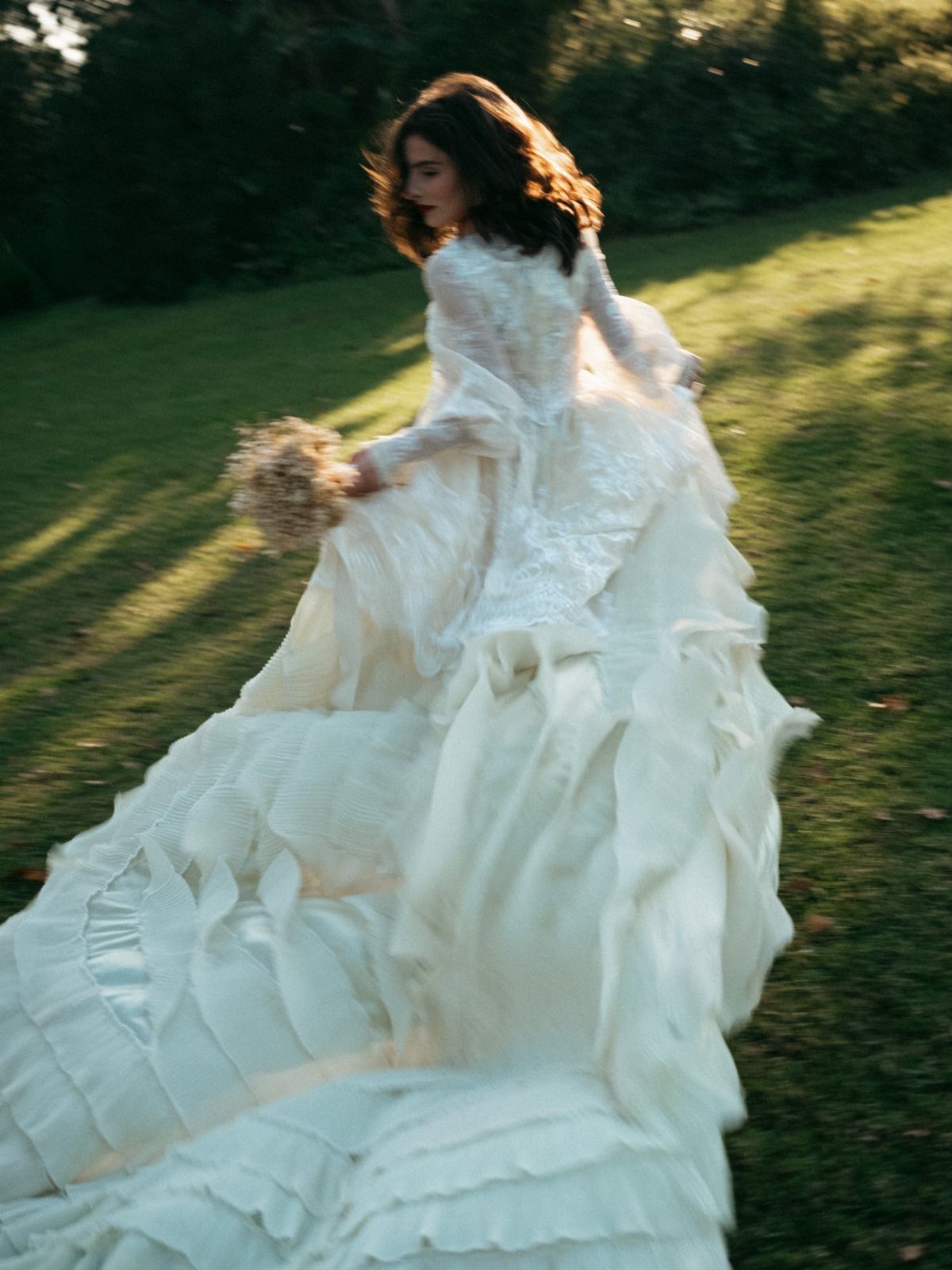
A ruffled train turns the back of a lace dress into the moment, with layers of fabric fanning out behind you. Keeping the front simple lets the train carry the drama.
Layered ruffles take more fabric and more labor, so expect them to push up the price. Ask the boutique about a bustle before you buy, because a train this full needs a plan for the reception.
For an outdoor wedding on grass, I would also ask how the hem handles dirt.
Choosing a Personal Style
Start with what you already reach for: the necklines, fabrics and silhouettes you keep pinning or pulling off the rack. Trends work better as a way to sharpen those instincts than as a shopping list.
Romance also has no single look anymore. Your style could land on floral lace with a loose, flowing skirt, a structured satin ballgown cinched at a sharp waist, or a snug boned corset bodice dotted with fine beadwork.
Before you book appointments, write down 3 things you love and 1 thing you refuse to wear.
That short list will keep a pushy trend from talking you into a dress that isn’t yours, and it saves money, since every try-on that misses is time you can’t get back.
Customization Options
Removable pieces let one gown do the work of two, which matters when the budget is fixed. Overskirts, sleeves, bows, capes, scarves and trains can all be designed to come off.
Wear an overskirt down the aisle for the full-length entrance, then unhook it before the reception so you can move and dance in the slimmer dress underneath.
Sleeves that snap or hook off give you coverage during the ceremony, and once they’re gone, the bare neckline underneath makes the dress look like a second one for the party.
I would pick one removable piece rather than three, since each adds a fitting and a point where something can go wrong.
Ask the designer which pieces can be ordered with the dress and which can be added later, and get the price for each in writing before you commit.
When to Start Shopping
Plan to start shopping 9 to 12 months before the wedding. That window gives you time to try different options, order the gown, and still have room for alterations.
The exact timeline shifts with the designer, the gown and how much fitting work it needs.
For a Fall 2027 wedding, I would lean toward the early end of that range, because a late start leaves you choosing from what is available instead of what you love.
Work backward from your date and put the ordering deadline on your calendar, so the decision doesn’t drift.
Frequently Asked Questions
What wedding dress styles will be popular for Fall 2027?
Expect sculptural minimalism, exposed corsetry, 3D florals, statement skirts, draping, basque waists, dramatic sleeves and color like pale blue or champagne.
Updated A-line gowns and detachable pieces show up too. Most of these rely on cut, fabric and fit more than heavy beading, so they suit a fixed budget well.
Should you follow wedding dress trends?
Treat trends as a way to learn what you already like, since a shopping list will only send you toward dresses that belong to someone else.
Before you book a single appointment, I’d jot down 3 things you love and 1 you won’t wear; that short list keeps a persuasive stylist or a hot trend from steering you into the wrong gown.





