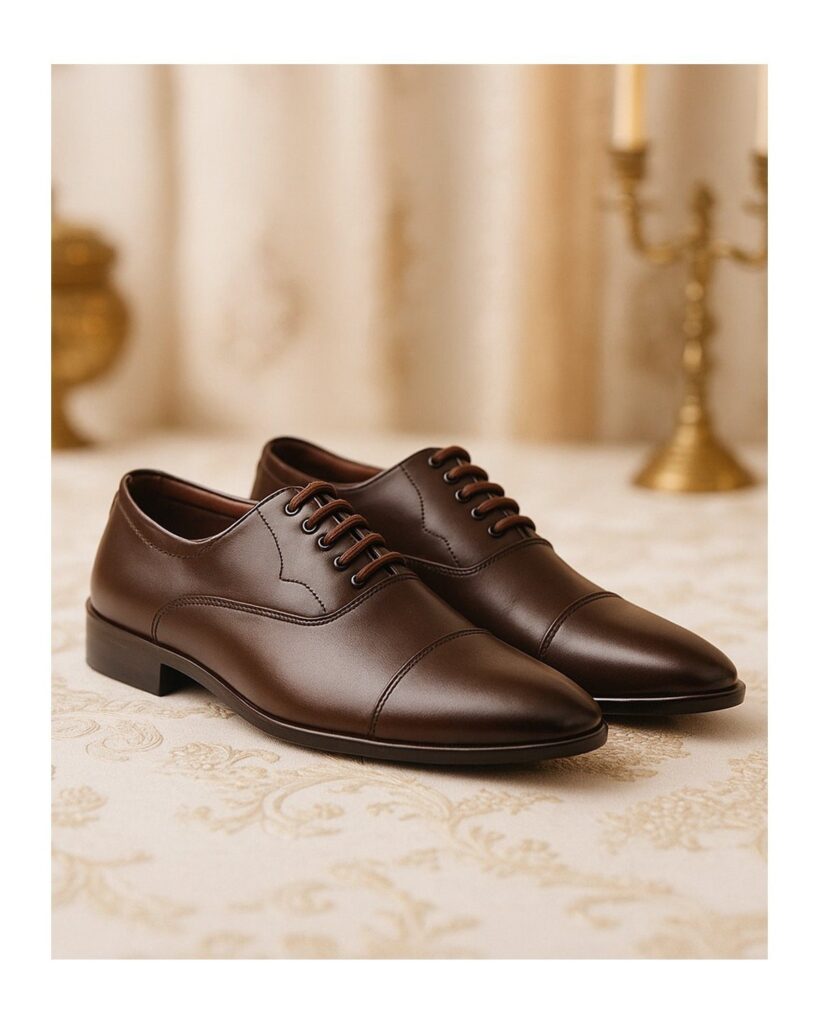
The shoes below run from black patent leather dress shoes for a tuxedo to gold metallic heels, strappy pearl sandals and blue wedding shoes, and the outfit settles the choice before taste does.
A plain satin or crepe gown can carry a statement pair like the silver rhinestone pump, while a heavily beaded or lacy dress needs a quiet shoe.
1. Unique Wedding Shoes
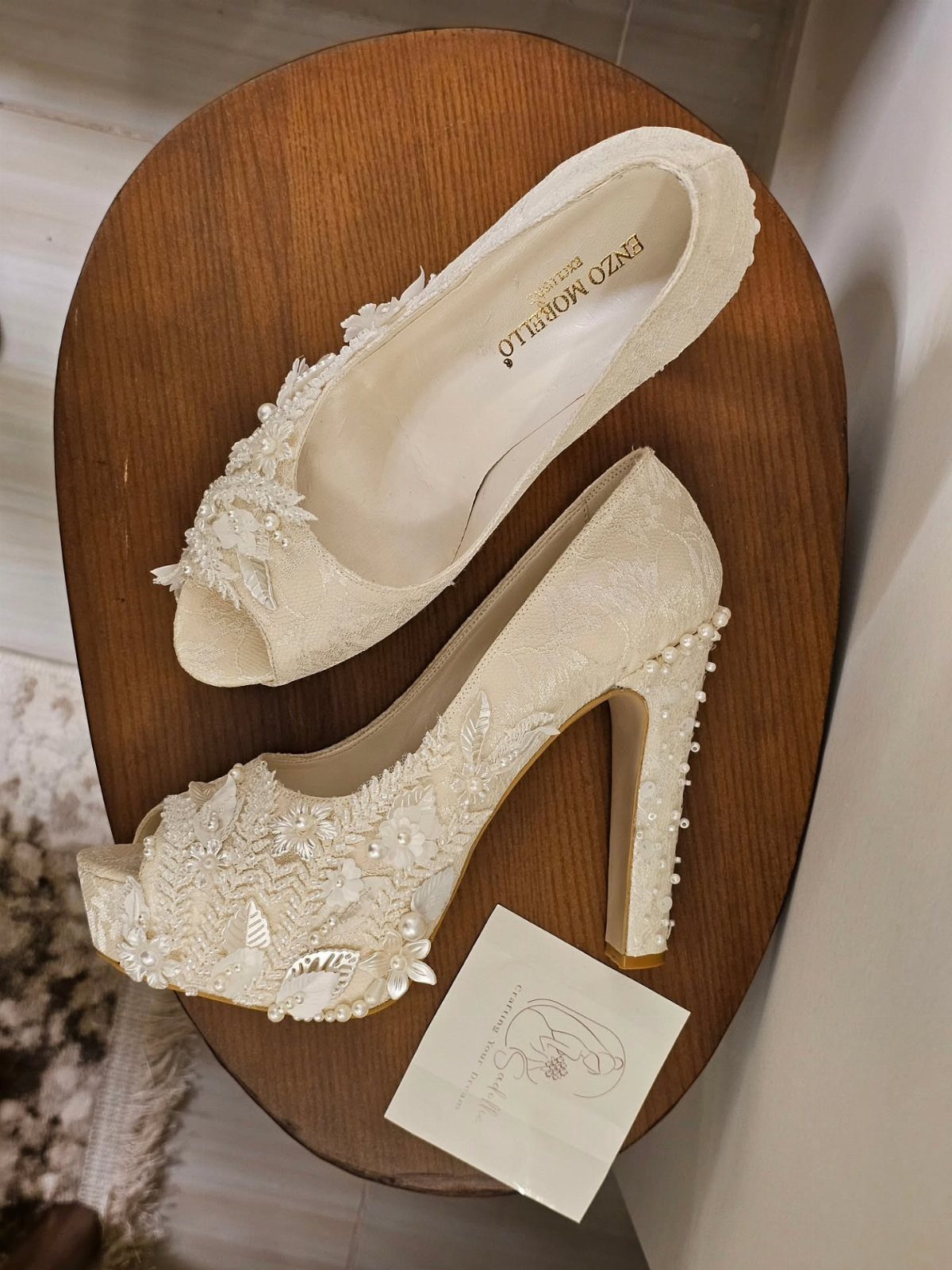
A shoe with lace and pearl detail does the work of a "something special" piece, so the rest of the outfit can stay quiet. Cream suits a gown in ivory or white without clashing.
Check the lining and insole too, since a pair this decorated is only worth it if you can stand in it for hours. Pick one detail, lace or pearls, to repeat elsewhere, such as a hairpin or earrings.
2. Darker Colored Shoes for Winter Weddings
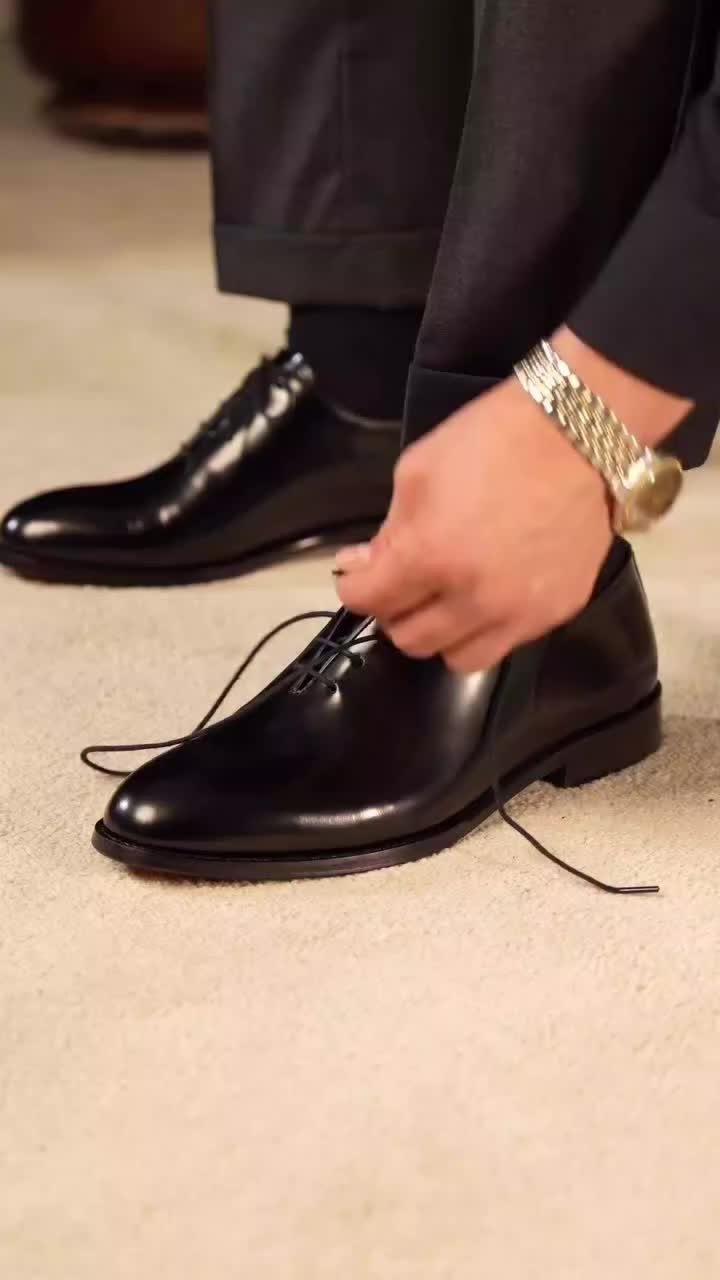
Black leather oxfords are the safest call for a cold-weather ceremony, and brown or navy work just as well. Darker leather hides slush and salt marks better than a pale pair would.
For a suit in charcoal or navy, I would match the shoe to the belt. Polish them the night before, and tie the laces snug so they stay put through the first dance.
3. Blue Wedding Shoes
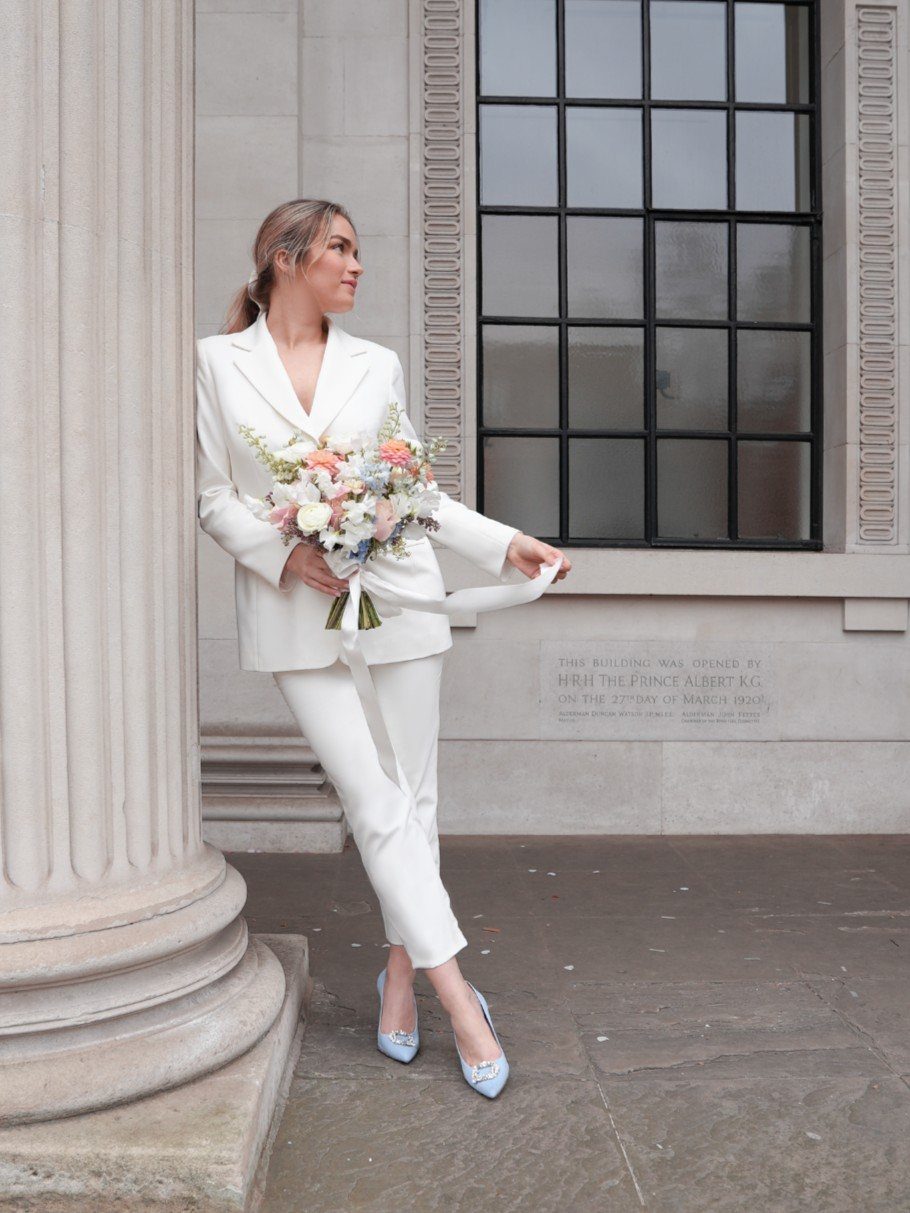
Blue is an underrated leather color, and a light blue pointed-toe heel proves it. Against a white suit or gown it reads as the "something blue" without a garter or a ribbon.
A pointed toe also lengthens the line of the leg. Keep the bouquet and jewelry neutral so the shoes get the attention, and pick a blue you can wear again with other outfits.
4. Wingtip Brogues
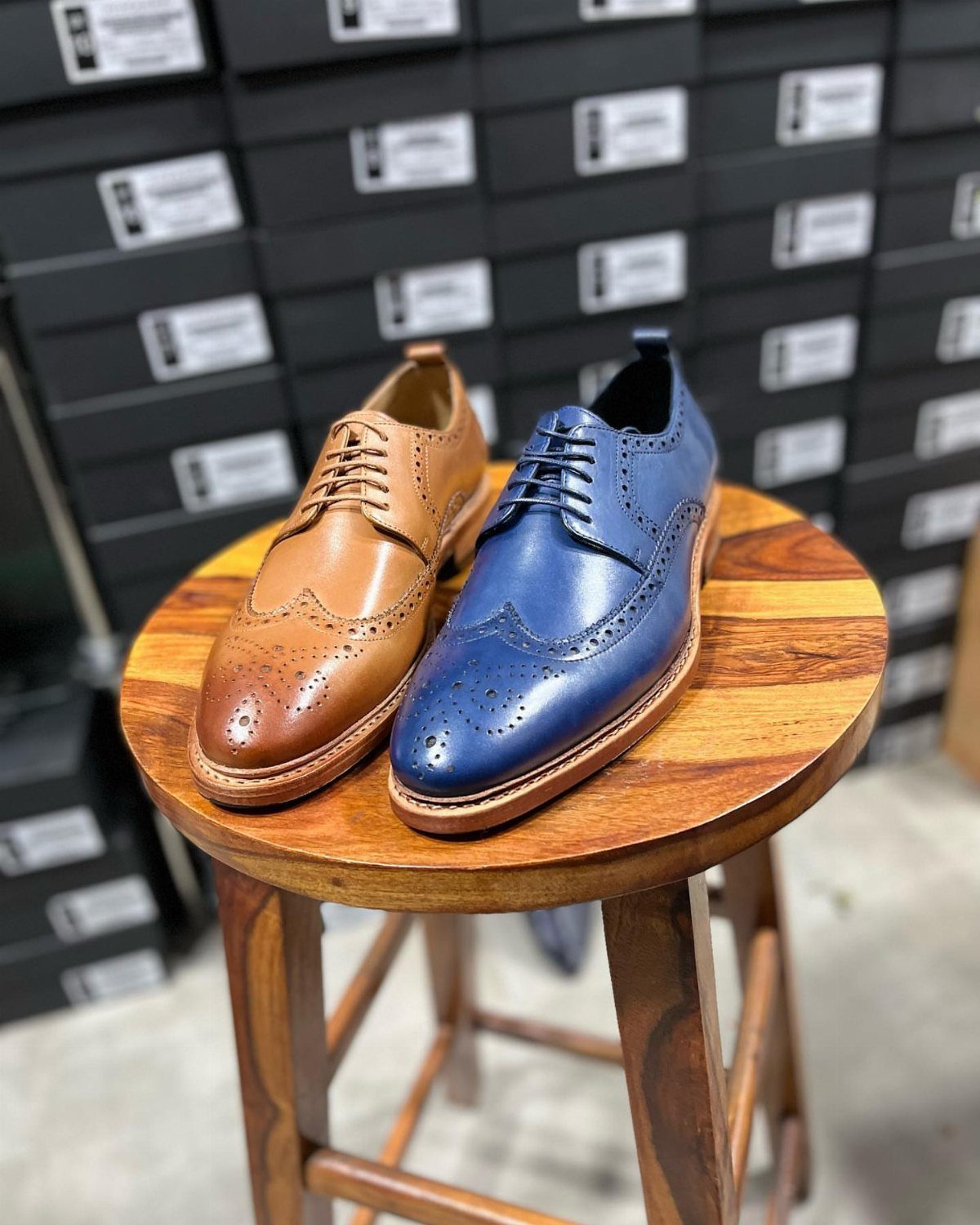
Brogues loosen up a wedding look. A wingtip or a semi-brogue cap-toe sits one step below the plain cap-toe oxford, since the punched holes along the seams loosen up the look without making it sloppy.
Tan pairs well with lighter suits, and blue works with navy or gray. I lean toward the blue, since it feels less expected than brown.
5. Reception Dancing Shoes
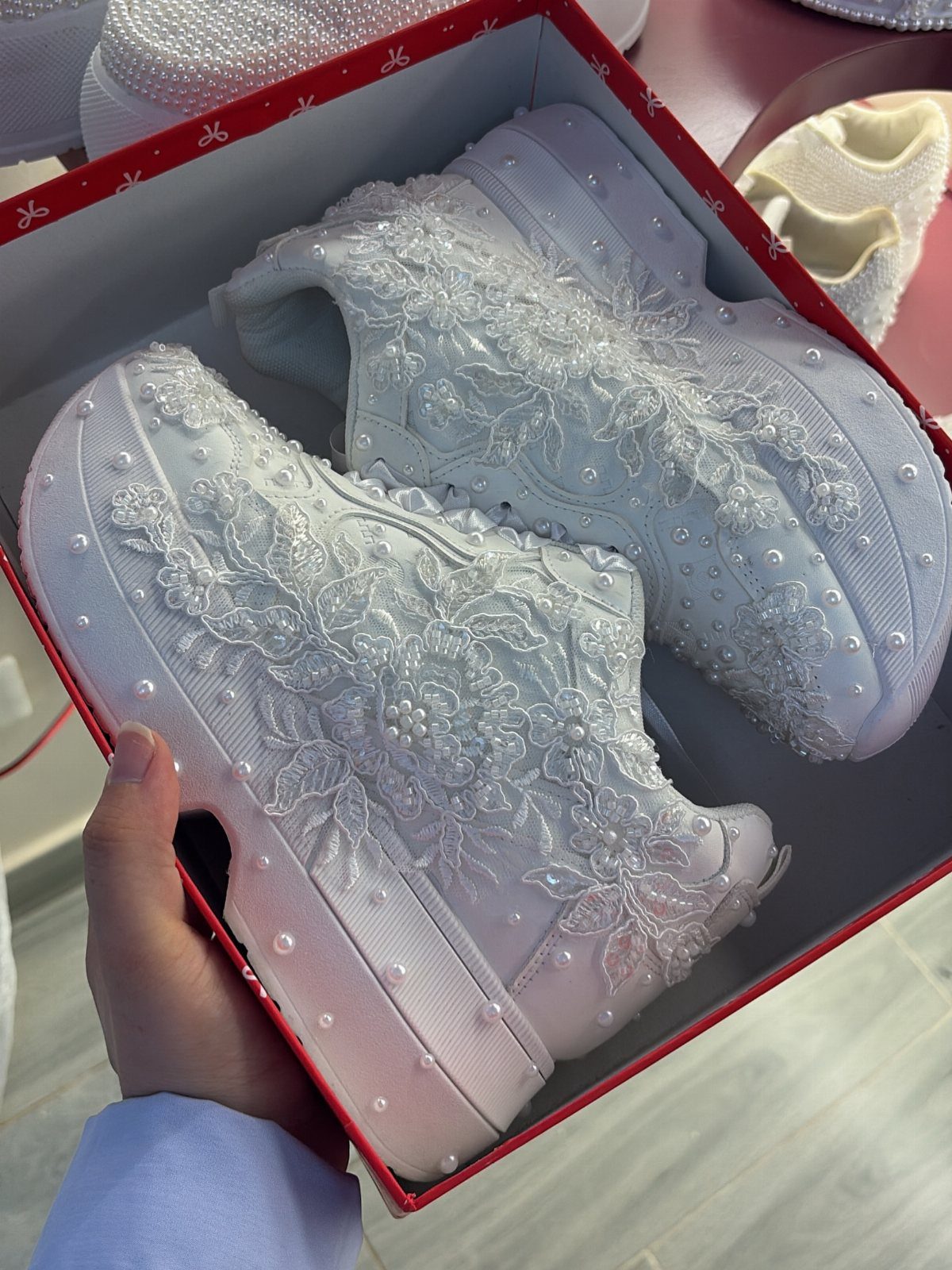
Once the ceremony ends, a second pair of shoes makes sense.
Pack them in the box they came in and hand them to a bridesmaid before the reception. Swapping into them is the most comfortable decision you will make all day.
6. Bridal Flats
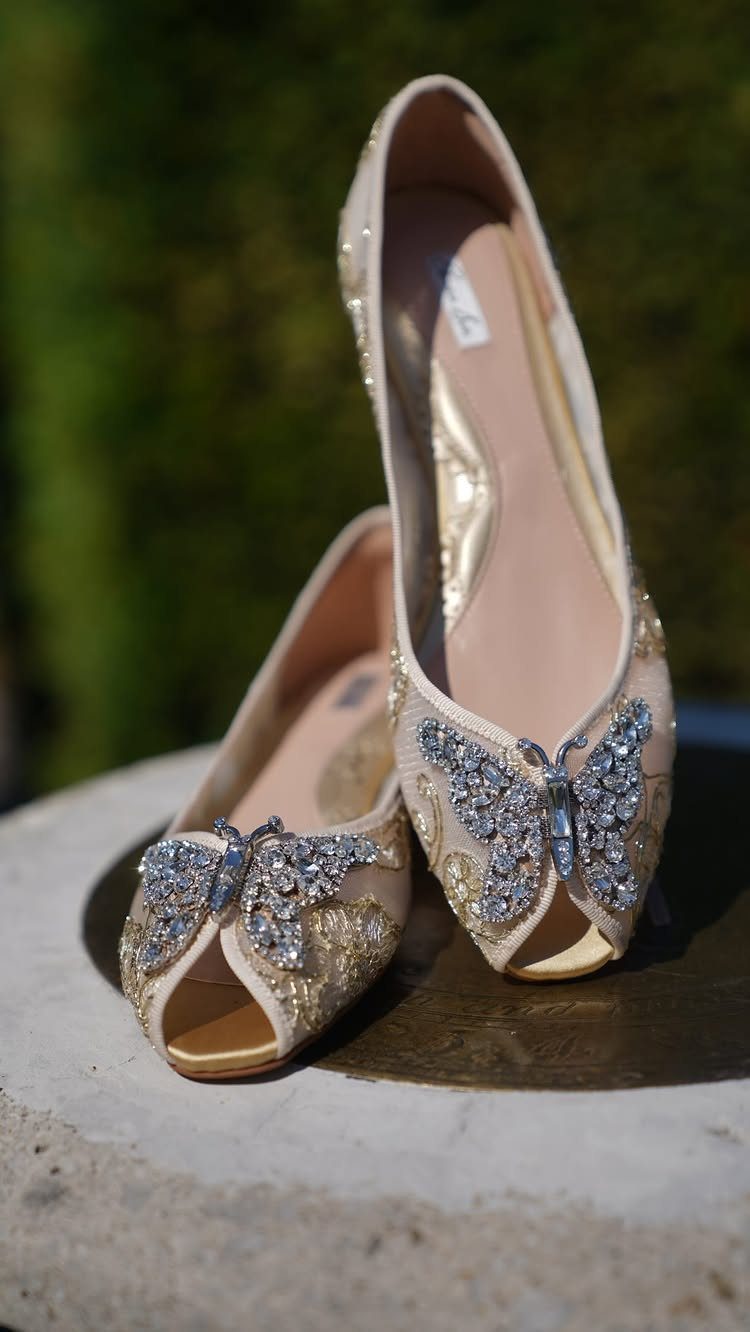
Flats are the stylish way to skip heels, and a pair with crystal butterflies on the toe proves they can still feel bridal. Champagne tones look soft with ivory and white gowns.
If your hem is cut for heels, bring the flats to your fittings so the length is right. Otherwise you may be tripping on fabric by the reception.
7. Pearl Embellished Bridal Heels
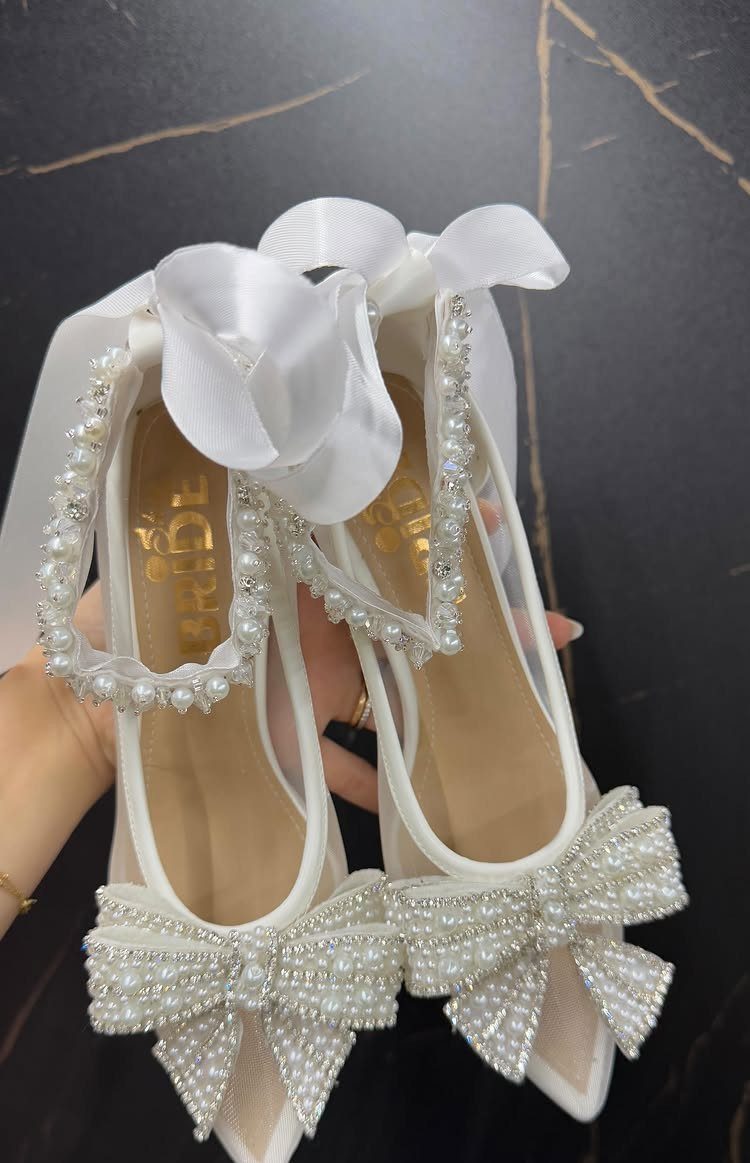
Pearl bows on a white pointed-toe heel give a bride her sparkle without any glitter. The satin ankle ribbons do double duty: they hold the shoe on and add a soft finish at the ankle.
With a plain satin or crepe gown, I would let these be the only decoration below the waist. Match the white to your dress, since a stark white shoe can look cold against ivory.
8. Strappy Pearl Wedding Sandals
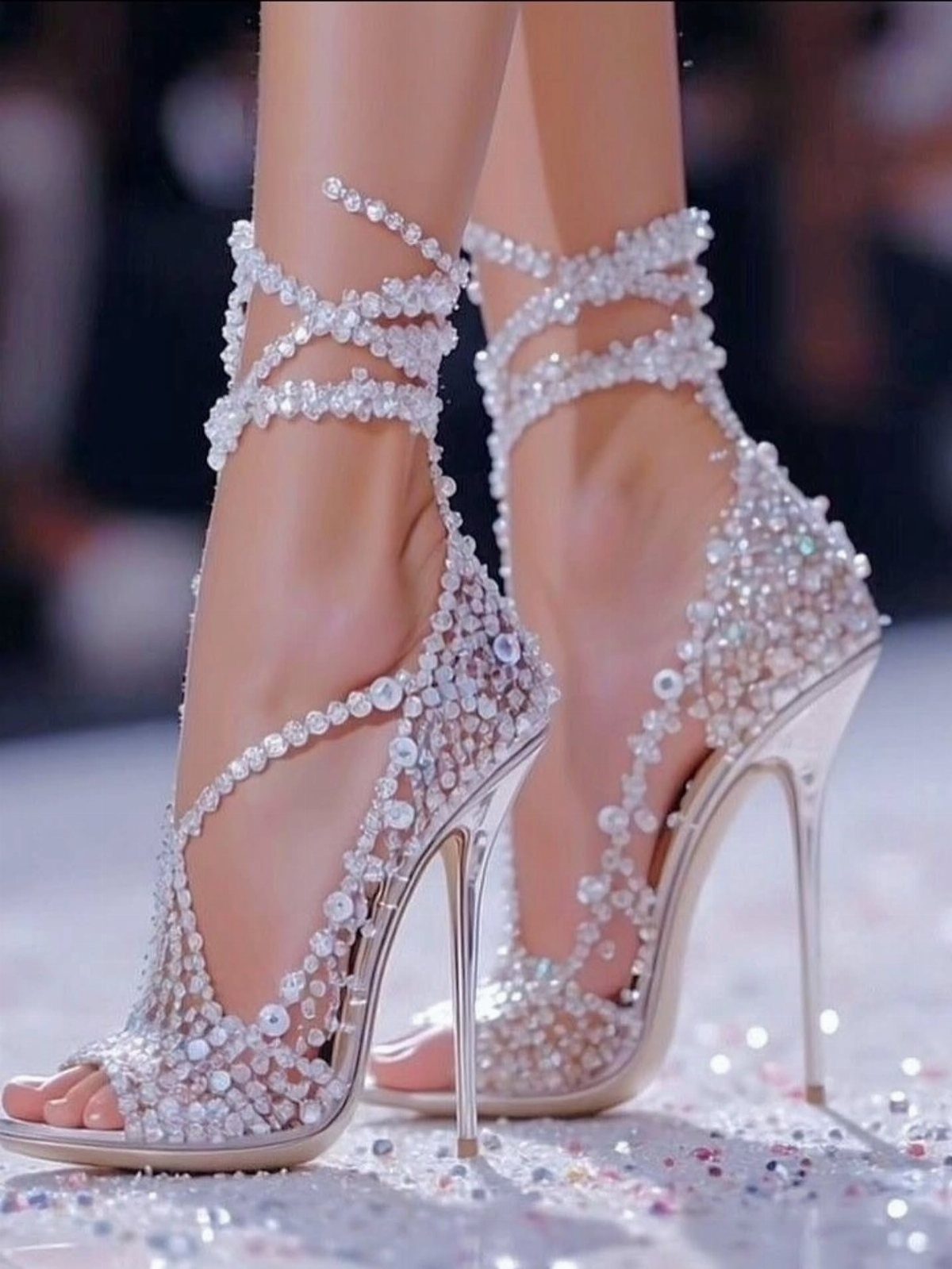
Strappy sandals with pearls and crystals suit a lighter look than a closed pump, and they breathe better on a warm day. The lace-up ankle straps keep the foot secure, which matters once the dancing starts.
Because the straps are busy, I would pair them with a simple, clean-lined gown and skip a heavy anklet.
A short or tea-length hem shows them off best. Expect your toes and pedicure to be on view, so book the nails ahead of the day.
9. Gold Metallic Wedding Heels
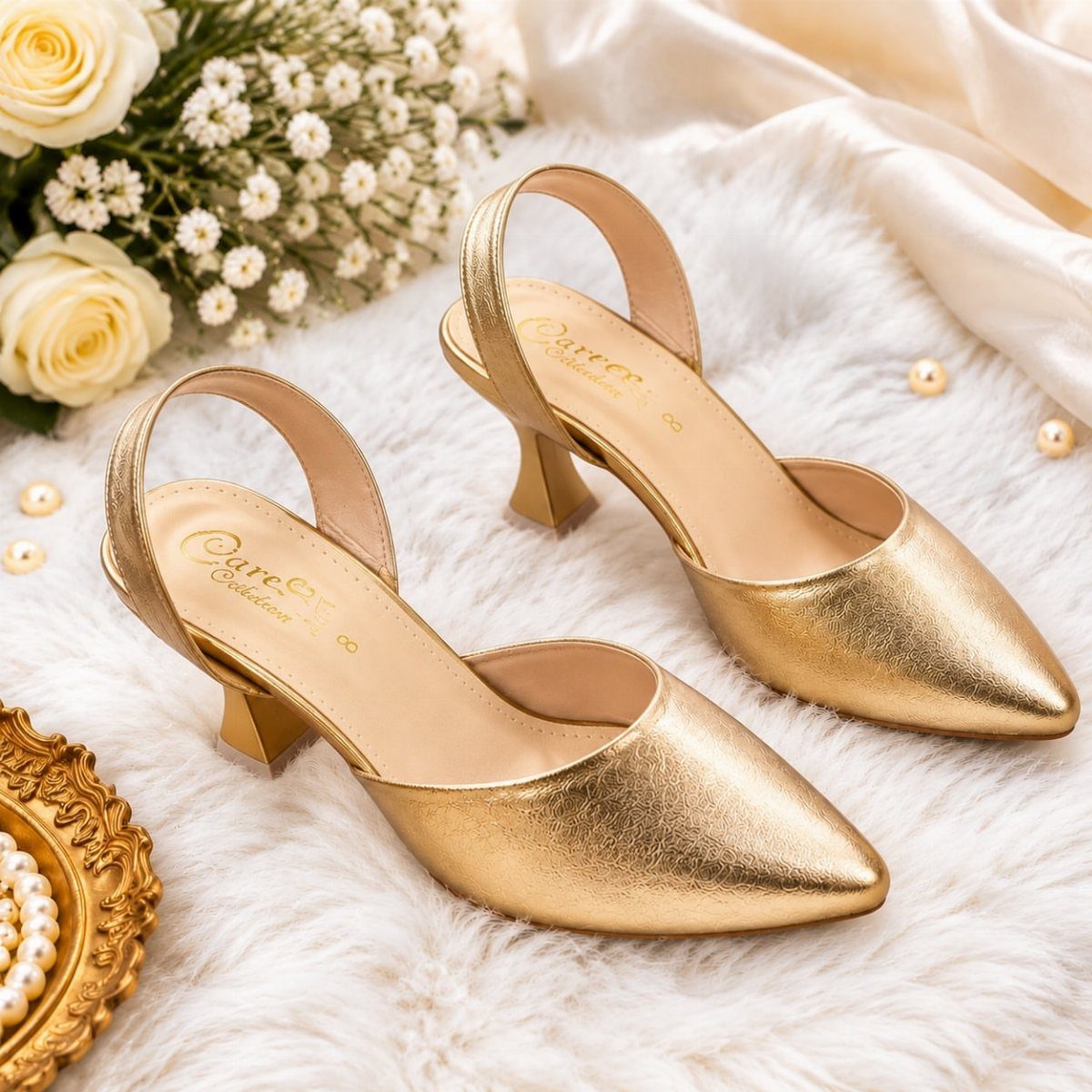
Gold slingbacks are the metallic that feels warm instead of flashy. A pointed toe with an open heel looks dressy, and gold sits well with ivory and champagne gowns.
I would repeat the gold once, in earrings or a hairpin, and leave the rest of the jewelry quiet. Try the slingback strap for slipping before you buy.
10. Sparkling Rhinestone Pumps
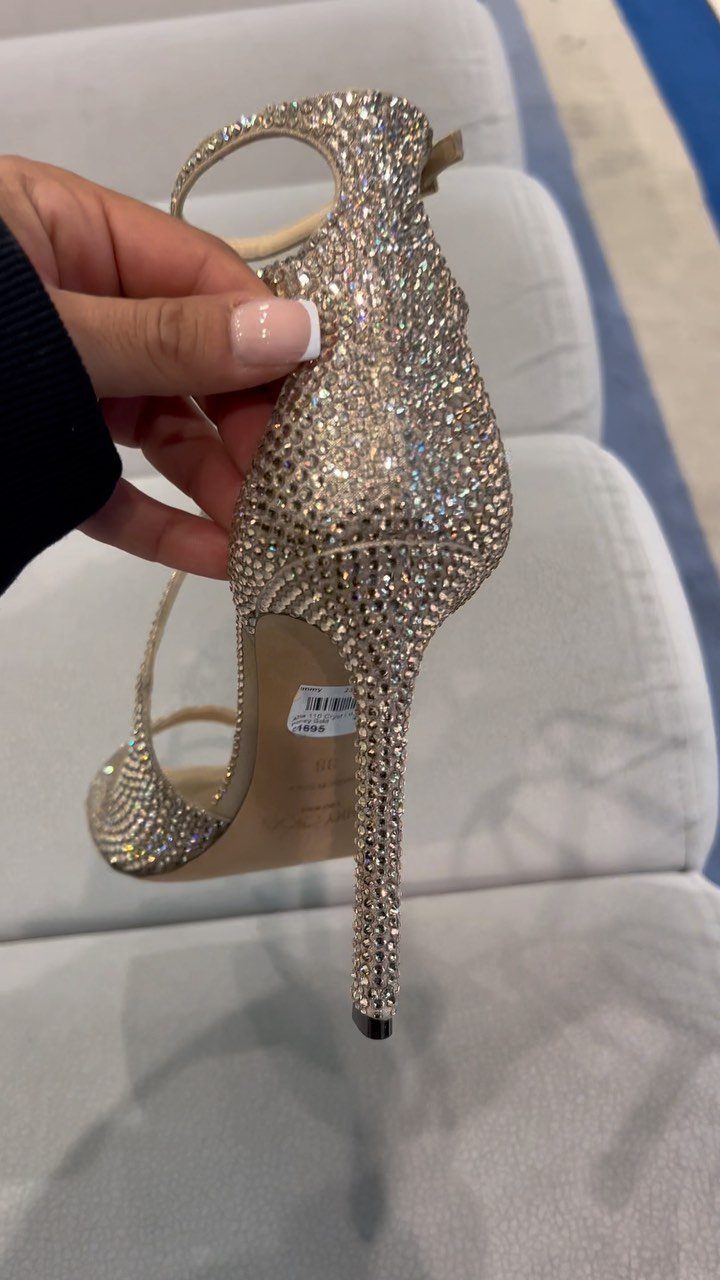
A pump fully coated in silver rhinestones is the shoe to buy when the dress is simple. It works as the statement piece, so keep jewelry minimal and let it catch the light on its own.
Check the price tag on the sole at the register, and look inside for rough stones that could rub.
On a tight budget, this pair beats a heavily beaded gown, since a plain dress costs less and the shoes still carry the look.
11. Floral Embroidered Bridal Heels
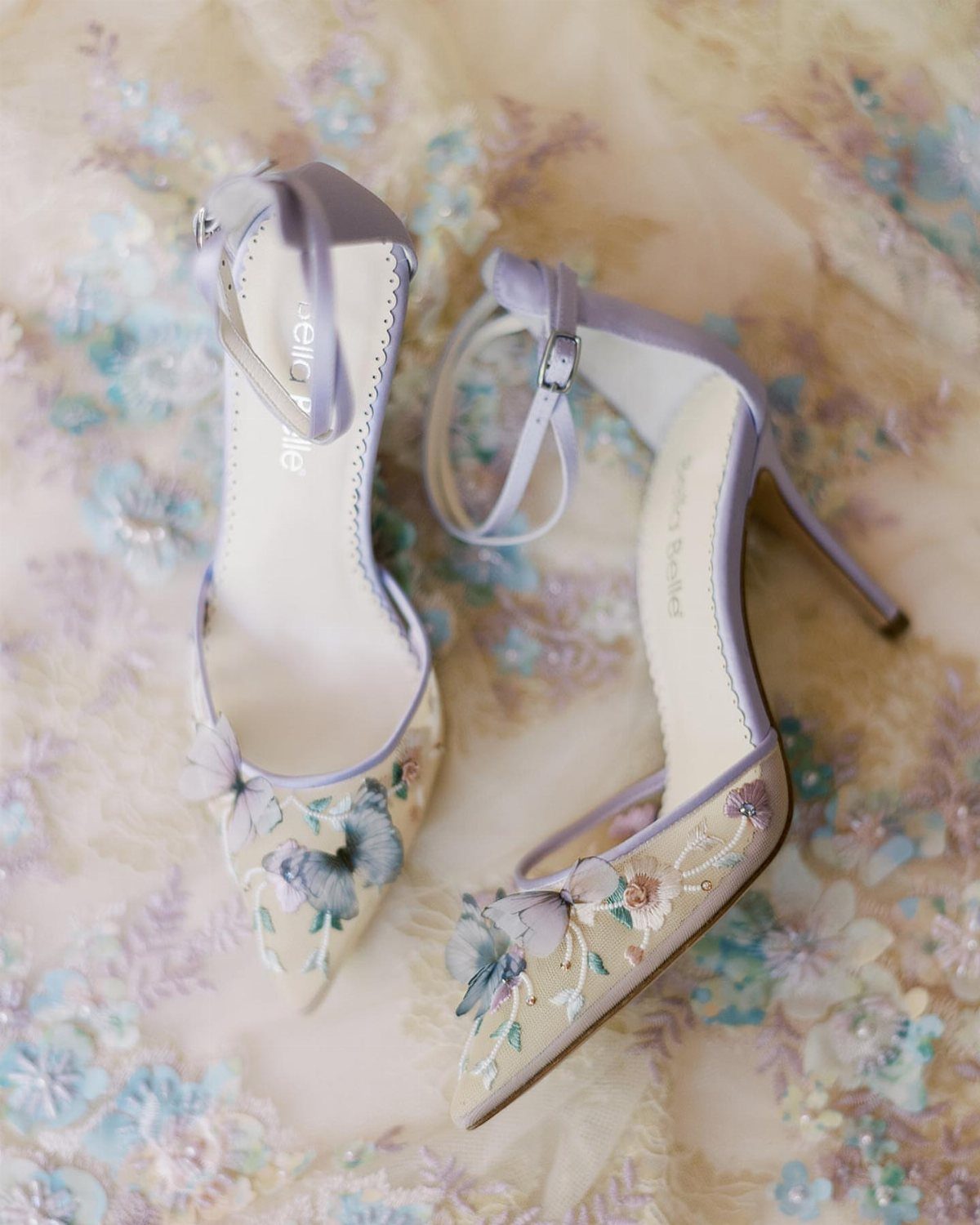
Pastel flowers stitched onto a pointed-toe heel make a shoe with color and no loudness. Blue embroidery with purple straps reads as "something blue" in a soft, garden way.
Choose a gown with little print or lace so the embroidery has room to show.
I like pairing them with a bouquet that echoes one of the shades. Because the ankle straps are colored, test them against your skin tone and hem at the fitting.
12. Black Patent Leather Dress Shoes
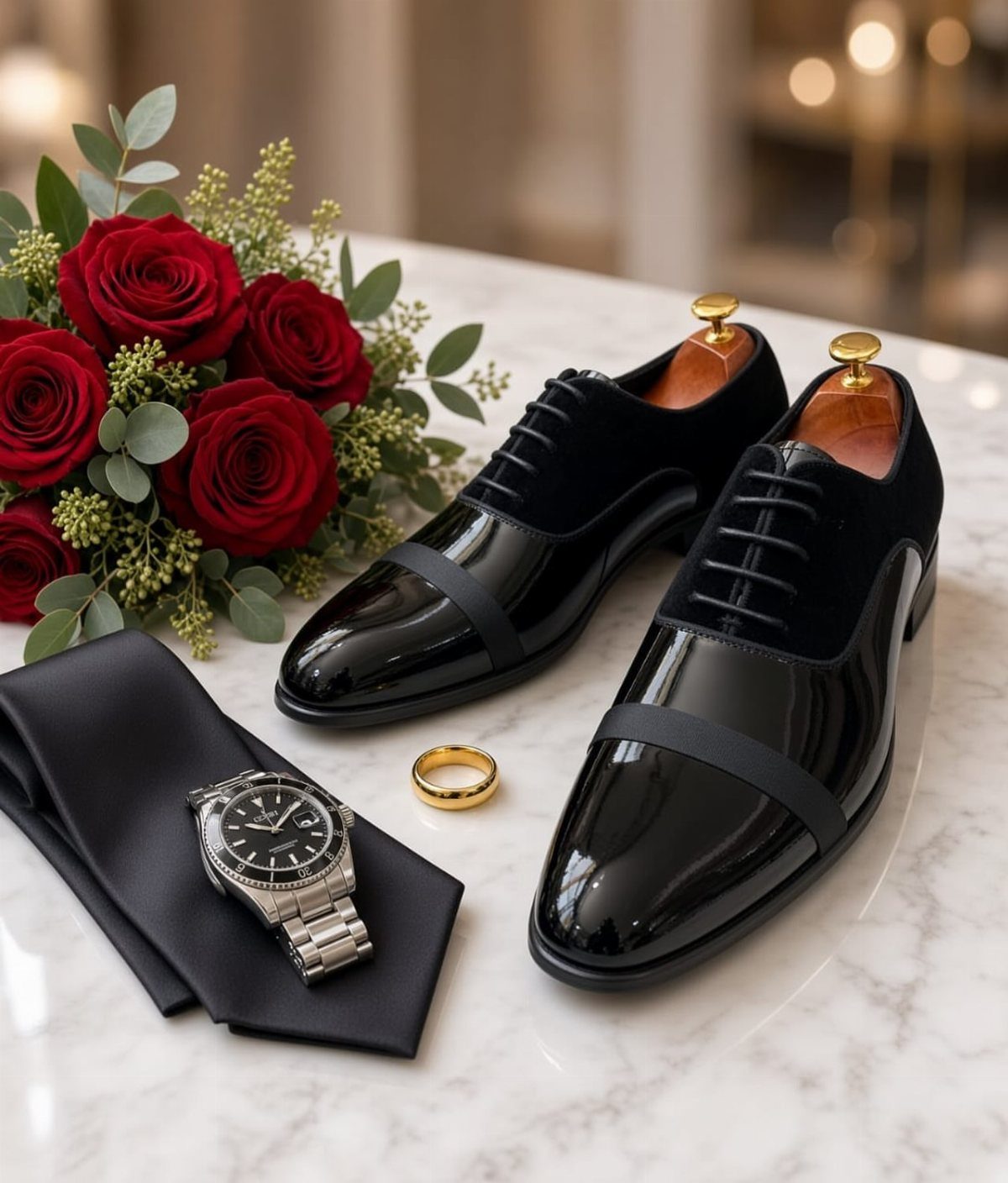
Black patent leather gives a groom’s shoe a high shine that reads as formal, especially with a black tie. The velvet detail adds a touch of texture without breaking the dress code.
Keep shoe trees in between wears so the leather holds its shape.
Patent shows scuffs, so wipe it with a soft cloth before the ceremony. I would choose this pair for a tuxedo and save brown leather for daytime suits.
13. Classic White Ankle-strap Pumps
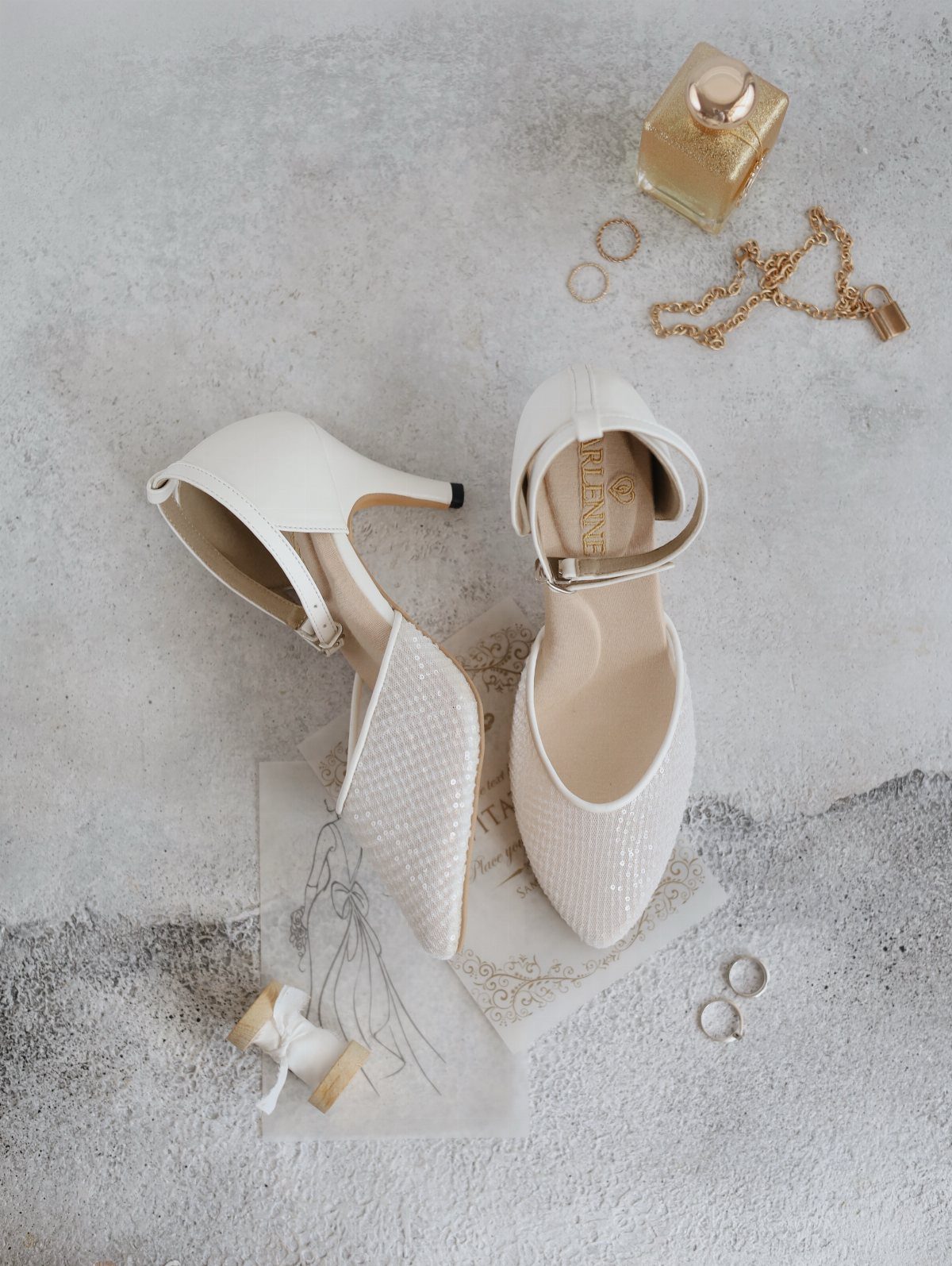
White pumps with a textured finish and a pointed toe are the safest bridal shoe I can name, and the ankle strap is what makes them practical.
It keeps the heel from slipping when you walk the aisle and again when the music starts.
Hold the shoe against your fabric in daylight before you commit, since white and ivory can look far apart. A textured surface hides small scuffs better than smooth satin, which helps if you plan to wear them again.
I like gold jewelry with this pair, as the warm metal softens the white.
Matching Shoes with Outfits
Start with the outfit, then pick the shoe.
Keep your leather pieces in the same color family. Your belt should match the shoes in tone, and a leather watch strap should land close to that shade too.
The formality of the dress code should steer both the color and the style of the shoe. Linen or a pastel button-up reads lighter than a suit, so the shoe can relax with it.
Before you buy, lay the shoes next to the clothes in daylight. Indoor light hides mismatches that show up in photos.
Comfort Tips for Wedding Shoes
Comfort starts with the inside of the shoe. Look for cushioned insoles, padded footbeds, or memory foam, since a hard footbed will let you know by the second hour.
If you wear heels, a block or wedge gives more stability than a thin stiletto, especially on grass or uneven floors.
For flats, check that the sole bends easily and the lining breathes, because a stiff, sealed shoe gets hot fast.
Pack a second pair for the dance floor, or for any walking between the ceremony and the reception. Your feet will thank you, and it costs far less than a blister kit and a bad night.
Break in new shoes at home for short stretches in the weeks before the day.
The kitten heel provides two important things to a wedding day: a classically elegant vibe, and total comfort.
— Vogue
Frequently Asked Questions
What types of shoes are best for weddings?
Match the shoe to the dress code and the venue. Pointed-toe pumps, slingbacks and flats suit most gowns, and strappy sandals work on a warm day.
For a groom, black leather or patent oxfords suit formal and winter weddings, and wingtip brogues in tan or blue loosen up a lighter suit.
Are flats acceptable for weddings?
Flats work fine at a wedding, and a pair with crystal trim or a champagne finish still reads as bridal.
A hem cut for heels needs the flats at every fitting, so the length gets pinned for the shoe you’ll actually wear. Skip that step and extra fabric will be underfoot long before the reception starts.
Should I bring a second pair of shoes to my wedding?
Yes, a second pair for the reception is worth packing.
Keep them in their box and hand them to a bridesmaid before the party starts. A quick swap into comfortable shoes beats a blister kit and a night spent wincing.





