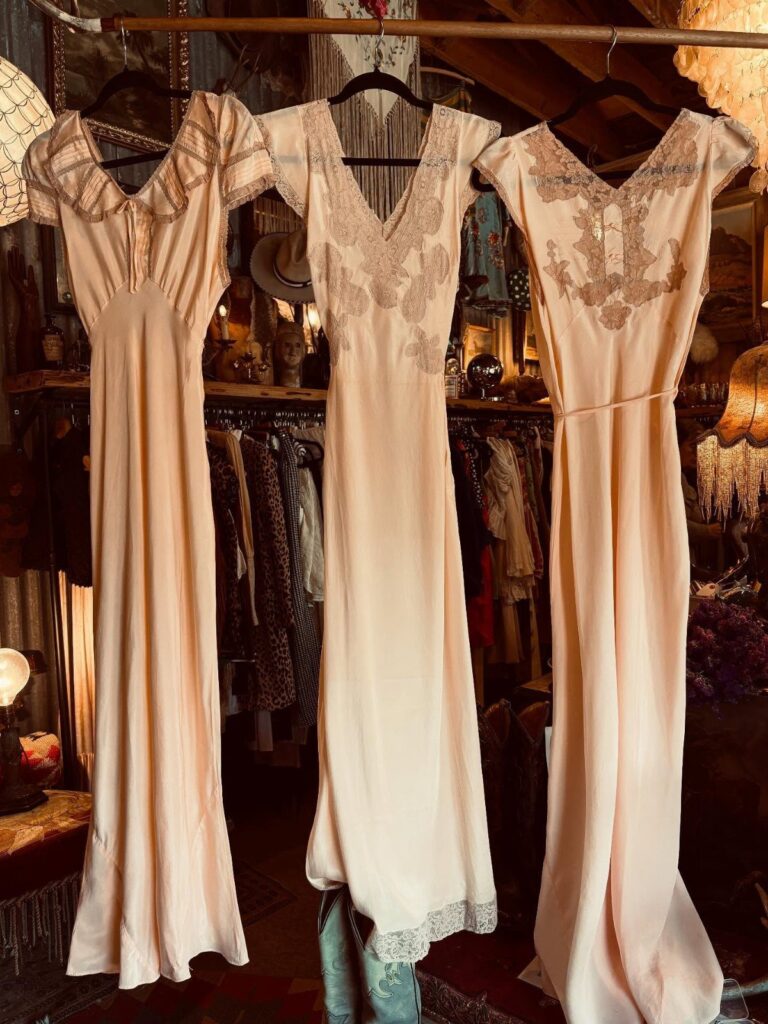
The looks here run from a new vintage-inspired dress to satin gowns, lace, puffed sleeves and a tea-length dress with a jacket and hat, and the choice between them depends on how much repair and fitting work you can take on.
Because a genuine older gown was usually handmade for one wearer, plan on alterations and a seamstress who knows old fabric; the sections on sizing and repair cover what that involves.
1. Where to Find Vintage Dresses
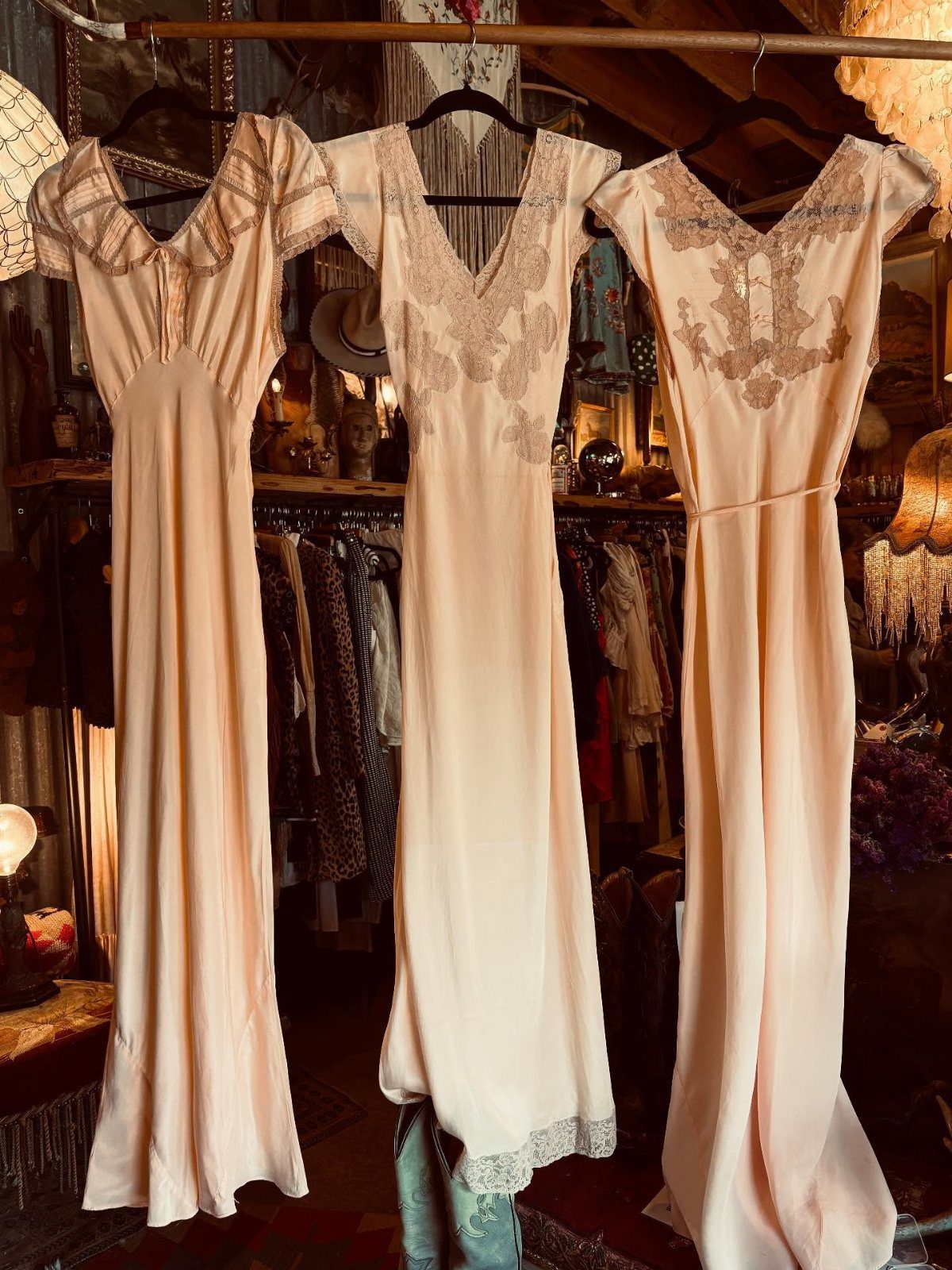
Boutiques and online stores both carry vintage gowns, and buying in person has one clear upside: you can see the true lace color and feel the fabric before paying.
Online listings give you more choice and often lower prices, but cream, ivory and white can look very different on a screen. Ask for close-up photos taken in daylight and a full list of measurements before you pay a deposit.
Budget for alterations on any older gown, since sizing rarely matches modern numbers.
2. What Is a Vintage Wedding Dress?
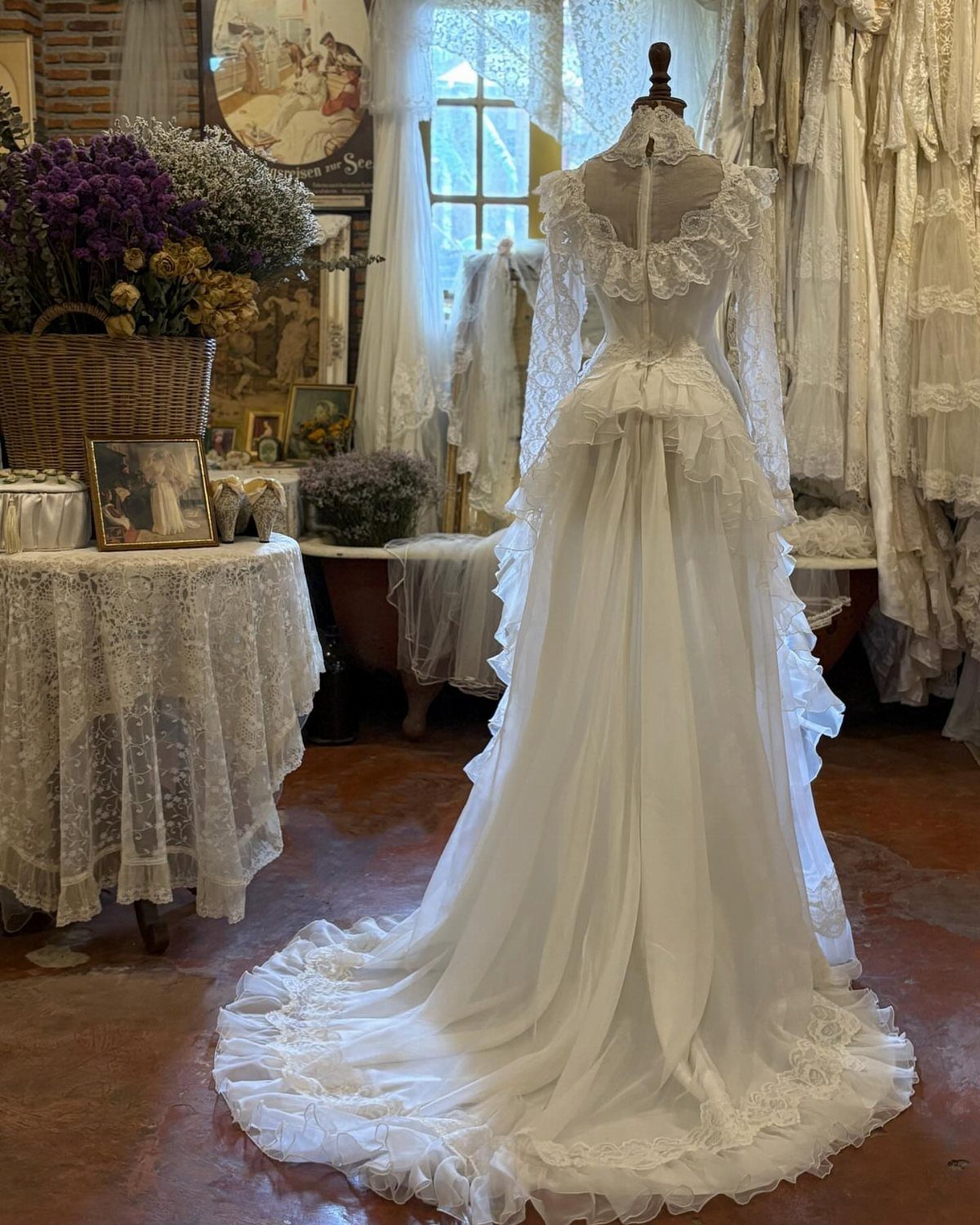
A vintage wedding dress is a gown made between the 1920s and 1990s. Anything newer is simply used, and anything that only copies an older look is vintage-inspired.
That definition helps your search. Filter listings by decade, and ask sellers for the year or era so you know what you are buying.
Lace and tulle are easy to find in older pieces, and a sweeping chapel or cathedral length is worth asking about up front, since extra fabric on the floor affects both cleaning and alterations.
3. Relaxed 1970s Vintage Wedding Dress
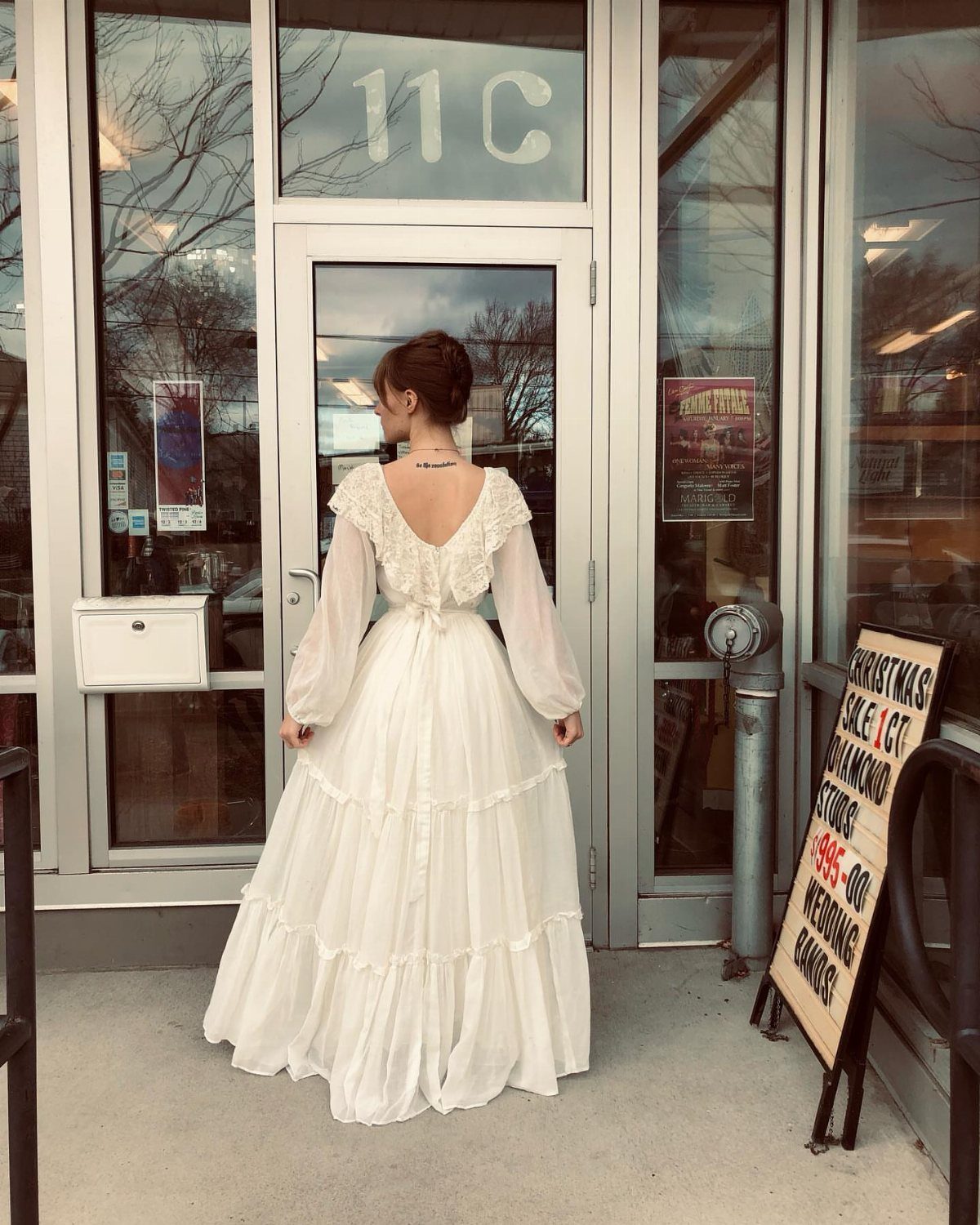
Tiers give a 1970s gown its easy, flowing movement, so the look suits a bride who wants to walk, dance and hug people without managing a stiff skirt.
Search listings for "1970s" plus words like "tiered" or "flowing," and ask for the measurements, not just the size on the tag.
A loose silhouette like this is usually simpler to alter than a fitted one. I would pair it with loose hair and almost no jewelry, so the dress does the talking.
4. Vintage-inspired Wedding Dresses
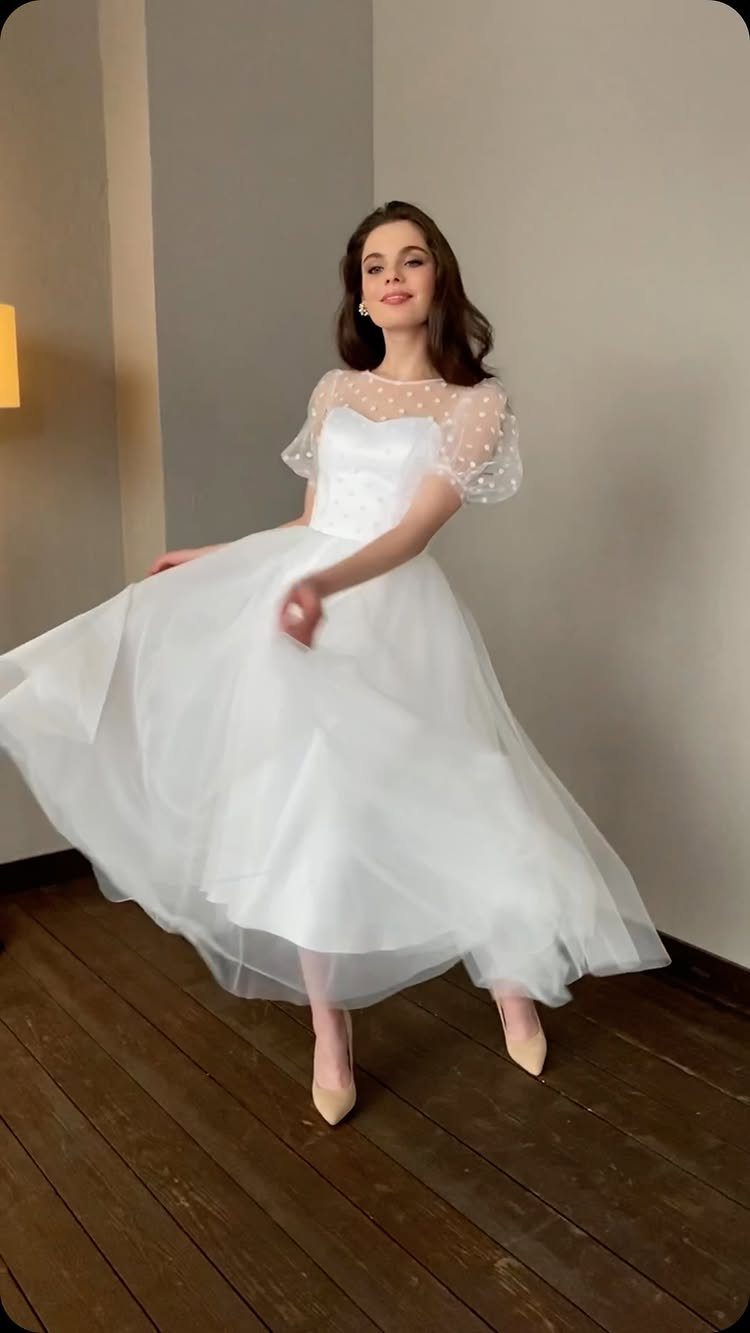
A vintage-inspired dress gives you the era’s look in new fabric, which is my pick for anyone who wants the style without hunting for a fragile original.
Modern designs often borrow from older styles, like the tea-length hem and sheer dotted sleeves seen here. Because the dress is new, you can order your size and skip the repairs an older gown may need.
A vintage-inspired dress costs less and fits more easily, but others can own the same design, so it won’t be truly one of a kind. If sustainability matters to you, consider buying a gently worn one.
Though a vintage wedding dress comes with strings attached—there might be repairs, unalterable elements, or imperfections due to age, the upside is endless. “Thanks, it’s vintage” feels utterly cooler when it’s said on your wedding day.
— Vogue
5. Vintage Satin Gown with Veil
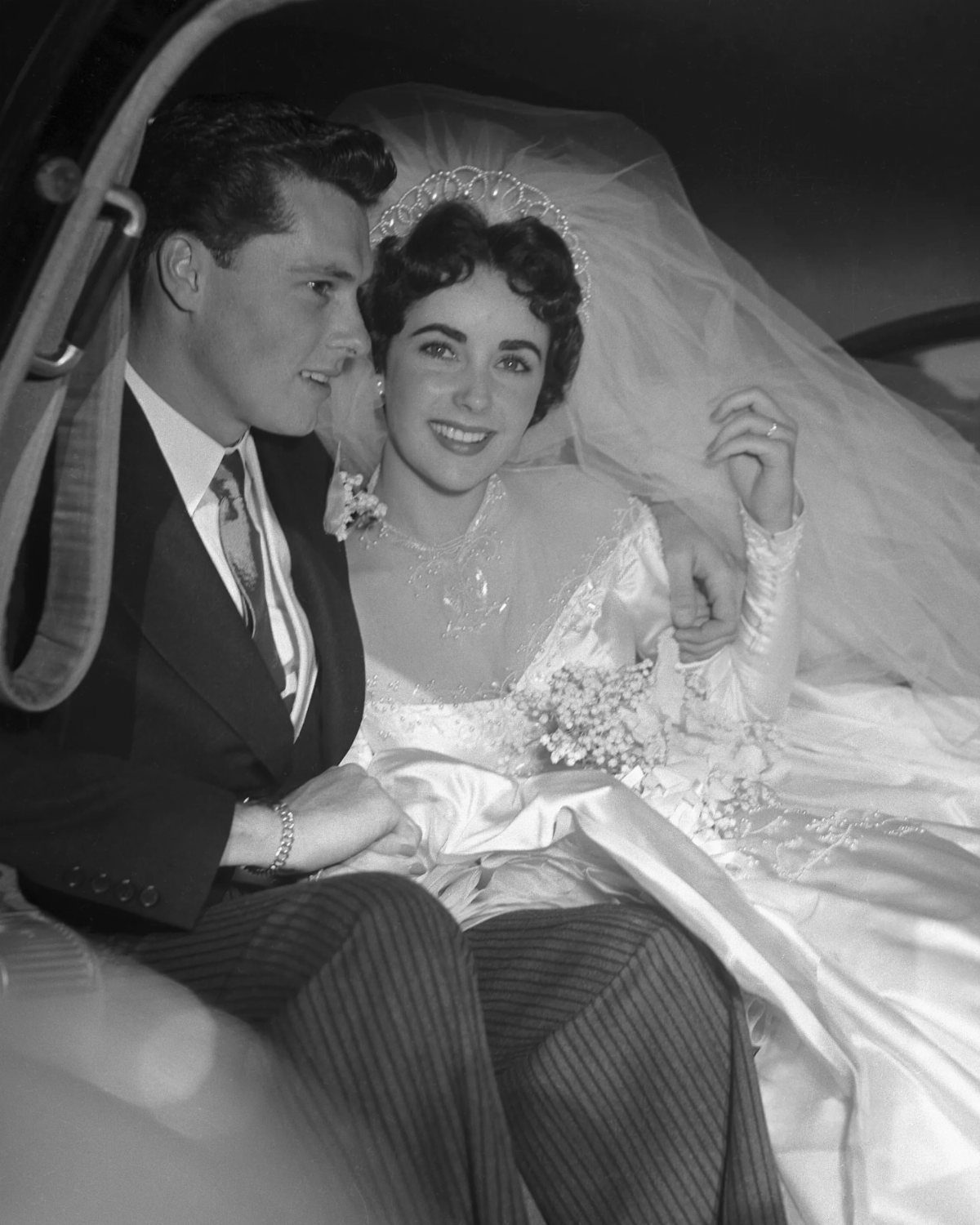
Satin, a tiara and a veil make the classic vintage bridal look, and together they read as formal without any extra decoration.
If you buy a vintage satin gown, inspect it closely for stains and snags, because the smooth surface shows flaws more than lace does. Choose the veil to match the dress’s white, so the two don’t clash in photos.
I would keep the rest simple: the tiara and the veil are enough, and this is a look that rewards restraint.
6. Ruffled Off-the-shoulder Lace Gown
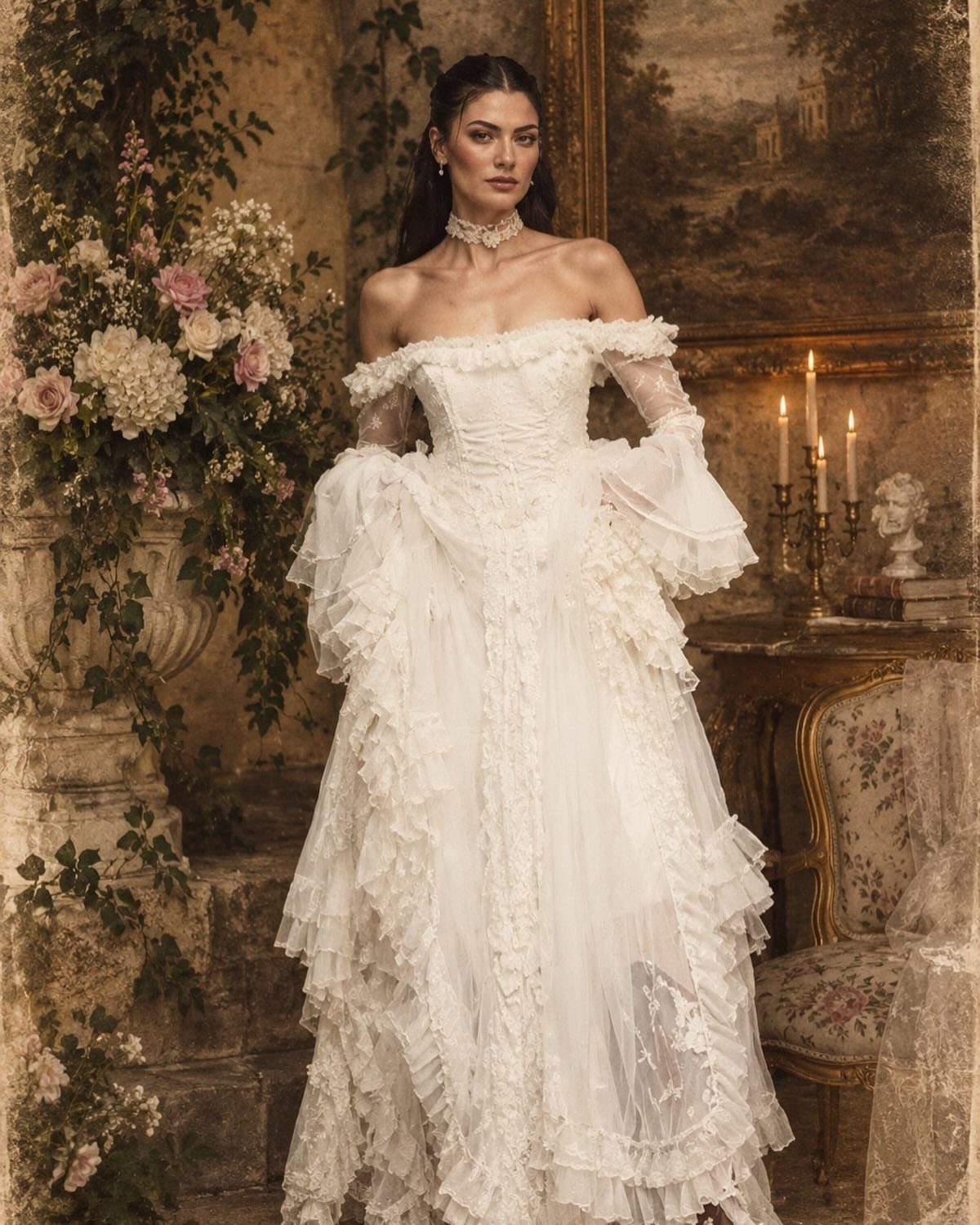
Layers of lace and ruffles do the decorating on this off-the-shoulder gown, so it needs very little else.
Skip a necklace, since the neckline and ruffles already frame your shoulders and collarbone. Choose small earrings and an updo if you want that line to show.
A gown this ornate is a good candidate for a trial fitting with your shoes and undergarments, because ruffles can add volume and change how the dress hangs.
Ornate lace also tends to cost more, so decide early where this dress sits in your budget.
7. Cream Satin Strapless Ballgown
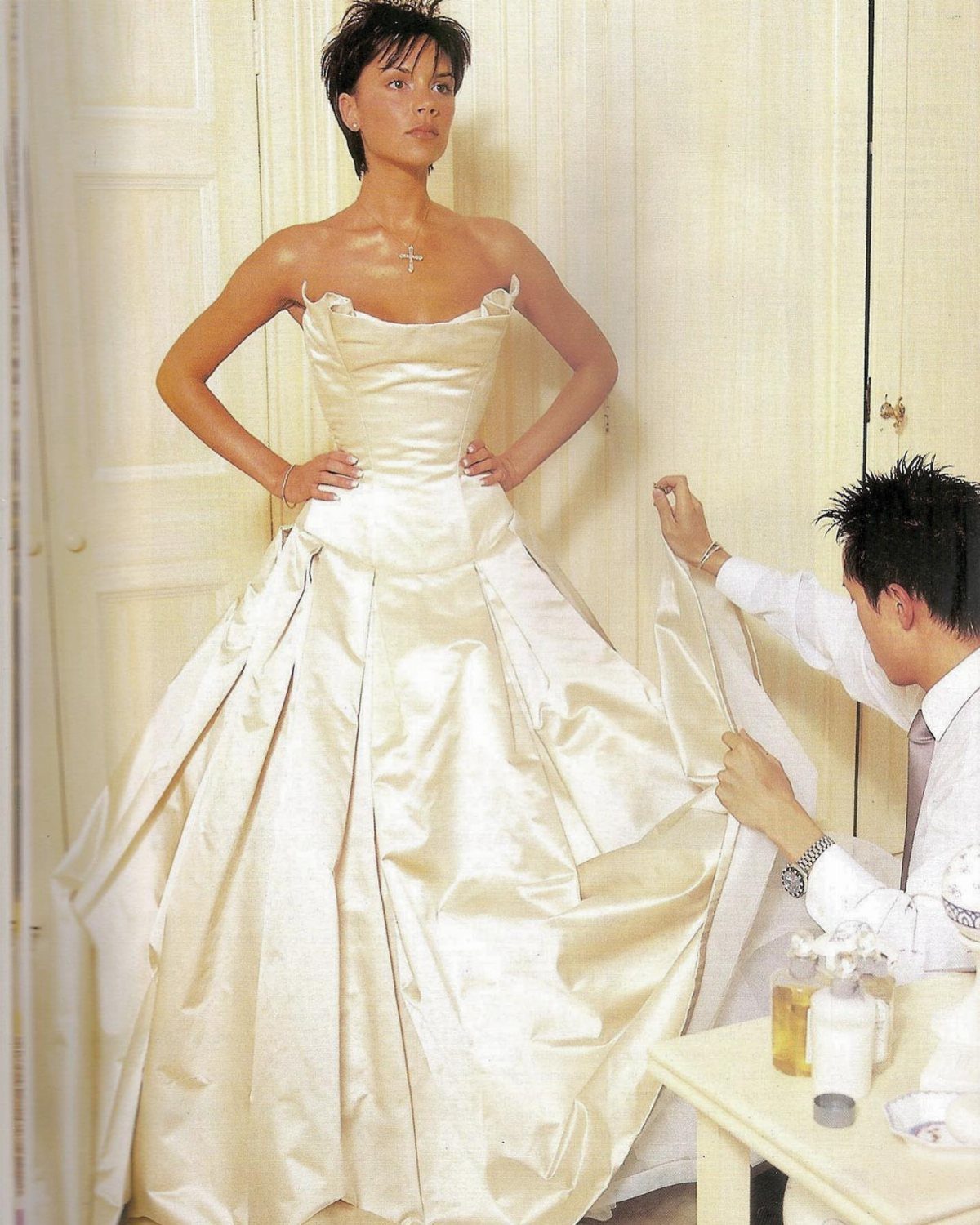
A boned, structured bodice is what holds a cream satin strapless ballgown up, and the fitting decides whether it works.
Strapless means the bodice has to hold at the bust and waist on its own, so have your tailor confirm it stays in place when you sit down, reach overhead and hug someone.
Bring your shoes and undergarments to every fitting, since both change the fit and the hem. Every pin mark and pull will read on satin, so I would save the hem for the final appointment.
8. Satin Gown with Puffed Sleeves
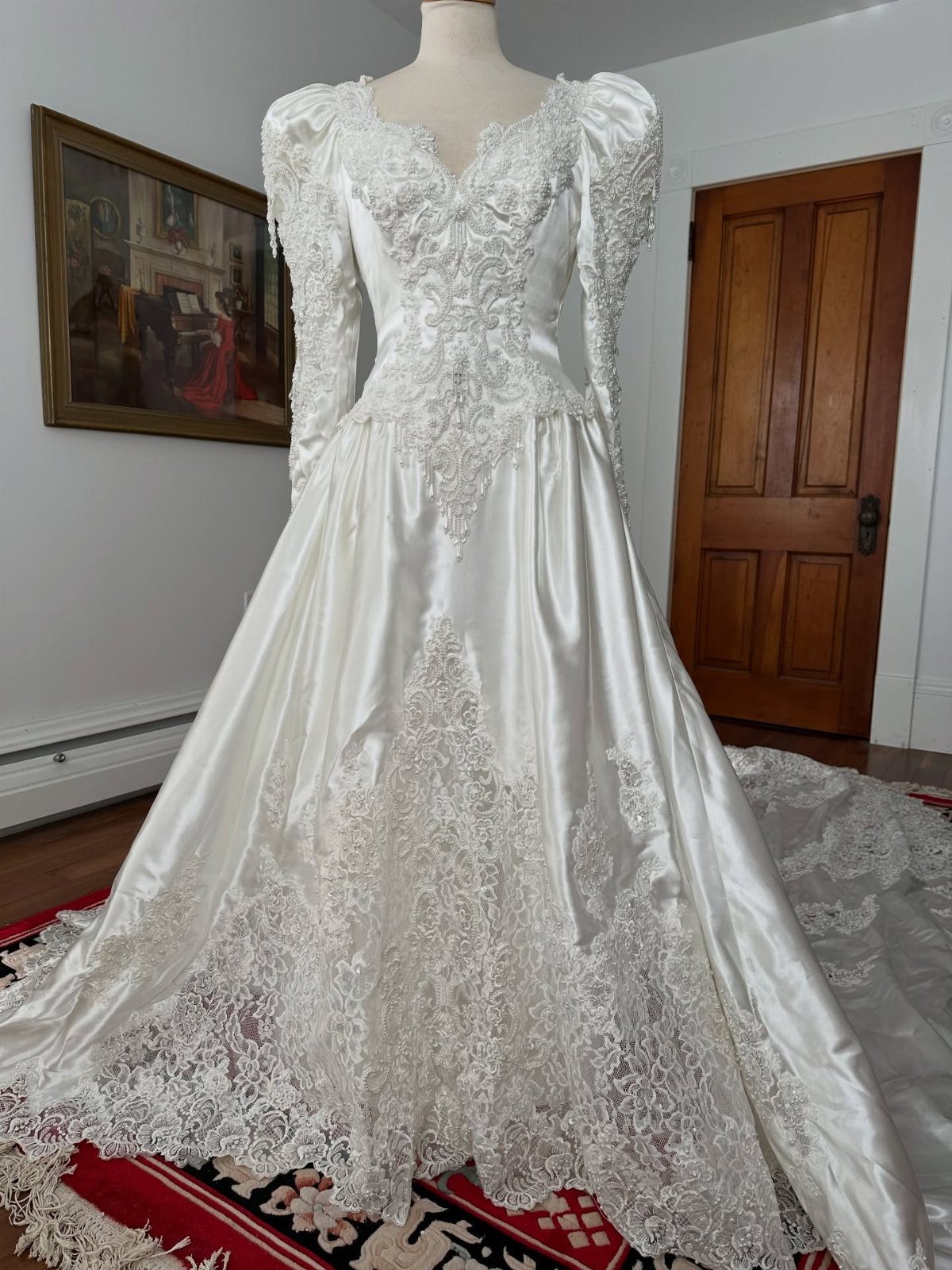
Puffed shoulders, long sleeves and lace embroidery give this white satin gown plenty of drama, and the cathedral train adds more. Keep everything else plain: simple earrings, hair swept off the shoulders, and no necklace over the embroidery.
If you buy a vintage version, ask for close-up photos of the sleeves and the lace, since seams at the shoulder take strain and satin shows snags.
Ask for the train length too, because a train this long affects cleaning and alterations. Sleeve fit is the hardest part to change, so check those measurements first.
9. Tea-length Dress with Jacket and Hat
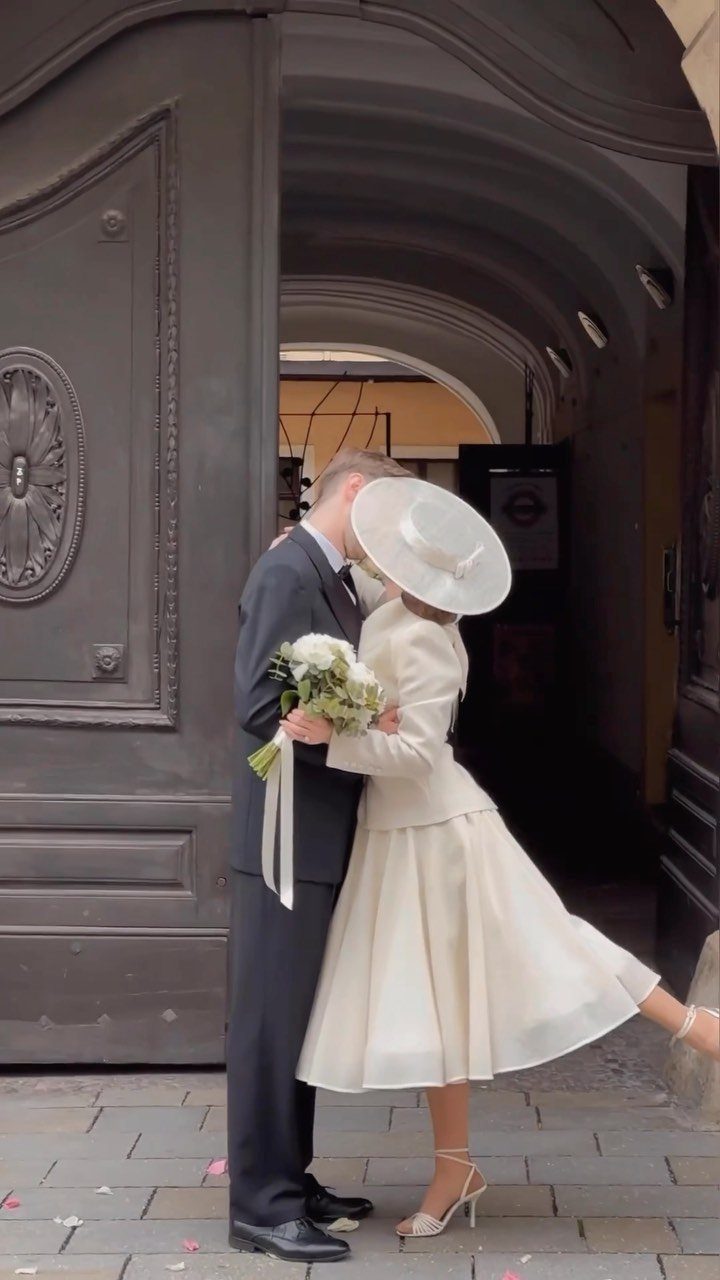
Cream tea-length dress, tailored jacket, wide-brimmed hat: this is a full outfit rather than a single gown, and it suits a courthouse, a small ceremony or a garden day.
It is also my pick for a bride on a modest budget, since a shorter hem means less fabric to clean and alter.
Buy or fit the jacket and dress together so the creams match, and wear the hat with your planned hairstyle before you decide on it. A wide brim can shadow your face in photos, so check it in daylight.
Finding the Right Size
Online vintage listings give you the garment’s own measurements in inches, not a tag size, so measure your bust, waist, hips and arm length first and hold each number up against the listing.
Write them down once and keep them handy.
Ignore the size on the label. Sizing has shifted over the decades, and people are generally a bit bigger than their mothers and grandmothers were, so an older "8" rarely matches a modern 8.
Compare your numbers to the seller’s flat measurements and ask for any you can’t find. Arm and bust measurements deserve the closest look.
Most vintage gowns were handmade for one original wearer, so a perfect fit off the rack is unlikely. Plan on alterations and don’t let that put you off a dress you love.
Repairing Vintage Dresses
Any dress that has survived 50 or even 100 years has almost certainly picked up some damage along the way.
Flaws like pinholes, small stains and weak seams are normal, so decide which ones you can live with, and do it while the dress is still in the cart.
Good sellers will describe problems up front, but read the description closely and ask for photos of anything vague. Seams and zippers are the usual repair jobs, so ask whether the zipper works and whether the seams are sound.
A seamstress who has already worked on older fabrics is worth finding first, and I would book her ahead of any final payment.
Show her photos of the dress, get a repair estimate, and add it to the purchase price so you see the true cost.
Shopping Tips for Vintage Dresses
Finding the right vintage gown takes time, so start early and look in many places. Check several boutiques rather than stopping at the first one.
Sign up for email lists, and give shop owners your wish list and measurements. Buyers who travel to source stock can watch for your style on their next trip.
Online shops are worth a try too, and Etsy is a good place to turn up vintage finds. Directories of vintage and pre-loved wedding dress shops can save you hours, and some will notify you when new stores are added.
Buyer beware applies to any secondhand dress, so inspect every listing carefully before you pay.
Frequently Asked Questions
What makes a wedding dress vintage?
A vintage wedding dress is a gown made between the 1920s and the 1990s. A dress under that age is just secondhand, and a brand-new gown cut to echo an older era gets called vintage-inspired.
Are vintage wedding dresses less expensive than new ones?
Not always. An original can look cheaper because of its age, yet restoration and alterations can make it cost as much as a new vintage-inspired gown.
On a tight budget, a vintage-inspired gown usually costs less and is easier to fit, but the same design can turn up at other weddings.





