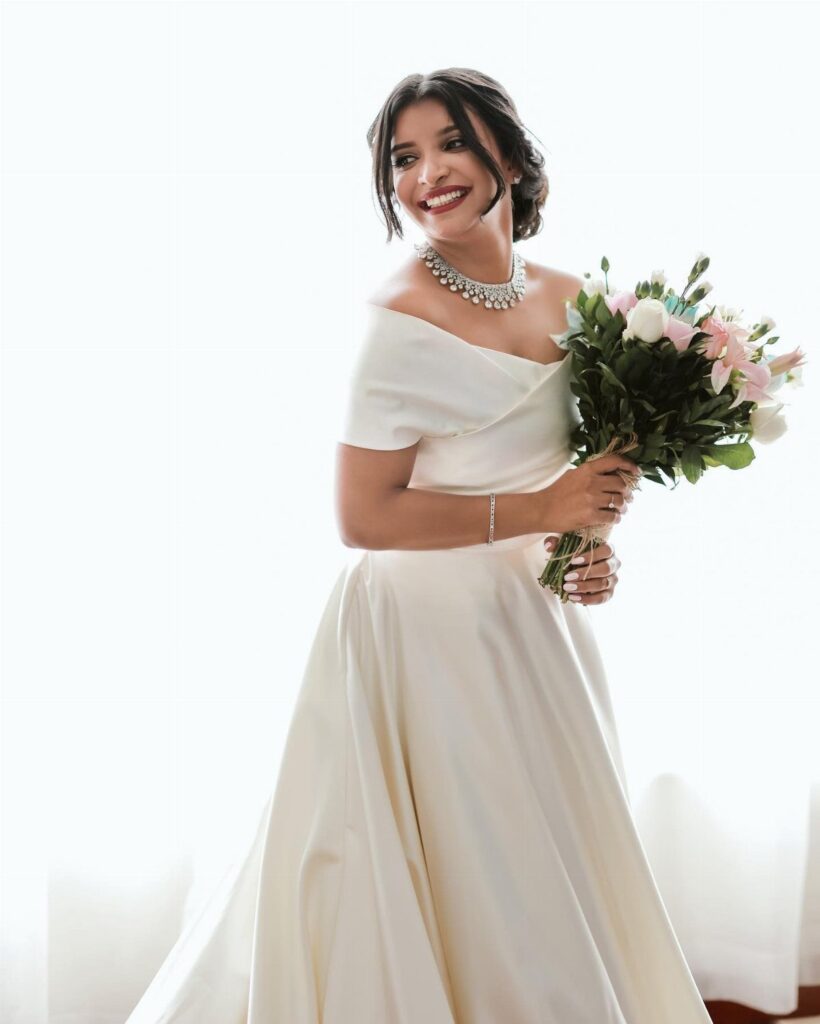
These dresses run from a plain strapless fit-and-flare with no trim at all to a one-shoulder gown with a cape, a ballgown skirt or pearl beading at the neckline, waist and hip.
Satin has little give, so the cut has to suit your body, the venue and the time of day before any detail does.
1. Smooth Satin Fabric
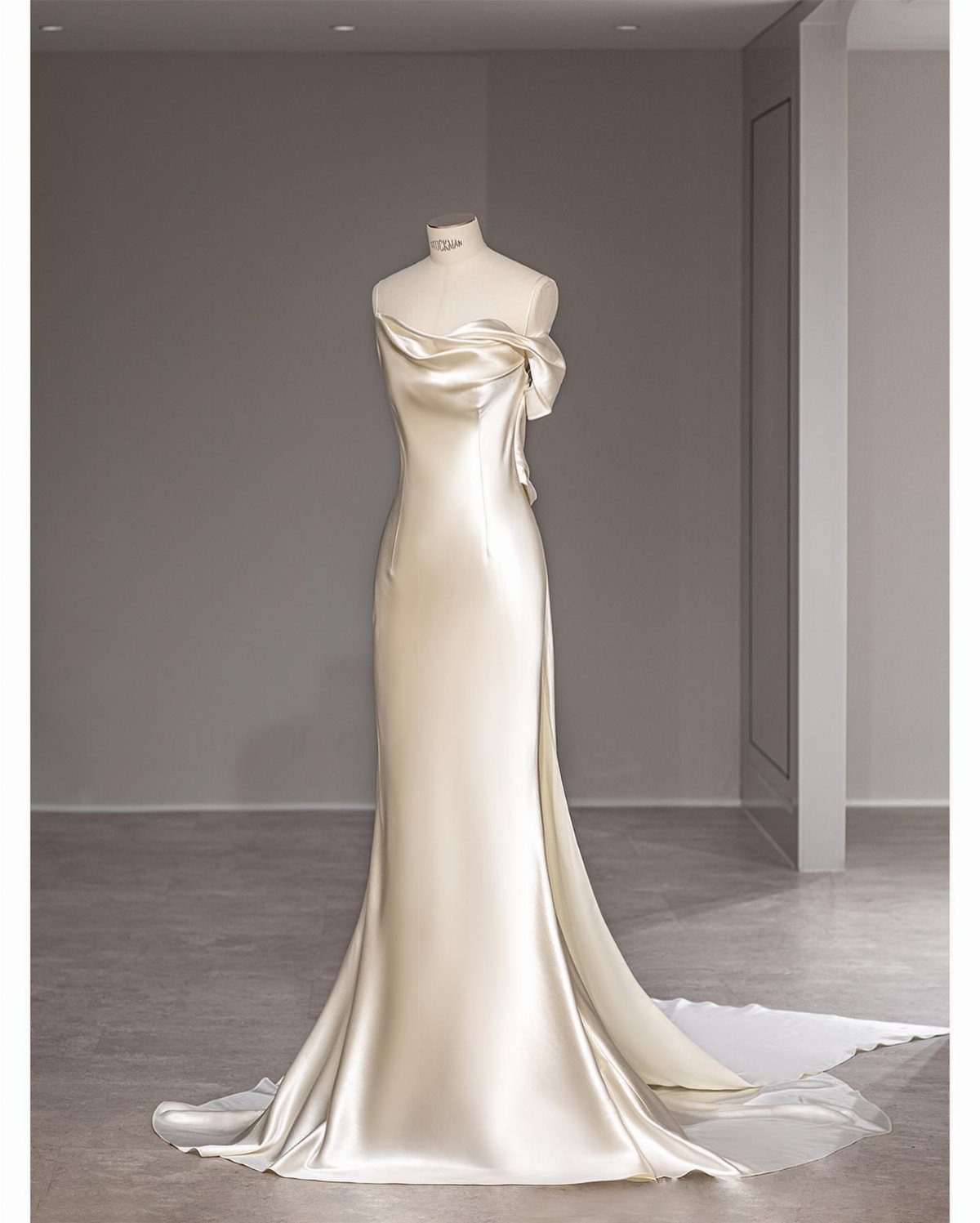
Satin’s glossy surface does the work that beading or lace would do on another dress. With no embellishment, the shine itself becomes the detail, so the cut and the fit have to be right.
Plan on a steamer and a good seamstress. A smooth, shiny fabric shows every pull and pucker at the seams, and I would rather spend alterations money on a precise fit than on extra trim.
Cream and champagne both read softer than stark white in a plain, glossy finish.
2. Sweetheart Satin Bridal Gowns
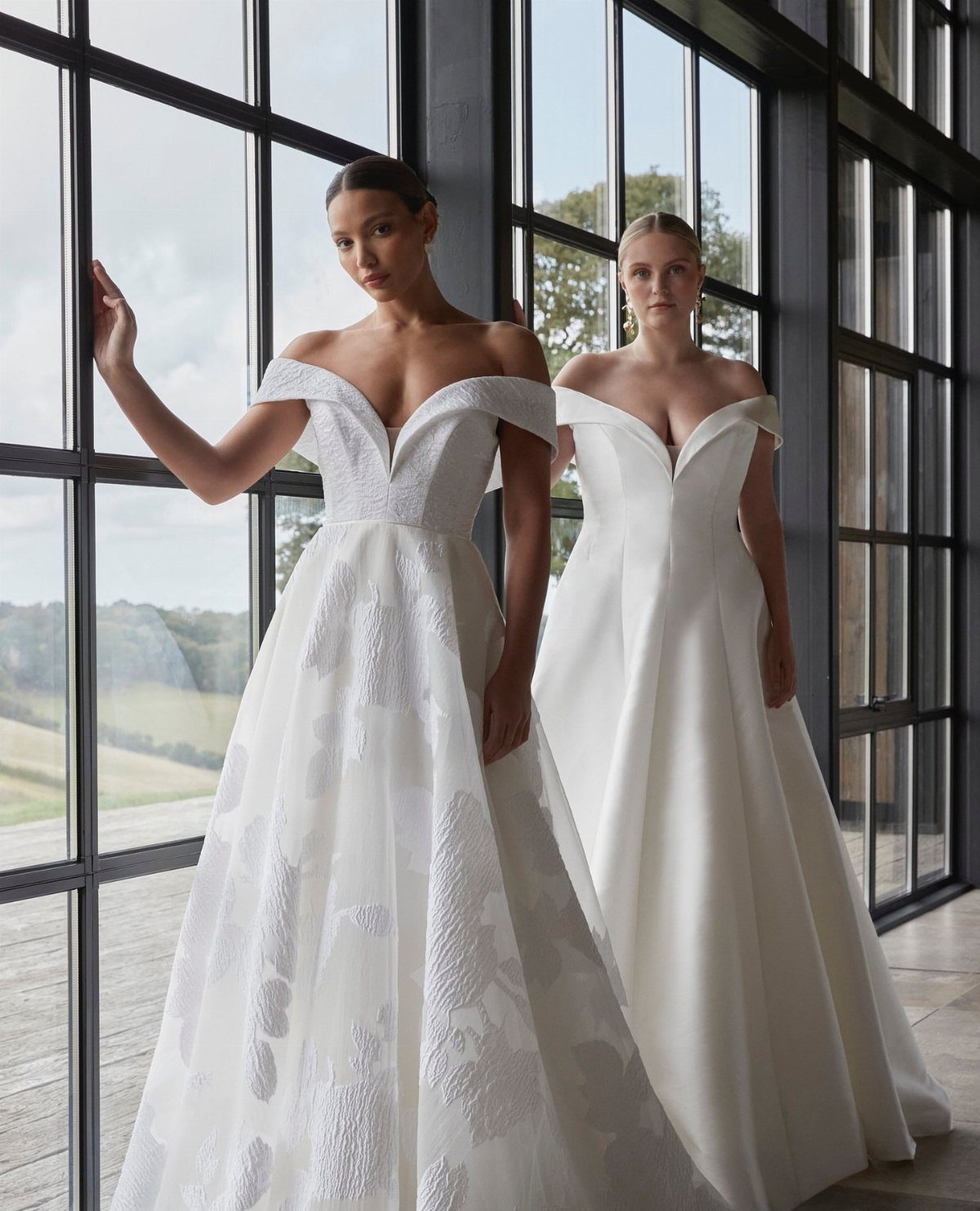
A sweetheart neckline dips into 2 soft curves over the bust, and in satin that curve catches light and looks sculpted without any extra work.
I like it for brides who want a strapless shape that feels less severe than a straight-across neckline. Try it on with the undergarments you will actually wear, since the shape depends on a clean fit at the bust.
Ask the seamstress to check that the neckline stays put when you reach up to hug people. Fix that at the fitting, not on the wedding day.
3. Ballgown Wedding Dresses
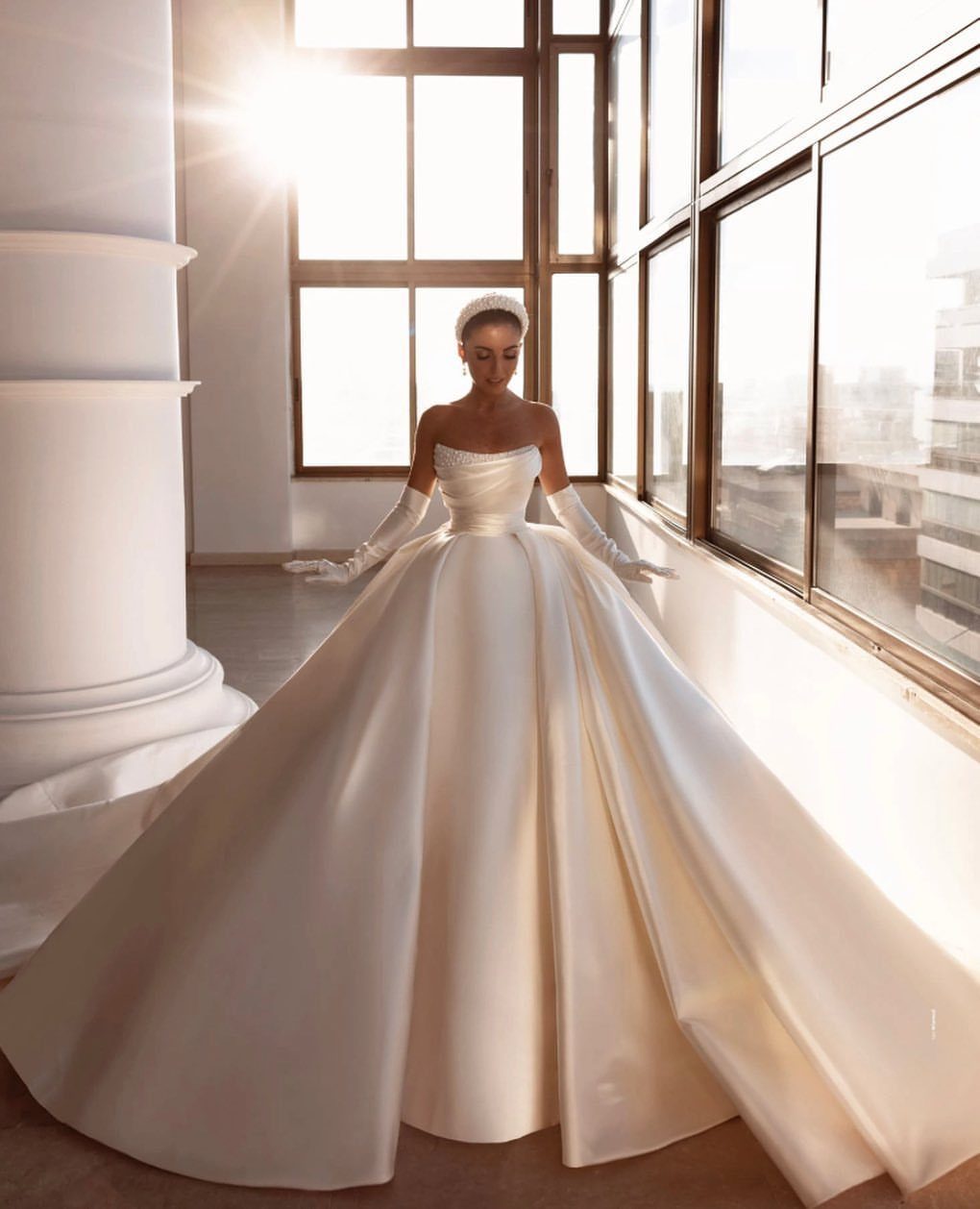
Satin gives a ballgown skirt a heavy, smooth drape, which is why a ballgown in this fabric looks so formal. Long gloves and a simple headband, as here, keep the focus on the skirt instead of competing with it.
Budget honestly for the volume. A skirt this big takes more fabric, so it usually costs more, and it needs room to move through doorways, onto a dance floor, and into a car.
If you want the drama, choose it. If you hate fuss, pick another shape.
4. Sheath Silhouette
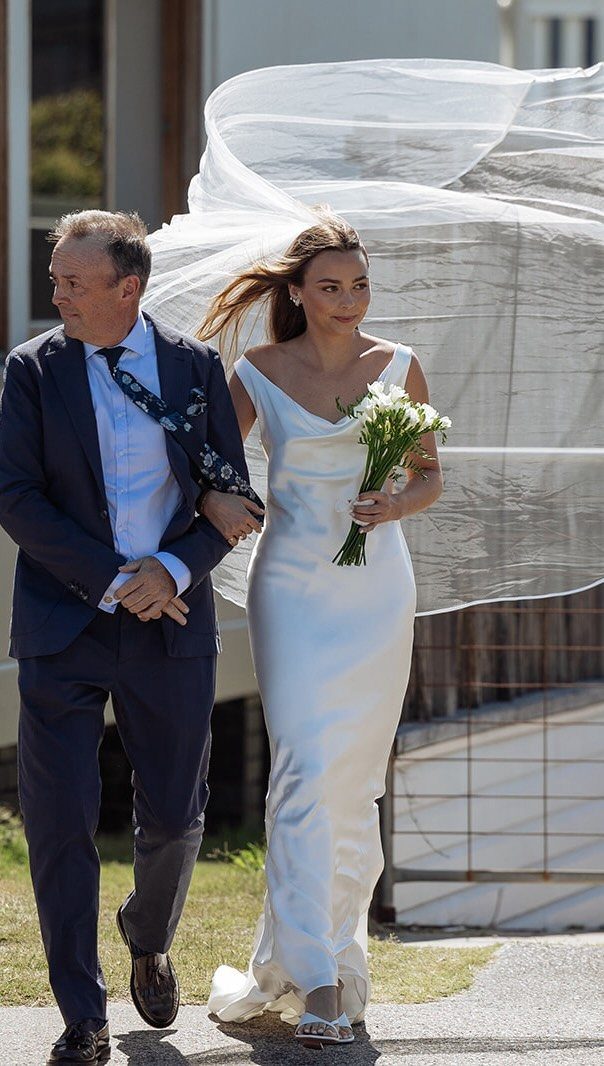
A sheath follows the body from shoulder to hem with no waist seam and no volume, so satin does all the talking. That makes it one of the easiest silhouettes to wear outdoors, where a long veil can move freely.
Fit is everything here. A sheath has no volume to hide behind, so plan for at least one extra fitting.
I would choose a sheath for a couple who want a modern, minimal look. Walk, sit and climb stairs in it before you commit.
5. Satin Gowns with Beading
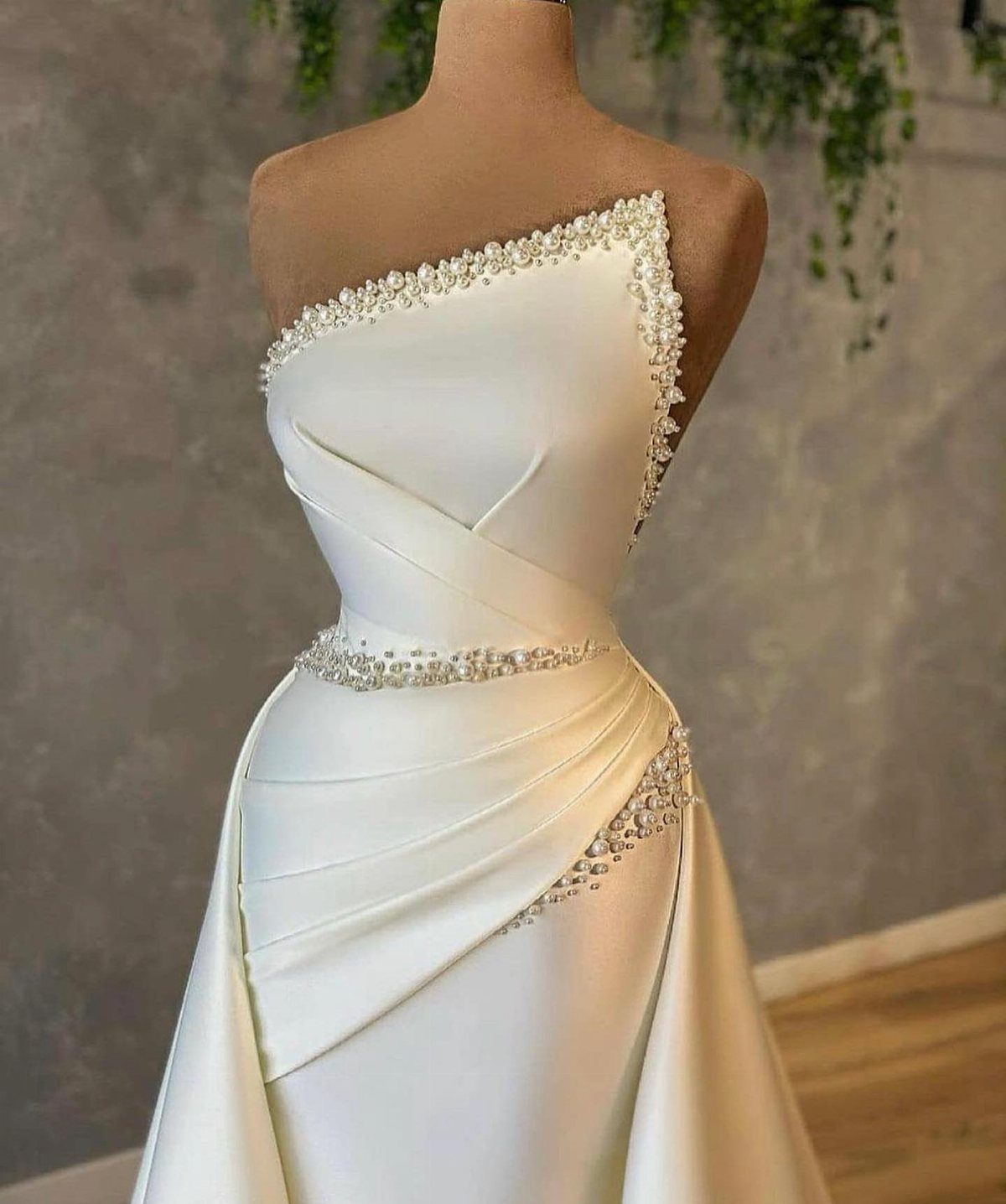
Pearl beading placed at the neckline, waist and hip gives a plain satin gown a few chosen points of detail instead of an all-over sparkle. The draping and one-shoulder line keep it from looking busy.
I prefer this restraint: pearls on glossy satin read soft and classic. Beading adds cost and weight, so ask how it is attached and whether repairs are possible.
If the budget is tight, a simple satin gown with a pearl-trimmed accessory is a cheaper route to a similar mood.
6. Satin Gowns with Sleeves
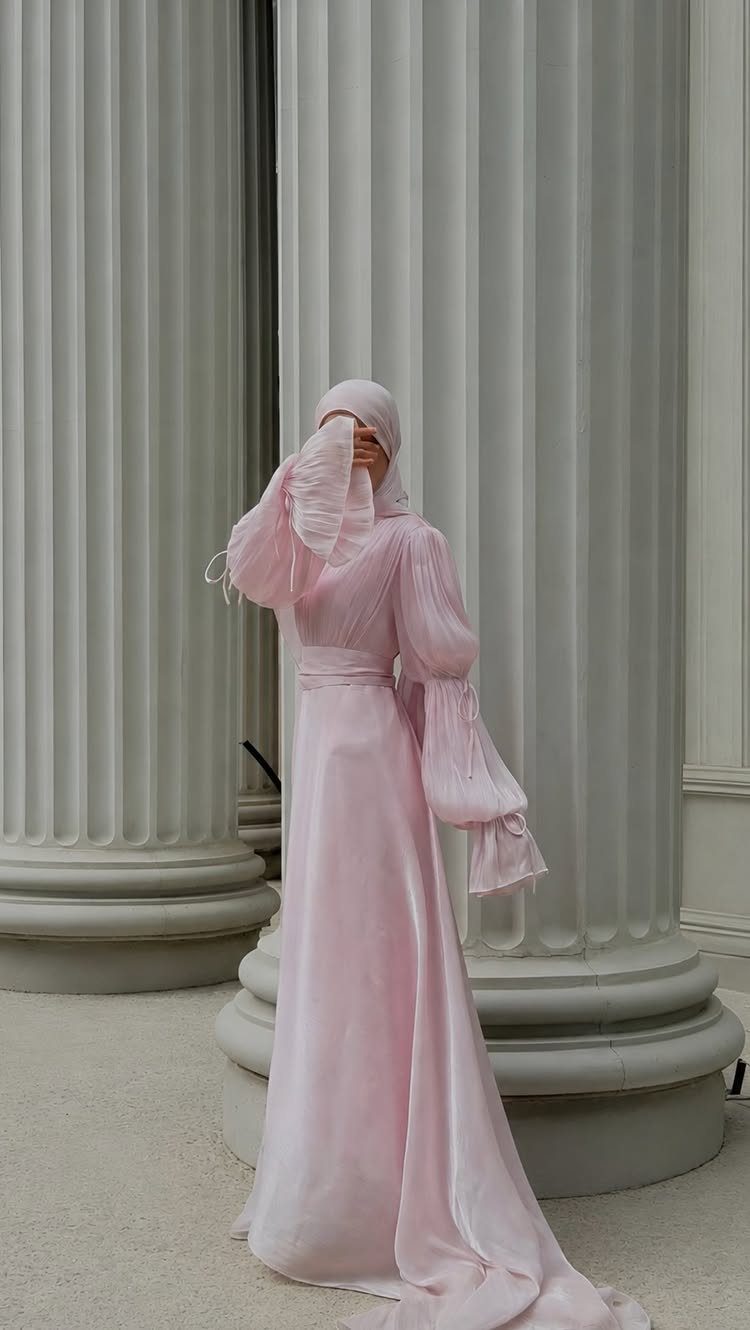
Long sleeves turn satin into a more covered, graceful look, and a light pink shade softens it further. Full, voluminous sleeves add shape, so the gown stands out even with a simple skirt.
Ask for sleeves that let you lift your arms. Satin has little give, so a tight sleeve will restrict you when you hug guests or dance.
A satin gown with sleeves suits a bride who wants coverage without heavy lace.
7. One-Shoulder Satin Dress with Cape
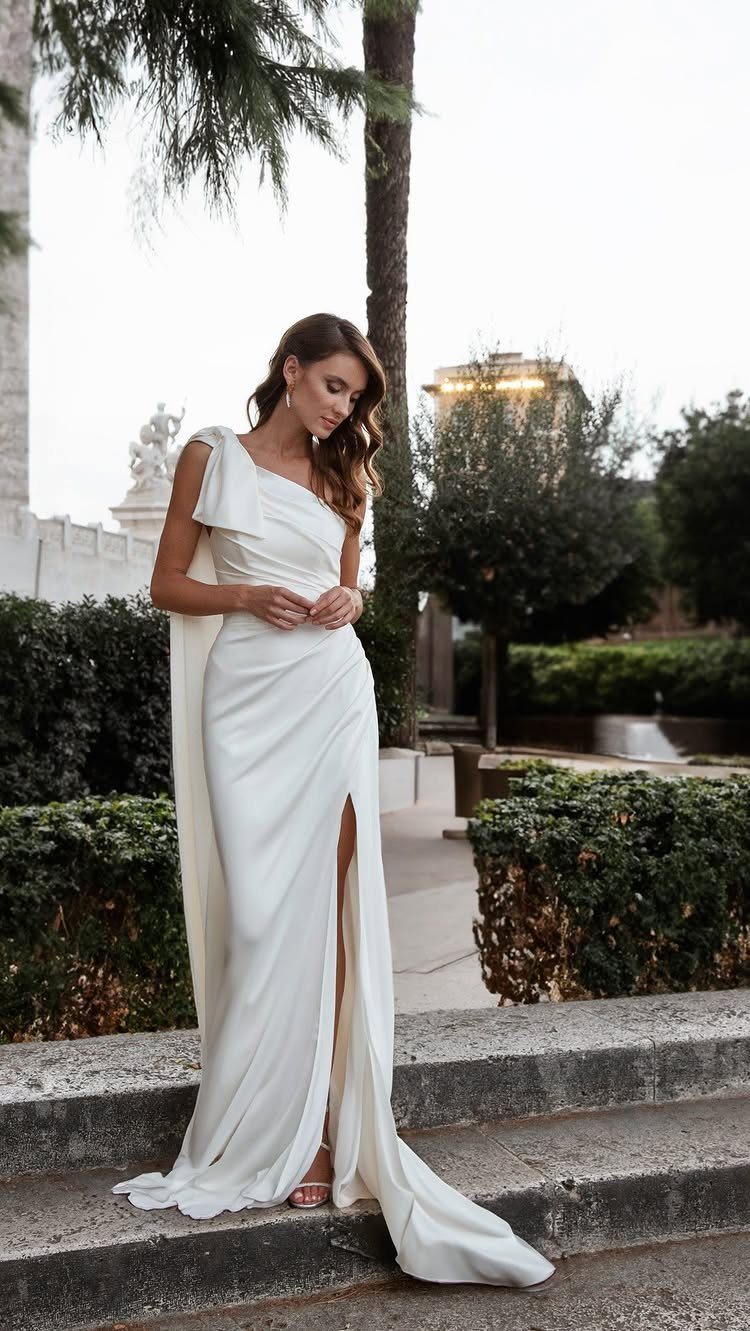
A cape gives a one-shoulder satin gown movement that the sleek bodice cannot. Satin is slippery, so the cape needs to be attached securely at the shoulder, or it will slide as you walk.
A high side slit needs a test run. Take full steps and sit down in it before you commit, because a slit that looks great standing can gape when you sit.
Stone steps and outdoor venues suit this look, but check that the cape hem clears the ground.
8. Floral Back Detail Satin Gown
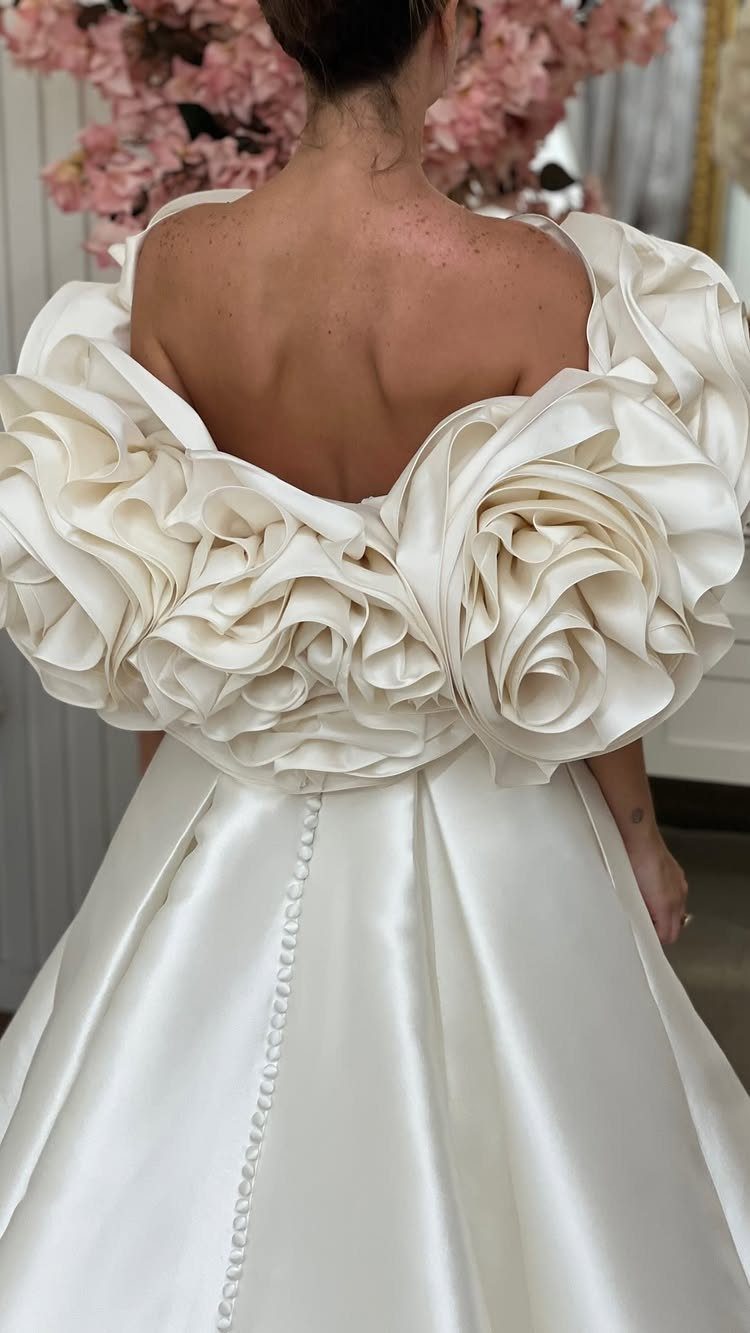
Fabric rosettes across the upper back turn the view guests get during the ceremony into the main event. Covered buttons trailing down the skirt echo that detail without adding more.
I would keep the front plain and let the back carry the dress. Ask how the rosettes are attached, and whether you can lie against a car seat or a chair without crushing them.
Covered buttons also take time to fasten, so allow extra minutes on the wedding morning.
9. Off-the-Shoulder Satin Gown
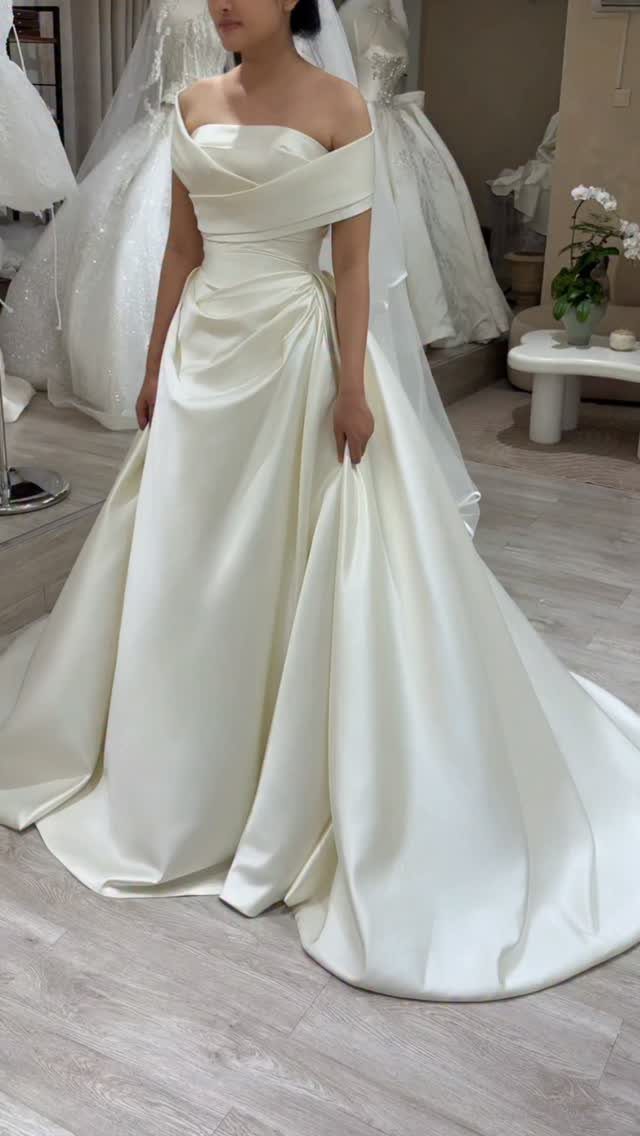
Off-the-shoulder necklines sit on the upper arm, and on a satin gown the draped fabric frames the collarbones and shoulders with a soft, formal line.
Satin has little stretch, so the neckline can slip down or restrict your arms. Ask the seamstress to check that you can raise your arms and hug someone without the fabric pulling.
Pair it with a full skirt, as here, for a classic shape. Wear your hair up if you want the neckline to be the focus.
10. Lace Bodice Satin Dress
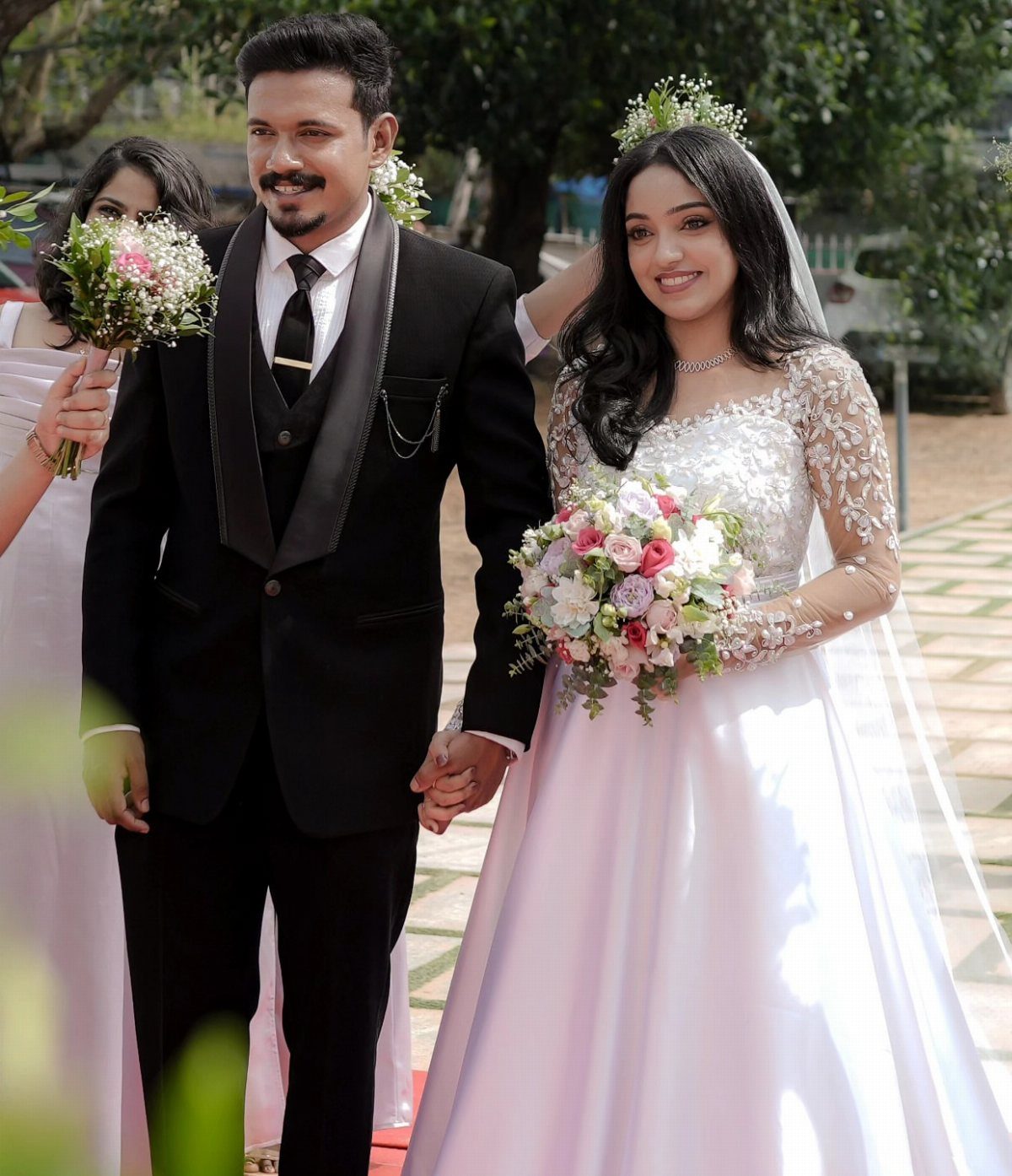
Lace on the bodice and satin on the skirt split the dress into 2 textures: detailed on top, smooth below. That keeps the lace from feeling heavy and lets the satin skirt do its work.
I like this mix for brides who want romance without full lace coverage. Look at where the lace meets the satin, because the seam should sit flat and not pucker.
A simple skirt also keeps the price easier to manage than an all-over design.
11. Blush Pink Satin Wedding Dress
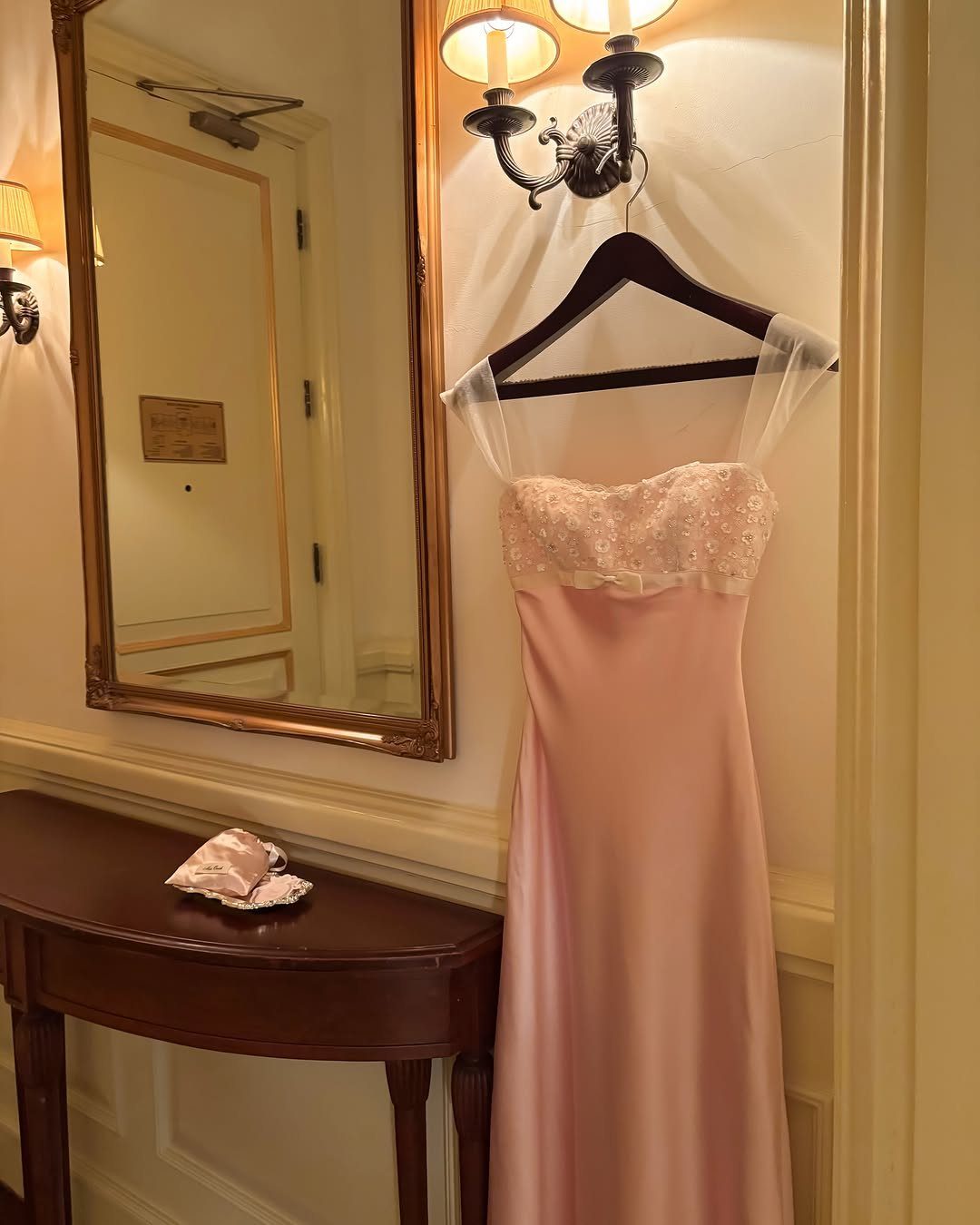
Blush pink satin reads warmer than white and looks soft in photos. Sheer straps and a lace-embellished bodice add detail without breaking the pale tone.
See the color in daylight before you order, since pale pink can look white or peach under salon lighting. Ask for a fabric swatch if you can.
I would choose blush for a bride who wants color but not a bold statement. Keep the accessories simple, so the shade stays the focus.
12. Strapless Fit-and-Flare Satin Gown
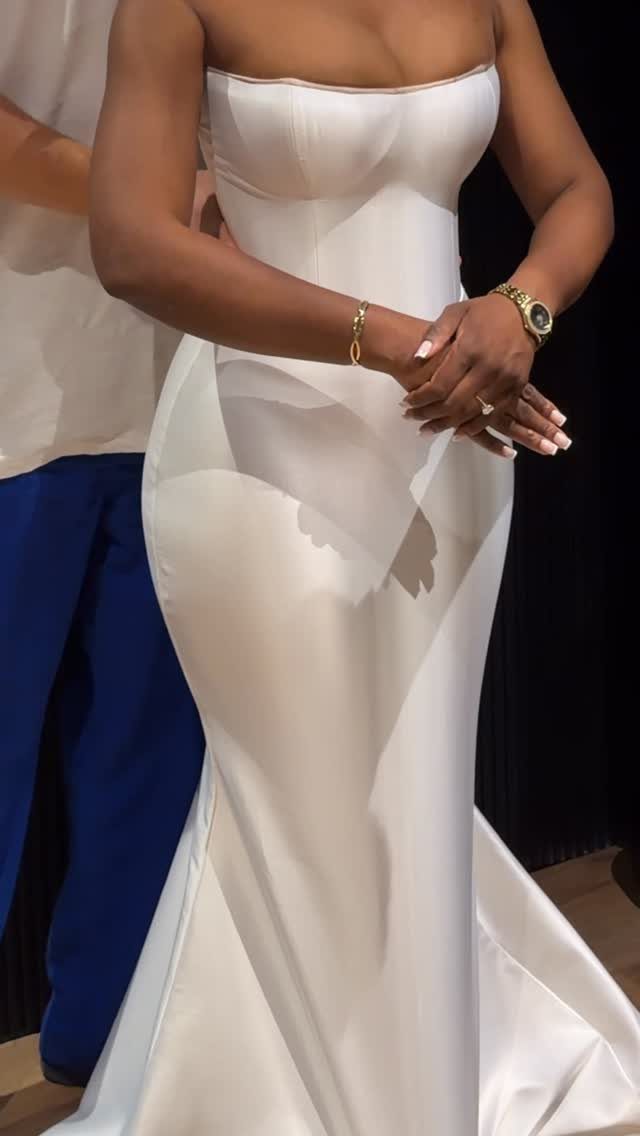
A strapless fit-and-flare grips the body through the hip, then flares into the skirt. In satin, the minimalist line looks clean and sculpted with no embellishment at all.
Fit decides everything. With no straps, the bodice has to stay put on its own, so plan for fittings and wear the undergarments you will actually use on the day.
Gold jewelry, as here, is a simple way to add polish without touching the dress. Sit, dance and walk in it before the final fitting.
Satin Gown Types
Satin is not one fabric, and the type you pick decides how the dress behaves. Plain satin falls in the middle: a smooth, medium-weight cloth with the glossy face most people picture when they hear "satin gown."
Stretch satin is lightweight and hugs the figure, and stretch satin twill adds a diagonal weave with subtle texture and good give.
Duchess satin is the heaviest of the group, with a deep luster, no give at all, and enough body to hold a sculpted shape by itself.
Mikado is a thick satin-silk blend with a matte sheen that sculpts the shape. Jacquard satin has a pattern woven into the cloth, so it brings texture without trim.
Match the type to the silhouette.
If you want structure, ask for duchess or mikado. If you want a close fit with comfort, ask for a stretch version.
Check the train too.
A sweep train glides behind you, a chapel train feels more ceremonial, and a cathedral train is the most dramatic. A longer train needs a bustle plan for the reception.
Satin Gown Fitting
Book the first fitting early enough that the seamstress has time to fix problems without rush fees.
Bring the shoes and the undergarments you will wear on the day. Hem length, bust fit and waist shaping all change with them.
Ask what the seamstress can and cannot alter. Taking in a seam is usually simple on satin; reshaping a heavy structured bodice is harder.
Ask for a bustle that you can practice once before the day.
Satin Gown Trends
Satin suits more settings than its classic reputation suggests. A full ballgown fits a grand venue, and a traditional ceremony pairs well with a timeless, refined cut.
At an evening reception, satin catches candlelight and throws it back as a soft, warm glow across the skirt. If your wedding runs after dark, that is a real reason to pick it over a matte fabric.
A modern, glamorous wedding suits a satin gown cut with real structure, since the crisp lines read as bold and still look polished. Match the cut to the venue and the time of day first, then worry about trim.
Frequently Asked Questions
What are satin wedding gowns?
Satin is a weave, not a fiber, so a satin gown can be silk, polyester or a blend; what they share is a glossy front and a dull back.
Bare of lace and beading, a satin dress relies on its shine, which puts the weight on cut and fit. A plain glossy finish looks warmer in cream or champagne than in bright white.
What satin types are available?
6 types cover most gowns. Mikado, a thick blend of satin and silk, has a quieter, matte glow, while jacquard satin carries a woven-in pattern.
If you want structure, ask to see duchess or mikado; if comfort and a close fit matter more, look at the stretch versions.
Are satin gowns suitable for outdoor weddings?
Satin holds up fine outdoors, and a sheath is an easy shape to wear in open air since a long veil can drift freely behind you.
Check the weather and the venue first. Satin is slippery and has little give, so a cape needs a secure attachment at the shoulder, and a cape hem should clear the ground on stone steps or uneven surfaces.





