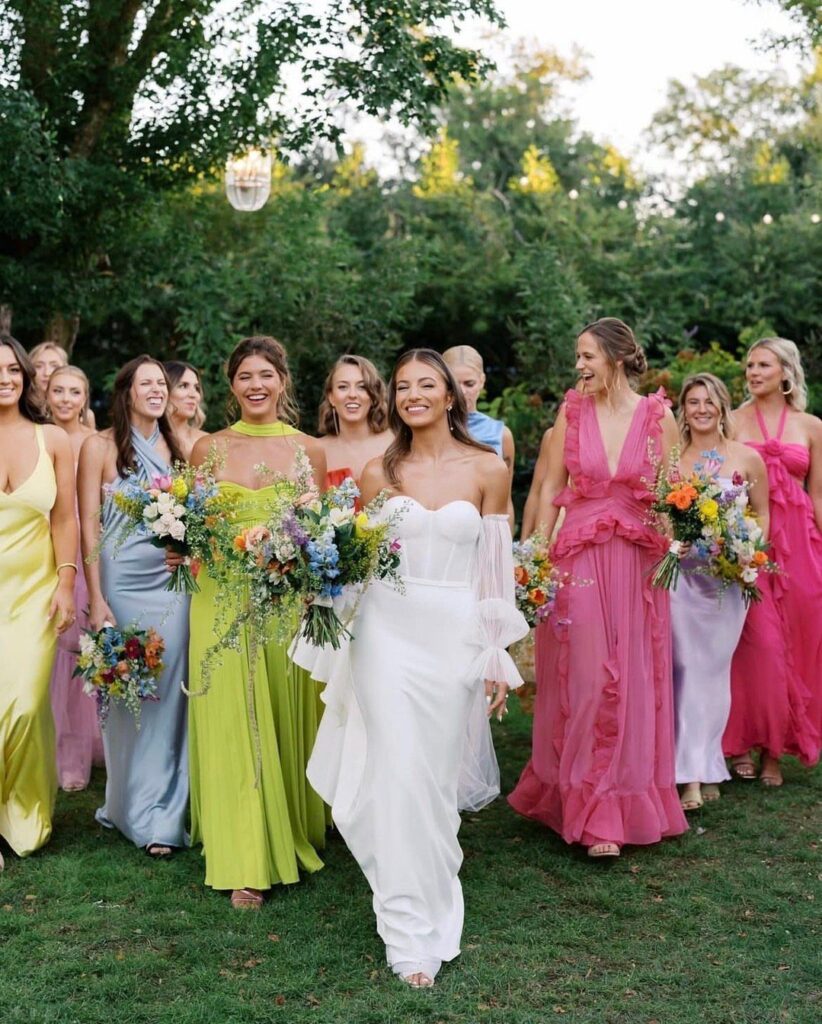
Mixing can mean one color in several cuts, one hue in different shades, a full rainbow with a color for each woman, florals, pastels, terracotta with jewel tones, or a loose yellow and green palette.
What decides your pick is how many of the 4 elements you can let vary: color, fabric, cut or hemline. Satin shows dye differences, so a screen match won’t settle it.
1. Visual Examples
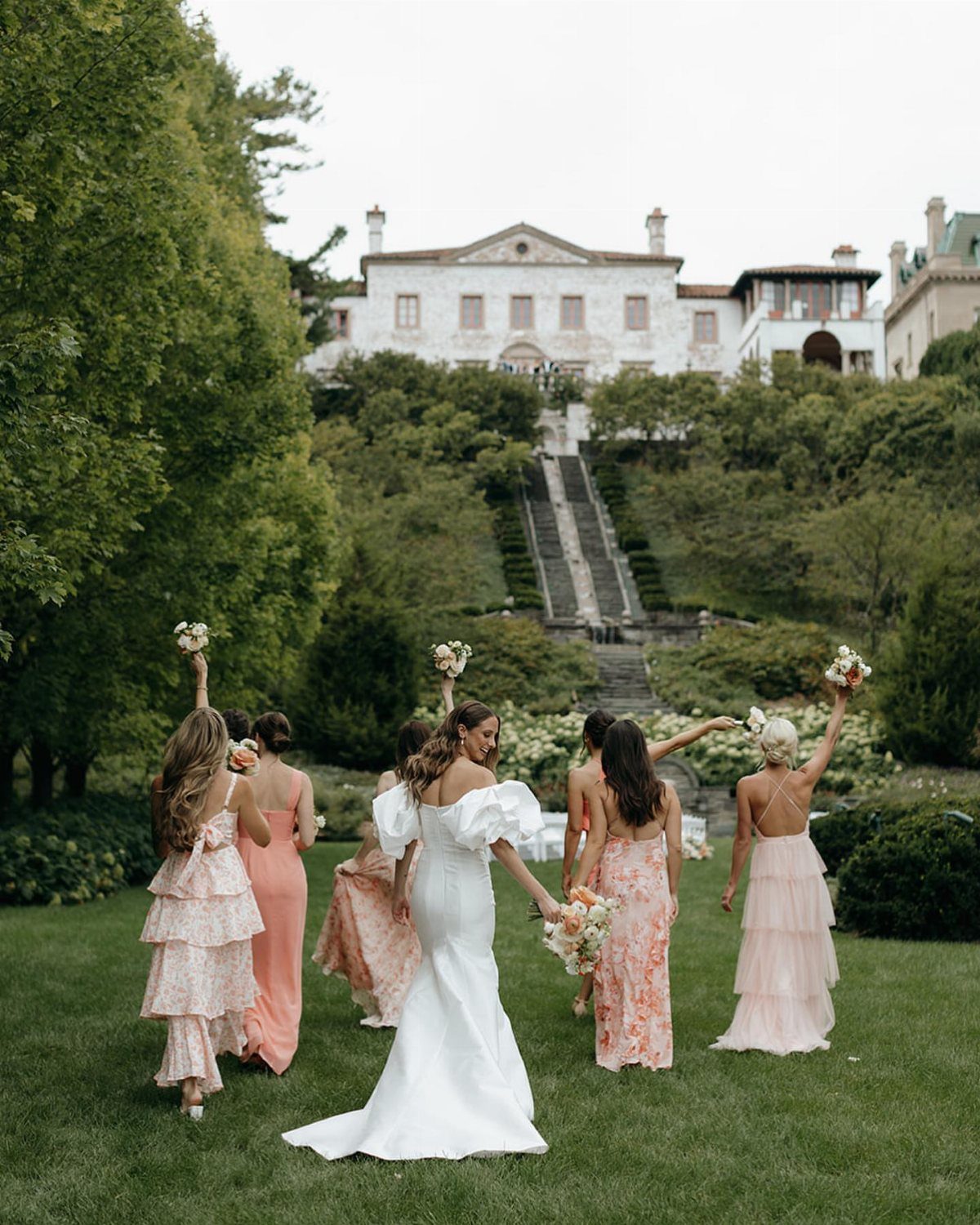
Bridesmaids can’t match a look they can’t picture, so send a small mood board instead of a color name. Pink and peach sit close enough on the color wheel that one board covers a lot of ground.
Pin a handful of images that show the range you’ll accept, then add one line on what’s off limits, like white or anything brighter than the palette. Seeing the lawn-and-estate setting beside the dresses also helps everyone judge the mood.
I’d share the board before anyone shops, since returns get awkward once the dress is bought.
2. Same Color, Different Styles
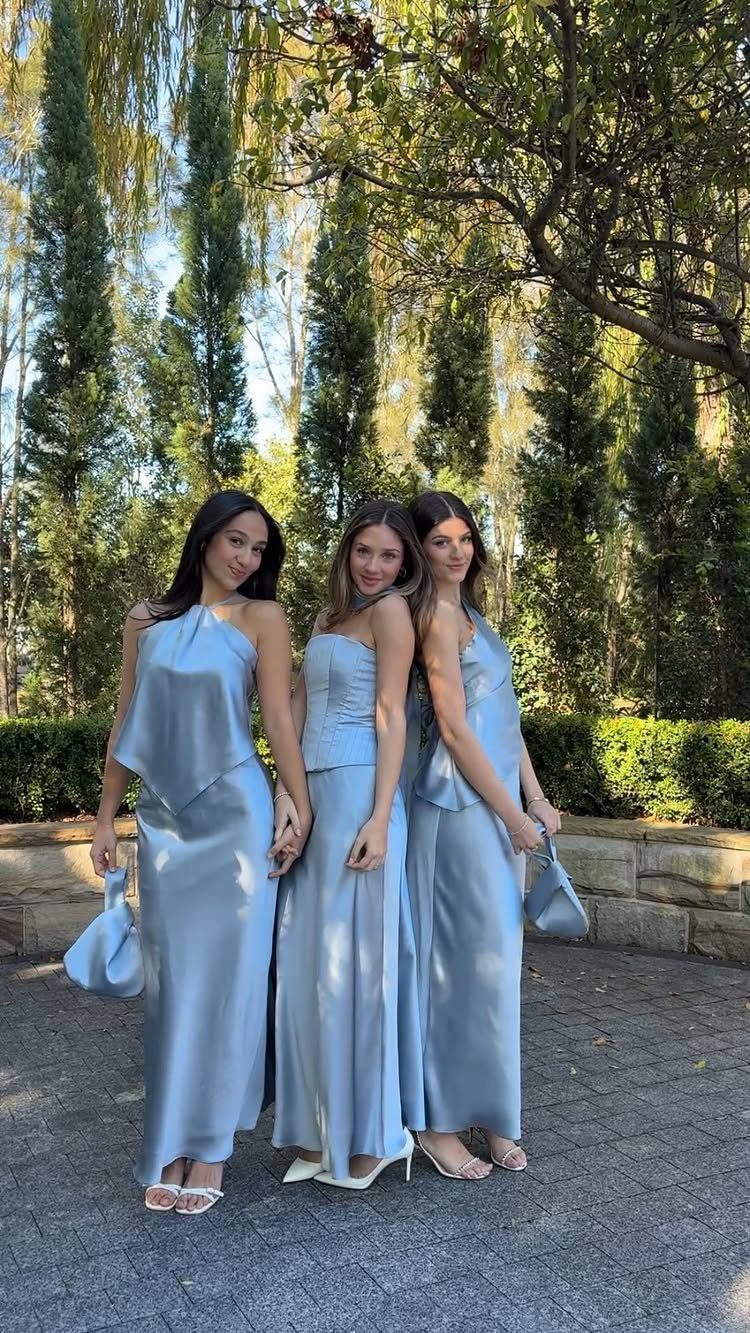
Satin in one light blue, cut in whatever shape flatters each woman, is the easiest mismatch to pull off. The shared fabric and color do the unifying, so necklines and silhouettes can wander.
Ask everyone to buy from a single color name, ideally the same retailer, or mail swatches around first. Satin shows dye differences more than matte fabrics, so a screen match isn’t enough.
For a group with very different body types and taste, this is the setup I’d choose.
3. Same Color, Different Shades
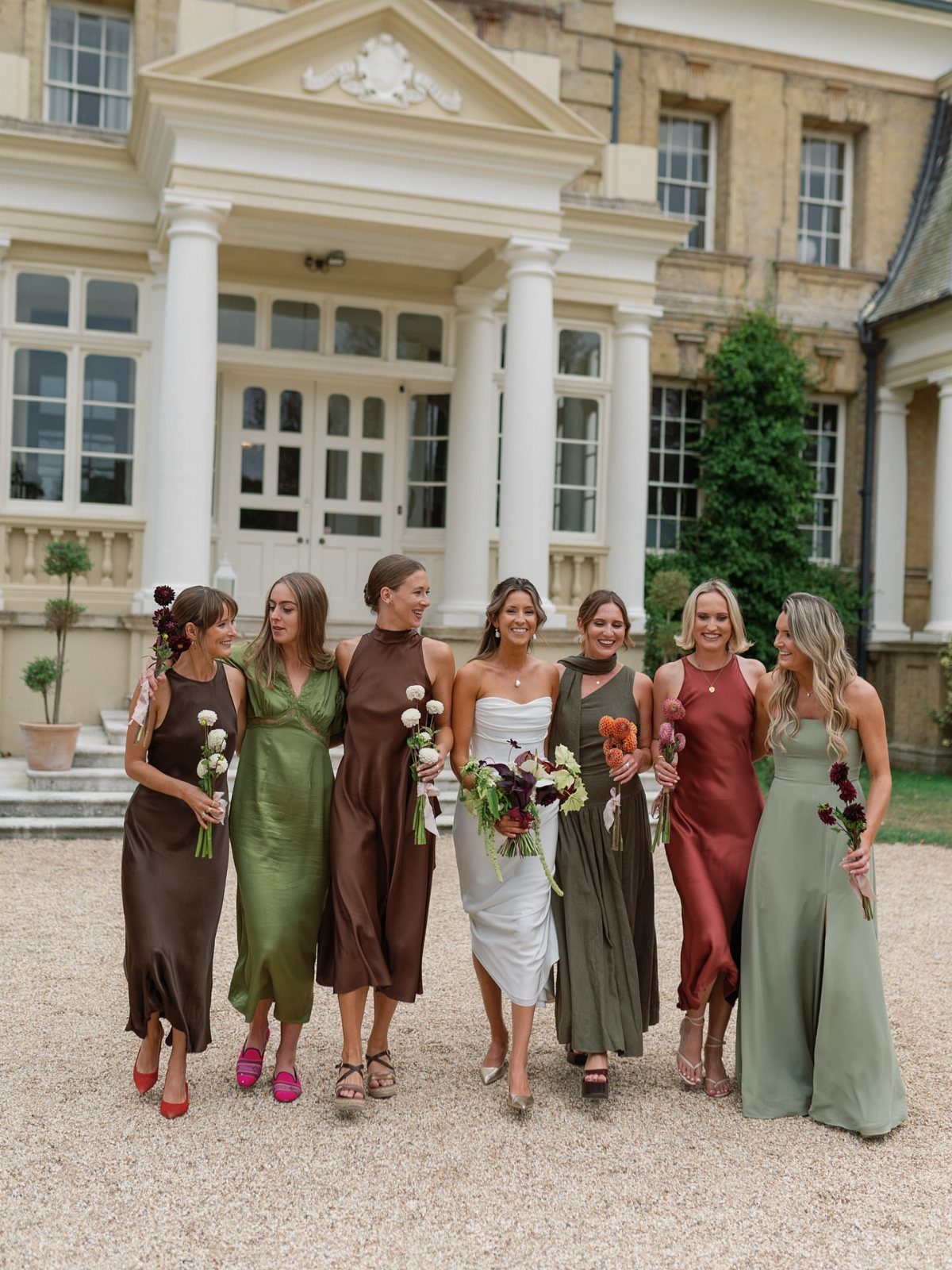
Greens and browns in different depths read as one palette when the shades stay in the same family. Sage, olive and forest can sit beside chocolate or tan without clashing.
Pick 2 anchor shades and let everyone choose between them, or set a light and dark limit.
Before anyone orders, ask each bridesmaid for a photo of her dress taken in natural light, and hold the bouquets up against them to check.
4. Rainbow Mismatched Bridesmaid Dresses
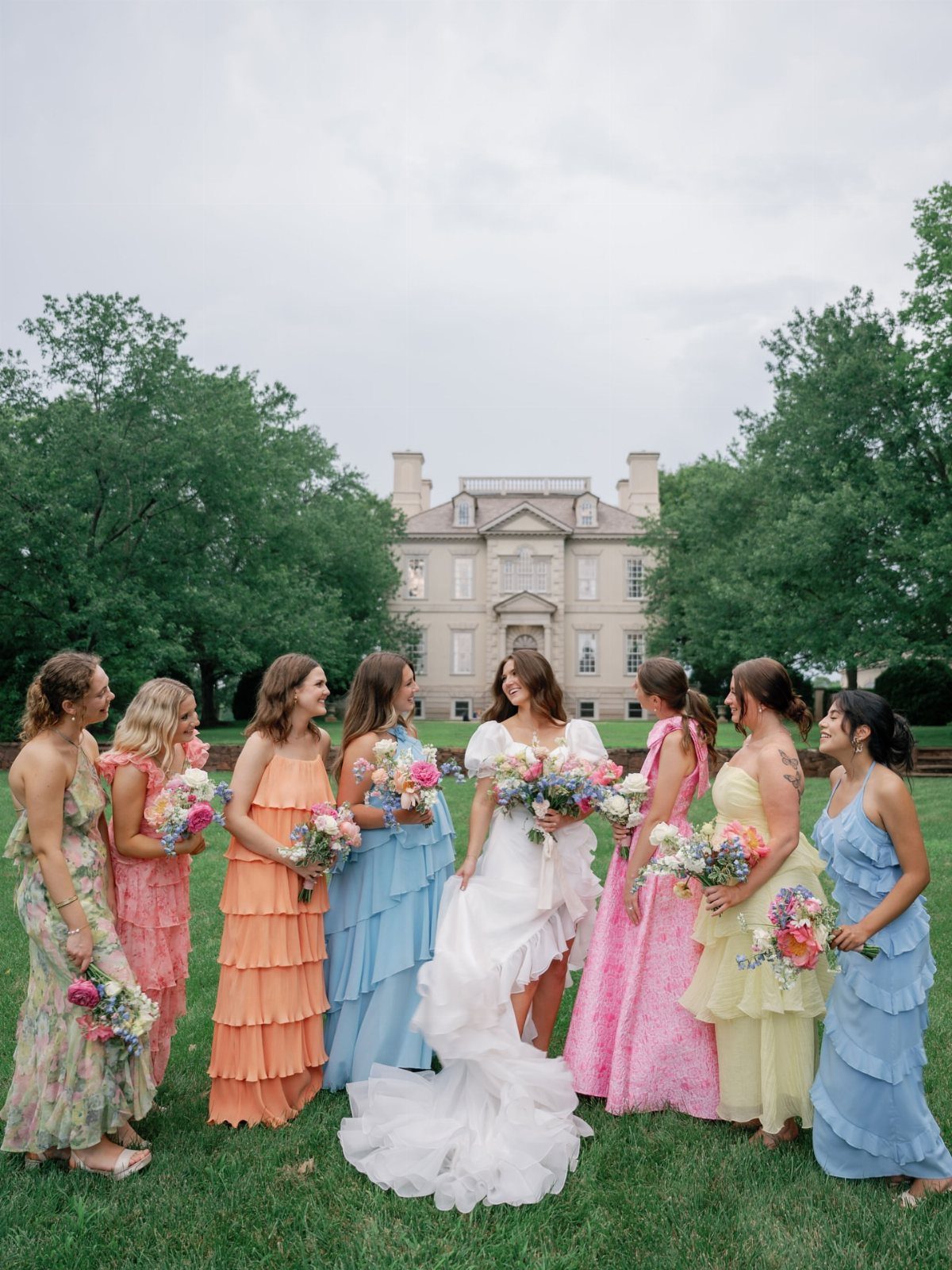
A full rainbow works best with a plan, or it turns into a pile of random brights. Assign each bridesmaid a color, and line them up in spectrum order for photos.
Let each woman have a say in her shade, since a color she hates will show on her face all day. Keep fabric and formality similar so the colors carry the look, not the cuts.
White gowns and a pale venue, like the manor behind this group, give saturated colors room to stand out.
5. Floral Prints
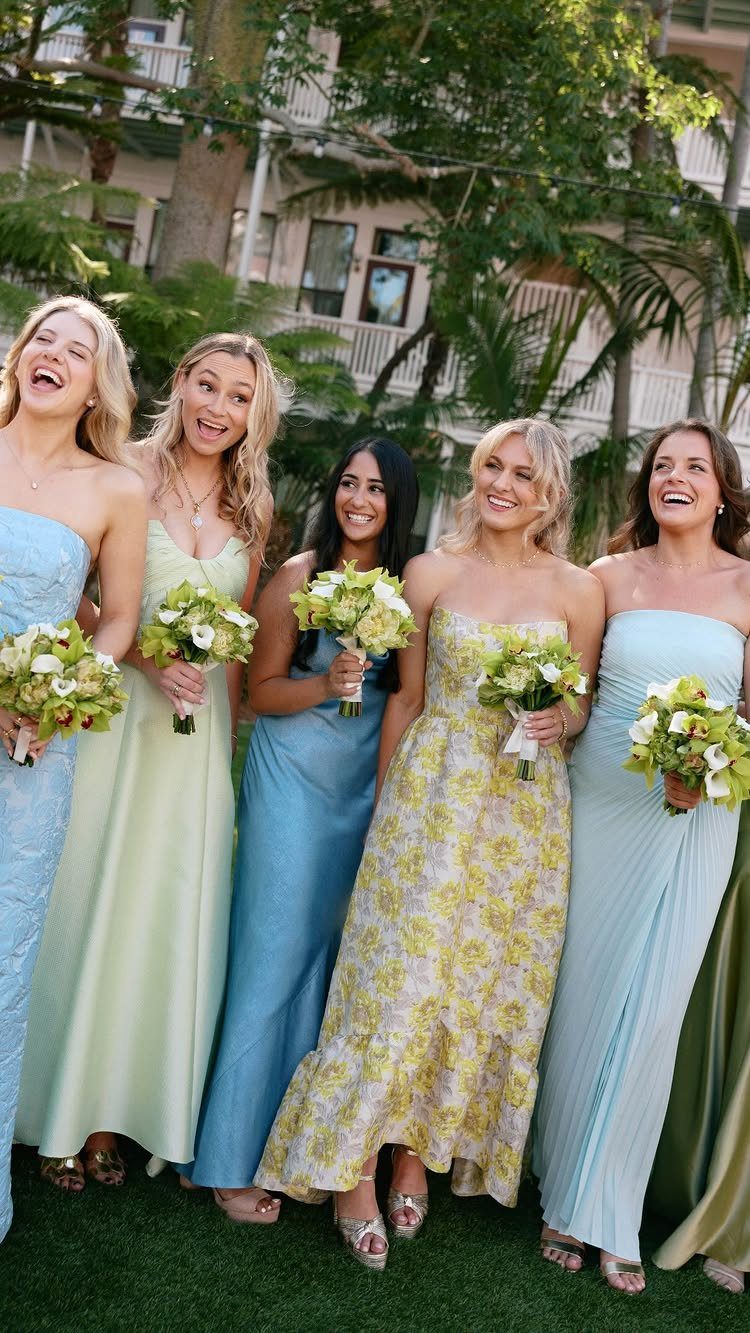
Floral prints let a mismatched group pick up color from your bouquets. Mix one or two prints with solid dresses in a shade pulled from the flowers, rather than printing every dress.
Keep prints in the same scale, all small or all large, and in the same color range. Solids in light blue or yellow calm things down and keep the florals from competing.
I’d let the women who love a print wear one and give everyone else a solid.
6. Different Dress Lengths
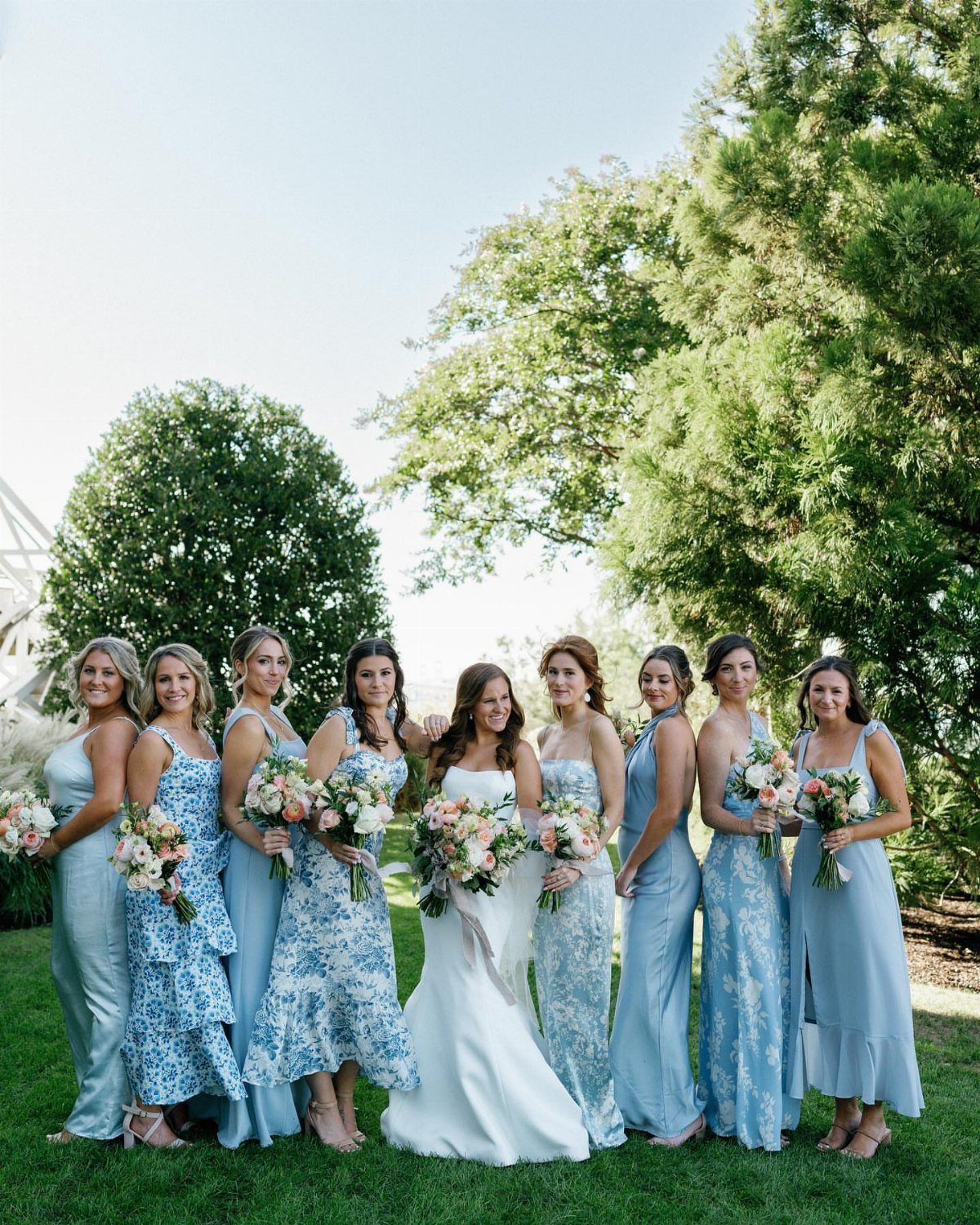
Mixing short, midi and floor-length hems in one blue family looks relaxed and gives each woman a say in how much leg or ankle she shows. It also helps in grass, where a long hem can drag.
Set the shade first, then the formality, so the lengths read as a choice and not a mistake. A shared fabric keeps the group cohesive.
I like it best for outdoor weddings with casual settings, where the varied hemlines move nicely together.
7. Mismatched Pastel Bridesmaid Dresses
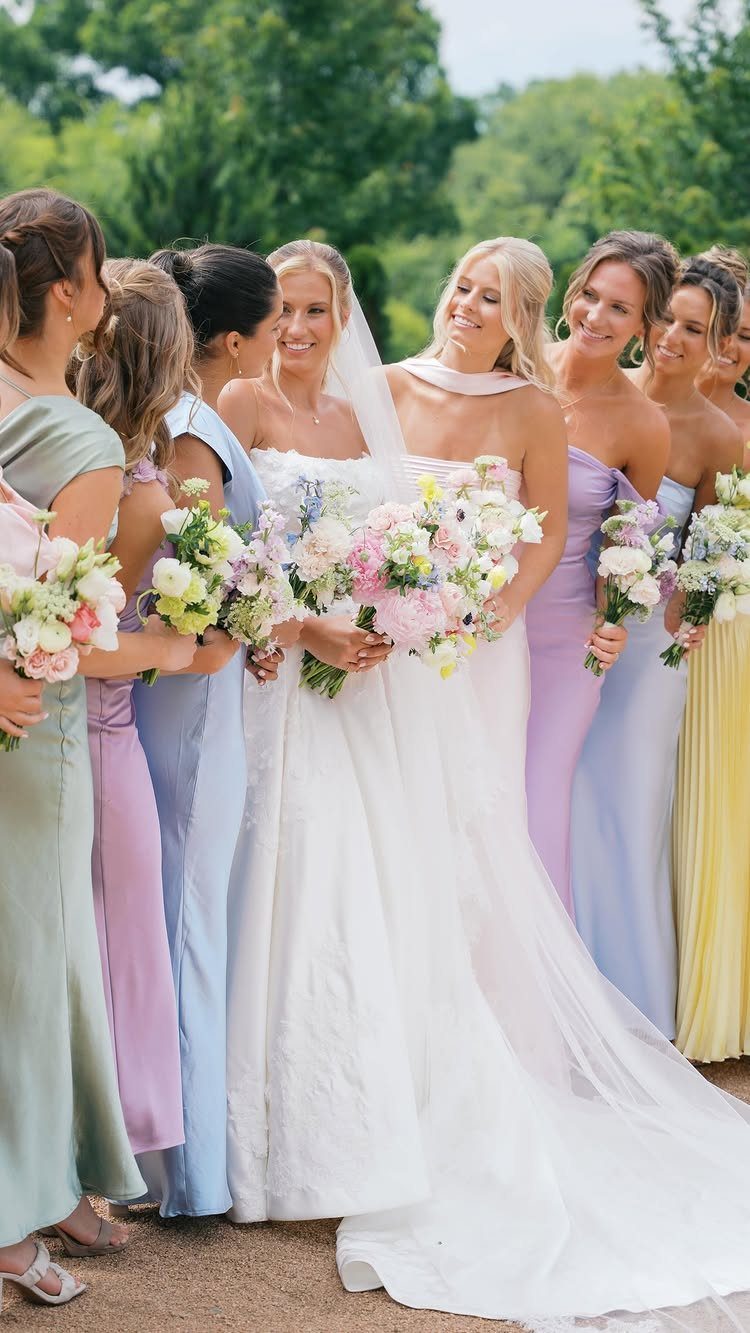
Soft pastels forgive a mismatched group because no single dress shouts. Lavender, sage, blue and yellow all sit at the same low saturation, so the floor-length hems and shared formality do the matching.
Skip any pastel that leans bright or neon, since one loud dress breaks the set. Blush and butter yellow are easy additions for a warmer note beside the cooler shades.
I’d hand each bridesmaid a color and let her pick the cut within it.
8. Terracotta and Jewel Tones
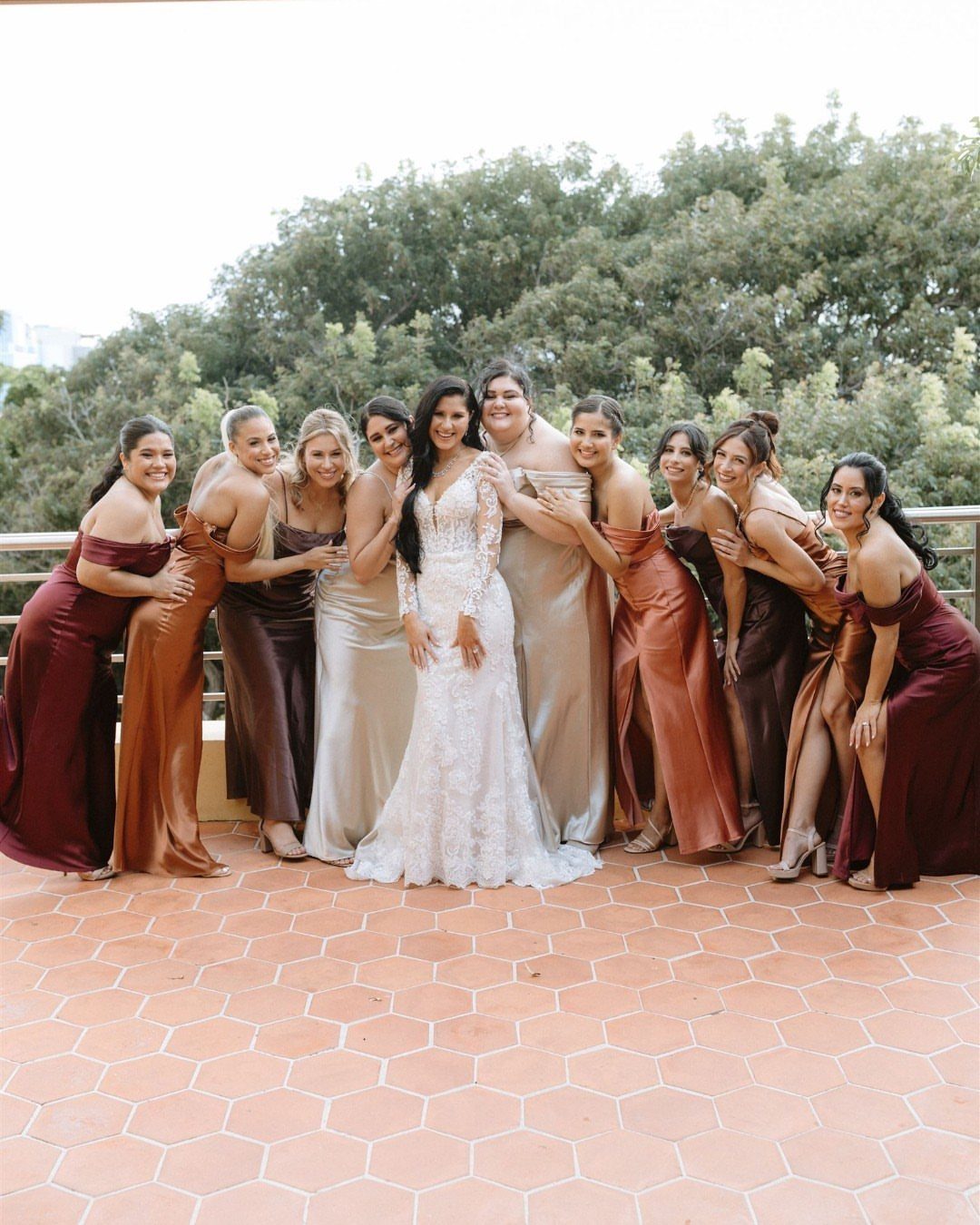
Terracotta, rust, bronze and burgundy all pull from the same warm, earthy family, which is why a group this large still looks planned.
Long satin in every dress keeps the sheen consistent, so the colors can differ without the fabric fighting itself.
In a large party, give each shade a few takers rather than a string of one-offs. Satin shows dye differences, so have everyone order from a single color name or compare swatches in daylight first.
Against a white lace gown, deep warm tones read rich and not heavy.
9. Yellow and Green Palette
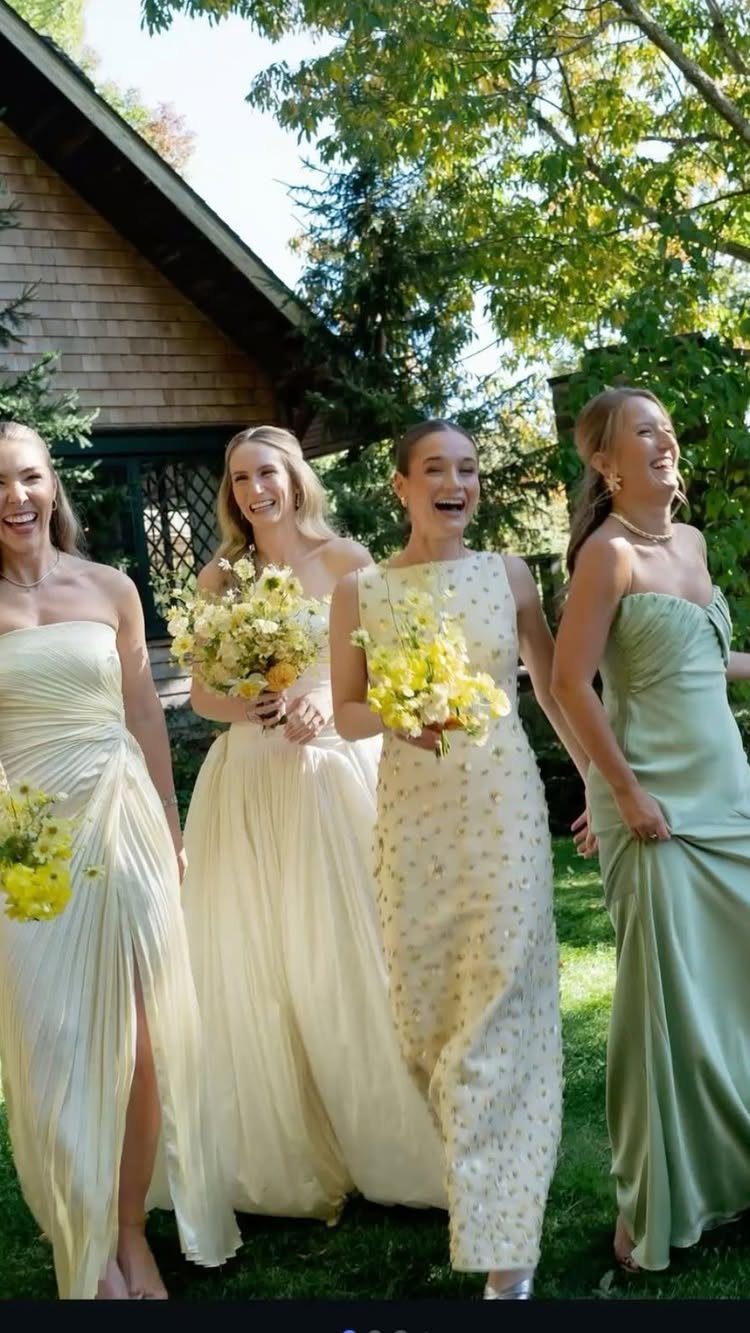
Pale yellow, cream and green make a tight palette, and that limit is what lets solids and patterns share a group. Yellow bouquets tie the different dresses together, so the flowers carry some of the matching.
Set the rule in one line: yellow, cream or green only, solid or patterned. Ask anyone choosing a print to send a photo first, since a stray pink or blue in the pattern will stand out.
I’d keep cream to a dress or two, so it doesn’t compete with the bride’s white.
Benefits of Mismatched Dresses
Comfort is the benefit I’d put first. A woman who is happy in her neckline and hem stands straighter, smiles more, and looks better in photos than one tugging at a dress she picked to match.
Mixing dresses also spreads the cost. Each bridesmaid can shop at her own price point, which matters when some of them are paying for travel, a shower and a bachelorette on top of the dress.
Body types are the other big win. One cut rarely flatters every shape, and a mismatched group lets each woman choose straps, sleeves or a waistline that works for her.
The limit is that you can mix two of these elements: color, fabric, cut or hemline.
Mixing all 4 is very hard to pull off. Lock down two and let the rest vary.
Planning and Communication
Start with the vibe, in a sentence or two. Boho-chic and black-tie call for very different dresses, and bridesmaids who know the formality up front won’t show up in a sundress at a ballroom wedding.
Then give guidelines instead of a single dress: the palette, the one element that stays constant, and anything off limits. Clear rules make shopping easier for them, because "anything goes" is harder to follow than it sounds.
Put it all in one group message that you can pin and refer back to.
Keep the tone relaxed. The point of mixing is that each woman gets a say, so invite questions and answer them in the same thread.
Ordering and Timing
Place bridesmaid dress orders 5–7 months ahead of the wedding date. A mismatched party takes longer to order than a matching one, since you’re juggling several orders, sizes and fittings instead of a single batch.
Here’s a schedule I’d follow:
- 8 to 7 months out: Settle the bride’s gown first, then agree on the palette and the constant element.
- Seven to 5 months out, measure everyone and place all the orders in one round rather than trickling them in.
- By 3 to 2 months out, the dresses should be in hand, and that’s when I’d book the first round of alterations for the entire group.
- 1 month out: Hold final fittings.
Add one group try-on at that last stage. Plenty of bridal parties skip this step and wish they hadn’t.
Colors that look balanced on a phone can clash in a real room, so lay the swatches or dresses together in person; a month out, a shade can still be swapped.
Choosing bridesmaid dresses are a crucial yet stressful part of every wedding. Unless your entire bridal party consists only of models, chances are everyone is going to have a different body shape.
Frequently Asked Questions
How do you have mismatched bridesmaid dresses?
Pick a palette, choose one element that stays constant, and let each bridesmaid choose a cut that suits her.
Put the vibe, the palette and anything off limits in a single group message so shopping has clear rules. A loose brief sounds easy, but with no limits at all, you get a lineup that looks accidental.
Why are mismatched bridesmaid dresses a popular trend?
They let each woman wear something she’s comfortable in, and that shows in her posture and her photos.
They also spread the cost, since everyone shops at her own price point. Since no single silhouette suits every body, mixed dresses let each bridesmaid pick the straps, sleeves or waist placement she feels best in.
How many elements can you mix in mismatched bridesmaid dresses?
I’d vary only two of color, fabric, cut and hemline. Change all four and the group stops looking planned; it reads as random.





