Every dress here gets its price from labor you can see: hand beading, embroidery, fabric roses or a lace bodice.
The range runs from a silk dress with lace to a voluminous ballgown with fabric roses, a heavy silver beaded ballgown and a red and gold lehenga.
Where the budget has to hold up after the dress is bought decides which of these suits you.
Dense beading makes alterations costlier, and a train needs a bustle, so a tight budget should favor the single detail worth paying for and leave the rest of the dress plain.
1. Expensive Wedding Dress in Silk and Lace
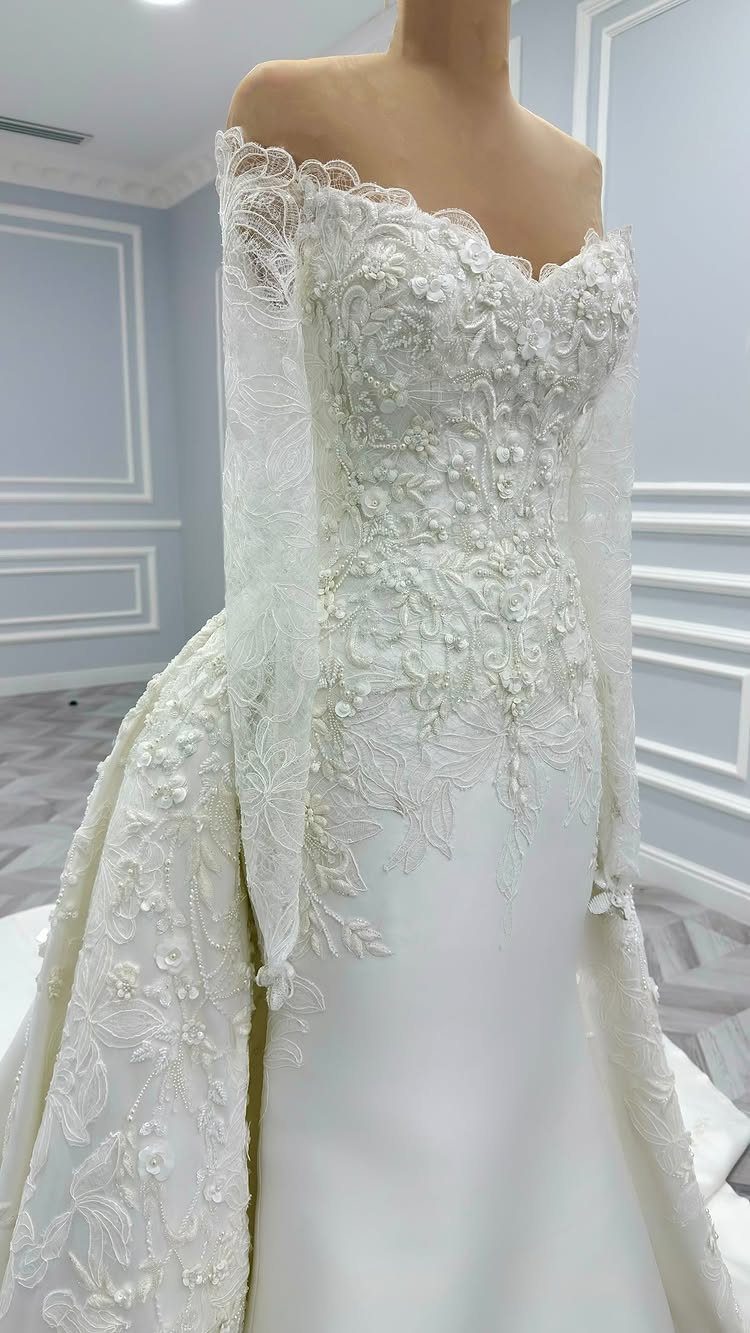
Silk and lace together cost more than either alone, because the lace bodice and the smooth silk skirt are 2 separate jobs of craftsmanship. The beading on an off-the-shoulder lace bodice is where the labor shows, so spend there first.
Silk skirts hold nothing back: every seam and wrinkle is visible. Ask about the lining and the fit before you pay for the label.
If the budget is tight, I would keep the silk plain and put the money into the lace.
2. Voluminous Ballgown with Fabric Roses
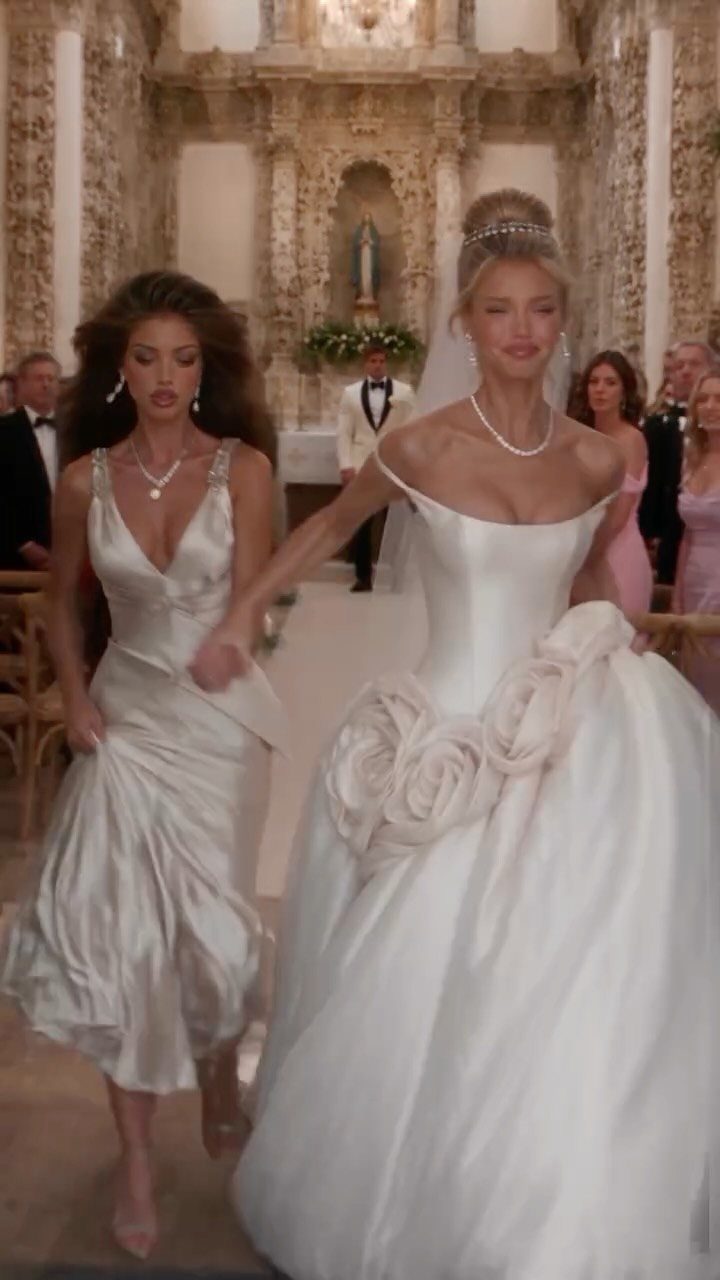
Oversized fabric roses along the waist give a ballgown a focal point without a full bodice of beading. That makes it a smart pick for a bride who wants drama and a distinct design.
A voluminous skirt needs room, so measure the aisle and doorways at your venue. An ornate church can carry the volume well.
I would let the roses be the only statement piece. Add a simple veil and minimal jewelry so the waist stays the star.
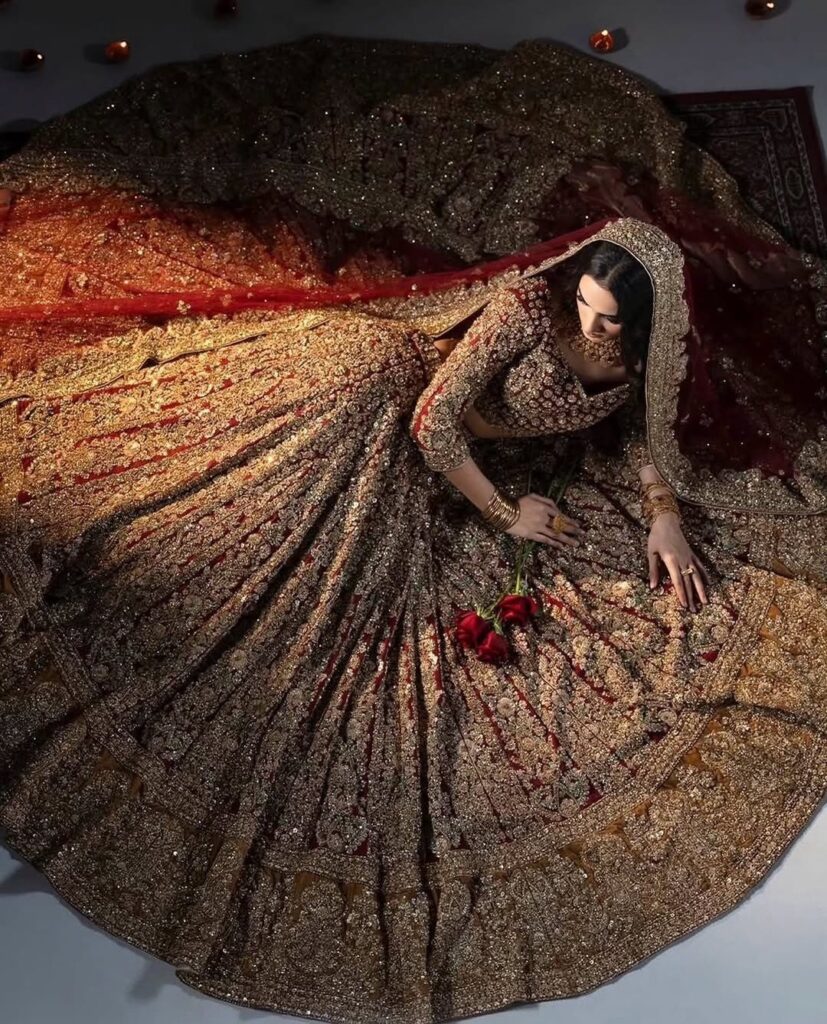
3. Embellished Gold and Red Bridal Lehenga
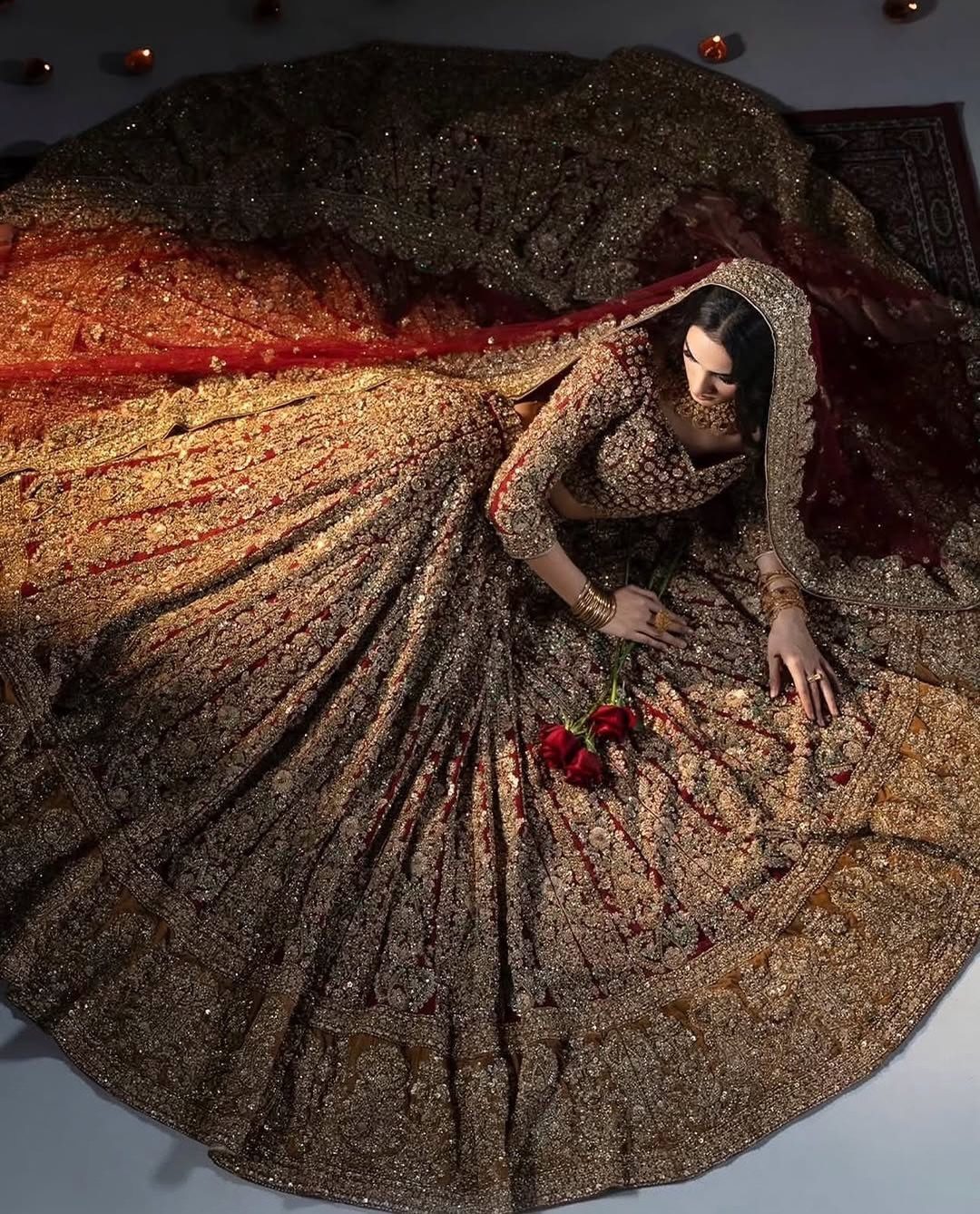
A red and gold lehenga carries its price in the embroidery and sequins, so ask how much of the work is done by hand. That detail separates a dress worth the money from one that only looks it.
Traditional jewelry belongs to the outfit, not after it. Set aside part of the budget for it from the start, so the total does not surprise you later.
Choose gold thread that catches light in person, not just in photos. Request a fabric swatch before ordering.
4. Silver Beaded Ballgown
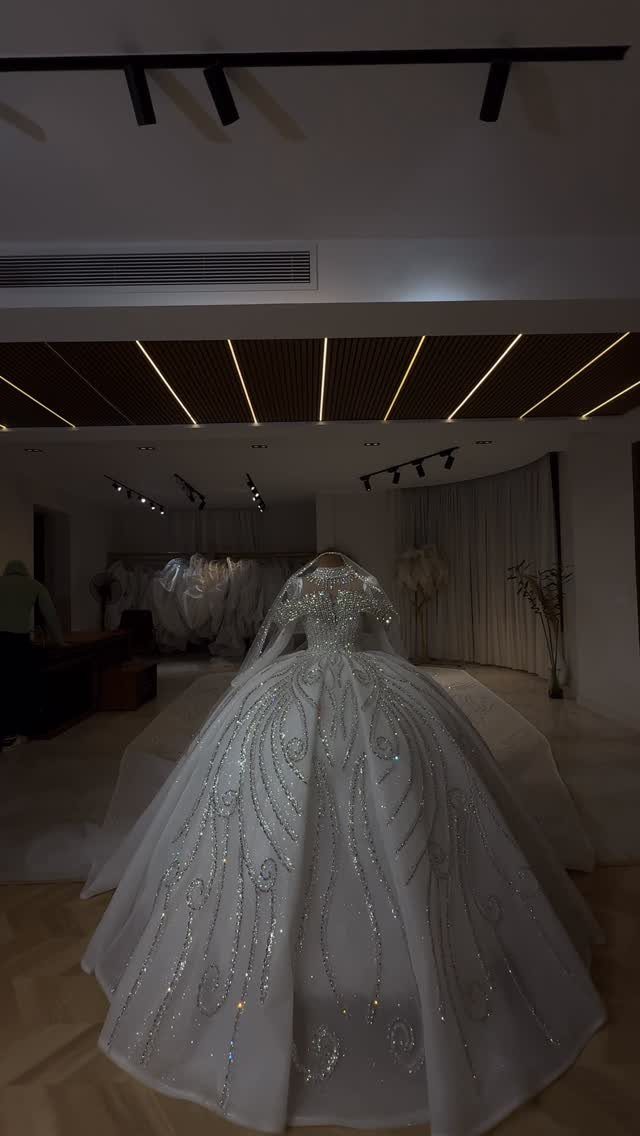
Heavy silver sequins, crystals, and beads on a white ballgown mean weight.
Try the dress on and stand in it long enough to feel the weight of the beading on your shoulders and hips; a gown that tires you out by the ceremony is a poor buy at any price.
Dense beading also makes alterations costlier, because every stitch has to be worked around. Ask for a hem and bustle quote before you pay a deposit.
I like silver on white better than gold; it stays cool and quiet.
5. High-neck Lace Bridal Gown
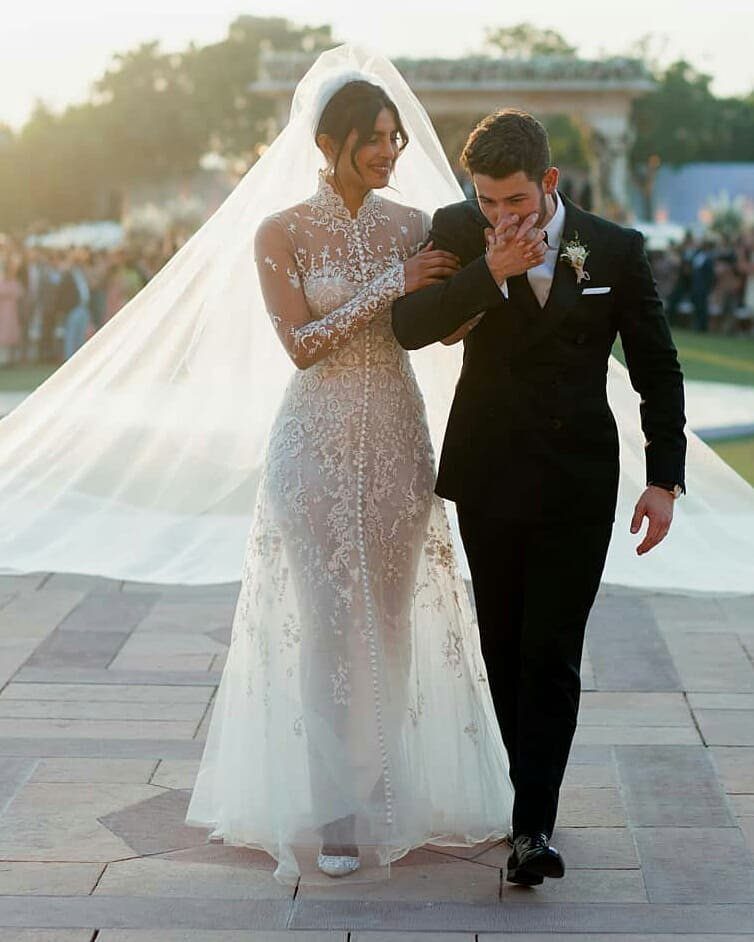
High-neck lace with long sleeves covers a lot of ground, so the detail work has to carry the whole look. Check the lace up close: clean edges and even patterns signal quality.
A bride choosing this style often wants an intricate veil too, but pick one or the other as the busier piece. 2 heavy pieces compete.
Long lace sleeves are hard to adjust late, so settle on the fit early. I would order with extra time for alterations.
6. Sparkling Shimmer Ballgown
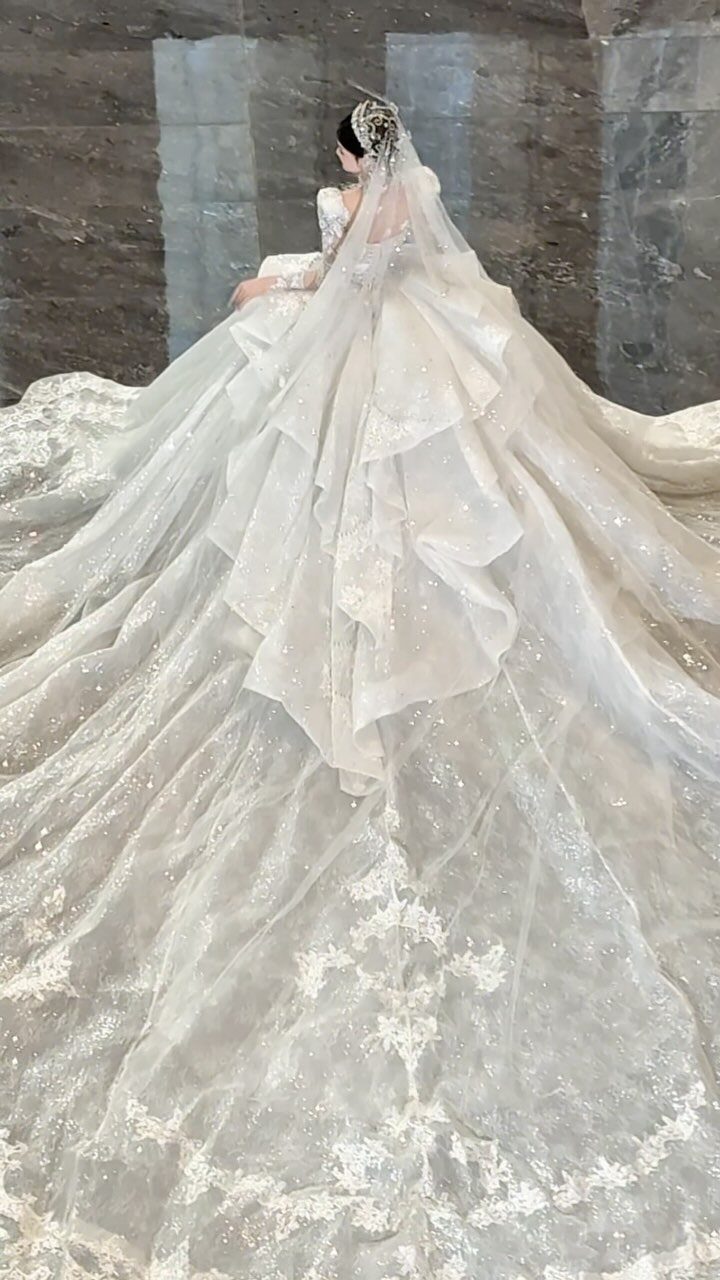
Sparkle plus a long lace train gives a ballgown real presence in a stone-walled room, and also real cost. Both the shimmer and the train add layers of fabric and labor.
Walk in the dress before buying. A long train needs a bustle, and the veil should not fight the sparkle.
My preference is to let the shimmer be the star and keep the lace train soft and simple, so the dress reads as one idea.
Frequently Asked Questions
What are some of the most elegant wedding dresses available?
A high-neck lace gown with long sleeves is one of the most elegant, as long as the lace has clean edges and an even pattern.
Silver beading on white also stays cool and quiet, and plain silk paired with a lace bodice looks refined. Elegance usually comes from one strong idea, so keep the veil and jewelry simple.
What is the average cost of a designer wedding dress?
I can’t give a true average from what I have, but the figures I can point to run from about $1,950 to $4,850 for made-to-measure luxury gowns, with a typical wait of 8–16 weeks.
Pre-owned designer gowns from brands like Maggie Sottero and Allure Couture show up around $875 to $1,000. Add alteration costs on top, especially for heavily beaded dresses.
Is $1000 a lot for a wedding dress?
Not for a designer gown: pre-owned designer dresses are listed at roughly $875 to $1,000, and new luxury gowns start near $1,950.
For many modest budgets, though, $1,000 on the dress alone takes a real share of the total. Remember to leave room for alterations, since beading makes a hem and bustle cost more.
Are expensive wedding dresses worth it?
They can be, when the money goes into materials, construction and a design that feels like yours. Hand-done embroidery, quality lace and a good lining are worth paying for, while a label alone is not.
Before you pay, wear the gown for a full stretch: sit, climb a stair, lift your arms for a hug. If it wears you out before the ceremony, no price tag makes it a good buy.





