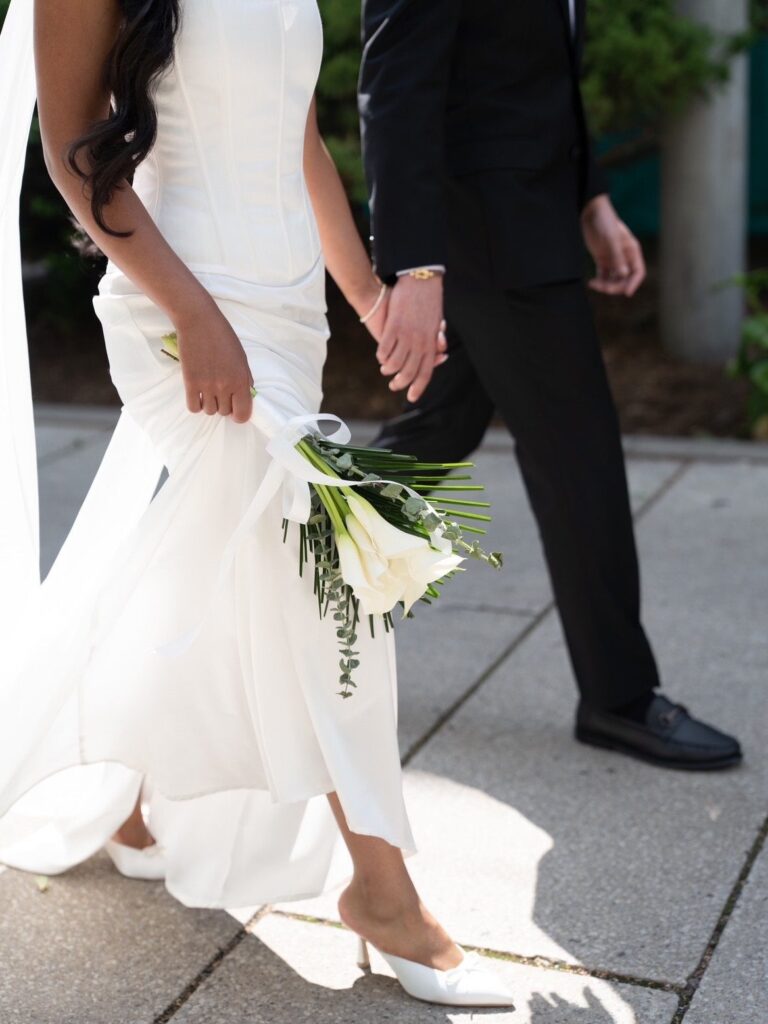
Courthouse options run from a tailored jumpsuit or a white blazer set to an off-the-shoulder gown, and the building decides which one works for you.
Stone floors, tight corridors and a few flights of stairs all reward a hem that lets you climb freely, which is why knee-length or tea-length usually works better than a long train that drags behind you.
Call the clerk’s office first, since dress rules differ from one courthouse to the next.
1. Tailored Jumpsuits
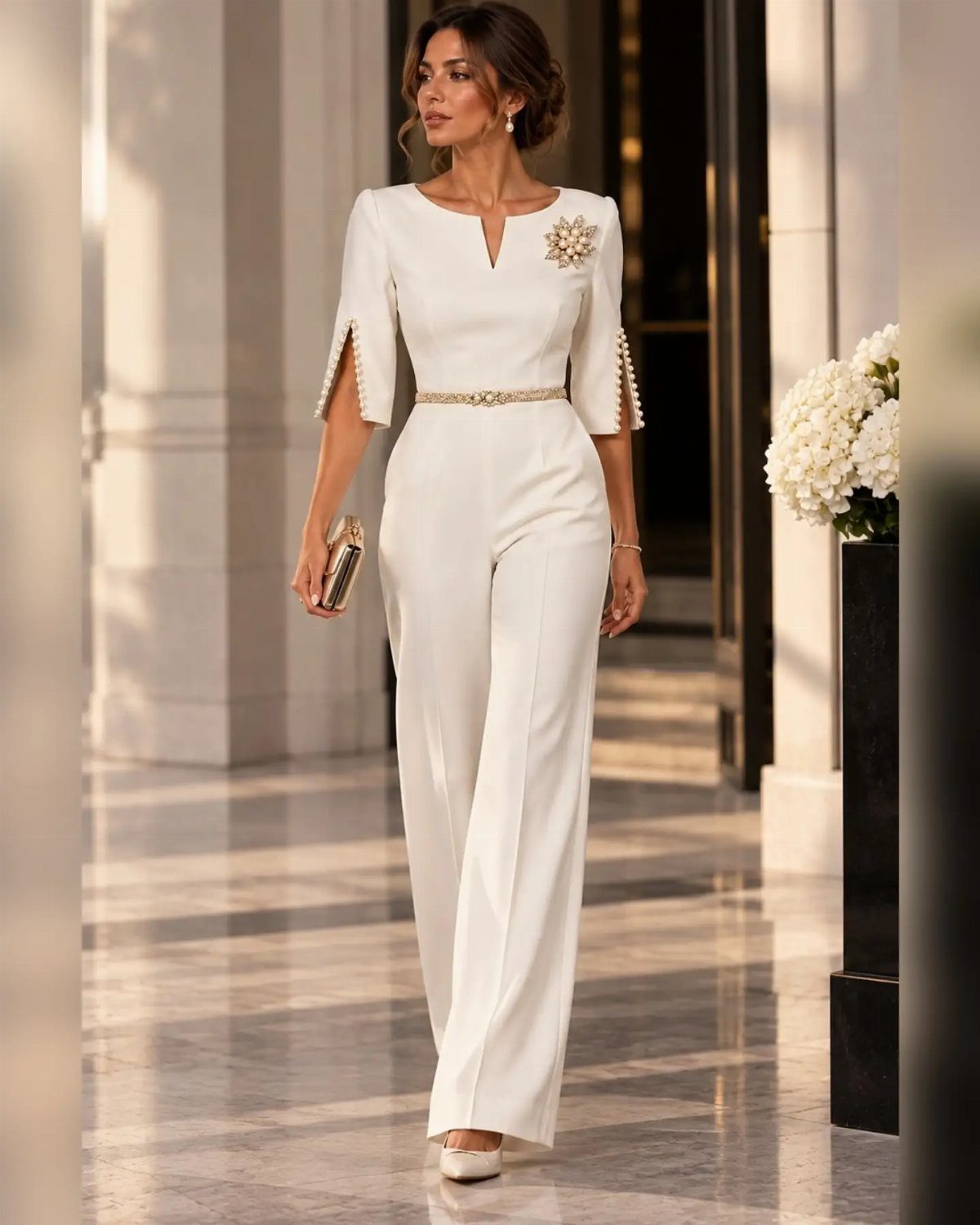
A wide-leg jumpsuit solves the courthouse problem of stairs, security lines and a quick walk to the car. Nobody trips on a hem, and the legs move like a skirt.
A belt defines the waist, and a brooch pinned at the neckline or on the belt does the work a veil would. I like gold accents against white because they read as bridal without a single extra yard of fabric.
Get it hemmed with your shoes on.
2. Satin and Crepe
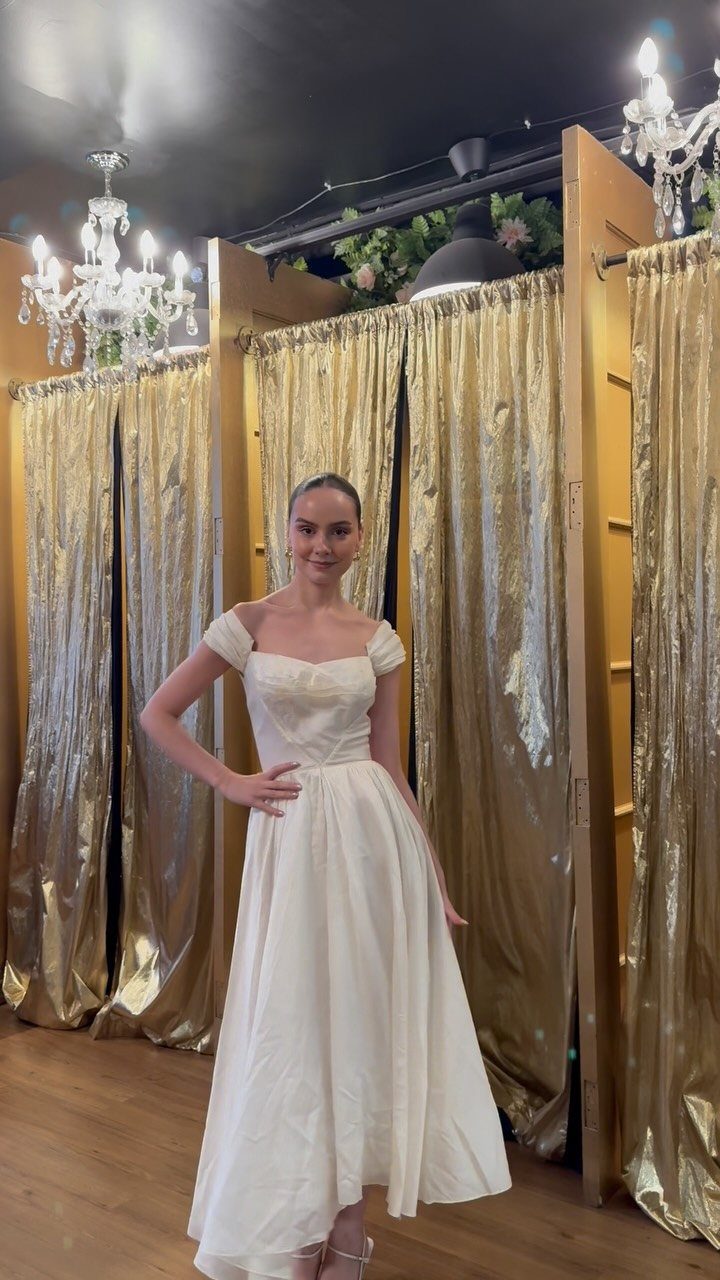
Satin and crepe are the 2 fabrics I would look at first for a dress that has to look expensive with no embellishment at all. Satin brings sheen; crepe sits matte and falls in a clean, heavy line.
Choose satin for light and glow in a plain room, crepe if you want a softer, quieter finish.
Try both under harsh courthouse lighting if you can, since sheen shows every wrinkle.
3. Tea-length Dresses
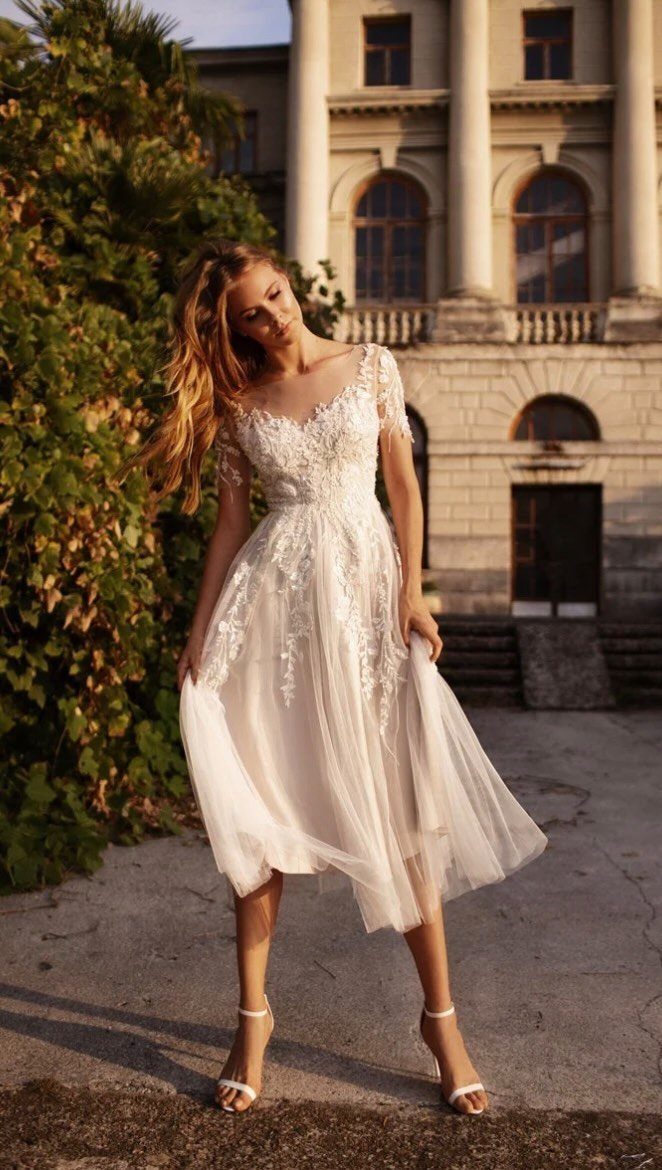
Hemlines that stop mid-calf suit a daytime ceremony, and a tea-length dress in lace gets there with real charm. You can walk, climb steps and hug everyone without gathering fabric in your fists.
I would stick to flat or low-heeled shoes, a small bouquet, and hair down or in a low knot for everything else. Lace already supplies the detail, so extra jewelry only competes.
Tea length also photographs well against columns and stone, where a long train would just collect dust.
4. Ivory Wedding Dresses
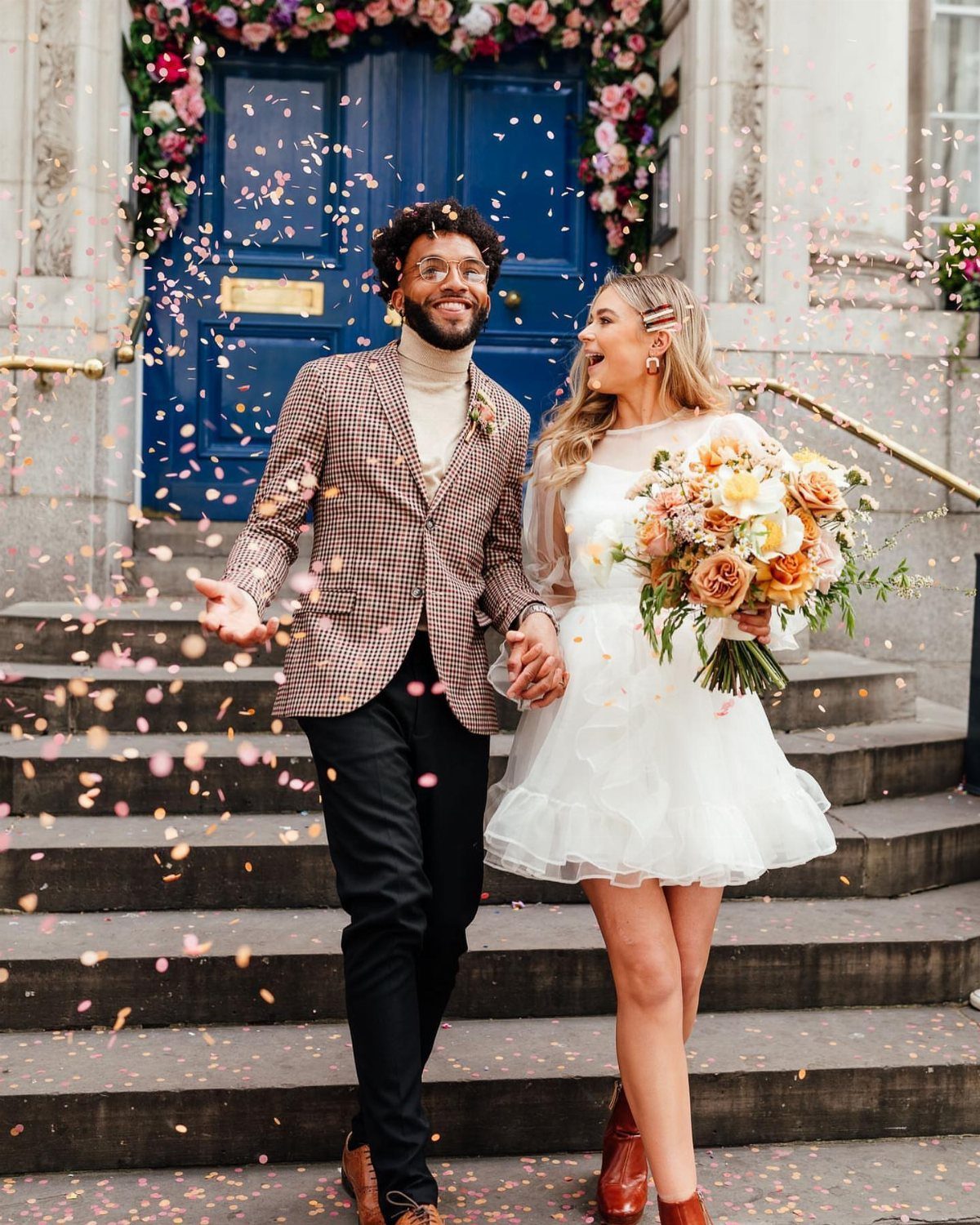
Ivory is the quiet fix for brides who find pure white too stark. It reads warmer and softer, especially in photos taken outdoors in daylight.
Short ivory pairs well with earth tones like brown, tan, or olive, so a groom in a brown blazer can look better than one in the usual black.
Bring a swatch or the dress itself when you pick the groom’s outfit and flowers, because ivory shifts next to bright white.
Compare it against your bouquet before you commit.
5. Simple Courthouse Wedding Dresses
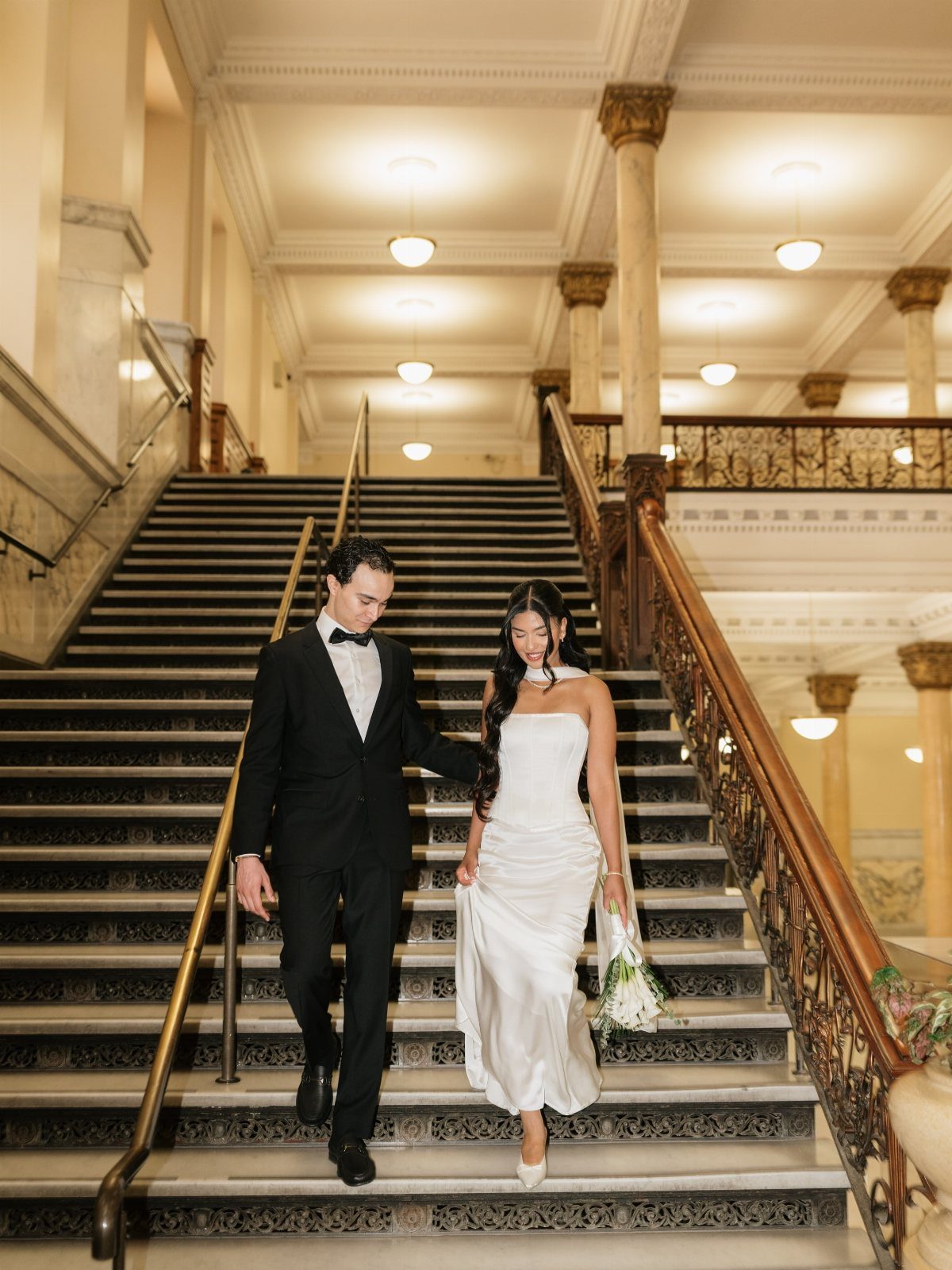
A simple strapless dress in white is the classic courthouse answer: clean lines, no train to manage, and it still looks right beside a groom in a tuxedo on a grand staircase.
Skip heavy beading. A plain silhouette lets the building do the decorating, and it costs less than a gown built for a ballroom.
Add a wrap or a light jacket if the room runs cold. Strapless needs a well-fitted bodice, so budget for a small alteration so it stays put through the whole ceremony.
6. Lace Wedding Dresses
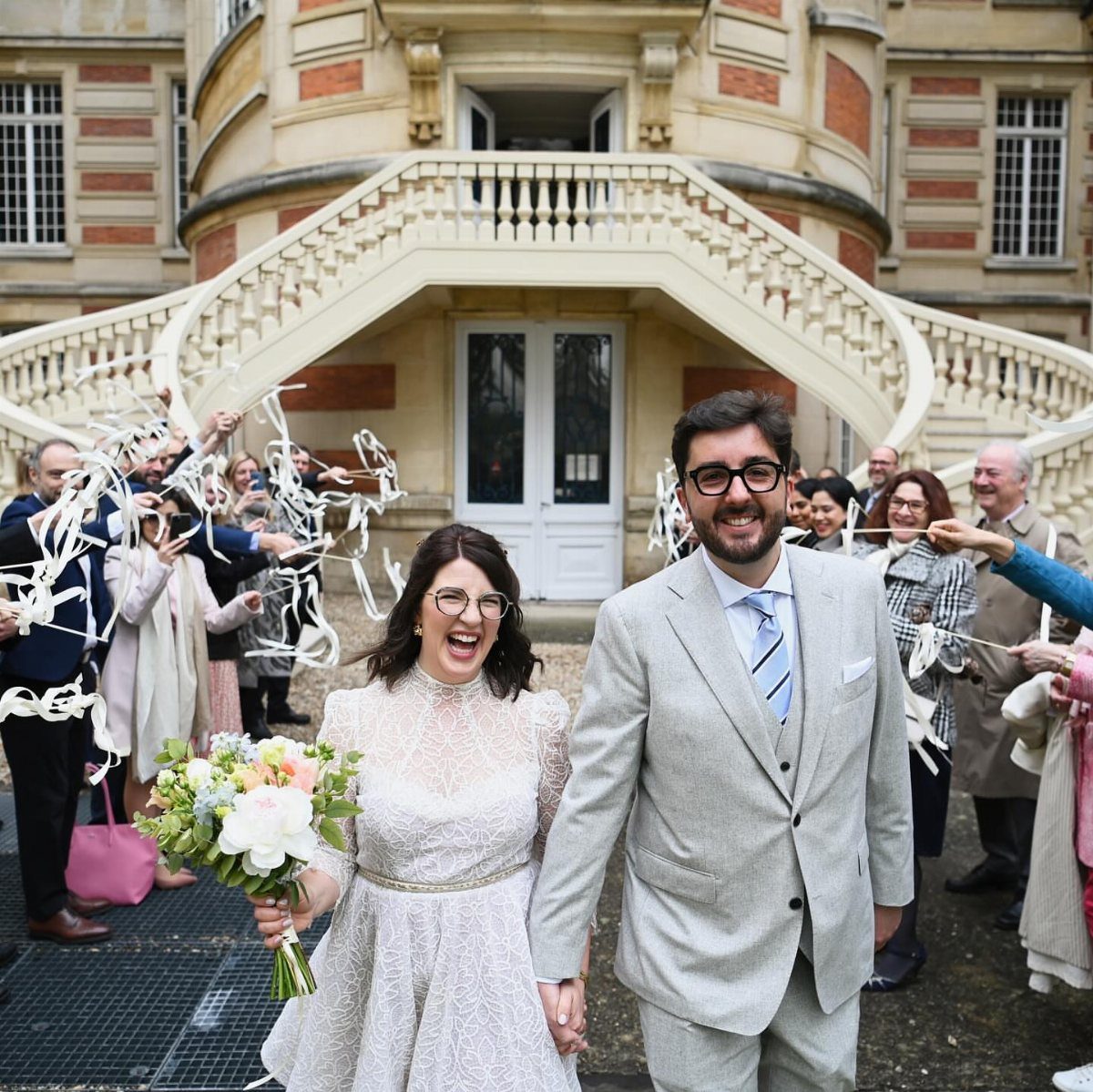
Lace is the romantic pick, and an ivory lace dress looks right whether you marry in a courthouse or in front of guests on a staircase. The pattern gives texture, so you can skip the veil and the jewelry.
I would choose a fitted shape with sleeves or a modest neckline for a civil ceremony. It feels dressy without turning fussy.
Pair it with a grey or navy suit, as here, and the 2 outfits look planned together.
Add a sultry element to your civil ceremony look by selecting dresses that have strategically placed front, back, or side cutouts.
7. Little White Dresses
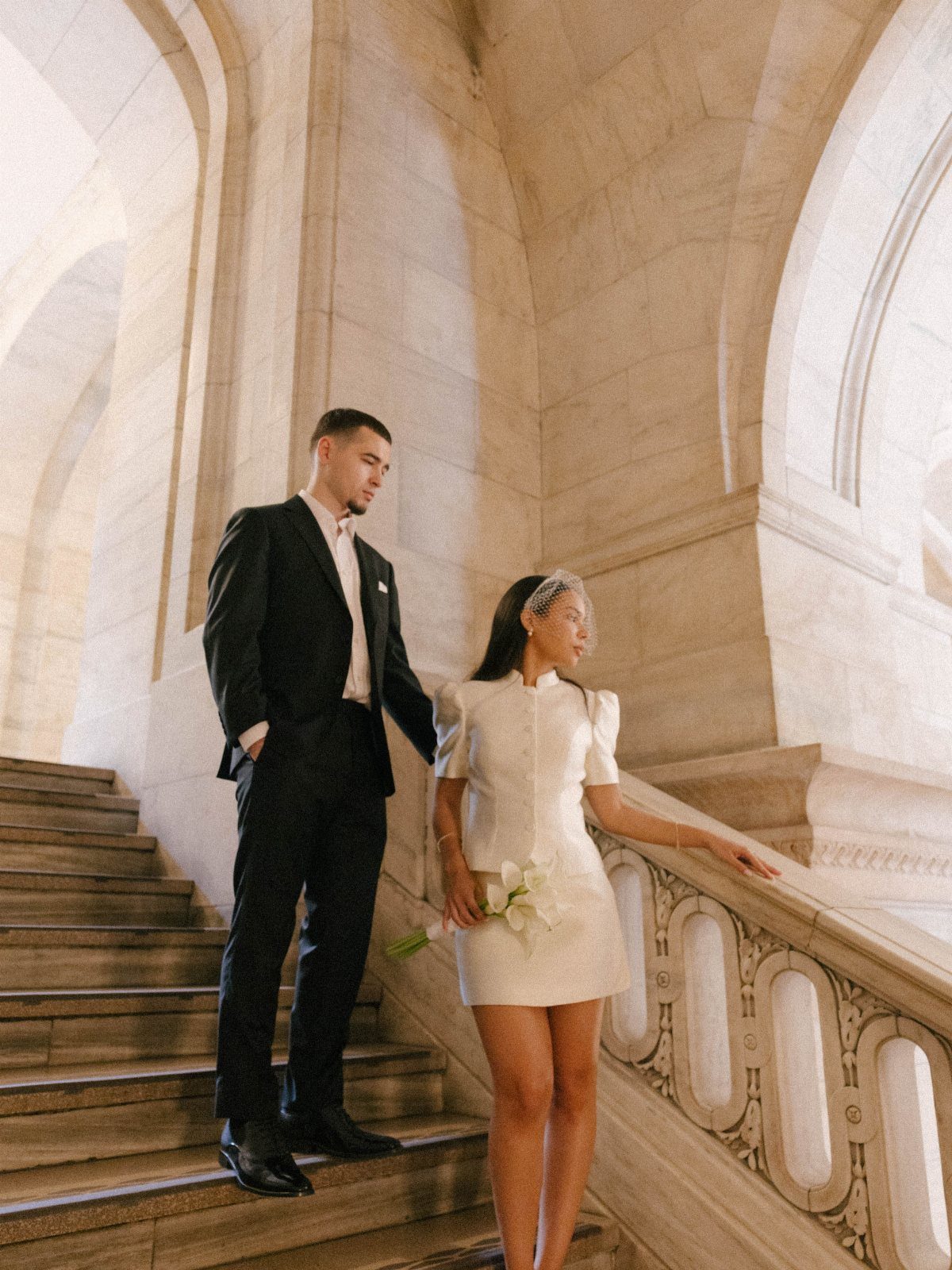
A veil is the one addition I would make, since it marks the day as a wedding without adding bulk. Simple shoes and small earrings are all it needs.
Hem length decides how this looks, so try it on with your shoes before you buy.
8. Bridal Suits and Blazer Sets
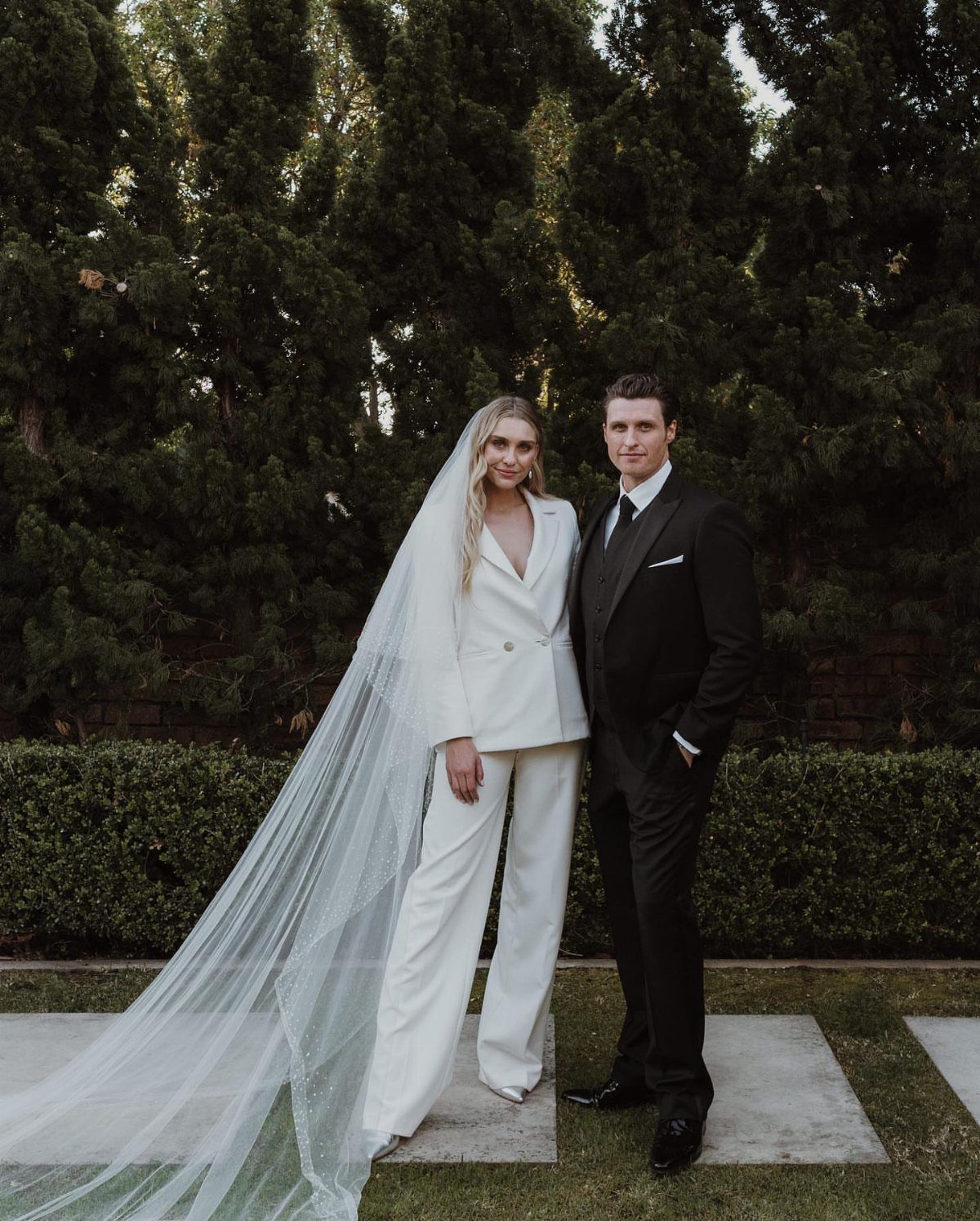
White blazer, wide-leg trousers, long sheer veil: the combination looks tailored and traditional at once, and the veil does most of the bridal work.
I like this one for anyone who wants a suit she can wear again. Tailoring matters more than price here, so budget for hemming the trousers with your shoes on and taking in the jacket if the shoulders sit loose.
9. Off-the-shoulder Wedding Gowns
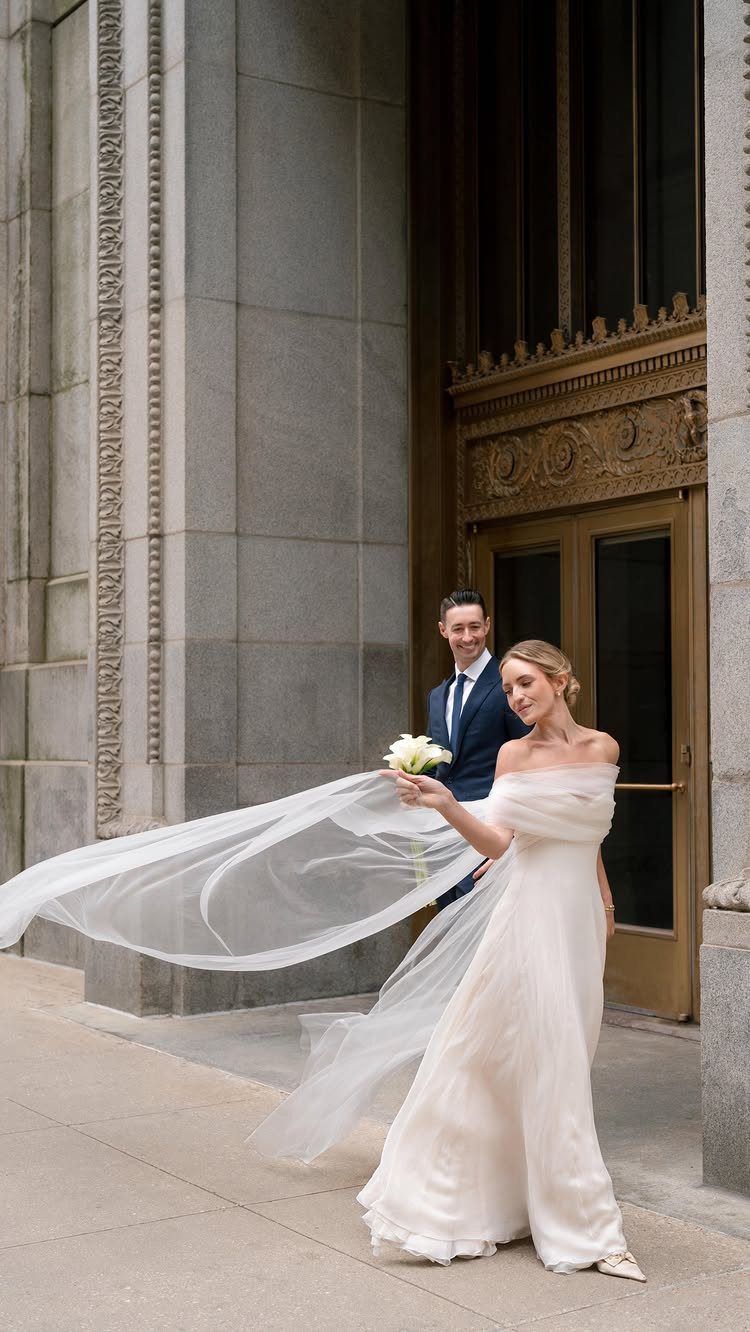
An off-the-shoulder neckline frames the collarbones and shoulders, so a necklace becomes optional and a long veil gives you all the drama you need.
Outside a stone building with ornate doors, the bare line of the neckline looks clean.
I would pick a bodice that fits snugly across the top, since this neckline has no straps to hold it in place, and ask for a fitting before the day.
10. High-neck Long-sleeve Gowns
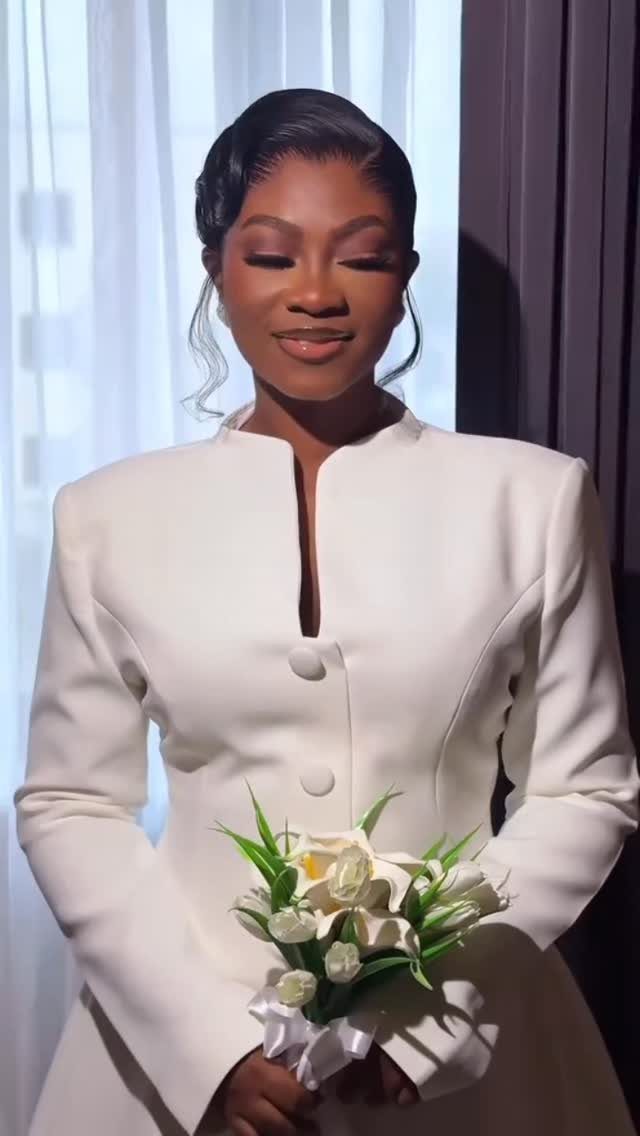
Structured fabric, a high neckline, long sleeves and a row of decorative buttons: this gown covers you completely and still looks formal.
I would keep the styling spare, with a white bouquet, hair pulled back, and no necklace, so the neckline and buttons stay the focus. Long sleeves work for a cool courthouse room and need no wrap.
Try the sleeves with your arms raised, because a stiff cuff that restricts a hug is worth finding out about early.
Dress Code for Courthouse Weddings
Most courthouses expect something between business casual and semi-formal, so aim for an outfit that looks put together and you will fit in anywhere.
Many courthouses accept everything from a cocktail dress to a full gown, though the rules differ from one location to the next.
Phone the clerk’s office first and ask whether the building has any dress rules, since that call costs nothing and a returned dress costs time.
Then decide how formal you want to feel, how you picture the photos, and what you are doing afterward, whether that is dinner or a drive home.
Tips for Selecting a Wedding Outfit
Start with the calendar. Season and indoor temperature change what you can wear, and so does the weather on the walk from the car to the door.
Time of day matters too, since a morning slot and an evening slot call for different levels of dressiness.
Courthouse interiors tend to have marble floors, narrow hallways and several staircases.
A fitted or A-line cut slips through narrow hallways and security lines more easily than a full ball-gown skirt. On courthouse stairs, a knee-length or tea-length hem keeps you steadier than a floor-length train that can catch underfoot.
Changing space is often limited, so pick a dress you can put on without help.
Measure hems and necklines against the building’s rules, then sit, stand and climb a few steps in the dress to make sure it works for you.
Practical Considerations for City Weddings
City hall ceremonies run on tight timelines, in tight spaces, across mixed surfaces. Your dress has to handle all three without a second thought.
Test it the way you will use it: walk a few blocks, climb stairs, sit on a hard bench, and step into a car. If any of those make you gather fabric or tug at a neckline, choose again.
Plan the trip as well as the ceremony. Weather on the way in and out can matter as much as the room itself, so pack what you need for rain or wind.
Frequently Asked Questions
What does the bride wear to a courthouse wedding?
Most brides pick something simple and easy to move in: a tailored wide-leg jumpsuit, a tea-length dress, a plain strapless dress, or a white blazer set.
Courthouses mean stairs, security lines and narrow hallways, so a clean shape with no long train works best.
Before you buy anything, call the clerk’s office, since a few courthouses set their own rules even though most accept a cocktail dress or a full gown.
What are the different types of wedding dresses?
For a courthouse, the main options are little white dresses, tea-length dresses, lace dresses, simple strapless dresses, off-the-shoulder gowns, high-neck long-sleeve gowns, tailored jumpsuits and blazer sets.
Satin catches light and glows, while crepe stays matte and hangs with a heavier, quieter drape, so the fabric alone can change how a silhouette reads. Ivory is a softer alternative to stark white in any of these.
Do you walk down the aisle at a courthouse wedding?
Usually not in the traditional sense, since courthouse ceremonies are short and informal and take place in small rooms or on a staircase. That is why a dress built for movement matters more than a long train.





