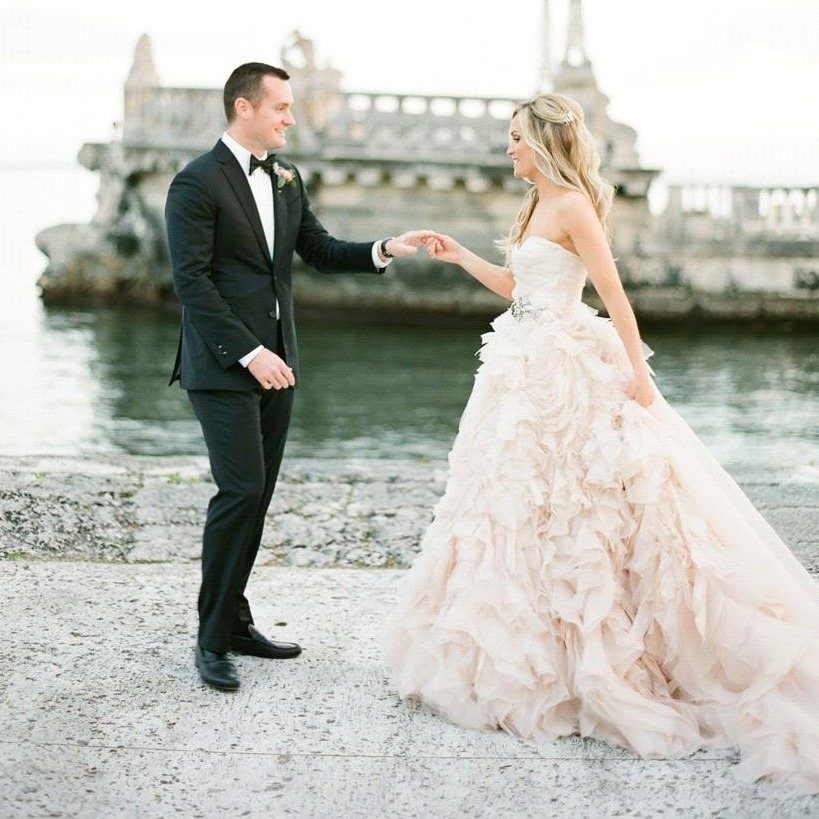
Organza runs from the Minimalistic styles to Layered dresses and Flowing Ball Gowns, and what decides your pick is how much structure you want against how much movement.
Polyester organza stays firmer than tulle or chiffon, so it holds a sculpted skirt or a bow away from the body, while chiffon falls loose and fluid.
1. Layered Organza Dresses
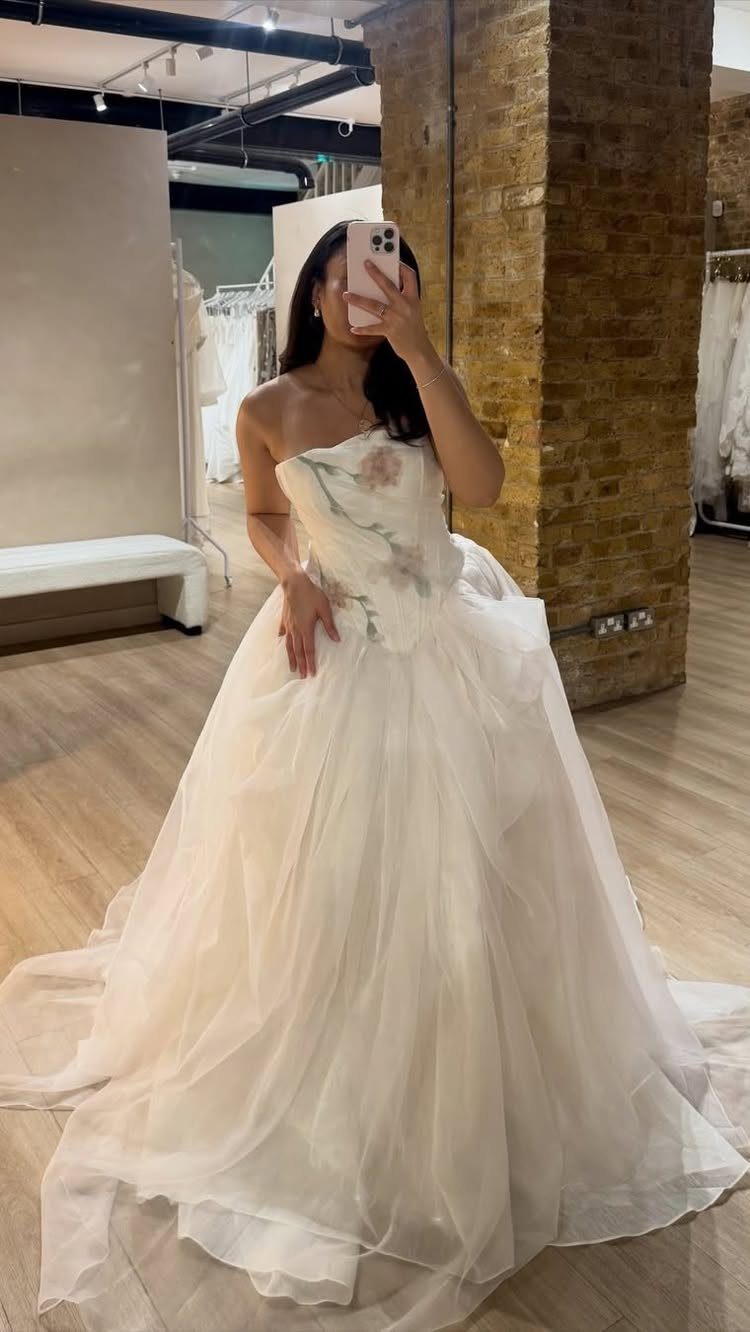
Stacked organza layers give a skirt volume without the weight of satin or taffeta. Each layer is sheer, so they float apart when you walk and settle back when you stop.
For a budget-minded bride, that fullness is the appeal: the look reads like a ball gown but moves lightly.
Try the dress on and take a few steps and a turn before deciding; the movement is the reason to choose it.
2. Minimalistic Organza Dresses
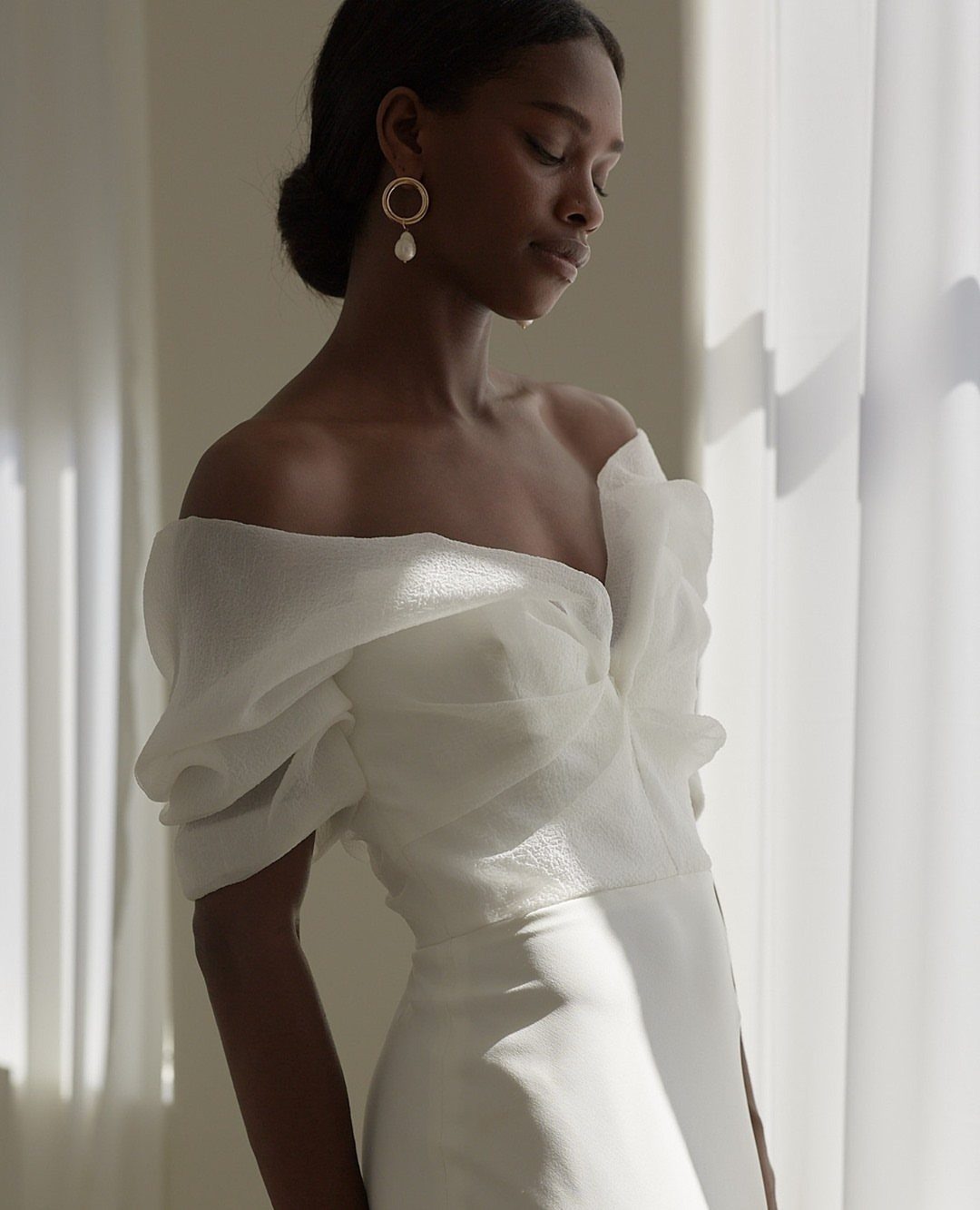
A draped organza bodice looks finished with no beading or lace at all. The fabric does the work, falling in soft folds along the neckline.
That suits a bride on a tight budget, since less embellishment usually means a simpler build.
An off-the-shoulder cut keeps the line clean. Small gold earrings suit it, or no jewelry whatsoever; the drape does the work.
3. Organza Wedding Dresses for Summer
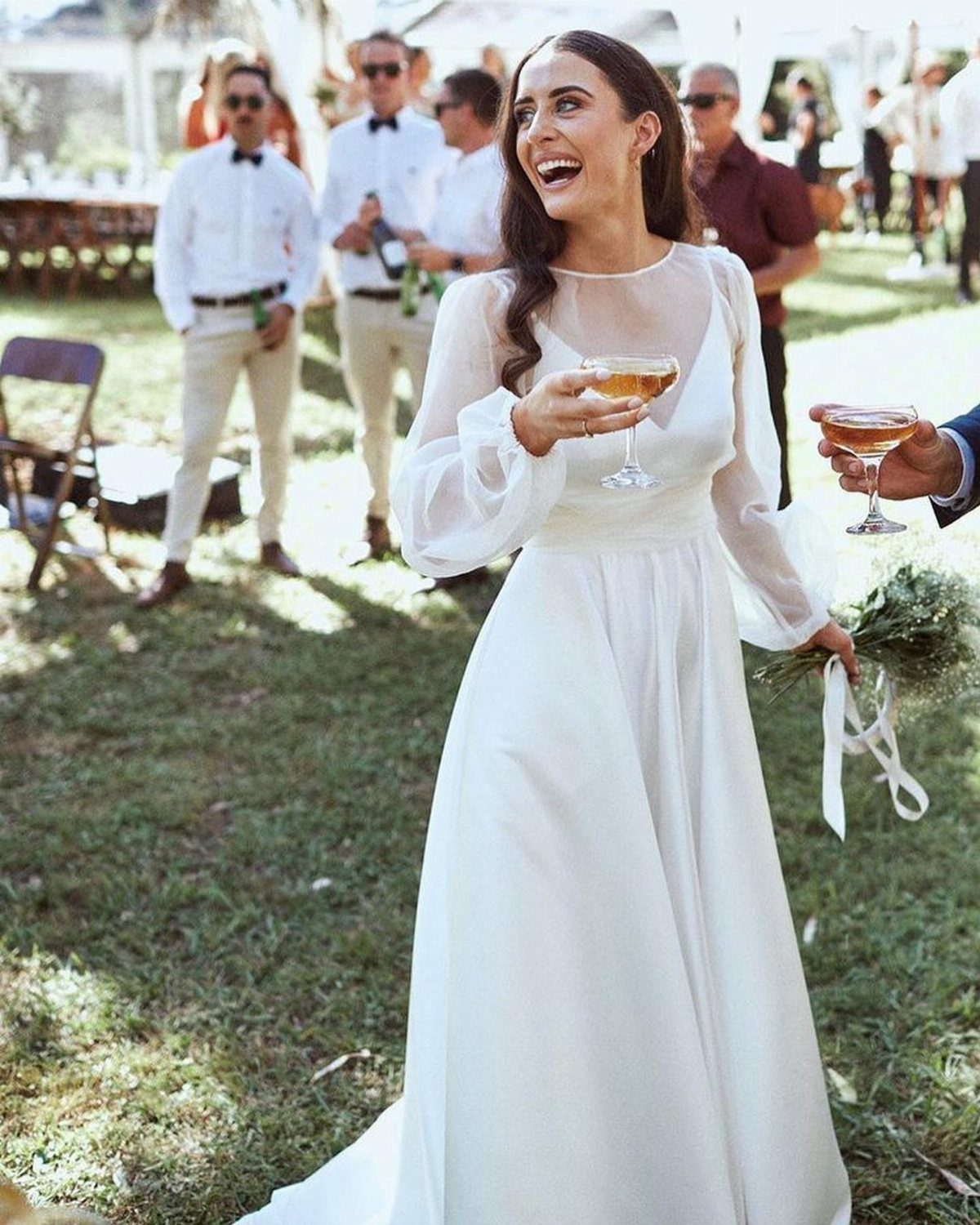
Organza is a smart pick for a warm-weather ceremony because it is thin and sheer, so a skirt of it feels far lighter than a dress of heavier fabric.
For an outdoor wedding, check with the shop on whether the dress is lined and how many layers the skirt has.
Fewer layers means less heat; more layers means more shape. I would take the lighter option for a daytime summer wedding.
4. Ethereal Sheer Organza Wedding Dresses
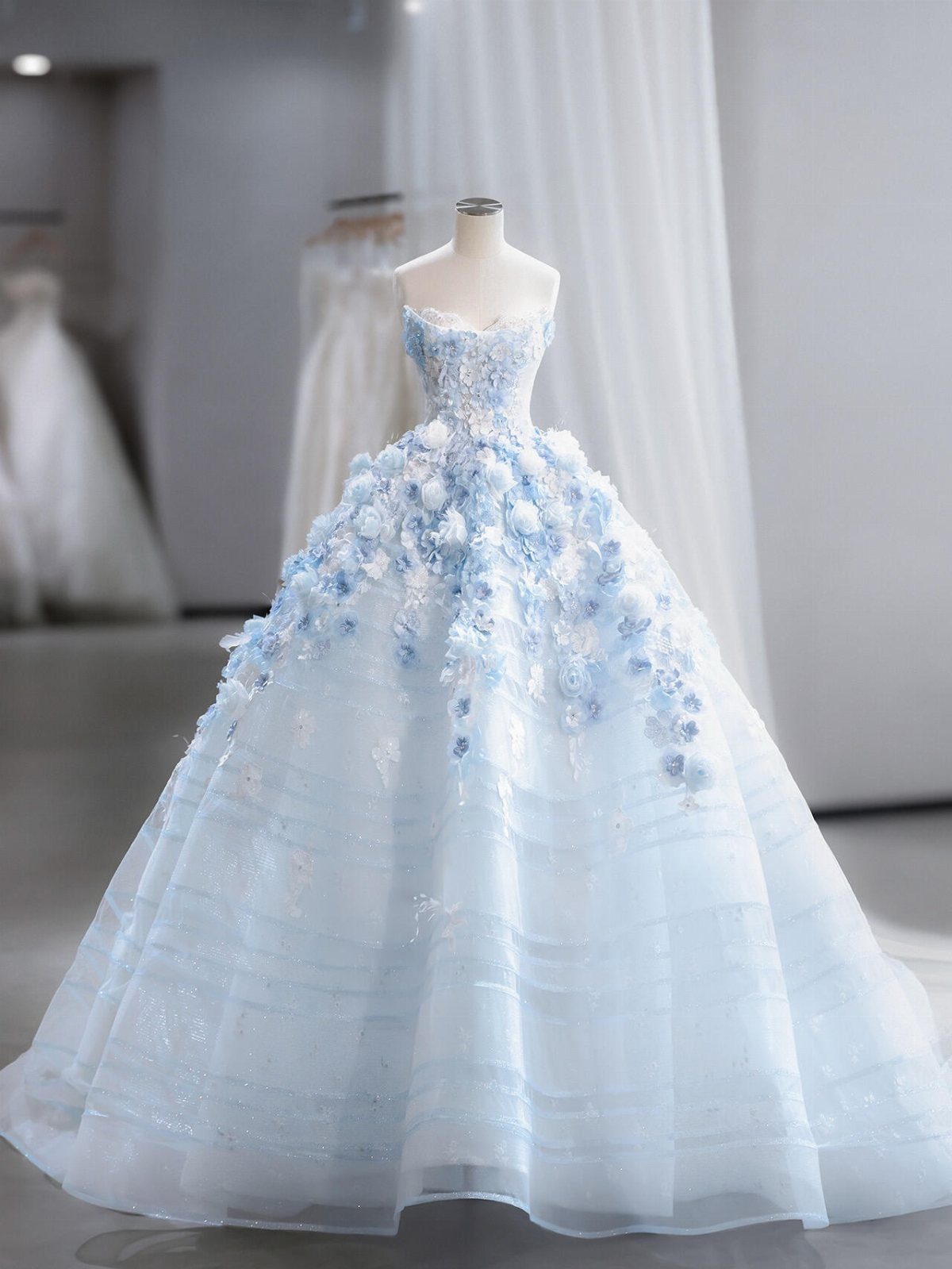
Sheer organza holds color softly, which is why a pale blue ball gown works here. Light passes through the fabric, so the shade reads as a tint rather than a block of color.
Three-dimensional floral appliqués add texture without hiding that sheerness.
A pale tint is the gentlest way to add color to organza without worrying that it will date. Ask for a swatch and check it in daylight, not just under boutique lighting.
5. Flowing Organza Ball Gowns
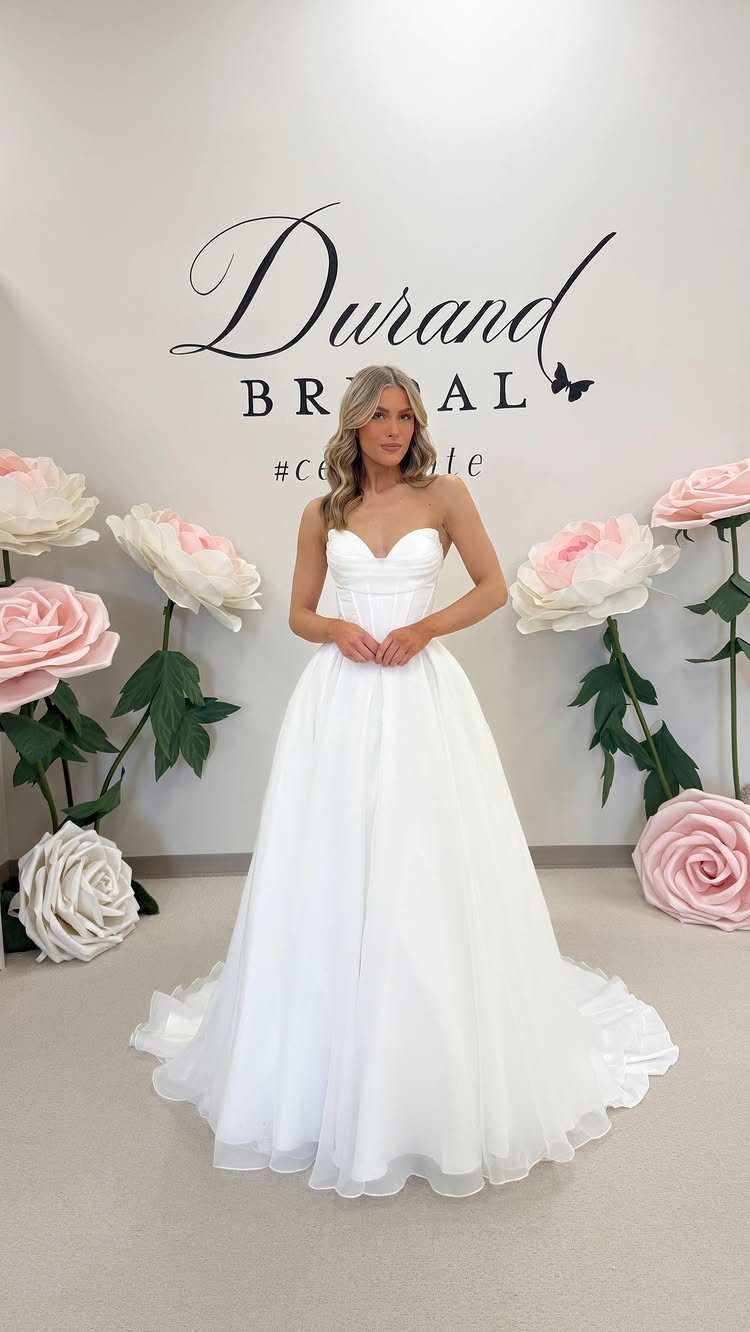
Organza is a thin, plain-weave, lightweight sheer fabric, traditionally made from silk, according to the maker of this gown. That crisp weave is what lets a ball gown skirt flow instead of sit heavy.
A strapless bodice keeps the focus on the skirt. Plan for the fit at the bust and waist, since that is where a strapless gown has to stay put, and book alterations early.
6. Organza Gowns with Simple Jewelry
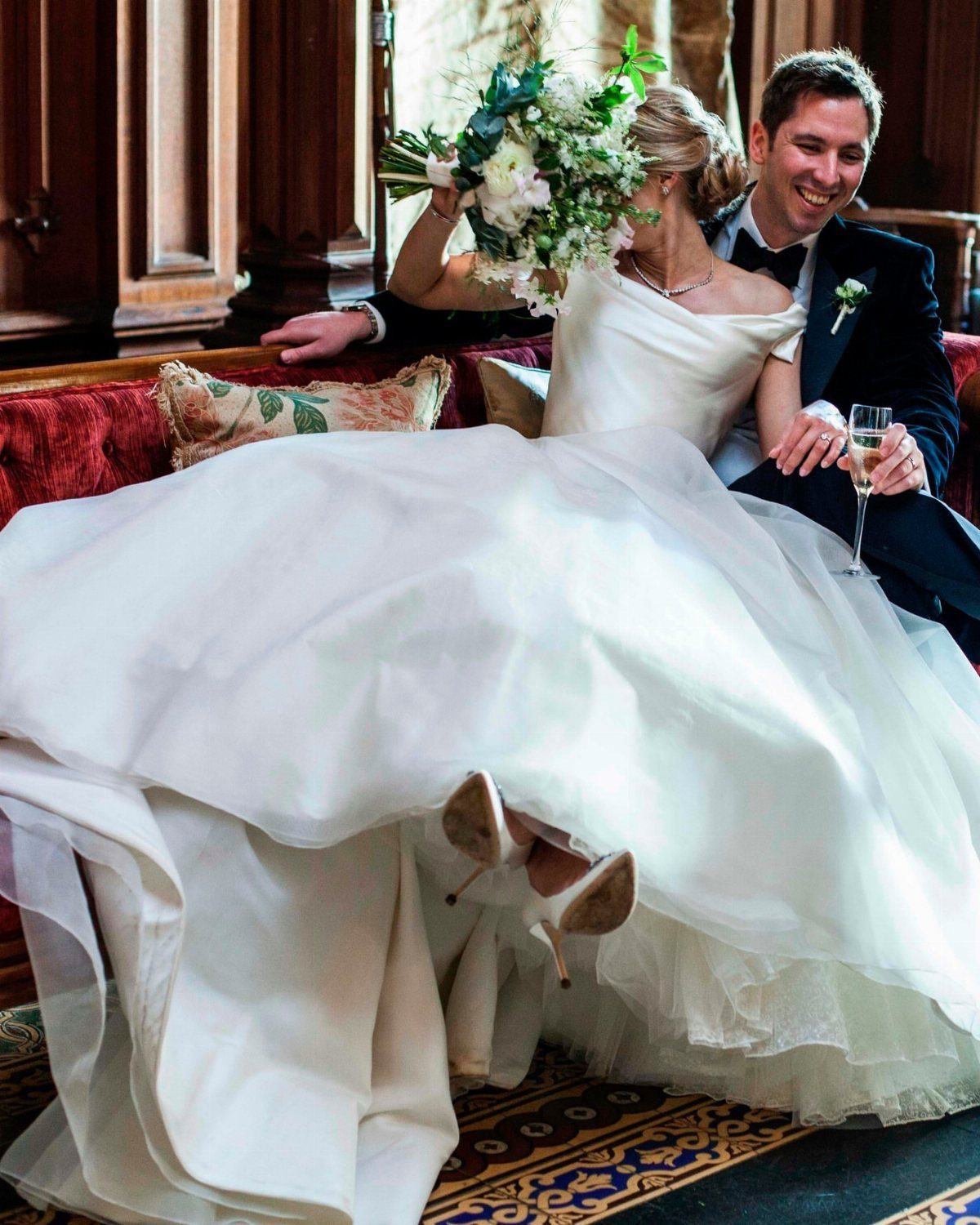
With an organza gown, jewelry works best when it stays small. The fabric already carries texture and shine, so a thin necklace or a pair of studs is plenty.
Pick one piece to lead and skip the rest.
That also helps the budget: a single simple piece costs far less than a full set. Bring the jewelry to your final fitting and hold it against the bodice, since that is the last moment a change is easy.
7. Floral Print Organza Gowns
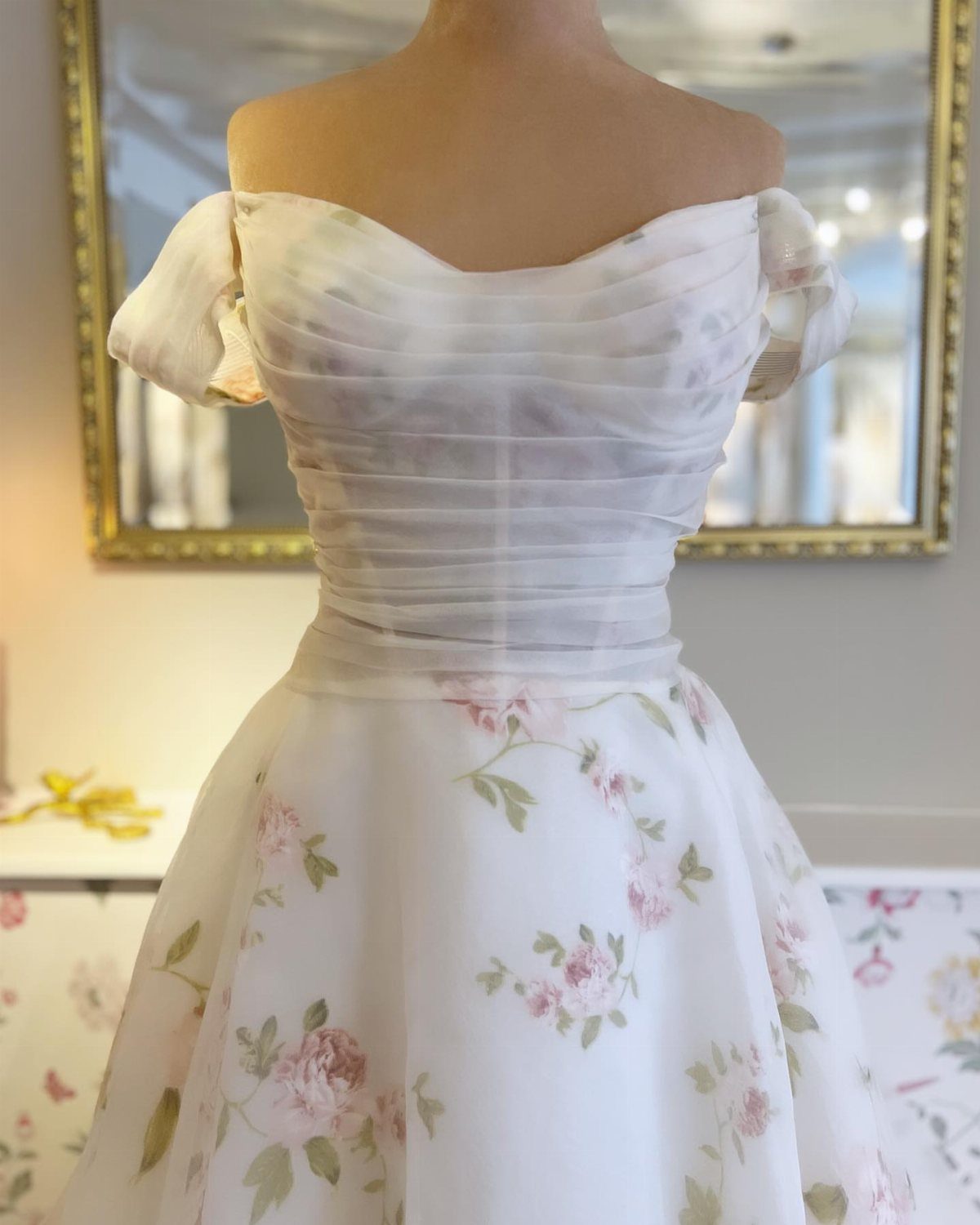
A printed skirt lets a mostly white gown carry color without a full tint. Here the ruched off-the-shoulder bodice stays plain white, so the pink floral print lives only in the skirt.
That split is easy to live with. Organza is sheer, so a print on it reads soft, and the white top keeps the dress bridal.
Ask the shop how much of the print shows in daylight, and whether the pattern can be worn with a slip or lining underneath.
I would choose this over an allover print if you want one dress for the ceremony and the party.
8. Organza Gowns with Statement Bows
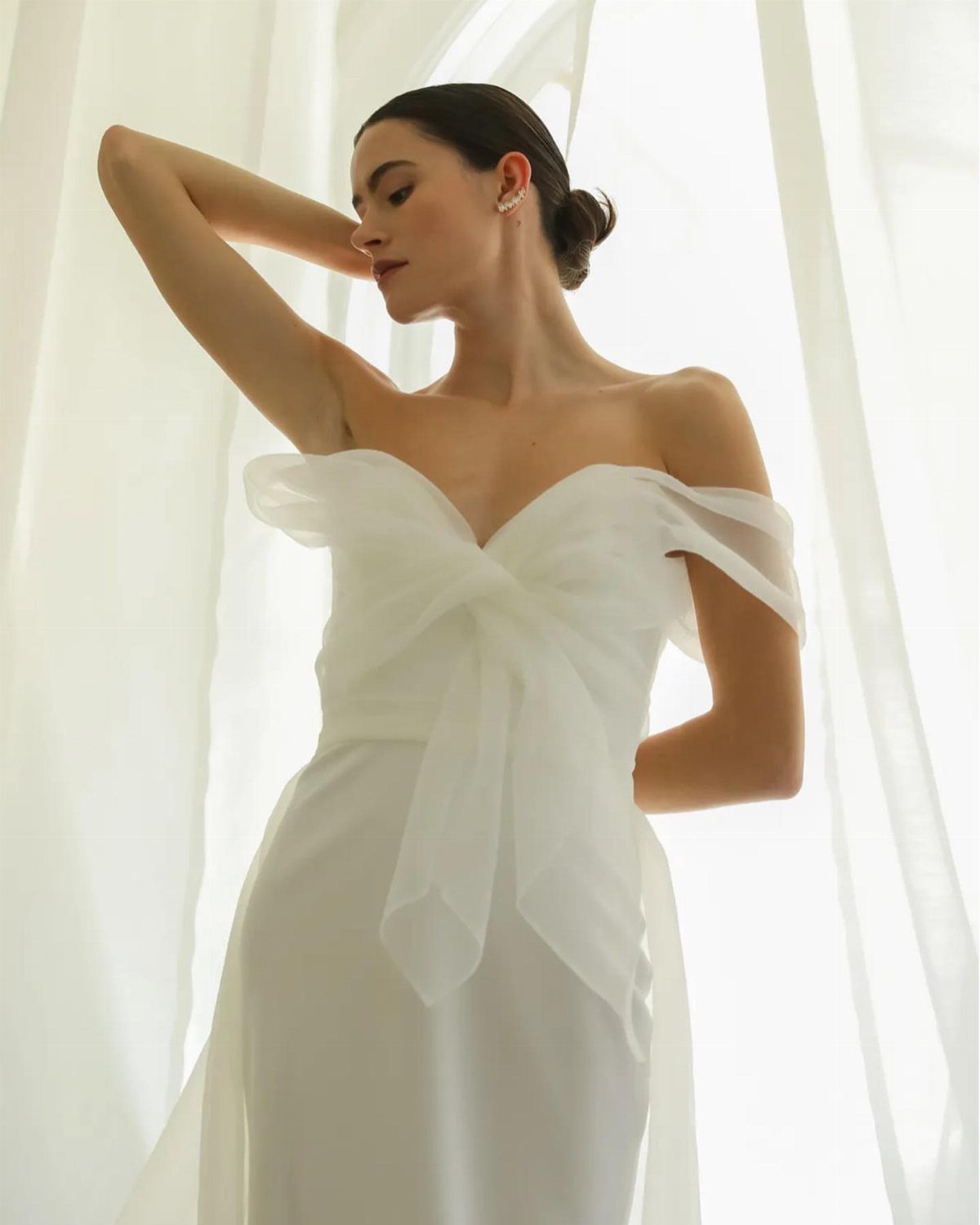
A big sheer bow on the bodice is the one detail that does all the decorating. On an off-the-shoulder organza gown, it sits where the eye lands first, so the rest can stay plain.
For a tight budget, one oversized bow is a smarter spend than beading across the whole dress. Check how it is attached: a bow sewn flat holds its shape, while a loose one can sag as you move.
Skip a necklace, since the bow already fills that space. Try sitting and hugging in the fitting before you decide.
Choosing the Right Silhouette
Fabric should drive the silhouette choice as much as body shape does. Sheath cuts work too, though they show less of what organza does best.
Chiffon drapes so well that it mostly shows up in sheath and A-line gowns, and it is less common in structured styles like a traditional ball gown.
If you love a fitted shape and a fluid fall, chiffon is the likelier match.
Try on three shapes in one visit: A-line, ball gown, and sheath.
Stand, sit, and walk in each before judging. Photograph the side and back views, since the front alone hides how a skirt holds its shape.
Finding the Perfect Dress
Try the dress on in person and book that fitting early, since organza reads very differently in a photo than it does on your body. Photos flatten how stiff it is and how much light passes through it.
Tell the consultant your budget at the start, so you only try on dresses you can afford. Bring the shoes and undergarments you plan to wear, and ask what the price includes.
Try a few bolder cuts too, such as a plunging neckline, a high slit, or a fitted bodice. You may find one you would never have picked from a photo.
Still, choose the dress you can move in comfortably. You should be wearing the gown, not the other way around.
Fabric Comparisons
Chiffon feels soft and light, and it falls in a loose, fluid line. Organza has more body and crispness, so it holds a skirt out where chiffon simply collapses.
Polyester organza tends to be firmer than tulle or chiffon, and it keeps its shape well. That makes it a good fit for structured bodices, sculpted skirts, and any detail that has to stand away from the body.
My pick: organza for a defined shape, chiffon for movement without volume.
A dress with an organza skirt under a chiffon overlay can give you both, so ask the salon whether one exists. Hold a swatch of each up and bunch it in your hand; the difference shows in seconds.
Frequently Asked Questions
Is organza a good fabric for a wedding dress?
Yes, especially if you want volume without weight. Organza is a crisp, sheer, plain-weave fabric, so a skirt holds its shape and still moves lightly when you walk.
Photos hide how stiff organza really is and how much light it lets through, so put the dress on, walk a few steps, and turn before you decide.
What is the difference between organza and chiffon for a wedding dress?
Organza has a crisp hand that props a skirt away from the body; chiffon is soft and drapes in a loose, flowing line. For a sculpted shape I pick organza, and for movement without bulk I pick chiffon.





