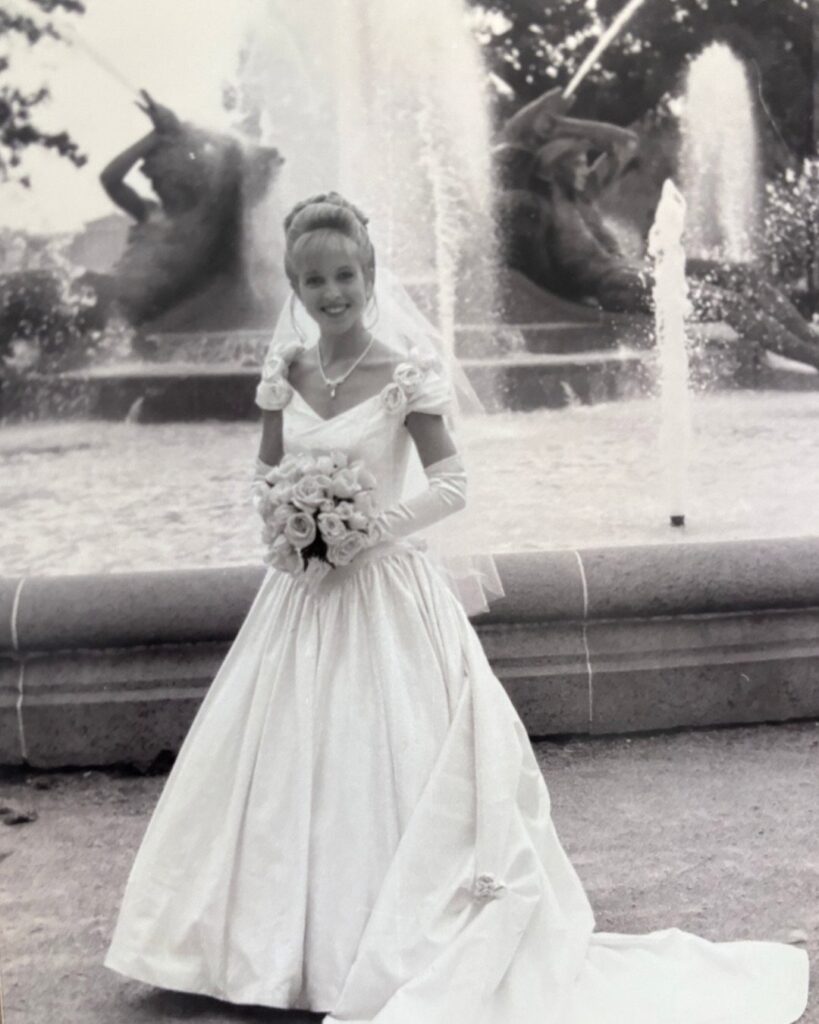
Satin runs through all of it, yet the silhouettes swing wide: a thin-strapped slip that depends on its cut, a ballgown with a big bow at the waist, a high lace neckline with puffed shoulders.
The rule that picks one is how much detail you want to pay for and carry: a plain slip means fewer details and usually a lower price tag, while sleeves, lace and a chapel-length train each bring their own alterations, from steaming to a bustle plan.
Pick the amount of fuss you can budget for first, then the silhouette.
1. Vintage Wedding Dresses, Venues and Decor
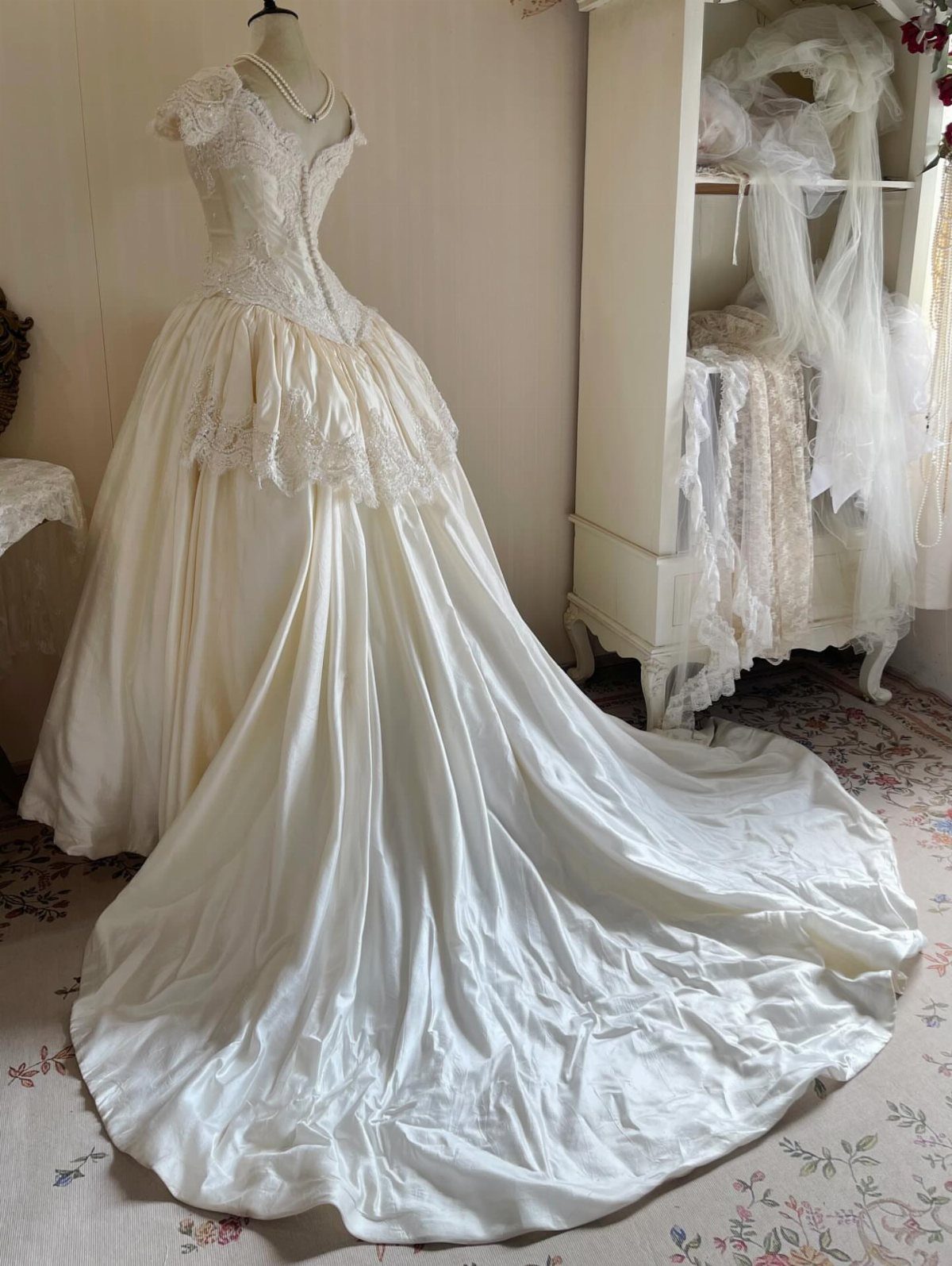
Look for a cream gown with lace through the bodice and a full satin skirt that sweeps out behind into a chapel-length sweep of fabric; a vintage piece like that is worth tracking down in person.
Lace and satin age differently, so check the seams, hem and underarms by a window or outdoors in natural light, and only then commit.
On a tight budget, a secondhand gown with a small flaw usually beats a new one at the same price. Ask what alterations it needs first, since a train that long also needs a bustle plan.
2. Puffed Sleeve Ruffled Satin Gown
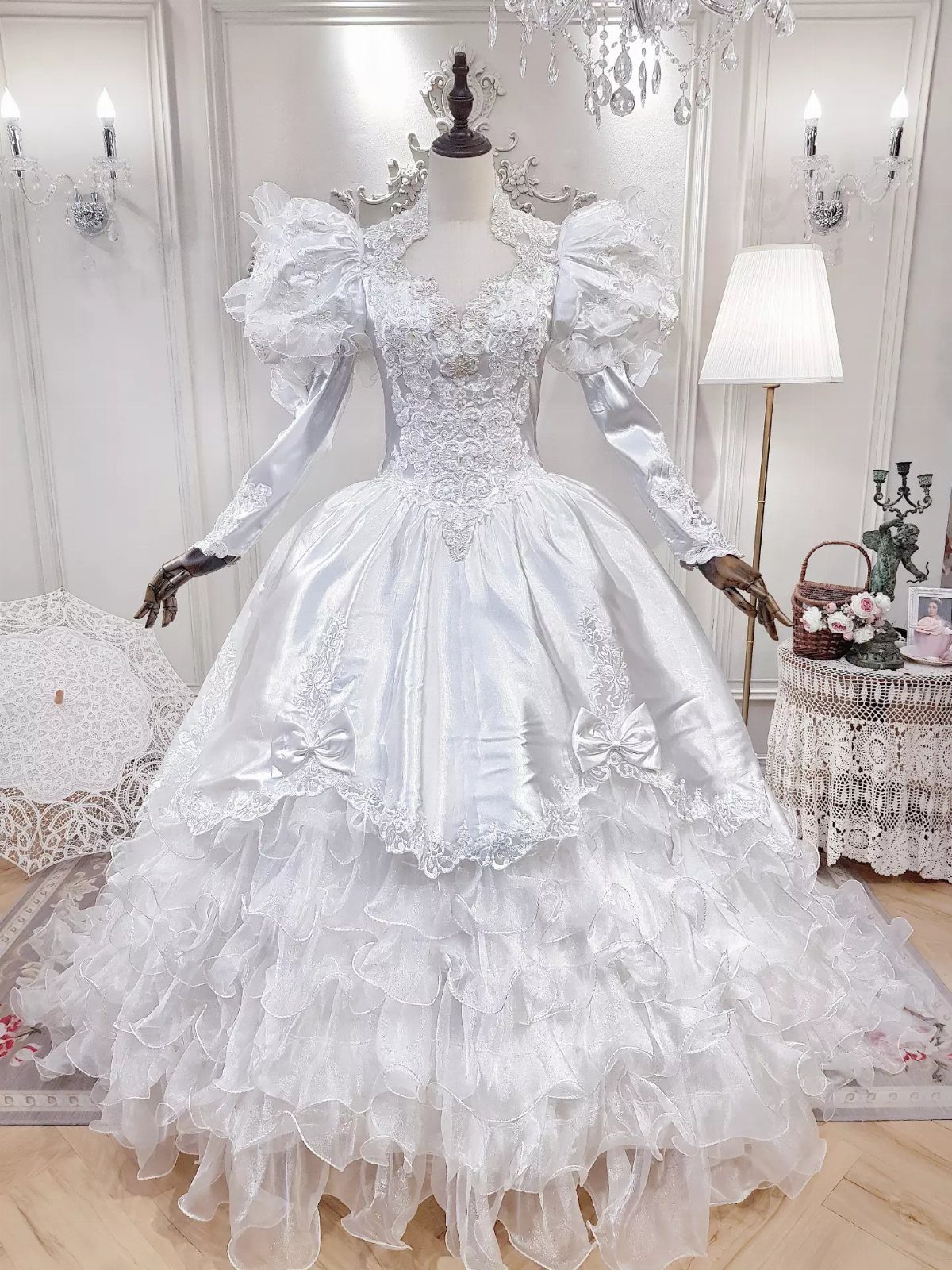
Sleeves this big do most of the talking, so I would keep everything else about the look quiet. A satin gown with puffed sleeves, lace embroidery on the bodice and a ruffled skirt already has plenty going on.
Skip a heavy necklace and a long, busy veil. Satin shows every pressed crease, so ask about steaming ahead of the day, and expect the sleeves to make hugs harder, because raising your arms will pull against the puffs.
3. Minimalist Satin Slip Dress
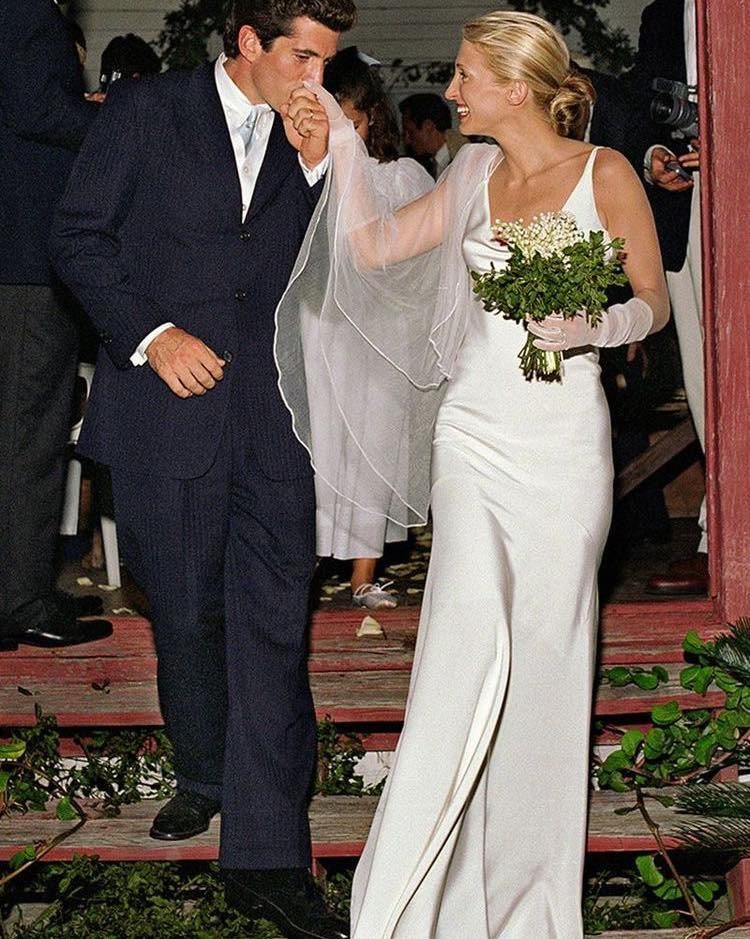
Thin straps, a floor-length slip shape and a sheer veil: this is the cheapest way into 1990s bridal style, because the dress relies on cut rather than trim. Fewer details usually means a lower price tag.
Fit decides everything, since satin with no structure clings to whatever is under it. Spend your alterations money on the hem and the straps, and choose a veil with a plain edge.
4. Off-the-Shoulder Satin Ballgown
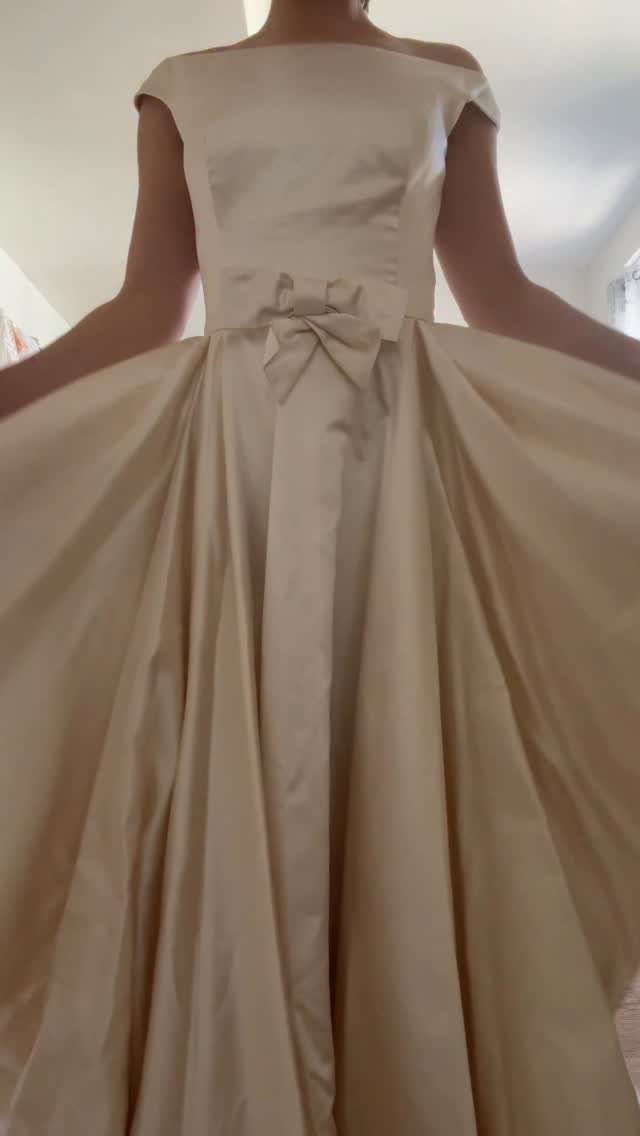
An off-the-shoulder neckline suits a woman who wants bare arms with no sleeves in the way but still wants a dressy, full shape.
A cream satin ballgown with a large bow at the waist gives you a focal point without adding lace or beading.
My pick would be keeping jewelry to simple studs and letting the bow lead. Ask a seamstress about securing the neckline, because a strapless-style fit needs to stay put through dancing.
5. Lace High-Neck Puffed Gown
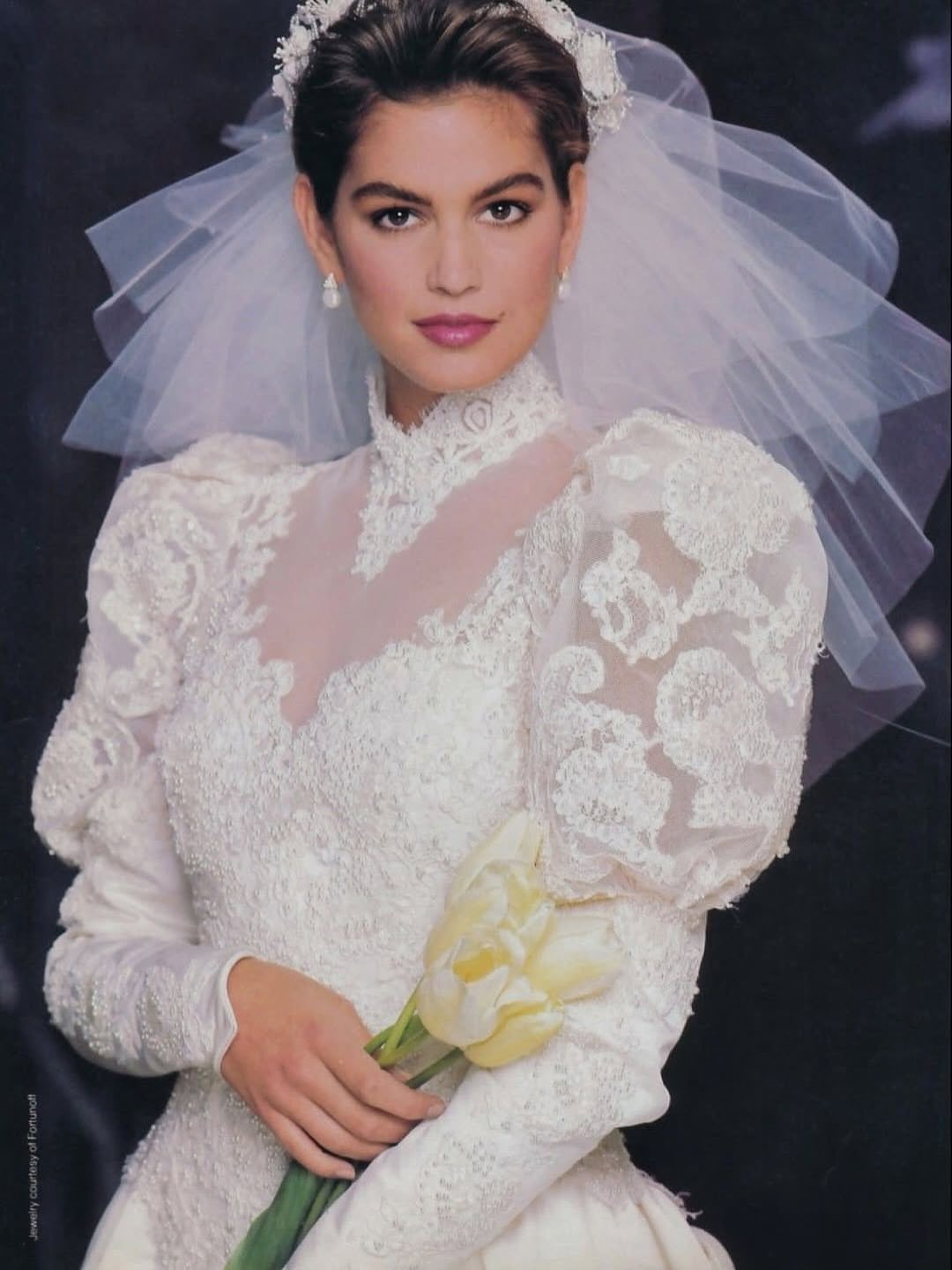
A high lace neck, puffed shoulders and sheer detailing add up to a covered-up look that still feels romantic. It suits brides who want long coverage without a plain sleeve.
Pair it with a veil that stays out of the way of the collar, and keep the bouquet simple, since the dress already carries the detail.
Sheer lace is delicate, so find out how any repairs would be handled while you can still walk away from the sale.
For some brides, the first of those auspicious points might mean securing a pair of antique pearl studs into your ears. But for the daring, it means a 1979 Azzaro gown with exaggerated semi-sheer sleeves—as was the case for Chloe Kernaghan.
— Vogue
Frequently Asked Questions
What is a vintage wedding dress?
A vintage wedding dress is a bridal gown made between the 1920s and the 1990s.
A common rule of thumb is that anything over 20 years old counts as vintage, and anything past 100 years is antique. Each era has its own look, from relaxed 1970s styles to minimalist 1990s cuts.
How do I check a vintage wedding dress before buying it?
Hold the dress up to a window or take it outside, because daylight shows what store lighting hides: weak seams, a stretched hem, stained underarms.
Satin tends to yellow and snag at the hem, while lace can shred at the edges or pull away from its backing.
Get a clear idea of the alterations before you pay, and ask who would handle any repairs and what they cost, since that is the last moment you can leave without losing money.
What is the cheapest 1990s wedding dress style?
For 1990s style on a tight budget, I would pick the minimalist satin slip dress first.
Thin straps, a bias-cut skirt to the floor and no beading or lace mean less fabric and labor, and that usually shows up as a lower price tag.
Fit matters most, since unstructured satin clings, so put your alterations money into the hem and straps.





