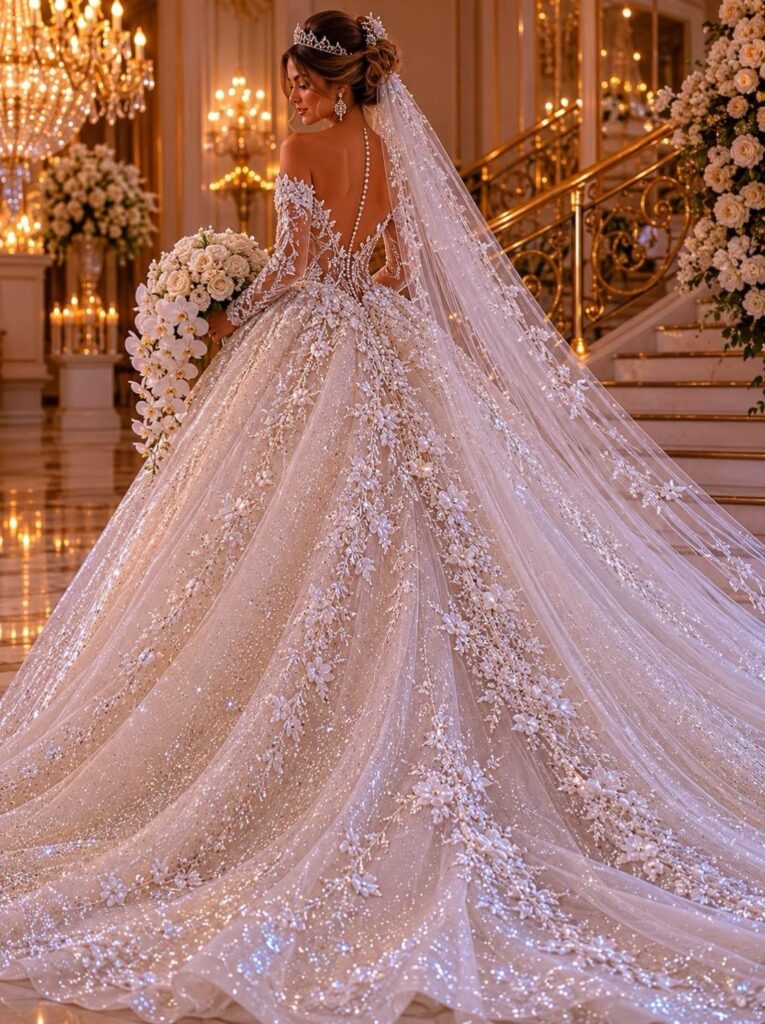
The gowns here run from ball gowns and heavily beaded long sleeves to strapless draped bodices and high-neck lace, and what separates them is how much fabric and hand work each one carries.
Your budget number picks the dress: with a tight one, choose a single showpiece, either a dramatic overskirt or heavy beading, and keep the rest of the look plain.
Fit is the cost that follows every option, since a beaded long-sleeve gown or a fitted bodice needs the alteration price in writing before you sign.
1. Luxury Wedding Dresses
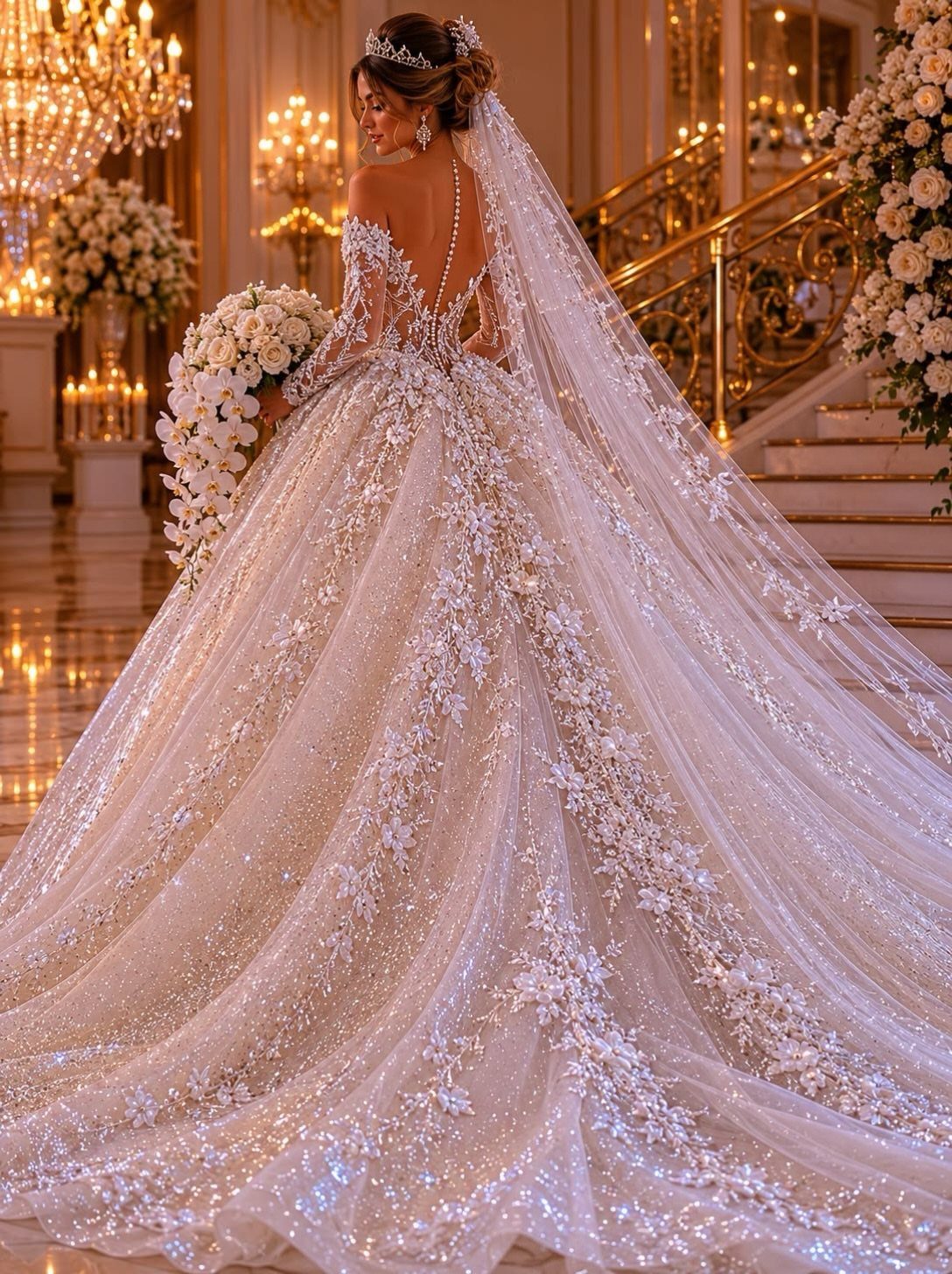
Luxury, in a gown like this, means surface and length: sparkle across the bodice, a train that sweeps well behind you, a veil that follows it.
Each of those adds fabric and hand work, so the price climbs with every layer.
If the budget is tight, pick one. A plain bodice with a train that sweeps well behind you reads as grand, and so does heavy sparkle on a shorter skirt.
Together they take you into the top designers’ price range, and I would only go there with a firm number set first.
2. Modern Designer Wedding Dresses
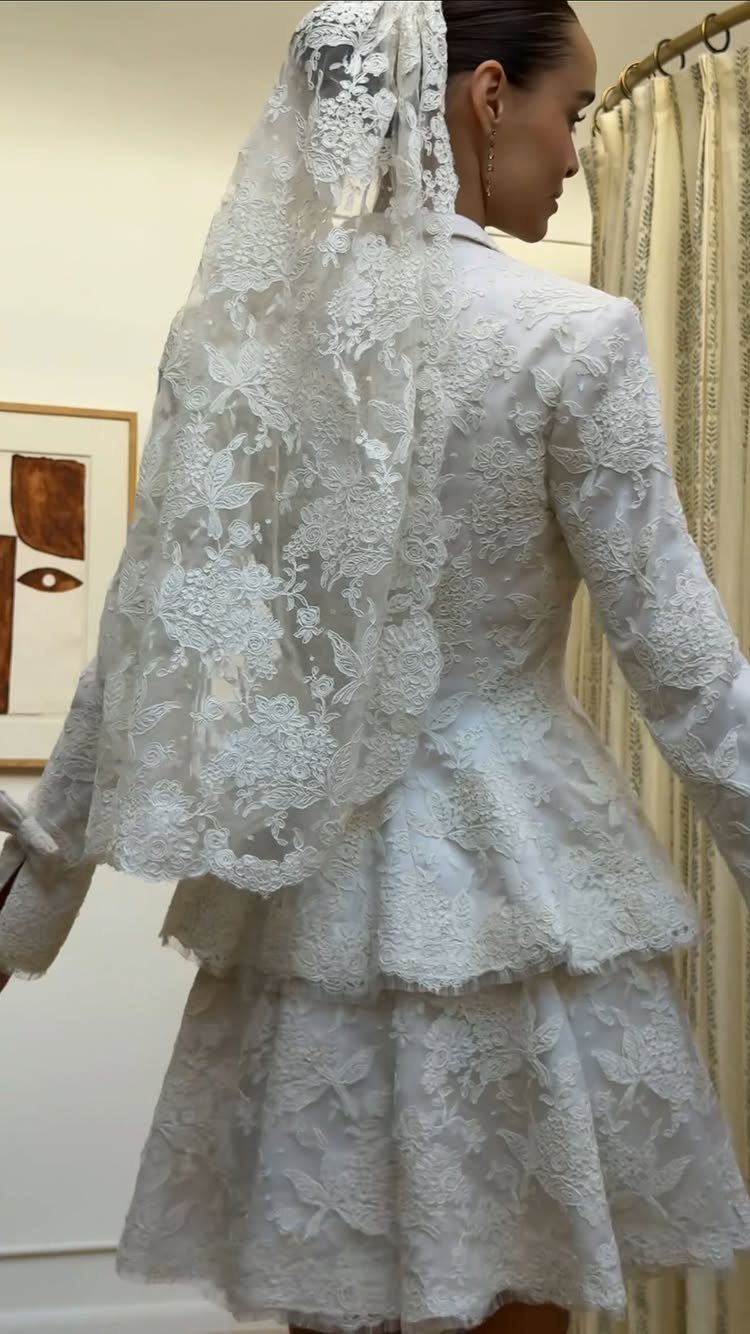
The look comes from separates, so you can fit each piece on its own.
I like this for a second outfit or a courthouse ceremony. The jacket can also be worn again over a plain dress, which stretches the spend.
3. Designer Wedding Dresses in Bridal Boutiques
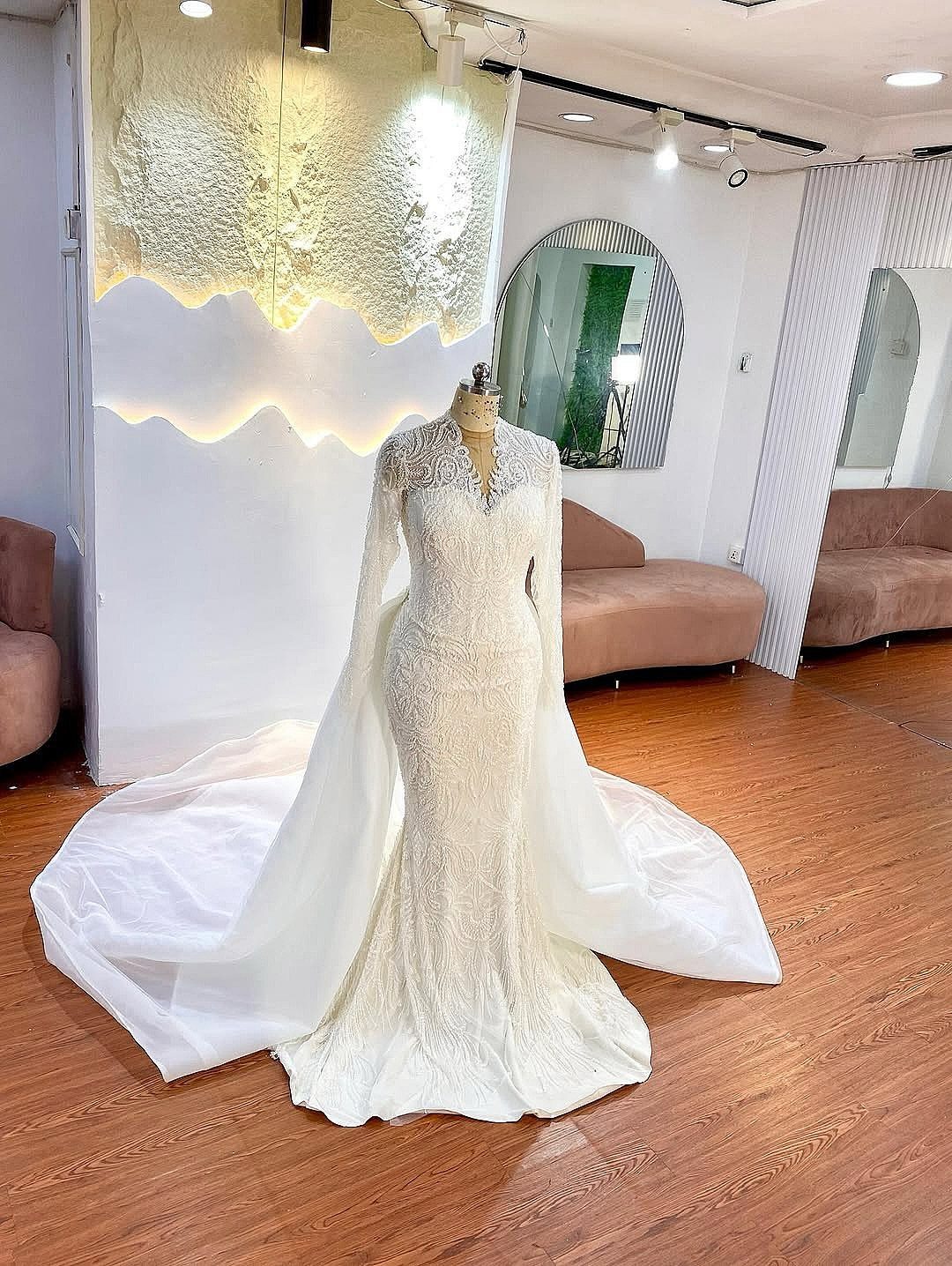
A boutique lets you see the gown on a body before you pay for it, and that matters most with beading.
A long-sleeved lace dress with a cape and a heavy beaded train hangs differently on a mannequin than on you.
Try on at least one gown that is not your style.
Walk around in the gown to check the weight of the beading, and ask what the alteration cost will be before you sign anything, since heavy embellishment makes hemming slower.
4. Ball Gown Designer Wedding Dresses
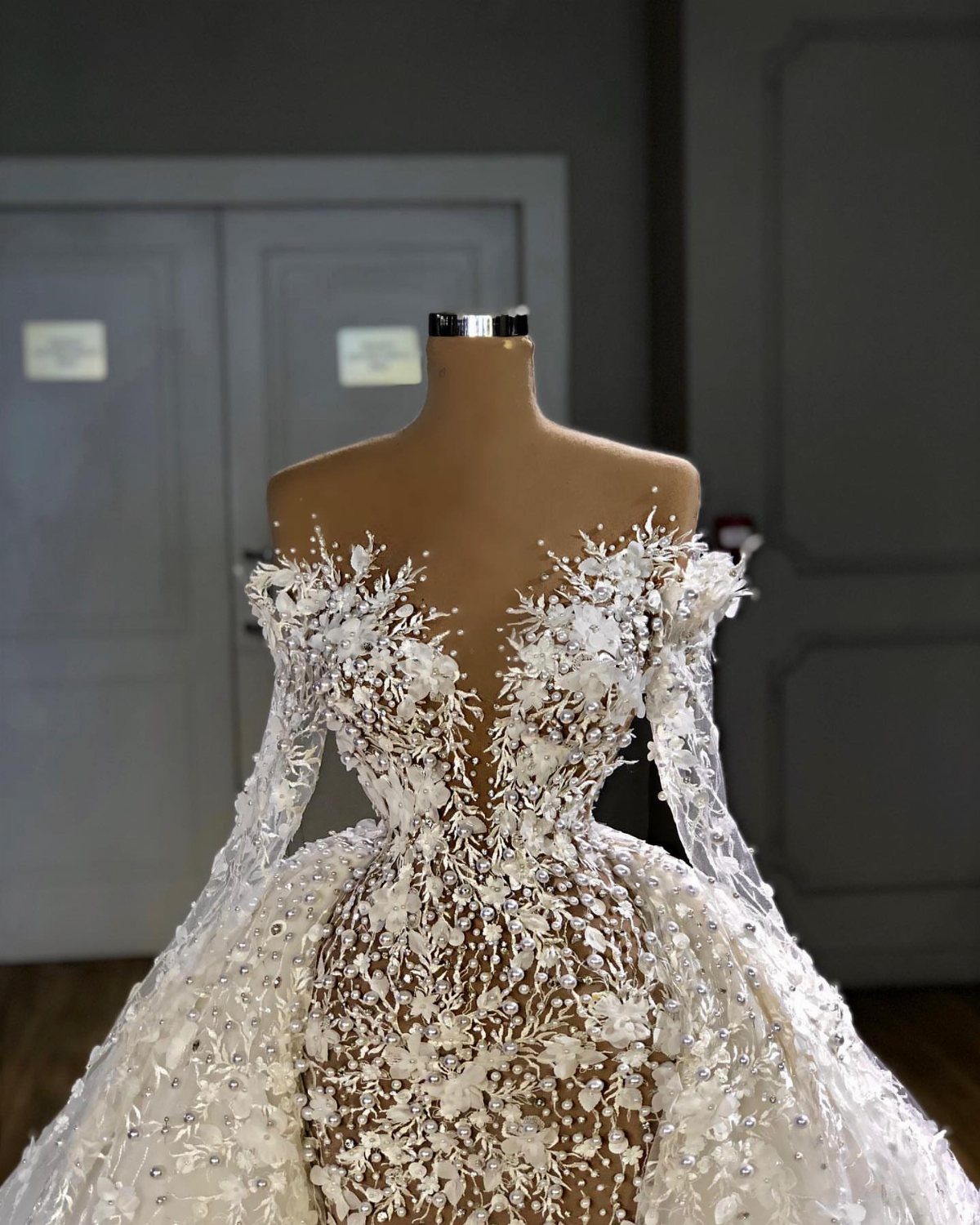
Ornate floral lace across a full ball gown skirt makes the dress the center of the room. For the traditional fairy-tale shape with real detail up close, this is the silhouette I’d choose.
Volume comes with limits: the skirt needs space to move, so check doorways, car seats and the dance floor.
Spend your fitting time on the waist and hem length, because a skirt this voluminous hides a bad hem less than you would hope.
5. Heavily Beaded Long-sleeve Gowns
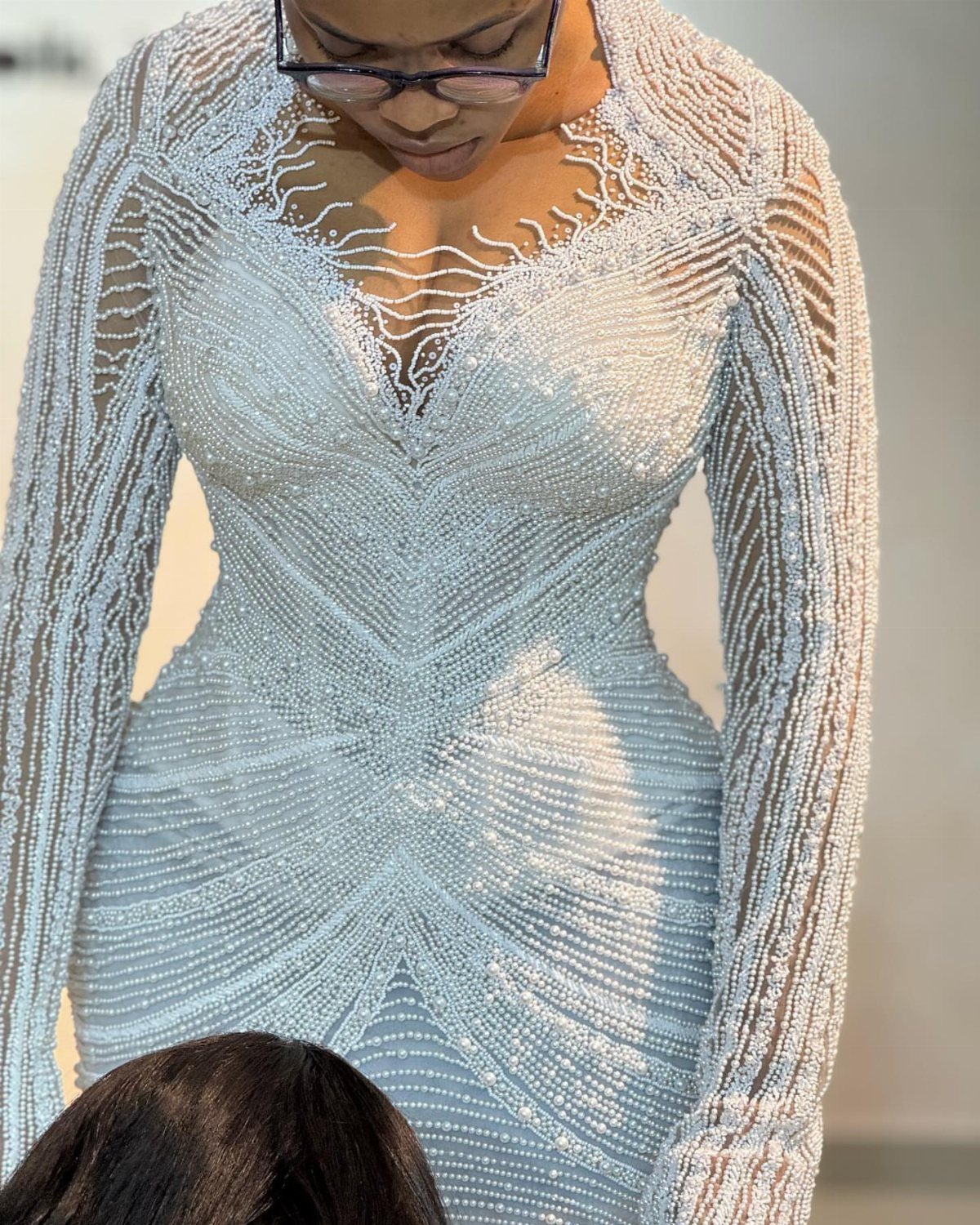
Beading from shoulder to wrist on a form-fitting gown puts all the attention on the sleeves and silhouette.
Heavy necklaces can go; simple hair works better with this much beading. Fitted beaded sleeves must allow you to lift your arms for hugs, so test that reach at every fitting before the final alteration.
6. Gowns with Dramatic Overskirts
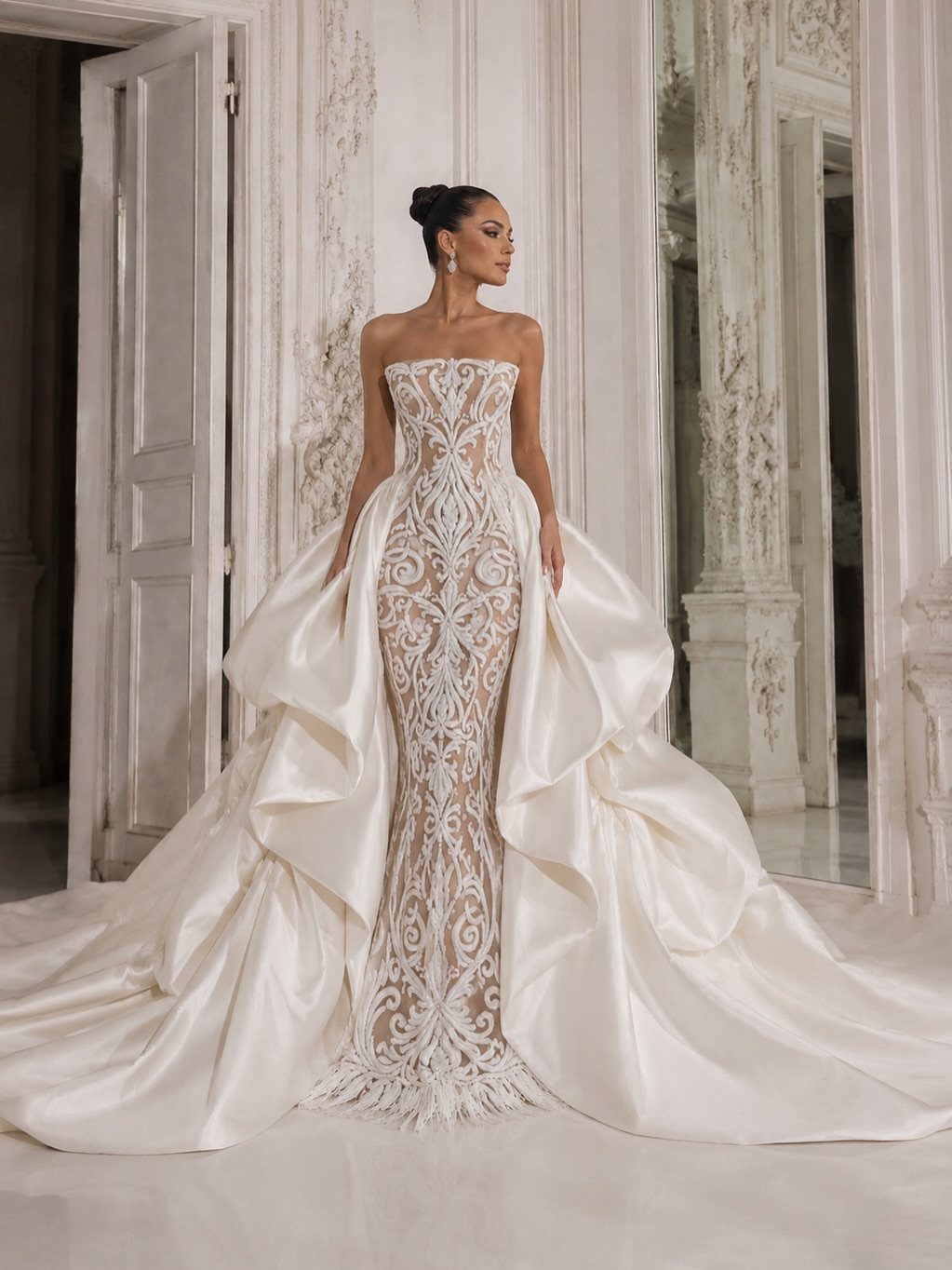
A fitted lace dress with a large satin overskirt gives you two looks in one gown. The slim lace underneath stays for the party, while the satin sweep suits the ceremony and the aisle.
Ask whether the overskirt detaches.
If it does, you can remove it before dancing, which I would do. Satin drapes best with a steamer and a helper to arrange it before photos.
7. Strapless Draped Bodice Dresses
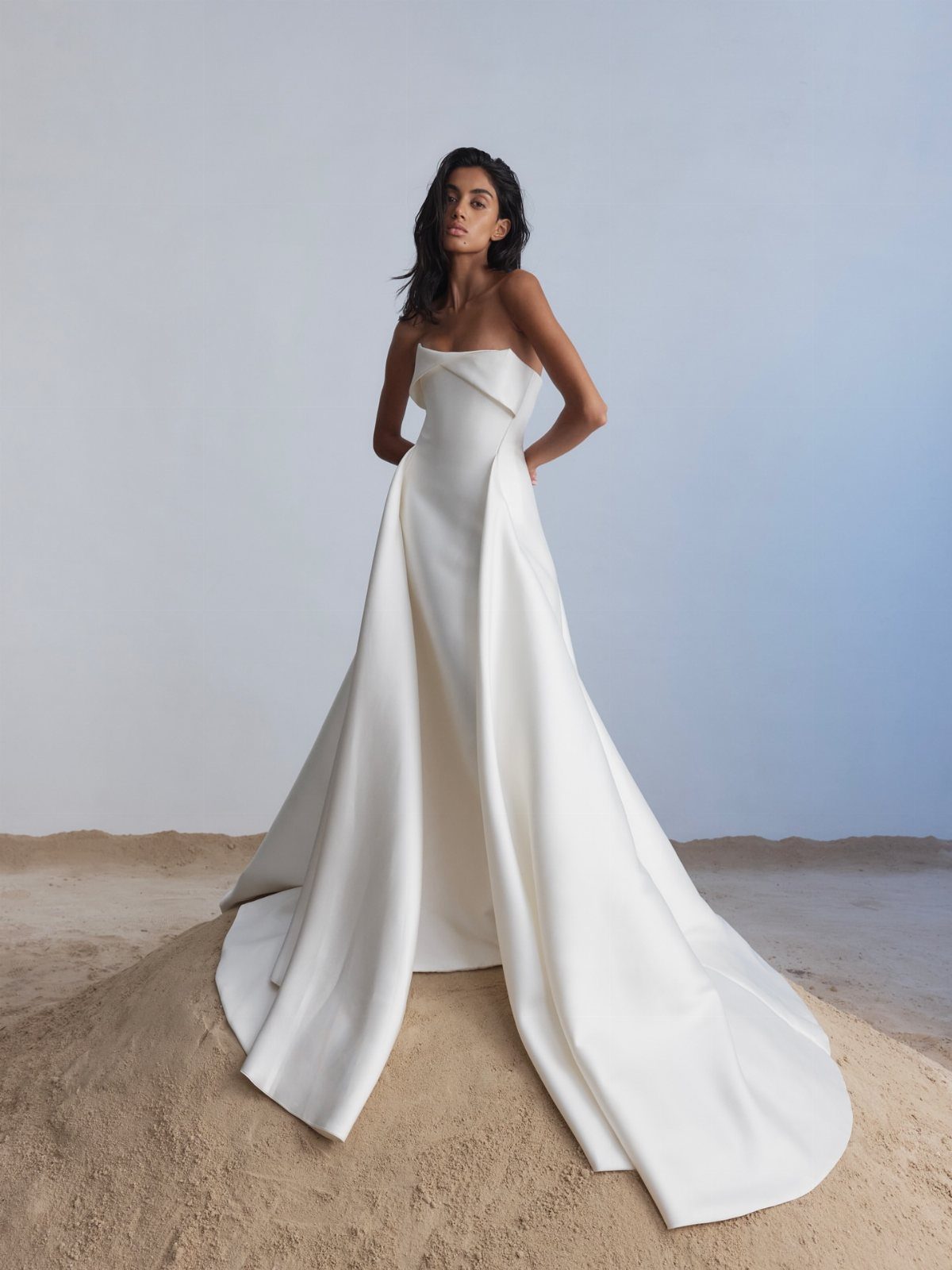
A strapless gown with a draped bodice is a structured dress, and the structure is what holds it up.
Fitting matters more than anything else here: the bodice should stay put when you raise your arms and sit down, with no tugging at the neckline.
I’d choose this for a clean, simple look, since the draping supplies the detail so you can skip heavy embellishment.
Get the alteration cost in writing at the first appointment, because bodice work is the part that takes the most fitting.
8. Floral Appliqué Mermaid Dresses
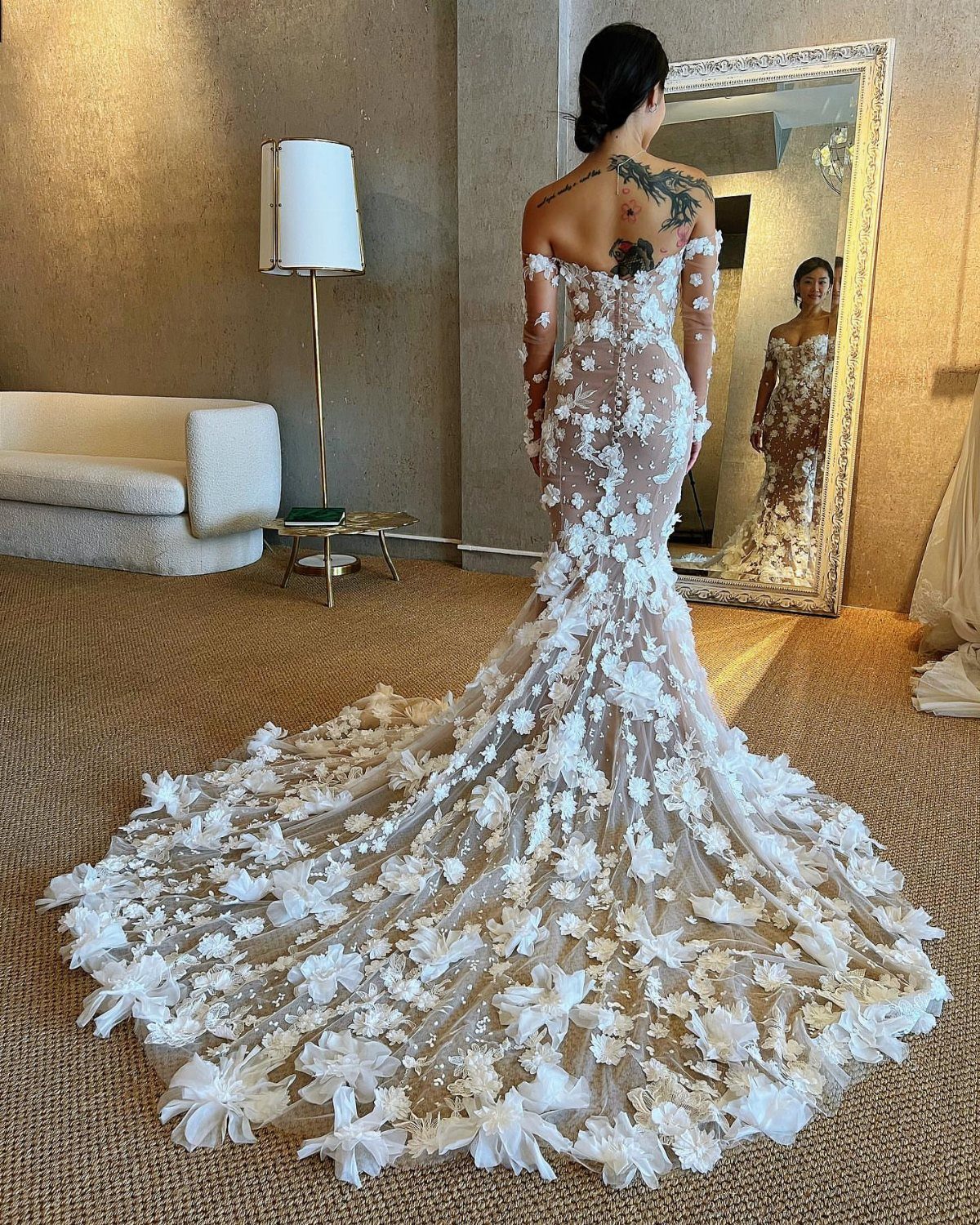
Textured 3D florals on a mermaid cut put the detail right against the body, which is where it shows most.
A fitted skirt that sweeps out into a floor-length trail lets the appliqués do the talking, so I would keep the veil and jewelry quiet.
Check how the appliqués feel against your skin and how easy it is to sit.
A gown this fitted gives you less room to move than a ball gown, so test walking and sitting at the fitting, and ask what repairs would cost if a flower snags.
9. High-neck Lace Wedding Dresses
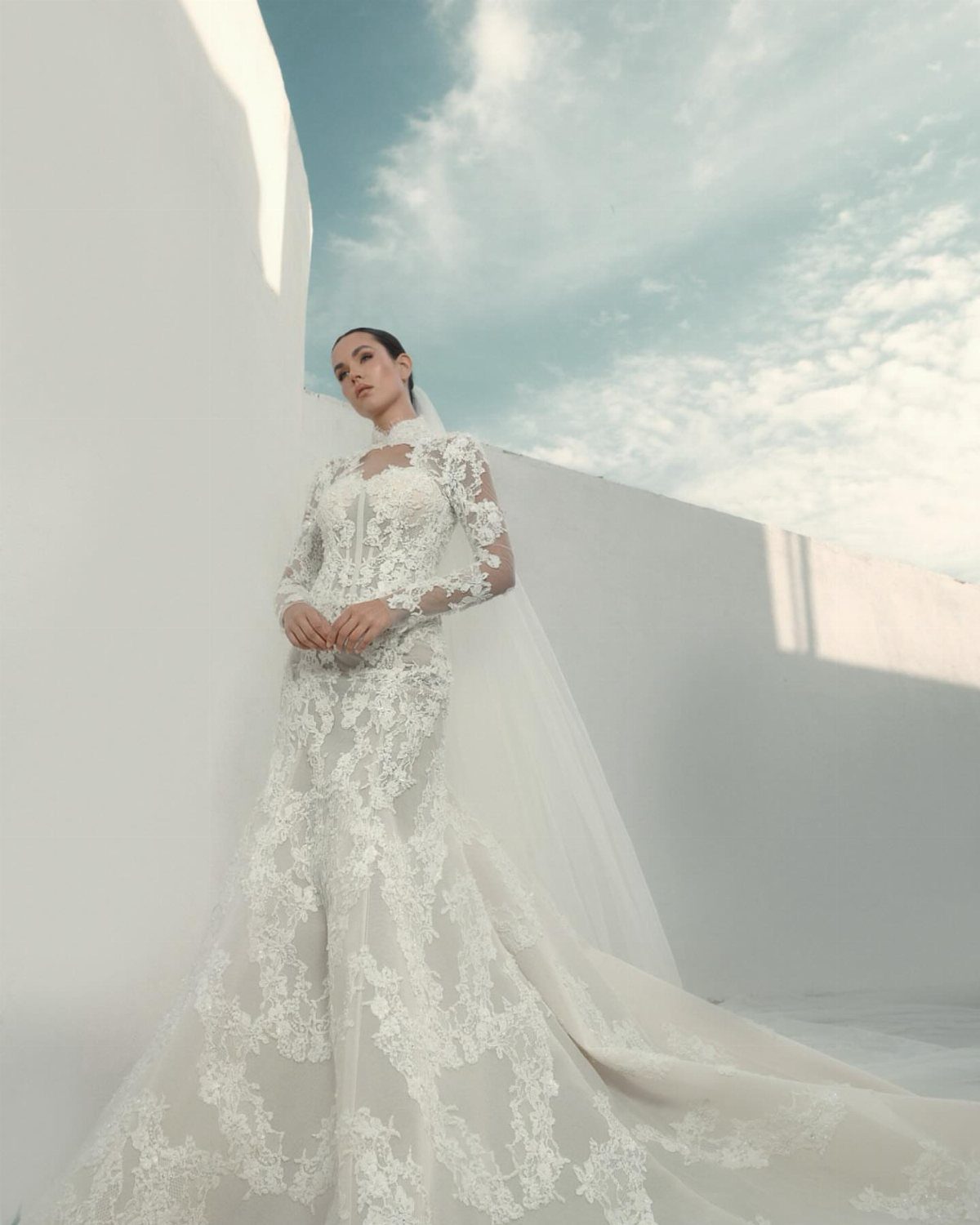
High neck, long sleeves and lace make a covered-up gown that still looks elaborate. The lace does the decorating, so a veil and a long train are all it needs.
This is a good pick if you want modest coverage without a plain dress. Ask about sleeve length at the first fitting, since lace sleeves are hard to shorten or lengthen later without disturbing the pattern.
10. Off-the-shoulder Lace Gowns
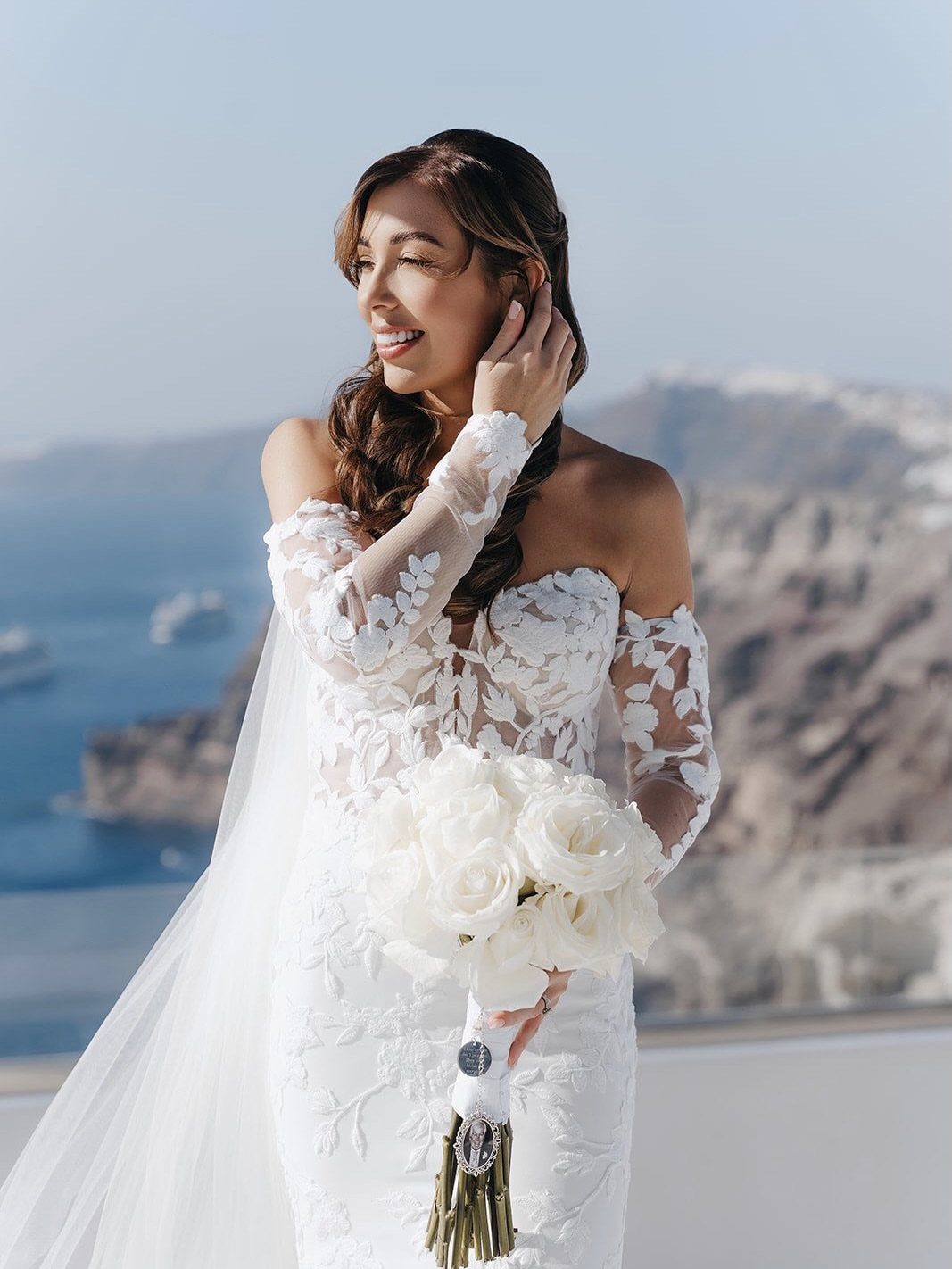
Lace sleeves that sit off the shoulder frame the collarbones and give a romantic look without a plunging neckline. For a soft, classic bride, this is the neckline I’d pick.
Fit decides everything: the sleeves need to stay in place when you hug and lift your arms. Test that at every fitting, and hold your bouquet while you do it, since reaching with flowers in hand shows any slipping fast.
11. Runway Designer Wedding Gowns
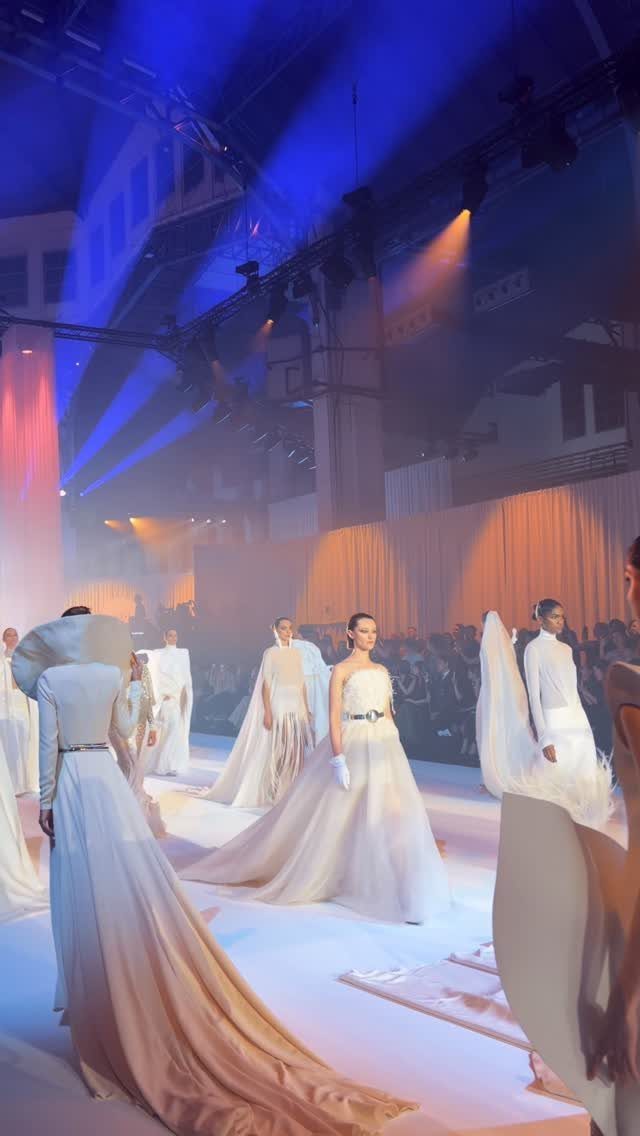
Runway gowns are made to be seen from across a room, under strong lights, so they lean toward drama.
Treat them as inspiration rather than a shopping list, because the price tag on a full designer piece rarely fits a modest budget.
Pick one idea from the show, such as a neckline or a sleeve, and look for it in a simpler gown. That gets you the look for far less.
Frankel, a runner-up in the CFDA Fashion Fund (the first time a bridal designer has entered the fund, let alone won one of its prizes) is all about taking the best parts of getting dressed–layering and styling–and applying them to bridal.
Choosing the Right Silhouette
Designers each draw the same silhouettes differently, so a "fit-and-flare" from one label can feel nothing like another’s. Judge the cut on your own body rather than by its name.
Start with how you want to move and feel from the first photos through the last dance, then pick the shape that suits that.
Body type is a starting point, not a rule. Try a few silhouettes from different labels before you decide, since the same shape can sit very differently depending on who made it.
Decide which part of the dress you want people to notice, whether waist, shoulders or skirt, and let that guide the shortlist.
Importance of Fit
A gown should fit as well as it looks, and few come off the rack that way. Plan for professional alterations from the start, and put them in the budget next to the dress itself.
Trumpet and fit-and-flare shapes show why.
They sit close through the body and open lower down, and they depend on draping, structured fabric and careful tailoring to move well down the aisle. A small error in the hip or hem shows right away.
Book your first fitting early, and schedule the last one close to the wedding so your measurements are current. Bring your shoes and undergarments every time, and ask for the bustle to be finished and practiced before the day.
Bridal Shopping Experience
A good bridal boutique gives you stylists who know how each label fits, which saves you from guessing at sizing. They can also show you several designers side by side, so you can see which one suits you.
Before you go, bring a few inspiration photos and say your budget out loud at the start. A stylist can only steer you to gowns you can afford if they hear the number first.
Ask about appointment length, how many guests you can bring, and whether the shop does alterations. Keep your group small, since too many opinions slow the decision down.
Frequently Asked Questions
What defines a designer wedding dress?
A designer gown carries the creative signature of the person who drew it, backed by careful craftsmanship.
Designer gowns usually reach shoppers through a short list of authorized bridal salons, so you may have to book an appointment to try one on.
What are the most popular wedding dress designers?
Essense of Australia, Martina Liana and Maggie Sottero come up most often among popular bridal designers.
Labels cut the same silhouette differently, so try a few from different designers before choosing. A boutique can show several side by side.





