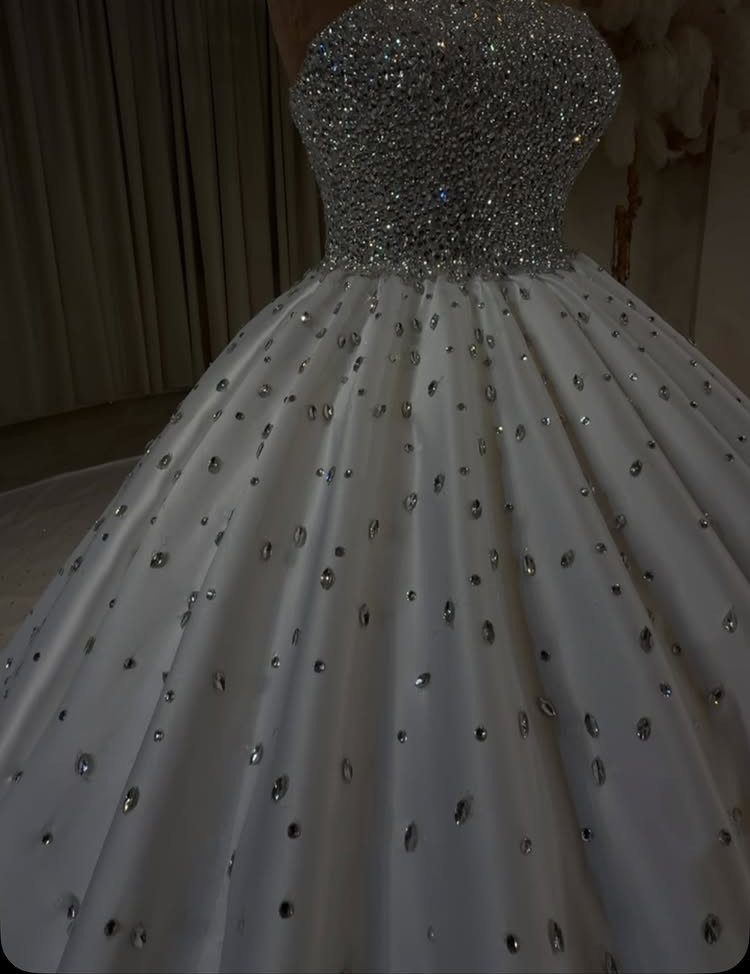
The list runs from the ball gown, with its full circle of skirt, to the slip, which is little more than satin and a clean line, and how each one behaves over a long day differs far more than how it looks.
1. Ball Gown
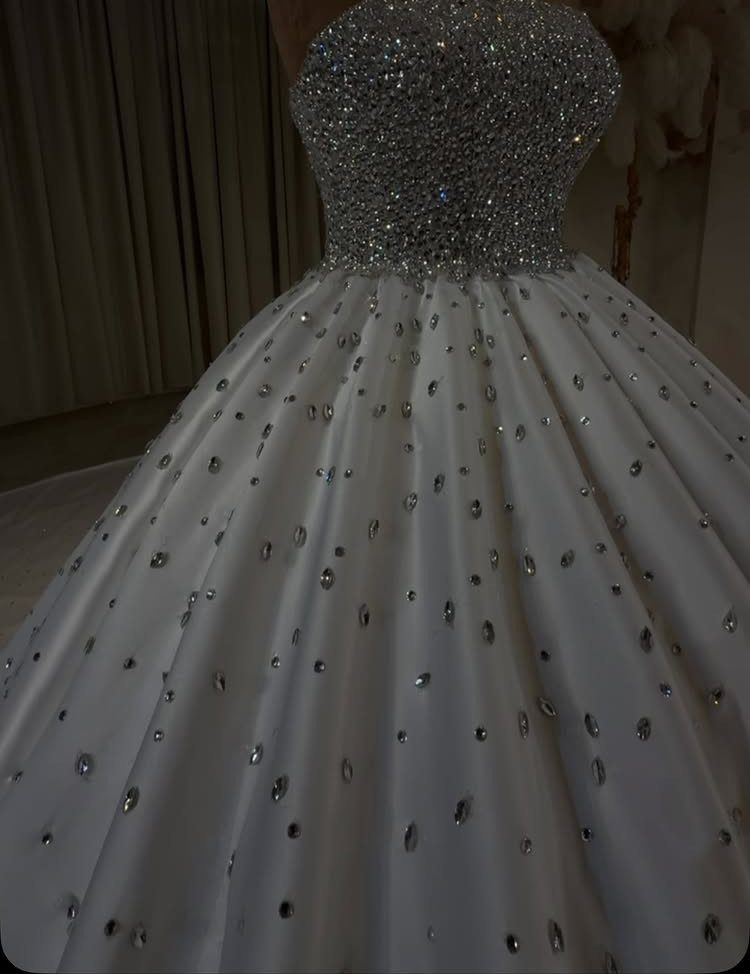
A ball gown lives on volume: a fitted bodice over a skirt that stands out from the waist in a full circle. Beading on the bodice and crystals scattered through the skirt push a ball gown further toward formal.
It suits a ceremony with room to move, like a church aisle or a ballroom. A skirt this wide takes up real space, so measure the doorways at your venue and test how it fits in the car first.
2. Mermaid
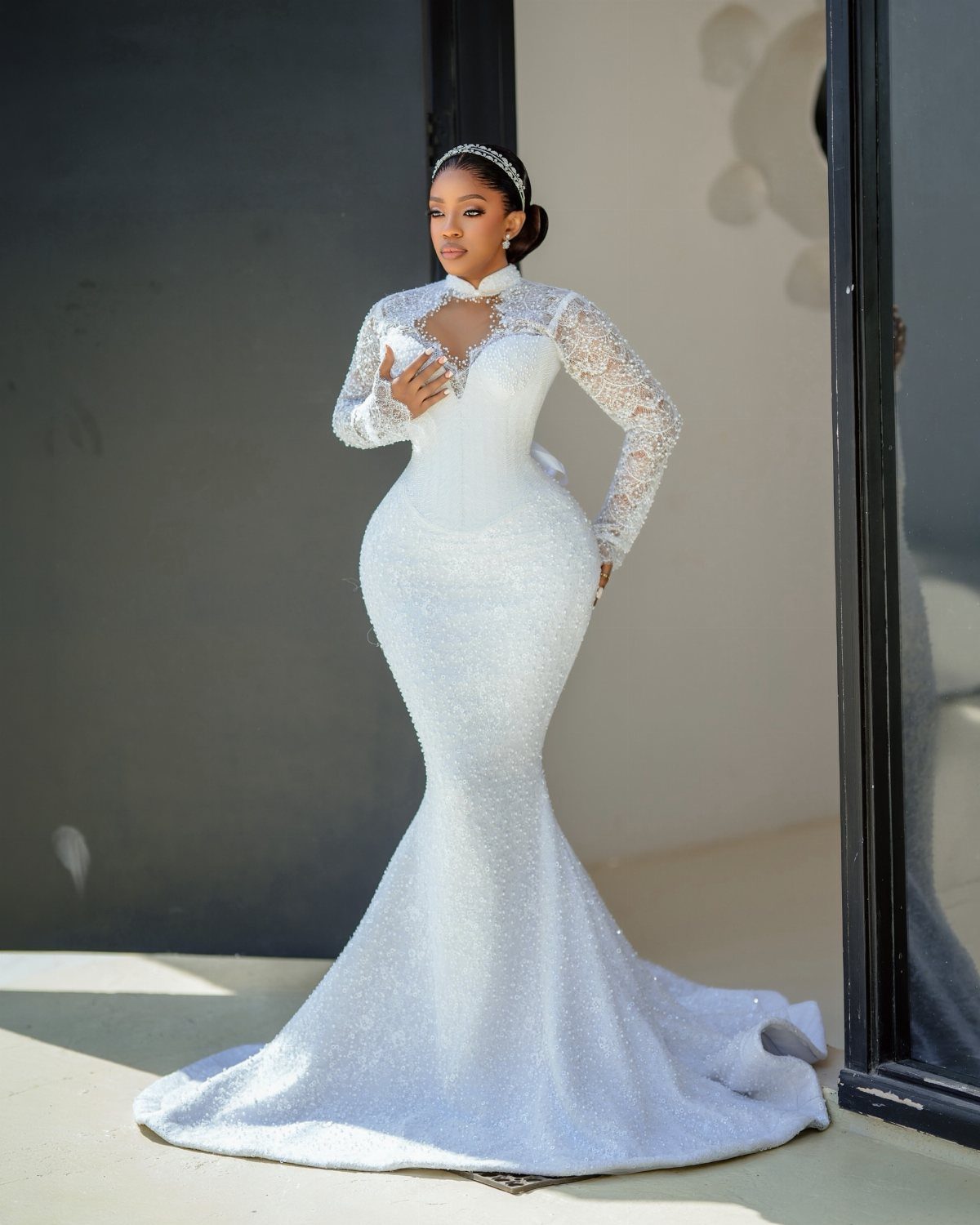
The mermaid silhouette’s sharp change in line, fitted through the hips and flaring dramatically below the knee, is what you are paying for, so try the dress on and sit down, walk and hug someone before you decide.
Lace sleeves add coverage to a mermaid without loosening the fit. I would pick mermaid only if you want the curves on show; a roomier cut will feel better for a long reception.
3. Fit-and-Flare
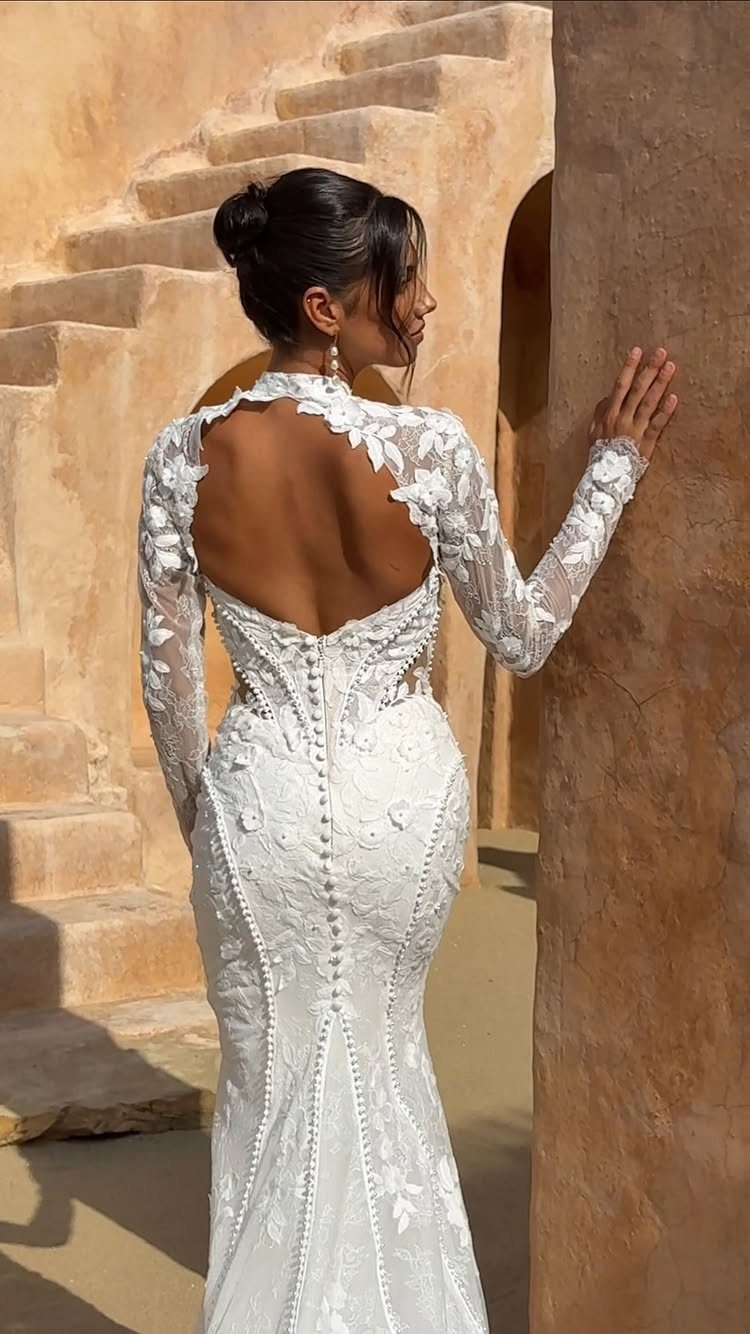
The fit-and-flare sits between A-line and mermaid: it follows the body to about mid-thigh, then opens into the skirt. You get shape without the knee-level squeeze.
A lace open back gives a plain front something to balance against.
Choose this if A-line feels too soft and mermaid feels too tight. Walking and dancing are easier here than in a mermaid, and I count that as a real advantage.
4. A-Line
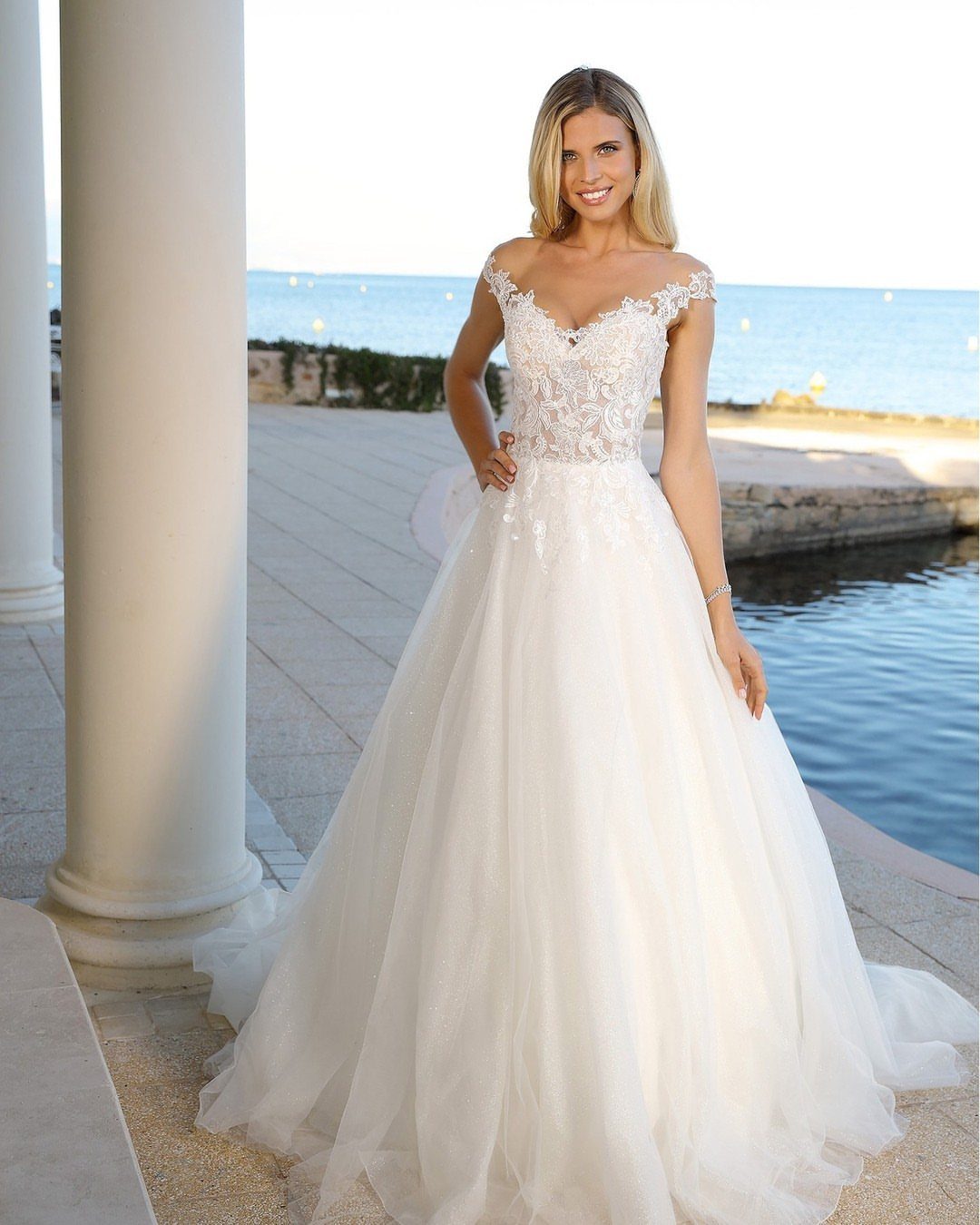
Narrow at the top and widening gradually from the waist, the A-line traces the letter it is named for. No other silhouette gets recommended as often, and for good reason: the skirt skims the hips instead of clinging to them.
If you have a modest budget and no strong preference, start your fittings here. An A-line works indoors or outdoors, and it is the easiest shape to dress up with a veil or leave simple with nothing at all.
5. Trumpet
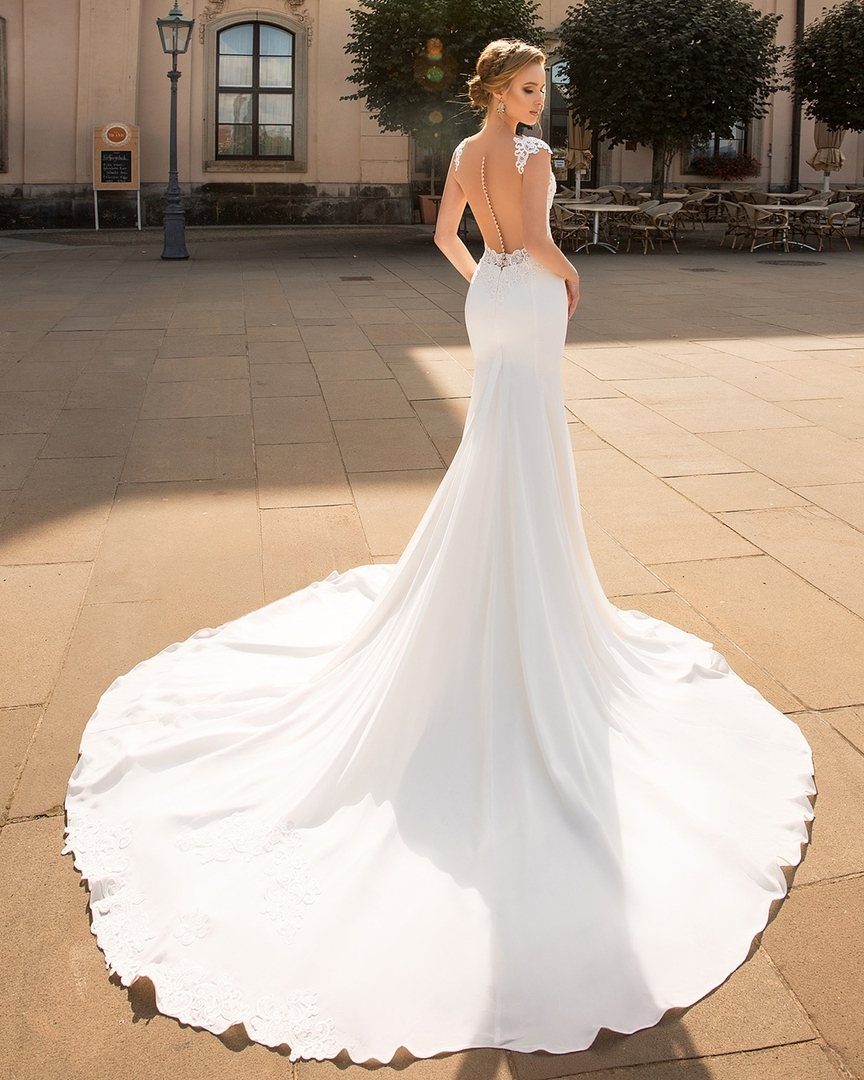
Trumpet dresses stay fitted through the hip and thigh, then flare at mid-thigh, which gives your stride a bit more room than a mermaid cut. A long train finishes the line of a trumpet.
I like it for brides who want the contour of a mermaid but expect to walk a long aisle or dance for hours.
A long train has to be bustled for the reception, so ask the salon how it bustles and whether that costs extra at alterations.
6. Empire Waist
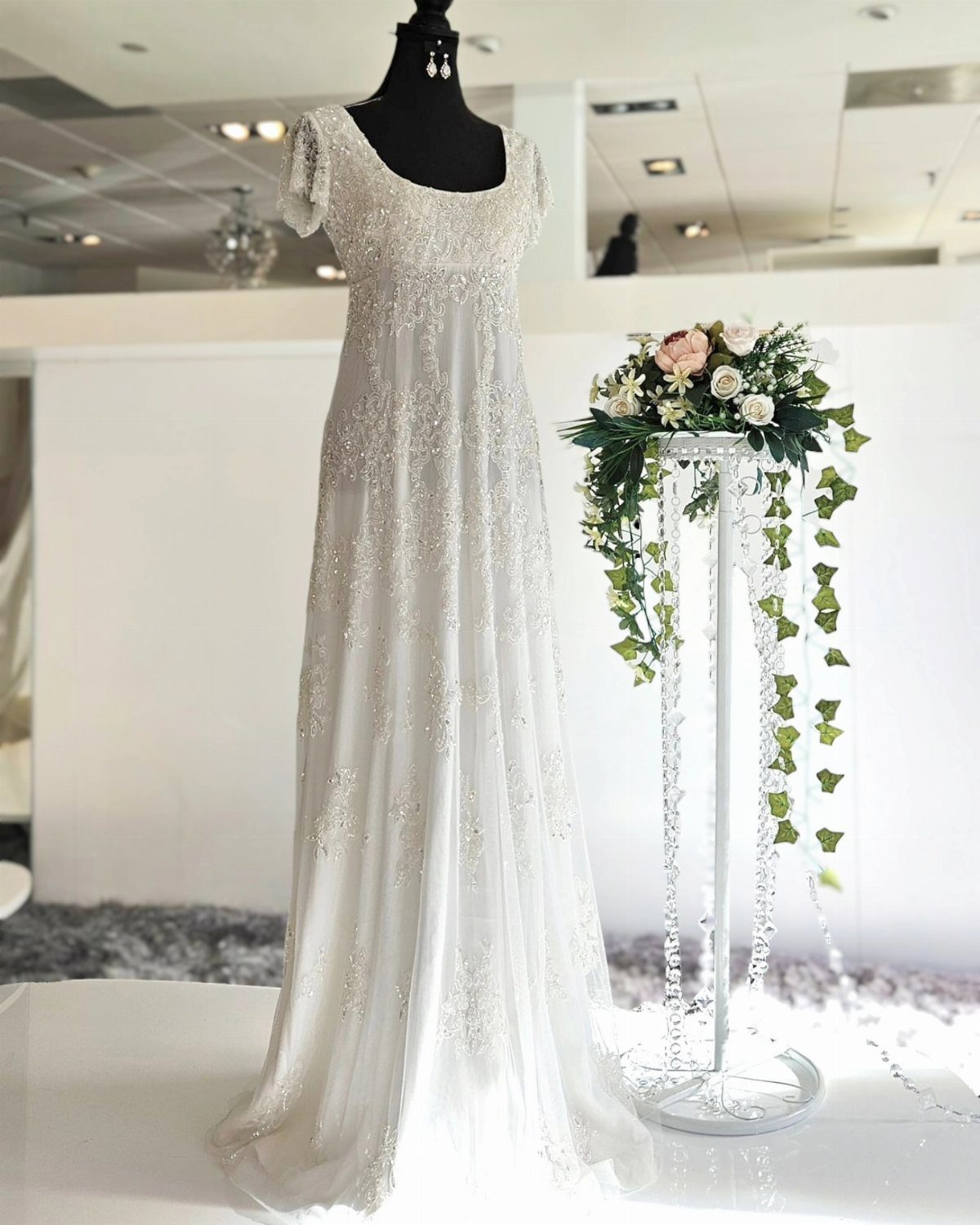
An empire waist sits just under the bust, so the skirt falls loose from there to the floor. Nothing clings at the waist or hips, and that is the appeal.
Beading across the bodice, as on this dress, draws the eye upward and keeps the skirt simple.
It is a comfortable pick for a warm day or a relaxed ceremony. Try it on in person, because the placement of that seam changes how the whole dress sits.
7. Tea-Length
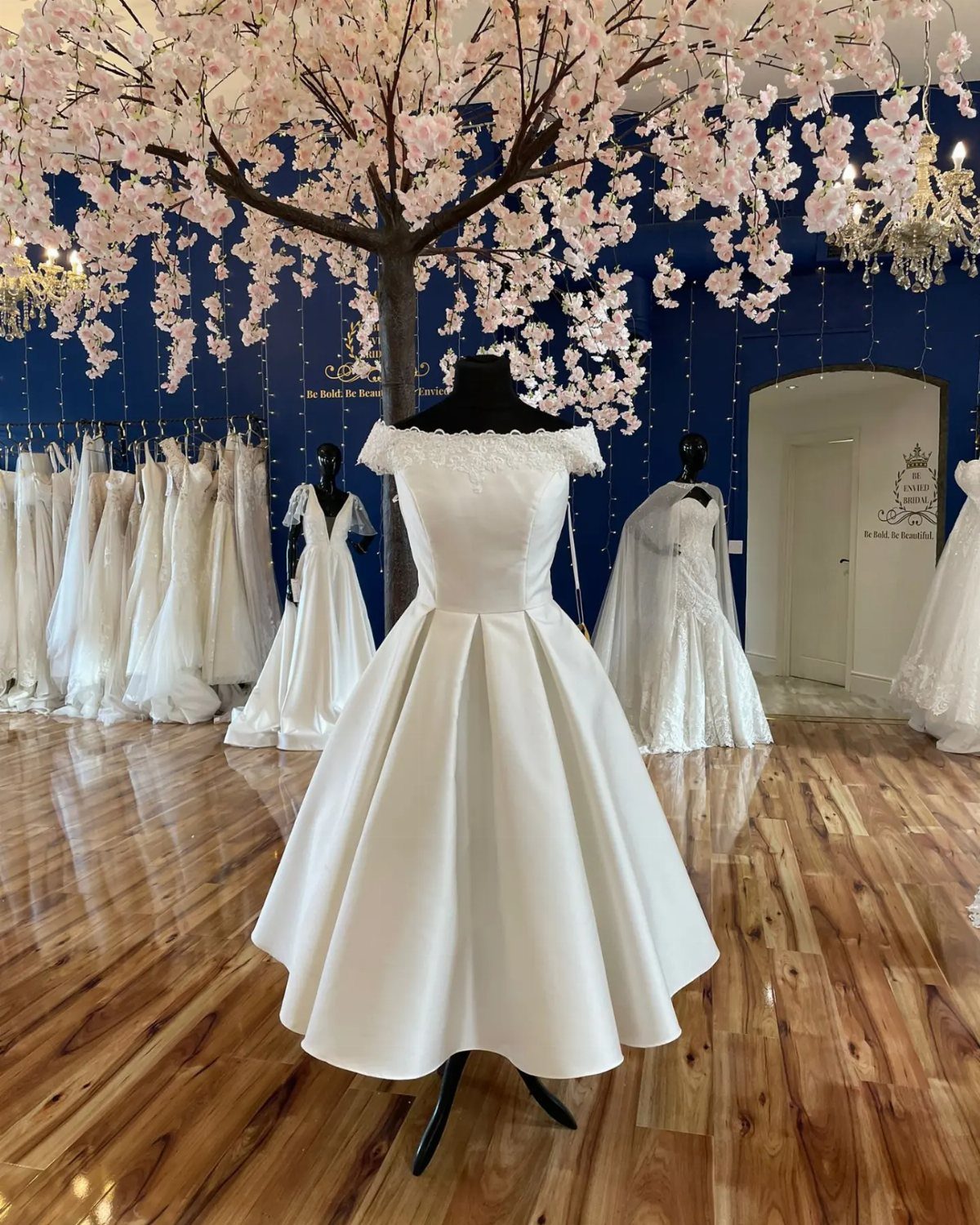
Hemlines that stop between the knee and the ankle give tea-length its vintage feel, and the off-the-shoulder neckline on this dress leans into that retro mood.
Your shoes are on show, so budget for a pair you actually love.
Without a floor-length skirt to hide them, they become part of the look. Tea-length suits a daytime or relaxed ceremony, and it spares you a long train to bustle.
8. Top with a Skirt
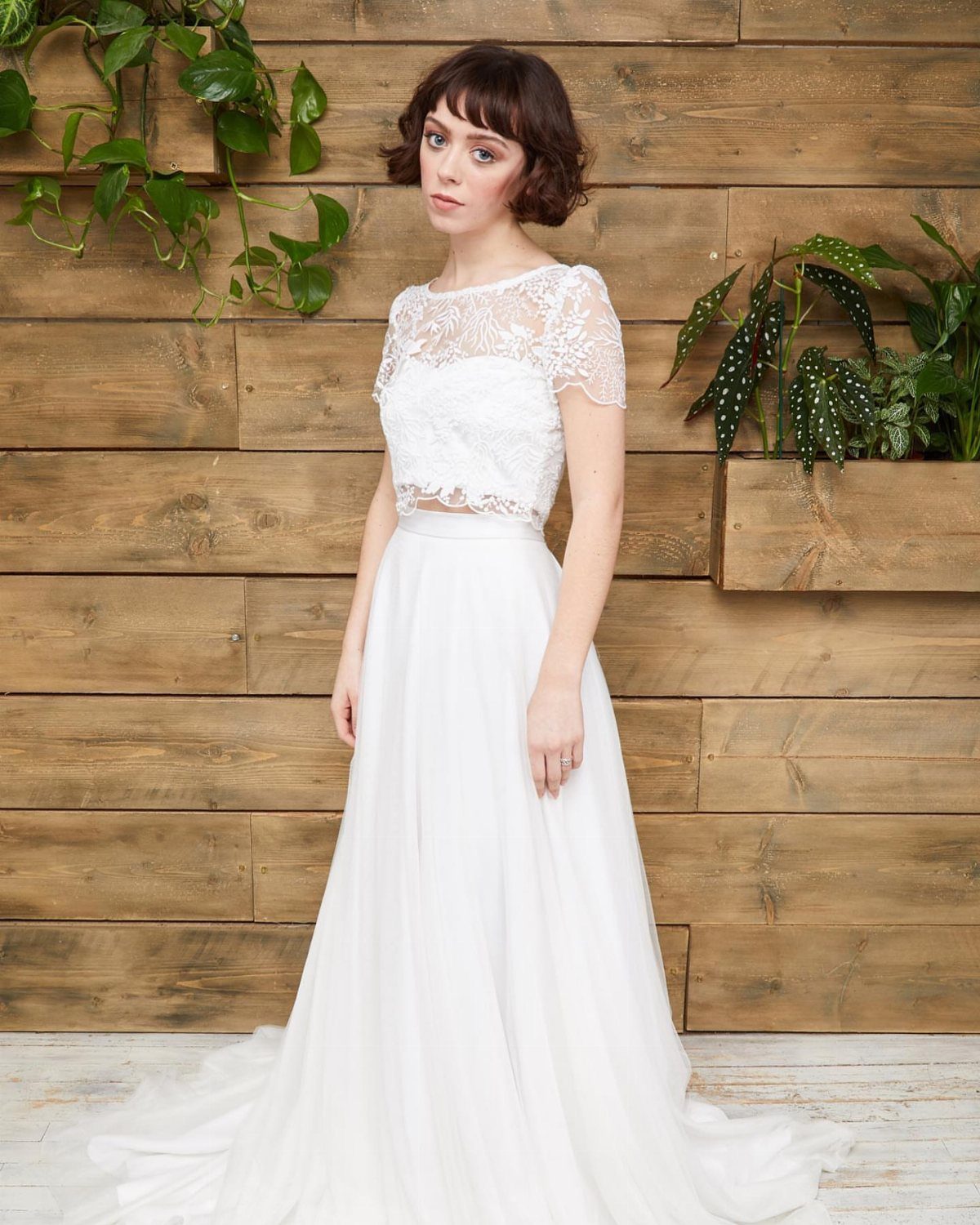
Bridal separates let you build the silhouette yourself: a lace crop top over a long tulle skirt, or a top with trousers if a skirt isn’t your style.
Buy the pieces together and try them on as a pair, because the gap between top and skirt decides how the outfit reads.
Mixing also lets you spend where you care, say on lace for the top and a simpler skirt. Each piece may need its own alterations, so ask the salon about that cost.
9. Slip
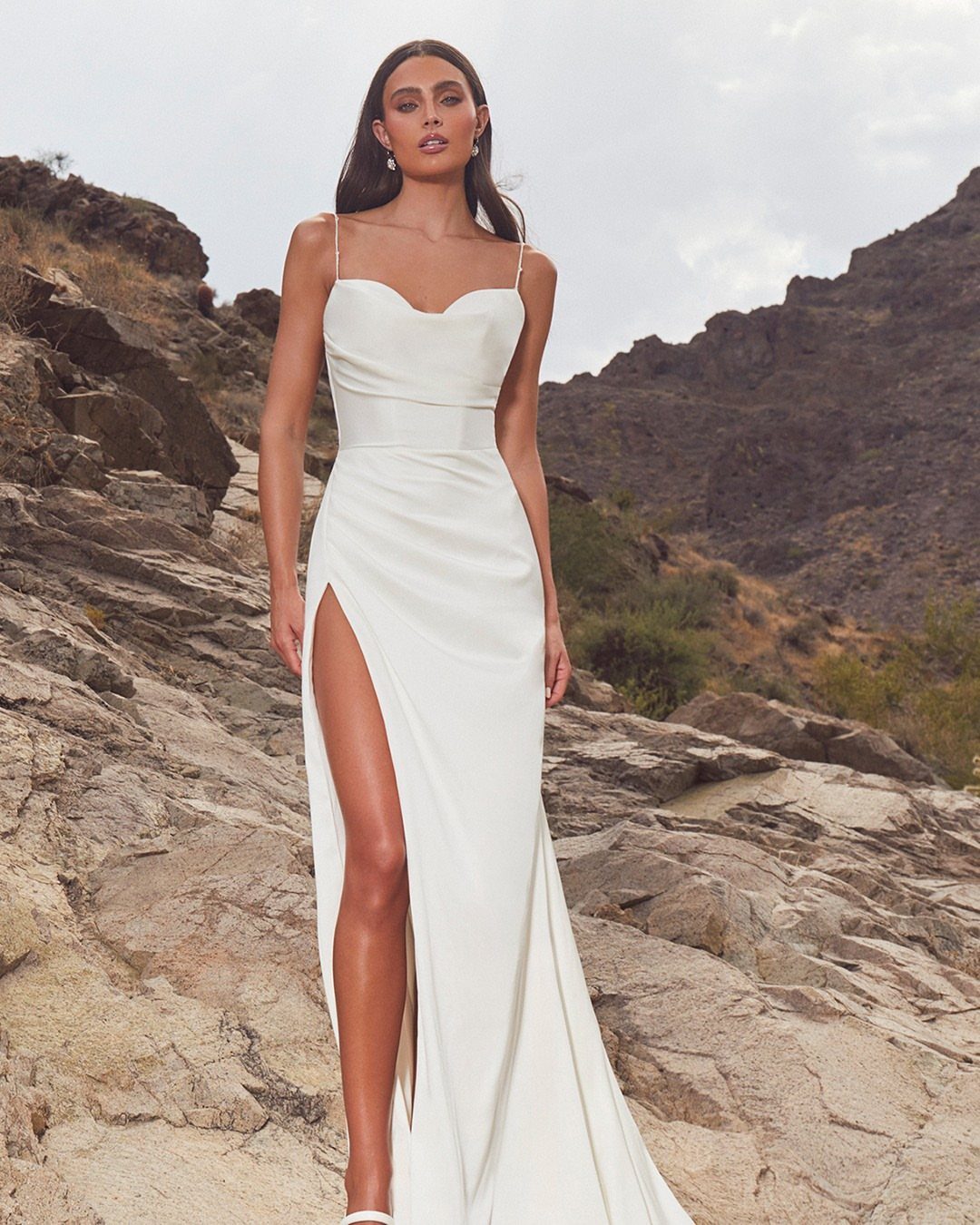
A slip dress relies on a fluid fabric and a clean line, so satin with a high slit needs no extra detail; the cut and the drape do all the work.
Because there is so little decoration, fit does all the work.
Have it tailored closely, since a plain fabric shows every wrinkle and pull. I like it for brides who want something quiet, and it pairs easily with a simple veil or nothing at all.
Choosing the Right Silhouette
Start with the venue and your plans for the day, then let body shape come last. A full cathedral skirt can swallow a small garden ceremony, and a narrow sheath can vanish in a big ballroom.
Ask yourself 2 plain questions: will I be dancing all night, and will I spend most of the day posing for photos?
A dress built for photos can wear badly over a long reception, so think about sitting, dancing and eating in it.
You don’t have to squeeze into a silhouette. If a shape feels wrong in the mirror, move on to the next one.
When you try a dress on, pay attention to your first reaction. A mirror only tells you how the dress fits; the way you feel standing in it tells you whether to buy it.
The relationship between your body type and dress shapes for weddings is important, but here’s the beautiful truth: every silhouette can be stunning on every bride.
Fabric Choices Matter
Silhouette sets the shape, and fabric sets the feel. The same cut can look crisp in one material and soft in another, so judge the fabric as carefully as the line.
These are the fabrics you will see most, and how each one behaves:
- Duchess satin and mikado: structure and shine, with crisp lines that make dramatic shadows and highlights in photos.
- Tulle: volume and romance.
- Chiffon: softness and movement.
Ask the stylist how a fabric’s weight and texture will look on camera, since the fitting room lighting can be misleading. Then move in the dress: turn, sit and lift the skirt to see how the material falls.
Personal Style Reflection
Plenty of brides arrive at the first appointment with no fixed idea of their style, and that is fine.
Before you go, save every gown image you love and look for repeats. You may find you keep choosing defined waists, simple fabrics, fuller skirts, low backs or one neckline.
Then try a silhouette you hadn’t planned on. Designers often advise an open mind over sticking to what you expect will work, and a surprise pick can beat the one you came in for.
In each dress, check these:
- How you feel wearing it
- How easily you can move
If the gown feels like you, that settles it.
Frequently Asked Questions
What does a silhouette dress mean?
A wedding dress silhouette is the overall shape or outline of the gown, such as ball gown, mermaid, A-line or slip.
A cut gives a dress its outline, and the material decides how that outline behaves: the same A-line reads sharp in mikado and loose in chiffon.
What wedding dress silhouette is most flattering?
The A-line is the safest bet for most people.
Fitted through the bodice and opening up from the natural waist, it grazes the hips rather than hugging them. No single shape flatters everyone, though, so try several and trust how you feel standing in each one.
How do I figure out what kind of wedding dress I want?
Screenshot every gown you like, then scan the pile for patterns: a defined waist, plain crepe, a full skirt, a low back, or the same neckline over and over.
After that, slip into one shape you never planned to try, because the surprise often ends up winning over the dress you walked in wanting.
How do I choose a silhouette for my venue and plans?
Let the venue and the schedule for the day guide the choice first; body shape can settle the tie afterward. If you’ll dance all night, favor a fit-and-flare, trumpet or A-line over a tight mermaid.
Which wedding dress silhouette is best for a modest budget?
The A-line is the one I’d start fittings with if your budget is modest and you have no strong preference. Indoors or out, it holds up, and a veil dresses it up while bare styling keeps it simple.
Splitting the look into a top and a skirt lets you put the money into one piece, say a lace bodice, with a plain skirt below; just budget for alterations on both.





