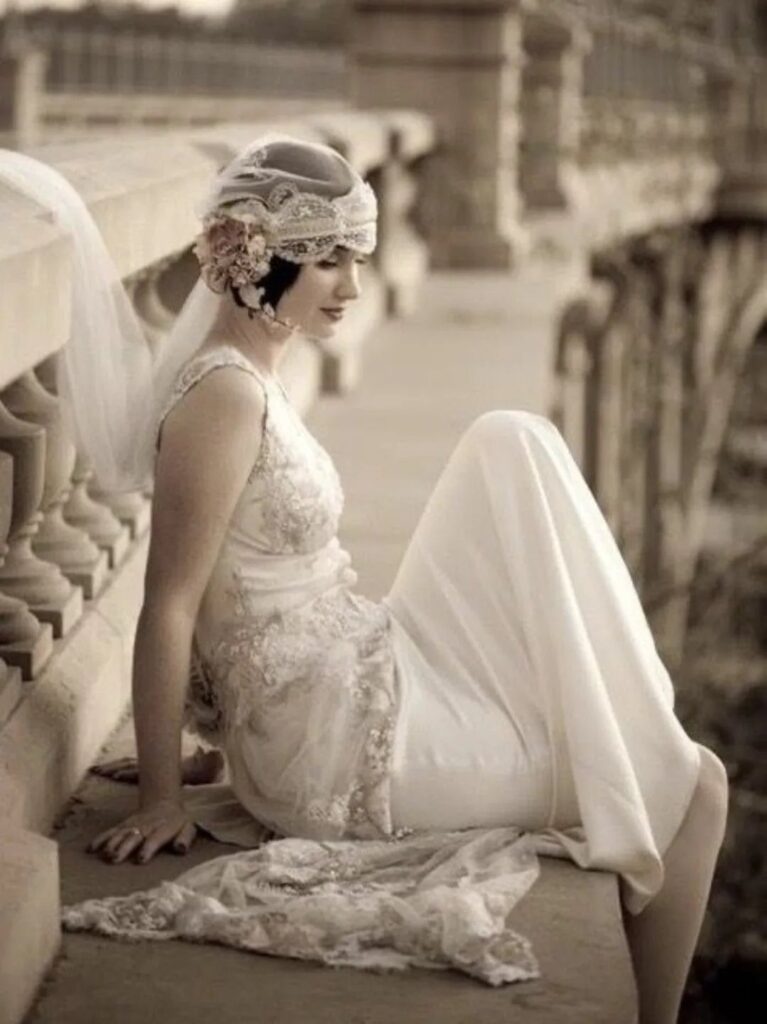
These ideas range from a beaded sheath that costs more than a plain column of the same length to a pearl strand that keeps the jewelry budget small, and the one that fits depends on whether you want a true century-old gown or a modern reproduction.
Modern 1920s-style dresses are easier to alter than originals, and a reproduction in a sturdy fabric holds up far better if you plan to dance.
1. Beaded Dresses
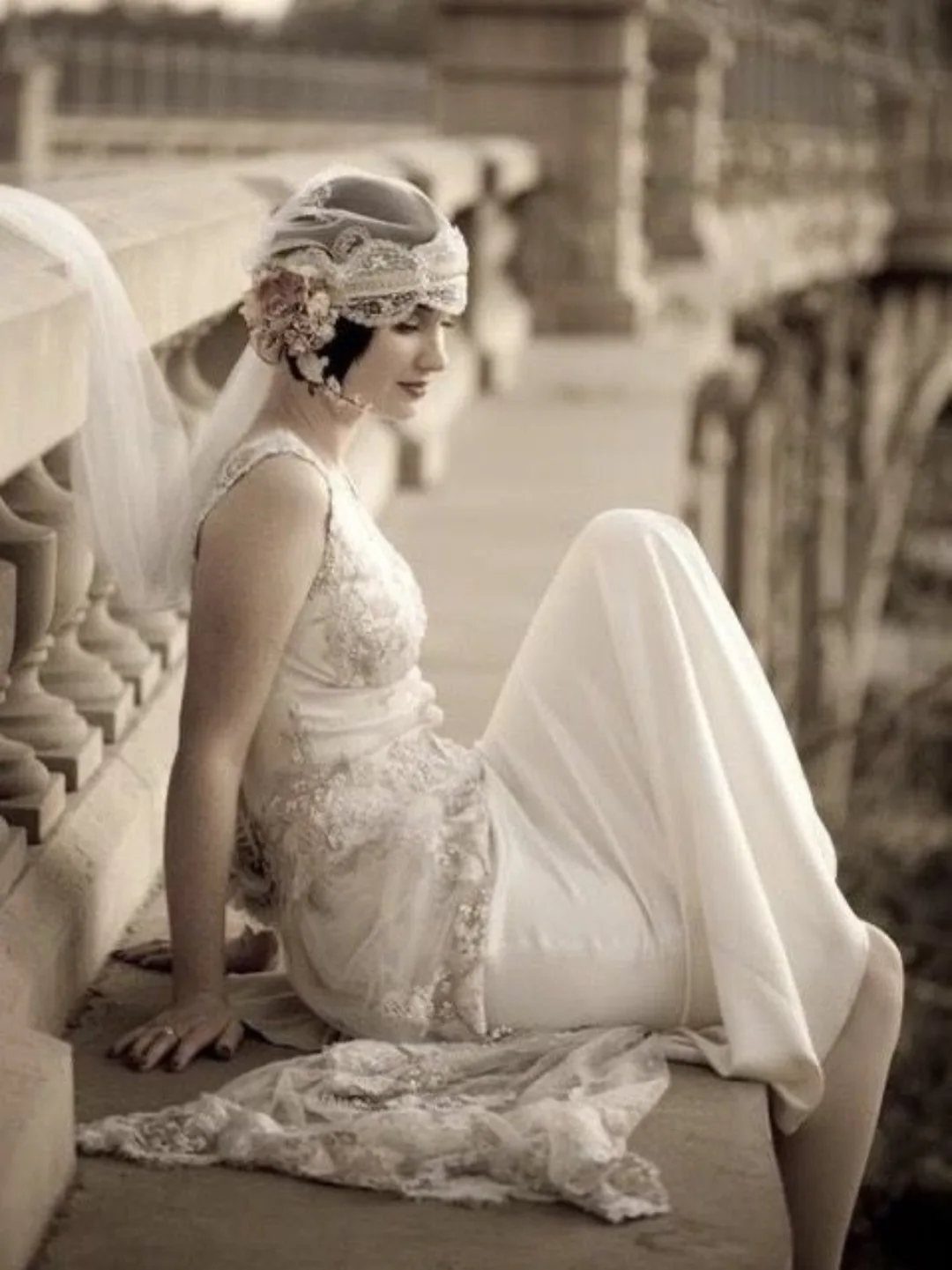
Beading is what makes a 1920s-style dress move, and it is also what drives the price. Dense beadwork means hours of hand labor, so expect it to cost more than a plain column of the same length.
If the budget is tight, put the beads on the bodice and skimmed hips, then work a simpler skirt below. A cloche veil and headpiece, like the one on this bride, let the dress do the talking without extra sparkle.
Ask for a swatch first and hold it under both daylight and indoor lighting.
Head-to-toe embellishments feel bridal—but can feel basic—if you’re not selective with your textures, fabrications, embroidery patterns, and accessories. Opt for beadwork that provides intrigue, rather than your standard sequin sheath, and nods to the Deco designs of the ’20s.
2. 1920s Vintage Style Wedding Dresses
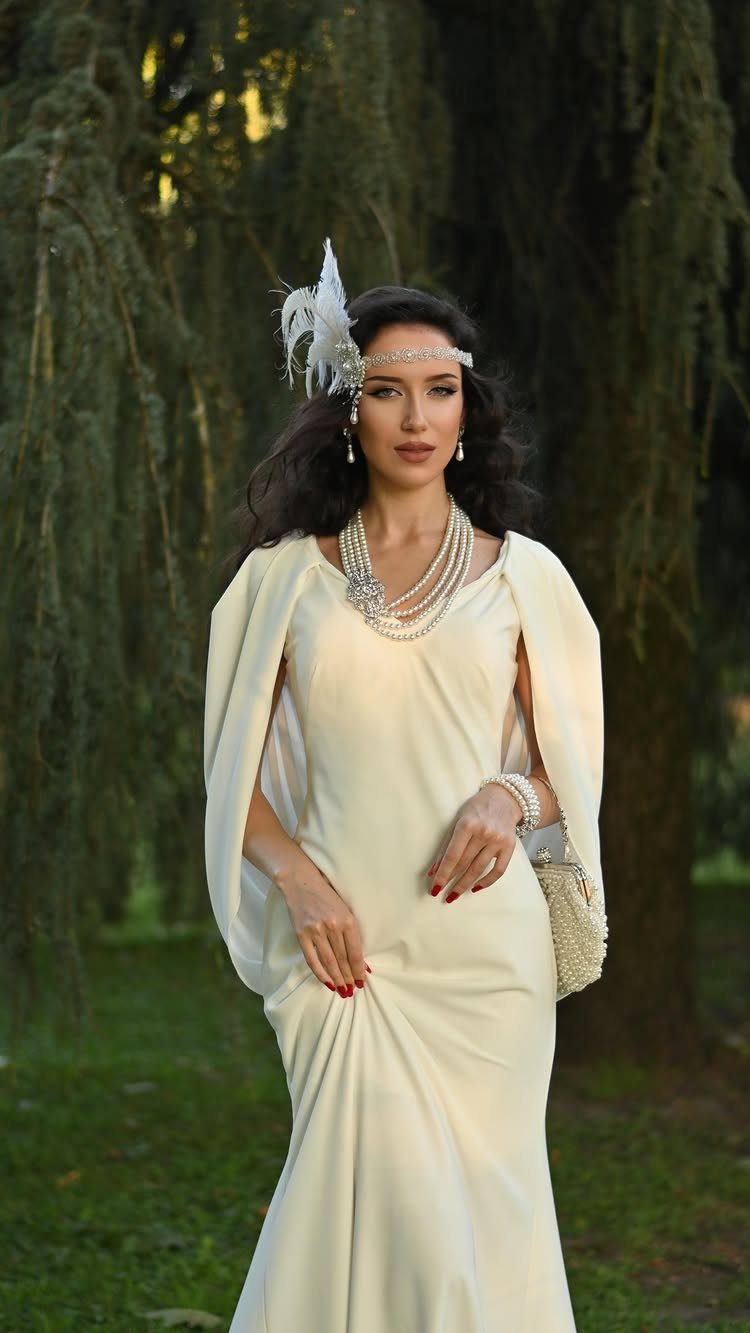
For a 1920s look, cream is my pick over stark white. It reads softer than stark white and pairs naturally with pearls, which cost far less than most bridal jewelry.
Vintage-style gowns from modern makers keep the era’s flair without the fragility of a true century-old dress, which matters if you plan to dance.
Buy the accessories last, so they match the gown’s exact shade.
3. Juliet Caps
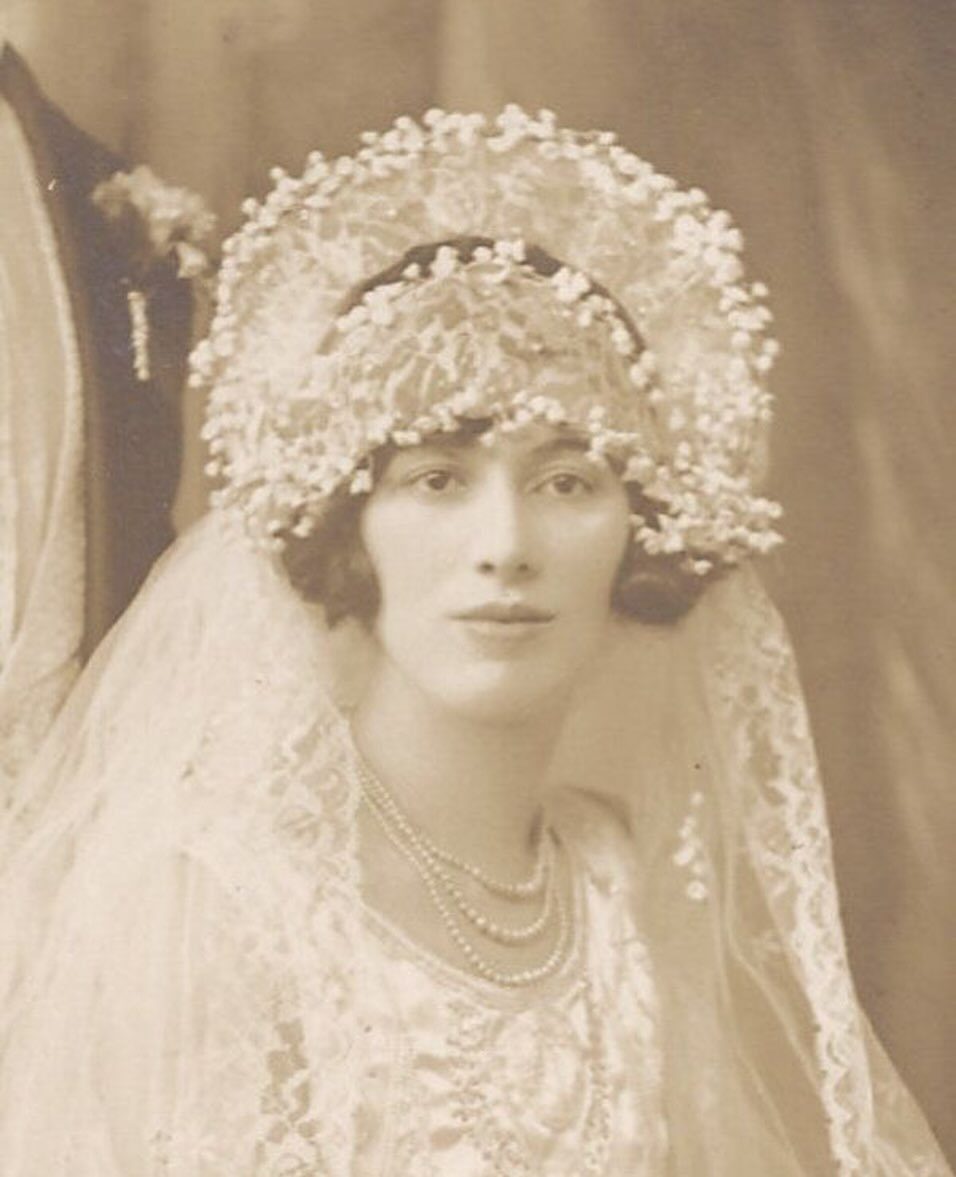
A Juliet cap sits on the crown of the head like a small, rounded skullcap, and a veil falls from its edge. Floral versions, like the ornate one in this portrait, add texture where a plain cap would disappear.
I like this option for brides who find a full cloche too severe. It frames the face gently and can stand in for a tiara.
Pair a decorated cap with simple pearl strands, and a clean neckline on the dress means nothing competes.
4. Cloche Veil Wedding Gowns
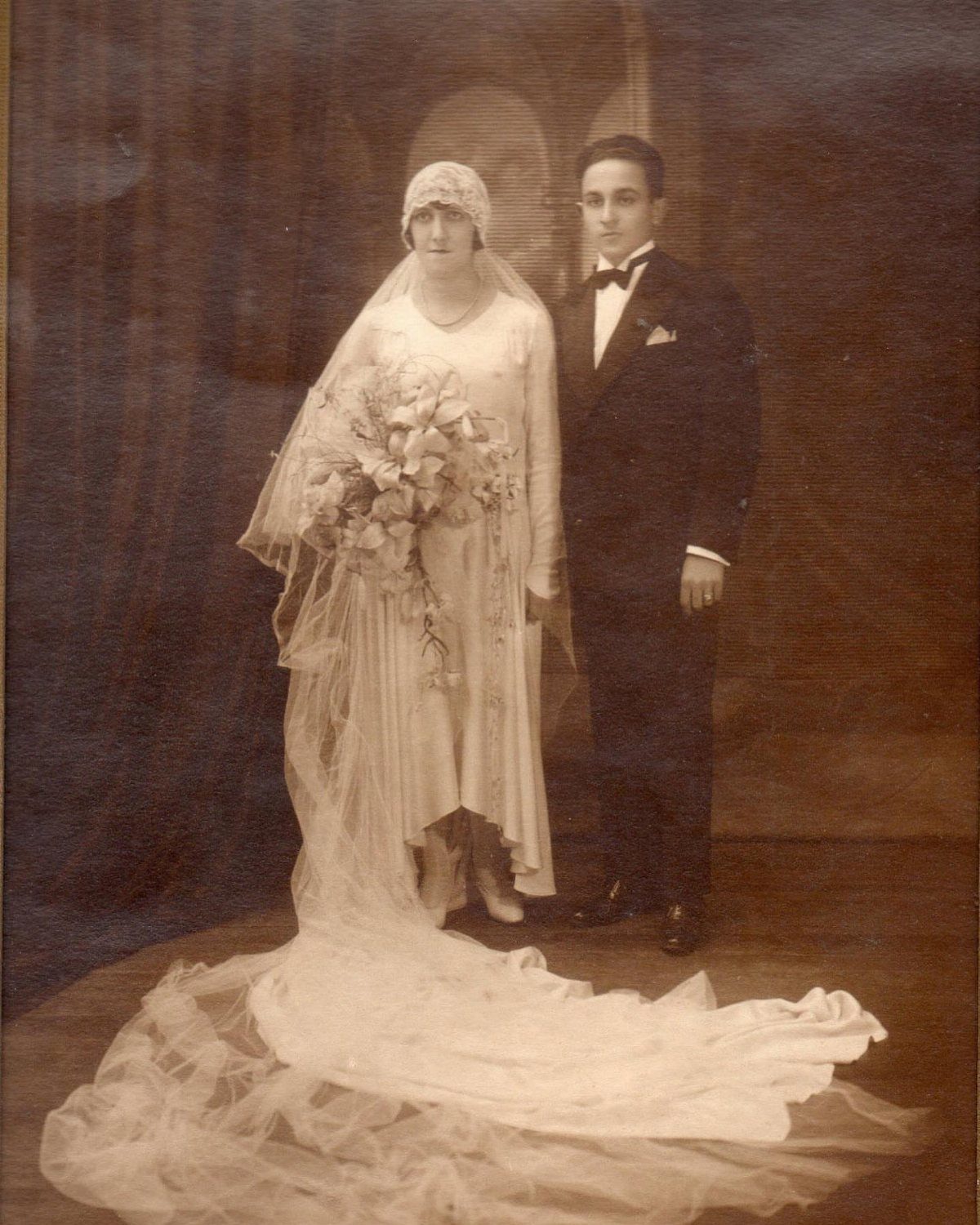
Wearing a genuine 1920s dress with a close-fitting cloche veil gives you the whole era in 2 pieces. Original gowns are delicate, so a seamstress should check the seams and fabric first, ideally before any money changes hands.
A reproduction costs less to repair and is easier to alter. The cloche itself hugs the head, so style your hair close and smooth beneath it.
For the groom, a classic tuxedo is all it takes to match, as in this studio portrait.
Resurgence of 1920s Fashion
The 1920s keep coming back to brides because the dresses carried a message: women were claiming new freedoms, and the gowns showed it.
A relaxed, flowing shape celebrates the natural body instead of molding it, which is why these dresses flatter so many figures.
Most 1920s-style gowns land in one of two camps: a sheath covered in beadwork, or a looser drop-waist cut that moves when you walk.
Lowered waistlines are the signature, so check where the waist actually falls on you before you fall for a photo.
Sequins and feathers push the look toward flapper fun. If you want something lighter and more playful than formal, that is the direction I’d lean.
An authentic gown from the era is wearing a piece of history, and I find that hard to resist, though it takes patience to find one.
Jewelry Trends
Beyond the wedding band, a 1920s bride usually wore almost no jewelry at all.
If she added anything, it was a single strand of pearls or faceted white or clear beads, usually 12 to 20 inches, which sits anywhere from a choker to a princess length at the collarbone.
I’d follow that restraint. One long strand does the job, and it keeps the jewelry budget small.
If you want a bolder, more current take, layer pearls thickly.
Wear them long and wrapped several times around the neck, or let them cascade down the back with an open-back gown. Skip crystals and sparkle; the pearls alone give you glamour without the glitz.
Pick one approach, a single strand or a heavy layered stack, rather than mixing both.
Frequently Asked Questions
What are the key features of 1920s wedding dresses?
The signature is a lowered waistline, cut either as a beaded sheath or as a looser drop-waist that swings as you walk. The shapes are relaxed and flowing, so they skim the body instead of molding it.
What accessories are popular with 1920s wedding dresses?
Pearls and head coverings lead the list. A single long strand of pearls, hanging 12–20 inches, was the period choice, and a thick layered stack is the bolder modern take.
Should I buy an authentic 1920s wedding dress or a reproduction?
A reproduction is the safer buy if you plan to dance.





