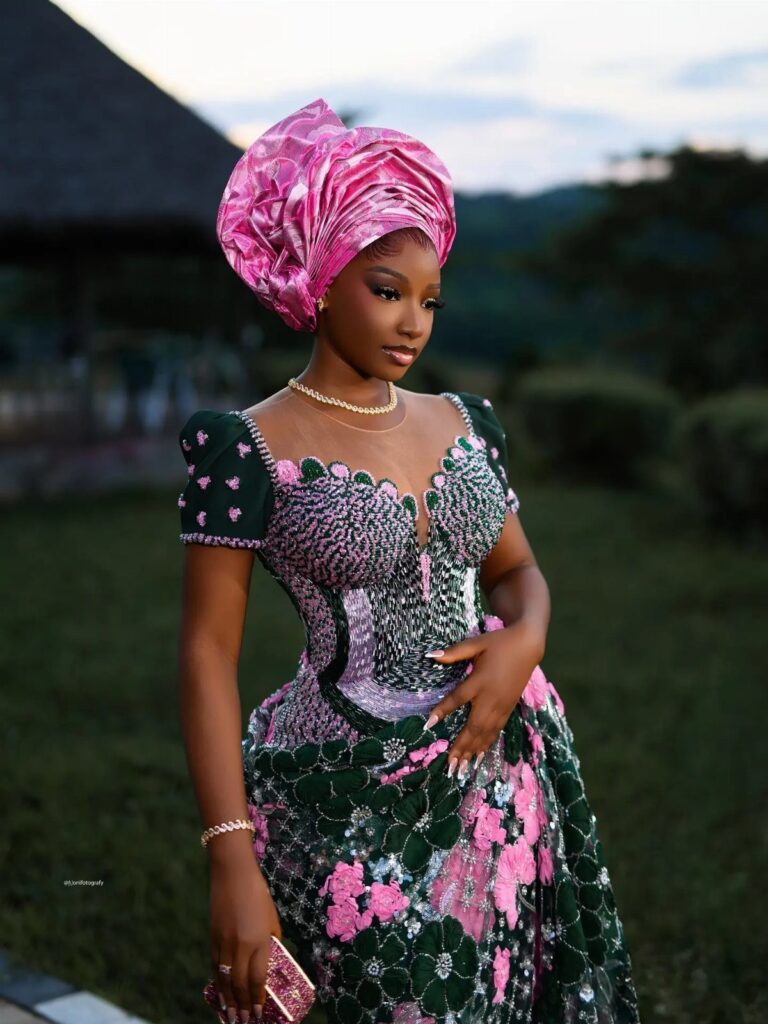
The list runs from the Maasai dress, which stays simple and puts its money into beadwork, to Ghanaian kente, where hand weaving and tailoring cost real money.
Culture sets the look before any silhouette does: your family’s tradition, or the one you want to honor, decides the fabric, the colors and the jewelry.
1. Modern Adaptations
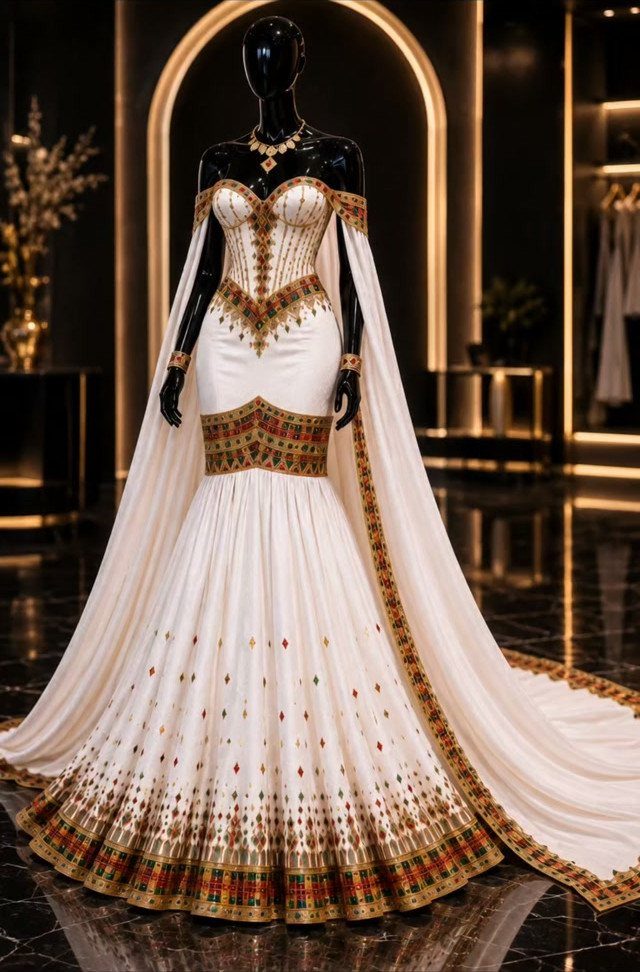
A mermaid silhouette in white, with gold and red traditional patterns worked into it and a long cape behind, is the easiest way I know to wear heritage without giving up a modern cut.
The shape stays clean, so the embroidery does the talking.
Keep the pattern in one zone, like the bodice or the cape edge, so the gown reads as bridal first.
Ask to see the embroidery up close at your fittings, since that is where careful detail shows: look at stitch spacing, how the thread lies flat, and whether the edges are finished cleanly before you pay a deposit.
A cape also lets you change the look between ceremony and reception.
2. Nigerian Wedding Dress
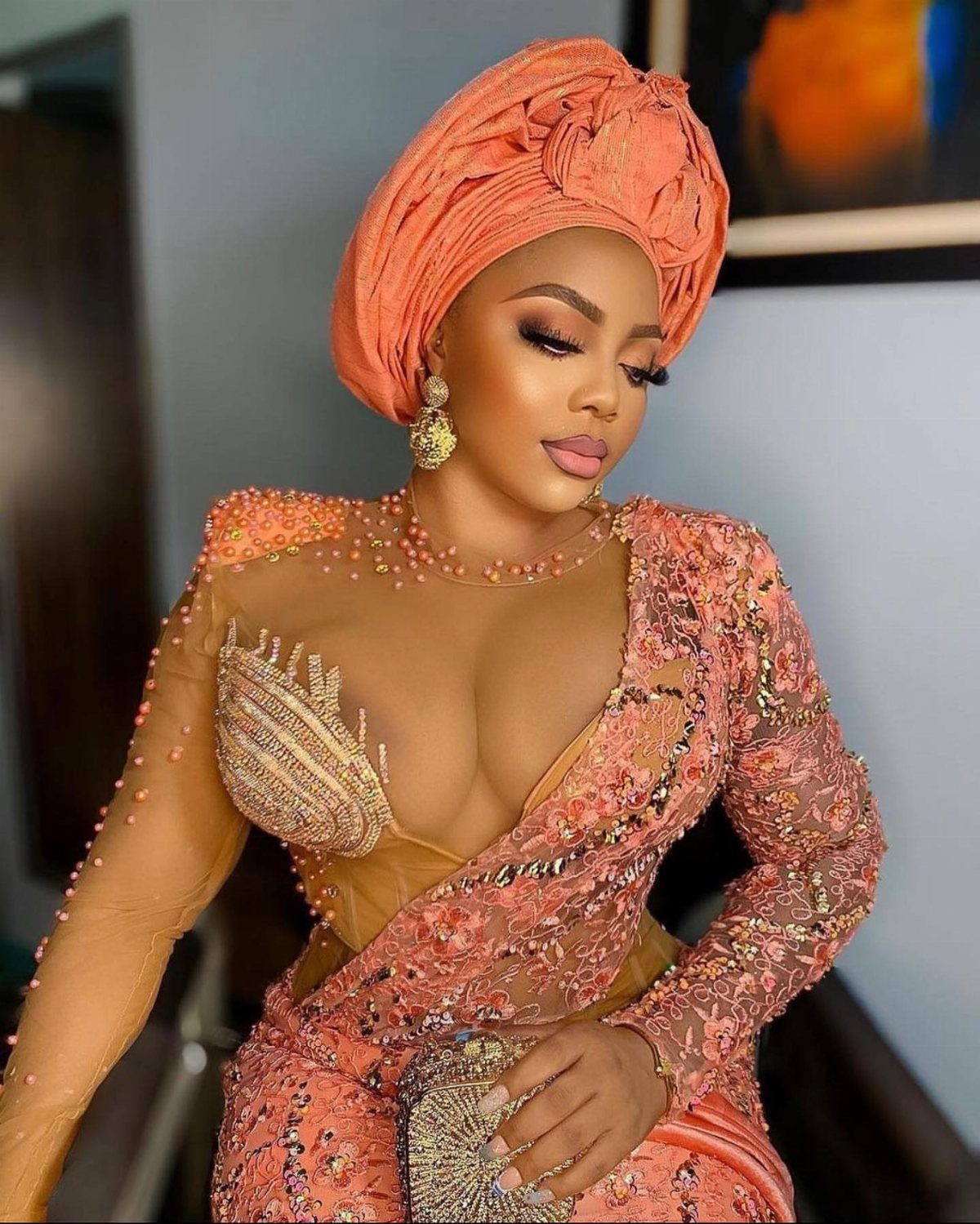
Long, bold sleeves are what make this peach Nigerian bridal look so striking, and the matching gele headtie finishes it like a crown. Peach is a softer choice than the saturated colors people expect, and it photographs warmly indoors.
Order the headtie from the same fabric as the dress, so the two match exactly. Ask whoever ties it to do a practice wrap before the wedding, since the shape matters as much as the cloth.
Ornate fabric with sleeves this dramatic needs very little else. I would skip a veil and keep the jewelry small.
3. Ghanaian Bridal Kente Cloth Dress
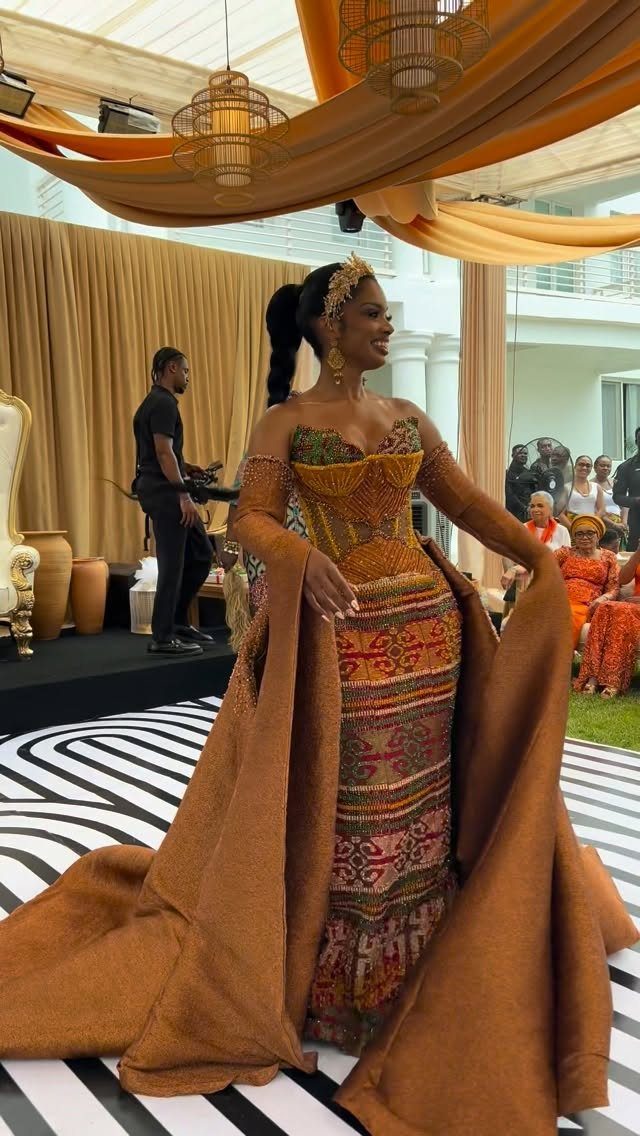
Kente is woven in narrow strips and stitched together, so a gown in gold and multicolored kente carries its pattern in the cloth itself. The long cape gives that pattern room to move when you walk outdoors.
Gold tones are the safest way to wear it for a wedding: they read as formal, and they sit well against other gold decor.
Let the kente be the loudest thing on you. Plain gold jewelry, or none, works better than competing prints.
Weaving and tailoring by hand cost real money, so ask for a quote early and budget for fittings.
4. Maasai Wedding Dress
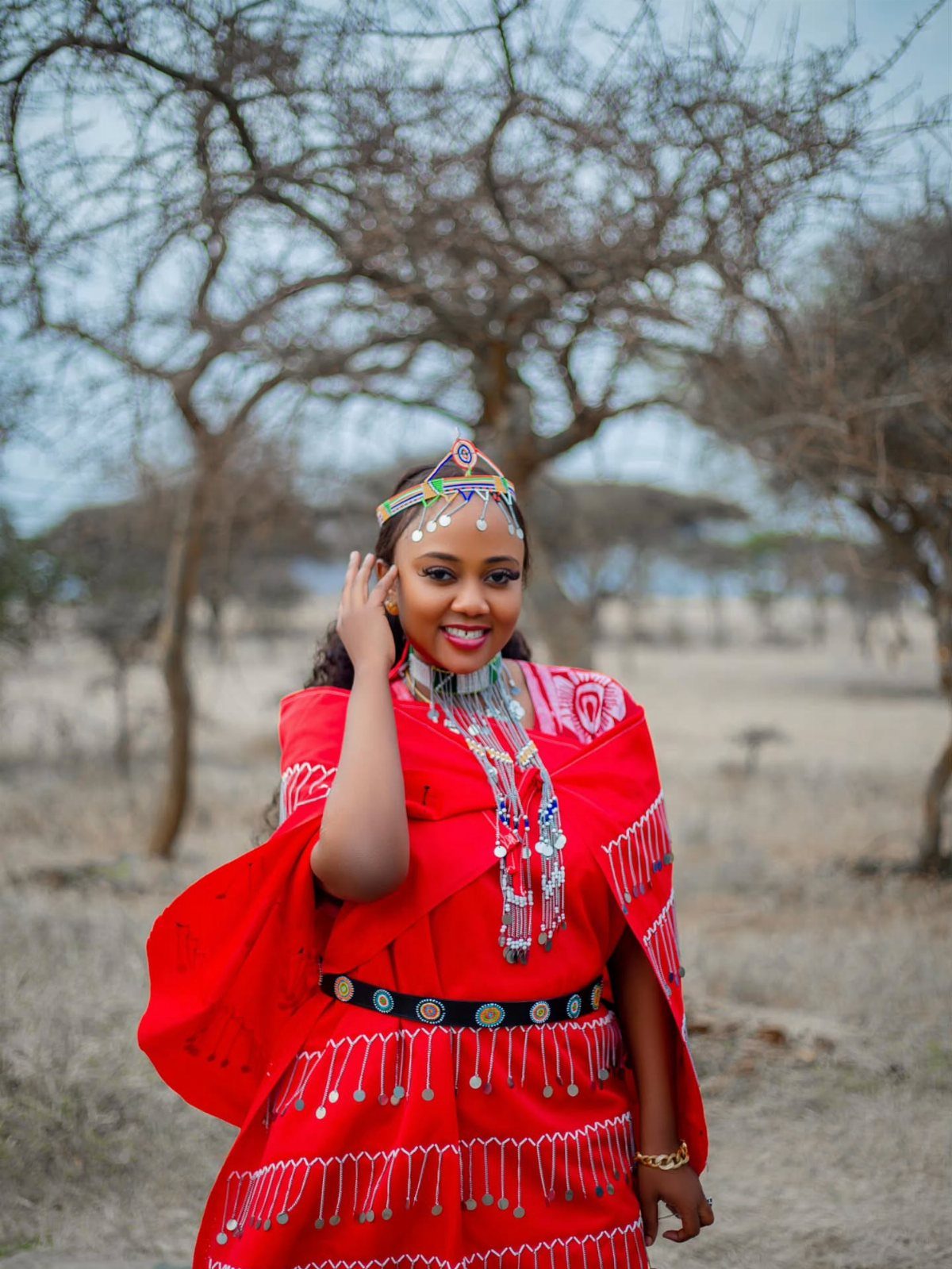
Red and beadwork define the Maasai wedding look, with layers of beaded jewelry and a beaded headpiece doing most of the decorating. The dress itself stays simple, which makes it a fair option for a small budget.
Spend where the eye lands: the headpiece and the collars. Bead colors can be chosen to suit your palette, so bring a swatch of your bouquet or groom’s outfit.
Bright red reads best in open daylight, where the color stays true and doesn’t turn muddy the way it can under dim indoor lighting. Against a busy venue, it can get lost.
5. Moroccan Caftan
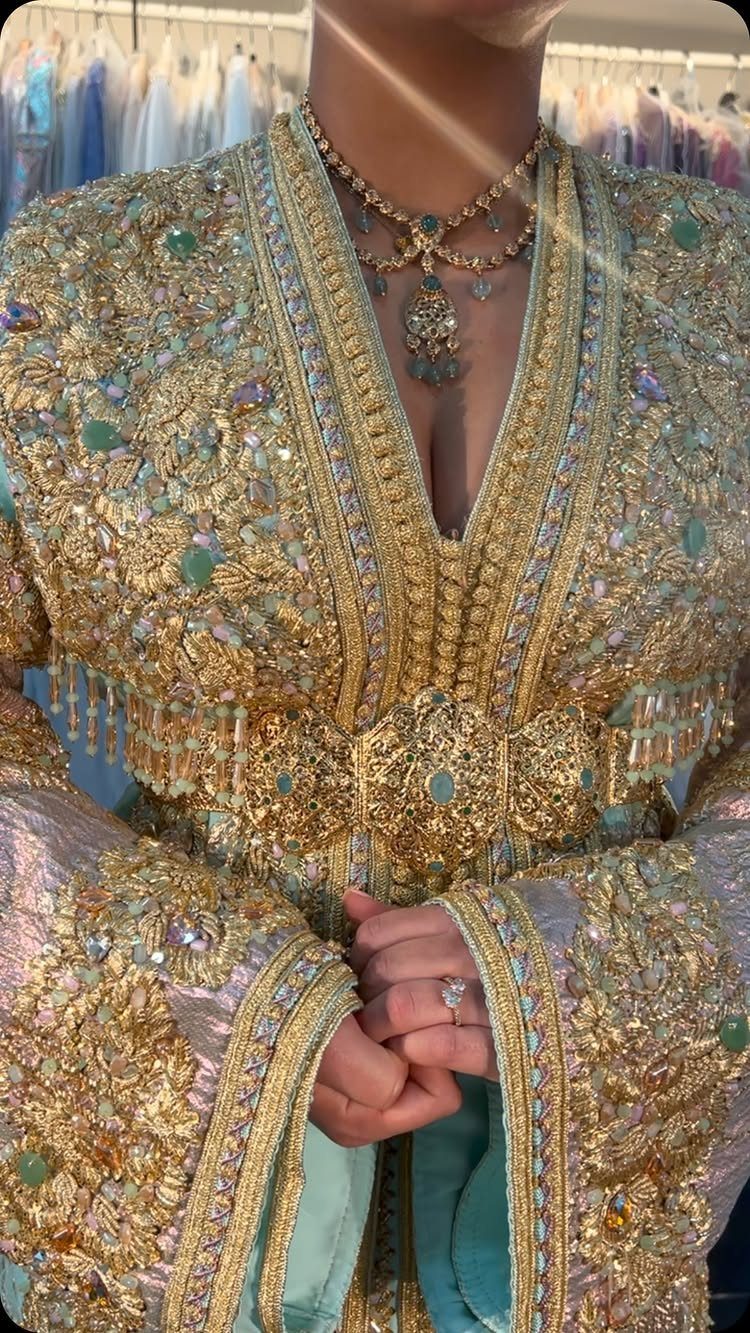
A Moroccan caftan covers the body in embroidery, and a matching belt with a gold necklace turns it into a full outfit with nothing else to buy.
Gold on teal is a richer pairing than the all-white gown most shops push.
Try it on with the belt fastened, since the belt sets the whole shape. Heavy embellishment means the fit needs to be right through the shoulders, so book alterations well ahead.
I would pick one statement piece of jewelry, here the necklace, and keep earrings small.
6. African Bridal Necklaces and Headwraps
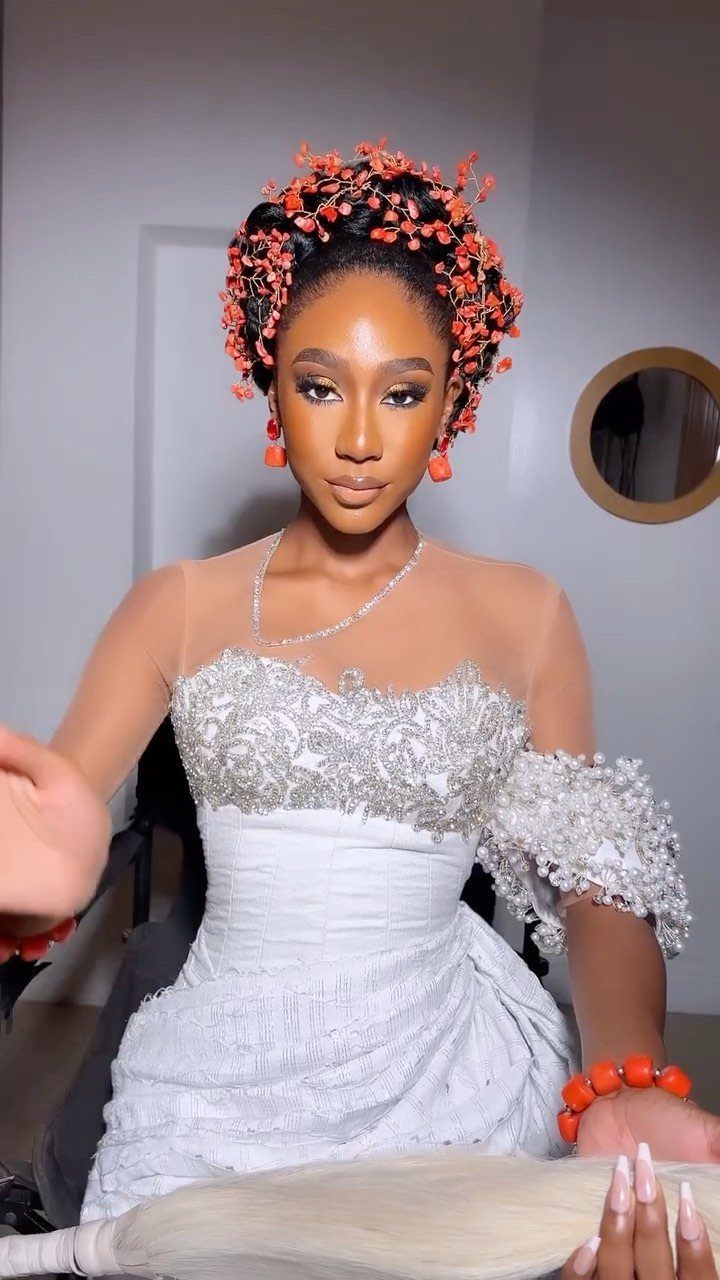
Coral beads against a white gown are a quiet, striking pairing: a beaded headpiece, matching earrings and a bracelet add color without touching the dress.
That makes this the cheapest way to bring African tradition into a gown you already own.
Match the bead color across every piece, as this look does in coral, and let one metal, such as the silver necklace, stay different. Carrying a white fly-whisk gives your hands something to do, and it looks deliberate.
If the headpiece is heavy, test it for a full evening before the wedding.
7. Ethiopian Habesha Kemis Bridal Gown
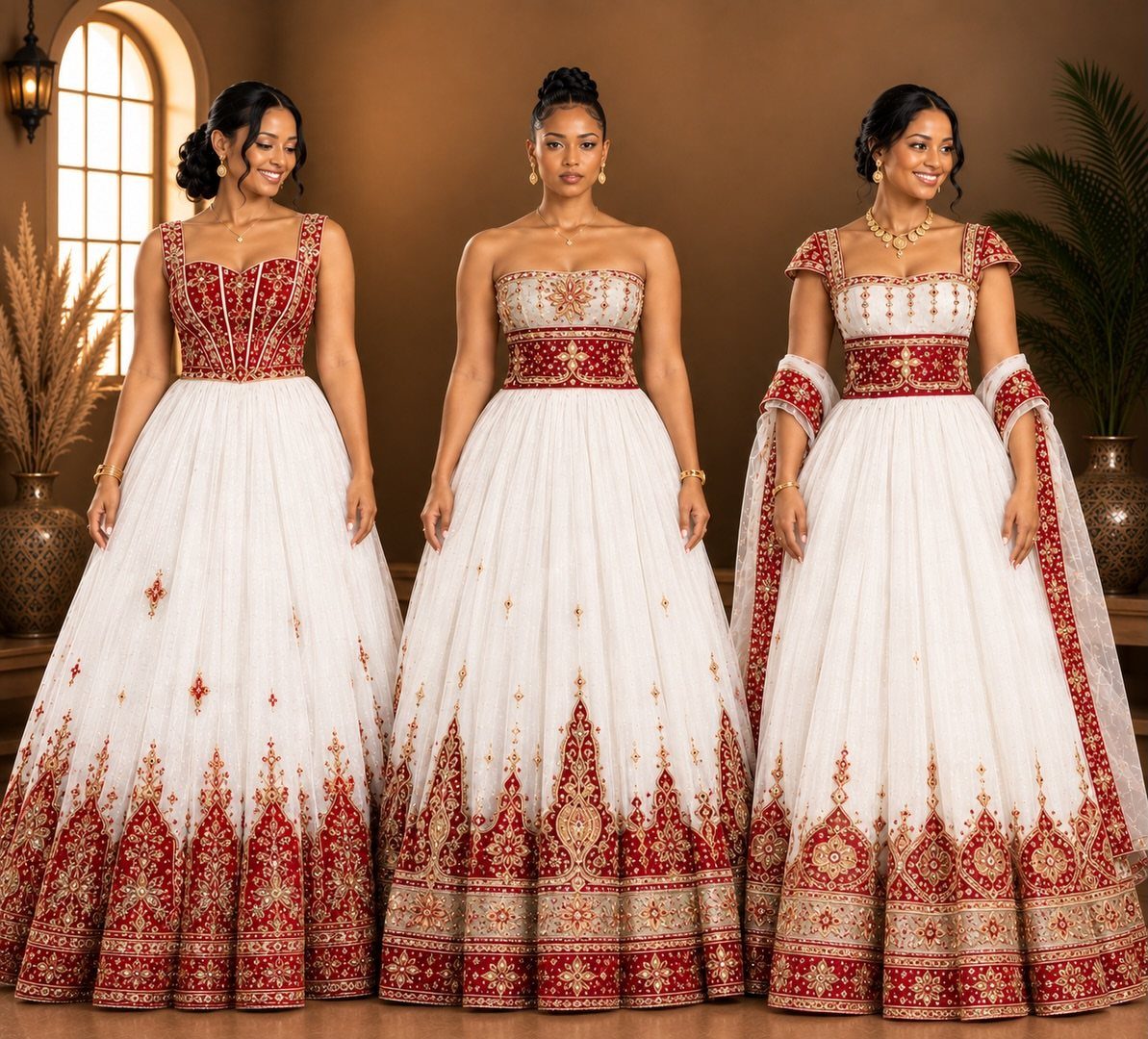
White with red and gold embroidery running along the bodice and the hemline is the Habesha kemis look in its most recognizable form.
Because the color sits at the top and the bottom, the eye travels the full length of the gown and the middle can stay plain.
Check that the 2 bands of embroidery match in color and thread weight ahead of the final order, since a hem sits at the floor and gets handled more.
Hem length matters here: have it fitted in the shoes you will wear, so the embroidery clears the ground.
Bridesmaids in the same white and embroidered style, as in this group, make a strong photo, but it costs more than one gown.
8. Ankara Print Ballgown
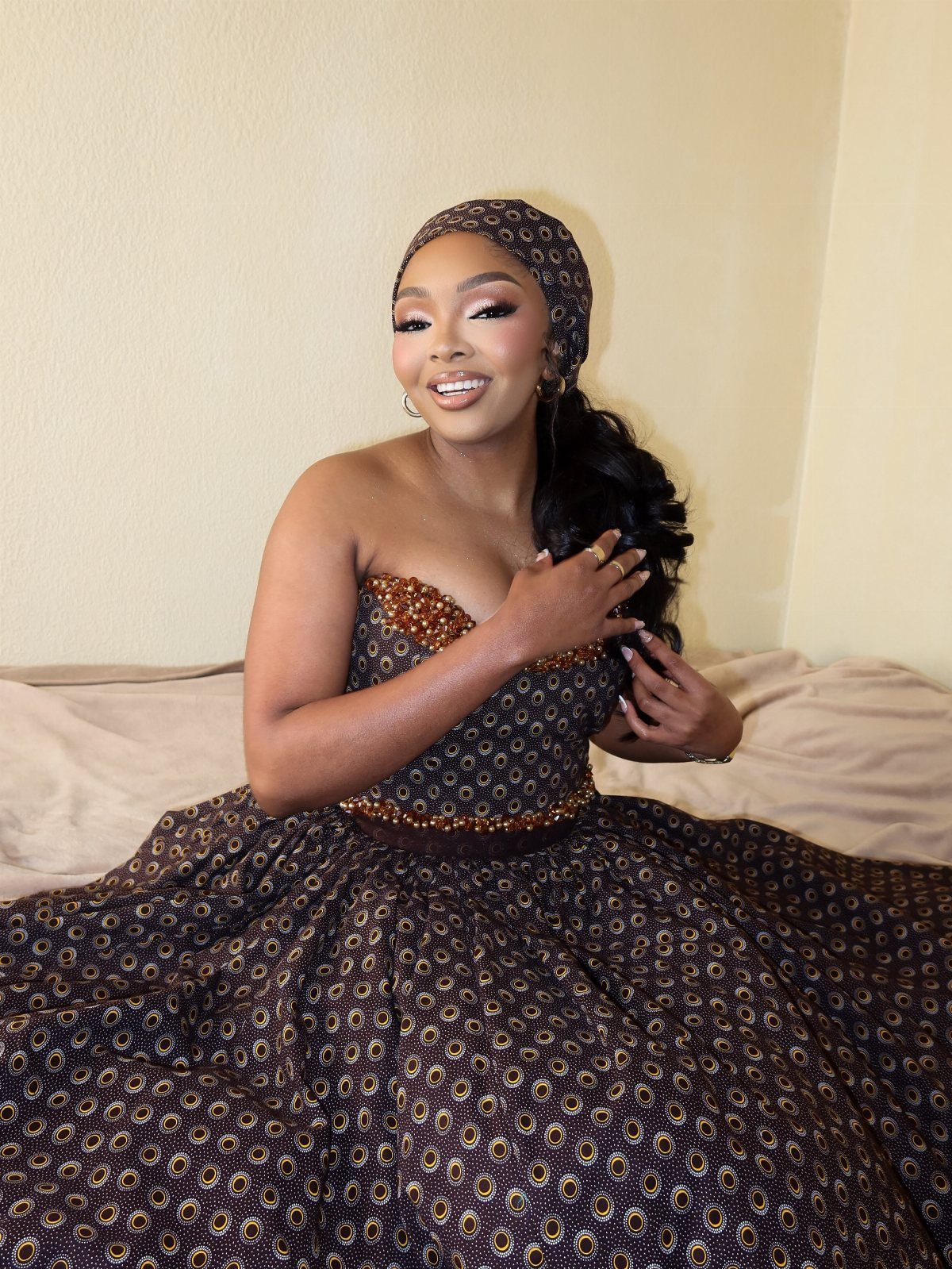
Bold metallic circles on a brown Ankara print make a strapless ballgown feel like a statement without a single bead or sequin. A matching headwrap cut from the same fabric turns the print into a complete look.
Strapless needs a well-boned bodice, so ask the tailor how the top is structured before you pick the fabric.
Ankara is a printed cotton, and a full skirt takes a lot of yardage, so request a quote for the fabric and the sewing separately.
I would keep jewelry minimal and let the print do the work. Brown and gold also sit well beside warm, earthy decor.
9. Geometric Pattern Bridal Gown
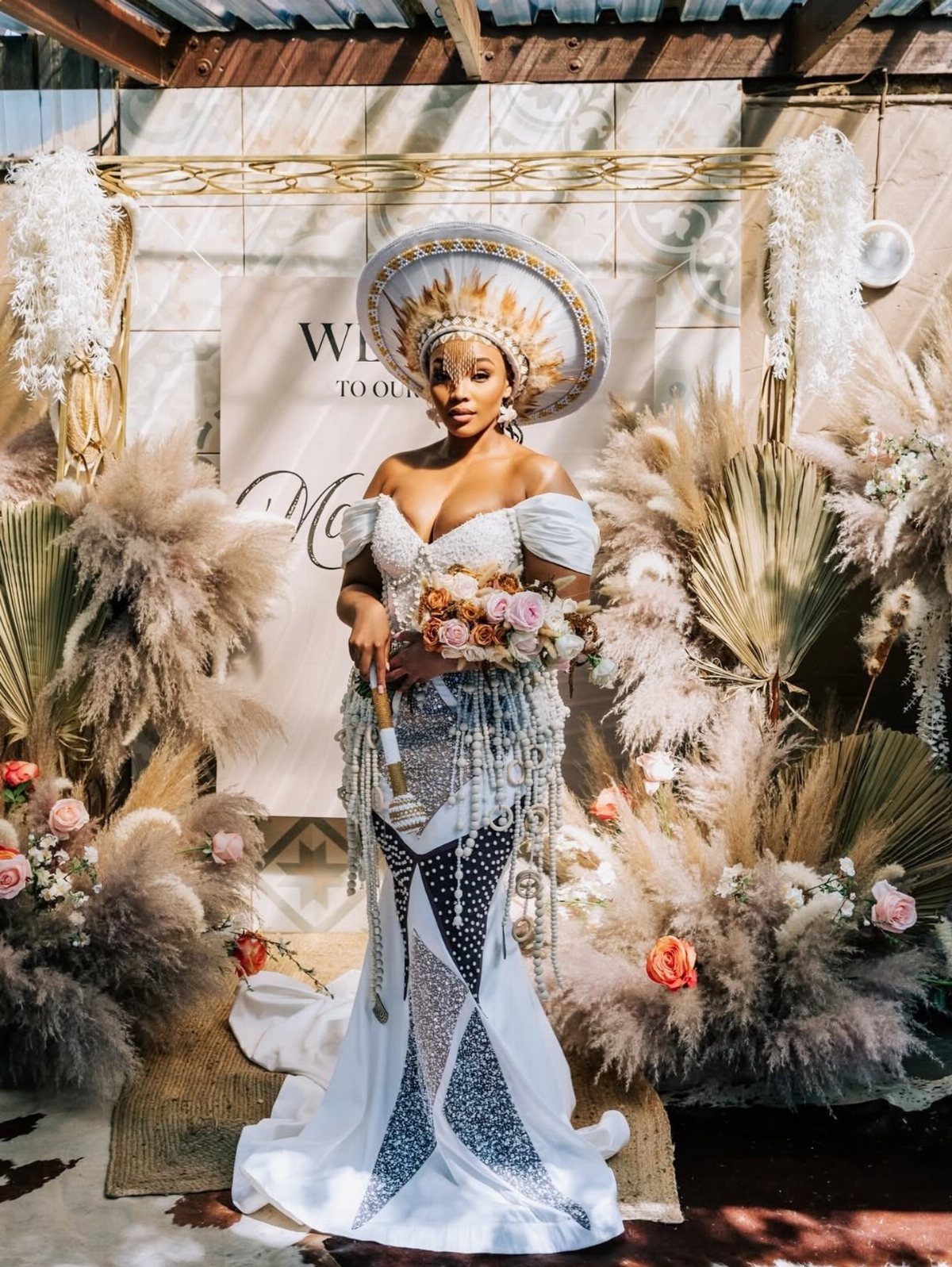
White carries the dress here, and geometric print panels give it edges and structure, while the off-the-shoulder neckline keeps the shape soft. A large statement headpiece takes the place of a veil.
Keep the print to the panels. The more of the gown it covers, the less it reads as bridal, so ask the designer to place it where it frames the body, such as the bodice or skirt seams.
With a headpiece this large, I would skip the necklace and wear small earrings. Practice holding your bouquet with the headpiece on a week or two ahead of the wedding, because the two compete for the same space.
Choosing the Right Dress
Start with the culture behind the dress. Before you open a single gown page, spend an evening learning the traditional dress of your own family’s heritage, or of the culture you want to honor.
Weight is the next check.
Plan the headpiece, jewelry and shoes together with the dress rather than after it. A designer who makes traditional African wedding dresses every week can tailor the look to you and tell you which pieces belong together.
Go easy on modern add-ons. Too many of them dilute the cultural meaning of the dress.
Cultural Variations
Each region has its own look, built from local materials. Knowing which is which keeps you from mixing pieces by accident.
Zulu bridal wear from South Africa combines beaded bodices and animal skin skirts, with an isicholo, a wide flat hat, on top.
Maasai dress from Kenya relies on brightly colored shuka cloth with beaded necklaces and bracelets. In Morocco, the caftan comes in silk or brocade with a belted waist.
Pick the style that matches your heritage, or the one you want to honor, and say so to your designer. That context helps them choose the right fabric and details.
Symbolism in Colors
Color can carry meaning, so check it before you order. In some cultures white stands for purity, and red for passion or life.
Beads work the same way. Beads and patterns can stand for fertility, protection or the bride’s passage into marriage, depending on the culture, so ask what a color or motif means before choosing it for looks alone.
Fabric speaks too. Ghanaian kente signals wealth and prestige, while Nigerian aso oke ties a bride to her roots.
Ask a family elder or your designer what each color and cloth means in your tradition. Then choose the ones that tell the story you want.
Frequently Asked Questions
What are traditional African wedding dresses?
They are garments that carry a family’s or a region’s cultural identity, and many are rich in symbolism.
Each region has its own look: a Nigerian gown with bold long sleeves and a gele headtie, Maasai red cloth with beadwork, a Zulu beaded bodice with an isicholo hat, or a Moroccan silk or brocade caftan with a belted waist.
Color, beads, patterns and cloth can all carry meaning, so the style is as much a statement as a outfit.
How can I wear an African wedding look without giving up a modern cut?
For a modern cut with African roots, a plain white mermaid gown is the easiest base, and one patterned zone, say the bodice or the hem of a long cape, carries the heritage.
Because a cape comes off, you can wear it for the ceremony and drop it for the reception.





