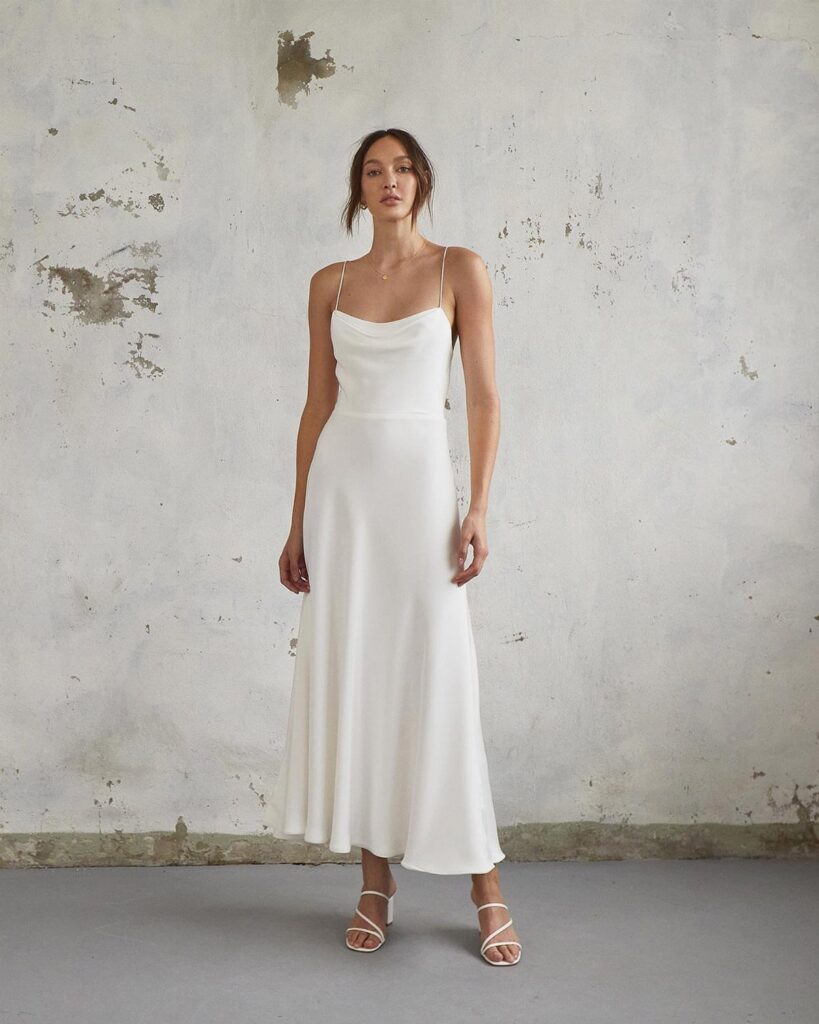
The silk gowns below run from a plain slip with a bias-cut drape to a long-sleeve gown with a train, with a cape, a halter, puff sleeves and an open back in between.
Budget decides which one is yours: a simple shape like the slip or the strapless spends its money on fabric and cut, while a cape or long sleeves with a train add yardage and labor on top.
1. Silk Wool High Halter Gown
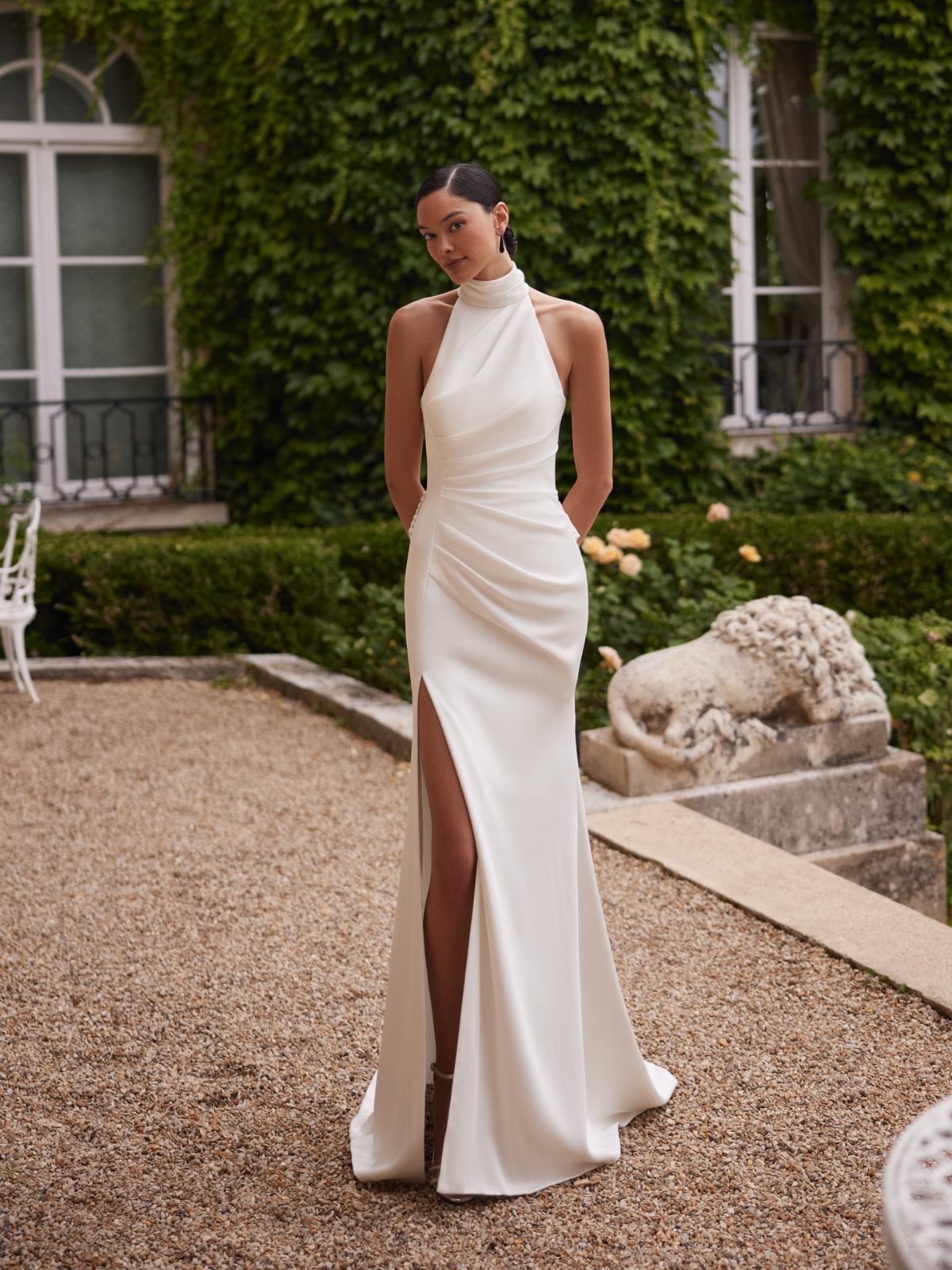
A high halter puts all the attention on the neck and shoulders, so the dress needs no lace, beading or sleeves to feel finished.
That suits a budget: a clean silk wool halter spends its money on fabric and cut instead of trim.
Skip a heavy necklace; the neckline is the jewelry. Pin your hair up and let the shoulders show.
2. Silk Strapless Dress
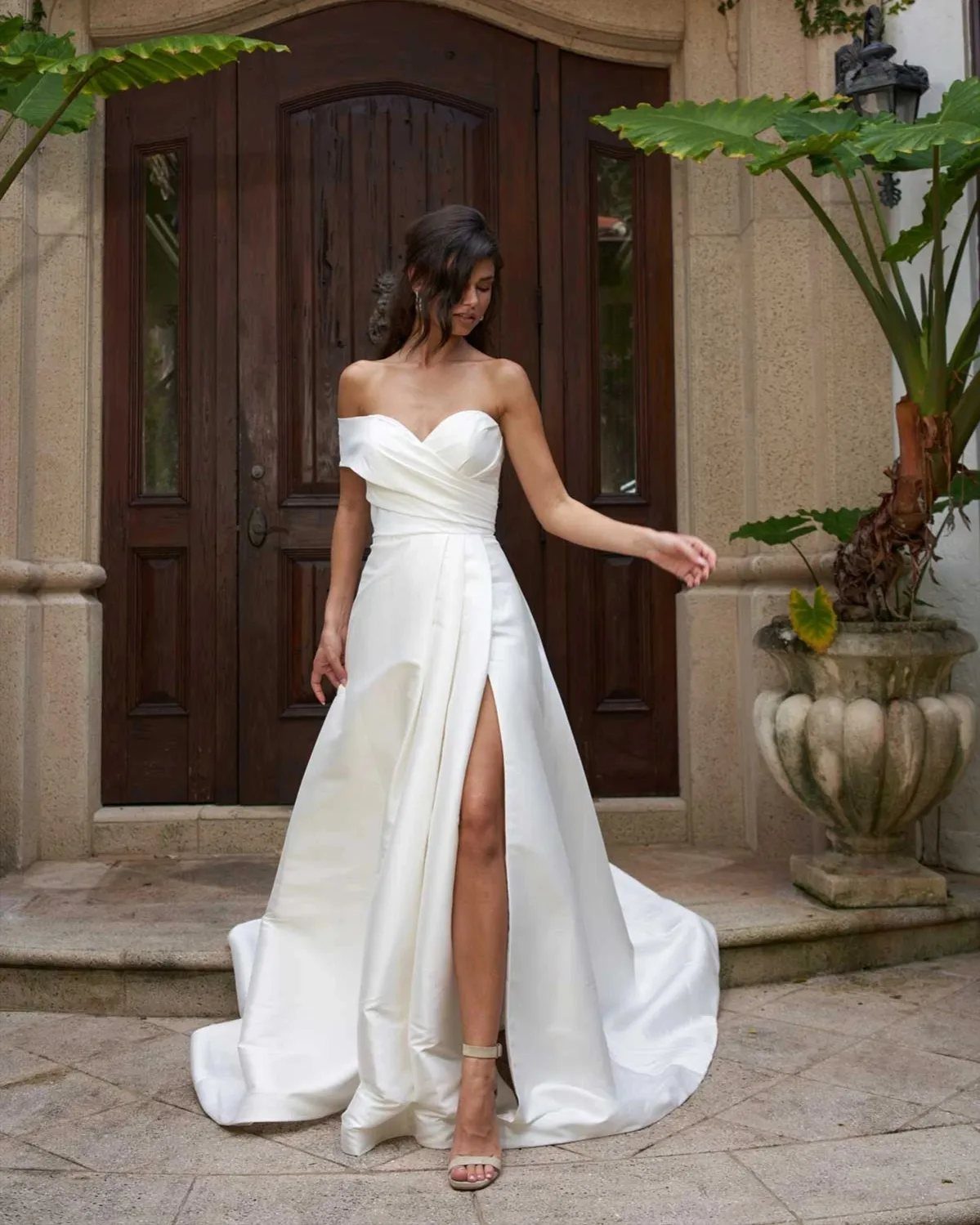
Strapless silk with a high leg slit is a simple shape that moves well when you walk. The slit gives it motion without any added fabric or embellishment.
Take a full lap in the dress before you decide, because a slit that looks right standing still can gape when you step. Ask the seamstress to check that before you order.
3. Silk A-Line Gown
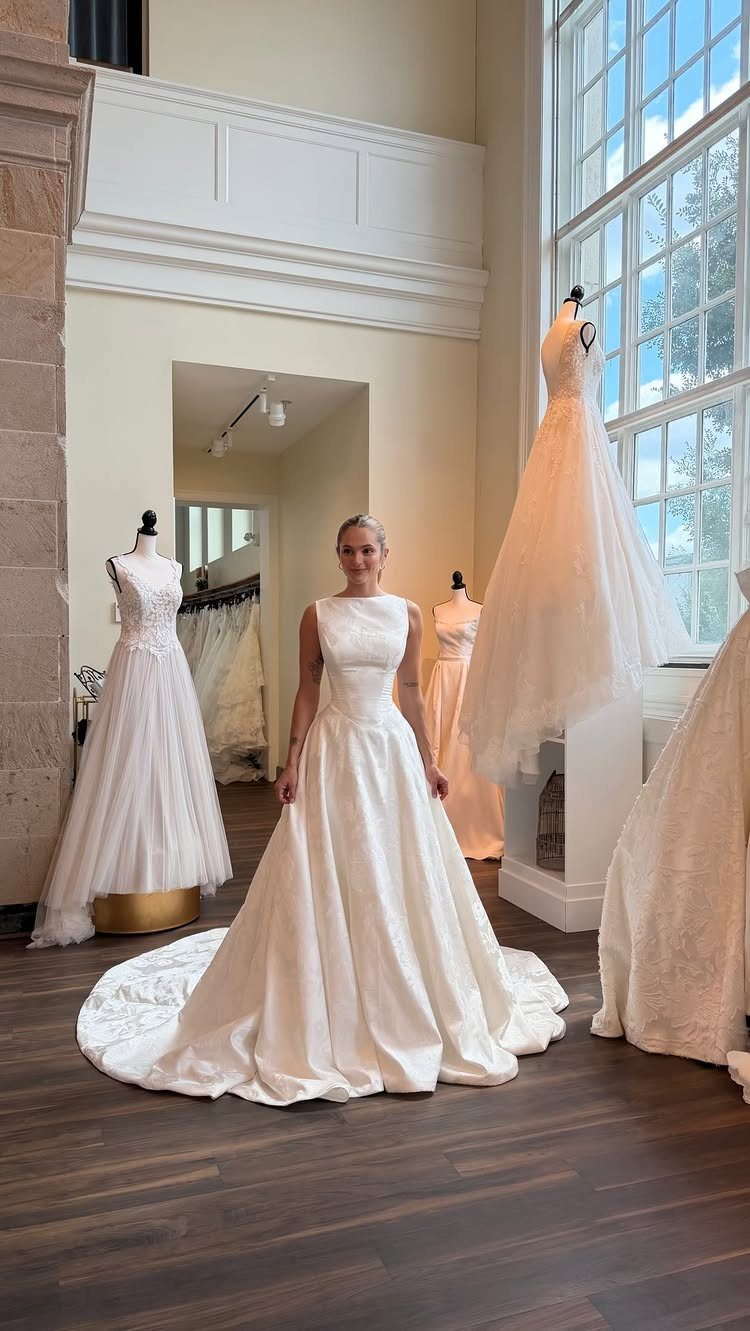
An A-line is the safest silhouette to try first. It fits close through the bodice and flares gently from the waist, which flatters most figures and lets silk hang in a soft, clean line.
Boutiques stock plenty of them, so you can compare several silks in one afternoon. Touch the fabric, hold it to the light, and pick the one that feels best against your skin.
4. Off-the-Shoulder Mikado Silk Dress
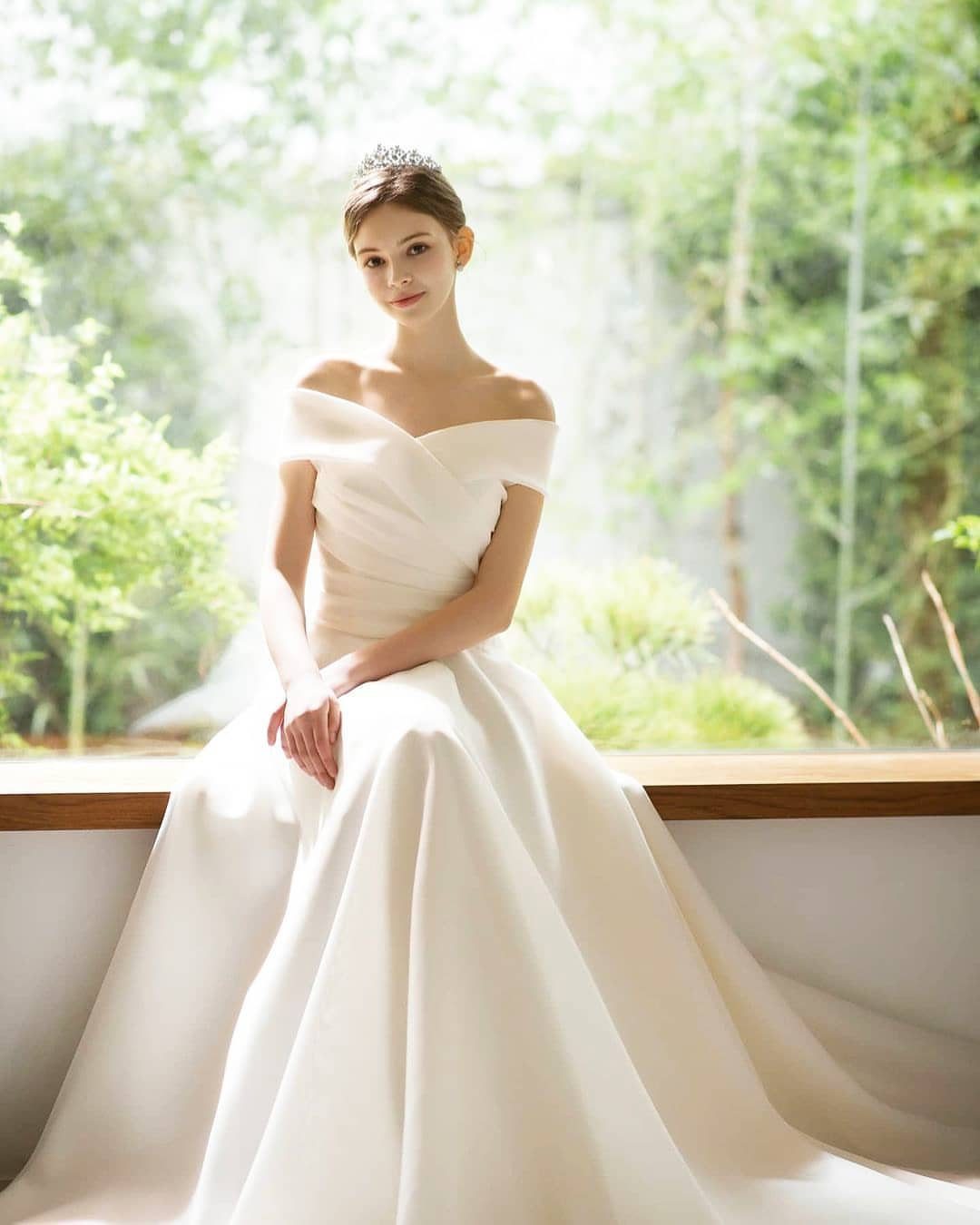
Mikado is a structured silk with some body, which is why an off-the-shoulder neckline holds its shape instead of slumping. Pair it with a tiara or a simple updo and the neckline does the rest.
Because mikado is firm, fit matters more than with softer silks. Plan time for alterations, and have the bodice checked while you raise your arms.
5. Silk Slip Dress
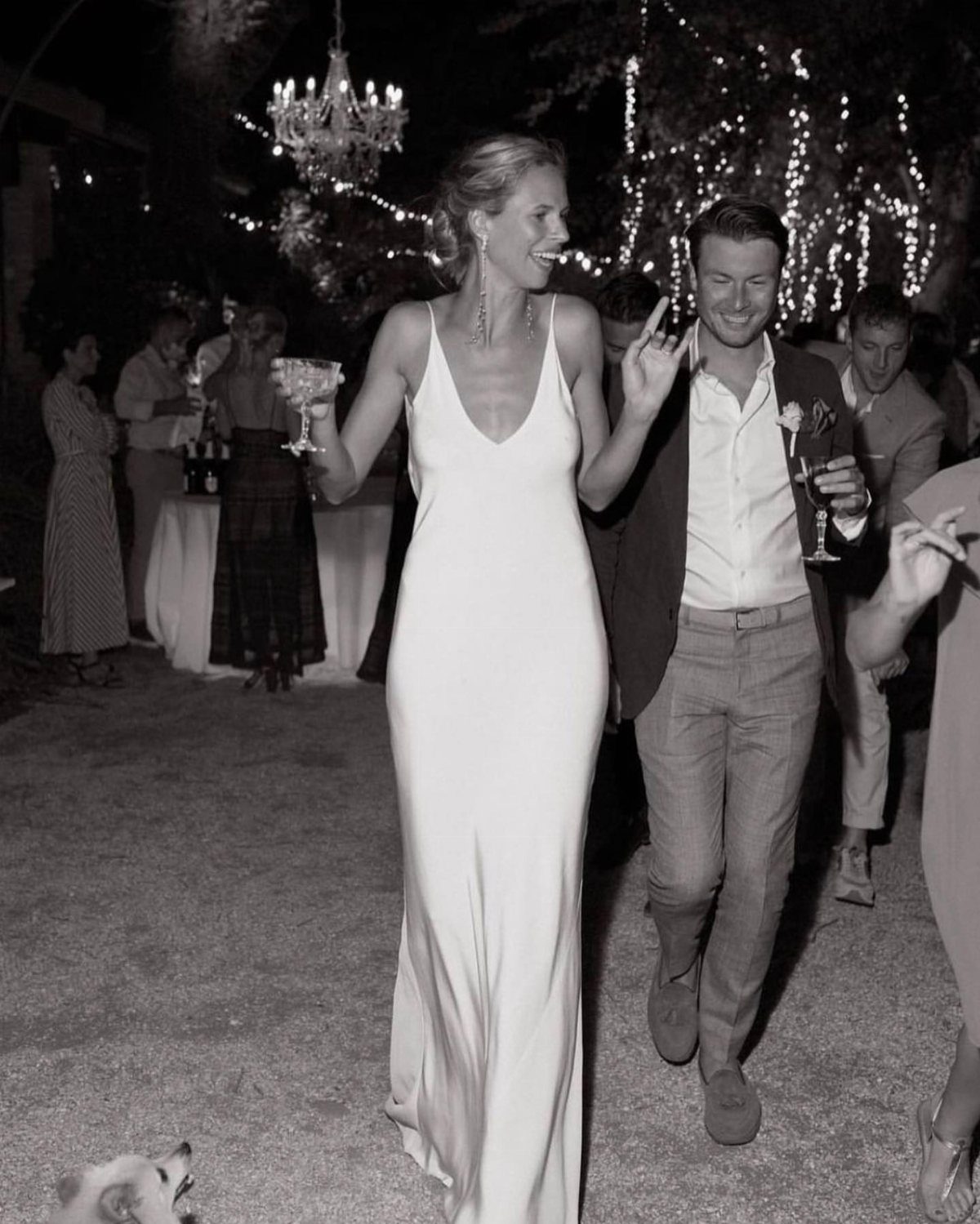
A silk slip dress is the lightest, simplest silhouette of the group: a narrow strap, a bias-cut drape and nothing to fuss over.
Silk this plain shows every seam and line underneath, so choose your undergarments carefully. I would add a shawl or jacket for cooler nights and keep the styling minimal.
6. Silk Wedding Gown with Cape
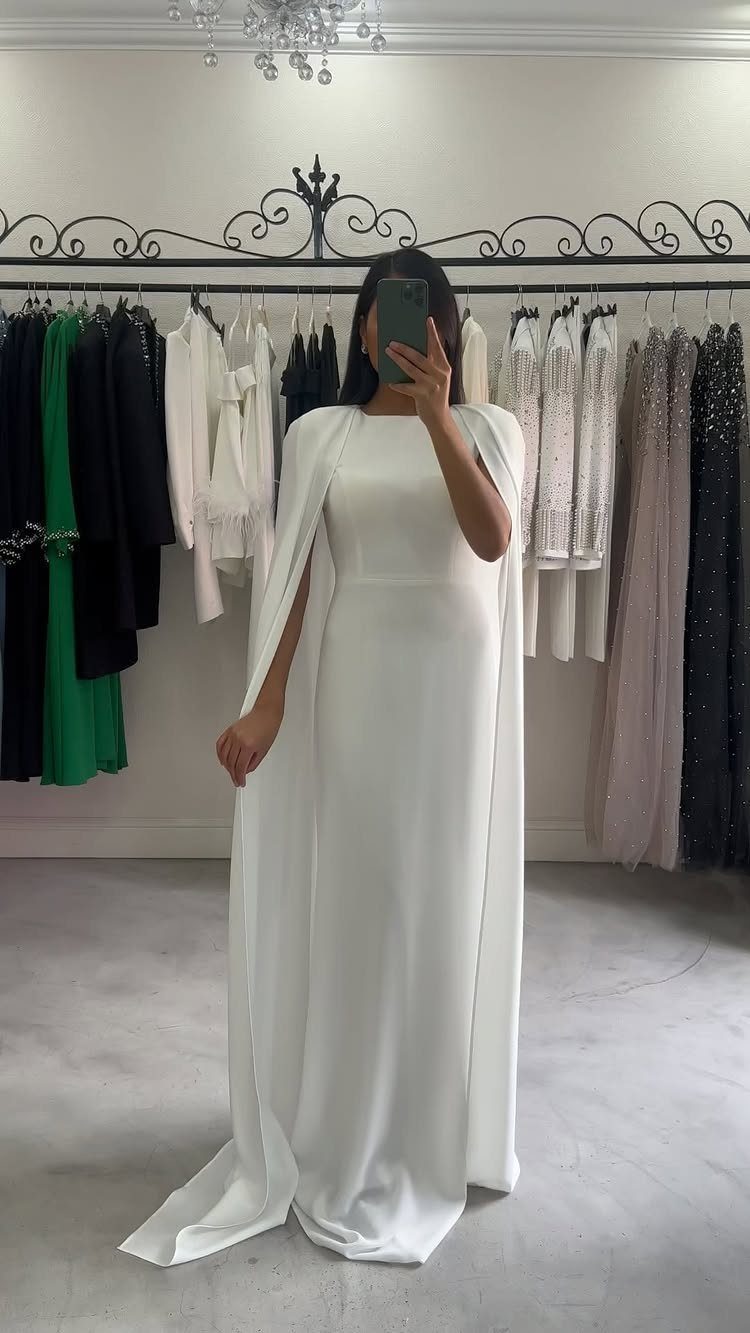
A cape turns a floor-length silk gown into something more formal without a second dress. It adds drama for the ceremony, and you can remove it for the party if you want to move freely.
Ask whether the cape is attached or separate. A detachable one gives you two looks, so ask the boutique what it adds to the price before you buy.
7. Long-Sleeve Silk Gown with Train
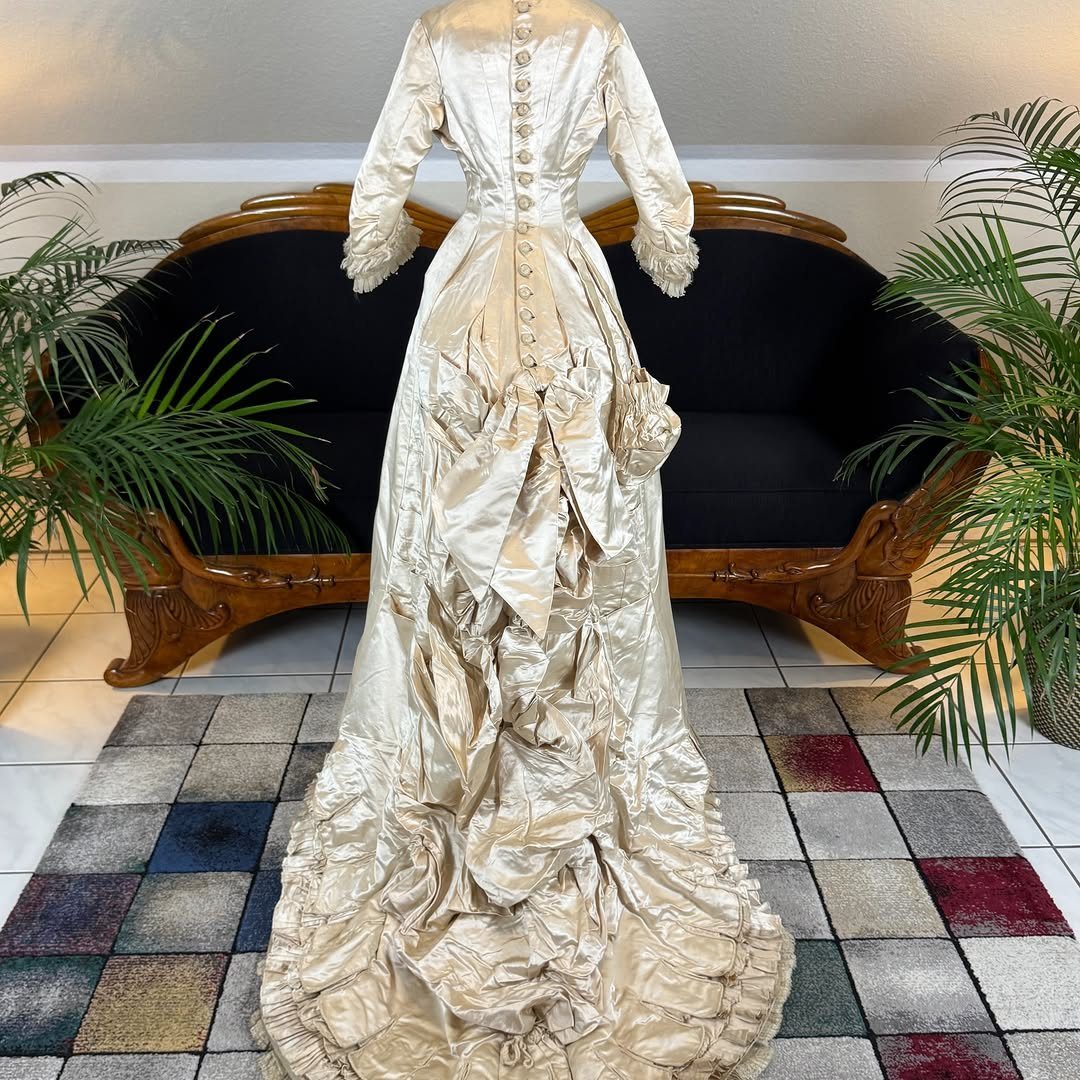
Long sleeves, a buttoned back and a ruffled train give this champagne silk gown 3 details worth studying from behind. Champagne reads softer than stark white and suits a silk that catches light.
Tally the buttons down the back and along each cuff before you buy, since 30 or more loops take real time to fasten.
A closed back means extra time at fittings and extra minutes on the wedding morning, so plan for a helper with patient fingers.
Check how the train moves, too. Ruffles look lovely walking away, but you will want to practice stepping and turning in them.
8. Draped Neckline Silk Gown
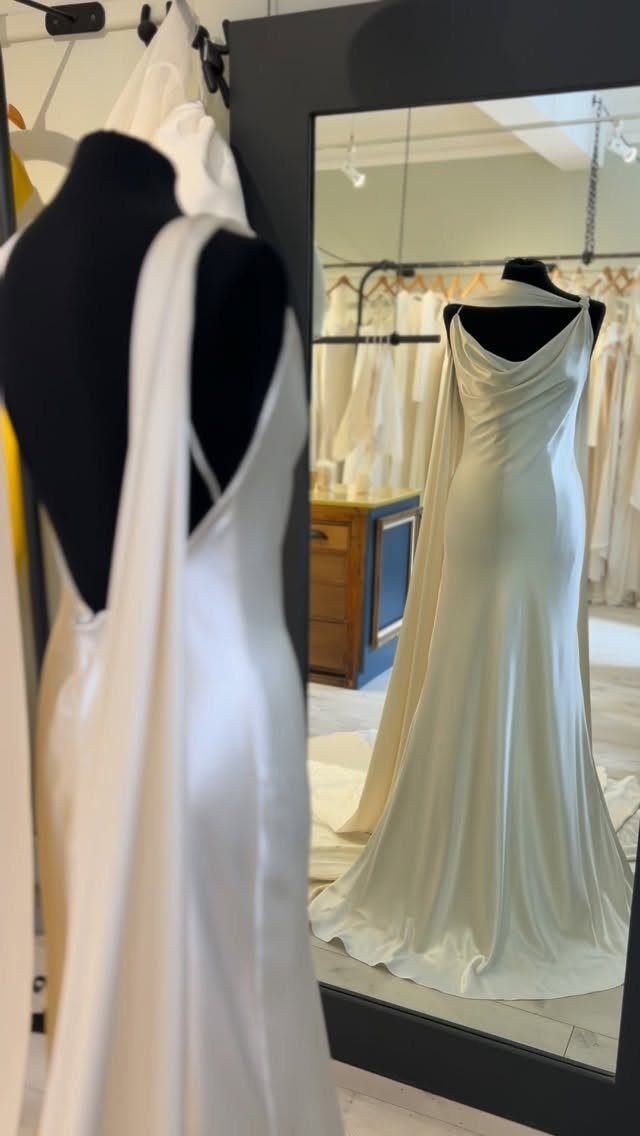
A draped neckline lets the silk itself do the decorating. Soft folds at the bodice, whether cowl or pleated, add shape without a single bead, which keeps the cost in the fabric.
Try the dress on in front of a mirror and move around. Drape shifts when you sit, hug or reach, so find out where it settles before you buy.
I would keep the jewelry to small earrings and let the folds stay the focus.
9. Open-Back Silk Wedding Dress
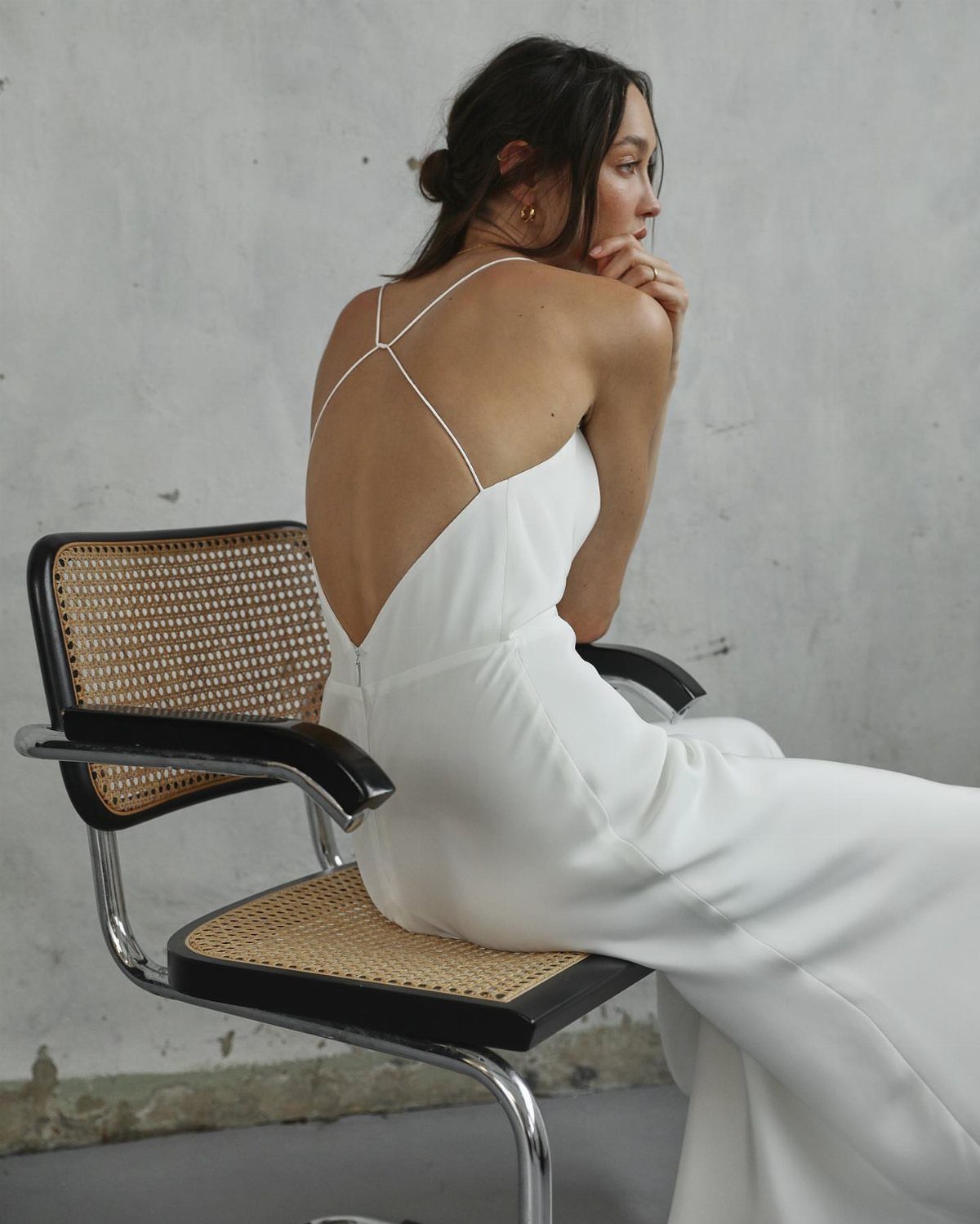
Thin straps up front and a low open back make this the dress that looks quiet from the front and bold from behind. A bun suits it well, since nothing hides the back.
Sit down in it before you decide. A low back can shift when you bend or lean, and you will be seated through dinner.
Ask the seamstress how the dress stays in place, and plan on a bra alternative made for open backs.
10. Puff-Sleeve Silk Wedding Dress
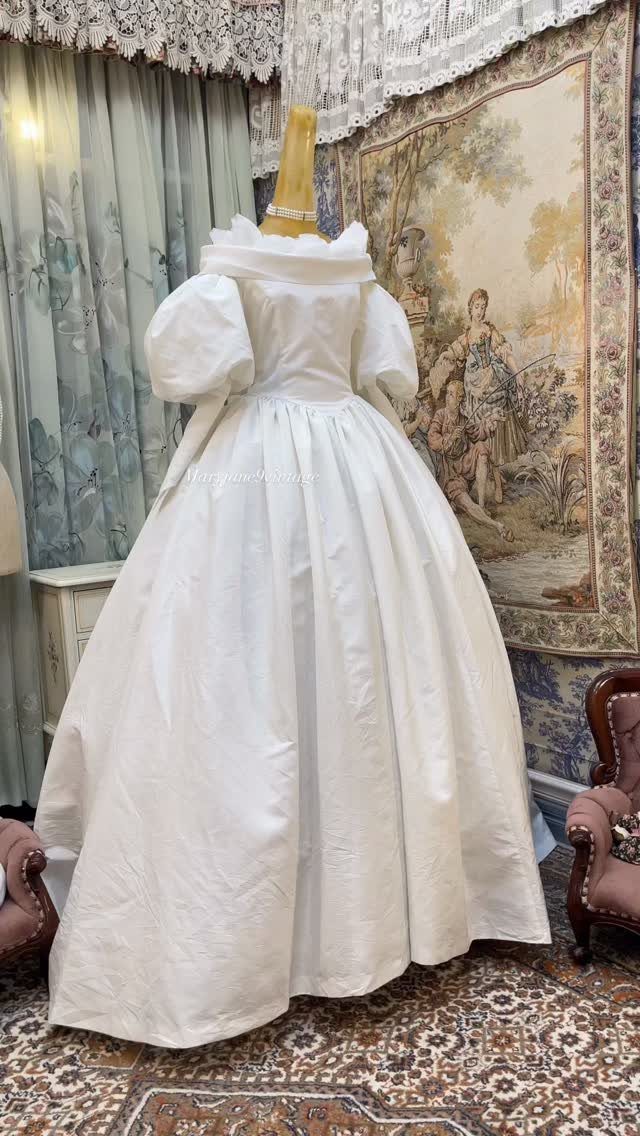
Puff sleeves add volume at the shoulder and balance a flowing skirt, so the silhouette reads as romantic without extra trim. Silk holds the puff in soft, rounded folds.
Lift both arms overhead in the dressing room, because a puff sleeve that pulls at the shoulder seam will only get tighter by the reception.
Sleeves that look full on a mannequin can feel tight when you hug people, and that happens often on the wedding day.
I would skip statement sleeves paired with a heavy veil or big earrings. One bold feature is enough.
11. Sleeveless Boat-Neck Silk Dress
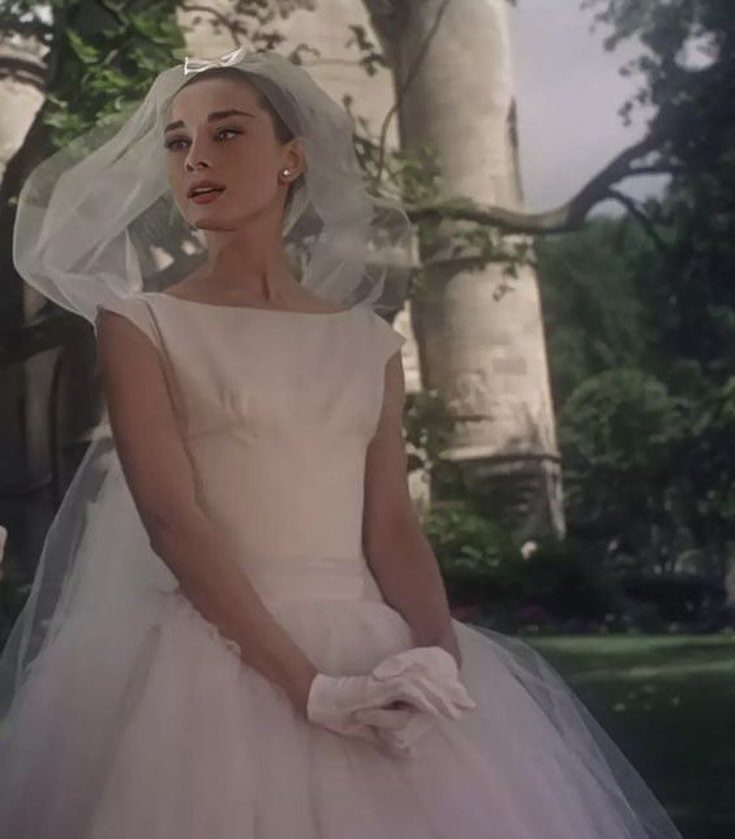
A boat neck runs straight across the collarbones, which gives a sleeveless silk dress a clean, classic frame. It pairs naturally with a veil and gloves, as in this look.
Gloves and a veil each add cost, so price them alongside the dress before you set your budget. If money is tight, pick one and let the neckline carry the rest.
Keep the hair simple so the line across the shoulders stays unbroken.
12. Long-Sleeve V-Back Silk Dress
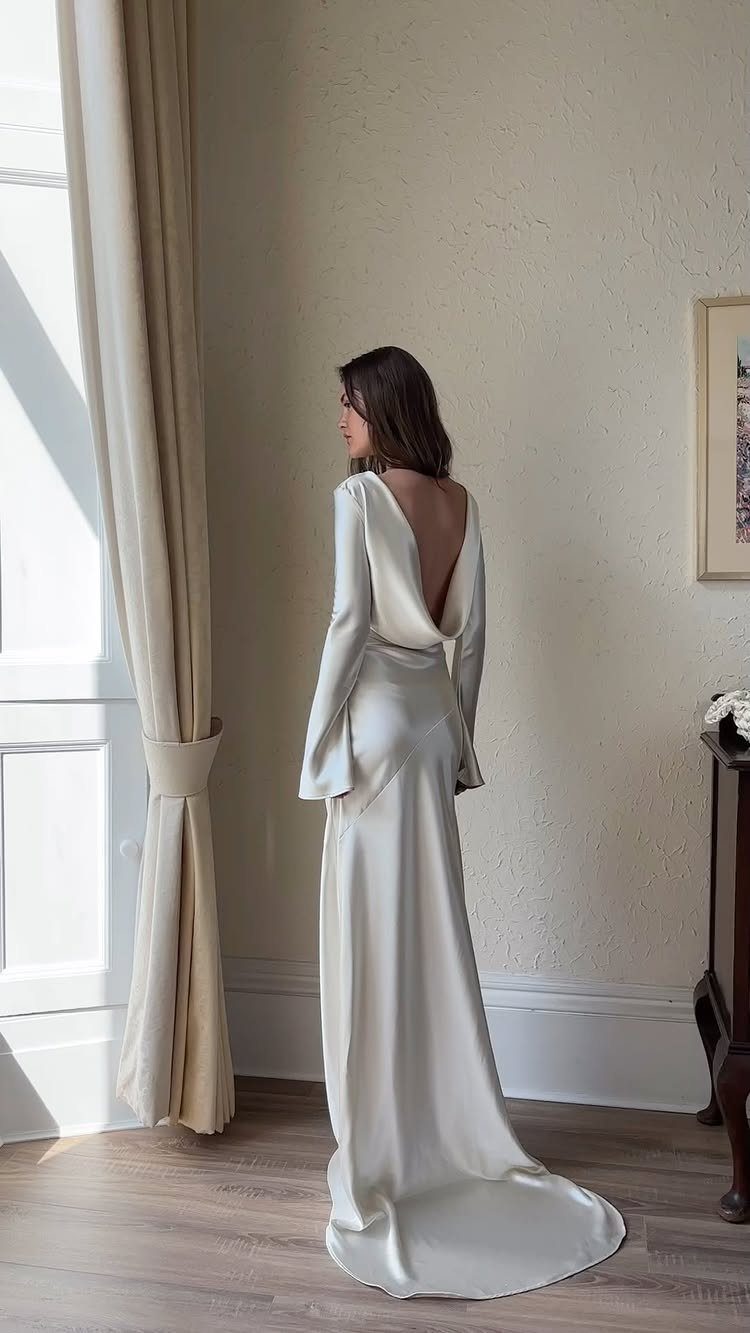
Long sleeves and a deep V-back flip the usual balance: covered arms in front, a dramatic plunge behind. It works for a cooler ceremony where you still want one bold moment.
Have the V checked at fittings, because a plunging back needs a precise fit to stay put when you move. Lift your arms and sit down before you sign off.
I would wear the hair up and let the back be the surprise.
Silk Wedding Dress Care
Professional cleaning after the wedding is the safest plan for a silk or satin gown, so book it before the dress goes into a closet.
Fresh stains set over time, and a cleaner who handles bridal fabric can treat them while they are still easy to lift.
On the day, be careful around makeup, food and drinks. Keep a glass in hand only when you must, and if you wear makeup, finish it before the dress goes on.
Rubbing spreads a mark and roughs up the surface of the fabric.
Try any cleaning method on a hidden patch first, like the inside of the hem, and wait for it to dry to check for water rings or color loss.
If the fabric changes color or texture there, you have lost nothing that shows.
Ask the salon where you bought the gown about your exact fabric, since the staff there often know how that particular silk behaves and what to avoid.
Satin wedding dresses have long held a revered place in the world of bridal fashion. Known for their impeccable sheen and luxurious feel, satin gowns offer a versatile choice for brides aiming for various aesthetics.
Silk Wedding Dress Fit
Sample gowns hanging in a showroom tend to be sizes 2 to 6, so the one you try on may be a different size than you actually wear.
Treat the sample as a preview of cut and fabric, and use the appointment to talk through fit and customization with the consultant.
Start early. Silk gowns made to order take a while to produce, so I’d start shopping 9–12 months out from the wedding day.
Set your number before you book. Designer silk starts at $4,000 and up at some studios, depending on silhouette, fabric and design details, so a tighter budget means asking about price before you fall for a gown.
Ask each salon which designers it carries, so you can try several in one visit.
Silk Wedding Dress Styling
Silk can be worn alone or layered, and the choice changes the whole mood. Worn alone, the gown gives you a clean line and lets the sheen and movement of the fabric do the work.
A sheer overpiece adds softness and a bit of coverage without hiding the silk underneath.
Try the layer over the dress in the fitting, in daylight if the salon has a window, so you can see how the 2 fabrics sit together.
Layering adds cost too, so get a price on the overskirt or topper first, then decide if it fits your budget. If the budget is tight, a plain silk gown with simple accessories is the stronger buy.
Frequently Asked Questions
Why choose a silk wedding dress?
Silk has a luminous sheen and moves well when you walk, so a plain gown can look finished without lace or beading.
That keeps your money in fabric and cut rather than trim. It is also breathable and flatters the body, and you can touch and compare several silks in one boutique visit.
When should I start shopping for my wedding dress?
Give yourself 9–12 months between your first appointment and the date you walk down the aisle. A made-to-order silk gown can take months to cut and sew, and fittings come after that, so the calendar fills up quickly.
Do satin wedding dresses photograph well?
Yes, satin is known for photographing well. The shine people worry about usually comes from the lighting more than the fabric, and good tailoring lets the sheen look elegant in photos.
How much does a silk wedding dress cost?
Expect designer silk to begin around $4,000 and climb from there, with silhouette, yardage and beadwork driving the number.
Ask for separate quotes on any cape, overskirt, gloves or veil, since each one adds to the total. With a tight budget, I would put the money into a plain silk gown and keep the extras simple.





