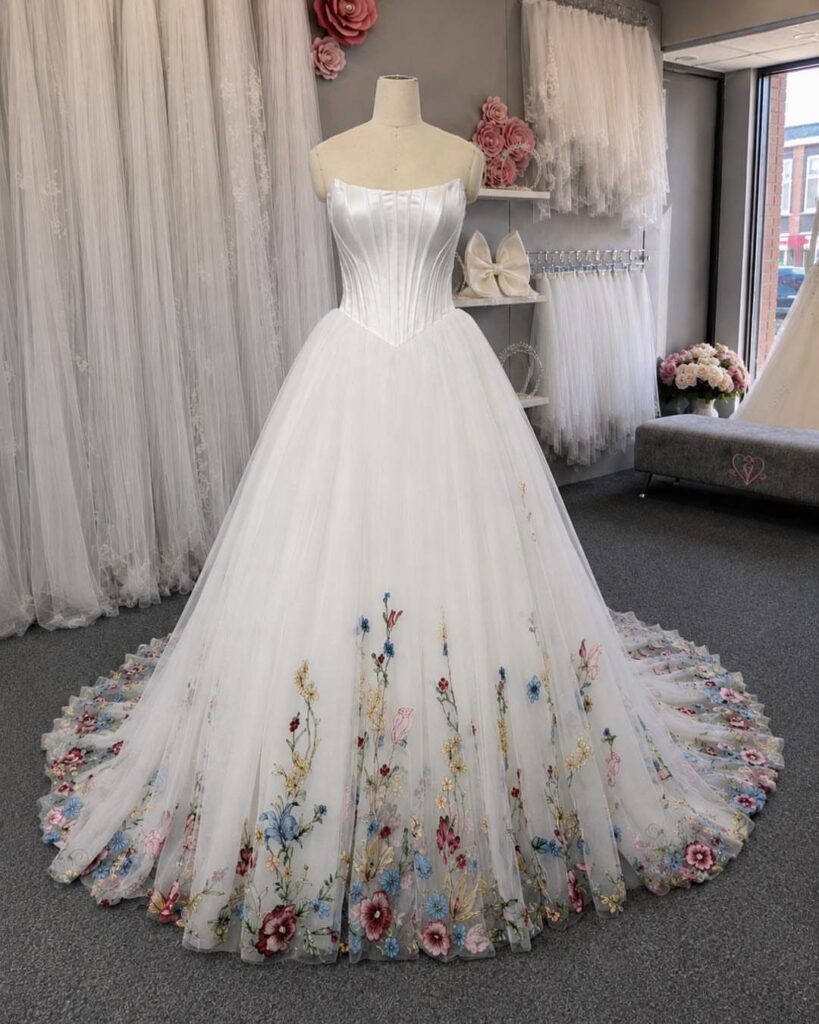
Sentence 1 names the venue, which the list never covers, so the rewrite sticks to what the list does cover: the type of floral work, from 3D appliqué to jacquard, changes how much of the flowers shows in photos and from across a room.
An outdoor ceremony with greenery or stone nearby lets flowers on the dress echo the setting, while a ballroom or city venue calls for a lighter hand.
The ideas here range from flat floral lace, the easiest way into the look, to raised 3D appliqué that costs more in labor, plus colorful embroidery and woven jacquard.
Pick the kind of floral work first, whether 3D appliqué, lace, embroidery or jacquard, then let your budget and any customization options decide how far to take it.
1. 3D Floral Appliqué Wedding Dress
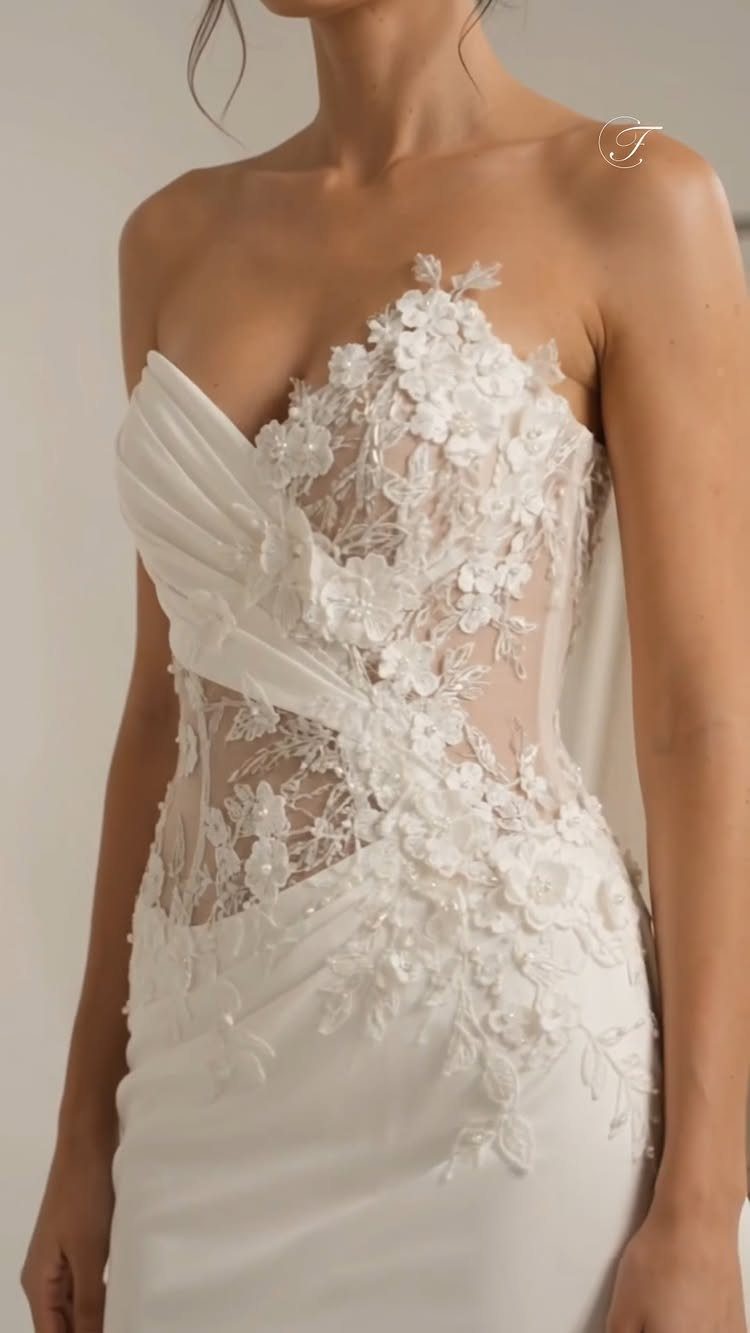
Strapless suits 3D appliqué well, because the raised lace flowers need bare shoulders and a clean neckline to read as the focus.
Choose a dress where the flowers sit against softly draped fabric, so the texture has room and the skirt stays simple.
Skip a statement necklace. Earrings are enough, since the appliqué already supplies the dimension.
Order a swatch if you can and run a finger over the petals. Raised flowers cost more in labor than flat lace, so expect that to show in the price.
2. Floral Lace Wedding Dresses
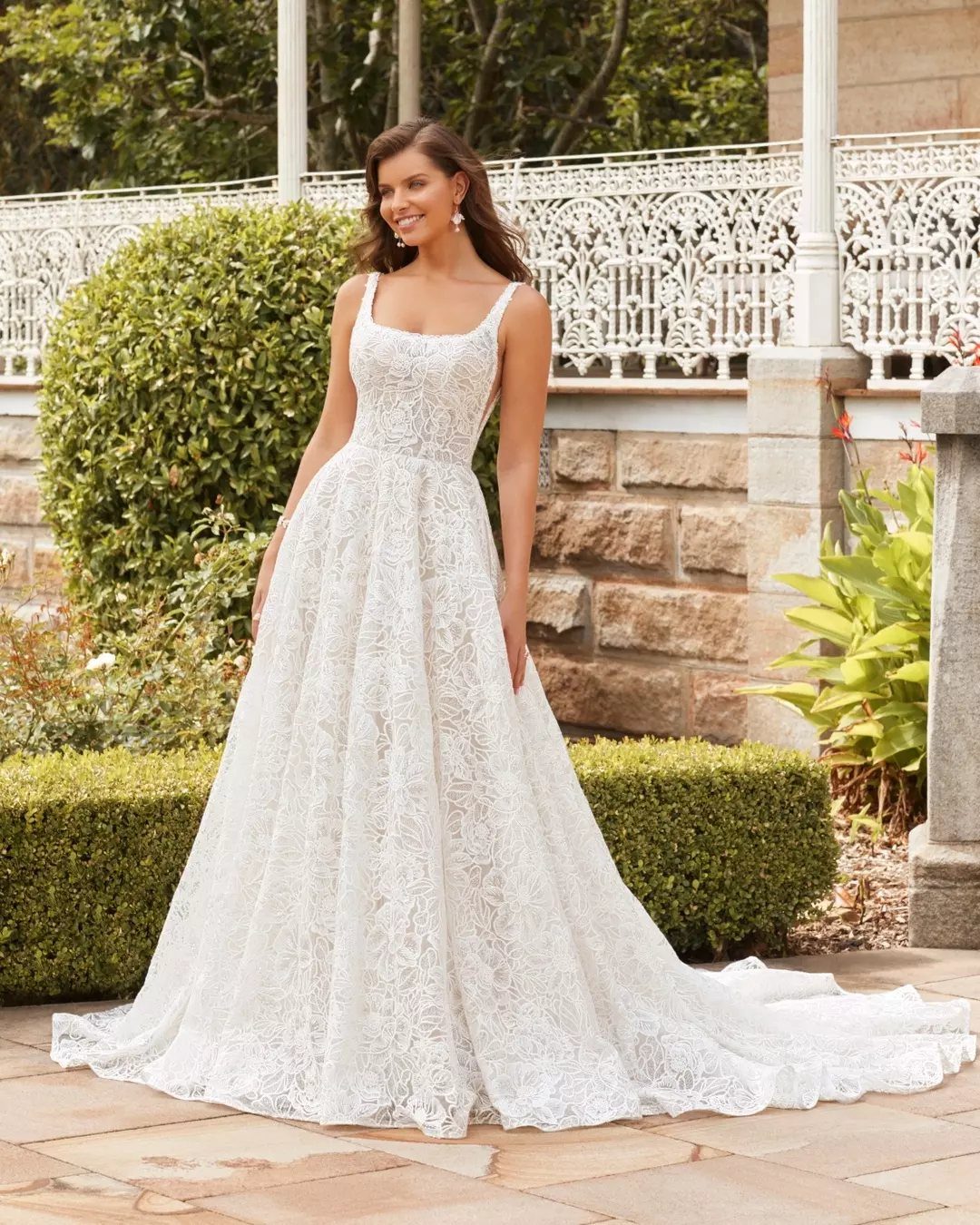
Floral lace is the easiest way into a floral dress, and it photographs well against a garden or stone wall. The pattern gives you flowers without color, so it works with nearly any theme.
Compare two or three laces in daylight before you decide. A dress that looks white indoors can read warmer outside, and a garden setting will show that difference.
For a modest budget, this is the version I would start with: it is a classic that stays flexible with veils, shoes and hair.
3. Wildflower Wedding Dresses
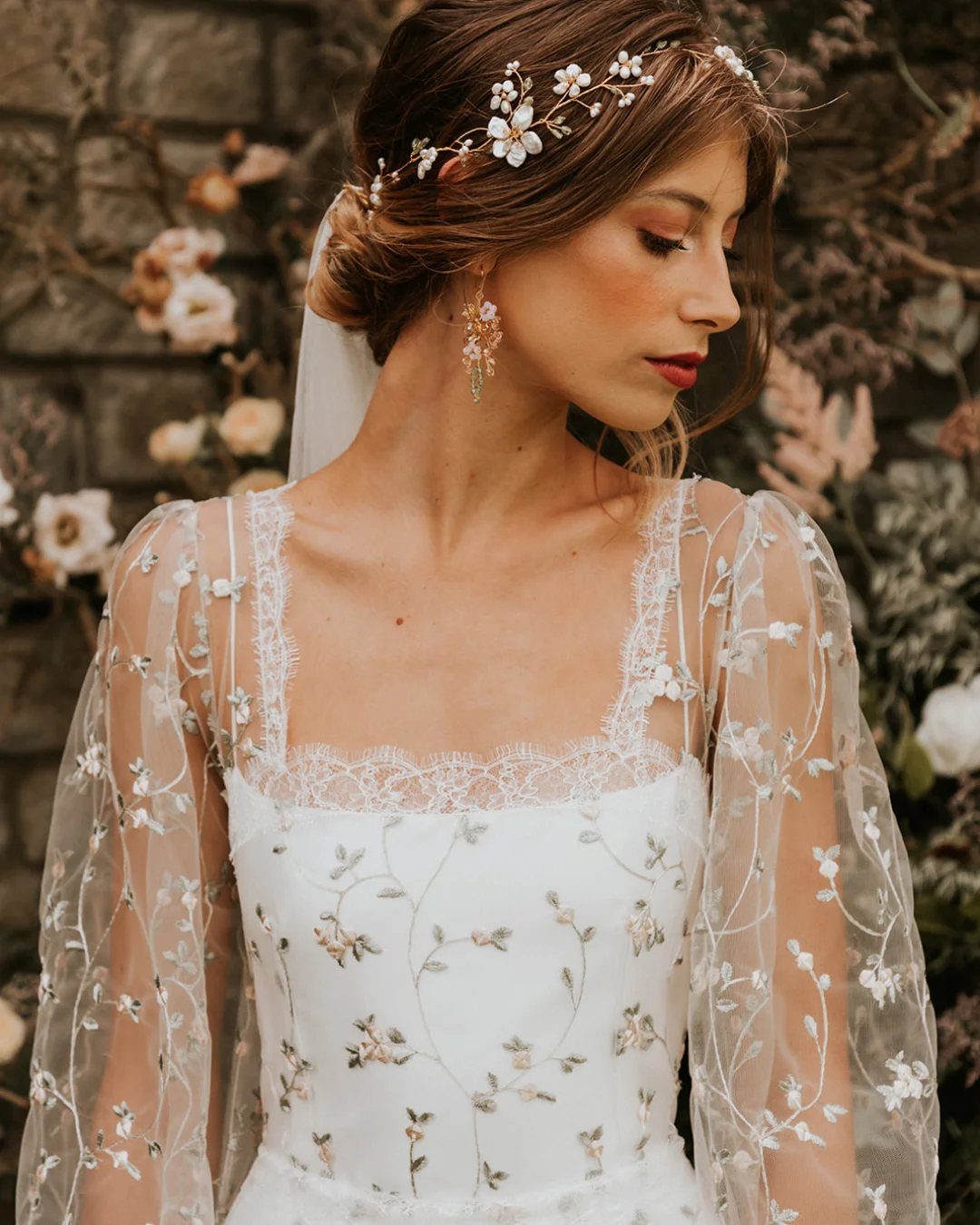
A wildflower dress borrows from the setting itself, so it makes the most sense for an outdoor venue with greenery or stone nearby.
Embroidered blooms on white, paired with a floral headpiece, let the dress and the landscape echo each other.
With embroidered blooms on the dress and flowers in the headpiece, I would keep earrings simple so the florals repeat in just those 2 places. Too many floral elements start to compete.
If your bouquet is also wild and loose, the whole look ties together.
4. Embroidered Wedding Dresses
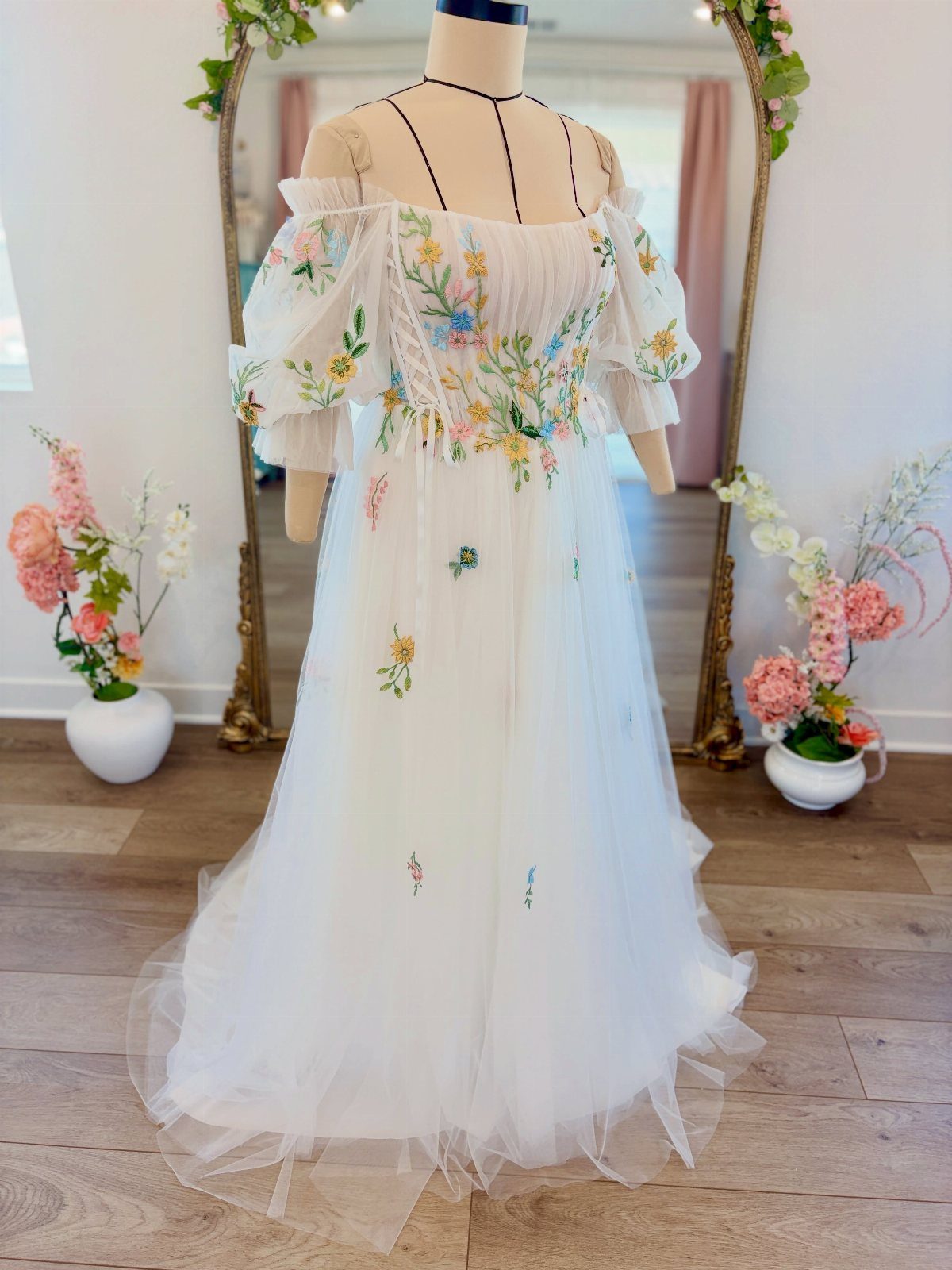
Colorful floral embroidery turns a white dress into the one piece of color at your wedding. Paired with an off-the-shoulder neckline and a tulle skirt, the stitching stays the star while the shape stays light.
Ask to see the embroidery up close before buying. Dense, even stitching looks better than sparse threads, and hand-finished work usually costs more.
Match one or two thread colors to your bouquet or bridesmaid dresses, and the palette will feel planned rather than added on.
5. Floral Jacquard Wedding Dresses
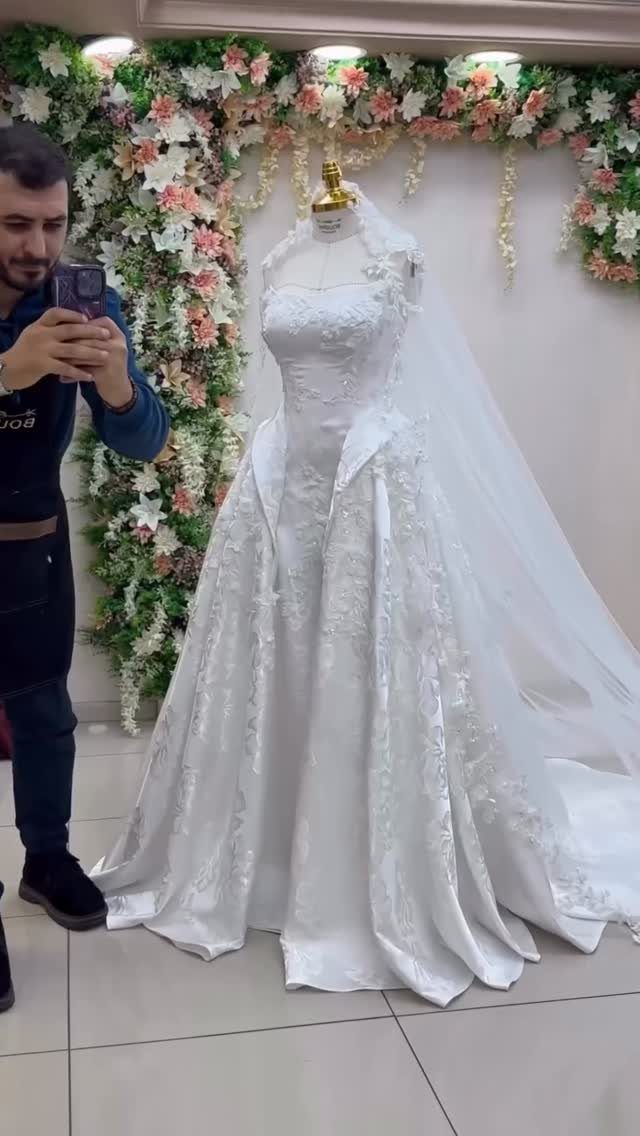
Jacquard weaves the floral pattern into the fabric itself, so the flowers come from the weave rather than from added lace or stitching.
Floral jacquard gives you pattern woven into the cloth itself, so the surface stays smooth and a long, flowing veil in plain tulle suits it well, since the fabric already carries the interest.
I would keep the veil plain. The pattern does the decorating, and a busy veil would fight it.
Look at the fabric in person if possible, since the sheen of a woven pattern changes with the light.
Choosing the Right Floral Dress
Start with the venue, because it decides how much the flowers on the dress will show.
Then check the season. Spring suits florals best, and an outdoor ceremony lets daylight bring out the texture.
For a ballroom or a city venue, I would go lighter on the florals and let the dress carry them quietly, since there is no greenery to echo.
Floral Dress Trends
Floral gowns are a current trend, and designers showed them prominently at New York Bridal Fashion Week this year.
Some brides worry that flowers are too bold for a wedding day, but they read as timeless and a little ethereal when the dress has texture and movement.
You can cover the whole dress in flowers or keep them to a few accents, and the restrained version is the safer choice if you want photos that still look right decades from now.
A few floral accents on the bodice or skirt give you the trend without committing the whole dress to it.
Customization Options
Made-to-order is where a floral dress gets personal. Many designers will adjust the floral details and the colors, so ask what can change: how dense the flowers are, where they sit, and which shades they use.
Custom work usually takes longer and costs more, so ask for the price and the delivery date in writing before you commit. Build in time for alterations on top of that.
White isn’t required, so if it was never your color, a tinted gown with floral detail still reads as a bride.
Frequently Asked Questions
What is a floral bridal gown?
Flowers worked into the fabric itself, through embroidery, lace appliqué, or printed tulle, are what make a gown floral; a few real blooms tucked in at the last minute do not count.
The flowers can be lace patterns, raised 3D appliqué, embroidery, or a jacquard weave.
Florals can spread across the whole gown or sit in small clusters on the bodice or hem, and I lean toward the lighter touch because it looks less dated in photos 20 years from now.
Are wildflower wedding dresses suitable for outdoor weddings?
Yes, they suit outdoor venues best, especially ones with greenery or stone nearby. Repeat the flowers in only one spot, either the dress or the headpiece, so the floral elements don’t compete.





