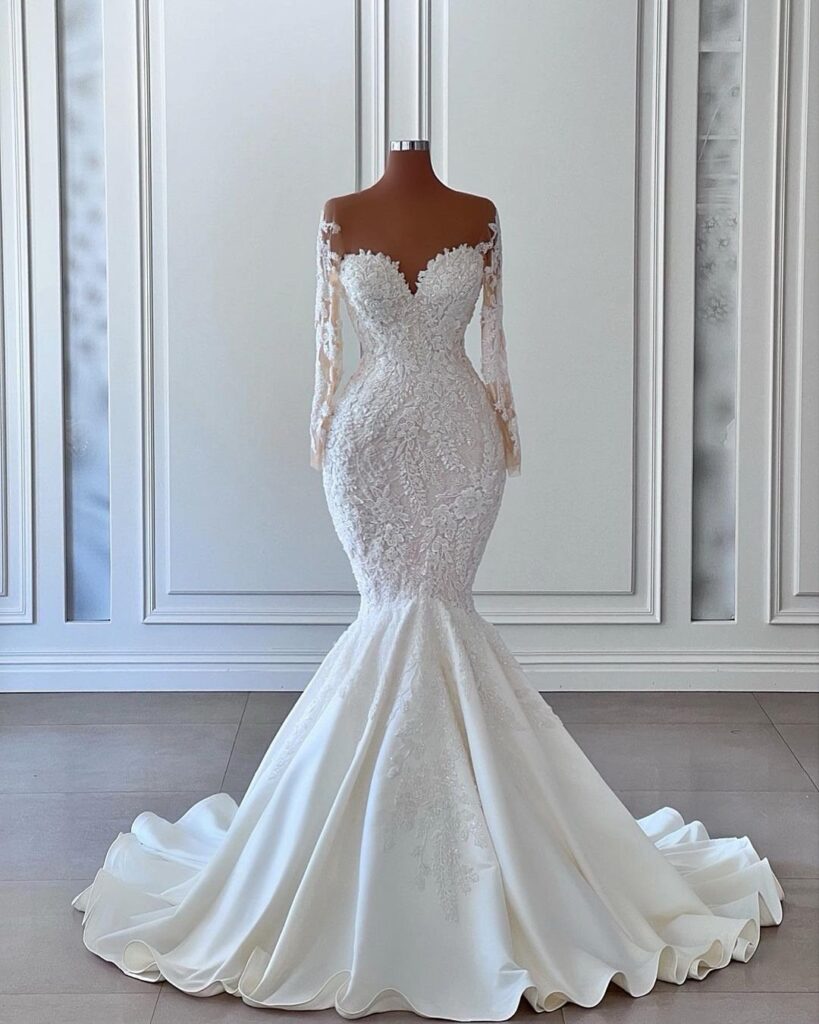
A mermaid gown fits close from chest to thigh and flares at the knee, so the choice comes down to how your body meets that line, since a fitted bodice follows a defined waist and curved hips instead of hiding them.
If a mermaid fights your shape at a professional fitting, an A-line is the safer pick.
1. Mermaid Silhouette
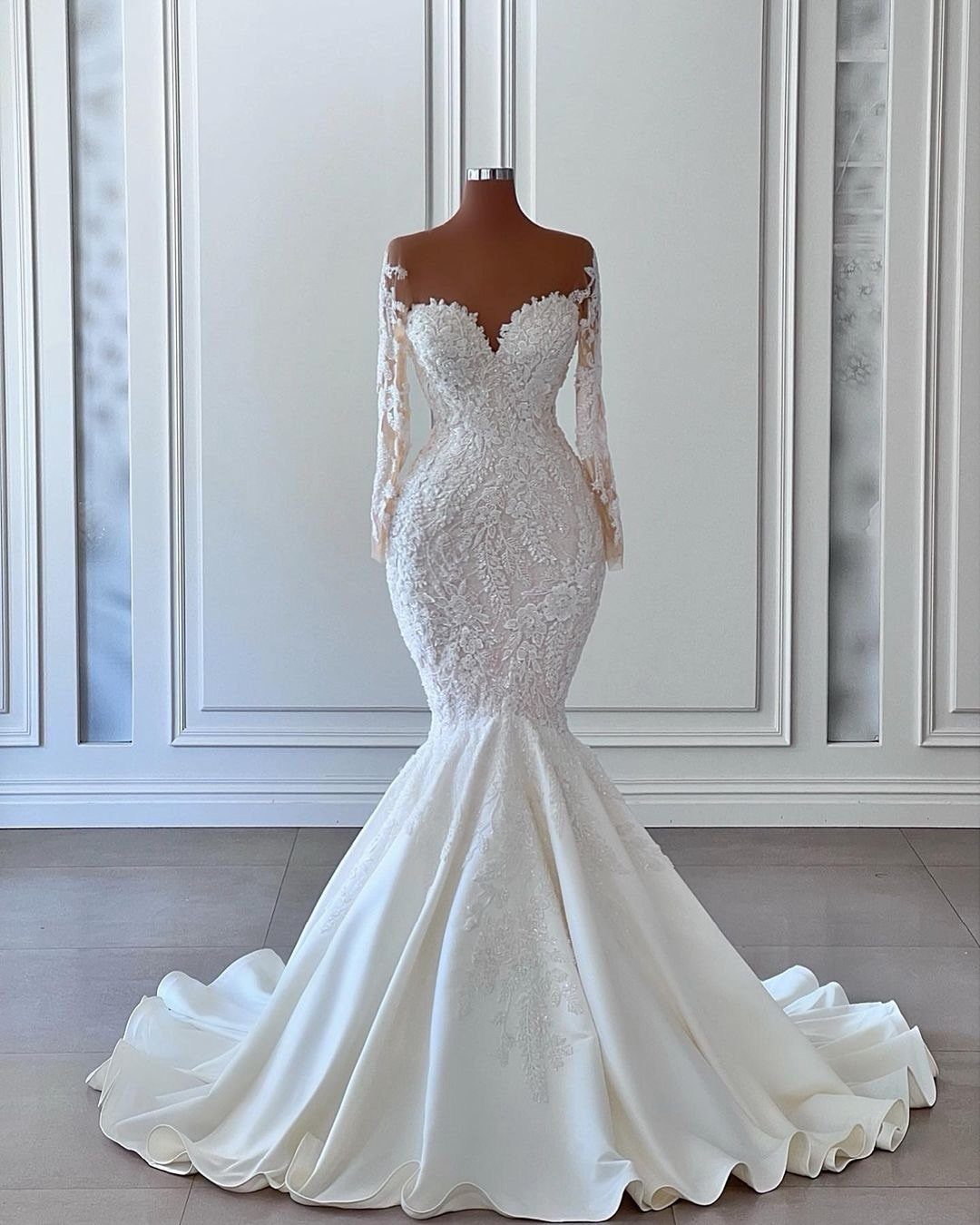
Mermaid gowns hug the body from the chest through the hips and thighs, and the skirt only opens up around the knee or lower.
That one line of shape is the whole idea, and it is why lace works so well on it: the pattern stays crisp where the fabric hugs you.
Bring your shoes and the underlayers you plan to wear to every fitting. The flare begins right where you bend and walk, so I’d test sitting and stepping before you commit.
2. Flattering Bridal Gowns for Hourglass Figures
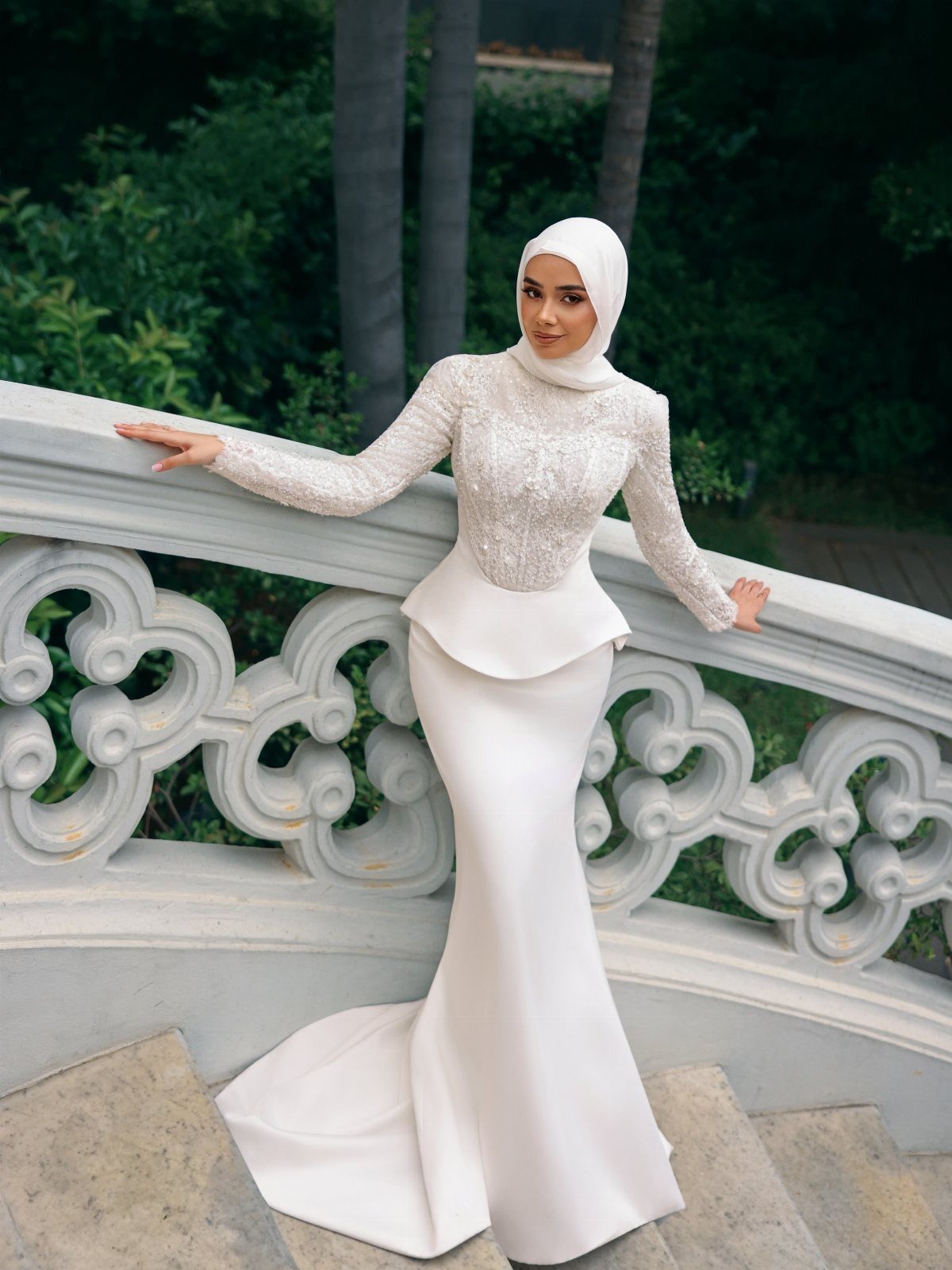
Hourglass and athletic figures are where a mermaid cut makes the most sense. The fitted bodice follows a defined waist and curved hips instead of hiding them, and the flare gives a long, clean line below.
Modest styling suits it too. A hijab and a full-coverage cut keep the silhouette readable, so I’d choose the gown for the fit through the waist and hip first, and decide on the rest afterward.
If you carry your curves more evenly, still try one on. The shape either flatters you in the mirror or it doesn’t.
3. Sweetheart Neckline
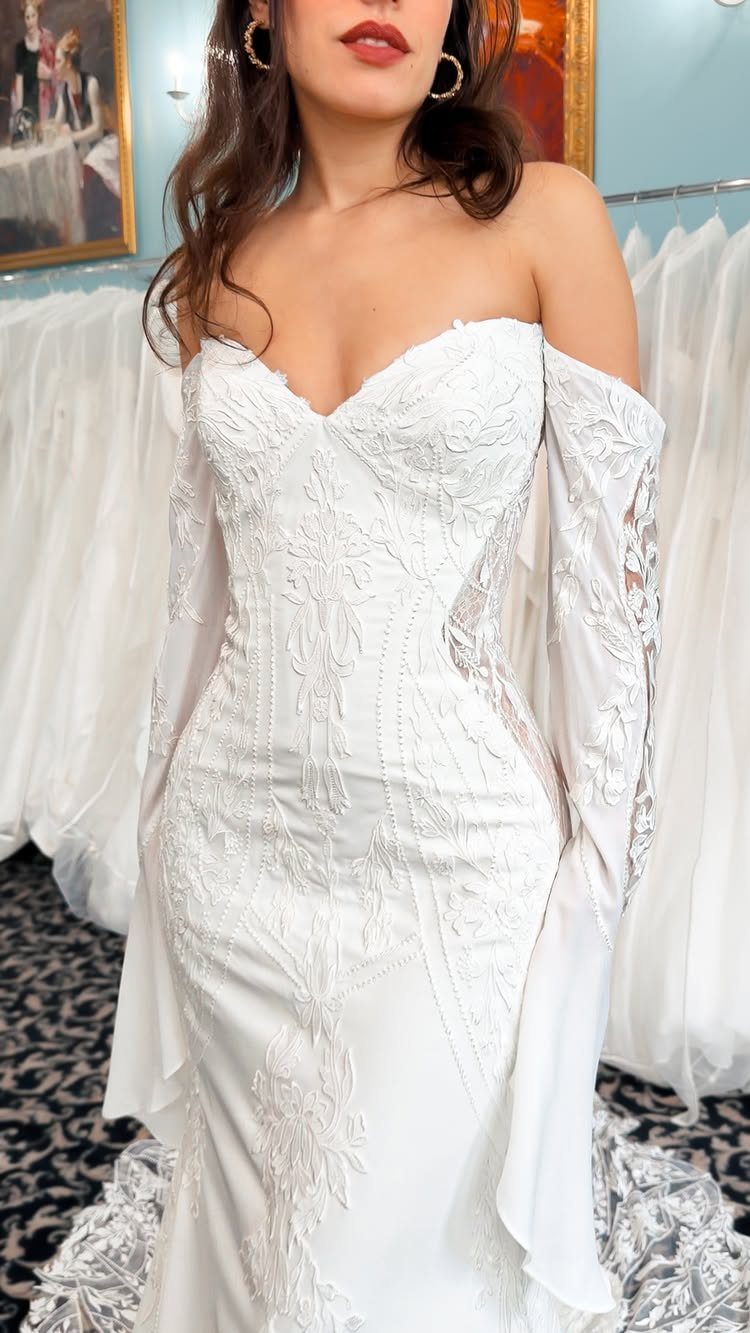
Necklines change a mermaid gown more than almost any other detail, and a sweetheart is my favorite pairing for it. Its curved dip at the center of the bust echoes the curves of the skirt below.
Floral embroidery across the top draws the eye upward and balances all that fitted fabric lower down. Try the sweetheart with and without sleeves or straps, since the same neckline reads quite differently once the shoulders are covered or bare.
4. Long Sleeve Mermaid Gown
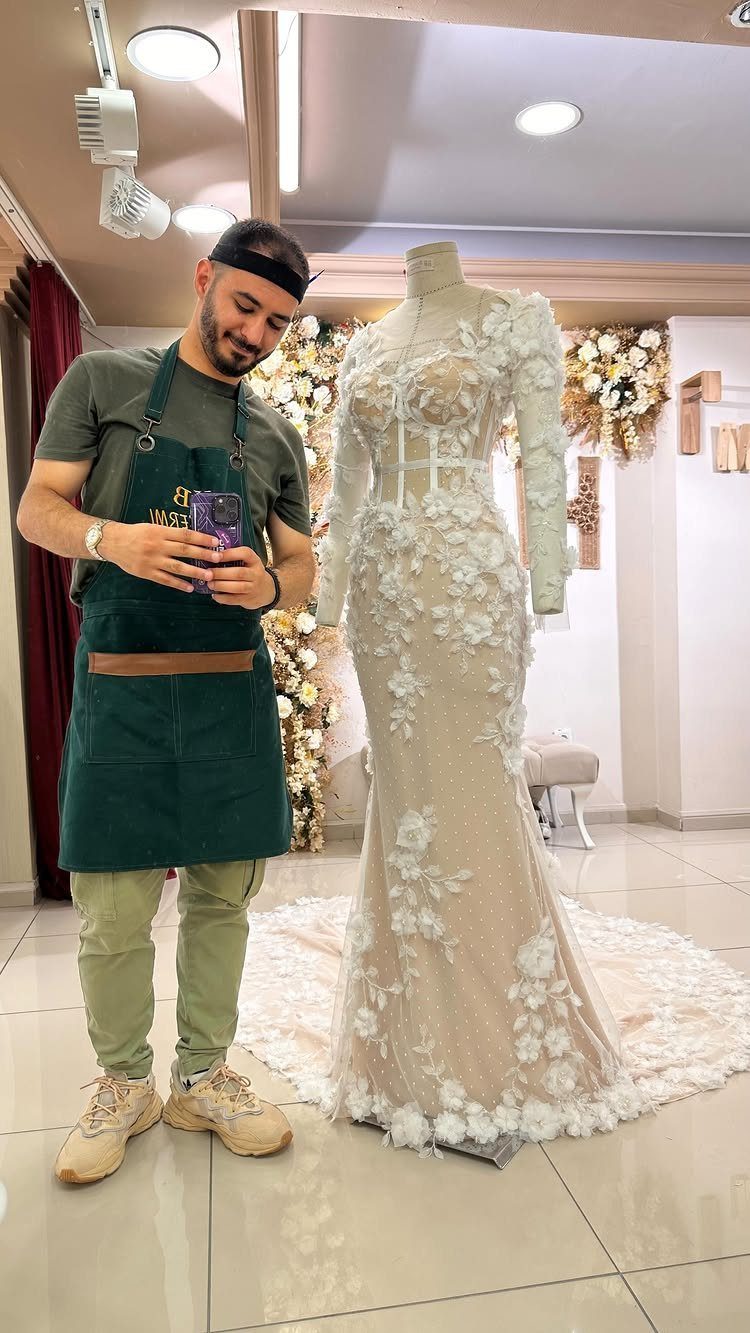
Full-length lace sleeves turn a mermaid gown into something quieter and more formal. The lace carries the pattern from wrist to hem, so the dress feels like one continuous piece.
Sleeve length is the thing to check at fittings.
Lace has little give, so reach forward and raise your arms before the tailor marks anything. If it pulls, ask for adjustments then, not the week of the wedding.
5. Off-the-shoulder Mermaid Gown
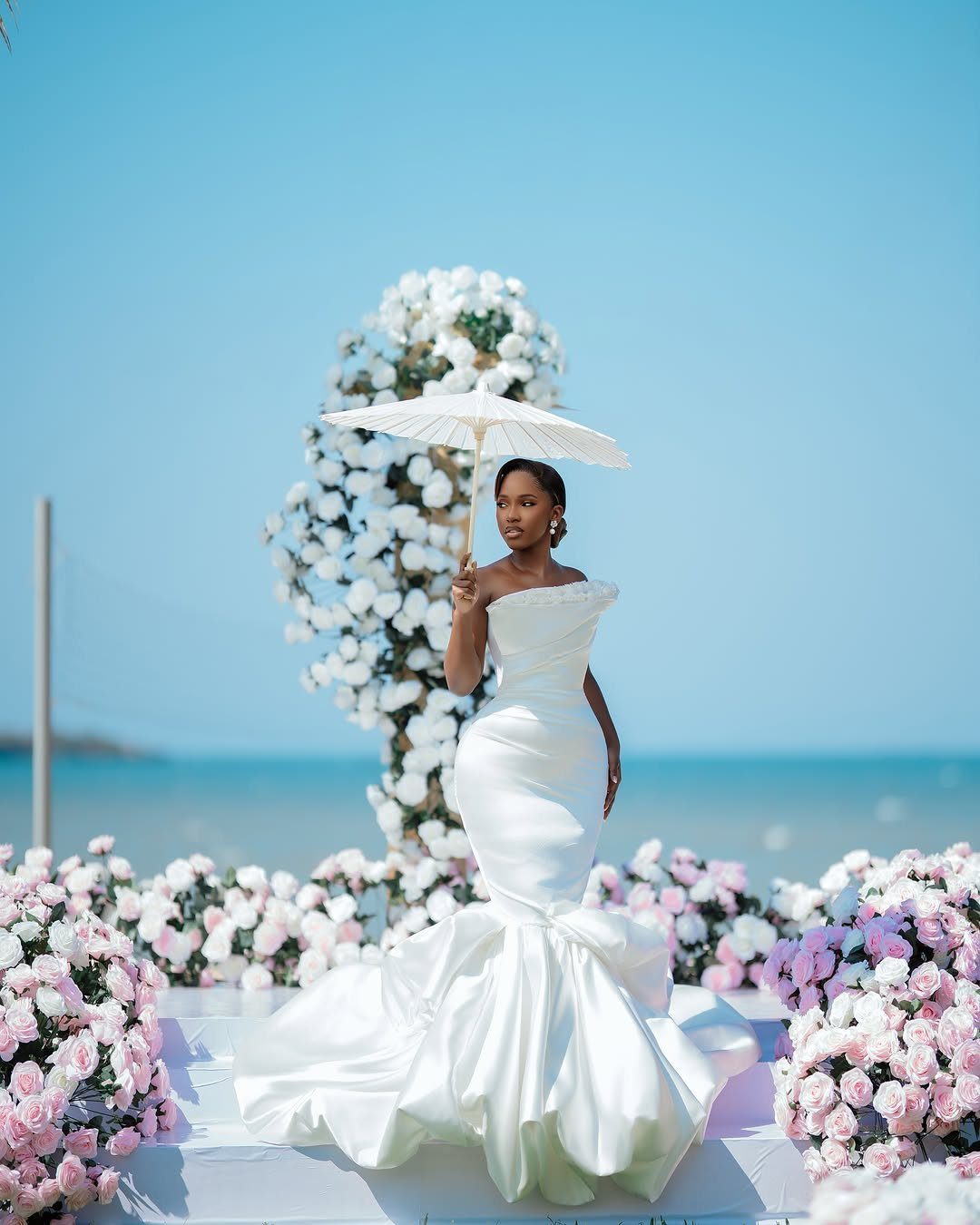
An off-the-shoulder neckline frames the collarbones and leaves the arms free, which suits a mermaid skirt that already draws attention to the lower half. Outdoors by the water, the bare shoulder line keeps the whole look light.
I’d pick this over a heavier neckline for a warm, open setting. Practice lifting your arms and hugging people in it, because a band that sits low can slip if it’s cut too loose.
6. Halter Neck Mermaid Gown
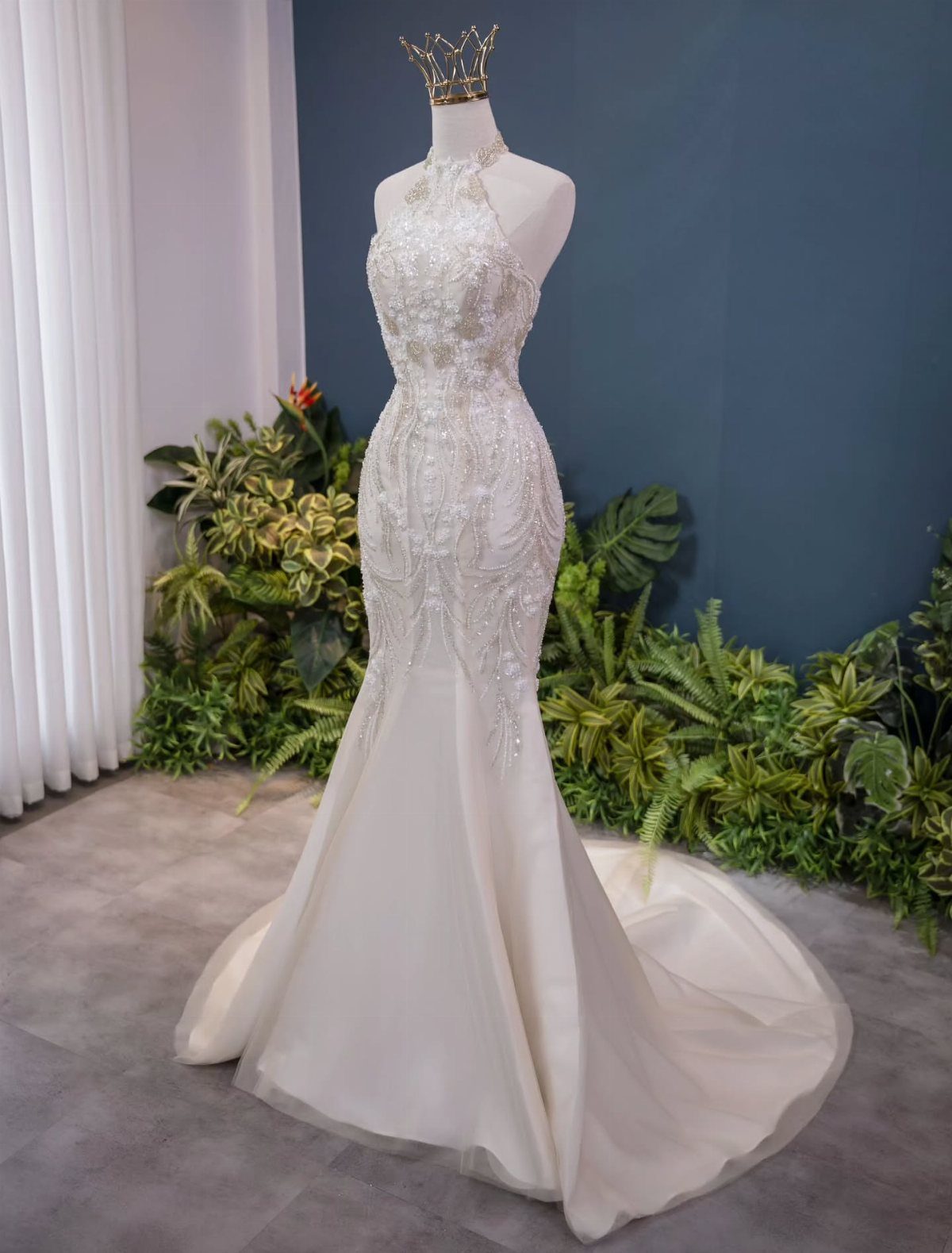
A high halter neckline pulls the straps up and in toward the neck, leaving the shoulders fully bare. With embroidery across the bodice, it gives a mermaid gown a polished, almost sculpted top.
Of the neckline choices, this one asks the most of your shoulders and back, so check how it sits from behind in the mirror.
If you plan to wear a crown, a halter pairs well with a simple updo, which keeps the neckline visible.
7. Ruffled Skirt Mermaid Gown
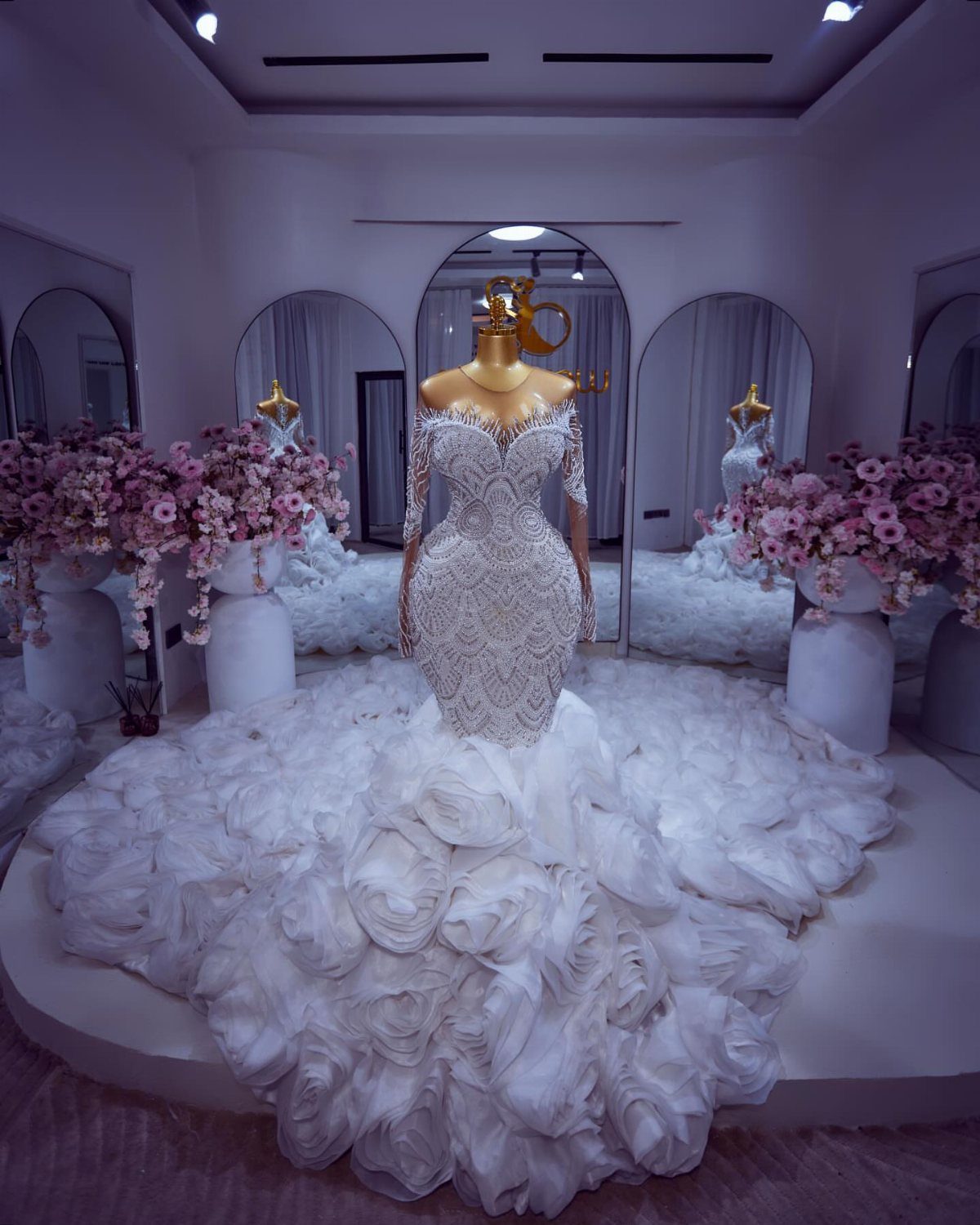
A ruffled skirt gives a mermaid gown its drama below the knee, where the fitted line breaks into layers of volume.
With a beaded bodice above it, the dress has 2 textures in conversation: crisp and sparkling on top, soft and moving below.
I’d choose this when you want movement without a ball gown’s bulk. Ruffles add fabric and weight at the hem, so walk a full length of the room and turn in it before you decide.
Ask how the ruffles are anchored, since layers that flip up when you sit are easy to trip on.
8. Ornate Veil Paired Mermaid Gown
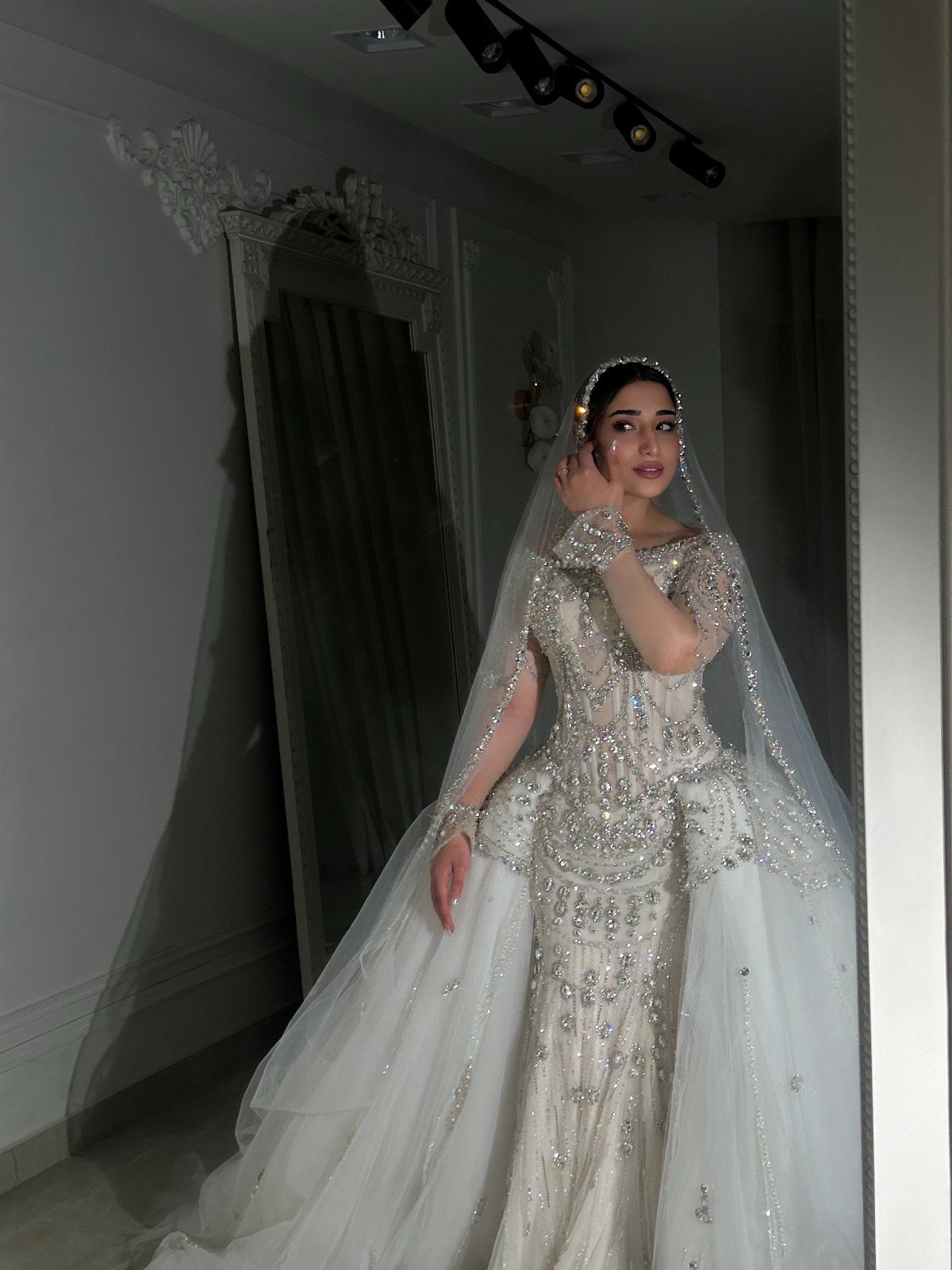
Heavy beading already does the talking, so the veil has to be chosen against it.
A long cathedral-length veil with a matching headpiece reads as one deliberate look, and I’d keep the veil sheer and plain so it frames the beadwork instead of competing with it.
Wear the headpiece and veil together at a fitting, not separately. Check that the veil doesn’t snag on the beads when you move or hug someone, and ask where the comb sits so it stays put.
A beaded gown plus a long veil is a real cost stack, so budget for both at once.
9. Colorful Red Mermaid Bridal Gown
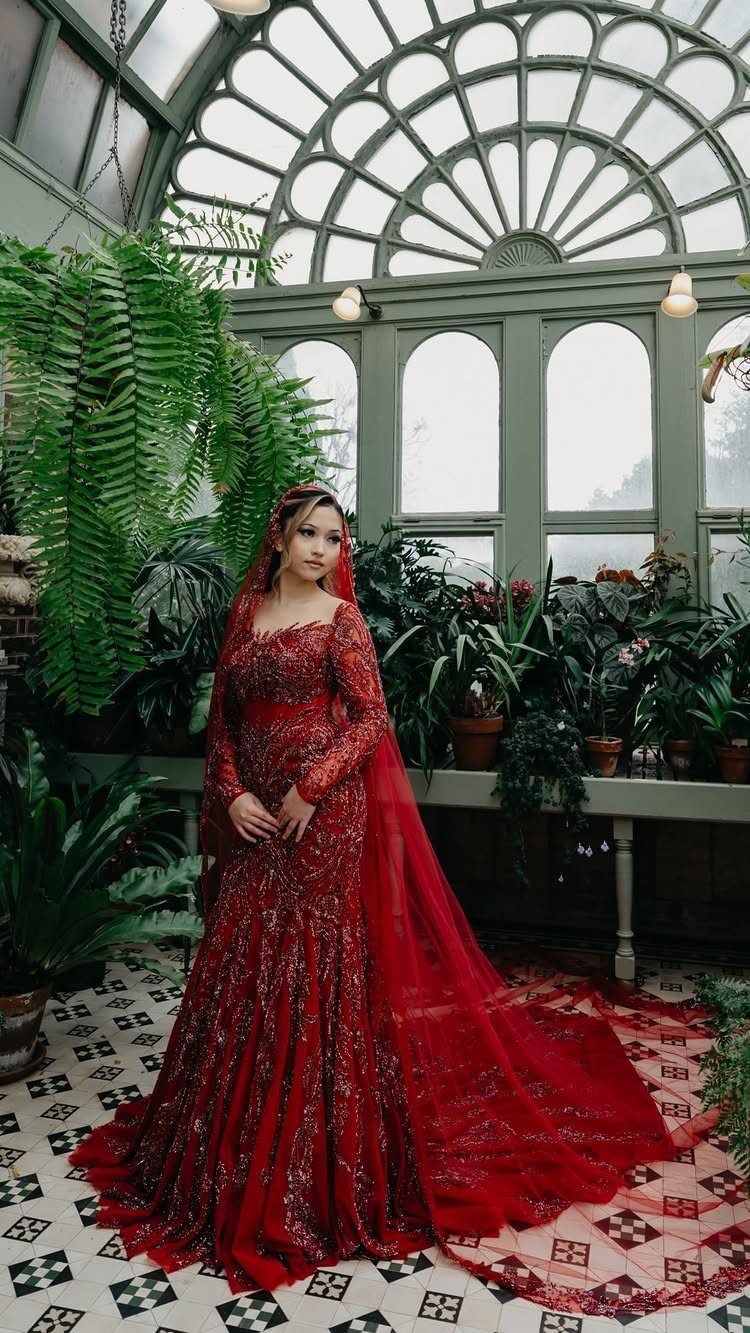
Red is the boldest answer to a mermaid cut, and a deep crimson with embellishment holds up well against a sweeping chapel-length sweep of tulle behind you and a matching veil.
The fitted shape shows the color at full strength, which is why I’d pick this over a pale gown when the dress itself should be the center of every photo.
Look at swatches in daylight and under indoor bulbs, since red shifts more than ivory does. Keep jewelry minimal, because the embellishment already has plenty to say.
Tell your photographer early, so they can plan around the color against your venue.
Mermaid Dress Styles
Mermaid gowns run from minimalist to ornate, so the silhouette fits a formal ballroom as easily as a quiet backyard. Match the amount of detail to the theme of the day.
The style dates to the 19th century, when it began as a design for wealthy women. Madeleine Vionnet is the designer usually tied to the cut’s early refinement, and Marlene Dietrich wearing it on screen pushed it into public view.
Details are where 2 mermaid gowns differ most: corsets, bows, a slit in the skirt, a bow at the hem, or a slit at the back.
Pick one or two. A train, long or short, adds grandeur to your walk, so ask to see the dress with it down.
Body Shape Considerations
Fabric and structure do much of the work for everyone else.
A crepe mermaid gives a smooth, elongating line. Vertical seams paired with a Basque waistline give the bodice real structure, so the waist and hips read as defined on nearly any figure.
Get a professional fitting first, ahead of any purchase, and if the mermaid fights your shape, an A-line is the safer pick.
Trends in Mermaid Dresses
Lately I see heavy satin mermaid gowns covered in detailed beadwork, and some come with an off-the-shoulder neckline. That is the look getting the most attention.
A second direction runs the other way: clean, simple lines for brides who want unfussy beauty. A mermaid doesn’t need heavy embellishment to look finished.
I’d choose by how much you want the fabric to carry. If the budget is tight, a plain satin cut with one good detail often looks more expensive than a gown covered in beads.
Frequently Asked Questions
What is a mermaid wedding dress?
Through the bust, waist, hips and thighs, a mermaid gown follows your body closely, and the skirt only releases into a flare at or below the knee.
That single line of shape defines it. Mermaid silhouettes trace back to the 1800s, when they were made for wealthy clients; Madeleine Vionnet refined the cut, and Marlene Dietrich’s screen appearances made it famous.
Are mermaid dresses flattering for all body types?
A defined waist and curvy hips give the fitted bodice something to follow, so hourglass and athletic builds wear this shape with the least effort.
Fabric and construction can do a lot for other builds: crepe drapes smoothly and lengthens the line, while vertical seams plus a Basque waist mark the waist and hips on almost anyone.
Try gowns on with a skilled fitter before you commit, and if the mermaid cut keeps working against your proportions, I would choose an A-line instead.





